
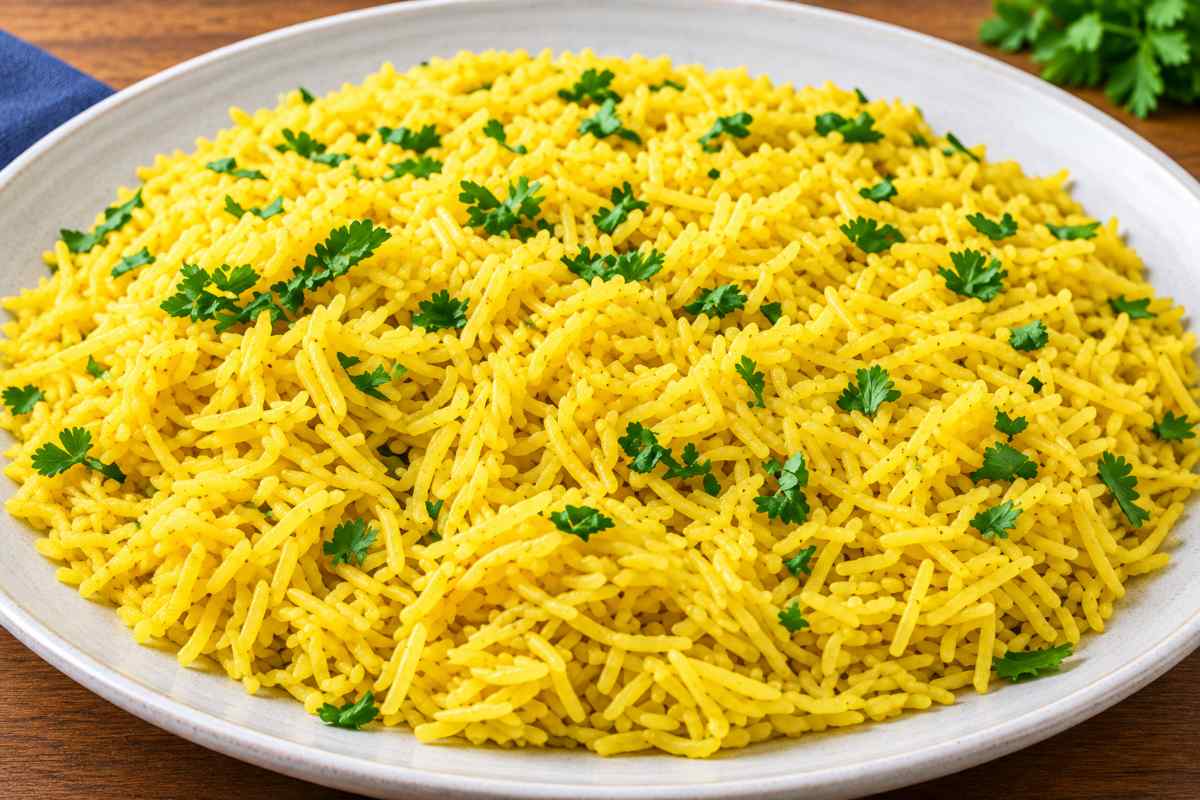
Turmeric rice is one of the easiest, most rewarding things you can make at home, golden, fragrant and on the table in under 30 minutes using nothing more than pantry staples. Whether you make turmeric rice on the stovetop, in a rice cooker, or in an Instant Pot, the result is the same, fluffy, warmly spiced yellow rice that makes every meal it sits beside taste more intentional.
This guide covers all three methods clearly so you can choose the one that works for your kitchen and your schedule. You will also find tips on getting that deep, consistent golden color, how to nail the water ratios for each cooking method, Indian style variations, meal prep advice and answers to the questions we get asked most about this recipe. If you have ever ended up with pale, patchy, or bitter tasting yellow rice, this is where that stops.
What Is Turmeric Rice and Why Does It Turn Yellow?
Turmeric rice is simply rice cooked with ground turmeric powder and it turns yellow because of curcumin, the natural pigment compound found in turmeric that releases a deep golden color when it comes into contact with heat and fat. To make rice yellow with turmeric, you don’t need much a little turmeric powder, a little oil or butter and the right technique to distribute the color evenly through every grain.
How Turmeric Makes Rice Golden, Not Just Yellow
The difference between rice that looks genuinely golden and rice that looks a dull, patchy yellow comes down to one step that most basic recipes skip, toasting the turmeric in fat before adding any liquid. When turmeric hits hot oil or butter, curcumin dissolves into the fat and coats each grain of rice evenly as it is stirred through. Add the water after that and every grain cooks in a uniformly spiced, golden liquid. Skip the fat toasting step, say, by just stirring turmeric powder into boiling water and the curcumin does not disperse properly, which is why you end up with patchy color and a sharper, slightly raw taste.
The other factor is turmeric freshness. Ground turmeric loses its potency over time and old powder would not give you that vibrant, deep gold, no matter how much you use. If your turmeric does not smell warm and faintly musky when you open the jar, it needs to be replaced. Fresh, fragrant turmeric powder is what turns rice genuinely golden rather than a washed out yellow.
For a clean, fluffy base that lets the turmeric color shine through properly, it also helps to start with well rinsed rice. Our guide on Perfect White Rice covers the rinsing and water ratio fundamentals that carry directly into this recipe.
The Difference Between Turmeric Rice and Saffron Rice
Both turmeric rice and saffron rice are yellow rice, but the similarity stops at the color. Saffron produces a brighter, more orange gold hue with a floral, slightly honeyed flavor that’s distinctly delicate. Turmeric gives a deeper, earthier yellow with a warm, savory flavor that’s far more robust.
Saffron is one of the most expensive spices in the world, turmeric costs a fraction of the price and is available in every grocery store. In everyday cooking across African, Indian and Continental kitchens, turmeric is the standard choice and it is what this recipe is built around. The two are not interchangeable in flavor, but if you’re cooking to make rice yellow with turmeric rather than saffron, you are getting a more versatile, weeknight friendly result that pairs with a far wider range of dishes.
How to Make Simple Turmeric Rice
Preparing turmeric rice is straightforward, making it perfect for beginners and seasoned cooks, the secret lies in the perfect harmony between fragrant spices and fluffy rice.n To prepare this rice, you will need
Equipment
- A large bowl (for soaking and rinsing)
- A non stick pot with a tight fitting lid
Ingredients You Need for the Best Turmeric Rice Recipe
Making turmeric rice at home requires no special shopping trip. Everything on this list is a pantry or produce staple and the turmeric does the heavy lifting on both flavor and color. Here’s what you need and why each ingredient matters.
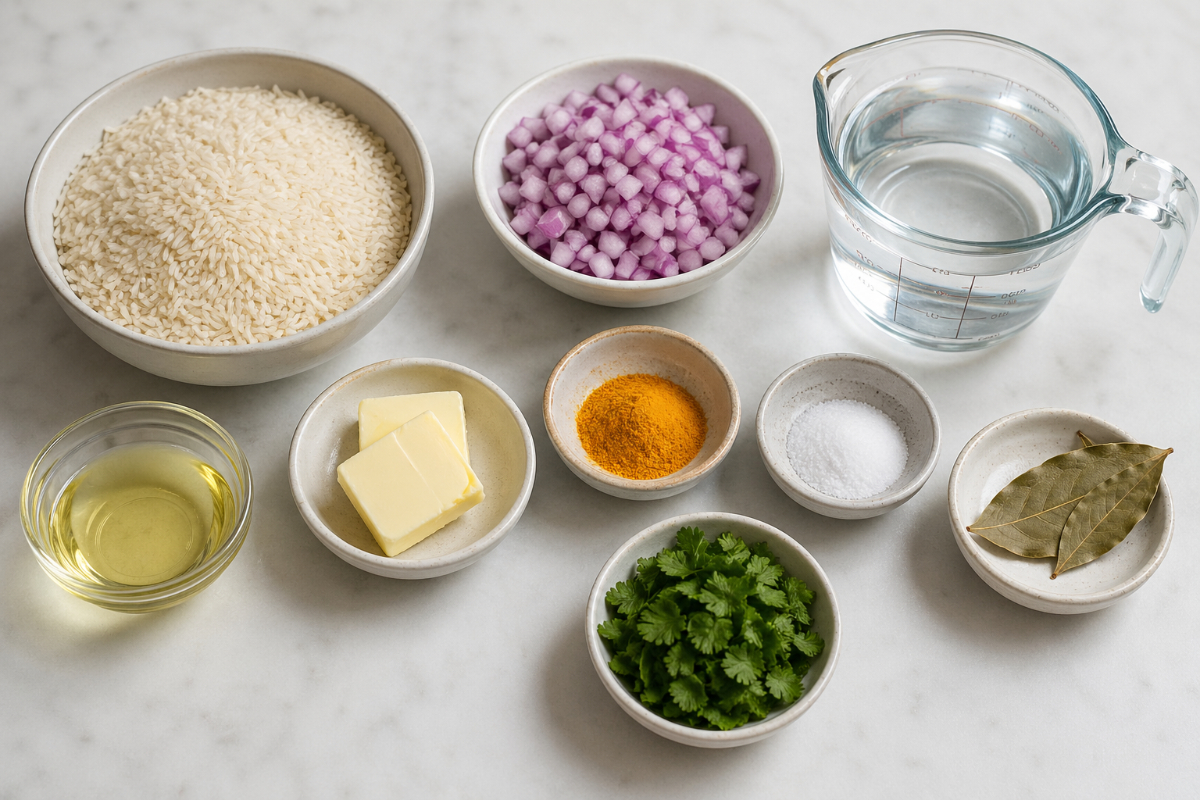
- 2 cups jasmine rice or basmati rice
- 1 medium onion, chopped
- 2 tbsp cooking oil of choice
- 2 tbsp butter
- 3/4 tsp turmeric powder
- 1 1/2 tsp salt or to taste
- 1-2 bay leaves (optional)
- 3 cups water
- Cilantro to garnish
The onion and butter are not decorative additions, sautéing the onion first builds a savory aromatic base and the butter carries the turmeric into the rice more effectively than oil alone. Together they are responsible for the depth of flavor that separates this from plain boiled rice with a pinch of yellow spice stirred in at the end.
Basmati vs. Jasmine Which Rice Works Best
Both work well in this turmeric rice recipe and the right choice depends entirely on the texture you are after. Basmati produces longer, drier, more distinct grains with a slightly nutty aromam, it is the better pick if you want that clean, separated look you would get in an Indian or Continental restaurant. If you specifically want to make turmeric basmati rice, soak it for 30 minutes before cooking, basmati benefits more from pre soaking than jasmine does and that step is what gives you fluffy grains rather than dense ones.
Jasmine rice is softer and slightly sticky by nature, which makes it a better fit if you are serving this beneath a saucy curry or stew where you want the rice to absorb and hold the sauce. It is also slightly more forgiving for first time cooks, since it is less sensitive to slight variations in water ratio. Both rice types need a thorough rinse under cold water until the water runs clear, that step removes the surface starch that causes clumping and is non negotiable regardless of which variety you use. If you enjoy experimenting with rice based dishes, our Bacon Fried Rice Recipe is another great way to put a batch of well cooked rice to work.
Can I Use Broth Instead of Water?
Yes and it is worth doing if you have broth on hand. Chicken broth adds a gentle savory richness that complements the turmeric without masking it, vegetable broth works equally well and keeps the dish fully plant based.
The key adjustment when switching to broth is salt, most store bought broths already carry significant sodium, so reduce the added salt to around ½ teaspoon and taste before adding more once the rice is cooked. The flavor payoff is real broth cooked turmeric rice has a depth that plain water cannot quite match and it makes a noticeable difference when you are serving the rice as a standalone side rather than under a heavily sauced dish.
Fresh Turmeric vs Ground Turmeric Powder
Ground turmeric powder is the right choice for making turmeric rice at home and it is what this recipe is built around. The reason is distribution, powder disperses evenly through the fat and water, coating every grain uniformly and producing that consistent golden color throughout the pot. Fresh turmeric root, while more vibrant in flavor, doesn’t dissolve into the cooking liquid as readily. It tends to produce uneven color and can leave fibrous bits in the rice if not handled carefully.
If you only have fresh turmeric, grate about 1 tablespoon and add it during the onion sauté step, rather than to the water. Cooking it in fat first helps extract more color and flavor than adding it raw to liquid. That said, powder remains the more reliable, consistent option for this recipe and as long as it’s fresh and fragrant, the results are excellent every time.
Instructions to Make Turmeric Rice on the Stovetop, Pan Method, African and Continental Style
- Begin by soaking your rice in cold water for 30 minutes. Then, rinse your rice under cold water until the water runs clear. This removes excess starch and ensures the grains remain separate and fluffy.
- In a large pot, heat some oil over medium heat and sauté chopped onions until fragrant.
- Add the rice and turmeric powder and mix to coat evenly. Pour in the water, add the butter and bay leaf if using then bring it to a boil
- Once it starts boiling, reduce the heat to the lowest setting. Cover and cook for 15–20 minutes or until the liquid is fully absorbed.
- Once done, fluff the rice with a fork, and you’re ready to serve!
- To add freshness, sprinkle chopped herbs like cilantro or parsley on top before serving
The Secret Step | Toasting Rice in Turmeric Oil First
Step 3 is where this turmeric rice recipe separates itself from every basic version that just boils rice and stirs in spice at the end. Adding the dry rinsed rice directly to the turmeric infused oil, before any water goes in and stirring to coat does two things at once. First, it distributes curcumin evenly across every grain through the fat, which is what produces a consistent deep gold color rather than patchy yellow. Second, the brief heat contact starts building a light toasty flavor in the rice itself, the same principle behind pilaf and biryani, where toasting the raw grain in fat is always the foundation of the dish.
This step takes under two minutes and costs nothing extra. It is also the reason this stovetop method produces better flavor than the rice cooker or Instant Pot versions, the fat toasting phase simply cannot be replicated once you are working inside a sealed appliance. If you enjoy one pot rice dishes built on this same principle, our One Pot Chicken and Rice is worth trying next, it uses a similar aromatic base with equally satisfying results.
How to Get That Deep, Consistent Golden Color Every Time
Three variables control your final color and all three must be correct. The first is turmeric freshness, ground turmeric loses its potency and color giving ability over time and old powder produces a pale, washed out result no matter how much you use. Open the jar and smell it fresh turmeric has a warm, distinctly earthy aroma. If it smells like nothing, replace it.
The second variable is the toasting step above, turmeric activated in hot fat before liquid is added gives a richer, more even color than turmeric stirred into water. The third is quantity ¾ teaspoon per 2 cups of rice is the sweet spot. Less than that and the color is too faint more than that and the earthy bitterness of the spice starts to come through in the finished dish. Nail those three things and the rice comes out of the pot a deep, even gold every single time.
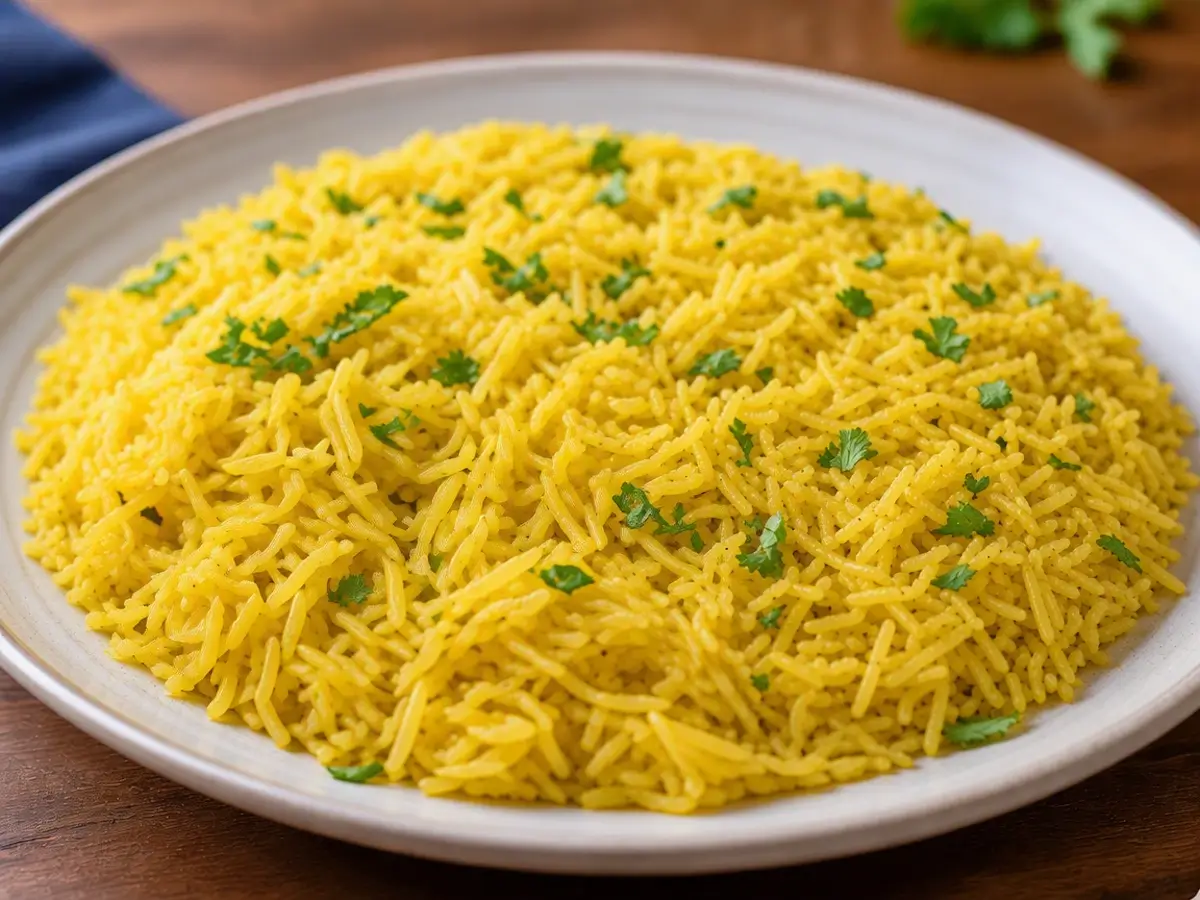
How To Make Simple Turmeric Rice
Ingredients
- 2 cups rice jasmine or basmati
- 1 medium onion chopped
- 2 tbsp cooking oil
- 2 tbsp butter
- 3/4 tsp turmeric powder
- 1 1/2 tsp salt or to taste
- 1 medium bay leaf optional
- 3 cups water
- cilantro to garnish
Instructions
- Soak rice in cold water for 30 minutes. Then, rinse the rice under cold water until the water runs clear. This removes excess starch and ensures the grains remain separate and fluffy.
- In a large pot, heat the oil over medium heat and sauté chopped onions until fragrant.
- Add the rice and turmeric powder and mix to coat evenly. Pour in the water, add the butter and bay leaf if using then bring it to a boil
- Once it starts boiling, reduce the heat to the lowest setting. Cover and cook for 15–20 minutes or until the liquid is fully absorbed.
- Once done, fluff the rice with a fork, then garnish with cilantro or parsley then serve!
Video
Notes
Nutrition
How to Make Turmeric Rice in a Rice Cooker
You can absolutely make turmeric rice in a rice cooker and the result is genuinely good, hands off, consistent and freeing up your stovetop for whatever else is on the menu. The method requires one small stovetop step first, but after that the machine does everything and you do not have to watch it.
Do You Need to Sauté First?
Yes and this is the step that most rice cooker turmeric rice recipes skip, which is exactly why they produce golden colored rice with very little flavor behind it. Before anything goes into the rice cooker, heat your oil in a pan over medium heat, sauté the chopped onion until softened and fragrant, then add the rinsed rice and turmeric powder and stir to coat for about 90 seconds. Once the rice is evenly coated in the turmeric spiced oil, transfer everything, rice, onion, butter, bay leaf and water, into the rice cooker and let the machine take it from there.
That 90 second toasting step is what gives the rice cooker version its depth. Without it, you get rice that’s yellow but flat, technically correct in color, missing in character. The sauté is also what ensures the turmeric color is evenly distributed before the rice hits the water, so you end up with a consistent golden finish rather than patchy spots. If you enjoy rice dishes with bold, layered flavor built on a similar aromatic base, our Dirty Rice Recipe is worth exploring alongside this one.
Water Ratio for Rice Cooker Turmeric Rice
Use the same ratio as the stovetop version, 1.5 cups of water per cup of dry rice, which means 3 cups of water for this 2 cup recipe. Rice cookers are designed around this standard ratio for white rice and it works reliably here. The one exception is if your machine consistently produces wet or dry results with other recipes, in that case, adjust by ¼ cup in the appropriate direction and note it for next time. Every rice cooker model runs slightly differently and once you know your machine’s tendency, you can dial it in exactly.
One thing to keep in mind because you’ve pre soaked and rinsed the rice before the sauté step, it will absorb water slightly faster than unsoaked rice would. If your cooker runs on the longer side, this is not an issue. If it’s a fast cook model, check the rice about 5 minutes before the cycle ends to make sure it hasn’t dried out.
Best Rice Cooker Settings for Fluffy Golden Rice
Use the standard white rice setting for both basmati and jasmine, it is the longer, gentler cycle. It produces a better texture than any quick cook mode your machine offers. Quick cook settings apply higher heat for a shorter time, which tends to cook the outside of each grain faster than the inside, resulting in rice that is simultaneously overcooked on the surface and slightly underdone at the core.
Once the rice cooker clicks over to the warm setting, do not open the lid immediately. Let the rice sit on warm for 5 minutes before lifting the lid and fluffing with a fork. That resting period allows the residual steam trapped inside to redistribute evenly through the grains, it is the difference between rice that fluffs cleanly and rice that sticks together in clumps when you try to serve it.
How to Make Turmeric Rice in an Instant Pot
Making turmeric rice in an Instant Pot is straightforward. It produces consistently fluffy, golden results, especially useful when you are cooking a larger batch or want the stovetop completely free for other parts of the meal. The pressure environment actually works in your favor here, locking in the turmeric aroma and delivering evenly cooked grains every time.
Pressure Cook Time and Water Ratio
The key adjustment when moving from stovetop to Instant Pot is the water ratio. Because the Instant Pot is a sealed environment with no evaporation, you need less water than the stovetop version. Use a 1:1 ratio of rice to water, so 2 cups of rice to 2 cups of water. The stovetop version uses 3 cups of water for the same amount of rice, that extra cup accounts for the steam that escapes during open cooking. In the Instant Pot, that steam stays sealed inside, which means using the stovetop ratio will leave you with wet, overcooked rice.
Once your rice and water are in the pot along with the turmeric, butter, salt and bay leaf, seal the lid, set the valve to sealing and cook on High Pressure for 3 minutes for white basmati or jasmine rice. The pot will take around 8–10 minutes to come to pressure before the 3 minute cook time begins. Factor that into your timing so the result does not catch you off guard. If you enjoy Instant Pot rice dishes that build on the same principle of layered, spiced flavor, our Shrimp Fried Rice is a great next recipe to try with leftover turmeric rice as the base.
Natural vs Quick Release for Best Texture
Always use natural pressure release for at least 10 minutes before switching to quick release, this is the single most important technique decision in the entire Instant Pot method. When pressure is released too quickly, the sudden drop in pressure causes the starch inside the rice grains to burst outward rapidly, resulting in a gummy, sticky texture that no amount of fluffing can fix. Natural release allows the pressure to drop gradually, which lets the grains finish cooking gently in the residual heat without that starch disruption.
After 10 minutes of natural release, switch the valve to venting to release any remaining pressure, then open the lid and fluff the rice immediately with a fork. Leaving it to sit too long after opening, especially on the keep warm setting, can cause the bottom layer to dry out and stick. Fluff it as soon as it’s safe to open, then serve promptly, or transfer to a container for meal prepping.
Can You Sauté the Onion in the Instant Pot?
Yes and doing everything in one pot is the cleanest, most efficient workflow for this recipe. Use the Sauté function set to Normal heat, not High, which runs too hot for onions and risks burning them before they soften. Add your oil, let it heat for about a minute, then add the chopped onion and cook for 3 minutes until softened and fragrant. Add the rinsed rice and turmeric powder and stir continuously for 60–90 seconds to toast the rice in the spiced oil. Then press Cancel to turn off the Sauté function.
Add your water, butter, salt and bay leaf, give everything a gentle stir to lift any bits stuck to the bottom. This prevents the burn notice that Instant Pot users sometimes encounter, then seal the lid and proceed with the pressure cook step above. One pot, no transfer, no extra washing up. It’s the most practical way to make turmeric rice in an Instant Pot without compromising on the flavor that the sauté step delivers.
How to Make Indian Style Turmeric Rice Authentic Stovetop Method
Indian style turmeric rice, known in Hindi as haldi chawal, is a more aromatic, spice layered version of the base recipe that comes together on the stovetop using the same pan method but with a richer, more complex foundation. If you’ve ever wondered how to make turmeric rice Indian style and why it tastes so distinctly different from plain yellow rice, the answer lies in two things ghee instead of neutral oil and whole spices bloomed in fat before anything else goes into the pot.
What Makes Indian Turmeric Rice Different Whole Spices and Ghee
The defining difference in Indian turmeric rice is the treatment of fat and spice at the very start of cooking. Where the base recipe uses cooking oil and butter, the Indian method uses ghe, clarified butter cooked until the milk solids are removed, leaving a golden fat with a deep, nutty richness that regular butter simply does not have. Ghee also has a higher smoke point, which means the whole spices added at the start can bloom without burning.
Blooming whole spices in hot ghee is the cornerstone technique of Indian rice cooking. The heat causes the essential oils inside the spices to release rapidly into the fat, infusing it with concentrated flavor before a single grain of rice or drop of water enters the pot. That infused fat then coats every grain during the toasting step, carrying the flavor throughout the entire dish rather than sitting on the surface. The result is rice that tastes aromatic from the inside out, layered, warm and unmistakably Indian in character.
Adding Cumin Seeds, Cardamom and Cinnamon
To make Indian turmeric rice at home, start by heating 2 tablespoons of ghee in a heavy bottomed pot over medium heat. Once the ghee is shimmering, add ½ teaspoon of cumin seeds and let them sizzle for 20–30 second, you will know they are ready when they darken slightly and release a smoky, nutty aroma. Add 2 lightly crushed cardamom pods and a small cinnamon stick, stir once and let the whole spices bloom for another 15 seconds.
Add your chopped onion to the spiced ghee and sauté until soft and lightly golden, about 4–5 minutes. Then add the rinsed and soaked basmati rice along with ¾ teaspoon of ground turmeric, stir to coat every grain in the spiced ghee and cook for 90 seconds before adding 3 cups of water and 1½ teaspoons of salt. Bring to a boil, reduce to the lowest heat setting, cover tightly and cook for 15–20 minutes until the liquid is fully absorbed. Remove the whole spices before serving, or leave them in as a visual garnish and remind guests not to eat them. The cinnamon stick and cardamom pods are flavor vehicles, not food.
For a completely different but equally aromatic rice dish that uses a similar single pot technique with layered aromatics, our Lemongrass Rice Recipe is worth trying alongside this one, it builds on the same principle of infusing fat with flavor before the rice goes in.
How to Serve It the Indian Way
Indian turmeric rice is traditionally served as part of a thali, a full plate meal with several components eaten together. The rice sits at the center and everything else is arranged around it a dal for spooning over the top, a dry vegetable dish on the side, a small bowl of raita to cool things down and a wedge of lemon or lime to squeeze over the whole plate before eating. A spoonful of mango or lime pickle alongside adds a sharp, fermented contrast that beautifully cuts through the richness of the ghee cooked rice.
Outside the thali format, Indian turmeric rice serves as the base for any curry with a sauce thick enough to cling to the grains, lamb rogan josh, chicken tikka masala, or a simple chickpea curry all sit perfectly on top. A handful of fresh cilantro scattered over the finished rice just before serving adds brightness that balances the warm, earthy spice notes underneath. If you’re building a full Indian inspired spread, this rice is the anchor the entire meal is built around.
Turmeric Rice Health Benefits
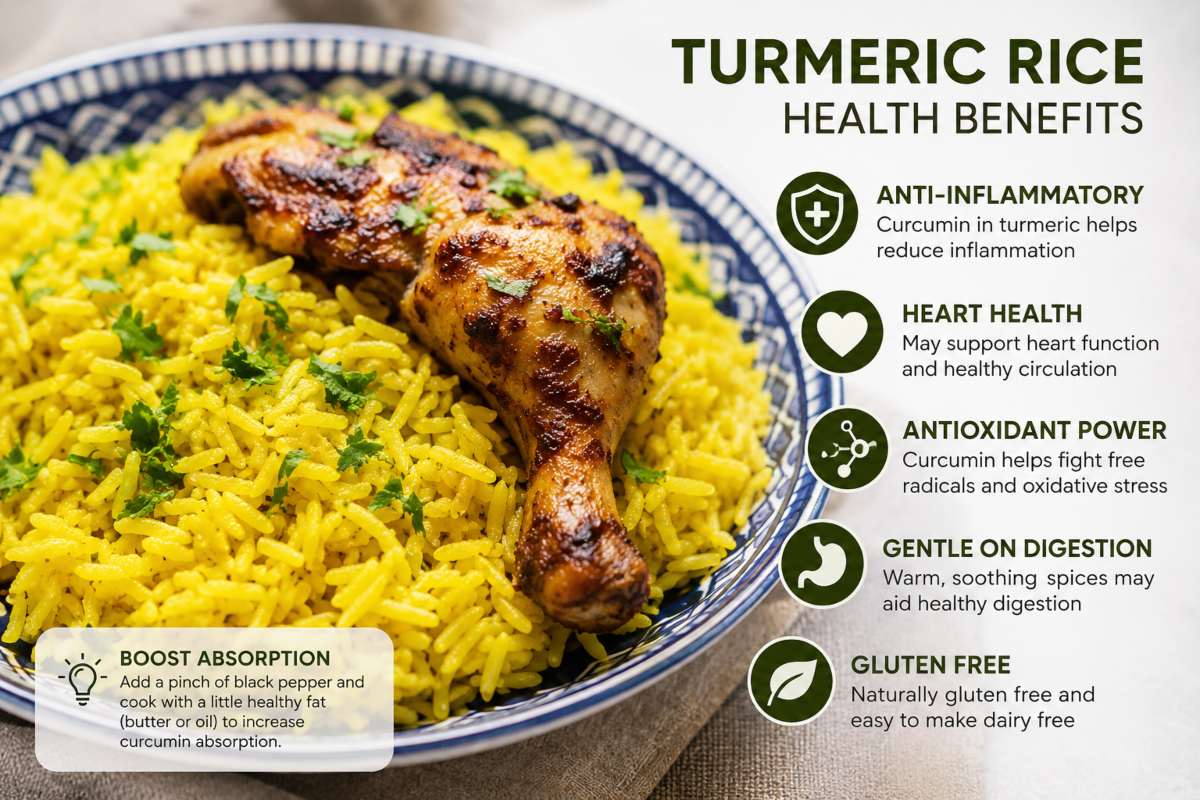
Turmeric rice has gained genuine traction in the wellness space, and not just because of its color. Turmeric includes curcumin, a compound that has been widely researched for its anti-inflammatory and antioxidant properties. Research published by institutions like Johns Hopkins highlights its potential to support heart health and reduce chronic inflammation.
A few things worth knowing
The absorption of curcumin increases significantly when consumed with black pepper (piperine) or with fat. This recipe already includes butter or cooking oil, which helps. If you want to boost absorption further, add a small pinch of black pepper to the pot along with the turmeric, it would not change the flavor noticeably.
Basmati rice, which is one of the two rice options in this recipe, has a lower glycemic index than many other white rices, meaning it raises blood sugar more gradually. Paired with turmeric anti inflammatory properties, this is one of the more genuinely health conscious rice dishes you can make without it tasting like health food. This is naturally gluten free and can be made dairy free swap butter for olive oil or a plant-based alternative.
Turmeric Rice Variations Worth Trying
The classic version above is genuinely delicious on its own. But once you’ve made it a few times, these twists are worth exploring:
Golden Rice with Coconut Milk
Replace ½ cup of the water with full-fat coconut milk. The result is slightly creamier with a subtle sweetness that pairs beautifully with curries and fish dishes. This is one of our favorite rice and turmeric recipes for a dinner party side.
Turmeric Rice with Vegetables
Toss in a handful of frozen peas, diced carrots, or sliced bell peppers during the last 5 minutes of cooking. Sautéing them briefly with the onions first adds even more flavor. This turns a simple side into something closer to a full vegetarian meal.
Toasted Nut and Raisin Turmeric Rice
This one has Middle Eastern and African roots, toasted almonds or cashews on top add crunch, while a small handful of raisins stirred in during cooking adds a gentle sweetness that plays well against the earthy turmeric.
Spicy Turmeric Rice
Add a pinch of cayenne or a sliced fresh chili alongside the turmeric. The heat cuts through the butteriness nicely and gives the dish an extra kick without completely changing its character.
Cumin Spiced Yellow Rice
Add ½ teaspoon of cumin seeds to the oil before sautéing the onion. The cumin blooms in the heat and adds a smoky, warm base note that makes this feel closer to a pilaf. A small stick of cinnamon also works beautifully here.
Meal Prep and Storage Guide
Turmeric rice is one of the best things to batch cook for the week ahead. Here’s everything you need to know
Storing in the Fridge
Let the rice cool completely before packing it into an airtight container. It keeps well in the fridge for up to 4 days. One thing to note, turmeric will stain plastic containers. Use glass if you can.
Freezing
Portion cooled rice into zip lock bags or freezer safe containers. Flatten the bags so they stack easily. Frozen turmeric rice keeps for up to 3 months.
Reheating
Add a small splash of water about 1 tablespoon per cup of rice before microwaving, covered, for 1–2 minutes. The water turns to steam, reviving the rice without drying it out. On the stovetop, reheat on low with a lid on, adding a small knob of butter for extra richness.
What to Serve With Turmeric Rice
This is where it really shines. Recipes with turmeric rice work across so many different cuisines because the flavor is warm and earthy without being bold enough to clash with much. Here is how we love to use it at Devine Dishes:

With Protein
Our Juicy Roasted Chicken is a natural pairing, the golden rice and golden chicken together on a plate look stunning and taste even better. The Beef & Green Bean Stir Fry also works wonderfully, with the stir fry sauce soaking into the rice as you eat.
With Curry and Stew
Any sauce-based dish benefits from having turmeric rice underneath it. Try our Simple Yellow Lentil Soup spooned over the top, the combination is comforting and deeply satisfying.
For a Quick Weeknight Bowl
Scoop a big pile of turmeric rice into a bowl, add sliced avocado, a fried egg, some hot sauce, and whatever vegetables you have. It is an effortless dinner that feels put together. You can also build it into a full meal alongside our Easy One Pot Cajun Rice Chicken if you want something more substantial.
With Seafood
The earthy warmth of turmeric pairs surprisingly well with fish and shrimp. Serve it alongside our Grilled Fish with Shrimp Recipe for a full dinner with color and flavor from every direction.
Common Turmeric Rice Problems and Fixes
- The rice is mushy. This usually means too much water or the heat was too high. For jasmine or basmati, 1.5 cups of water per cup of dry rice is the standard starting point.
- The recipe calls for 3 cups of water for 2 cups of rice, which is correct. If yours is coming out wet, your pot lid may not be sealing tightly, or you skipped the soaking step pre soaked rice absorbs water faster during cooking.
- The rice is undercooked or dry. Add 2–3 tablespoons of warm water, replace the lid, and cook on the lowest setting for another 5 minutes. Resist the urge to check constantly, every time you lift the lid, you lose steam.
- The color looks more yellow brown than golden. Old turmeric is usually the culprit. Also, toasting the rice in the turmeric oil mixture before adding water helps distribute the color more evenly. Do not skip that step.
- The onion is sticking to the pot. Make sure the oil is properly heated before adding the onion, and do not rush the sauté. Medium heat, not high. A non stick pot makes this step much more forgiving.
Final Thought
Turmeric rice is one of those recipes that earns its place on a permanent weekly rotation. It takes almost no effort, uses ingredients you already have, and makes everything it touches taste more intentional. The golden color alone makes a dinner table feel more festive. Whether you are following this as a simple turmeric rice recipe for the very first time or looking to sharpen a version you have been making for years, the core principle stays the same, good rice, fresh turmeric, heat it in fat first, and do not lift the lid while it cooks. Do those four things, and you will have a side dish that earns more compliments than the main course. Tried this? Leave a comment below and let us know what you served it with, we’d love to hear your combinations.
Also, try our other delicious recipes
Frequently Asked Questions (FAQs)
How to make turmeric rice without it tasting bitter?
Use ¾ teaspoon or less per 2 cups of rice, make sure your turmeric is fresh and fragrant, and always sauté it briefly in oil or butter before adding liquid. The fat helps mellow the sharpness.
Can I make turmeric rice with brown rice?
Yes. Use 3.5 cups of water for 2 cups of brown rice, and increase the cooking time to 40–45 minutes. The result is nuttier and chewier than the white rice version.
What is the difference between turmeric rice and yellow rice?
They’re largely the same thing. The vibrant yellow hue of rice is derived from turmeric (or sometimes saffron). Turmeric is the more affordable, widely available version, and it’s what this recipe uses. The terms are interchangeable in most turmeric rice recipes.
Can I use fresh turmeric instead of powder?
You can, but it behaves differently. Fresh turmeric does not disperse as evenly in the cooking water, so your rice may end up unevenly colored. If using fresh, grate about 1 tablespoon and add it with the onion during sautéing.
How long does turmeric rice last in the fridge?
Can be stored for as long as 4 days in a sealed glass container. Rice should always be stored properly after cooling. Never leave cooked rice sitting at room temperature for more than 2 hours.
Is turmeric rice good for meal prep?
It’s one of the best. It reheats well, tastes great cold in rice salad bowls, and holds its color even after a few days in the fridge. Make a double batch on Sunday and use it all week.
What rice is best jasmine or basmati?
Both work well. Basmati has longer, drier grains and a slightly more aromatic flavor. Jasmine is softer and slightly sticky. If you want that restaurant-style, separated-grain look, go with basmati. If you prefer something softer and more comforting, jasmine is your pick.
Can I add garlic to this recipe?
Absolutely, 2–3 minced cloves added alongside the onion during sautéing takes this recipe to another level. It’s one of the most popular ways to make yellow rice with turmeric that people search for, and it works beautifully.
How do you make turmeric rice without it tasting bitter?
Use no more than ¾ teaspoon of ground turmeric per 2 cups of rice, make sure your turmeric is fresh and fragrant when you open the jar, and always sauté it in oil or butter before adding any liquid.
Can I make turmeric rice with brown rice?
Yes. Use 3.5 cups of water for 2 cups of brown rice and increase the stovetop cooking time to 40–45 minutes on the lowest heat setting. The result is nuttier and chewier than the white rice version, a good option if you prefer more texture and a slightly lower glycemic load.












4 Comments. Leave new
Their guidelines snd directions are mind blowing, am impressed on the recipe and I can’t imagine the outcome wen i try it
Aww, thank you for your kind words Emmanuella. I am glad you found the guidelines and directions clear. Can’t wait to hear how it turns out for you!
I made this turmeric rice as a side for grilled chicken and it was a total hit! The color came out beautifully golden and the tips about toasting the rice first really made a difference. So simple yet so flavorful this is now my go-to rice recipe!
This turmeric rice looks simple, flavorful and beautifully colorful! 💛🍚 Definitely a delicious side dish!