
Some nights you want something that feels like an even, the sizzle in the pan, the smell of smoky spices filling the kitchen, everyone leaning in to see what’s coming. And then some nights you just need dinner on the table in 30 minutes without a mountain of dishes. These shrimp fajitas are somehow both things at once. That’s what makes this recipe worth coming back to again and again. One pan, a handful of bold spices you probably already have, a pound of shrimp, and three different bell peppers that go from raw to caramelized in under 10 minutes.
The result is a plateful of color, heat, and flavor that looks far more impressive than the effort it actually takes. This easy shrimp fajitas recipe has become a weeknight regular in a lot of homes for exactly that reason, it earns its reputation every time. Whether you’re building your first fajita night or you’ve been making some version of this dish for years, this guide covers everything, the right way to cook shrimp so they stay juicy (not rubbery), the exact spice balance that hits every note, tortilla tips, toppings that genuinely add something, and answers to every question people are searching about shrimp fajitas right now.
Why Shrimp Fajitas Specifically?
Chicken fajitas are great. Steak fajitas are a whole thing. But shrimp fajitas have a specific advantage that neither of those can match: speed. Shrimp cook in under 3 minutes per side. That’s not a benefit to overlook. It means you’re not babysitting the protein, you sear it quickly, set it aside, cook the vegetables in the same pan, bring everything back together with the spices, and you’re done.
Shrimp also take on marinades and dry spice blends with a willingness that beef and chicken don’t always match. The surface area relative to size means seasoning coats and clings, actually. When you hit properly seasoned shrimp in a hot skillet, the outside caramelizes fast, and you get that slightly sweet, deeply smoky exterior within minutes.
And from a nutrition standpoint, shrimp punch well above their weight. High protein, low fat, very low calorie per serving, all of which means you get a satisfying, filling meal that doesn’t feel heavy. More on the full nutrition breakdown below. If you love cooking with shrimp, this recipe is a great gateway into a whole world of shrimp dishes.
What Makes This Shrimp Fajita Recipe Different from the Competition
The difference between a mediocre fajita and a genuinely great one usually comes down to three things: the shrimp texture, the vegetable texture, and the spice layering.
Most recipes get one or two of these right. This recipe focuses on all three.
Shrimp texture
The shrimp are cooked first and set aside before the vegetables go in. This prevents overcooking, which is the number one reason shrimp fajitas turn rubbery. Shrimp that sit in a hot pan while the peppers catch up become tough and chewy. Cooking them separately and reuniting them at the end with the spices means every component finishes at its best.
Vegetable texture
The onions get 60 seconds alone in the pan before the bell peppers join them. Onions need more heat time to soften properly. The peppers go in second because they should stay slightly crunchy, tender but with some resistance. If you add everything at once, you either end up with mushy peppers or half-raw onions.
Spice layering
The spices go in at the reunion step, not as a marinade, not on the shrimp alone. They coat everything in the pan and bloom in the residual oil and shrimp juices, creating a sauce-like coating rather than a dry powder dusting. This is why the final dish tastes integrated rather than like separately seasoned components.
Making Shrimp Fajita Recipe
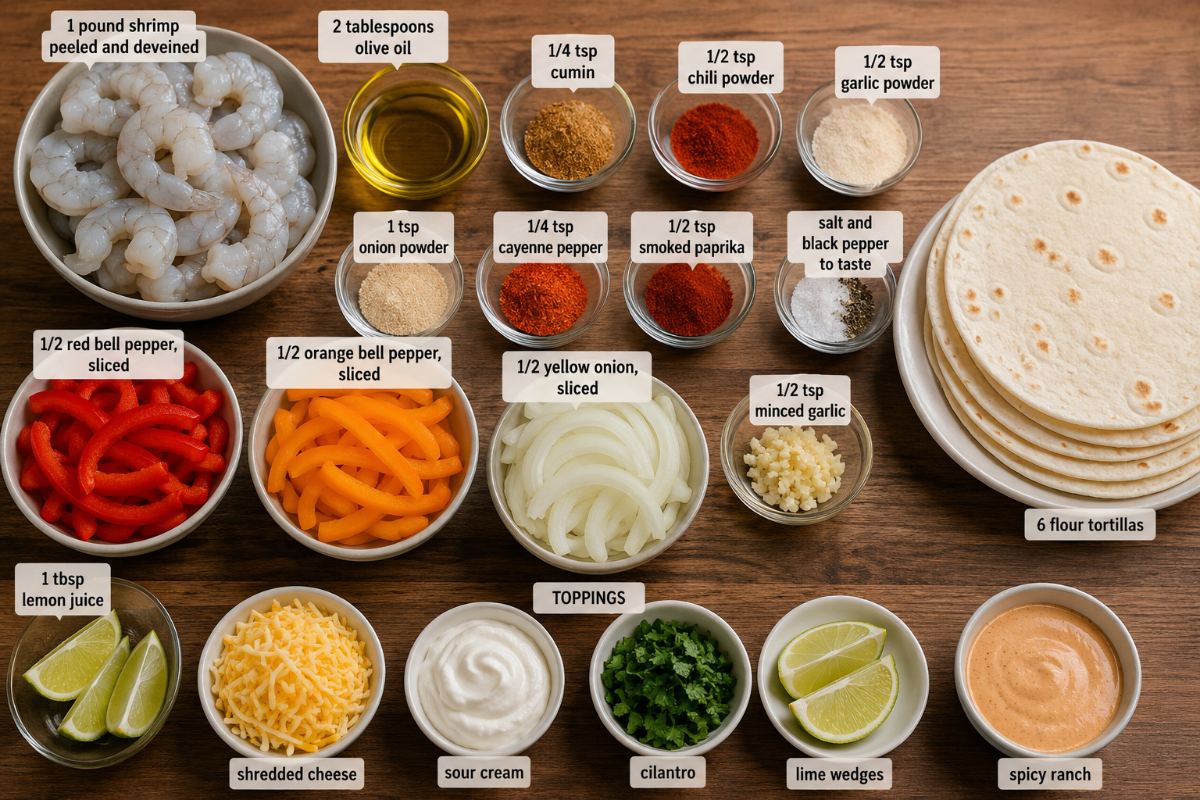
To make this recipe, you will need
Ingredients
- 1 pound of shrimp, peeled and deveined
- 2 tablespoons of olive oil
- 1/4 tsp of cumin
- 1/2 tsp of chilli powder
- 1/2 teaspoon of garlic powder
- 1 tsp onion powder
- 1/4 tsp cayenne pepper
- 1/2 teaspoon of smoked paprika
- Black pepper and Salt to taste
- 1/2 red bell pepper, sliced
- 1/2 orange bell pepper, sliced
- 1/2 yellow onion, sliced
- 1/2 tsp minced garlic
- 6 flour tortillas
- 1 tbsp lemon juice for the last step
Toppings
shredded cheese, sour cream, cilantro, lime wedges, or spicy ranch
Instructions
- In a large skillet over medium-high heat, add the olive oil and sauté the shrimp. Brown both sides until pink and slightly browned, then add the minced garlic. Set aside.
- In the same skillet, add onions, sauté for 1 minute, then add the bell peppers and cook until tender but still slightly crunchy.
- Return the shrimp to the skillet, followed by the spices, and cook for a minute while mixing well.
- Turn off the heat. Add the cilantro, followed by the lemon juice.
- Heat the flour tortillas in the oven for about 2–3 minutes until soft and heated through.
- Put together the fajitas by adding several slices of the sautéed vegetables and shrimp in the center of each tortilla. Top with shredded cheese, avocado, and a dollop of sour cream or your favourite sauce.
- Serve immediately and enjoy!

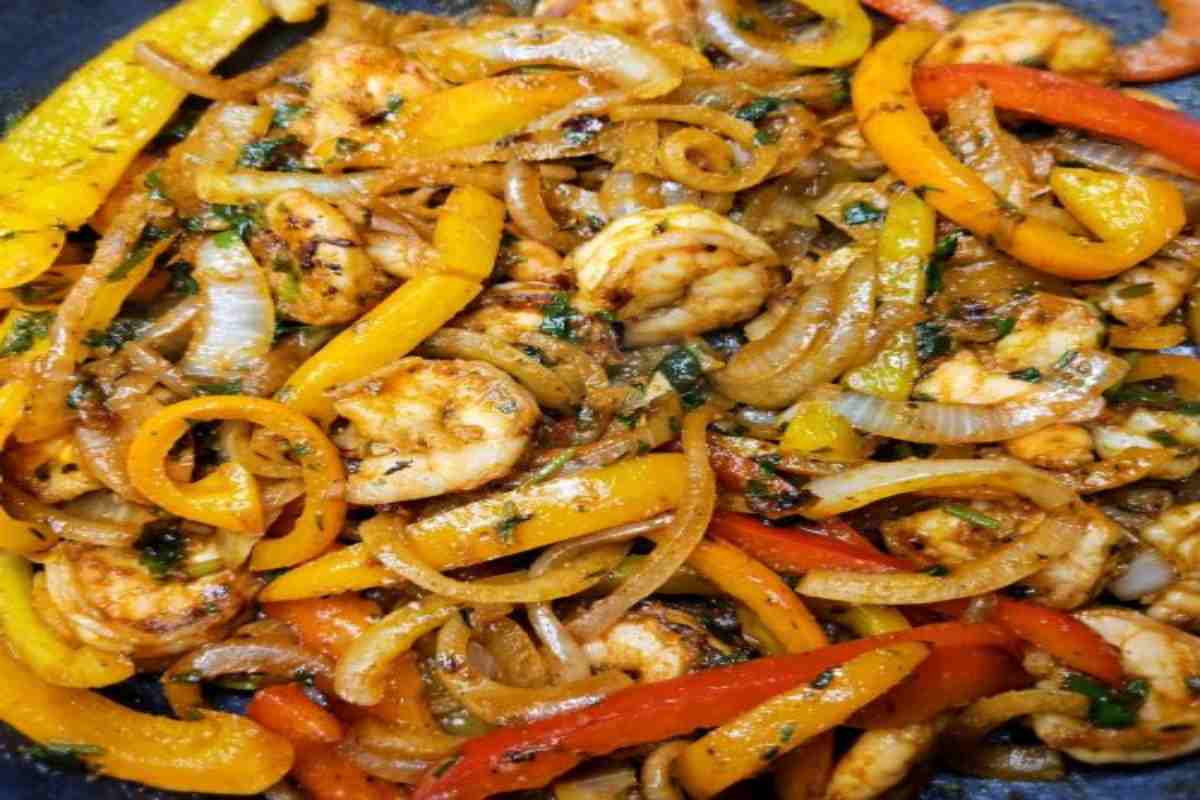
Easy Shrimp Fajitas Recipe
Ingredients
- 1 lb shrimp peeled and deveined
- 2 tbsp olive oil
- 1/4 tsp cumin
- 1/2 tsp chilli powder
- 1/2 tsp garlic powder
- 1 tsp onion powder
- 1/4 tsp cayenne pepper
- 1/2 tsp smoked paprika
- salt and pepper to taste
- 1/2 medium red bell pepper sliced
- 1/2 medium yellow bell pepper sliced
- 1/2 medium orange bell pepper sliced
- 1 medium onion sliced
- 1/2 tsp garlic minced
- 1 tbsp lemon juice for the last step
- 6 medium flour tortillas
Toppings
- shredded cheese, sour cream, cilantro, lime wedges or spicy ranch
Instructions
- In a large skillet over medium-high heat, add the olive oil and sauté the shrimp. Brown both sides until pink and slightly browned then add the minced garlic. Set aside.
- In the same skillet, add onions, sautee for 1 minute then add the bell peppers and cook until tender but still slightly crunchy.
- Return the shrimp to the skillet followed by the spices and cook for a minute while mixing well.
- Turn off the heat. Add the cilantro followed by the lemon juice.
- Warm the flour tortillas in the oven for about 2-3 minutes until they are soft and heated through.
- Assemble the fajitas by placing a few slices of the sautéed vegetables and shrimp in the center of each tortilla. Top with shredded cheese, avocado, and a dollop of sour cream or your favourite sauce.
- Serve immediately and enjoy!
Notes
Nutrition
Nutrition Per Serving
Based on 2 servings as written. Values are estimates and may vary based on specific products and toppings used.
| Nutrient | Amount Per Serving |
| Calories | 653 kcal |
| Carbohydrates | 58 g |
| Protein | 55 g |
| Total Fat | 23 g |
| Saturated Fat | 5 g |
| Polyunsaturated Fat | 4 g |
| Monounsaturated Fat | 12 g |
| Trans Fat | 0.01 g |
| Cholesterol | 365 mg |
| Sodium | 948 mg |
| Potassium | 1,041 mg |
| Dietary Fiber | 6 g |
| Sugar | 9 g |
| Vitamin A | 2,433 IU |
| Vitamin C | 138 mg |
| Calcium | 309 mg |
| Iron | 6 mg |
Note: Toppings like cheese, sour cream, and avocado will add to these totals. Nutritional content is approximate.
The Nutritional Case for Shrimp Fajitas
At 653 calories for a full serving of three loaded tortillas, with 55g of protein, this meal earns its place on any balanced dinner table. Let’s break down what’s actually working for you here.
Shrimp are one of the leanest high-protein seafoods available. Per ounce, shrimp deliver more protein relative to calories than most other animal proteins. They’re also a meaningful source of iodine and selenium, two minerals many people don’t get enough of through everyday eating.
Bell peppers are the unsung heroes of this recipe from a nutrition standpoint. The three colors together, red, orange, and yellow, contribute over 138mg of Vitamin C per serving, which exceeds the daily recommended intake for most adults in a single meal. They’re also one of the richest sources of Vitamin A in the vegetable world, which explains the 2,433 IU figure in the table above.
Olive oil provides heart-healthy monounsaturated fats, the 12g of monounsaturated fat in this recipe comes almost entirely from the olive oil, which is exactly the kind of fat nutritionists consistently recommend as part of a balanced diet.
Smoked paprika and cumin aren’t just flavor, both spices contain antioxidant compounds and have been studied for their anti-inflammatory properties. Using whole, real spices rather than processed seasoning packets means you’re getting those benefits without the fillers.
Lemon juice at the end isn’t just a finishing touch. The acidity brightens the entire flavor of the dish and adds a small but real dose of Vitamin C. It also cuts through the richness of the olive oil and makes the whole thing taste fresh rather than heavy.
The fiber count, 6g per serving, comes from the bell peppers, onion, and tortillas combined. That’s a meaningful contribution toward the daily target of 25–38g for most adults.
Making Shrimp Fajita Recipe Step by Step Tips You Won’t Find Everywhere
Understanding the why behind each step makes you a better cook, not just someone following instructions.
On patting the shrimp dry before cooking
This single step makes a measurable difference in browning quality. Shrimp release moisture as they cook. If the surface is already wet when they hit the pan, the water has to evaporate before any browning can happen, meaning by the time the surface is dry enough to caramelize, the interior is already overcooked. Pat dry with paper towels, and you get a clean sear from the moment you start.
On oil temperature
The oil should be shimmering, not smoking, before the shrimp go in. Too cool and the shrimp steam; too hot and the outside burns before the inside cooks. Medium-high heat on a standard stovetop is the right setting, the same pan should hold a steady sizzle throughout.
On the garlic timing
The garlic goes in after the shrimp are already browned on both sides. Adding garlic at the start with the raw shrimp risks burning it, garlic burns fast and turns bitter. Adding it in the final minute with the already-cooking shrimp means it just toasts gently and perfumes the oil without scorching.
On the lemon juice at the end
Acid added to a hot pan immediately brightens everything. The same principle applies in professional kitchens, a hit of citrus at the end of cooking lifts the whole dish, making the flavors cleaner and more vivid. Don’t skip it, and don’t add it earlier in the cooking process, heat destroys the volatile aromatic compounds that make fresh citrus worthwhile.
On warming the tortillas
Dry-skilling the tortillas on medium heat for 30 seconds per side is faster and gives you better char-spotted results than the oven. But the oven-wrapped-foil method is better for keeping multiple tortillas warm at once. If you’re making fajitas for more than two people, go with the foil method.
How to Make Shrimp Fajitas Variations Worth Trying
The base shrimp fajita recipe is solid enough to stand alone every time, but here are variations that legitimately improve on the concept depending on what you’re after:
Cajun Shrimp Fajitas
Replace the individual spices with a generous tablespoon of Cajun seasoning. The result is smokier, spicier, and deeply Southern-influenced. Our Cajun seasoning guide you through making your own blend from scratch if you want full control over the heat level.
Grilled Shrimp Fajitas
Take this to the outdoor grill for summer. Thread the marinated shrimp on skewers, similar to the technique in our Delicious Shrimp Pineapple Skewers recipe, and grill over medium-high heat for 2 minutes per side. Grill the peppers and onions in a foil packet or in a cast-iron skillet alongside. The char from the grill adds a whole new dimension.
Shrimp and Avocado Fajitas
Load on sliced avocado (not guacamole sliced so you get full chunks) as a core topping rather than an afterthought. The creaminess of avocado, paired with spiced shrimp and crunchy peppers, is one of those combinations that genuinely improve the experience.
Low-Carb Shrimp Fajita Bowl
Skip the tortilla entirely and serve the shrimp and vegetable mix over cauliflower rice or a simple bed of leafy greens: same spice profile, same cook method, completely different macros.
Sheet Pan Shrimp Fajitas
Everything goes on a baking sheet, shrimp on one side, sliced peppers and onions on the other, and is tossed in the same spice mix, then roasted at 220°C (425°F) for 12–15 minutes. Less hands-on, it works great for larger batches when you’re feeding a crowd.
What to Serve Alongside Shrimp Fajitas Recipe
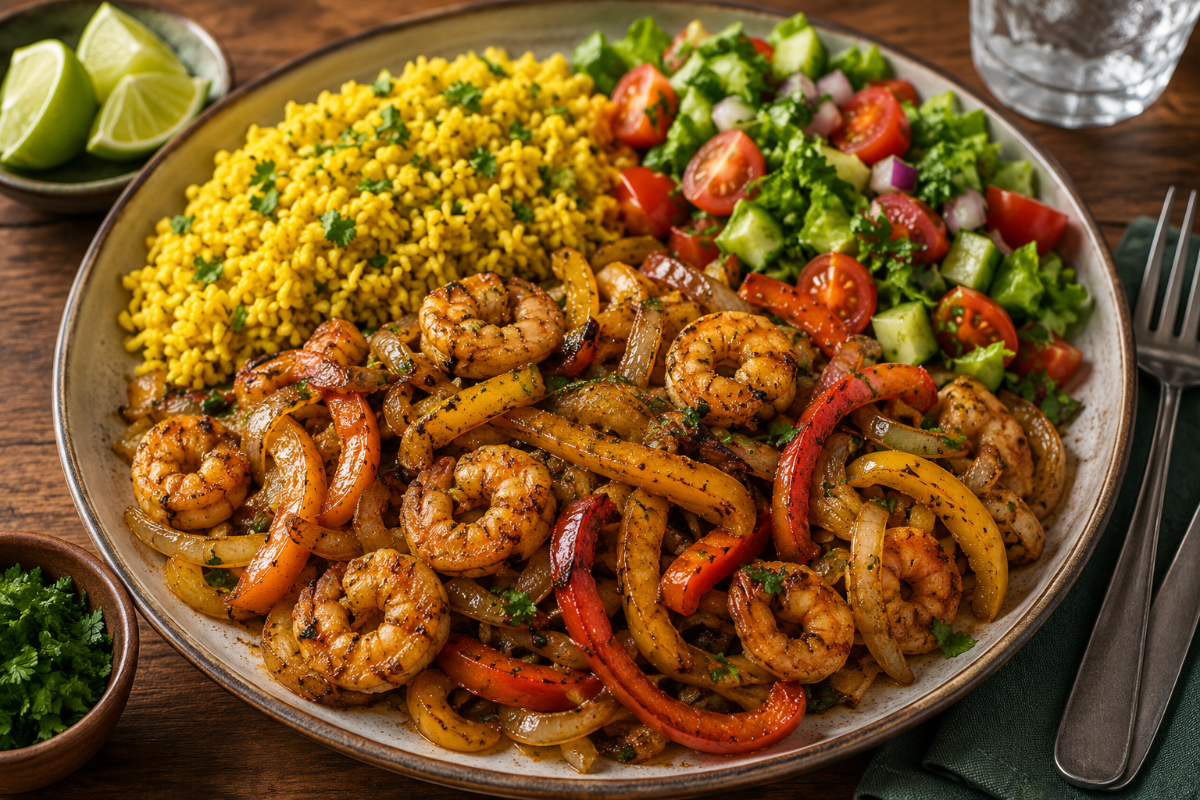
The fajita filling handles itself. What you add around it completes the meal.
Rice
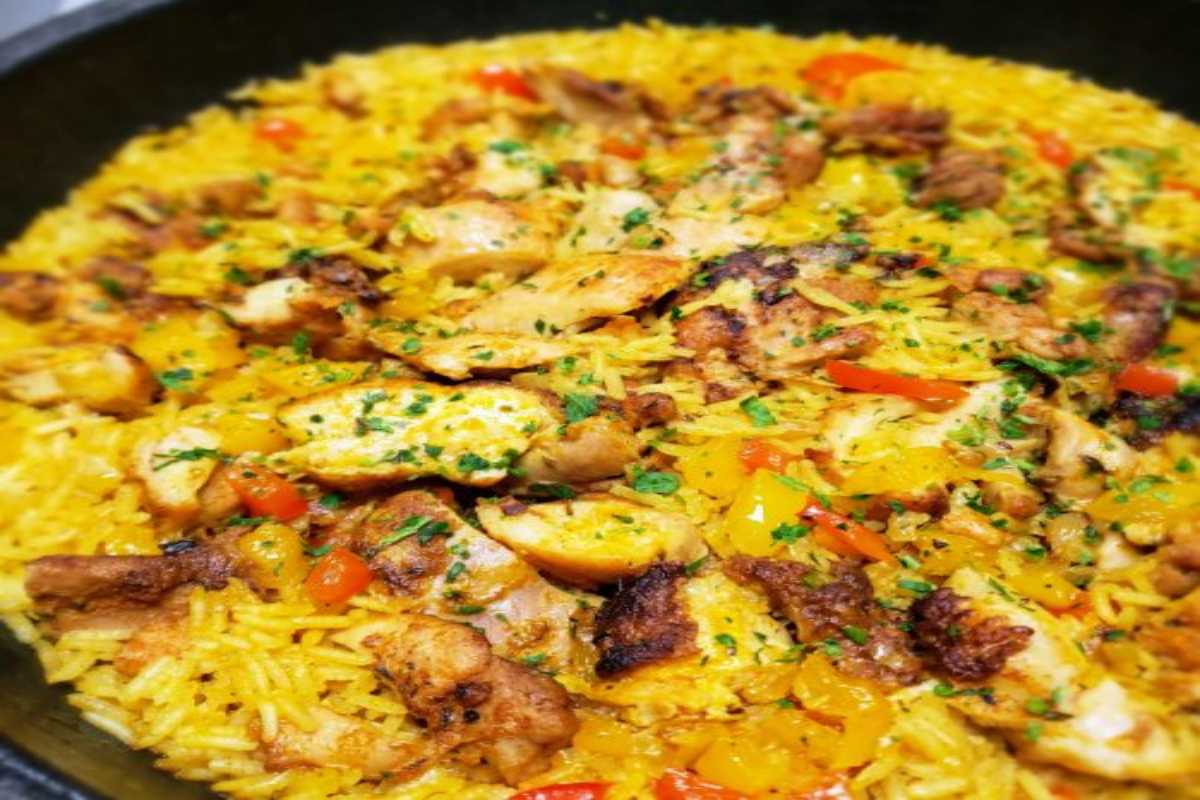
A simple, well-seasoned rice soaks up any juices that escape the tortilla. Our Turmeric Rice on Devine Dishes pairs particularly well, the warmth of the turmeric echoes the smoked paprika in the fajitas without competing.
Beans
Black beans or pinto beans on the side add fiber and plant protein without complicating the main dish. Canned and reheated with a little cumin and garlic takes three minutes and transforms a one-component dinner into a genuinely complete plate.
A simple salad
Something fresh and acidic cuts through the richness of the fajitas well. Our Easy Vegetable Salad is clean, bright, and takes minutes to throw together, exactly the right counterbalance to a hot, spiced main.
More shrimp, different treatment
If shrimp is the theme of the evening, branch out. Our Shrimp Curry made with coconut milk and garam masala is a completely different flavor world from fajitas. Still, it works brilliantly as a multi-dish spread when you’re cooking for guests who want options. Or go for our Shrimp Fried Rice, quick, satisfying, and perfect as a complementary side that holds its own as a main.
How to Make Shrimp Fajitas Work for Meal Prep
This dish is genuinely good for meal prep, with a few small adjustments.
What to prep ahead
The shrimp and vegetable filling reheats well for up to Up to 3 days if kept in a sealed container in the fridge.. The tortillas are better fresh. The toppings should be stored separately and added at the moment of eating.
For reheating
Using a dry skillet heated to medium for 2–3 minutes is the optimal approach. While the microwave can be utilized, it tends to make the shrimp’s texture softer. In contrast, the skillet method preserves the shrimp’s original sear and texture better.
Freezing
The cooked filling freezes reasonably well for up to 2 months. Let it thaw overnight in the refrigerator before reheating. Expect the shrimp texture to be slightly softer than fresh, it’s still good, just different.
Scaling up
This recipe doubles cleanly. For a crowd, cook the shrimp in two batches in the same pan rather than cramming everything in at once. Overcrowding lowers the pan temperature, leading to steaming rather than searing.
Toppings That Actually Make a Difference
The toppings section of most fajita recipes gets a single line and a list. But the toppings are where you can genuinely customize the experience.
Shredded cheese
Mexican blend or Monterey Jack melts into the warm filling beautifully. Sharp cheddar works if that’s what’s in the fridge. Cotija crumbled on top adds a salty, slightly crumbly texture that’s more authentic to the dish’s Mexican-American roots.
Sour cream
Classic, cooling, and necessary if the cayenne is doing its job. Full-fat gives you a richer result. Greek yogurt is a practical substitute with more protein and a nearly identical flavor profile.
Spicy ranch
The recipe already lists this as an option, and it earns its place. Especially good if you’re serving people with different heat tolerances, the ranch carries its own flavor and tempers the cayenne without completely neutering it.
Cilantro
Non-negotiable if you’re a fan. Stir some into the filling at the final step and add fresh leaves on top. If you’re a cilantro-avoider (a genuine genetic situation for a meaningful portion of the population), flat-leaf parsley gives you the fresh herb note without the controversial flavor.
Lime wedges
Squeeze at the table, not in the pan. The brightness of fresh lime over the assembled fajita adds a final aromatic lift that no amount of lemon juice added during cooking can replicate. Both are useful, the lemon cooks in and integrates, and the lime squeezes on top and perfumes.
Avocado or guacamole
Sliced avocado adds creaminess and good fat. Proper guacamole adds lime, salt, and herb, more of a flavor punch than plain slices, both work. What doesn’t work is the refrigerated packaged guacamole that’s mostly sour cream, go with the real thing or skip it.
Common Problems and Their Solutions While Making Shrimp Fajitas
Rubbery Shrimp
Overcooked. Shrimp need 2–3 minutes per side at most. The moment they turn pink and curl into a loose C-shape, they’re done. If they curl into a tight O-shape, they’ve gone too far. The fix is to pull them off the heat slightly before they look completely done, they’ll finish cooking from residual heat.
Frozen Shrimp
Absolutely, and most people do. The key is thawing them completely before cooking and patting them dry afterward. Frozen shrimp that haven’t been properly thawed release a lot of water in the pan, which prevents browning and makes everything steam instead of sear.
Size of Shrimp
Large (31–40 per pound) or extra large (26–30 per pound) gives you the best result. Medium shrimp work but cook faster and can get lost in the filling. Jumbo shrimp work but can feel unwieldy in a tortilla and may need to be sliced before assembling.
Marinate the shrimp beforehand
You can, but not for long. Shrimp marinated in anything acidic (lemon juice, lime juice, vinegar) for more than 20–30 minutes start to denature from the acid, which changes their texture before they even hit the pan. A quick 10-minute toss in the dry spices with a little olive oil is plenty.
My bell peppers are too soft
They cooked it too long. Bell peppers in fajitas should have some resistance, tender but not collapsed. As soon as they turn slightly translucent and start to show some color, they’re done. Pulling them off the heat at that point and then returning the shrimp to the pan means the peppers finish gently from residual heat.
Utilize Corn Tortillas Rather than Flour
Yes, and for gluten-free eating, corn tortillas are the better choice. They’re smaller, so you’ll need more of them, and they have a slightly earthier, corn-forward flavor that pairs well with the spiced shrimp. Heat them in a dry skillet or over a gas flame for about 15–20 seconds on each side.
Traditional vs Modern Shrimp Fajitas
Fajitas originated as a South Texas dish built around skirt steak, not shrimp. The transition to seafood and poultry versions occurred across the Tex-Mex restaurant industry during the 1980s and 1990s as cooks sought lighter, faster alternatives to beef. Today, shrimp fajitas are fully established in their own right.
Traditional Tex-Mex Style
Rich in cumin and chili, this dish is served steaming in a cast-iron skillet, accompanied by Mexican rice and refried beans, along with either corn or flour tortillas, varying by region.
Modern Home Kitchen Style
Skillet or sheet pan, emphasis on speed and lighter profiles; often accompanied by a grain bowl or salad rather than rice and beans; frequent use of air fryers, heavy customization with toppings. The protein mix has also expanded, many people make half-shrimp, half-plant-based protein fajitas to accommodate mixed dietary preferences at the table.
Birria-inspired shrimp fajitas with a consomé dipping sauce. Korean-Mexican fusion with gochujang in the spice mix. Mango salsa topping is a popular alternative to classic guacamole. These aren’t departures from the original concept, they’re extensions of it, and the base technique in this recipe supports all of them.
Make Ahead and Storage Guide
Dough isn’t a factor here, but timing is: Shrimp fajitas are best eaten as soon as they’re assembled. But the components can be prepared strategically.
The filling shrimp + vegetables stores in the refrigerator for up to 3 days in a sealed container. Warm in a dry skillet on medium heat for 2–3 minutes. Don’t microwave if you can avoid it, the shrimp texture suffers.
The shrimp alone can be cooked, cooled, and refrigerated for up to 2 days. Reheats faster than the full filling.
The spice mix the dry spices in a small jar in advance and store at room temperature for up to 3 months. This is genuinely useful for weeknight cooking, the “mise en place” is already done, which cuts active prep time significantly.
For batch cooking double the recipe and use for shrimp fajita bowls no tortilla, shrimp tacos with a different topping profile, or a shrimp quesadilla the next day. The filling transitions well across all three.
Final Thought
There are recipes you make once and forget about. And then some recipes earn a permanent spot in your rotation, the ones you don’t need to look up anymore because you’ve made them enough times that they’ve become second nature. This shrimp fajita recipe is the second kind. It’s fast enough for a Tuesday night and impressive enough for a casual dinner with people you want to cook well for. The spice balance is calibrated. The technique is straightforward. And the result every time is a pan full of something genuinely good, juicy shrimp, slightly sweet caramelized peppers, warm tortillas, and toppings that let everyone build exactly what they want.
Also, try our other delicious recipes:
Frequently Asked Questions (FAQs)
What are shrimp fajitas?
Shrimp fajitas are a Tex-Mex-inspired dish featuring seasoned, sautéed shrimp and colorful bell peppers and onions, served in warm flour or corn tortillas with various toppings. They’re lighter than traditional beef fajitas but just as bold in flavor.
How long does it take to make shrimp fajitas?
From start to finish, this recipe takes 30 minutes, 15 minutes of prep and 15 minutes of active cooking. It’s one of the fastest full meals you can make from scratch.
Can I use pre-cooked shrimp?
You can, but the result won’t be the same. Pre-cooked shrimp are already fully cooked, so any additional heat just dries them out. If that’s what you have, add them at the very last step, just 30 seconds in the hot pan to warm through, then immediately off the heat.
What tortillas are best for shrimp fajitas?
Standard 8-inch flour tortillas are the most practical for home use. They’re flexible, hold the filling without tearing, and warm up quickly. Street-style corn tortillas work well for a lighter, gluten-free option, but are smaller, so plan for 2–3 per person rather than one large one.
Are shrimp fajitas healthy?
In terms of calories, shrimp fajitas deliver an impressive nutritional profile. The protein content, 55g per serving, is substantial, and the bell peppers contribute meaningful amounts of Vitamins A and C. The main factors to watch are sodium (948mg per serving) and the calorie additions from toppings like cheese and sour cream. For a lighter version, swap flour tortillas for corn, use Greek yogurt instead of sour cream, and load on extra vegetables.
What is the best way to season shrimp for fajitas?
A dry spice blend applied right before cooking outperforms liquid marinades for fajitas. This recipe’s combination, smoked paprika, cumin, chilli powder, garlic powder, onion powder, and cayenne, covers every flavor dimension: smokiness, earthiness, heat, and depth. The key is to apply the spices to the entire pan at the reunion step, rather than just to the shrimp, ensuring every component is seasoned.






1 Comment. Leave new
These shrimp fajitas were quick, flavorful and so easy to prepare. The shrimp stayed juicy while the peppers added the perfect crunch. Definitely a great weeknight meal