
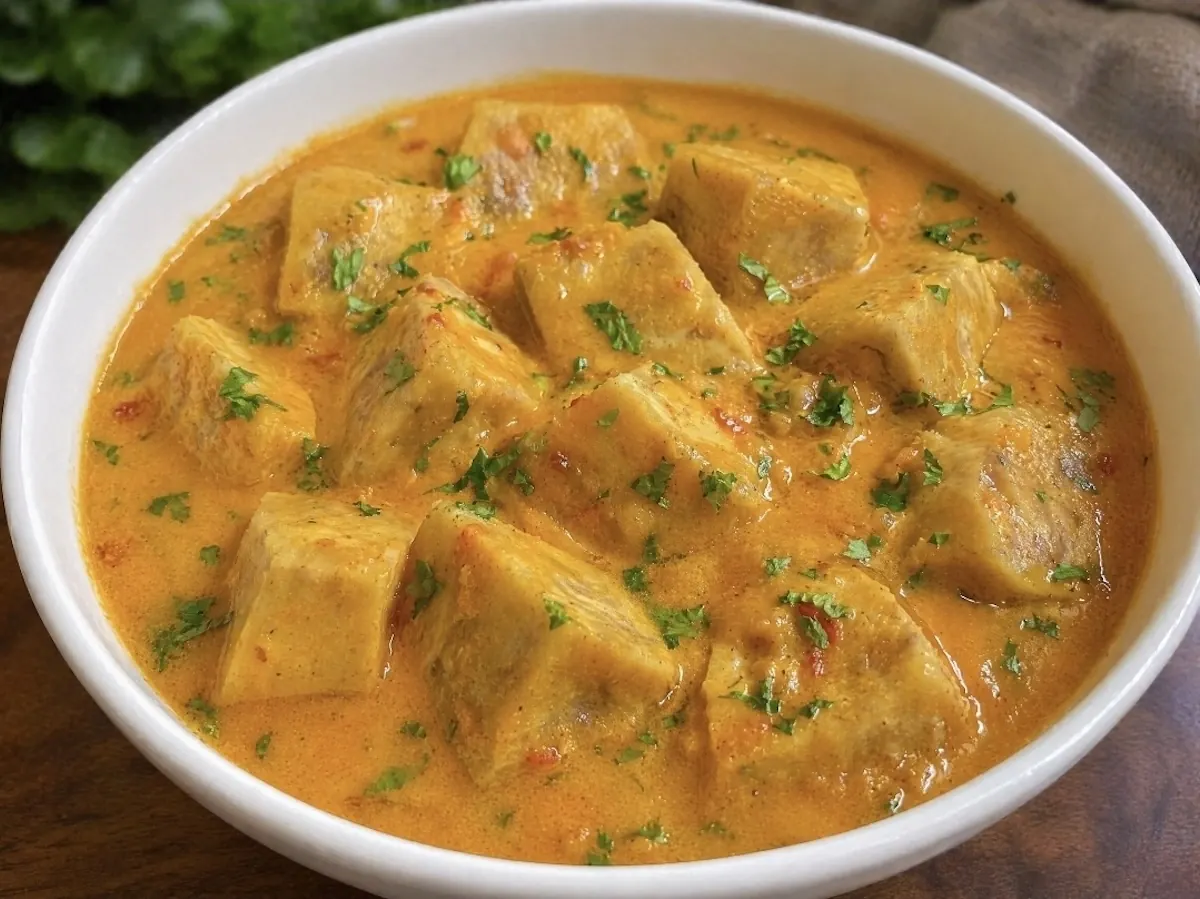
Creamy Coconut Nduma is a traditional Kenyan dish of arrowroot cooked low and slow in rich coconut milk until the sauce turns silky, fragrant and deeply comforting. It comes from the East African coast, a region where coconut milk has been a kitchen staple for centuries, woven into everything from stews to breakfast dishes by communities along the Swahili coast.
Nduma, known in English as arrowroot, is one of Kenya most beloved root vegetables. Earthy, starchy and satisfying on its own, it transforms completely when simmered in coconut milk, absorbing the cream and spice until each piece is tender to the core and coated in a sauce that is rich without being heavy. This is the kind of dish that has fed families across Kenya for generations, eaten at breakfast, served as a side, or spooned straight from the pot as a full meal.
What makes this recipe stand out is its simplicity. There are no complicated techniques, no hard to find ingredients and no lengthy prep. The method is one pot, the ingredients are few and the result is a dish that tastes like it took far more effort than it did. It is naturally vegan and dairy free, making it a recipe that works for almost everyone at the table, without any substitutions required. Whether you are cooking Kenyan food for the first time or reconnecting with a dish you grew up eating, this creamy coconut nduma recipe is the one to make.
Quick answer: Sauté onion, garlic and ginger, coat 700 g of peeled, 4 cm nduma chunks in turmeric, paprika and salt, and stir in 2 chopped tomatoes. Add 400 ml of full-fat coconut milk and 250 ml of water, cover and simmer on medium-low for 20 to 25 minutes until fork-tender and the sauce is thick. Finish with lime juice and coriander. It takes about 40 minutes, serves 3, and is naturally vegan and dairy-free.
What Is Nduma? The East African Root That Deserves a Spot in Your Kitchen
Nduma is the Swahili name for arrowroot, a starchy root vegetable widely grown across East Africa and a dietary staple in Kenya for generations. It is mild in flavour, dense in texture and exceptionally versatile, eaten boiled, roasted, or simmered in coconut milk as it is in this recipe.
The root itself is knobby and brown on the outside, with a pale, almost white flesh inside. When cooked, it becomes soft and slightly sticky, with a neutral earthiness that makes it an ideal vehicle for bold sauces and spiced broths. Unlike some root vegetables that hold their shape firmly after cooking, nduma absorbs surrounding flavours deeply, which is exactly why it pairs so well with coconut milk.
Nduma vs Taro What is the Difference?
Nduma and taro are closely related and often confused, but they are not the same plant. Taro belongs to the Colocasia genus, while nduma is Maranta arundinacea, a different species with a lighter texture and a slightly more neutral taste. Taro tends to be denser and more starchy, with a faintly nutty quality, while nduma is smoother and more delicate once cooked.
In practical terms, the two can substitute for each other in most recipes, including this one. If you cannot find nduma at your local market, taro root will work and produce a very similar result. The sauce, the method and the spicing remain the same, only the texture shifts slightly, with taro holding its shape a little more firmly.
Why Nduma Is a Staple Across Kenya and the Swahili Coast
Nduma has been grown and eaten along the East African coast and highlands for centuries and its staying power comes down to a few practical realities. It is hardy, grows in a range of climates across Kenya and stores well without refrigeration, qualities that made it an essential crop for communities long before modern supply chains existed.
Along the Swahili coast, where trade routes brought coconut palms, spices and Arab and Indian culinary influences together over hundreds of years, nduma found its most flavourful expression. Cooking it in coconut milk is not a modern fusion idea, it is an old and deeply rooted tradition in coastal Kenyan kitchens, where the combination of starchy root vegetables and rich coconut sauces became a defining feature of the regional cuisine. Today it remains a common breakfast dish, a comforting side and a meal in its own right across households throughout Kenya.
Why This Creamy Coconut Nduma Recipe Works Every Time
This creamy coconut nduma recipe succeeds because it follows the logic of the cuisine it comes from, simple ingredients, patient cooking and coconut milk doing the heavy lifting. There are no shortcuts that compromise the result and no complex steps that intimidate a first time cook. The method is forgiving, the flavours are deep and the dish comes together reliably every single time.
The Role of Coconut Milk in East African Cooking
Coconut milk is not an add on in East African cooking, it is a foundation. Along the Swahili coast, it has been used for centuries to build sauces, braise vegetables and add body to stews in a way that no other ingredient replicates. It brings fat, flavour and creaminess in a single pour, which is why coastal Kenyan cuisine can produce such rich, satisfying dishes with very few ingredients overall.
In this recipe, coconut milk serves two functions at once. It acts as the cooking liquid that tenderises the nduma as it simmers and it reduces gradually into the glossy, clinging sauce that coats every piece by the time the dish is done. Full fat coconut milk is what makes this possible, it has enough natural fat content to emulsify into a proper sauce rather than separating or turning thin. If you are looking for easy quick breakfast ideas rooted in real ingredients rather than processed shortcuts, this dish is one of the most honest examples in East African home cooking.
What Makes This Version Creamy, Not Watery
The difference between a creamy coconut nduma and a watery one comes down to two things, the fat content of the coconut milk and the patience to let it reduce properly. Many recipes rush this stage, adding too much water or pulling the dish off the heat before the sauce has had time to thicken. The result is a thin, pale broth that pools at the bottom of the bowl rather than coating the nduma.
This recipe avoids that by using full fat coconut milk from the start and cooking the sauce uncovered for the final stretch, allowing excess liquid to evaporate and the natural fats to come forward. The nduma itself also contributes, as it cooks, it releases a small amount of starch into the sauce, which adds body without any thickening agent. No cornstarch, no cream, no dairy of any kind. The creaminess is entirely natural, which is also what makes this a genuinely dairy free creamy nduma recipe that does not feel like a compromise.
Is Coconut Nduma Healthy? Nutrition You Should Know
Coconut nduma is a nutritious, whole food dish that fits comfortably into a balanced diet. Nduma itself is a good source of complex carbohydrates and dietary fibre, which means it digests slowly and provides sustained energy rather than a sharp blood sugar spike. It also contains potassium, vitamin C and small amounts of iron, nutrients that support everyday health without requiring any supplementation.
Coconut milk adds healthy saturated fats, specifically medium chain triglycerides, which the body processes differently from long chain fats found in animal products. For anyone exploring coconut nduma for weight loss, the fibre content of the arrowroot combined with the satiety that comes from coconut fat makes this a genuinely filling meal that tends to prevent overeating later. It is also entirely plant based, no meat, no dairy, no eggs, which makes this a naturally vegan creamy coconut nduma that requires no modifications whatsoever.
For those following a low carb approach, the carbohydrate load from arrowroot is worth noting, nduma is starchy and portions matter if carb intake is a concern. A lighter alternative in that context would be something like fluffy keto bagels, but for anyone eating a whole food, plant forward diet without strict carb limits, coconut nduma is an excellent and deeply satisfying choice.
Making Delicious Creamy Coconut Nduma Recipe
Yields 3–4 servings | Prep time 15 minutes | Cook time 25–30 minutes | Total Time: 40-45 minutes
Ingredients

- 700 grams dasheen (nduma) Peeled and cubed into even 4cm chunks.
- 400 milliliters full fat coconut milk Rich canned coconut milk gives the sauce its signature velvety, coastal body.
- 250 milliliters water Used to balance the thickness of the coconut milk during the long simmer.
- 2 medium tomatoes, chopped Adds a subtle tang and moisture to the aromatic base.
- 1 medium onion Finely diced to create a sweet, structural foundation for the sauce.
- 3 garlic cloves Minced fresh for a pungent, savory kick.
- 1 teaspoon fresh ginger Grated fine to add a sharp, warming undertone.
- 0.5 teaspoons turmeric powder Gives the dish its iconic, vibrant golden yellow hue.
- 1 teaspoon paprika Adds a mild, earthy sweetness and depth of color.
- 1/2 teaspoon chili powder (optional) Add to your preference if you like a gentle kick of coastal heat.
- 2 tablespoons oil (coconut or vegetable) Coconut oil is highly recommended to amplify the tropical aroma.
- 1 tablespoon fresh lime or lemon juice Crucial for introducing acidity to cut through the heavy richness of the coconut fat.
- 1 teaspoon salt Or adjust to your specific taste.
- 2 tablespoons fresh coriander Finely chopped, used as a vibrant, fresh garnish to finish the dish.
Step by Step Instructions
Prep the Nduma Carefully peel your 700 grams of nduma, ensuring all the rough skin is discarded. Cut the roots into uniform chunks (about 4cm each). Rinse the pieces thoroughly under cold running water to remove excess surface starch, drain completely, and set aside.
Sauté the Aromatics Heat 2 tablespoons of coconut or vegetable oil in a wide, heavy bottomed pan or pot over medium heat. Drop in the finely diced onions and sauté for about 5 minutes, stirring occasionally, until they are soft, translucent, and just beginning to turn a beautiful golden color.
Wake Up the Garlic and Ginger Add your minced garlic and grated ginger to the softened onions. Stir continuously and cook gently for another 2 minutes. Be careful not to let the garlic brown heavily; you want them to release their aromatic oils into the base without turning bitter.
Coat the Nduma and Spice It Up Add your cubed nduma chunks directly into the pot. Gently toss the pieces with your spatula for a minute to coat them thoroughly in the hot, aromatic oil. Sprinkle in the paprika, turmeric, chili powder (if using), and salt. Toss everything together once more until the spices form a fragrant, golden crust around the nduma chunks.
Meltdown the Tomatoes Toss in your chopped tomatoes. Stir well and let them cook for 3 to 4 minutes until they soften, break down completely, and merge with the spices to form a thick, concentrated paste at the bottom of the pot.
The Coconut Simmer Pour in the 400ml of full fat coconut milk and 250ml of water. Give the mixture a gentle stir to lift any browned fragments from the bottom of the pan. Let the liquid to a boil, then instantly drop the heat down to a medium low simmer. Cover the pot with fitting lid and cook for 20 to 25 minutes. Stir periodically to prevent the coconut milk from sticking. You will know it is ready when a fork easily glides into the center of the nduma, and the sauce has reduced into a thick, ultra creamy glaze that clings beautifully to the chunks.
The Acid Balance and Finish Remove the pot from the heat. Squeeze in 1 tablespoon of fresh lime or lemon juice and give it a final, gentle stir. Taste the gravy and adjust the salt levels if needed, the citrus juice will magically wake up the spices and cut through the heavy coconut fats.
Garnish and Serve Scatter the 2 tablespoons of freshly chopped coriander generously over the top of the hot dish for a vibrant pop of color and freshness. Serve immediately while hot and comforting.
One Pot Method
This is a true one pot coconut nduma recipe and that is not a compromise, it is actually the correct way to cook it. The nduma goes into the same pot as the aromatics and coconut milk from the start, which means every layer of flavour builds in one place. The arrowroot absorbs the spiced coconut liquid as it cooks, rather than being added to a pre made sauce at the end and that difference is what gives each piece flavour all the way through, not just on the surface.
The cleanup is minimal, the process is linear and the timing is forgiving. If the nduma needs another few minutes to soften, leaving it on a low heat does not hurt the sauce, it only improves it. For a quick coconut nduma recipe that does not cut corners on depth, the one pot approach is the only method worth using.
How to Get the Sauce Perfectly Creamy
The sauce becomes creamy through reduction, not addition. Once the nduma is tender, the heat stays on and the lid comes off, allowing the coconut milk to concentrate. As the liquid reduces, the natural fats in the coconut milk come forward and the sauce shifts from a loose broth to something thicker and more coating. This takes patience, usually ten to fifteen minutes of gentle simmering, but it cannot be rushed without losing the result.
Two things to avoid during this stage, stirring too aggressively, which can break up the nduma before it is fully set and turning the heat too high, which can cause the coconut milk to split rather than reduce smoothly. Keep the heat at a steady medium low, stir gently every few minutes and let the sauce tell you when it is ready. It should coat the back of a spoon and hold its shape briefly when you drag a finger across it.
Can You Make This Spicy? Variations to Try
The base recipe is mild and aromatic, designed to let the coconut milk and nduma speak for themselves. But the dish takes heat well and a spicy coconut nduma version is just as traditional in many Kenyan coastal households as the mild one. The most straightforward way to add heat is with fresh green chilli or a pinch of cayenne stirred in with the aromatics at the start, so the spice cooks into the sauce rather than sitting on top of it.
For a deeper, more complex heat, a small spoonful of harissa or a few dried chilli flakes added early in the cooking process builds warmth gradually without sharpness. Ginger, already in the base recipe, can also be increased for a more pronounced warmth that reads as spicy without the direct burn of chilli. Beyond heat, the dish also works well with a squeeze of lime stirred in just before serving, which lifts the richness of the coconut milk and adds a brightness that balances the starch of the arrowroot. These are variations, not requirements, the base recipe is complete as it stands.
Creamy Coconut Nduma Recipe
Ingredients
Ingredients
- 700 g dasheen (nduma) peeled and cubed
- 400 ml coconut milk
- 250 ml water
- 2 tomatoes chopped
- 1 medium onion finely diced
- 0.5 tsp turmeric powder
- 1 tsp paprika
- 1/2 tsp chili powder optional
- 3 cloves garlic minced
- 1 tsp fresh ginger grated
- 2 tbsp cooking oil coconut or vegetable
- 1 tbsp lime or lemon juice
- 1 tsp salt
- fresh coriander chopped for garnish
Instructions
Instructions
- Peel the nduma and slice into even 4cm chunks. Rinse thoroughly under cold water, drain, and set aside.
- Heat oil in a wide pot over medium heat. Sauté diced onions for 5 minutes until soft and golden.
- Add minced garlic and grated ginger; cook for another 2 minutes until completely fragrant.
- Add the nduma chunks and gently toss to coat in the oil. Sprinkle in the turmeric, paprika, chili powder, and salt, tossing well to coat.
- Stir in the chopped tomatoes and cook for 3-4 minutes until they soften and break down.
- Pour in the coconut milk and water. Stir gently, bring to a boil, then cover and reduce heat to a medium-low simmer. Cook for 20–25 minutes until the nduma is perfectly fork-tender and the sauce is thick.
- Remove from heat, stir in the fresh lime juice, and adjust salt to taste. Garnish generously with fresh chopped coriander and serve hot.
Video
Notes
Please note that the nutritional information is a rough estimate and can vary significantly based on the products used in the recipe.
Nutrition
Serving Suggestions How Nduma Is Eaten Across the Swahili Region
Across the Swahili coast and Kenyan highlands, nduma is eaten at almost every point in the day, as a morning meal, a midday side, or a standalone dinner dish. The way it is served shifts depending on the household and the region, but the coconut milk version is almost always eaten simply, without elaborate accompaniments, because the sauce is rich enough to carry the meal on its own.

Serving Coconut Nduma as a Main vs a Side
As a main dish, creamy coconut nduma is served in a deep bowl with the sauce spooned generously over the top and eaten with flatbread, chapati, or plain rice to soak everything up. This is the most common way it appears in coastal Kenyan homes, a complete, filling meal that needs nothing else on the plate. The protein comes from the arrowroot itself and the fat from the coconut milk and together they provide enough sustenance to carry through several hours without hunger.
As a side dish, smaller portions of coconut nduma stew work well alongside grilled fish, braised chicken, or slow cooked beef, proteins that are equally at home in East African coastal cooking. The creaminess of the sauce acts as a contrast to anything with char or spice, softening the overall plate and adding a richness that ties the meal together. Whether served as a main or a side, this homemade coconut nduma dish holds its own at the table without requiring any garnish or finishing touch beyond perhaps a scatter of fresh coriander.
Coconut Nduma for Breakfast A Traditional Morning Dish
In many parts of Kenya and along the Swahili coast, nduma in coconut milk is a breakfast food before it is anything else. It is warming, starchy and sustaining in exactly the way a morning meal needs to be, the kind of dish that keeps hunger at bay through a long morning without leaving you feeling heavy. Traditionally it is eaten early, often alongside a cup of spiced tea and served in portions generous enough to fuel a full day of work.
This makes creamy nduma one of the most practical and culturally grounded healthy breakfast ideas for weight loss, not because it is a diet food, but because it is genuinely filling, whole ingredient and free of the refined sugar and processed flour that make many breakfast options unsatisfying an hour later. If you are building a morning routine around real food that keeps you full, healthy breakfast ideas for weight loss that draw from traditional cuisines like this one are worth exploring beyond the usual options.
What to Pair With Coconut Nduma Stew
The best pairings for coconut nduma stew are those that complement its richness without competing with it. Soft, lightly charred chapati is the most traditional accompaniment on the Swahili coast, the bread tears easily, soaks up the coconut sauce and adds a slight chew that contrasts well with the soft arrowroot. Plain steamed rice works for the same reason, acting as a neutral base that lets the sauce remain the focus.
For something alongside rather than underneath, a simple tomato and onion salad dressed with lime juice cuts through the richness of the coconut milk and refreshes the palate between bites. Fried or grilled fish is another natural partner, the pairing of coconut and fish is deeply embedded in Swahili coastal cooking and feels entirely at home here. If you are building a broader East African meal, serving this alongside freshly made Mandazi, the lightly sweet East African fried dough, creates a spread that is both traditional and genuinely impressive, the kind of table that needs no explanation to anyone familiar with the cuisine.
Storage, Reheating and Make Ahead Tips
Creamy coconut nduma stores and reheats well, which makes it one of the most practical dishes to batch cook for the week ahead. The flavour actually deepens overnight as the arrowroot continues to absorb the coconut sauce, meaning leftovers are often better than the original serving.
How Long Does Coconut Nduma Keep?
Stored in an airtight container in the refrigerator, creamy coconut nduma keeps well for up to four days. The sauce will thicken considerably as it cools, this is normal and not a sign that anything has gone wrong. The coconut fat solidifies slightly at lower temperatures, which gives the chilled dish a denser, almost set appearance. It loosens completely once reheated.
For best results, let the dish cool to room temperature before sealing and refrigerating. Storing it while still hot traps condensation inside the container, which adds excess water to the sauce and can dilute the creaminess you worked to build during cooking. A few minutes on the counter before the lid goes on makes a meaningful difference to the quality of the leftovers.
Can You Freeze Creamy Coconut Nduma?
Creamy coconut nduma can be frozen, though coconut milk based sauces do sometimes change texture slightly after freezing and thawing, the sauce can appear grainy or separated when it first comes out of the freezer. This is a cosmetic issue rather than a food safety one and it resolves almost entirely with gentle reheating and a stir. The flavour is unaffected.
To freeze, portion the cooled nduma into freezer safe containers or bags, leaving a little space for expansion and freeze for up to two months. Thaw overnight in the refrigerator rather than at room temperature, which keeps the texture more stable and makes reheating faster and more even. If you are batch cooking this as part of a broader meal prep routine,pairing it, for example, with something like peppered chicken for a full week of varied, ready to go meals, freezing individual portions is a genuinely efficient strategy.
Best Way to Reheat Without Losing the Creaminess
The stovetop is the best method for reheating coconut nduma without losing the sauce quality. Place the portion in a small saucepan over low to medium heat, add a splash of water or coconut milk, just enough to loosen the thickened sauce and stir gently as it warms through. Within five minutes the sauce returns to its original consistency and the nduma is heated evenly throughout.
The microwave works in a pinch but requires a little more attention. Cover the dish loosely to trap steam, heat in short bursts of sixty to ninety seconds and stir between each burst to distribute the heat and prevent the edges from drying out while the centre remains cold. Adding a small spoonful of water before microwaving helps the sauce stay loose. Whichever method you use, avoid high heat, coconut milk sauces can split if brought to a rapid boil from cold and a low, steady warmth is always the better approach.
Also, try our other delicious recipes:
Frequently Asked Questions (FAQs)
What Does Nduma Taste Like with Coconut Milk?
Nduma is mild and earthy on its own, but simmers into something deeply creamy and comforting when cooked in coconut milk. It absorbs the richness of the sauce and any aromatics in the pot, producing a flavour that is warm, gently sweet and satisfying.
Is This Recipe Authentic to Kenya and the Swahili Coast?
Yes, cooking nduma in coconut milk is a long standing tradition in Kenyan coastal and Swahili cuisine. The combination of local arrowroot and coconut milk reflects centuries of East African coastal cooking, not a modern adaptation.
Can I Substitute Taro Root for Nduma?
Taro root is the closest substitute and works well in this recipe with no changes to the method. It is slightly denser than nduma but produces a near identical result in both flavour and sauce consistency.
Is Coconut Nduma Good for Weight Loss?
Nduma is high in fibre and complex carbohydrates, which digest slowly and support sustained fullness. Eaten in moderate portions, this dish is a whole food, plant based meal that fits comfortably into a weight loss diet.
Is This Recipe Vegan and Dairy Free?
Yes, this recipe contains no animal products of any kind. The creaminess comes entirely from full fat coconut milk, making it naturally vegan, dairy free and gluten free, with no substitutions.












3 Comments. Leave new
This creamy coconut nduma recipe is pure comfort in a bowl! The sauce turned out so rich and silky, and the instructions were easy to follow for a one-pot meal. Tastes just like home will definitely be making this again!
This creamy coconut nduma looks absolutely delicious! 🥥✨ Such a comforting and flavorful twist on a classic dishdefinitely worth trying! 😍
This creamy coconut nduma recipe is such a treat! The sauce came out beautifully rich and thick, and the spices balanced perfectly with the coconut milk. Definitely adding this to my regular rotation!