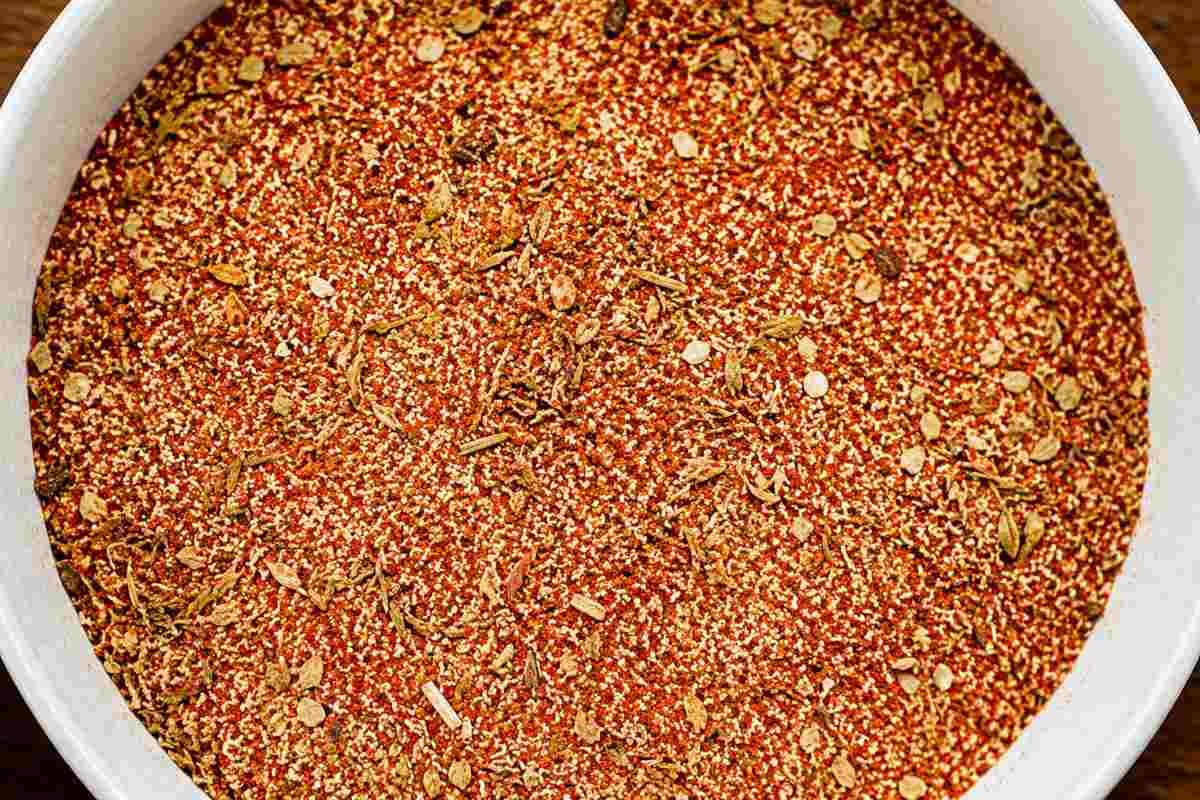
A homemade cajun seasoning recipe takes about five minutes to mix and needs only pantry staples you likely already have, paprika, garlic powder, onion powder, cayenne, black pepper and dried herbs. Unlike most store bought blends, making it yourself lets you control the salt, the heat and the ratio of every spice, no fillers, no guesswork.
This blend traces back to Louisiana Acadian communities, where bold, peppery seasoning became a defining feature of home cooking. Store bought versions often pack in anticowak fillers and anti caking agents just to stay shelf stable, while a homemade batch is nothing but spice. That matters if you are watching sodium, commercial cajun blends can run well over 300mg of sodium per teaspoon, whereas a salt free version you mix yourself brings that down to zero without losing any of the flavor.
Below, you will find the base recipe along with salt free, low sodium and sugar free variations, plus where this blend shines, from chicken and shrimp to fries and steak. If you are building out a flavor arsenal, this seasoning also pairs well with the sauces and dips in our sauces and dips collection for dipping, marinating or finishing a dish.
What Is Cajun Seasoning Made Of?
Cajun seasoning is a spice blend built on paprika, garlic powder, onion powder, cayenne pepper, black pepper and herbs like oregano and thyme, a combination that delivers smoky, garlicky heat without any single flavor overpowering the rest. It is a Louisiana staple, born out of Acadian home cooking and it is designed to season everything from meat to vegetables in one shake.
Core spice ingredients and ratios
A well balanced cajun blend leans on paprika as its base, usually two to three parts to every one part of the sharper spices. Garlic powder and onion powder each contribute one part for savory depth, while black pepper adds another part of sharp bite. Cayenne pepper is the heat driver and typically makes up the smallest share, often just half a part, so the blend stays flavorful without becoming unbearably spicy.
A touch of dried oregano and thyme rounds it out with herbal complexity. Salt is optional, many store bought blends lean on it heavily, with regular cajun seasoning containing over 1,000mg of sodium per teaspoon, while a homemade version lets you skip it entirely or use just a pinch.
Is cajun seasoning spicy?
Cajun seasoning has noticeable heat, but it is moderate rather than fiery, the paprika and herbs balance out the cayenne so the overall effect is warm and savory rather than overwhelming. Because cayenne is the only truly hot ingredient in the mix, you control the spice level simply by adjusting how much you use. Cutting the cayenne in half turns this into a mild, family friendly seasoning, while doubling it pushes it closer to a genuine kick.
How to Make Homemade Cajun Seasoning
Ingredients
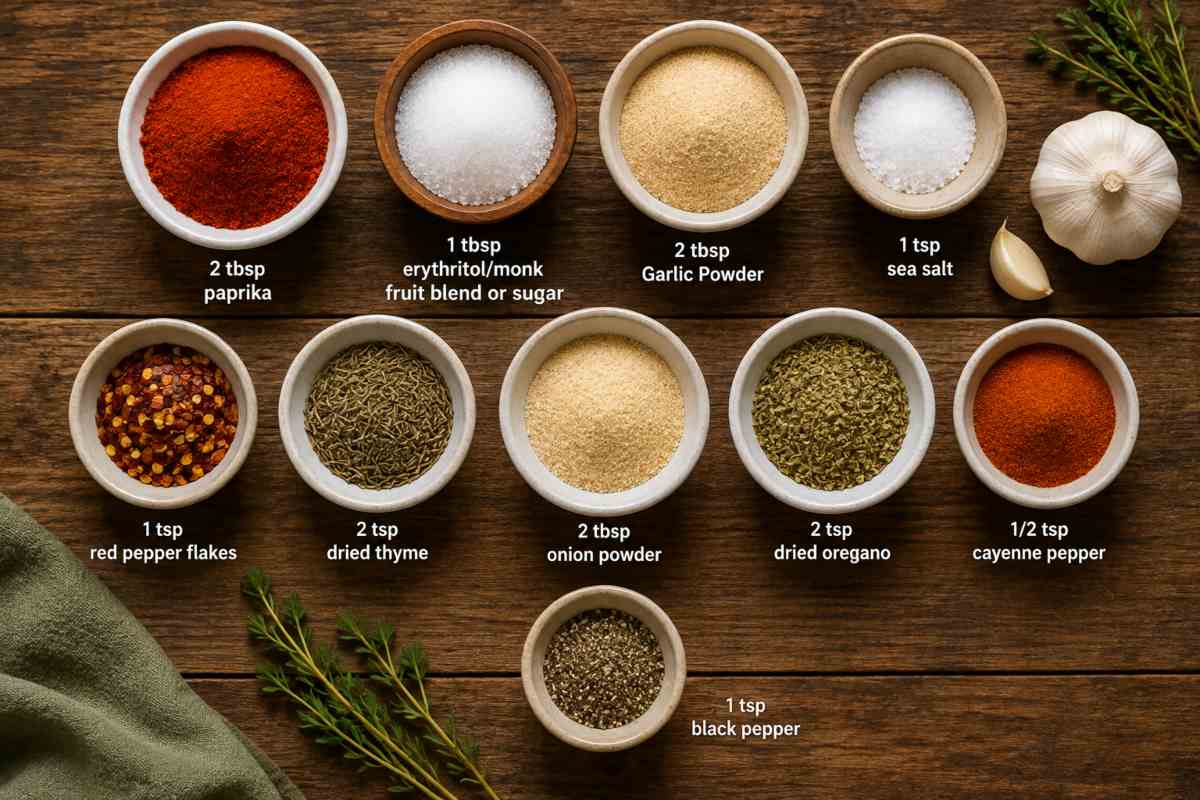
2 tbsp paprika
1 tbsp erythritol/monk fruit blend or sugar
2 tbsp Garlic Powder
1 tsp sea salt
1 tsp red pepper flakes
2 tsp dried thyme
2 tbsp onion powder
2 tsp dried oregano
1/2 tsp cayenne pepper
1 tsp black pepper
Instructions
Mix all the ingredients in a bowl and stir well.
Keep the mixture in a sealed container in a cool, dry area for as long as six months.
Easy Cajun Seasoning Recipe
This is an easy homemade cajun seasoning recipe that will take you less than 5 minutes to make. Store it in an air-tight container and use it in your everyday cooking to give any dish that cajun kick.
Prep Time5 minutes mins
Active Time0 minutes mins
Total Time5 minutes mins
Course: Seasoning
Cuisine: American, Cajun
Keyword: Cajun Seasoning, Cajun Seasoning Recipe
- 2 tbsp paprika
- 1 tbsp erythritol/monk fruit blend or sugar
- 2 tbsp Garlic Powder
- 1 tsp sea salt
- 1 tsp red pepper flakes
- 2 tsp dried thyme
- 2 tbsp onion powder
- 2 tsp dried oregano
- 1/2 tsp cayenne pepper
- 1 tsp black pepper
Mix all the ingredients in a bowl and stir well.
Keep the mixture in a sealed container in a cool, dry area for as long as six months.
Please note that the nutritional information is a rough estimate and can vary significantly based on the products used in the recipe.
Salt Free, Low Sodium and Sugar Free Variations
Making cajun seasoning salt free, low sodium or sugar free just means adjusting one or two ingredients in the base recipe, the spice blend itself does not need salt or sugar to deliver its signature smoky heat. Since you are mixing it yourself, each variation takes the same five minutes as the original.
Salt free swap
To make a fully salt free cajun seasoning, simply leave the salt out of the base recipe entirely, the paprika, garlic powder, onion powder, cayenne, black pepper and herbs already carry enough flavor on their own. This is not a minor tweak, standard cajun seasoning can carry over 1,000mg of sodium per teaspoon, so cutting the salt brings that down to essentially zero without changing the taste profile. If a dish feels like it needs a little something extra afterward, add plain salt separately at the table so you’re controlling the amount rather than baking it into the blend.
Low sodium ratio adjustment
For a middle ground option, cut the salt in the base recipe by half rather than removing it completely. This keeps a light background salinity while significantly reducing total sodium per serving, which works well if you are cooking for people with different dietary needs at the same table. A good approach is to mix the seasoning without salt, then add a small, measured amount back in, that way you can taste and adjust before committing the whole batch.
Sugar free version
Cajun seasoning is naturally sugar free in its traditional form, since the classic ratio relies on paprika, garlic, onion, pepper and herbs rather than any sweetener. Some commercial and recipe variations add a spoonful of brown sugar to round out the heat, so if a recipe you’re following includes it, simply omit it, the blend holds together fine without it and the flavor stays savory and smoky rather than sweet.
Cajun Seasoning Substitute Options
If you are out of cajun seasoning, the closest substitute is a quick mix of paprika, garlic powder, black pepper,onion powder and a bit of cayenne, the same core spices that make up the original blend, just combined on the spot. This works because cajun seasoning isn’t one fixed formula, it is a flavor profile built from common pantry spices, so recreating that profile gets you nearly the same result.
Creole seasoning is the next best swap, since the two blends overlap heavily and are often used interchangeably in recipes. The main difference is that creole seasoning typically leans more herb forward, with more dried basil, thyme and sometimes a touch of celery seed, while cajun seasoning puts more weight on pepper and heat. When a recipe specifies cajun seasoningand you only have creole on hand, it will still work, expect a slightly milder, more herbal result rather than a sharp, peppery one.
For a heat focused substitute in a pinch, blackening seasoning is a reasonable stand in, since it shares the same paprika and cayenne base and is often used for the exact same dishes, chicken, fish and shrimp. It tends to run spicier and smokier than a standard cajun blend, begin with a smaller amount than the recipe suggests and modify it according to your preference.
If none of those are available, a simple combination of chili powder, garlic powder and a dash of cayenne can approximate the flavor in a pinch, though it will taste noticeably milder and less complex than an actual cajun or creole blend. This works as an emergency fix rather than a long term swap, for regular cooking, making your own batch from the recipe above takes about five minutes and costs a fraction of what pre made blends charge per ounce.
Cajun vs Creole Seasoning What is the Difference?
The main difference between creole seasoning and cajun comes down to origin and balance, cajun seasoning is pepper forward and rustic, born from rural Acadian cooking, while creole seasoning is more herb heavy and layered, shaped by New Orleans mix of French, Spanish, African and Caribbean influences. Both blends share a similar spice base, which is why they are so often confused, but they lean in different directions.
Cajun seasoning puts the emphasis on paprika, cayenne, garlic and black pepper, giving it a straightforward, peppery heat that works well as a simple rub or all purpose shake. Creole seasoning builds on that same foundation but adds more dried herbs, basil, thyme oregano and sometimes celery seed, resulting in a rounder, more complex flavor that leans savory rather than sharply peppery. This traces back to their roots, cajun cooking developed in the countryside using whatever pantry spices were on hand, while creole cooking developed in the city, blending European technique with a wider range of imported ingredients.
In practice, the two are close enough to swap in most recipes without ruining a dish, using creole seasoning where cajun is called for (or vice versa) will shift the flavor slightly toward more herbs or more pepper, but it won’t throw off the recipe. The distinction matters most in dishes where the seasoning is the star, like a dry rub or a simple sprinkle over fries, where the herb versus pepper balance is more noticeable than it would be buried in a big pot of gumbo or jambalaya.
Homemade vs Store Bought: Tony Chachere, Zatarain and Slap Ya Mama Compared
The biggest difference between homemade cajun seasoning and brands like Tony Chachere, Zatarain and Slap Ya Mama comes down to control, store bought blends are formulated for shelf stability and consistent salt levels, while a homemade batch lets you dial in the exact heat, herb balance and sodium you want. All three brands are legitimate, Louisiana rooted products, but they lean in noticeably different directions.
Tony Chachere is the most salt forward of the three, with salt typically listed as the first ingredient, giving it a balanced but distinctly salty profile that works well as an all purpose pre cooking seasoning. Zatarain tends to lean more herb heavy, closer to a creole style blend with visible oregano and thyme and reads as milder on the heat scale. Slap Ya Mama sits at the spicier end and one retail listing shows its standard blend carrying 310mg of sodium per just a 0.25 teaspoon serving, meaning a full teaspoon can run well over 1,200mg, more than half the general recommended daily sodium intake in a single spoonful.
All three brands do offer reduced sodium versions now, which signals real demand for exactly what a homemade blend gives you by default, the option to season boldly without the sodium spike. The tradeoff with any store bought jar original or reduced sodium, is that you are locked into whatever ratio the company chose. Mixing your own means you taste as you go and adjust the next batch, something no shaker bottle allows.
How to Use Cajun Seasoning
Cajun seasoning works as a dry rub, a marinade base or a finishing sprinkle, which is why it shows up across so many different proteins and sides. The general rule is about one to two teaspoons per pound of protein, applied before cooking so the spices have time to bond with the surface and build flavor as it cooks.
Cajun seasoning for chicken
Cajun seasoning is especially well suited to chicken because the paprika and garlic help build a deep, golden crust whether you are pan searing, baking or grilling. Pat the chicken dry first, then coat it generously and let it sit for at least 15 minutes before cooking so the spices have a chance to adhere rather than just sitting on wet skin. For a milder, family friendly take on this pairing, our creamy baked chicken recipe shows how a cajun style spice base works even in a rich, sauced dish rather than just a dry rub.
Cajun seasoning for shrimp
Shrimp cooks fast, so cajun seasoning is ideal here, a light coating goes a long way, since the shrimp short cook time means the spice does not need to penetrate deeply to deliver flavor. Toss peeled shrimp with about a teaspoon of seasoning and a bit of oil, then cook for just a few minutes per side, any longer and the shrimp turns rubbery regardless of how well it is seasoned. If you’d rather skip the stovetop, our air fried shrimp recipe shows how the same quick cook logic applies in an air fryer.
Cajun seasoning for salmon
On salmon, cajun seasoning creates a flavorful, slightly spicy crust that pairs naturally with the fish richness. Pat the fillet dry, rub the seasoning into the flesh side and sear skin side down first to render the skin crisp before flipping. Because salmon has enough natural fat to carry bold spice, this is one of the few proteins where you can be generous with the rub without it overwhelming the dish, though if you are after something sweeter instead, our honey lemon garlic salmon shows the other end of that flavor spectrum.
Cajun seasoning for steak
Cajun seasoning doubles as a solid steak rub, particularly for a blackened style crust, press it firmly into both sides of the steak before searing in a very hot pan so the spices char slightly rather than just toast. This works best on cuts with some fat marbling, like ribeye or strip steak, since the fat helps mellow the direct heat of the cayenne as it cooks. For a full recipe built around this technique, our beef steak with mushroom pairs a peppery crust with a rich mushroom sauce.
Cajun seasoning for fries
Tossing fries in cajun seasoning right after they come out of the fryer or oven is one of the simplest ways to use the blend, since the residual heat and oil help the spices stick evenly. A light dusting is usually enough, about half a teaspoon per serving, since fries have a lot of surface area and can turn overly salty or spicy fast if you are heavy handed.
Storage and Shelf Life
Homemade cajun seasoning stays fresh for up to six months when stored in an airtight container in a cool, dark place, though it is still safe to use beyond that point, it just gradually loses potency rather than spoiling outright. Because the blend is entirely dry spices with no fresh ingredients, there no risk of bacterial growth, the main concern is flavor fading over time, not food safety.
Keep the seasoning in a sealed jar away from direct sunlight, heat and moisture, since all three accelerate the breakdown of the volatile oils that give paprika, cayenne and dried herbs their punch. A spot in the pantry or a cabinet away from the stove works better than a shelf right above it, where rising heat from cooking can quietly dull the blend faster than expected. If you notice the color has faded or the aroma is weak when you open the jar, that is the clearest sign it is time to mix a fresh batch rather than a hard expiration date to track.
Doubling or tripling the recipe is worth doing once you know you like the ratio, since a bigger batch means less frequent mixing without any downside, properly stored, six tablespoons keeps just as well as two.
Conclusion
A homemade cajun seasoning recipe gives you everything a store bought jar promises, bold, smoky, peppery flavor, without the sodium overload, the fillers or the fixed ratio you can not adjust. In about five minutes, you can mix a batch that is salt free, low sodium or exactly as spicy as you want it, using spices that are probably already in your pantry.
Whether you are rubbing it onto chicken and salmon, tossing it with fries or using it to build a steak crust, the same base blend adapts to whatever you are cooking. And once you have got a batch on hand, it is worth exploring more ways to put it to work, browse Devine Dishes for more recipes built around bold, everyday flavor.
Also try our other delicious sauces recipes:
Frequently Asked Questions (FAQs)
Is cajun seasoning the same as creole seasoning?
Not exactly, cajun seasoning is more pepper forward and rustic, while creole seasoning leans more herb heavy and complex. They are close enough to substitute for each other in most recipes without ruining a dish.
Is cajun seasoning spicy?
It has moderate heat, mainly from cayenne pepper, but paprika and herbs balance it out. You can adjust the cayenne up or down to control the spice level to your taste.
What can I use instead of cajun seasoning?
A quick mix of paprika, garlic powder, black pepper, onion powder and a some cayenne works as a close substitute. Creole seasoning or blackening seasoning also work well in a pinch.
How do I make cajun seasoning salt free?
Simply leave the salt out of the base recipe, the paprika, garlic, onion, cayenne, pepper and herbs already carry the flavor. Store bought versions can carry over 1,000mg of sodium per teaspoon, so this cuts that down to zero.
How long does homemade cajun seasoning last?
It stays fresh for up to six months when stored in an airtight container in a cool, dark place. It won’t spoil after that, but the flavor gradually fades.
Is Tony Chachere the same as homemade cajun seasoning?
It is built on a similar spice base, but Tony Chachere is notably salt forward, with salt typically listed as the first ingredient. A homemade batch lets you control that sodium level directly.