There is a short list of recipes that belong in every kitchen regardless of the season, dietary preference, or how much time you have. This chickpea salad recipe belongs on that list. Ten minutes of chopping, one bowl, zero cooking, and you end up with something that’s filling enough to eat as a full meal, vibrant enough to bring to a gathering, and reliable enough to prep on Sunday and eat through Thursday without it getting sad and soggy. If you’ve been searching for a salad that actually satisfies, one that doesn’t leave you reaching for something else an hour later, this is the one.
Chickpeas bring a quiet nuttiness and enough fiber and plant-based protein to make every bowl genuinely filling. The vegetables bring crunch and freshness. The dressing ties it all together with brightness and just enough acidity to make the whole thing pop. What fish to use (just kidding, it’s a salad), how long it keeps, what the actual nutrition numbers look like, what competitors are missing, and why this specific version of an easy chickpea salad is worth choosing over the dozens of other recipes.
What Makes This Chickpea Salad Stand Out From the Rest
If you’ve spent five minutes on food sites lately, you know that chickpea salad recipes are everywhere. AllRecipes, SimplyRecipes, Half Baked Harvest, RecipeTin Eats, they’ve all got versions. So why is one worth choosing over another? Here’s the honest breakdown. Many popular versions of this salad are heavy on Mediterranean cheese and light on substance. Others are so minimal they feel underdressed.
A few require ingredients that are genuinely hard to find, such as sumac, Aleppo pepper, and specialty olives that need to be ordered online. Some are built around avocado as a primary ingredient, which means the leftovers are brown and sad by the next morning. This easy chickpea salad recipe works because it hits the balance that the others miss: enough substance to work as a standalone meal, accessible ingredients, a bold dressing without being fussy, and the kind of flavor that actually improves overnight as everything marinates together.
It holds its texture in the fridge for days. It scales easily for a crowd. And it doesn’t require anything you can’t find at a standard grocery store. Nowadays, home cooks are asking sharper questions about salads. They want protein content, they want to know about meal prep durability, and they want plant-forward options that don’t feel like a compromise. This recipe answers all of those questions before they’re even asked.
Everything You Should Know About Chickpeas Before You Start
Chickpeas, also called garbanzo beans, are one of the most nutritionally dense pantry staples that exist. They’ve been a dietary foundation across the Mediterranean, South Asia, and the Middle East for thousands of years, and the reason they’ve endured is simple: they deliver. A single can of chickpeas contains roughly 25 grams of protein and around 35 grams of fiber across the entire can.
Per serving in this salad, you’re looking at a meaningful hit of plant-based protein that competes with what you’d get from a small serving of lean meat. For anyone eating less meat, tracking macros, or simply trying to build more filling meals without relying on heavy animal protein, chickpeas are one of the most practical ingredients in the kitchen.
Canned chickpeas are the right choice here. There’s nothing wrong with cooking dried chickpeas from scratch, they’re slightly creamier and have a more developed flavor, but for a quick chickpea salad you want ready in 10 minutes, canned chickpeas work beautifully. The key is to drain and rinse them thoroughly. The liquid in the can (called aquafaba) has a slightly metallic, starchy taste that lingers on everything it touches.
Drain, rinse under cold water for a full 30 seconds, and shake the colander well before transferring the chickpeas to the bowl. If you do want to go from dried, soak them overnight, cook them in fresh water with a pinch of salt for 45 to 60 minutes until tender, then cool completely before using. The flavor is noticeably better, but the time investment is real. For most weeknight purposes, canned is the practical and totally legitimate choice.
The Dressing Where Most Chickpea Salads Go Wrong
The dressing is the part of a healthy chickpea salad that separates the ones worth making again from the ones you forgot about by the following week. A thin, underdressed salad, chickpeas swimming in watery olive oil, and a squeeze of lemon, feels like something you made reluctantly. A properly emulsified, properly seasoned dressing transforms the same bowl of ingredients into something you’d be comfortable serving to guests.
The principle is simple, fat needs acid, acid needs salt, and everything needs time to come together before it hits the vegetables. Whisking the dressing first in the bottom of the salad bowl (before adding anything else) accomplishes two things. It emulsifies the oil and acid into a cohesive dressing rather than a separated mixture that you’d need to shake right before pouring. And it means one fewer dish to wash, which is always a win.
Garlic goes in the dressing raw. Some recipes soften it in oil first, but in a cold salad, raw garlic, very finely minced or pressed, provides a sharper bite that works beautifully against the mild sweetness of chickpeas. If raw garlic feels like too much, let the dressed salad rest in the fridge for 20 to 30 minutes before serving. That rest time mellows the garlic significantly and lets every ingredient absorb the dressing rather than just being coated by it.
To make this salad you will need
Serves: 6 | Prep: 15 min | No Cook
Ingredients
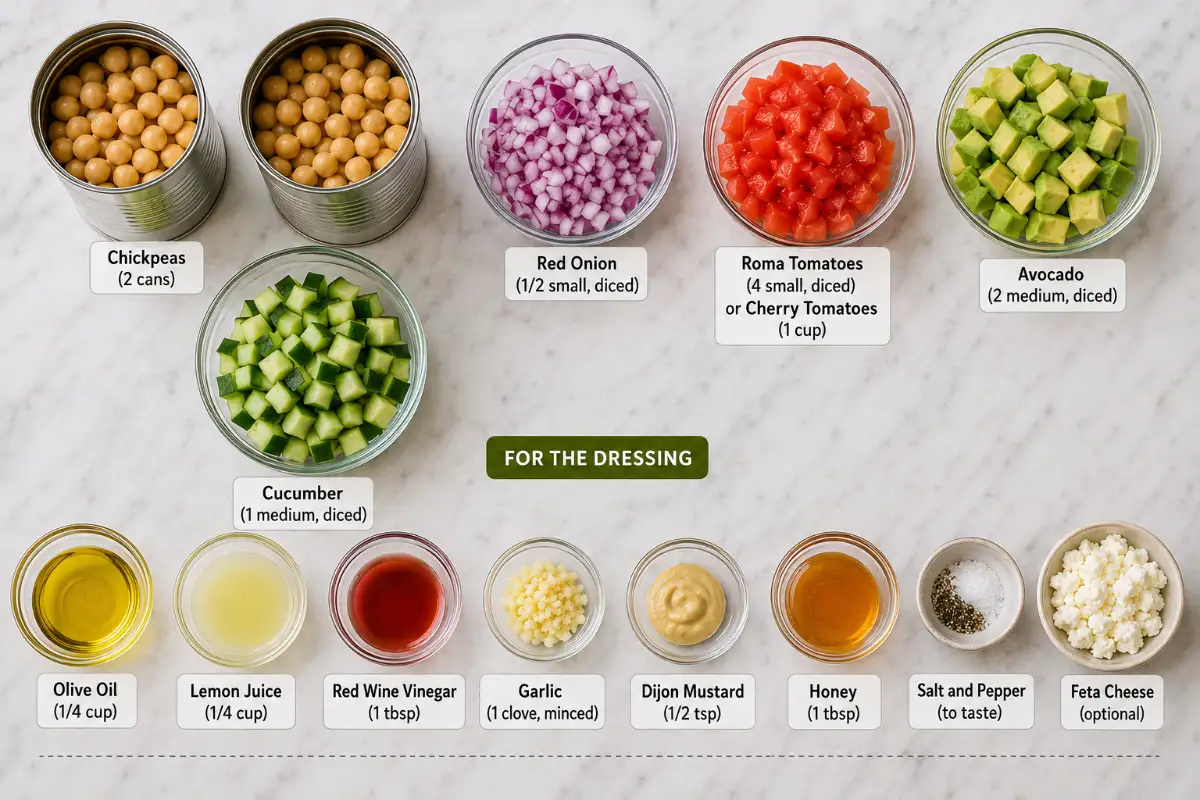
- 2 cans of chickpeas
- 1/2 red small onion, diced
- 4 small Roma tomatoes diced/1 cup cherry tomatoes
- 2 medium ripe avocados, diced
- 1 medium cucumber, diced
For the dressing
- 1/4 cup of olive oil
- 1/4 cup of lemon juice
- 1 tbsp red wine vinegar
- 1 garlic clove minced
- 1/2 tsp dijon mustard
- 1 tbsp honey
- Salt and pepper to taste
- Feta Cheese, optional
Instructions
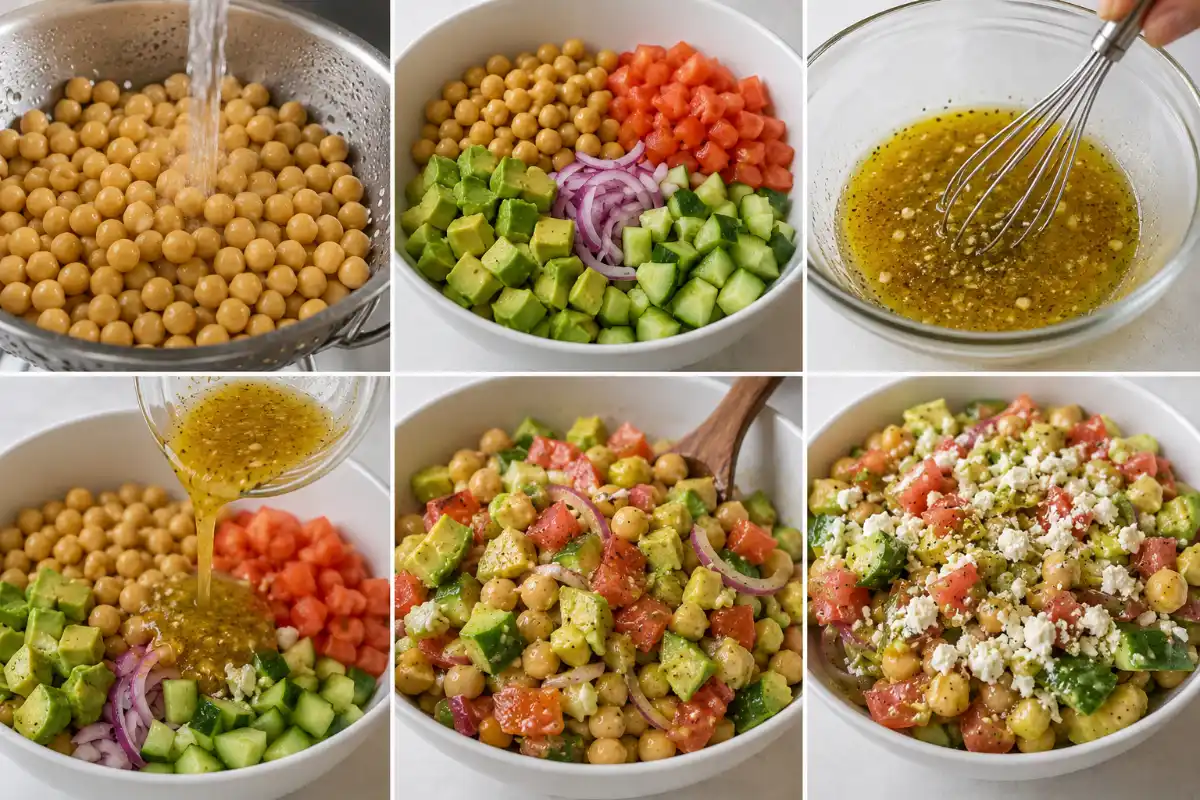
- Rinse and drain the chickpeas in a colander.
- In a large bowl, combine the chickpeas, red onion, tomatoes, avocados and cucumber
- In a small bowl, whisk together the dressing ingredients.
- Pour the dressing over the chickpea salad and mix well.
- Top with feta if using
- Serve the chickpea salad immediately or refrigerate for later.
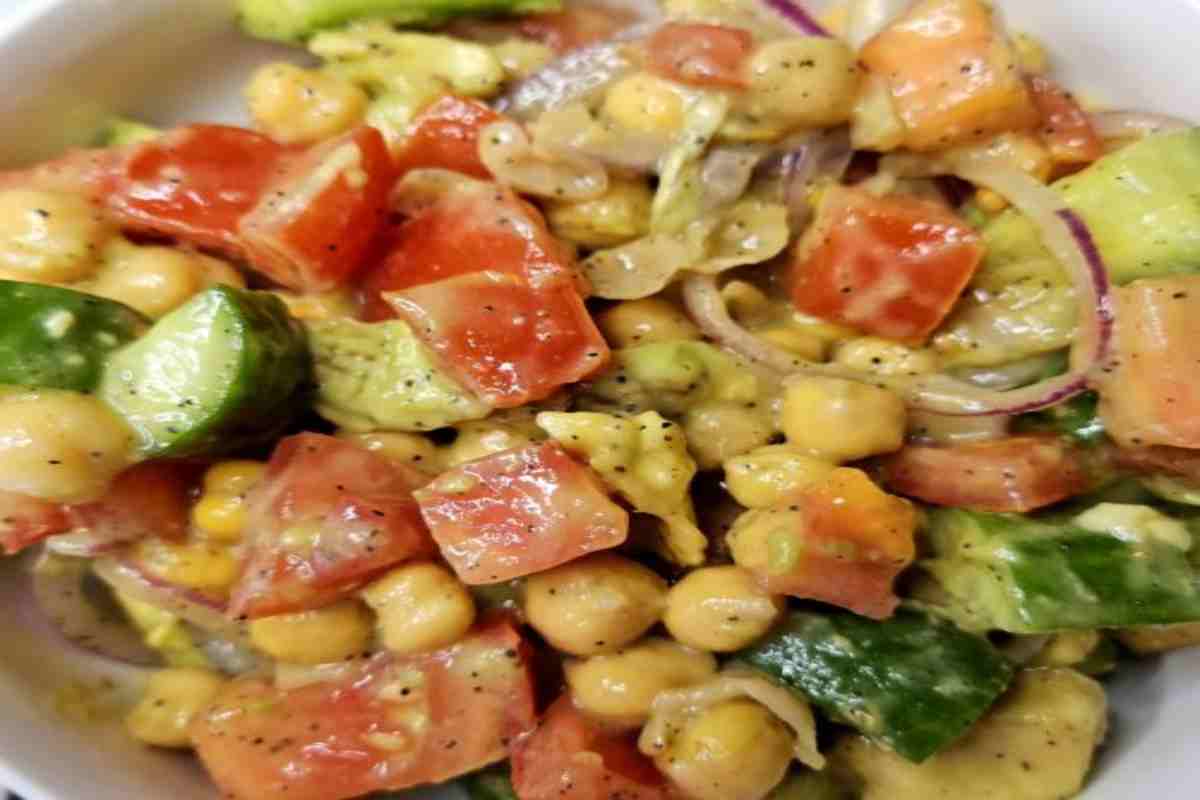
Chickpea Salad Recipe
Ingredients
- 2 cans chickpea
- 1/2 small red onion sliced
- 4 small Roma tomatoes chopped/1 cup grape tomatoes
- 2 medium avocados ripe, diced
- 1 medium cucumber diced
For Dressing
- 1/4 cup olive oil
- 1/4 cup lemon juice
- 1 tbsp red wine vinegar
- 1 clove garlic minced
- 1/2 tsp Dijon mustard
- 1 tbsp honey optional
- Salt and pepper to taste
- 1/4 cup feta cheese optional
Instructions
- Rinse and drain the chickpeas in a colander.
- In a large bowl, mix the chickpeas, red onion, tomatoes, avocado and cucumber.

- In a small bowl, whisk together the dressing ingredients.

- Pour the dressing over the chickpea salad and toss well to coat. Season with salt and pepper
- Serve the chickpea salad immediately or refrigerate for later.

Notes
Nutrition
Nutrition Per Serving
A simple chickpea salad like this one lands in a remarkably good nutritional position for something that takes ten minutes and requires no cooking. The values below are estimates based on a standard serving of the recipe with typical ingredients, chickpeas, cucumber, tomatoes, red onion, herbs, olive oil-based dressing, and feta cheese, where included.
| Nutrient | Per Serving |
|---|---|
| Calories | 239 kcal |
| Carbohydrates | 13g |
| Protein | 3g |
| Total Fat | 21g |
| Saturated Fat | 4g |
| Polyunsaturated Fat | 2g |
| Monounsaturated Fat | 14g |
| Cholesterol | 6mg |
| Sodium | 88mg |
| Potassium | 504mg |
| Fiber | 5g |
| Sugar | 6g |
| Vitamin A | 495 IU |
| Vitamin C | 18mg |
| Calcium | 54mg |
| Iron | 1mg |
The folate number deserves a specific mention. Chickpeas are one of the single best food sources of folate (vitamin B9) in a typical diet, important for DNA synthesis, cell repair, and particularly significant during pregnancy. A single serving of this salad delivers close to half of the recommended daily intake from folate alone, without supplements or fortified foods.
The fiber content (9 to 11 grams per serving) is also notable. Most adults fall well short of the recommended 25 to 35 grams of daily fiber, and a single bowl of this salad gets you roughly a third of the way there. That fiber is also what makes this salad filling, soluble fiber from chickpeas slows digestion, keeps blood sugar stable, and signals satiety for hours after eating.
Why This Salad Is Built for Eating Habits
The food trends shaping home cooking are pretty clear, more plant-forward meals, more protein awareness, less processed food, and more gut health focus. This healthy chickpea salad addresses all four without requiring anyone to change how they think about food or buy anything unfamiliar.
Plant-forward
This recipe is naturally vegetarian and easily made vegan by skipping or swapping the feta cheese. No meat substitutes, no processed alternatives, just whole food ingredients doing exactly what they’re supposed to do.
High protein
At 11 to 14 grams of protein per serving from plant sources, this salad holds its own against many meat-based lunch options on a gram-for-gram comparison.
Gut health
Chickpeas are rich in prebiotic fiber, the kind that feeds beneficial gut bacteria rather than being rapidly digested. The garlic, onion, and fresh herbs in the dressing add additional prebiotic compounds. Every bowl of this salad is actively supporting your microbiome, which is something that researchers and clinicians have been placing significantly more emphasis on in the last few years.
Minimal processing
Every ingredient in this salad is a whole food. The dressing is made from scratch in two minutes. There’s nothing from a bottle, a packet, or a shelf-stable sauce with an ingredient list you’d need a chemistry background to parse.
How Long Does Chickpea Salad Keep?
This is one of the most searched questions about chickpea salad, and most answers hedge more than they should. Here’s the straight version.
A simple chickpea salad without avocado keeps well in an airtight container in the fridge for 4 to 5 days. The vegetables soften slightly, and the dressing absorbs more deeply over time. Still, the flavor actually improves for the first 24 to 48 hours as everything marinates. By day four, it’s still perfectly good, just a bit more tender and more integrated than it was fresh out of the bowl.
If avocado is in the recipe, the situation changes. Avocado browns quickly once exposed to air and is broken down by dressing. The classic workaround is to add avocado only to the portion you’re eating immediately, keeping it out of the batch you’re storing.
A squeeze of lemon or lime directly on a cut avocado slows browning significantly if you mix it in, but don’t expect it to look pristine after 24 hours. Feta cheese in the salad is fine for storage, it holds its texture and doesn’t make the salad soggy the way softer cheeses would.
For meal prep
Dress the salad fully, store it in portioned containers, and it’s ready to grab and go every morning with no additional prep. That’s a legitimately useful lunch strategy for busy weekdays.
What to Serve This With And When to Serve It as the Main
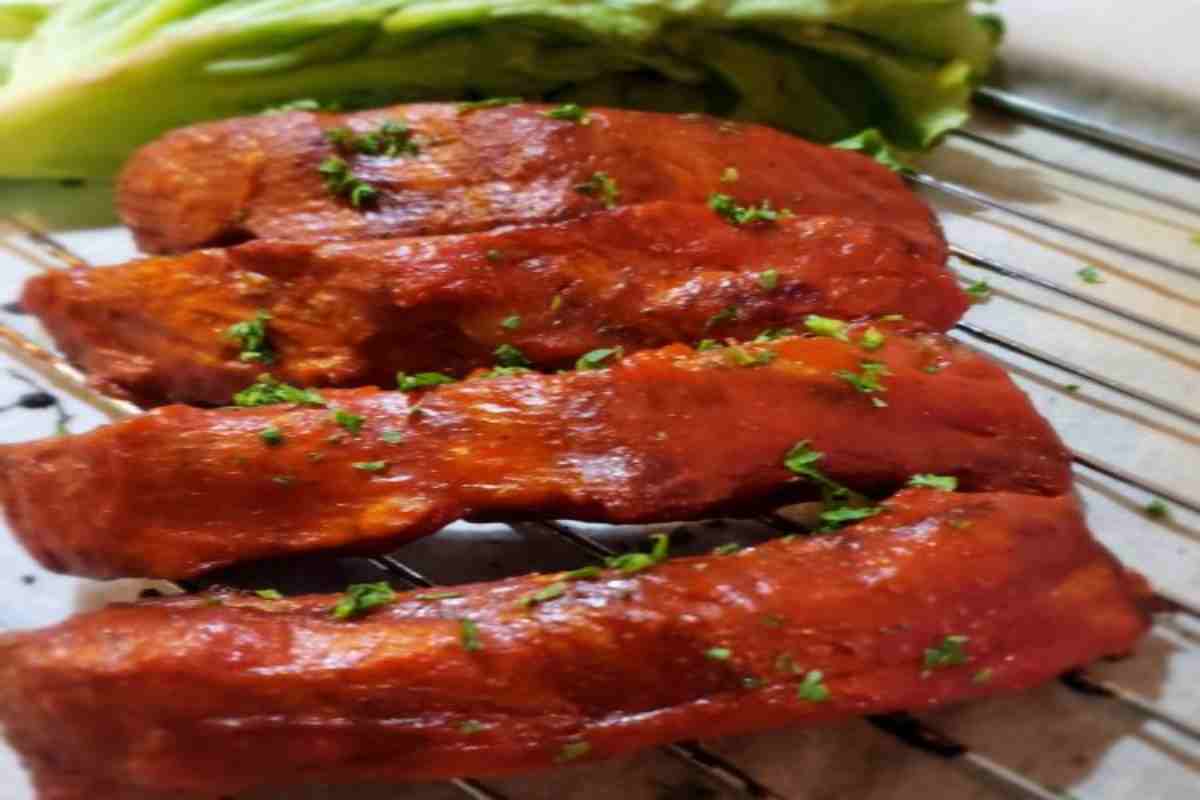
This salad is genuinely versatile, which is one of the things that makes it worth having in your recipe arsenal. It serves in several different capacities depending on what else is on the table, including alongside dishes like Liver stew, Whole tilapia, Basa fillet, or Creamy honey chicken.
As a standalone lunch or light dinner, it’s complete. The protein and fiber content means you won’t be hungry again an hour later, which is the real test of whether a salad works as a meal.
Serve it with warm pita bread or crusty sourdough on the side if you want something to tear and dip.
As a side dish, it pairs with almost anything off the grill. Chicken, fish, lamb skewers, veggie burgers, the freshness of the salad cuts through anything richer and heavier. On a summer table, it’s the kind of dish that disappears before the main event gets around to everyone.
Serve into a Shawarma Bread with a spoonful of hummus, and it becomes a wrap that’s faster to assemble than any sandwich and substantially more interesting. This is a favorite weekday lunch format for households where time is short, and quality still matters.
Spooned over a bed of baby spinach or arugula, it becomes a more substantial salad, the greens add volume and a slight bitterness that plays well against the chickpeas and the lemon dressing.
Variations Worth Adding to Your Rotation
The base recipe is exactly what it needs to be. But once you’ve made it a few times, the variations are worth exploring, each one feels like a different dish rather than just a tweak.
Roasted chickpea version
Spread drained, dried chickpeas on a baking sheet with olive oil, paprika, cumin, and salt. Cook in an oven preheated to 400°F for 20 to 25 minutes until crispy. Let them cool before adding to the salad. The roasted chickpeas add a completely different texture, crunchy, smoky, and almost snack-like, which makes the whole bowl feel more substantial and interesting.
Grain bowl version
Add a base of cooked and cooled quinoa, bulgur wheat, or farro. The grain absorbs the dressing and turns this salad into something that eats more like a grain bowl, satisfying enough for a post-workout meal or a filling dinner.
Spiced-up version
Add half a teaspoon of cumin and a pinch of smoked paprika to the dressing. These two spices change the flavor profile entirely, still fresh and bright, but with a warm, earthy undertone that pairs particularly well with roasted red peppers in the salad base.
Tuna or salmon addition
For a higher-protein version that’s further from vegan territory, a drained can of good-quality tuna or salmon mixed into the bowl is a classic combination. The chickpeas and fish have a natural affinity, and the lemon dressing works perfectly for both. This version works especially well as a sandwich filling.
Tips That Change the Final Result
Dry the chickpeas
After rinsing, spread them on a clean kitchen towel or paper towel and pat them dry. Wet chickpeas dilute the dressing and don’t absorb it as well as dry ones. This takes 60 seconds and makes a noticeable difference.
Cut everything to a similar size
This sounds like the kind of advice that’s easy to ignore. Still, uniform chopping means that every forkful has a bit of everything, chickpea, cucumber, tomato, herb, dressing. When the pieces are wildly different sizes, you end up with mouthfuls that are mostly one thing. Take the extra two minutes to cut uniformly.
Make the dressing first, in the bowl
Whisk it directly in the large bowl you plan to serve the salad in. Add the chickpeas first and toss them in the dressing before adding the other vegetables. This gives the chickpeas a head start in absorbing the dressing, resulting in a more evenly flavored salad throughout.
Chill before serving
Even 20 minutes in the fridge makes a difference. The vegetables crisp up slightly, the dressing settles into everything, and the flavors integrate. If you have an hour, even better.
Taste and adjust at the end
Every batch of salad is slightly different, depending on the sweetness of your tomatoes, the bitterness of your cucumbers, and the sharpness of your onion. A final taste before serving, and an adjustment of salt, lemon, or olive oil, is the step that takes a good salad to a great one.
The Honest Case for Making This Today
A quick chickpea salad is one of those recipes that rewards consistent making. The first time you make it, you’re following the recipe. The second time, you know what you want more of. By the third or fourth time, it’s yours, you know when to add extra lemon, which herbs you prefer, how long you want to let it sit before serving. It doesn’t ask much of you. No stove, no oven, no specialized equipment. A cutting board, a decent knife, a large bowl, and ten focused minutes. What it gives back, a genuinely satisfying, nutritious, beautiful bowl of food, is a return on investment that most recipes in any category can’t match.
Make it this week. Eat it for lunch three days in a row and see if you don’t find yourself thinking about the next batch before the current one is gone.
For other salad recipes, you can also try
Refreshing Cucumber Tomato Salad
Frequently Asked Questions (FAQs)
Can I make this the night before?
Yes, and it actually gets better. The flavors meld and deepen overnight. If avocado is in the recipe, add it fresh before serving rather than the night before.
Is chickpea salad good for weight loss?
It’s high in fiber and plant protein, which supports satiety, meaning you stay full longer on fewer calories than many other meal options. It’s not a diet food in a restrictive sense, but it’s genuinely nutrient-dense, supporting healthy eating patterns.
Is it possible to substitute dried chickpeas for canned ones?
Yes. Soak overnight, cook for 45 to 60 minutes until tender, cool completely, then use in place of canned. The flavor is slightly nuttier and creamier. The time investment is significant though, canned is entirely reasonable for everyday cooking.
What makes chickpea salad high in protein?
The chickpeas themselves. A single can (15 oz) provides roughly 25 grams of plant-based protein across the whole can. Per serving in a 4-serving recipe, that’s around 10 to 12 grams from chickpeas alone, with additional protein from feta cheese if included.
Is this salad gluten-free?
Yes, as written. All the standard ingredients, chickpeas, vegetables, olive oil, lemon, herbs, feta, are naturally gluten-free. If you’re adding anything extra, check labels for hidden gluten sources.
How do I keep the cucumber from making the salad watery?
Two options: use English cucumbers (which have thinner skins and fewer seeds than standard cucumbers and release less water) or slice regular cucumbers, sprinkle them lightly with salt and allow them to drain in a colander for 10 minutes before adding. The salt draws out excess moisture before it can dilute your dressing.
Can I add protein to make it more filling?
Absolutely. Grilled chicken, canned tuna, sliced hard-boiled eggs, or cooked and cooled quinoa all work well mixed through the salad. The chickpeas provide solid plant protein on their own. Still, if you want a more substantial meal, any of these additions are a natural fit.