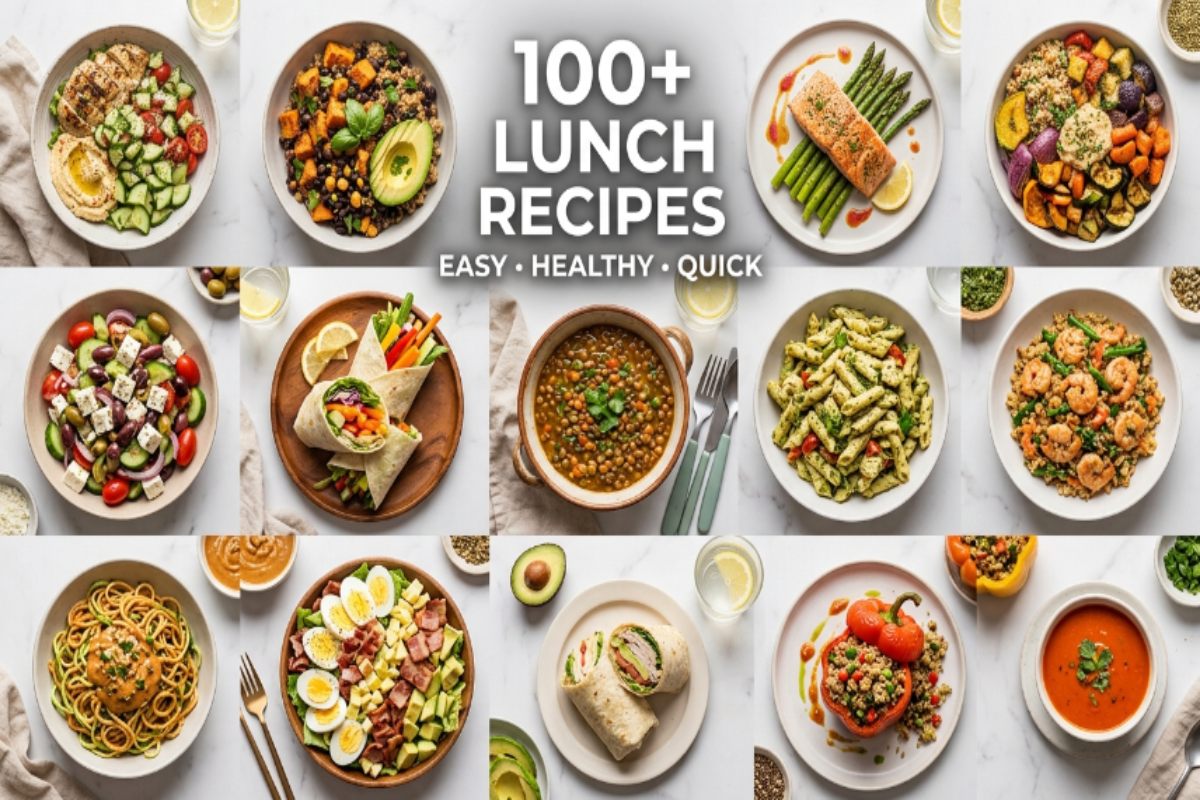
Lunch recipes don’t have to be complicated, the best ones are fast enough for a busy weekday, satisfying enough to keep you focused all afternoon, and flexible enough to work with whatever you already have at home. This guide brings together over easy lunch recipes organized by diet, budget, and prep time, so finding the right meal takes seconds, not scrolling.
Most of us treat lunch as an afterthought, and it shows. According to a 2023 report by the International Food Information Council, nearly one in three adults either skips lunch or relies on ultra-processed options on weekdays, a habit directly linked to afternoon energy crashes and overeating at dinner. A well-chosen midday meal changes that equation completely, and it doesn’t require a culinary degree to pull off.
What you’ll find here covers the full range: quick lunch recipes ready in under 20 minutes, healthy lunch recipes for weight loss, keto lunch ideas, vegetarian and vegan options, and meal prep lunch recipes you can batch-cook once and eat all week. Whether you’re packing a lunch for work, feeding kids at home, or just tired of making the same three things on rotation, there’s a recipe in here that fits.
A few things set this collection apart from a standard recipe roundup. Every recipe has been tested with real ingredients and honest prep times, no “15-minute meals” that quietly assume you’ve already marinated the chicken overnight. The cheap lunch recipes, for instance, are genuinely budget-friendly, built around pantry staples without sacrificing flavor. The chicken lunch recipes, sandwich recipes, and egg-based ideas are organized so you can jump straight to what makes sense for your fridge today.
If you’re not sure where to start, the meal prep section is the highest-leverage entry point, a single Sunday session can eliminate five lunch decisions for the rest of the week. For something faster, the easy healthy lunch recipes deliver solid nutrition with minimal effort, most clocking in under 30 minutes from prep to plate.
Why a Great Lunch Matters (and How to Use This Guide)
A great lunch isn’t a luxury, it’s a performance decision. What you eat in the middle of the day directly affects your energy, focus, and how hungry you are by dinner. Yet lunch is consistently the meal people invest the least thought in, defaulting to whatever’s fastest or closest rather than what actually serves them well.

The science backs this up. A study published in Nutrients found that eating a nutritionally adequate lunch, one with adequate protein, fiber, and healthy fats, was associated with significantly better cognitive performance in the afternoon compared to skipping or eating a low-quality meal. That’s not a small edge. Over a five-day work week, it compounds into a meaningful difference in how you feel and function.
This guide exists to make that better lunch the path of least resistance. Whether you’re after healthy lunch recipes for weight loss, trying to nail your weekly meal prep, or just want something genuinely quick and easy that doesn’t taste like an afterthought, you’ll find it organized clearly below, no digging required.
How These Recipes Are Organized
The recipes in this guide are grouped by what most people actually search for at lunchtime: speed, diet type, ingredient, and budget. You’ll move through quick weekday options first, then healthy lunch ideas, diet-specific sections covering keto, vegetarian, vegan, and gluten-free lunch recipes, followed by ingredient-led chapters on chicken, eggs, and sandwiches. The guide closes with budget-friendly options and a meal planning section you can put to use immediately.
Each section stands alone. If you only need keto ideas today, jump there. If you’re building a full week of lunch meal prep, start at the end and work backwards. The structure is designed to serve both.
How to Pick the Right Recipe for Your Goals
The right lunch recipe depends on three things: how much time you actually have, what nutritional outcome you’re after, and what’s already in your kitchen. A simple lunch recipe that takes eight minutes and uses pantry staples will outperform an elaborate meal you abandon halfway through on a Tuesday.
If weight management is the goal, prioritize recipes from the healthy lunch recipes for weight loss and protein lunch recipes sections. Meals built around lean protein and fiber tend to reduce afternoon snacking more effectively than calorie-restricted options alone. If budget is the constraint, the cheap and healthy lunch recipes deliver solid nutrition without a complicated shopping list.
When in doubt, start with meal prep. Choosing your lunches once on Sunday removes the daily decision entirely, and decision fatigue is one of the quieter reasons people reach for poor options at noon.
Quick & Easy Lunch Recipes (Ready in 30 Minutes or Less)
The easiest lunch recipes are the ones you actually make. Speed matters at midday, most people have a hard stop on their lunch break, and a recipe that requires 45 minutes of active cooking simply won’t survive contact with a real Tuesday. Every recipe in this section is ready in 30 minutes or less, most in under 20, and none require techniques beyond basic knife work and a pan.

Quick doesn’t mean low quality. Some of the most satisfying lunches come together fastest, a well-seasoned avocado and egg toast, a chicken and rice bowl built from yesterday’s leftovers, or a simple sandwich elevated with the right combination of texture and acid. Speed is a constraint that sharpens creativity, not one that eliminates it.
A useful benchmark: according to the American Time Use Survey, the average American spends just 17 minutes preparing and eating lunch on workdays. These recipes are built for that reality.
5-Ingredient Lunches Anyone Can Make
Five ingredients are a discipline, not a limitation. When you remove the option to hide behind complexity, every component has to earn its place, and the result is almost always a cleaner, more direct flavor. These simple lunch recipes work precisely because they don’t overreach.
A few reliable five-ingredient formats that belong in regular rotation: a protein-forward lunch built on canned tuna, white beans, lemon, olive oil, and capers, ready in four minutes, genuinely satisfying. A quick vegetarian option of halloumi fried in a dry pan, served over dressed arugula with cherry tomatoes and a squeeze of lemon. Or a fast egg-based lunch of scrambled eggs folded through sautéed spinach, served on sourdough with a scrape of cream cheese.
The common thread is restraint. Pick one strong protein, one vegetable, one fat source, one acid, and one base, and you have a framework that produces a different lunch every day of the week without ever feeling repetitive.
No-Cook Quick Lunch Ideas
No-cook lunches are the fastest category in this guide, and they’re consistently underestimated. When the ingredients are good, the assembly is cooked. A chicken sandwich recipe built on quality bread with layered deli meat, sharp cheese, pickles, and grainy mustard takes four minutes and competes with anything you’d order at a café.
The easy vegan lunch recipes in this section lean heavily on no-cook assembly, hummus plates with raw vegetables and warm pita, grain bowls built from pre-cooked farro or quinoa, or a simple avocado lunch of sliced avocado over cold noodles with sesame oil and chili flake. The gluten-free options work just as well here: rice crackers with smoked salmon and labneh, or a lettuce wrap with any filling you’d normally put in a sandwich.
The key to making no-cook lunches sustainable is a stocked fridge. Keeping a few cooked grains, washed greens, a good cheese, and at least one pickled or fermented element on hand means assembly takes minutes without any planning at the moment.
Easy Lunch Recipes for Home
Cooking lunch at home is a different experience than packing one for the office, you have a stove, a full fridge, and no container constraints. That opens up a specific category of easy recipes for lunch at home that are too messy, too hot, or too fresh to transport, but come together quickly and taste delicious.
A pan of quick-fried rice using yesterday’s grains takes eight minutes. A simple quesadilla with whatever cheese and salsa you have is on the table at ten. Even a light lunch of a quickly poached egg over dressed lentils, something that looks considered and tastes restaurant-quality, is achievable in under fifteen minutes with minimal cleanup.
Home also means you can cook to order rather than transport. That changes the possibilities for texture and temperature entirely. Take advantage of it. The easiest lunch recipes in this section are designed specifically for a home kitchen midday, nothing that requires pre-planning, nothing that assumes you have a sous vide machine, and nothing that will leave you with more dishes than you have time to wash before your next meeting.
Healthy Lunch Recipes for Every Goal
Healthy lunch recipes mean different things depending on what you’re trying to achieve. For one person, it’s reducing calories without feeling deprived. For another, it’s hitting a protein target to support muscle. For someone else, it’s simply eating real food instead of something from a wrapper. This section addresses all three, organized by goal, so you can go directly to what’s relevant rather than filtering through recipes that don’t suit your situation.

What unifies every recipe here is the same underlying logic: adequate protein, enough fiber to sustain fullness, and enough flavor to make the meal worth eating. Healthy food that doesn’t taste good isn’t a solution, it’s a temporary measure that collapses the moment you’re tired or stressed. These healthy lunch recipes are built to hold up in real conditions, not just in ideal ones.
Healthy Lunch Recipes for Weight Loss
Weight loss at lunch comes down to one practical outcome: eating a meal that keeps you full and satisfied long enough that you’re not raiding the pantry at 3 pm. Research posted in the American Journal of Clinical Nutrition found that high-protein, high-fiber lunches reduced afternoon snack intake by up to 29% compared to low-protein equivalents of the same calorie count. That’s the mechanism these recipes are built around.
The healthy lunch recipes for weight loss in this section prioritize volume and satiety over pure calorie minimization. A large salad built on leafy greens, a palm-sized lean protein, legumes, and a light olive oil dressing will outperform a 300-calorie processed option every time, not because the calorie math is dramatically different, but because the fiber and protein keep hunger at bay for hours longer. The same applies to healthy chicken lunch recipes, which consistently rank among the most effective weight-management meals precisely because chicken breast delivers high protein at low caloric cost.
Portion awareness matters here, but restriction doesn’t have to. The goal is engineering fullness, not engineering deprivation. Lunch recipes for weight loss that actually work long-term are the ones you’d choose even if you weren’t trying to lose weight, because they taste good enough to sustain the habit.
High-Protein Lunch Recipes
Protein at lunch does two things simultaneously: it slows digestion to extend satiety, and it provides the raw material for muscle maintenance and repair throughout the day. For anyone training, managing weight, or simply trying to stay sharp through an afternoon of focused work, protein lunch recipes aren’t optional, they’re the highest-leverage variable in the midday meal.
The most reliable high-protein lunch formats center on a core protein source, chicken, eggs, legumes, Greek yogurt, cottage cheese, canned fish, built into a complete meal rather than treated as a supplement. A chicken and white bean soup bowl with roasted vegetables delivers upward of 40 grams of protein in a single serving. A healthy egg-based lunch of a three-egg frittata with spinach and feta hits 25 to 30 grams in under 15 minutes of cooking. Even plant-based options like a high-protein vegan lunch of edamame, tempeh, and quinoa with tahini dressing clear 30 grams without any animal protein.
Healthy protein lunch recipes don’t require shakes or supplements, they require intentional ingredient selection. Build the protein first, then add fiber and fat around it, and the rest of the meal composition tends to fall into place naturally.
Low-Calorie Light Lunch Ideas
A light lunch works best when it’s light by design rather than light by deprivation. The distinction matters: a meal that’s low in calories because it’s mostly water and lettuce will leave you hungry within the hour, while a genuinely light lunch recipe engineered around lean protein, broth-based components, and high-volume vegetables can clock in under 400 calories and hold you comfortably until dinner.
Some of the most effective formats in this category are broth-based soups loaded with vegetables and a small protein, a miso broth with silken tofu and wakame, a delicious chicken soup bowl, or a spiced lentil and tomato soup that’s as filling as it is low in calories. Easy healthy lunch recipes like these rely on volume and warmth to create the sensation of a substantial meal, even when the calorie count is modest.
Cold options work equally well. A simple vegetarian lunch of a large cucumber, tomato, and chickpea salad dressed with lemon and herbs, served alongside a soft-boiled egg, is refreshing, genuinely satisfying, and sits comfortably under 350 calories. The healthy lunch meal prep recipes in this section include several light options portioned specifically for people tracking intake, with approximate calorie counts included so there’s no guesswork involved.
The principle throughout is the same: design the meal to be filling first and low-calorie second. In that order, both goals are achievable. In the reverse order, neither tends to stick.
Meal Prep Lunch Recipes (Make Once, Eat All Week)
Meal prep lunch recipes solve the most persistent problem with eating well at midday: the decision. When lunch is already made, the only question is whether to eat it, and the answer is almost always yes. A single focused session on Sunday produces five ready-to-go meals that require nothing from you on Monday through Friday except opening a container.

The efficiency case is straightforward. A 2022 study in the International Journal of Behavioral Nutrition and Physical Activity discovered that people who regularly practiced meal preparation consumed significantly more vegetables, ate more nutritionally complete meals, and spent less money on food overall compared to non-preppers. The time investment, typically 45 to 90 minutes once a week, pays dividends across every dimension: nutrition, budget, and mental energy.
None of that requires complicated recipes or professional kitchen skills. The lunch meal prep recipes in this section are built around formats that hold well in the fridge, reheat cleanly or eat well cold, and don’t lose texture or flavor by day four. That last criterion eliminates a surprising number of otherwise good recipes, and it’s the one most meal prep guides ignore.
Sunday Meal Prep Lunch Ideas
Sunday is the highest-leverage day of the week for lunch preparation because it sits far enough from Friday to feel fresh and close enough to Monday to feel immediately useful. The goal for a Sunday session isn’t to cook five different lunches, it’s to cook two or three versatile components that combine into multiple meals across the week.
A reliable Sunday prep sequence looks like this: a large batch of a grain, brown rice, farro, or quinoa, that works as a base for bowls, salads, or sides. A roasted or poached protein, typically chicken or a plant-based equivalent like baked tofu or spiced chickpeas.
Chickpea & Egg Veggie Bowl is also a healthy option for lunch with low calories. From those three components alone, you can assemble a different healthy lunch meal prep recipe every day without eating the same meal twice.
Sunday lunch recipes that work especially well for batch cooking include grain bowls with interchangeable toppings, mason jar salads layered so the dressing doesn’t wilt the greens, and meal prep rice-based lunches that absorb flavor as they sit and actually improve by day two. The prep time for this kind of flexible batch session rarely exceeds an hour, and the return across the week is substantial.
5-Day Meal Prep Containers
The five-day container approach is the most structured form of lunch meal prep, five identical or varied portions, built on Sunday, eaten Monday through Friday. It works best when the recipe is chosen specifically for its fridge longevity and container compatibility, not just its flavor profile.
The easy meal prep lunch recipes that hold best over five days share a few characteristics: they’re dressed minimally at prep time with sauces stored separately, they use proteins that don’t dry out, chicken thighs, hard-boiled eggs over scrambled, and they rely on hearty vegetables like roasted sweet potato, broccoli, or cabbage that maintain texture through refrigeration rather than delicate greens that wilt by day two.
Strong five-day container formats include a keto lunch prep of sheet-pan salmon with roasted zucchini and cauliflower rice, genuinely good cold or reheated. A vegetarian meal prep lunch of spiced lentils over farro with pickled onions and a tahini drizzle stored separately. Or a simple chicken lunch prep of sliced thighs over tomato brown rice with a teriyaki glaze, which reheats in two minutes and doesn’t suffer from having sat in the fridge. Containers with divided sections help keep components separate until eating, which preserves both texture and the sense of a freshly assembled meal rather than a block of reheated food.
Healthy Lunch Meal Prep for Weight Loss
Meal prepping specifically for weight loss adds one layer of intentionality to the standard prep process: portion control built in at the container stage rather than managed at the moment of eating. When the right amount is already in the container, willpower isn’t a factor, the decision is already made.
The most effective healthy lunch meal prep recipes for weight loss follow a consistent macro structure across the week: a third of the container is devoted to lean protein, a third to fiber-dense vegetables, and the remaining third split between a complex carbohydrate and a small fat source. That ratio, without precise calorie counting, tends to land meals in the 400 to 500 calorie range while delivering enough volume and satiety to prevent afternoon hunger.
Healthy lunch prep recipes built on this structure include a turkey and roasted vegetable bowl over cauliflower rice for a lower-carb option, a high-protein egg and vegetable prep using hard-boiled eggs alongside a large portion of dressed chickpeas and cucumber, or a cheap and healthy meal prep lunch of seasoned black beans, brown rice, roasted peppers, and a spoon full of Greek yogurt standing in for sour cream. All three stay well for five days, reheat in under two minutes, and require no active decision-making at lunchtime, which is precisely the point.
The best lunch prep recipes for weight loss aren’t the most restrictive ones. They’re the ones you’ll actually eat on Thursday when you’re tired, distracted, and the easier option is ordering delivery. Make those meals good enough, and the prep does the work that willpower was never reliably going to do.
Keto Lunch Recipes
Keto lunch recipes work by replacing the carbohydrate-heavy formats that dominate most midday meals, sandwiches, wraps, grain bowls, and flavorful pasta, with high-fat, moderate-protein alternatives that keep blood sugar stable and hunger suppressed through the afternoon. Done well, a keto lunch is not a lesser version of a normal lunch. It’s a genuinely satisfying meal that happens to operate on a completely different fuel source.

The practical challenge with keto at lunchtime is that most grab-and-go food infrastructure is built around carbs. Bread, rice, noodles, and chips are everywhere; quality fat-forward options require more deliberate choices. That’s where a reliable collection of keto lunch recipes matters most, not for inspiration on good days, but for structure on the days when the path of least resistance points straight toward a sandwich.
The metabolic case for keto at lunch is well established. A review in Obesity Reviews found that very low-carbohydrate diets produced significantly greater short-term reductions in appetite compared to low-fat diets, a finding that maps directly onto the midday meal, where appetite control determines whether you overeat at dinner. These keto diet lunch recipes are built around that outcome: meals that satisfy completely, with no blood sugar spike and no 3pm crash to manage.
Easy Keto Lunches Under 30 Minutes
The fastest keto lunch recipes require nothing more than a pan, a protein, and a fat source, formats that are inherently quick because they don’t depend on grains or legumes that need long cooking times. A piece of salmon pan-seared in butter with a side of sautéed spinach and garlic is on the table in twelve minutes. A keto egg-based lunch of loaded omelette filled with aged cheddar, smoked salmon, and capers takes eight. A quick keto chicken lunch of sliced thigh meat over a dressed avocado and bacon salad comes together in under fifteen minutes and hits every macronutrient target the diet requires.
What makes these easy keto lunch recipes genuinely easy is the absence of substitution thinking. The goal isn’t to replicate a sandwich without bread or a bowl without rice, it’s to build a meal around ingredients that are naturally keto rather than forcing low-carb versions of high-carb formats. That shift in approach eliminates most of the effort and all of the disappointment that comes with keto imitation foods.
A well-stocked keto fridge makes 30-minute lunches automatic. Eggs, hard cheeses, cured meats, avocados, leafy greens, cream, butter, and a quality protein source in the fridge at all times means a complete keto diet lunch recipe is always 15 minutes away, regardless of how little planning preceded it.
Keto Meal Prep Lunch Ideas
Keto and meal prep are a particularly effective combination because high-fat foods tend to hold their quality in the fridge longer than carbohydrate-heavy alternatives. A keto meal prep lunch built on roasted meat, cooked vegetables dressed in olive oil, and a fat-based sauce will eat as well on Friday as it did on Monday, often better, as the flavors continue to develop.
The most reliable keto prep formats center on a batch-cooked protein, a tray of spiced chicken thighs, a side of salmon fillets, or a batch of seasoned ground beef, paired with two or three roasted or raw vegetables and a high-fat dressing or homemade sauces made in advance. From that base, five days of keto diet recipes for lunch assemble themselves in under three minutes per container.
Specific prep combinations worth building into regular rotation: a sheet-pan of chicken thighs roasted with olives, cherry tomatoes, and feta, served cold over arugula with a lemon-tahini dressing, that holds perfectly for four days. A keto-friendly egg prep of hard-boiled eggs alongside portioned avocado and smoked salmon that requires no cooking beyond the eggs. Or a ground beef pasta and cauliflower rice bowl seasoned with cumin and paprika, topped with sour cream and pickled jalapeños, that reheats in 90 seconds and tastes genuinely good at any temperature.
High-Fat, Low-Carb Lunch Staples
Understanding which ingredients anchor a keto lunch makes every recipe in this section easier to navigate and easier to adapt. A small set of high-fat, low-carb staples, reliable, versatile, and available in any grocery store, forms the foundation of nearly every keto lunch recipe worth making regularly.
Avocado is the single most useful keto lunch ingredient. Its fat profile is ideal, its texture provides substance, and it pairs with almost every protein from chicken to delicious salmon bites to a fried egg. Eggs themselves are the second pillar, cheap, fast, endlessly variable, and nutritionally complete enough to carry a meal alone. Hard cheeses, cured meats like prosciutto and chorizo, full-fat Greek yogurt used as a sauce base, olive oil, butter, cream, and nuts round out the staple list.
On the vegetable side, the most useful low-carb options are leafy greens, zucchini, cauliflower, broccoli, cucumber, and bell peppers, all of which appear repeatedly across the healthy keto lunch recipes in this guide. Cauliflower in particular functions as a legitimate substitute for rice and couscous in texture-forward dishes, and its neutral flavor makes it one of the most adaptable ingredients in the keto kitchen.
What these staples share is convenience. A simple keto lunch assembled from avocado, a tin of sardines, some cucumber slices, and a drizzle of good olive oil requires no cooking, no planning, and no compromise. That’s the practical power of understanding your staples, it turns any refrigerator into a keto lunch station, regardless of what was formally planned.
Vegetarian & Vegan Lunch Recipes
Vegetarian and vegan lunch recipes have moved well past the territory of sad desk salads and flavourless grain bowls. The best plant-based lunches today are built on the same principles as any great midday meal, adequate protein, enough fat to carry flavour, and enough fiber to sustain fullness.

They just achieve those outcomes without meat or animal products. For anyone eating this way, lunch is often the easiest meal to get right, because the ingredients that make plant-based cooking work best, legumes, whole grains, good olive oil, fresh vegetables, bold spices like Cajun Seasoning, are also the fastest to prepare.
The growth in this space reflects genuine demand. A 2023 report by the Good Food Institute found that nearly 40% of Americans now actively reduce meat consumption at least several days per week, with lunch being the most common meal where that substitution happens. These vegetarian lunch recipes and vegan lunch recipes are built for that majority, people who aren’t necessarily committed to a label but want plant-based options that are satisfying enough to choose repeatedly.
Easy Vegetarian Lunch Ideas
The easiest vegetarian lunch recipes share a structural simplicity that makes them repeatable without becoming monotonous. A base, a protein source, an acid, a fat, and something with texture, assembled rather than cooked, or cooked briefly over high heat, produces a different meal every time even when the framework stays constant.
A halloumi and roasted pepper wrap with hummus and pickled cucumber takes twelve minutes and eats like something from a good café. A simple egg-based vegetarian lunch of a soft-boiled egg over warm lentils dressed with red wine vinegar and mustard is ready in the time it takes to boil the egg. A quick avocado-based option of smashed avocado on sourdough with a poached egg, chili flake, and a squeeze of lemon is four ingredients and five minutes, genuinely satisfying, not a compromise.
Easy vegetarian lunch recipes become even more accessible when you keep a few cooked components in the fridge, a batch of lentils, some roasted vegetables, a block of halloumi or a wedge of good cheese. With those on hand, a complete vegetarian lunch recipe comes together in minutes rather than being cooked from scratch, which is the difference between a habit that sticks and one that collapses by Wednesday.
Plant-Based High-Protein Lunches
The most persistent concern about vegetarian and vegan lunches is protein, and it’s a legitimate one, because the formats that feel easiest (a salad, a piece of toast, a bowl of roasted vegetables) often don’t deliver enough to sustain meaningful satiety through the afternoon. The solution isn’t protein powder or elaborate supplementation. It’s intentional ingredient selection built around the plant foods that are genuinely high in protein.
Legumes are the anchor of any high-protein vegan lunch. A cup of cooked lentils provides 18 grams of protein, along with substantial fiber and iron. Chickpeas, black beans, edamame, and white beans are similarly dense, and all of them absorb flavour readily, which makes them useful across cuisines rather than limiting. A protein-forward vegetarian lunch of a spiced chickpea and spinach sauté over brown rice hits 25 grams of protein in a single bowl. A cold edamame and quinoa salad with sesame dressing and shredded nori clears 30 grams without any cooking beyond boiling the quinoa.
Tempeh and tofu extend the options further. Tempeh in particular, fermented, dense, and nutty, holds its texture better through high-heat cooking and refrigerated meal prep than most plant proteins. A simple vegan lunch recipe of pan-fried tempeh over rice with a soy-ginger glaze and steamed broccoli delivers a complete amino acid profile alongside 28 grams of protein, and it reheats cleanly from a meal prep container. The key throughout is treating protein as the first decision in the meal, not an afterthought added to an otherwise complete plate.
Vegan Meal Prep Options
Vegan food is exceptionally well-suited to meal prep because most of the ingredients that define plant-based cooking, grains, legumes, roasted vegetables, fermented condiments, nut-based sauces, retain their quality in the fridge for 4 to 5 days without degrading. Unlike chicken breast or fish, which can dry out or lose texture by day three, a batch of spiced lentils or a tahini-dressed grain salad often improves as it sits.
The vegan meal prep lunch recipes that work best across a full five-day week share a few common traits: they’re assembled in modular components rather than pre-mixed, sauces and dressings are stored separately to preserve texture, and they draw on at least two different protein sources to prevent flavour fatigue across the week. A Sunday prep session that produces a batch of herbed farro, a pot of smoky black beans, a tray of roasted sweet potato and cauliflower, and a tahini-lemon dressing yields five completely different easy vegan lunch recipes depending on how the components are combined each day.
Specific prep-friendly formats worth building into regular rotation include a vegan rice bowl with miso-glazed tofu and pickled vegetables that holds for four days and eats well at any temperature. A cheap and healthy vegan lunch prep of seasoned soup portioned into five containers, filling, nutritionally complete, and costing under fifty cents per serving. Or a gluten-free vegan option of quinoa tabbouleh with chickpeas and a preserved lemon dressing, which stays bright and fresh-tasting through Friday if the dressing is added at serving rather than at prep.
The broader principle is that vegan meal prep rewards a small amount of upfront planning with a disproportionately large return across the week. Once the components are in the fridge, every vegetarian diet recipe for lunch assembles in under three minutes, which is fast enough to compete with any alternative, including the ones that come in wrappers.
Gluten-Free Lunch Recipes
Gluten-free lunch recipes are most useful when they’re built around ingredients that are naturally gluten-free rather than engineered substitutes that approximate the real thing. Rice, potatoes, legumes, eggs, meat, fish, vegetables, and most dairy products contain no gluten at all, which means a genuinely satisfying gluten-free lunch doesn’t require specialty products, dedicated aisles, or premium price tags. It requires knowing which whole foods to build around and which processed formats to avoid.

The scale of need here is larger than most people assume. According to Beyond Celiac, approximately 3 million Americans live with celiac disease. At the same time, a further estimated 18 million experience non-celiac gluten sensitivity, a combined group for whom lunch, eaten outside the home or prepared quickly under time pressure, represents the highest daily risk point for accidental gluten exposure. For that group, a reliable collection of gluten-free lunch recipes isn’t a dietary preference. It’s a practical necessity.
For everyone else eating gluten-free by choice rather than medical requirement, the same logic applies: the best recipes in this section taste good not because they successfully imitate gluten-containing formats, but because they’re built on ingredients that are excellent in their own right.
Naturally Gluten-Free Lunch Staples
The most reliable gluten-free lunch recipes draw from a core set of naturally gluten-free ingredients that are widely available, genuinely versatile, and capable of forming the backbone of a complete midday meal without substitution or compromise. Understanding these staples turns gluten-free cooking from a process of elimination into one of intentional selection.
Rice is the most universal base, rice-based lunch recipes are naturally gluten-free across virtually every cuisine, from a Japanese-style salmon rice bowl to a Latin-inspired chicken and rice lunch seasoned with cumin and lime. Quinoa performs a similar function with the added benefit of a complete amino acid profile, making it the strongest grain choice for anyone combining gluten-free eating with high-protein lunch goals. Sweet potatoes, lentils, and chickpeas round out the carbohydrate options, all naturally gluten-free, all genuinely filling, and all inexpensive enough to anchor a cheap gluten-free lunch without stretching a grocery budget.
On the protein side, eggs, chicken, fish, and legumes are all inherently gluten-free and form the foundation of the most satisfying meals in this section. A pan-seared salmon fillet over dressed lentils with roasted cherry tomatoes is complete, nutritionally excellent, and contains no gluten in any of its components. A simple egg lunch of a vegetable frittata baked in a cast iron pan, zucchini, red onion, feta, and fresh herbs, is gluten-free by nature, ready in 20 minutes, and holds well in the fridge for three days.
The one consistent trap in gluten-free lunch cooking is hidden gluten in processed condiments and sauces, soy sauce, certain mustards, malt vinegar, and many pre-made salad dressings contain wheat-derived ingredients that aren’t obvious from the label. Tamari is a reliable soy sauce substitute. Homemade dressings built on olive oil, lemon, and fresh herbs eliminate the risk entirely and take under a minute to assemble. Staying close to whole ingredients removes most of the exposure without requiring constant label scrutiny.
Gluten-Free Meal Prep Ideas
Gluten-free meal prep is straightforward when the prep session is organized around naturally gluten-free whole foods rather than specialty products, because whole foods don’t carry cross-contamination risk, don’t require ingredient verification, and hold their quality in the fridge at least as well as their gluten-containing equivalents.
The most effective gluten-free meal prep lunches use a modular approach: a batch-cooked grain, a prepared protein, roasted or raw vegetables, and a sauce or dressing stored separately. A Sunday session producing a pot of brown rice, a tray of roasted chicken thighs, a pan of caramelized broccoli and sweet potato, and a tahini-lemon dressing yields five different easy gluten-free lunches across the week, each assembled in under three minutes, each naturally free of gluten without any special accommodation.
Specific prep combinations that work particularly well include a gluten-free keto-friendly prep of baked salmon portions with roasted asparagus and a herb butter, portioned into five containers that eat well cold or reheated. A vegetarian gluten-free option of spiced red lentil soup portioned into individual servings, filling, deeply flavoured, and genuinely cheap to produce at scale. Or a vegan, gluten-free prep of quinoa and roasted vegetable bowls, dressed with a miso-ginger vinaigrette that stays fresh and flavourful through Friday if the dressing is added at serving.
For anyone managing celiac disease specifically, dedicated prep equipment, a separate cutting board, utensils, and ideally a separate prep surface, reduces cross-contamination risk meaningfully. That single practical step transforms a standard meal prep lunch session into one that’s genuinely safe for the most gluten-sensitive members of the household, not just adequate for everyone else.
Chicken Lunch Recipes
Chicken lunch recipes dominate midday eating for one straightforward reason: chicken is the most versatile high-protein ingredient available at any budget, in any grocery store, across any cuisine. It absorbs marinades readily, cooks quickly, pairs with virtually every vegetable and grain, and holds well in the fridge, which makes it equally useful for a spontaneous weekday lunch and a five-day meal prep session. The challenge isn’t finding chicken lunch recipes. It’s knowing which ones are worth making repeatedly and which ones are forgettable.

The nutritional case is equally strong. A 100-gram serving of cooked chicken breast delivers approximately 31 grams of protein at roughly 165 calories, making it one of the most efficient protein sources available for anyone managing weight loss, building muscle, or simply trying to stay full through a demanding afternoon. These chicken lunch recipes are built around that efficiency, not around novelty for its own sake.
What follows covers the three most practical chicken lunch formats: quick grilled options for days when you’re cooking fresh, meal prep variations for building a week of lunches in a single session, and salad-based recipes for lighter, warmer-weather eating.
Simple Grilled Chicken Lunches
Grilled chicken is the foundation of more good lunches than any other single cooking method, because the high heat creates surface flavour, through caramelization and light charring, that elevates even a simply seasoned piece of meat into something worth eating. A simple grilled chicken lunch doesn’t require a backyard grill or complicated technique. A cast iron pan over high heat for four minutes per side produces results that compete with anything cooked outdoors.
The most reliable weekday format is a spatchcocked or pounded chicken breast, brought to even thickness so it cooks uniformly, seasoned 20 minutes in advance with olive oil, salt, garlic, and whatever dried spice suits the direction of the meal. Smoked paprika and cumin points it toward a quick Mexican-inspired lunch bowl over rice with black beans and avocado.
Za’atar and lemon zest takes it toward a Middle Eastern plate with hummus, cucumber, and warm flatbread. Italian seasoning and a finish of white wine in the pan produce a chicken that works over dressed arugula with shaved parmesan. The technique is constant, only the seasoning changes.
For a healthy grilled chicken lunch that comes together in under 20 minutes, serve the sliced chicken over a base that doesn’t require cooking, dressed greens, pre-cooked grains from the fridge, or a simple avocado and tomato salad. The chicken does the work. Everything else is assembly.
Chicken Meal Prep Recipes
Chicken is the most practical protein for lunch meal prep because it cooks quickly in large batches, stores well for up to four days in the fridge, and works across multiple cuisines, meaning five days of chicken meal prep lunches don’t have to taste like five iterations of the same meal.
The most effective approach is batch-cooking a larger quantity of chicken using a method that retains moisture through refrigeration, thighs over breasts when possible, since their higher fat content prevents the dryness that makes reheated chicken breast unpleasant by day three. A tray of bone-in thighs roasted at high heat with olive oil, lemon, and herbs produces eight to ten portions of chicken that work cold in salads, reheated over rice, shredded into a sandwich, or flaked through a quick vegetable stir-fry.
Specific easy chicken meal prep lunches worth building into regular rotation include a teriyaki chicken bowl over brown rice paired with steamed broccoli and topped with sesame seeds, portioned into five containers that reheat in 90 seconds. A keto chicken prep: roasted chicken over cauliflower rice with roasted zucchini and a tahini drizzle that holds perfectly for 4 days. Or a cheap chicken lunch prep of slow-cooked pulled chicken, made from the most inexpensive cuts available, seasoned with smoked paprika and served over a simple slaw, costing well under two dollars per serving at most grocery stores.
The prep logic is consistent regardless of the recipe: cook the chicken on Sunday, store it whole or in large pieces rather than sliced, slicing accelerates moisture loss, and portion it into containers with grains and vegetables that hold their texture through the week.
Healthy Chicken Salad Ideas
Chicken salad occupies a specific and valuable lunch niche, light enough to eat comfortably at midday without inducing the post-lunch heaviness that affects afternoon productivity, substantial enough to provide genuine satiety through to dinner. The version most people grew up with, mayonnaise-heavy, served on white bread, is only one expression of a format that works far better with a little more intention.
The strongest healthy chicken lunch salads build on a principle of textural contrast: something tender from the chicken, something crisp from a raw vegetable, something creamy from a dressing or avocado, and something sharp from an acid, lemon juice, vinegar, or a pickled element.
A shredded chicken and mango salad with red cabbage, mint, lime dressing, and a handful of toasted cashews delivers all four in a single bowl and clocks in under 450 calories. A Mediterranean chicken salad of sliced grilled chicken over chickpeas, roasted red peppers, cucumber, olives, and a preserved lemon vinaigrette is similarly complete, and the kind of healthy lunch recipe for weight loss that doesn’t read or eat like diet food.
For a high-protein chicken salad lunch that works equally well as a meal prep option, a chopped salad of diced chicken breast, white beans, celery, apple, toasted walnuts, and a light Greek yogurt dressing, substituted for mayonnaise, delivers over 35 grams of protein per serving, holds well in the fridge for three days without wilting, and tastes significantly better than the mayo-bound original. The yogurt adds a brightness that heavy mayonnaise obscures, and the beans extend both volume and protein without adding meaningful fat.
The easy chicken lunch recipes in the salad category share one practical advantage over hot formats: they require no reheating, no equipment beyond a bowl and a knife, and no timing. Pull the container from the fridge, dress it at the table, and eat, which makes chicken salad not just a healthy choice but the most frictionless one available on a busy day.
Sandwich & Wrap Lunch Recipes
Sandwich recipes for lunch represent the most democratic category in this entire guide, universally understood, infinitely adaptable, and capable of ranging from a 90-second assembly job to a genuinely considered meal that takes twenty minutes and earns every one of them. The format is so familiar that it’s easy to underestimate, which is precisely why most people eat mediocre sandwiches when excellent ones require only marginally more thought.

The global scale of the habit reflects how deeply embedded this format is. The sandwich industry in the United States alone generates over $28 billion annually according to Statista, a figure that captures everything from gas station grab-and-go to artisan lunch counters, and one that speaks to how consistently people reach for this format when they need a midday meal that travels, satisfies, and requires no cutlery. These sandwich recipes for lunch are built to compete with the best version you’ve ever bought, not the average one.
What separates a great seafood sandwich from a forgettable one is almost never the protein. It’s the combination of textures, something soft, something crisp, something creamy, something sharp, and the quality of the bread carrying them. Get those two variables right and the filling almost takes care of itself.
Classic Cold Sandwich Recipes
Cold sandwiches are the most practical lunch sandwich recipes in daily rotation because they pack well, hold their structure for hours, and require no equipment beyond a knife and a board. The craft is in the layering, both physical and flavour, rather than in cooking technique.
The structural principle that separates a great cold sandwich from a soggy one is fat as a moisture barrier. Spreading mayonnaise, butter, or a nut-based spread directly onto the cut face of the bread creates a layer that prevents wet fillings from penetrating the crumb during transport.
This single step, applied before any other ingredient, is the reason a sandwich made at 7am still eats well at noon. After the fat layer, the protein goes on first, then cheese if using, then any wet element like tomato or pickles, then the greens last so they stay crisp rather than wilting under the weight of everything above them.
A classic Italian-style cold sandwich of prosciutto, fresh mozzarella, roasted red peppers, basil, and a drizzle of good olive oil on ciabatta follows that structure exactly and requires no cooking at all. A healthy chicken sandwich of sliced poached breast with avocado, dijon, watercress, and cucumber on sourdough takes the same approach and delivers a complete high-protein lunch in under ten minutes.
For a cheap cold sandwich lunch that punches above its price point, a well-built tuna sandwich, quality tinned tuna mixed with a little mayonnaise, lemon zest, capers, and celery, on toasted rye with sliced cornichons and iceberg lettuce costs under two dollars per serving and eats better than most café equivalents.
The easy cold lunch sandwich recipes in this section all share that same fundamental architecture. Master the layering logic once, and the specific ingredients become interchangeable based on what’s in the fridge.
Hot Sandwich and Panini Ideas
Hot sandwiches occupy a different sensory register entirely, the contrast between a crisp, toasted exterior and a warm, melted interior produces a satisfaction that cold sandwiches don’t replicate, which is why they feel more like a proper meal even when the ingredients are comparable. A hot lunch sandwich takes slightly more active time than a cold one, but the payoff in flavour and texture is disproportionate to the extra five minutes invested.
The panini press is the most efficient tool for hot sandwiches at home, it applies heat and pressure simultaneously, creating a compressed structure that holds together and toasts evenly without requiring attention. A cast iron pan with a heavy second pan pressed on top achieves the same result with no specialized equipment.
Either method works for the same core recipe: a simple chicken and pesto panini on sourdough with mozzarella and sun-dried tomatoes, pressed until the cheese melts completely and the bread develops a deep golden crust, is ready in eight minutes and genuinely satisfying in a way that very few cold options match.
For a healthy hot sandwich lunch that doesn’t rely on heavy cheese or processed meat, a grilled vegetable and hummus panini, courgette, red pepper, spinach, and a generous layer of hummus on wholegrain bread, delivers substantial fiber and plant protein in a format that eats as comfortably as any meat-based version.
A quick egg-based hot sandwich of a fried egg with melted cheddar, hot sauce, and sliced avocado on a toasted English muffin takes six minutes and works as well for lunch as it does at breakfast, arguably better, because the avocado has time to ripen to exactly the right texture by midday.
The distinguishing feature of a great hot sandwich is the bread-to-filling ratio. Too much filling and the structure collapses under heat and pressure. Too little and the bread dominates. The right balance, where every bite contains equal parts crust, filling, and melted element, is what makes a simple hot lunch recipe feel considered rather than assembled in haste.
Wraps and Roll-Ups
Wraps solve the one practical problem cold sandwiches can’t: portability without structural compromise. A well-constructed wrap holds its form through a bag, a commute, and three hours in the fridge without the bread going soft or the filling migrating, which makes it the most reliable format for packed lunch recipes for home or work.
The construction logic for a wrap is different from a sandwich and matters more than most recipes acknowledge. The filling needs to be drier than you’d use in a bowl, excess moisture is the primary reason wraps fall apart, and distributed across the lower two-thirds of the tortilla rather than mounded in the centre. The fold sequence is: sides in first, then roll from the bottom up, maintaining tension throughout. A wrap rolled with adequate tension holds together without foil. One rolled loosely will open at the first bite regardless of how it’s wrapped.
A healthy chicken wrap of sliced grilled chicken, romaine, shaved parmesan, and a light Caesar dressing on a whole wheat tortilla is the most universally reliable format in this category, complete, portable, and easy enough to make in five minutes if the chicken is already cooked. A vegan wrap option of spiced roasted chickpeas, shredded red cabbage, pickled carrot, cucumber, and a tahini-sriracha sauce delivers a genuinely bold flavour profile with no animal products.
It holds its texture for four hours without softening. For a keto-friendly roll-up that eliminates the tortilla, large leaves of butter lettuce or collard greens work as wrappers for fillings like spiced chicken, avocado, and pickled jalapeños, structural enough to hold, light enough to fit a low-carb framework without compromise.
The lunch sandwich recipes in wrap format work best as a meal prep option too, assembled fresh the morning of rather than the night before, using components that were prepped on Sunday. That five-minute morning assembly is the middle ground between full daily cooking and eating something pre-made, fast enough to fit any schedule, fresh enough to taste like it was made with intention.
Cheap Lunch Recipes (Eat Well on a Budget)
Cheap lunch recipes are most useful when they refuse to trade quality for cost, when the goal is a genuinely satisfying midday meal that happens to be inexpensive, not a deprivation exercise disguised as frugality. The two objectives are entirely compatible.
Some of the most nutritionally complete and flavourfully satisfying lunches available are built on ingredients that cost under two dollars per serving: lentils, eggs, canned legumes, rice, oats, cabbage, and tinned fish have fed people well across every culture and century precisely because they deliver on every dimension that matters.
The economics are worth stating plainly. According to the Bureau of Labor Statistics, the average American household spends $3,639 annually on food away from home, a figure dominated by weekday lunches. Shifting even three of those five weekly lunches to cheap and easy lunch recipes made at home produces meaningful annual savings without requiring a lifestyle overhaul. The recipes in this section are built around that practical reality: real food, real flavour, real budgets.
Lunches Under $2 Per Serving
The under-two-dollar lunch is not a myth or a compromise, it is a discipline that rewards knowing which ingredients deliver the highest nutritional and flavour return per dollar spent. Dried lentils, canned chickpeas, eggs, rice, cabbage, sweet potatoes, tinned sardines, and seasonal vegetables consistently top that list, and they appear repeatedly across the cheap lunch recipes in this section for exactly that reason.
A spiced red lentil soup, lentils, canned tomatoes, onion, garlic, cumin, and smoked paprika , costs approximately $0.60 per generous serving, takes 25 minutes from start to finish, delivers 18 grams of protein and substantial fiber per bowl, and reheats perfectly from a meal prep container. It is, by any honest measure, a better lunch than most things available for five times the price.
A simple egg-based lunch of a two-egg frittata with whatever vegetables are in the fridge, courgette, onion, leftover roasted peppers, costs under $1.20 per serving and takes 15 minutes. A cheap rice-based lunch recipes of seasoned fried rice made from yesterday’s grains, two eggs, soy sauce, sesame oil, and frozen peas comes in under $1.50. It tastes significantly better than its price suggests.
The format that consistently underperforms at this price point is anything attempting to replicate an expensive meal on a budget ingredient list. A cheap imitation of a restaurant dish rarely satisfies. A simple lunch recipe designed from the outset around humble ingredients, and seasoned and cooked with the same attention you’d give anything else, almost always does.
Budget Meal Prep Ideas
Budget meal prep compounds the savings that cheap ingredients already deliver. Cooking in bulk reduces the per-serving cost of every recipe further, a pot of lentil soup that serves two costs more per portion than the same pot scaled to serve six, while simultaneously eliminating the daily friction that sends people toward expensive convenience options when they’re tired and hungry at noon.
The most cost-effective budget lunch meal prep sessions centre on two or three anchor ingredients purchased in their most economical form, dried beans rather than canned, whole chicken rather than breasts, a large cabbage rather than pre-shredded bags, and cooked in quantities that cover the full week.
A kilogram of dried chickpeas costs a fraction of the canned equivalent, yields roughly double the volume once cooked, and produces the base for a cheap vegetarian meal prep that covers five lunches across multiple formats: a chickpea and spinach curry one day, a cold chickpea and roasted pepper salad the next, a vegan wrap filling the day after.
Cheap and healthy lunch meal prep ideas that hold well across a five-day week include a large batch of seasoned black bean and brown rice bowls, complete protein when combined, under $1.30 per serving, and genuinely filling, portioned into five containers with a jar of salsa and a squeeze of lime stored separately.
A pot of minestrone made with whatever vegetables are available, white beans, and short pasta delivers a different flavour profile each time, costs under $1 per serving at scale, and improves noticeably by day two as the flavours develop. A budget chicken meal prep using the most economical cut, drumsticks or bone-in thighs, roasted in bulk with olive oil and spices, then stripped from the bone and stored, yields enough meat for five easy chicken lunches at a cost boneless breast can’t match.
The discipline of budget meal prep is shopping to a list built around the prep session rather than browsing and deciding afterward. That single habit change, planning the week’s lunch prep recipes before entering the store, eliminates the impulse purchases that quietly inflate a grocery bill while adding nothing to the week’s actual eating.
Cheap and Filling Lunch Staples
Filling a lunch cheaply requires understanding which ingredients produce genuine satiety rather than volume without substance. The distinction matters because a lunch that leaves you hungry an hour later isn’t cheap, it’s expensive at twice the price, because it triggers a snack, a second lunch, or overeating at dinner that a genuinely satisfying midday meal would have prevented.
The ingredients that deliver the most satiety per dollar share a consistent nutritional profile: high protein, high fiber, or both. Lentils and legumes lead this category comprehensively, a half-cup of dried lentils costs pennies, expands significantly during cooking, and delivers a protein-fiber combination that sustains fullness for four to five hours.
Eggs are the second-most-valuable staple, offering complete protein at roughly 20 cents per egg in most markets. Rice paired with a legume, any rice, any legume, produces a complete protein at a cost that no animal protein can match. Oats, often overlooked as a lunch ingredient, work as a savoury base in the same way congee functions across East Asian cuisines: cooked in broth rather than water, topped with a soft-boiled egg and pickled vegetables, they produce a cheap and filling lunch that costs under a dollar and eats like something considered and deliberate.
Cabbage deserves special mention as the most underrated budget lunch vegetable. Raw, it provides crunch and volume in slaws and wraps. Braised, it becomes tender and deeply savoury, a slow-cooked wedge of cabbage in chicken stock with caraway and a little butter.
Lunch Recipes by Season & Situation
The best seasonal recipes aren’t always the most nutritious or the most impressive, it’s the one that fits the specific circumstances of the day you’re actually having. A beautiful braised dish is irrelevant when it’s 34 degrees, and you have no appetite for heat. A complex Sunday roast is wrong for a Tuesday school lunchbox. Context shapes what a good lunch actually means, and the recipes in this section are organized around that reality rather than around ingredients or diet types alone.

Situational cooking is also where most recipe guides fall short. Collections organized purely by ingredient or cuisine leave the practical questions unanswered: what do I make when it’s too hot to cook, what will my child actually eat, what’s worth making on a slow Sunday when there’s time to do it properly. These lunch recipes by situation address those questions directly, with formats chosen specifically for the conditions they’re designed to meet.
Summer Lunch Recipes (No Oven Needed)
Summer lunch recipes work best when they acknowledge the fundamental problem with hot-weather cooking: turning on the oven raises the ambient temperature of a kitchen by ten degrees or more, which defeats the purpose of eating something light and cooling in the first place. The best summer lunch recipes are built around no-cook assembly. These stovetop methods generate minimal ambient heat, or ingredients prepared earlier in the day when temperatures are lower.
According to the National Restaurant Association, salad and cold sandwich consumption increases by over 35% during summer months compared to winter, a behavioural shift that reflects exactly this logic. People gravitate naturally toward cold, fresh, and assembled rather than cooked and hot. The easy summer lunch recipes in this section meet that instinct with structure, producing meals that feel considered rather than merely cold.
A cold rice-based summer lunch of sushi rice dressed with rice vinegar, topped with sliced avocado, cucumber, edamame, and a drizzle of sesame oil and tamari requires no oven and minimal stovetop time, the rice can be cooked in the morning when it’s cooler and refrigerated until needed.
A no-cook summer sandwich of quality tinned tuna, thinly sliced fennel, capers, lemon zest, and a scrape of mayonnaise on sourdough takes four minutes and eats better than most things available from a lunch counter. A cold chicken summer bowl built from leftover roasted chicken, shredded over a base of cold soba noodles with a sesame-ginger dressing, cucumber, and spring onions requires exactly zero cooking if the chicken is already made.
For quick summer lunch recipes that use the stovetop briefly, a two-minute sauté of cherry tomatoes in olive oil with garlic, served over cold burrata with torn basil and good bread, generates almost no kitchen heat and produces a lunch that tastes like something from an Italian terrace. The principle throughout summer cooking is the same: minimize heat generation, maximize flavour from fresh ingredients, and let quality produce do the work that cooking would otherwise have to.
School Lunch Ideas Kids Will Actually Eat
School lunch recipes occupy a uniquely constrained design space. The meal needs to travel without refrigeration for several hours, survive being carried in a bag by someone who does not treat their bag gently, require no reheating, and, most critically, actually get eaten rather than traded, ignored, or returned home intact. Nutritional value is only relevant if the meal clears that final hurdle.
A 2021 USDA report found that approximately 30% of food packed in school lunchboxes is thrown away uneaten, a figure that reflects the gap between what parents pack with good intentions and what children will reliably consume under the social and time pressures of a school lunch period.
The most effective school lunch recipes are built around that reality: familiar formats, manageable portions, minimal assembly required at the eating stage, and enough flavour variation to prevent the Monday-through-Friday fatigue that turns a previously accepted lunch into something suddenly refused.
The formats that hold up best across all of these constraints are deconstructed rather than assembled. A simple school sandwich where the fillings are separated into small containers and assembled by the child at lunchtime stays fresher, avoids the soggy bread problem entirely, and introduces an element of participation that increases the likelihood of the meal actually being eaten.
A school-friendly chicken lunch of cold sliced chicken strips with a small pot of hummus for dipping, alongside cucumber sticks and a handful of cherry tomatoes, requires no eating utensils, travels easily, and delivers solid protein without any element a child is likely to reject.
For a cheap school lunch recipe that doesn’t sacrifice nutrition, a whole grain wrap with cream cheese, shredded carrot, cucumber, and turkey costs under $1.50 per serving, packs flat, and holds its structure for six hours without refrigeration. The school lunch pizza recipe, a cold mini pizza made on an English muffin base, topped with tomato sauce and mozzarella, baked the night before and packed cold, is consistently one of the most reliably eaten formats across age groups, because it requires no convincing and zero negotiation at the table.
Easy Sunday Lunch Recipes
Sunday lunch occupies a different position in the weekly rhythm than any other midday meal. It’s the one occasion where time is genuinely available, no work deadline, no school pickup pressure, no reason to rush, which makes it the appropriate moment for the lunch recipes that reward a little more attention. A Sunday lunch recipe doesn’t need to be fast. It needs to be worth the time it takes.
The best easy Sunday lunch recipes sit in the middle ground between a full roast dinner and a weekday sandwich, substantial enough to feel like a proper meal, relaxed enough to cook without stress, and preferably producing enough leftovers to anchor at least one lunch meal prep for the week ahead.
A slow-roasted tray of chicken thighs with root vegetables and herbs takes 15 minutes of active preparation and an hour in the oven unattended, during which time the kitchen fills with the kind of smell that makes Sunday feel like Sunday, and produces both a generous lunch and the foundation of several easy weekday chicken lunches from the leftovers.
For a vegetarian Sunday lunch that delivers the same sense of occasion without meat, a baked Shakshuka, poached eggs served in a flavorful sauce made from tomatoes and peppers, finished with feta and fresh herbs, brought to the table in the pan it was cooked in, takes 30 minutes, serves four generously, and produces a lunch that feels celebratory without requiring any skill beyond basic sautéing.
A simple Sunday pasta of fresh tagliatelle with a slow-cooked butter and onion sauce, four ingredients, 45 minutes of largely unattended cooking, achieves a depth of flavour that belies its simplicity and reminds everyone at the table why unhurried cooking on a weekend morning produces results that Tuesday night efficiency never quite matches.
The Sunday lunch is also the highest-leverage meal prep opportunity of the week. Cooking a larger quantity than needed for the table costs almost no additional effort and produces ready-made lunch meal prep for Monday and Tuesday without any additional session. The roast chicken becomes a cold chicken salad.
The baked pasta reheats in two minutes. The shakshuka scales easily and holds in the fridge for three days. Sunday lunch, done with a little foresight, is the meal that makes the rest of the week easier, which is perhaps the most useful thing any single recipe can do.
costs almost nothing and pairs with any simple protein lunch you’d otherwise serve over a more expensive vegetable. Roasted at high heat until the edges char, it develops a complexity that consistently surprises people who pay five times as much for vegetables with less flavour.
These cheap and easy lunch staples don’t require a cooking education to use well. They require knowing they’re worth using, and treating them with the same attention and seasoning you’d bring to more expensive ingredients. That shift in attitude is the only thing separating a genuinely good cheap lunch from one that merely gets the job done.
International & Cultural Lunch Recipes
International lunch recipes reveal something that purely domestic cooking often obscures: the midday meal has been taken seriously, across virtually every culture and century, in ways that the modern rushed lunch has largely abandoned. From the long Brazilian almoço to the Roman prandium to the Colombian corrientazo, cultures that treat lunch as a proper meal, substantial, considered, and eaten without distraction, have built entire culinary traditions around it.

The range here spans ancient and contemporary, simple and elaborate, pantry-friendly and ingredient-specific. What every recipe in this section shares is a cultural logic, a reason why this particular combination of ingredients became the standard midday meal for a specific group of people, and that logic, once understood, makes the recipes easier to cook and more satisfying to eat.
Latin American Lunch Classics
Latin America produces some of the world’s most complete and satisfying lunch traditions, built around the practical reality that the midday meal in much of the region is historically the largest of the day. The Brazilian lunch recipes that define the country’s culinary identity centre on a format so consistent it functions almost as a national standard: rice, beans, a protein, and a salad, served together on a single plate.
The combination of rice and beans alone produces a whole protein, all important amino acids present, which explains both the nutritional intelligence and the cultural durability of a format eaten daily by millions of Brazilians across every income level.
A classic Brazilian feijão, black beans slow-cooked with bay leaf, garlic, and a smoked pork element, served over white rice with a simple tomato and onion salad and a fried egg on top, costs almost nothing to produce, takes under 30 minutes of active cooking after an overnight soak, and represents one of the most nutritionally complete cheap lunch recipes available from any culinary tradition.
The Colombian lunch recipes that define the country’s corrientazo tradition follow a similar logic: a set lunch of soup, a main of rice, beans, and protein, and a small juice, served quickly and affordably. Ajiaco, a hearty Bogotá soup of three varieties of potato, chicken, corn, and guascas herb, is the Colombian dish that has travelled furthest beyond its origin, and for good reason. It is deeply warming, genuinely filling, and built on ingredients available in most grocery stores outside Colombia.
Guatemalan lunch recipes draw on a Mayan culinary foundation, making them among the most distinctive in the region. Pepián, a thick chili and mayo sauce served over chicken or vegetables with rice, is the country’s national dish and one of the oldest continuously prepared recipes in the Americas, with roots in pre-Columbian cooking that predate European contact by centuries.
A Haitian lunch of diri ak djon djon, black mushroom rice cooked in the soaking liquid of dried Haitian black mushrooms, producing a distinctive dark colour and deeply earthy flavour, represents a technique of genuine sophistication that produces results impossible to replicate with any substitution. Both dishes reward the effort required to source their key ingredients and repay that effort with flavours that bear no resemblance to anything produced from a standard pantry.
Asian-Inspired Lunch Recipes
The pepper lunch recipe is among the most searched Asian lunch formats globally, and for good reason. The Japanese teppanyaki chain that popularized it built the dish around a single compelling idea: a portion of thinly sliced beef or chicken served on a sizzling iron plate with rice, corn, and a butter-soy sauce, mixed tableside as the residual heat finishes the cooking.
The drama of the sizzle and the interactive assembly are part of the eating experience, not incidental to it. Recreating it at home requires a cast iron skillet heated to the highest temperature your stovetop can achieve, thinly sliced beef or chicken from the freezer for ten minutes to make slicing easier, and a sauce of equal parts soy, mirin, and a small amount of honey. The entire assembly takes under ten minutes once the pan is hot.
Beyond pepper lunch, the broader category of Asian-inspired quick lunch recipes is among the most practical in this guide. A Japanese onigiri, seasoned rice shaped around a filling of pickled plum, grilled salmon, or seasoned tuna, wrapped in nori, is the world’s most portable lunch format and requires no reheating, no cutlery, and no container beyond the wrapper it arrives in. A Korean-inspired rice bowl lunch of leftover grain topped with a fried egg, gochujang, sesame oil, shredded nori, and whatever vegetables are available represents the bibimbap principle applied to whatever is in the fridge, endlessly variable, consistently satisfying, and ready in eight minutes. A Vietnamese-style cold noodle bowl of rice vermicelli, sliced chicken, fresh herbs, roasted brussels sprouts, cucumber, and a nuoc cham dipping sauce is among the most refreshing summer lunch recipes available from any tradition, light, bright, and cooling in a way that Western salad formats rarely achieve.
What Asian lunch traditions share, across their considerable diversity, is an economy of ingredients that produces maximum flavour return. A tablespoon of miso, a splash of rice vinegar, a few drops of sesame oil, these are not expensive or difficult to source. They transform simple lunch recipes into something that tastes genuinely specific to a place and a culinary logic rather than generically healthy.
European Lunch Traditions
European lunch traditions divide broadly along a north-south axis that reflects both climate and cultural attitude toward midday eating. Northern European lunches, particularly Scandinavian and British formats, tend toward the compact and portable: open-faced sandwiches, cold cuts, pickled fish, rye bread, and cheese assembled without heat. Southern European traditions, Italian, Spanish, French, treat lunch as a more substantial affair, with hot dishes, proper courses, and time to eat them.
The ancient Roman lunch deserves special attention because its recipes reveal how sophisticated pre-industrial midday eating actually was. The Roman prandium, typically eaten around noon, consisted of bread, olives, cheese, cold meat or whole tilapia left from the previous evening, and fruit, occasionally accompanied by a small cup of wine diluted with water. What’s striking about this format is how well it maps onto contemporary nutritional thinking: varied macronutrients, fermented elements, moderate portions, and no processed ingredients. A modern interpretation, quality sourdough with aged cheese, a handful of marinated olives, a few slices of cured meat, fresh fruit, and a small dressed salad, is both historically accurate and a genuinely excellent light lunch recipe for anyone eating at a desk.
Italian lunch traditions gave rise to the concept of the primo and secondo, a first course of pasta or risotto followed by a protein with vegetables, a structure that provides complete nutrition across two manageable courses rather than one overwhelming plate. A simple Italian-style lunch of a small portion of pasta aglio e olio followed by a piece of grilled fish with dressed greens takes 25 minutes to cook and produces a lunch that is both culturally authentic and nutritionally sound. Spanish traditions contribute the concept of the menú del día, a fixed-price lunch of multiple courses eaten at midday, whose domestic equivalent is a pot of simple soup followed by a protein-forward main with homemade bread, eaten without rushing. The French version of the same principle, a composed salad, a main, and a small cheese course, elevates the everyday lunch into something that acknowledges that eating well in the middle of the day is not an indulgence. It is, as the French have always maintained, simply the correct way to organize a day.
Build Your Lunch Recipe Plan
A lunch recipe plan transforms everything covered in this guide from inspiration into a system. Reading about great recipes is useful. Having a specific plan for what you’re eating Monday through Friday, decided once, on the weekend, before hunger and time pressure decide for you, is what actually changes how you eat. This section exists to make that transition as frictionless as possible.

The evidence for planning is consistent and specific. A study published in the International Journal of Behavioral Nutrition and Physical Activity found that meal planners consumed a more varied and nutritionally complete diet, were more likely to keep a healthy weight, and spent less on food overall compared to those who decided what to eat reactively. The planning itself is the intervention, not a particular diet or a specific set of recipes, but the simple act of deciding in advance rather than in the moment.
What follows is a complete framework: a tested five-day plan, a rotation strategy that prevents the monotony that kills most good eating habits, and a planner you can use immediately to build your own.
Sample 5-Day Healthy Lunch Plan
The plan below is built around five principles: adequate protein at every meal to sustain afternoon fullness, at least one serving of vegetables per lunch, genuine variety across the week so no two lunches feel like repetitions of the same decision, realistic prep times for a working week, and enough flexibility that substitutions don’t collapse the whole structure.
Monday starts with a healthy chicken meal prep bowl, sliced roasted thighs over brown rice with roasted broccoli and a sesame-soy dressing, prepped on Sunday and requiring nothing at lunchtime beyond opening a container. The week begins with the lowest-friction option deliberately, because Monday energy rarely supports cooking from scratch.
Tuesday moves to a protein-forward vegetarian lunch, a spiced chickpea and spinach sauté over farro with a lemon-tahini dressing, which uses components also prepped on Sunday and provides a complete break from the Monday flavour profile without any additional cooking. The variety sustains the habit.
Wednesday introduces a quick egg-based lunch cooked fresh, a three-egg frittata with whatever vegetables are in the fridge, ready in 15 minutes, as a midweek reset that requires minimal prep and produces something that tastes freshly made because it is. Midweek is also when meal prep enthusiasm typically wanes, so a fresh cook at this point reinforces the system rather than straining it.
Thursday returns to a prepped option, a keto-friendly lunch of cold salmon over dressed greens with avocado and cucumber, assembled from components stored since Sunday, light enough not to feel heavy going into the end of the week, substantial enough to hold through a full afternoon.
Friday closes with a cheap and easy lunch that uses whatever remains in the fridge: a grain bowl, a simple sandwich, a quickly assembled crispy tortilla wrap from leftover proteins and vegetables. Friday’s lunch is the system’s pressure valve, flexible by design, built to absorb whatever the week left behind, rather than requiring a specific shop or recipe.
This five-day structure delivers variety across protein sources (chicken, plant protein, eggs, fish, flexible), across formats (bowl, sauté, frittata, salad, wrap), and across the prep-vs-fresh spectrum, without requiring more than a single Sunday session of 60 to 75 minutes to execute.
How to Rotate Recipes to Avoid Boredom
Lunch boredom is the primary reason good eating habits collapse. The solution isn’t an endless supply of new recipes, it’s a rotation strategy that creates variety within a manageable framework, so the system remains sustainable without requiring constant new input.
The most effective rotation approach operates on three axes simultaneously: protein rotation, cuisine rotation, and format rotation. Changing all three at once produces a genuinely different lunch. Changing one produces enough variation to prevent monotony while keeping prep familiar. The goal is never to eat the same lunch twice in a week, which, when approached systematically, requires far less creativity than it sounds.
A practical rotation across a fortnight might look like this: chicken in week one becomes eggs in week two on the same day. The rice bowl format of Monday in week one becomes a sandwich on Monday in week two. The keto lunch of Thursday rotates to a vegetarian option the following Thursday. Each substitution takes a familiar prep structure and shifts one variable, which keeps the cooking manageable while keeping the eating interesting.
Cuisine rotation is the highest-impact single change available within any given format. A chicken bowl tastes completely different depending on the dressing: sesame-soy, tahini-lemon, harissa-yogurt, or a simple balsamic vinaigrette. The protein is the same, the format is the same, the prep is the same, only the flavour direction changes. Building a small library of five or six versatile dressings and sauces, each pointing in a different culinary direction, multiplies the variety of any meal prep lunch recipe collection by a factor that requires no additional cooking time.
The rule that prevents boredom most reliably is simple: never eat the same lunch more than twice in a single week. Within that constraint, any rotation system works. Outside it, even excellent recipes become chores.
Printable Weekly Lunch Planner
A weekly lunch planner works best when it’s simple enough to fill in under two minutes and specific enough to be actionable. The most useful format captures four things for each day: the recipe, the prep required, the ingredients needed, and whether it’s a make-ahead or cook-fresh option. Anything more complex than that tends to become a project rather than a tool.
Use the framework below to build your week, even for keto meal planning. Fill in the recipe from any section of this guide, note whether it draws from a Sunday meal prep session or requires fresh cooking, and add the elements to your shopping list before you close the browser. The planner only functions if it connects directly to a shopping list, a plan without ingredients is a wish, not a system.
| Day | Recipe Prep Type | Key Ingredients | |
| Monday | ☐ Meal prep ☐ Fresh cook | ||
| Tuesday | ☐ Meal prep ☐ Fresh cook | ||
| Wednesday | ☐ Meal prep ☐ Fresh cook | ||
| Thursday | ☐ Meal prep ☐ Fresh cook | ||
| Friday | ☐ Meal prep ☐ Fresh cook |
Sunday prep checklist:
| Component | Quantity | Done |
| Grain (rice/quinoa/farro) | ☐ | |
| Protein (chicken/eggs/legumes) | ☐ | |
| Roasted vegetables | ☐ | |
| Dressing/sauce | ☐ | |
| Additional components | ☐ |
Bookmark this page and return to it each weekend when you’re building the following week’s plan. The lunch recipes across this guide are organized to make that weekly selection as fast as possible, browse by diet in the healthy, keto, vegetarian, or vegan sections, by budget in the cheap lunch recipes section, or by time available in the quick and easy section. Every recipe links back here. The planner is the centre of the system, and the system is what makes eating well at lunch something that happens consistently rather than occasionally.
Frequently Asked Questions (FAQs)
What Are the Easiest Lunches to Make at Home?
The easiest lunches are built on assembly rather than cooking. A scrambled egg with vegetables takes eight minutes, a layered cold sandwich takes four, and an avocado rice bowl with a fried egg takes ten. The habit that makes all of them faster is keeping a batch of cooked grains, a prepared protein, and washed greens in the fridge, so any lunch is assembled from existing components rather than cooking from scratch.
What Are Healthy Lunches for Weight Loss?
Healthy weight-loss lunches are built around lean protein and fiber first. A grilled chicken bowl over brown rice, a chickpea and egg salad, or a lentil soup with raw vegetables all follow the same structure: half the plate in non-starchy vegetables, a quarter in lean protein, a quarter in complex carbs. Engineer for fullness, the calorie math follows automatically.
How Do I Meal Prep Lunches for the Week?
Prep components, not complete dishes. Cook a grain, a batch of protein, and roasted vegetables in one Sunday session of 45 to 90 minutes, then combine them differently each day. Store dressings separately, keep grains away from wet elements, and choose proteins cooked in their own fat, those three rules keep day-four lunch as good as day-one.
What Are Good Cheap Lunch Ideas?
The best cheap lunches are built on eggs, lentils, canned legumes, rice, tinned fish, and seasonal vegetables , ingredients that are inexpensive and genuinely excellent when cooked with attention. A spiced red lentil soup costs under $0.70 per serving. A vegetable frittata costs under $1.20. Buy key ingredients in their least processed form, dried beans over canned, whole chicken over portions, and the savings compound without any sacrifice in flavour.
What Are the Best Keto Lunch Options?
The best keto lunches are naturally keto rather than engineered substitutes. Pan-seared salmon over dressed greens with avocado is ready in 12 minutes. A cheese and vegetable omelette takes eight. A roasted chicken thigh bowl over cauliflower rice holds well for four days of meal prep. Stock the fridge with eggs, avocados, hard cheese, leafy greens, and a quality protein, and a complete keto lunch is always 15 minutes away.
What Can Vegetarians Eat for Lunch?
Vegetarian lunch is not a restricted category, it is the full range of lunch cooking with one protein constraint. Legumes deliver 15 to 20 grams of protein per cup. Eggs, halloumi, tempeh, paneer, and tofu cover every format from wraps to bowls to meal prep containers. Build the meal around a strong plant protein first and everything else second, and a vegetarian lunch is as satisfying as any meat-based alternative.