Kachumbari is a fresh Kenyan tomato and onion salad made by combining diced tomatoes, thinly sliced red onion, chili, and coriander with a splash of lime juice, no cooking required, ready in under 15 minutes. It is the East African answer to a side salad, crisp, acidic, and built to cut through the richness of grilled meat or a heavy plate of rice. In Kenya, kachumbari appears on the table at nearly every meal, which is part of why it is considered one of the most cooked salads across the African Great Lakes region, alongside similar tomato onion preparations in Tanzania and Uganda.
What makes kachumbari different from a plain chopped salad is the resting step, salting the onions briefly before mixing pulls out their sharpness, so the finished salad tastes bright rather than harsh. This version keeps the classic Kenyan base of tomato, onion, and coriander, with notes on popular additions like avocado or cucumber if you want to bulk it up. It works equally well as a quick side for a weeknight dinner or as part of a full spread, if you’re planning meals around it, our Lunch Recipes collection has more East African friendly pairings to round out the plate.
What Is Kachumbari?
Kachumbari is a raw tomato and onion salad that originated in Kenya and Tanzania, traditionally served as a cooling side dish alongside grilled meats, stews, and rice based mains. The name comes from Swahili, and the dish itself reflects a simple East African approach to fresh produce, no cooking, no complicated technique, just ripe vegetables cut thin and dressed with acid and heat. Tomatoes and onions form the non negotiable base, while coriander, chili, avocado, or cucumber are common regional additions depending on the household or the country.
Kachumbari reach extends well beyond Kenya, it is a staple across the African Great Lakes region, showing up under different names in Tanzania, Uganda, and Malawi (where it is sometimes called “sumu” or simply tomato onion salad). That regional spread is part of why it functions as more than a side dish in East African cooking, it is a default pairing for pilau, biryani, and grilled meat, the way a green salad might function in Western meals. It is especially popular alongside heartier mains, pair it with something like our Kenyan Ground Beef Bake for a complete, balanced plate.
Kachumbari vs Pico de Gallo
Kachumbari and pico de gallo look similar on the plate, both are raw, chopped tomato and onion mixtures, but they diverge in seasoning and role. Pico de gallo, rooted in Mexican cuisine, typically includes jalapeño, cilantro, and lime, and is used as a condiment or dip for tortilla chips and tacos.
Kachumbari uses a comparable base but leans on East African flavor cues instead, often incorporating chili, coriander, and sometimes avocado, and it is served as a full side salad rather than a dip. The core difference is not the ingredients so much as the context, pico de gallo accompanies Mexican dishes in small spoonfuls, while kachumbari sits on the plate as its own component, meant to be eaten in real portions alongside the main course.
Making Delicious Kachumbari Recipe
Recipe Yield
Serves: 4–6 | Prep Time: 15 min | Cook Time: 0 | Total Time: 15min
Ingredients
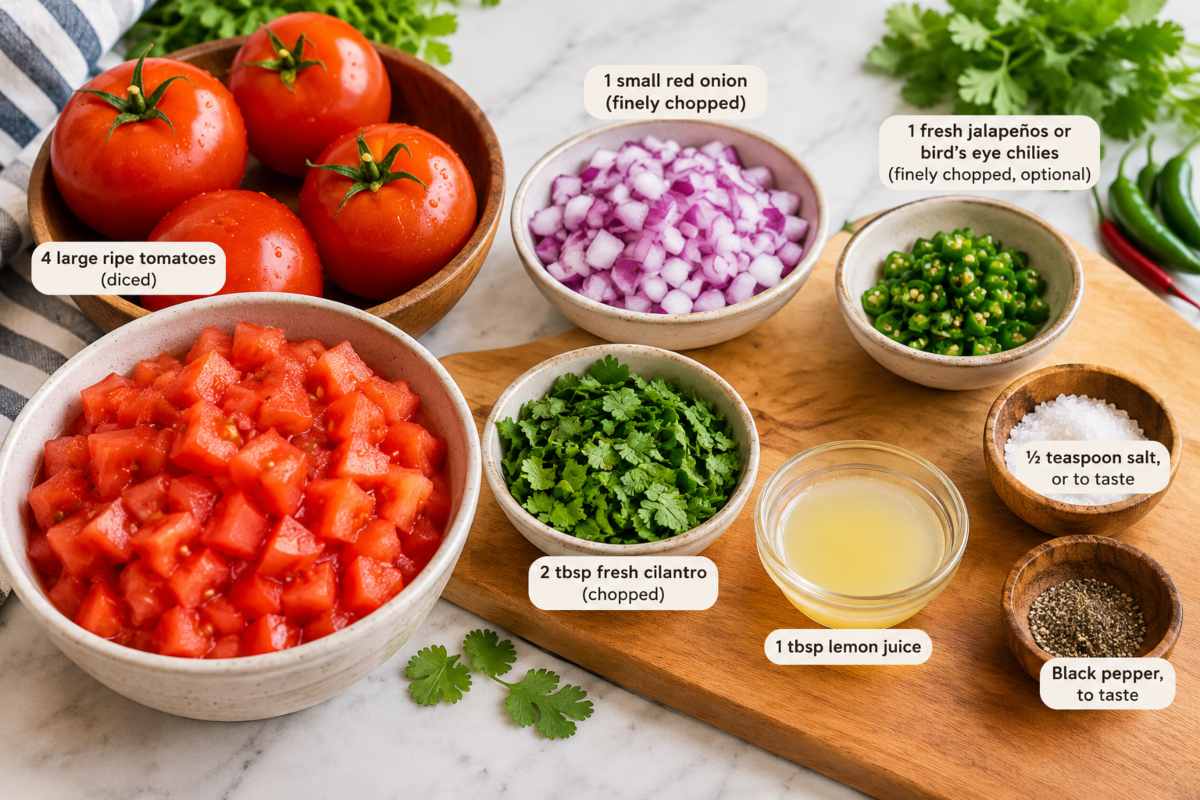
- 4 large ripe tomatoes, diced
- 1 small red onion, finely chopped
- 1 fresh jalapeños or bird eye chilies, finely chopped (optional)
- 2 tbsp fresh cilantro, chopped
- 1 tbsp lemon juice
- ½ teaspoon salt, or to taste
- Black pepper, to taste
Instructions
- Place the onion in a bowl of cold water for 5–10 minutes to reduce its sharpness. Drain and pat dry.
- Add the tomatoes, onion, chilies (if using) and cilantro to a large bowl.
- Pour in the lemon juice, sprinkle with salt and black pepper, and gently toss everything together.
- Let the kachumbari sit for 5–10 minutes so the flavors can come together. Taste and adjust the seasoning.
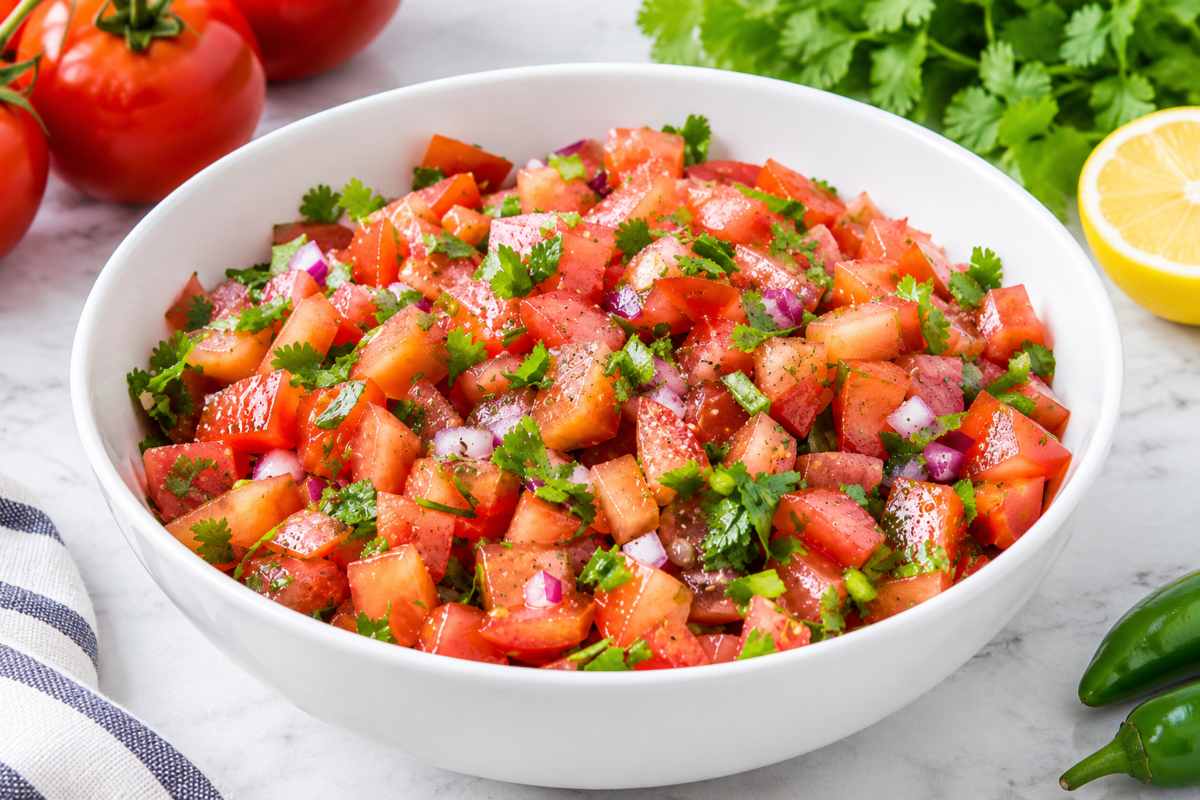
Kachumbari Kenyan Tomato and Onion Salad
Ingredients
Ingredients
- 4 large ripe tomatoes diced
- 1 small red onion finely chopped
- 1 fresh jalapeños or bird's eye chilies finely chopped (optional)
- 2 tbsp fresh cilantro chopped
- 1 tbsp lemon juice
- ½ teaspoon salt or to taste
- Black pepper to taste
Instructions
Instructions
- Place the onion in a bowl of cold water for 5–10 minutes to reduce its sharpness. Drain and pat dry.
- Add the tomatoes, onion, chilies (if using) and cilantro to a large bowl.
- Pour in the lemon juice, sprinkle with salt and black pepper and gently toss everything together.
- Let the kachumbari sit for 5–10 minutes so the flavors can come together. Taste and adjust the seasoning.
Notes
Nutrition
Kachumbari with Avocado (and Other Popular Variations)
Kachumbari with avocado is one of the most popular variations on the classic recipe, the avocado adds creaminess that balances the acidity of the tomatoes and lime, turning a sharp side salad into something closer to a light main. To make it, simply fold diced avocado into the finished kachumbari just before serving, rather than mixing it in early, since avocado softens quickly once it hits the citrus dressing. This version pairs especially well with starchier East African dishes, try it alongside something like Kenyan Mukimo, where the cool, creamy salad offsets the mash density.
Avocado is not the only direction kachumbari takes, though. Depending on the region and the cook, the base recipe flexes to include whatever fresh and on hand, which is part of why kachumbari appears in slightly different forms across Kenya, Tanzania, and Uganda.
Tomato Onion Only Version
The tomato onion only version is the original, most traditional form of kachumbari, and it’s still the most common way the salad is served across Kenya. This stripped down version relies entirely on ripe tomatoes, thinly sliced red onion, a squeeze of lime, and a pinch of salt, sometimes with chopped coriander, sometimes without. It is the version most likely to appear alongside nyama choma at a Kenyan barbecue, precisely because its simplicity lets the smoky, seasoned meat stay the centerpiece of the plate.
Adding Cucumber or Carrot
Adding cucumber or grated carrot is a common way to stretch kachumbari into a heartier side, especially when serving a larger group. Cucumber contributes extra crunch and a cooling effect that works well in hot weather, while grated carrot adds a subtle sweetness and a pop of color that makes the salad look more substantial on the plate. Neither ingredient is traditional in the strictest sense, but both show up regularly in home kitchens, kachumbari core appeal has always been its adaptability, which is likely why variations with cucumber, carrot, and avocado now appear in the majority of modern recipe write ups for the dish.
What to Eat Kachumbari With
Kachumbari is most often eaten alongside grilled or roasted meat, rice dishes, and stews, where its acidity and crunch cut through richer, heavier flavors. In Kenyan households, it is less a standalone dish and more a default companion, the kind of side that shows up on the table regardless of what the main course is, similar to how a green salad rounds out a Western meal. Its versatility is part of why it pairs just as well with a bowl of Chicken Stew East African Style as it does with grilled meat straight off the coals.
Kachumbari and Nyama Choma
Kachumbari and nyama choma is arguably the most iconic pairing in Kenyan cuisine, nyama choma (grilled meat, usually goat or beef) is smoky, fatty, and intensely savory, and kachumbari sharp acidity is what keeps each bite from feeling heavy. This combination is a fixture at Kenyan gatherings and roadside barbecue spots, where the salad is served fresh and cold specifically to contrast with the hot meat coming off the grill. If a Kenyan menu lists nyama choma, kachumbari is served alongside it by default, not as an optional extra.
Kachumbari for Pilau
Kachumbari for pilau works because the salad raw, tangy freshness balances the warm spices, cloves, cinnamon, cardamom, that give pilau its signature depth. Pilau on its own can taste rich and one note after a few bites, so kachumbari is typically served on the side specifically to reset the palate between forkfuls. This pairing is common enough in East African households that many cooks consider the two dishes incomplete without each other, a dish like Beef Coconut Pilau is a good example of the rich, coconut forward pilau that benefits most from kachumbari contrast, similar to how a stew benefits from a fresh side, such as our Kenyan Ground Beef Stew.
Kachumbari for Biryani
Kachumbari for biryani follows the same logic as its pairing with pilau, biryani layered spices and long cooking time produce a dish that is deeply flavorful but dense, and kachumbari raw vegetables and citrus bring back some lightness.
This pairing is especially common in Kenyan Indian fusion cooking, where recipes like our Chicken Biryani have been adapted with East African ingredients, and kachumbari has become the standard side rather than a raita or chutney. The salad short prep time, most versions come together in under 15 minutes, also makes it an easy last minute addition to a biryani spread that otherwise takes hours to cook.
Regional Variations
Kachumbari changes slightly depending on where it is made, even though the tomato and onion base stays constant across East Africa. The differences come down to what is added on top of that base and how the dish is used at the table, some regions treat it as a bright counterpoint to spiced mains, others as a simple everyday salad eaten on its own. These regional habits are shaped by what is locally available and which cuisines have influenced the surrounding food culture.
Kenyan Style
Kenyan style kachumbari is the version most people picture when they hear the name, diced tomato, thinly sliced red onion, chopped coriander, and a squeeze of lime, sometimes with a chopped chili for heat. It is served constantly in Kenyan households, appearing alongside grilled meat, stews, and rice dishes without much variation from meal to meal. A dish like Chicken Stew East African Style is a typical example of the kind of main this salad is built to accompany, something warm and richly spiced that benefits from a cold, acidic side.
Tanzanian and Ugandan Style
Tanzanian and Ugandan versions of kachumbari follow the same tomato onion foundation but lean into different regional additions, Tanzanian recipes sometimes include a touch of vinegar or extra chili for sharper heat, while in Uganda the salad is commonly served alongside nyama choma in much the same way it is in Kenya, reflecting how closely food traditions overlap across the three countries.
In Malawi, a related version goes by the name “sumu” or is simply called tomato and onion salad, showing how the same basic dish has been renamed and lightly adapted as it spread across the African Great Lakes region. Despite the small differences, the core identity of the dish, raw, acidic, and meant to offset heavier food, stays consistent everywhere it is made.
Tips for the Best Kachumbari
The best kachumbari comes down to three things, salting the onions before mixing, giving the salad enough resting time for flavors to meld, and eating it within a short window of making it. Skipping any one of these steps is usually what separates a flat, overly sharp kachumbari from one that tastes balanced and fresh.
Salting the onions is the step most home cooks skip, and it makes the biggest difference. Thinly slice the red onion, sprinkle it with salt, and let it sit for about 10 minutes before rinsing or draining, this pulls out some of the onion natural sulfur compounds, which are what cause that raw, eye watering sharpness. The result is an onion that still has bite but no longer overpowers the tomatoes and herbs around it.
Resting time matters just as much as prep. Once the tomatoes, onions, lime juice, and any additions like coriander or chili are combined, kachumbari benefits from sitting for 15 to 20 minutes before serving. This gives the acid time to soften the onion further and lets the flavors settle into each other rather than tasting like separate ingredients tossed in a bowl.
Freshness window is the one rule kachumbari does not bend on, it is meant to be eaten the same day it is made, ideally within a few hours. The tomatoes release liquid over time and the onions continue to soften, so a kachumbari left overnight turns watery and loses the crisp texture that makes it work as a side dish in the first place. If you are prepping ahead for a meal, cut the vegetables early but hold off on combining and dressing the salad until closer to serving time.
Conclusion
Kachumbari earns its place on the East African table through sheer versatility, a simple mix of tomato, onion, and lime that somehow works with grilled nyama choma, a spiced pot of pilau, or a rich plate of biryani just as easily as it stands alone as a quick, five minute side. Whether you keep it to the traditional tomato onion base or add avocado, cucumber, or carrot, the technique stays the same, salt the onions, let it rest, and eat it fresh. For more East African recipes to pair alongside it, explore the full collection at Devine Dishes.
Also try our other delicious recipes:
Frequently Asked Questions (FAQs)
What is kachumbari?
Kachumbari is a fresh, raw Kenyan salad made from diced tomatoes, sliced onions, coriander, and lime juice, often eaten alongside grilled meat, pilau, or biryani. It requires no cooking and is typically ready in under 15 minutes.
Is it spelled “kachumbari” or “kachumbali”?
“Kachumbari” is the standard, correct spelling used across Kenya, Tanzania, and most recipe sources. “Kachumbali” is a common misspelling or phonetic variation you may see online, but it refers to the same dish.
How spicy is kachumbari?
Traditional kachumbari has a mild kick from a single chopped chili, but the spice level is fully adjustable. Leave the chili out for a mild version, or add extra for a hotter salad.
How should kachumbari be stored?
Kachumbari is best eaten fresh within a few hours of making it, since the tomatoes release liquid and the onions soften over time. If needed, you can refrigerate it for up to a day, though the texture won’t be as crisp.