
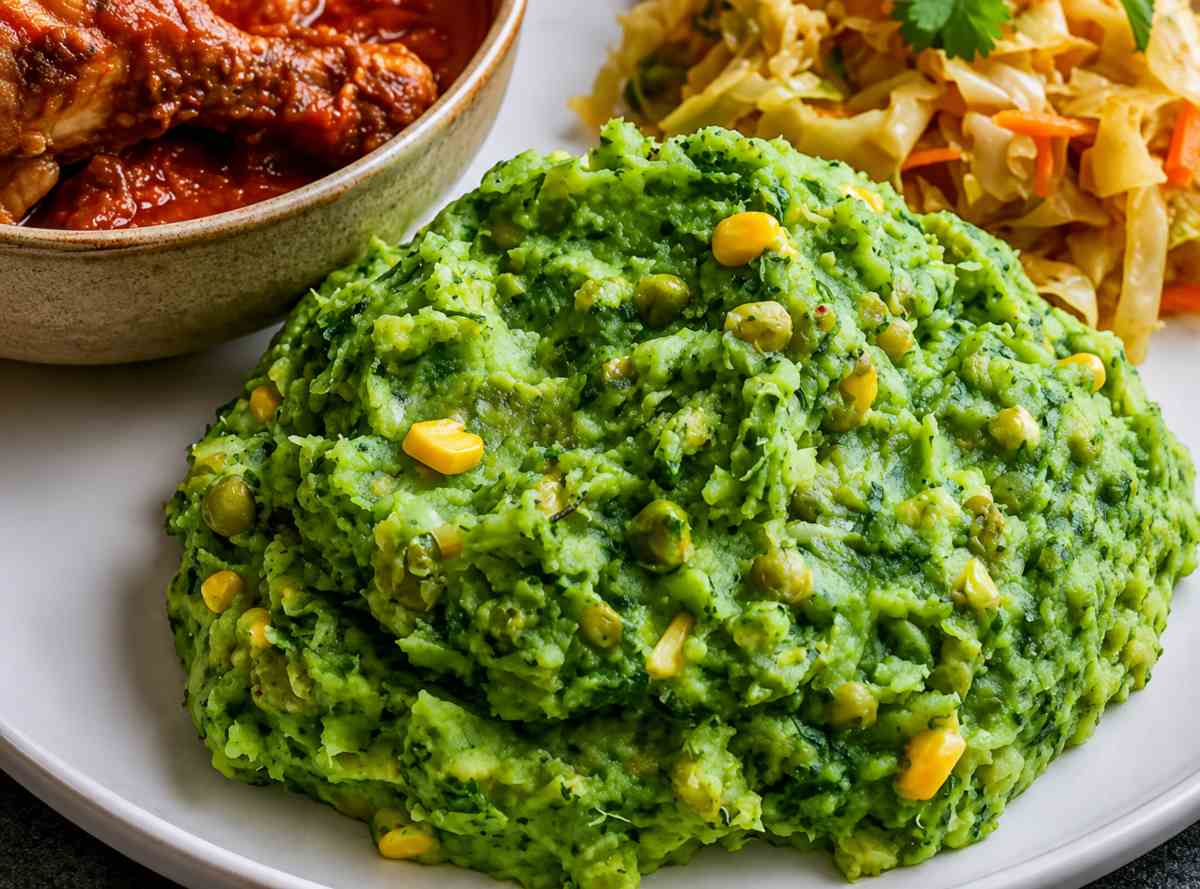
Mukimo is a traditional Kenyan dish made by mashing potatoes together with pumpkin leaves, peas and corn into a smooth, vibrant green side dish that is a staple at family meals throughout the country. Popular among the Kikuyu community of central Kenya, it’s often served alongside nyama choma or beef stew for a filling, nutrient dense meal that comes together in under an hour.
What sets mukimo apart from an ordinary mashed potato dish is the greens folded in during mashing, pumpkin leaves or spinach give it its signature color. At the same time, peas and corn add natural sweetness and texture. It is a dish rooted in Kikuyu farming traditions, where potatoes, maize and legumes have long been staple crops and it remains one of the most searched Kenyan recipes online today. If you are looking for more midday meal ideas to pair it with, our lunch recipes collection has plenty of options that work well alongside a plate of mukimo.
This recipe walks through the exact ingredients, mashing technique and serving pairings to make an authentic batch at home, whether you are cooking it for the first time or want to get the texture right.
Quick answer: Boil 1 kg of potatoes with 2 cups of corn until very soft, sauté onion with 1 to 2 cups of pumpkin leaves, spinach or kale, then mash everything together with 2 cups of peas, 4 tbsp butter and ½ to 1 cup of warm milk. Leave some corn and peas visible. It takes about 50 minutes, serves 4 to 6, and goes with beef stew, nyama choma or kachumbari.
What Is Mukimo?
Mukimo is a traditional Kenyan dish of mashed potatoes blended with pumpkin leaves, peas and corn, giving it a special green color and a texture somewhere between mashed potatoes and a hearty vegetable mash. It is eaten as a side dish across Kenya but is most closely associated with the Kikuyu community of the central highlands, where it developed as a way to combine staple farm crops, potatoes, maize, beans and leafy greens, into a single filling meal. The dish is typically served warm, alongside a protein like nyama choma or beef stew and a fresh kachumbari salad on the side.
Mukimo vs Irio, Same Dish, Different Name?
Mukimo and irio are closely related but not identical. Irio is the broader, older term for mashed potatoes combined with maize, beans and greens, while mukimo specifically refers to the version enriched with pumpkin leaves or spinach, which gives it a deeper green color and slightly softer texture. In everyday use, especially outside Kenya, the two names are often used interchangeably to describe the same general dish, but traditionally irio is considered the base preparation and mukimo one of its regional variations.
Where Mukimo Comes From (Mount Kenya and Kikuyu Origins)
Mukimo traces its roots to the agricultural communities around Mount Kenya, where the Kikuyu people have farmed potatoes, maize, beans and pumpkin leaves for generations. Mashing these staple crops together was a practical way to stretch a harvest into a nutritious, satisfying meal and the dish became a fixture of Kikuyu households long before it spread to wider Kenyan cuisine.
Today, mukimo is served at everyday family meals as well as celebrations and gatherings and it remains one of the most recognizable dishes tied to Mount Kenya farming culture, a reflection of how the region produce shaped its food traditions.
Making Delicious Kenyan Mukimo Recipe
Recipe Yield
Yield 4–6 servings | Prep Time 15 minutes | Cook Time 35 minutes | Total Time 50 minutes
Ingredients
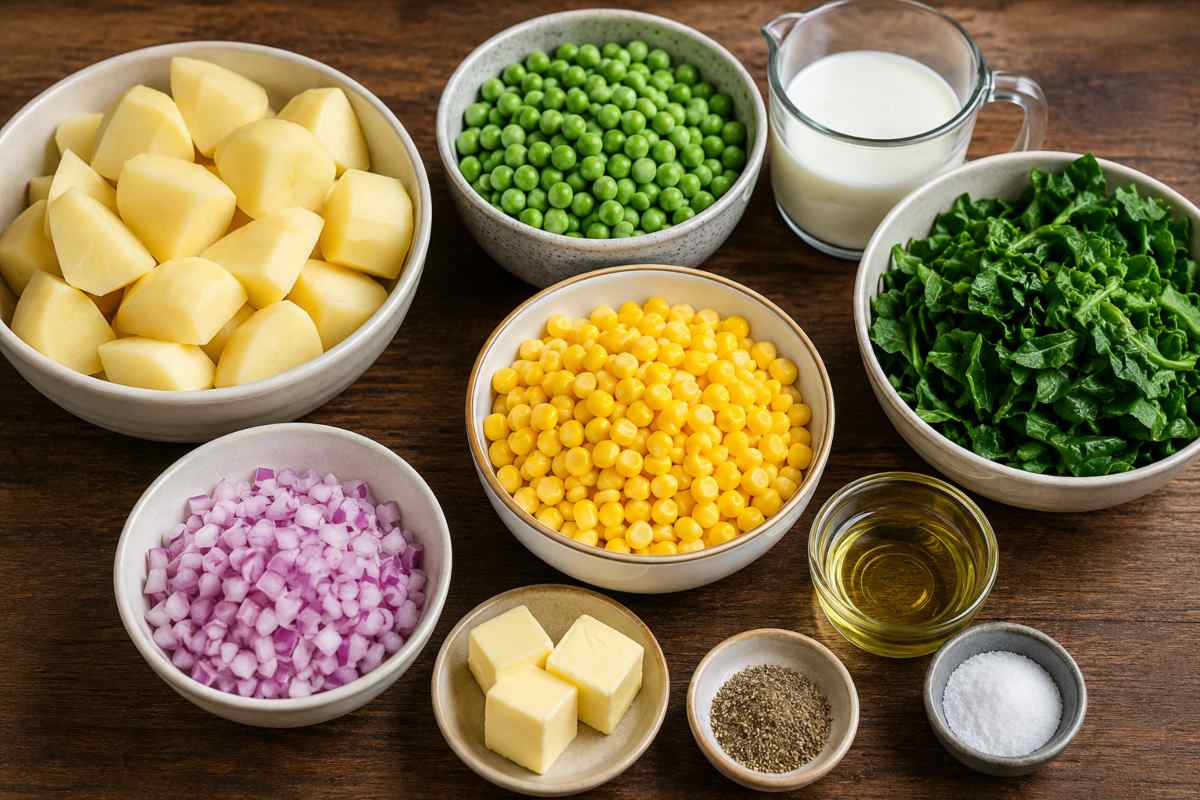
- 1 kg potatoes, peel and cut into chunks
- 2 cups green peas
- 2 cups maize/corn
- 1- 2 cups fresh pumpkin leaves, spinach or kale
- 1 large onion, finely chopped
- 4 tbsp butter
- ½–1 cup whole milk
- 1 tsp salt, plus more to taste
- ½ tsp black pepper
- 1–2 tbsp cooking oil
Instructions
- Boil the maize/corn in a large pot until tender. When almost ready, add the potatoes, season with salt and cook until very soft and easily pierced with a fork.
- While the potatoes cook, heat a little oil in a pan. Add your chopped onion and sauté until soft. Remove half of it and set aside.
- Add your chopped pumpkin leaves/spinach/kale to the rest of the onions and cook until tender. Season lightly with salt. Set aside.
- If using spinach, don’t overcook it! you want to preserve that beautiful green color.
- Boil milk together with butter. Set aside.
- Drain the potatoes/maize mixture very well and mash.
- Add the peas, followed by the sautéed veggies and continue to mash everything together. You should still be able to see little bits of maize and peas.
- Slowly add the warm milk until you get that gorgeous creamy consistency or to your liking.
- Add the salt and black pepper to taste.
- Serve with chicken stew or beef stew and side of sautéed cabbage.
Getting the Right Mashing Technique
The key to good mukimo is mashing the potatoes and greens together while everything is still hot, which lets the pumpkin leaves break down evenly and blend into a smooth, uniform mash rather than leaving stringy bits throughout.
Start by mashing the boiled potatoes on their own until mostly smooth, then fold in the cooked pumpkin leaves, peas and corn, mashing them together rather than stirring, a potato masher or the back of a large wooden spoon works better here than a blender, which can turn the greens gluey. Add a bit of the stocked cooking water a little at a time if the mash feels stiff, since mukimo should hold together but still scoop easily onto a plate.
Common Mistakes to Avoid
The most common mistake is boiling the potatoes and greens separately and combining them once they’ve cooled, which makes the greens harder to mash in smoothly and leaves visible flecks instead of an even green color throughout.
Overloading the pot with too much water is another frequent issue, mukimo should be firm enough to hold its shape on a plate, so draining well before mashing matters more than most home cooks expect. Finally, skipping the seasoning until the very end can leave the dish bland; salting the potatoes and greens while they cook, rather than only at the end, gives a more consistent flavor through the whole mash.
Delicious Kenyan Mukimo Recipe
Ingredients
- 1 kg potatoes peel and cut into chunks
- 2 cups green peas
- 2 cups maize/corn
- 1- 2 cups pumpkin leaves, spinach or kale fresh
- 1 large onion finely chopped
- 4 tbsp butter
- ½–1 cup whole milk
- 1 tsp salt plus more to taste
- ½ tsp black pepper
- 1–2 tbsp cooking oil
Instructions
- Boil the maize/corn in a large pot until tender. When almost ready, add the potatoes, season with salt and cook until very soft and easily pierced with a fork.
- While the potatoes cook, heat a little oil in a pan. Add your chopped onion and sauté until soft. Remove half of it and set aside.
- Add your chopped pumpkin leaves/spinach/kale to the rest of the onions and cook until tender. Season lightly with salt. Set aside.
- If using spinach, don’t overcook it! If you want to preserve that beautiful green color.
- Boil milk together with butter. Set aside.
- Drain the potatoes/maize mixture very well and mash.
- Add the peas, followed by the sautéed veggies and continue to mash everything together. You should still be able to see little bits of maize and peas.
- Slowly add the warm milk until you get that gorgeous creamy consistency or to your liking.
- Add the salt and black pepper to taste.
- Serve with chicken stew or beef stew and side of sautéed cabbage.
Video
Notes
Nutrition
Mukimo Variations
Mukimo isn’t a single fixed recipe, it changes depending on the greens, legumes and region a cook draws from and most Kenyan households have their own version built around what’s fresh or on hand. The core method of mashing hot potatoes with cooked vegetables stays the same across every variation; what changes is which greens or add ins go in.
Mukimo with Pumpkin Leaves
Pumpkin leaves are the classic choice for mukimo and the ingredient most people mean when they picture the dish’s deep green color. The leaves are boiled until tender, chopped fine and mashed directly into the potatoes, where their slightly earthy, mineral rich flavor balances the starchiness of the potato base. This version is the one most commonly served at family meals across central Kenya and is considered the standard against which other variations are measured.
Mukimo with Peas and Corn
Adding peas and corn to mukimo brings natural sweetness and a bit of consistency contrast to the smooth mash and it’s one of the most popular combinations for everyday cooking. Both vegetables are boiled alongside the potatoes and greens, then mashed in together rather than left whole, so they distribute evenly through the dish. This version pairs especially well with rich, savory proteins like beef stew, since the sweetness of the corn and peas offsets the heavier flavors on the plate.
Mukimo with Spinach
Spinach is a common substitute for pumpkin leaves when they’re not available, giving the mash a similar green color with a slightly milder, less earthy taste. Because spinach cooks down faster and holds more water than pumpkin leaves, it’s important to drain it well before mashing to avoid a watery, loose consistency. This variation is popular outside Kenya, where pumpkin leaves can be harder to find but spinach is a reliable year round substitute.
Green Mukimo
Green mukimo refers to versions made with a heavier ratio of leafy greens to potato, resulting in a mash that’s more vividly colored and slightly lighter in texture than the standard preparation. Cooks often use a mix of pumpkin leaves and spinach together to boost both the color and the nutritional content, since leafy greens add fiber and micronutrients that pure mashed potato lacks. This style is favored by those who want mukimo to lean more vegetable forward rather than potato heavy.
Potato Mukimo (No Greens)
Potato mukimo strips the dish back to its simplest form, mashed potatoes with maize and beans, without any leafy greens folded in. It’s a lighter, milder version often made for children or anyone who prefers a plainer flavor and it still carries the same base texture and starchy comfort food quality as the traditional dish. While it lacks the signature green color, it’s still recognized as a legitimate mukimo variation rather than a separate dish.
Mukimo with Maize and Beans (Mukimame)
Known as mukimame, this variation folds boiled maize and beans directly into the potato and greens mash, adding protein and a heartier, chewier bite to each spoonful.
It is closer to the traditional irio base than other variations and is often served as a more complete, standalone meal rather than strictly a side dish. A single serving of mukimame delivers a meaningful dose of plant based fiber and protein from the beans and maize alone, making it a popular choice for a filling vegetarian meal.
What to Serve with Mukimo
Mukimo is traditionally served as a side dish alongside a protein and a fresh vegetable component, rounding out the meal with opposing textures and flavors. The most common pairings are grilled meat, a rich stew or a tangy salad, each bringing something the mash on its own doesn’t.
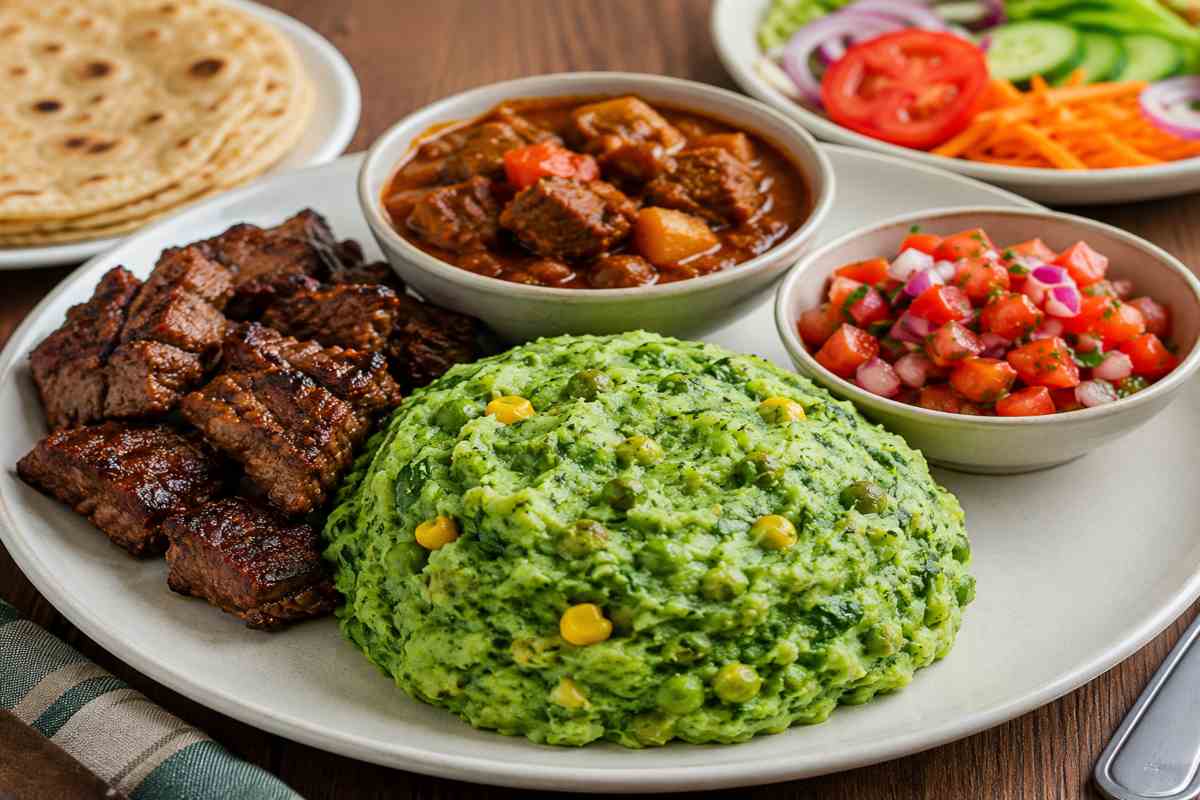
Mukimo and Nyama Choma
Nyama choma, Kenya’s popular grilled meat dish, is one of the most classic pairings for mukimo and the combination is a fixture at Kenyan gatherings and roadside eateries alike. The smoky and charred flavor of the grilled meat contrasts nicely with the soft, mild mash and the two are often served together on a shared platter rather than separate plates. If you’re building out a full spread, mukimo and nyama choma alongside a warm stack of Kenyan chapatis makes for a complete, traditional meal.
Mukimo and Beef Stew
Beef stew is another go to pairing, especially for a heartier, home style meal, since the rich, saucy stew soaks into the mash and adds depth the potato and greens don’t have on their own. A ladle of stew spooned directly over a mound of mukimo is a common way it’s served in Kenyan households, letting the sauce work its way through the mash as you eat. Our Kenyan ground beef stew is a straightforward version that comes together quickly and pairs especially well with this dish.
Mukimo and Kachumbari
Kachumbari, a tomato and onion salad with a squeeze of lime, is often served alongside mukimo to cut through the richness of the mash and any accompanying meat or stew. Its acidity and crunch provide a light contrast to mukimo’s soft texture, which is why the two are frequently plated together rather than kachumbari being treated as a separate course. This pairing is especially common at family meals, where the salad acts as a palate cleanser between bites of the heavier dishes on the table.
Tips for the Best Mukimo
Getting mukimo mashed potatoes and greens right comes down to three things, cooking the potatoes and greens together rather than separately, seasoning as you go instead of at the end and getting the texture firm enough to hold its shape on a plate. A few adjustments make the difference between an average batch and one that tastes like it came from a Kenyan kitchen.
Texture Drain the potatoes and greens thoroughly before mashing, excess water is the most common reason mukimo turns out loose or sloppy instead of holding together on the plate.
Seasoning Salt the potatoes and greens while they cook, not just at the end, so the flavor is even throughout rather than concentrated on the surface.
Consistency Mash while everything is still hot; cooled potatoes and greens are harder to blend smoothly and tend to leave lumps or stringy bits of leaf.
Make ahead Mukimo keeps well in the fridge for up to 3 days and reheats easily with a splash of water stirred in to loosen it back to its original texture, making it a practical dish to prep ahead of a gathering.
Serving temperature Serve warm rather than hot straight off the stove; letting it rest for a few minutes helps the mash firm up slightly, which makes it easier to plate neatly.
Conclusion
Mukimo is a simple, comforting dish that shows how a handful of everyday ingredients, potatoes, greens, peas and corn, can come together into something deeply tied to Kenyan tradition. Whether you stick with the classic pumpkin leaf version or try one of the variations like mukimame or green mukimo, the technique stays the same, mash everything together while it is hot, season as you go and let it rest before serving. Pair it with nyama choma, beef stew or a side of kachumbari for a meal that is simple to make but full of flavor.
Also try our other delicious recipes:
Frequently Asked Questions (FAQs)
What is the difference between mukimo and mokimo?
There is no real difference, mokimo is simply an alternate spelling of mukimo, often used in searches or informal writing. Both refer to the same traditional Kenyan mashed potato and greens dish.
What is another name for mukimo?
Mukimo is closely related to irio, an older, broader term for mashed potatoes combined with maize, beans and greens. The two names are often used interchangeably, though irio is technically the base dish mukimo builds on.
Is mukimo the same as irio?
Not exactly, irio is the traditional base of mashed potatoes, maize and beans, while mukimo specifically includes pumpkin leaves or spinach for its signature green color. Mukimo is best thought of as a variation of irio rather than an identical dish.
What vegetables go in mukimo?
The most common additions are pumpkin leaves or spinach, along with peas and corn, all mashed together with the potatoes. Some variations also include maize and beans for a heartier, more filling result.
Can you make mukimo without pumpkin leaves?
Yes, spinach is the most common substitute and gives a similar green color with a slightly milder flavor. You can also make it without any greens at all, though it won’t have the dish’s signature color.










2 Comments. Leave new
Such a comforting and unique recipe! 😋🥔 The combination of potatoes and peas looks absolutely delicious! 💚
Such a comforting and flavorful Kenyan dish! 🥔💚 The combination of creamy potatoes, greens, peas and corn sounds absolutely delicious. 😋✨