
This mahamri recipe makes soft, fluffy Kenyan coconut donuts with a golden crust and a tender, airy center. Mahamri is a lightly sweet Swahili fried bread from Mombasa and the Kenyan coast, often described as East African coconut donuts because coconut milk gives the dough its richness.
It is a staple of coastal breakfasts and tea time and a much-loved part of African cuisine. Below, I follow the method step by step, then cover how to keep the dough soft, fix hard or oily results and choose the right pairings. If you can make a basic yeast dough, you can make good mahamri at home.
Quick answer: Mahamri is a lightly sweet fried bread from the Swahili coast of East Africa, often called East African coconut donuts. The dough is enriched with coconut milk and flavored with cardamom, then cut into triangles and fried until puffed and golden. It is usually served with chai or beans.
What Is Mahamri?
Mahamri is a soft, lightly sweet fried bread from the Swahili coast of East Africa, often called East African coconut donuts. The dough is enriched with coconut milk and scented with cardamom, then cut into triangles and fried until puffed and golden. It sits somewhere between a donut and a bread, with an airy inside, a thin crisp crust and only a mild sweetness. That balance is why it works equally well with sweet chai at breakfast or with savory beans at lunch.
Swahili and Mombasa origins
Mahamri comes from the Swahili people of the East African coast and Mombasa is the city most closely tied to it. The coast has traded across the Indian Ocean for centuries and its food shows it. Coconut grows abundantly along the shoreline and spices like cardamom arrived through those sea routes, which is why they sit so naturally in coastal cooking. Many food writers link mahamri spiced, fried-dough style to that mix of local ingredients and Indian Ocean influence, though no single documented origin story is agreed on. Today mahamri is eaten across coastal Kenya and Tanzania and it has spread inland as a favorite breakfast and tea-time snack.
Why it is called mahamri, mamri and mahamri bread
“Mahamri” is the Swahili name for the bread and the same word is used for one piece or many. “Mamri” is a shortened spelling you will see on menus and in home kitchens and it refers to the same food. “Mahamri bread” is a descriptive English label that helps people searching in English understand that this is a bread-like fried dough rather than a sweet pastry. Spelling varies because Swahili words are often written differently across regions and in English transliteration, so all three names point to the same dish.
Mahamri vs Mandazi What is the Difference?
Mahamri and mandazi are both fried East African breads, but they are different foods. Mahamri is a softer, more bread-like dough enriched with coconut milk and scented with cardamom, while East African Mandazi is usually denser and sweeter, closer to a cake donut. Mahamri is most associated with the Swahili coast around Mombasa and mandazi is eaten widely across Kenya, Tanzania and Uganda.
Dough, flavor and texture compared
Mahamri dough is typically yeast-raised, which gives it an airy, springy crumb that puffs up when fried. Coconut milk adds richness and a mellow flavor and cardamom gives it a warm, floral note without making it taste sweet.
Mandazi is often leavened more quickly and tends to be sweeter, with a tighter, cakier bite. The shapes also tend to differ. Mahamri is classically cut into triangles or diamonds, while mandazi shapes vary more from cook to cook and recipes for both change from one household to the next.
| Mahamri | Mandazi | |
|---|---|---|
| Texture | Soft, airy, bread-like | Denser, cakier |
| Sweetness | Lightly sweet | Usually sweeter |
| Signature flavor | Coconut milk and cardamom | Varies by recipe |
| Typical shape | Triangles or diamonds | Varies |
Is mahamri the same as mandazi?
No, mahamri is not the same as mandazi, although they are closely related. Both are fried dough from East African kitchens and both are popular with tea, but mahamri has a softer, more bread-like crumb and a coconut-and-cardamom flavor, while mandazi is generally denser and sweeter. The names are sometimes used loosely, especially outside East Africa, so a menu that lists one may serve something close to the other. If you want the soft, fluffy, coconut-scented version, make mahamri.
How to make East African Mahamri at Home
Mahamri Ingredients
You need nine ingredients for this mahamri recipe, mostly pantry staples, with thick coconut milk and cardamom giving the dough its Swahili character.
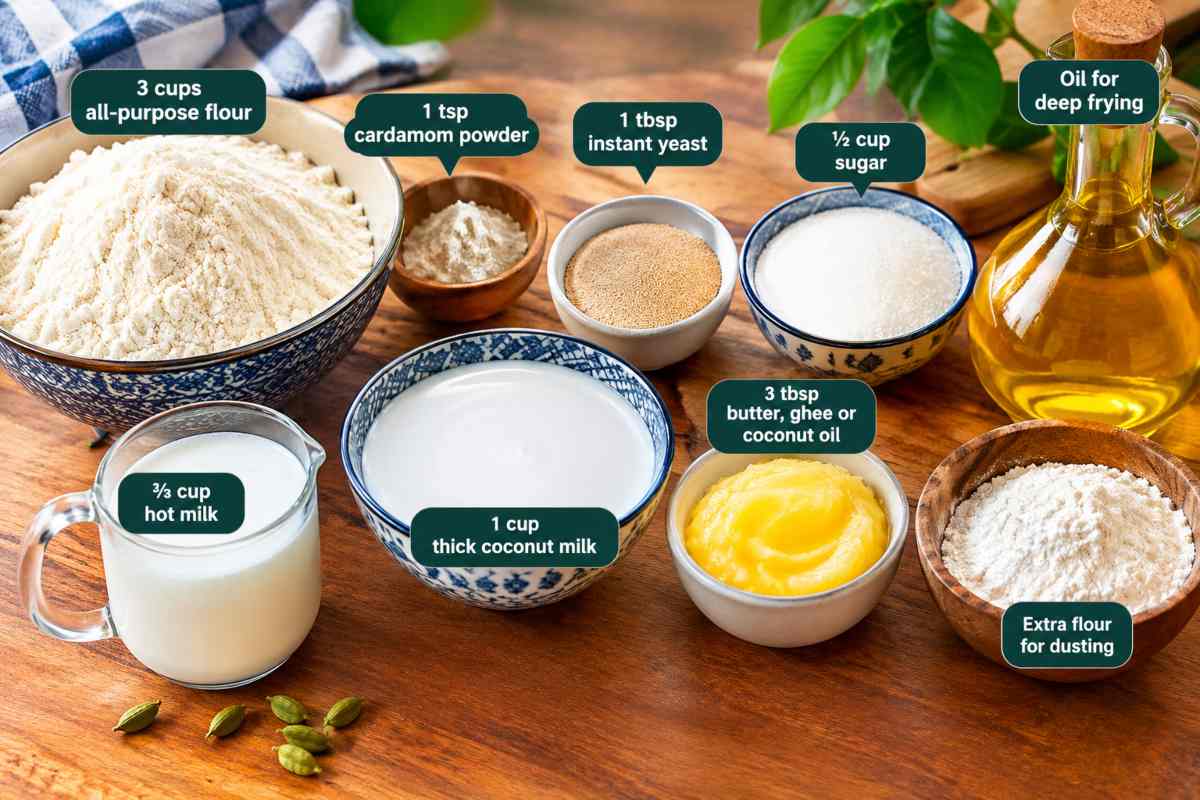
- 3 cups all-purpose flour
- 1 tsp cardamom powder
- 1 tbsp instant yeast
- ½ cup sugar
- ⅔ cup hot milk
- 1 cup thick coconut milk
- 3 tbsp butter, ghee or coconut oil
- Extra flour for dusting
- Oil for deep frying
Coconut milk, cardamom and yeast notes
Coconut milk: Thick coconut milk is the main source of richness in mahamri. It adds fat and a mellow sweetness, which gives a softer, more tender crumb than milk alone. Use full-fat, thick coconut milk as listed, because a thin or watery kind will change the dough. The same ingredient is the backbone of East African dishes like this beef coconut pilau, where it brings the same creamy depth to rice.
Cardamom: One teaspoon of cardamom powder is what makes mahamri smell and taste like the coast. It is warm and slightly floral and it works with the coconut milk instead of competing with it. If you already make mandazi, you will recognize the pairing, since both breads rely on coconut milk and cardamom, though mahamri is raised with yeast and mandazi is not.
Instant yeast: One tablespoon of instant yeast is what makes the dough rise and gives mahamri its airy, bread-like texture. Instant yeast is fine-grained and quick to activate, so it suits a dough warmed by hot milk. Measure it accurately and follow the order of mixing shown in the instructions.
Milk, butter and sugar: The hot milk and the fat (butter, ghee or coconut oil) keep the dough soft and tender, while the sugar adds the light sweetness mahamri is known for. Any of the three fats works as listed. Choose butter or ghee for a richer flavor or coconut oil to lean into the coconut.
How to Make Mahamri Step by Step
- Mix flour, sugar, yeast and cardamom.
- Add hot milk, coconut milk and butter.
- Knead into a soft dough.
- Cover and let rise until doubled.
- Roll out and cut into triangles.
- Fry until golden brown and puffed.
How to shape mahamri into triangles or diamonds
Roll the risen dough on floured surface to an even thickness, then cut it into triangles.To make triangles, cut the dough into squares and slice each square once on the diagonal. For diamonds, cut parallel diagonal lines across the dough, then cut across them at an angle.
The shape matters less than keeping every piece the same thickness, because even pieces puff and brown at the same rate. Use only as much of the extra flour as you need to stop sticking, since too much dries the surface and can make the mahamri tough.
How to make mahamri soft and fluffy
Soft, fluffy mahamri depends on a soft dough and a full rise. Knead until the dough is soft and fluffy, then cover it and let it rise until doubled, the clearest sign that the yeast has filled it with air. Handle the risen dough gently when rolling, because pressing hard or adding too much flour squeezes that air out and tightens the crumb. The coconut milk and butter keep the texture tender. Fry only until the pieces are golden brown and puffed and drain them on paper towels, since mahamri fried too long turns dry and hard.
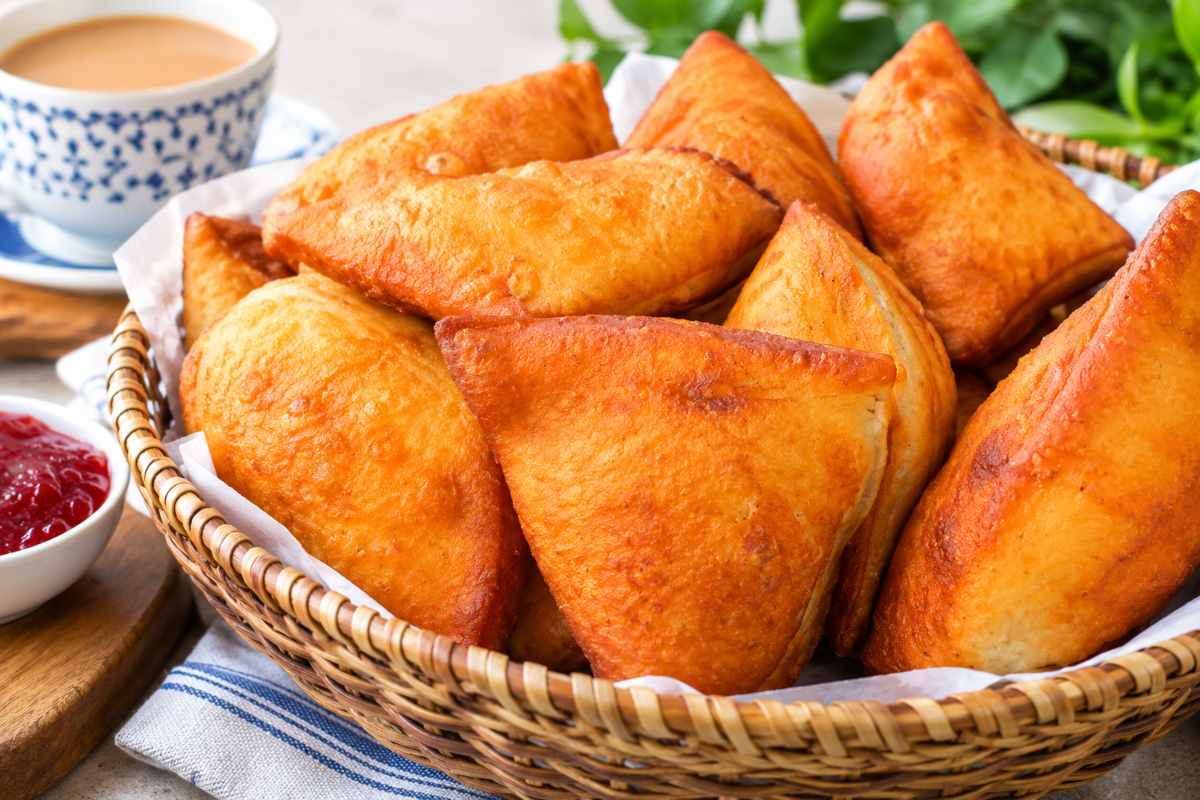
Fluffy Kenyan Coconut Donuts (Mahamri)
Ingredients
- 3 cups all-purpose flour
- 1 tsp cardamom powder
- 1 tbsp instant yeast
- ½ cup sugar
- ⅔ cup hot milk
- 1 cup thick coconut milk
- 3 tbsp butter ghee or coconut oil
- Extra flour for dusting
- Oil for deep frying
Instructions
- Mix flour, sugar, yeast and cardamom.
- Add hot milk, coconut milk and butter.
- Knead into a soft dough.
- Cover and let rise until doubled.
- Roll out and cut into triangles.
- Fry until golden brown and puffed.
Video
Notes
Nutrition
Why Is My Mahamri Hard or Oily?
Mahamri turns hard when the dough is too stiff, under-risen or fried too long and oily when the oil is not hot enough or the pan is crowded. Both problems come from a few small choices in the dough and the frying and each one is easy to fix.
Why is my mahamri hard?
Hard mahamri usually means the dough was too stiff, did not rise fully or was fried for too long. Extra flour is the most common cause, because it dries the dough. Dust the surface lightly when rolling and keep the dough soft and slightly tacky, as in the “soft dough” step of the recipe. A short rise is the second cause. If the dough has not doubled, it lacks the air that keeps the crumb tender, so give it the full time and judge it by size rather than the clock.
Frying too long is the third, once the pieces are golden brown and puffed, take them out, since extra time dries them into hard, crisp bites. Rolling too hard or re-rolling scraps many times also presses out air and toughens the dough. If your mahamri has already gone firm, cover the cooked pieces with a clean cloth as they cool and reheat them briefly to soften them.
Why is my mahamri oily?
Oily mahamri almost always means the oil was not hot enough when the dough went in. In cool oil, the dough soaks up fat before the outside can seal and puff. As a general frying guide, yeast doughs do well at roughly 170–180°C (340–350°F). Without a thermometer, drop in a small scrap of dough, it should sizzle at once and float up, not sink and sit quietly.
Frying too many pieces at once is the second cause, because each piece lowers the oil temperature, so fry in small batches and let the oil recover between them. Pieces rolled too thin can also absorb more oil than thicker ones, so keep the thickness even. Finally, drain the mahamri on paper towels straight after frying so extra oil does not sit on the surface.
What to Serve With Mahamri
The classic pairing for mahamri is a cup of hot, spiced chai and the most traditional meal is mahamri with beans in coconut sauce (maharagwe ya nazi). It also works well with pigeon peas, a savory stew or a fresh kachumbari. Because mahamri is only lightly sweet, it suits both a sweet drink at breakfast and a savory plate at lunch or dinner.
Mahamri and chai
Mahamri and chai is the most common way to eat it, especially at breakfast and tea time on the Swahili coast. Hot, milky, spiced Kenyan chai balances the lightly sweet, cardamom-scented bread and the soft crumb soaks up the tea in the best way. The warmth of the chai also complements the coconut in the dough. Tear a piece of fresh mahamri, dip it in the cup and eat it right away while the outside is still slightly crisp. For a simple morning spread, this is all you need.
Mahamri and beans (maharagwe ya nazi)
Mahamri with maharagwe ya nazi, which means beans cooked in coconut milk, is the best-known savory pairing and turns the bread into a filling meal. The beans are creamy, mildly spiced and rich and the soft mahamri works like bread for scooping up the sauce. The coconut in both dishes ties them together, so the plate tastes balanced rather than heavy. Serve the beans hot, spoon them over or beside warm mahamri and eat it as a hearty breakfast or lunch. It is a staple of coastal Kenyan home cooking and street food.
Other pairings pigeon peas, stew and kachumbari
Pigeon peas (mbaazi), usually cooked in coconut milk, are a close cousin of the bean pairing. They are thick, creamy and a little sweet, so they sit comfortably beside the cardamom in the mahamri. For a heartier meal, serve mahamri with a savory stew, such as a rich chicken stew or a spiced ground beef stew and use the bread to mop up the gravy. Add a bowl of fresh kachumbari, the crisp tomato and onion salad, to cut through the richness with a bright, tangy bite. Choose one or two of these for a balanced plate: something creamy or saucy, plus something fresh.
How to Store, Reheat and Freeze Mahamri
Store cooled mahamri in an airtight container and eat it within a day or two, reheat it in a warm oven or air fryer to bring back the soft inside and light crispness and freeze it for longer storage. You can also make the dough ahead and chill it overnight, so you can fry fresh mahamri whenever you want them.
Storing and reheating
Let the mahamri cool completely before storing, so steam does not collect in the container and turn the crust damp. Keep them in an airtight container at room temperature for a day or refrigerate them for up to three days. Because the dough contains milk and coconut milk, do not leave cooked mahamri out for long.
The USDA advises discarding perishable cooked food left out for more than 2 hours or 1 hour in hot weather above 90°F (32°C). To reheat, warm them in a 160–175°C (320–350°F) oven for about five to eight minutes or in an air fryer for a few minutes, until hot through. A dry pan over low heat also works. The microwave is quickest, but it softens the crust, so use it only when you are short on time.
Can you freeze mahamri?
Yes, you can freeze mahamri and it freezes well. Cool the cooked pieces completely, then freeze them in a single layer on a tray until firm so they do not stick together. Move them to an airtight freezer bag, pressing out the air and keep them frozen for up to two months for the best texture. To serve, reheat straight from frozen in a warm oven or air fryer until hot and slightly crisp or thaw them first at room temperature for a softer result. Avoid refreezing mahamri once thawed, since each freeze and thaw dries out the crumb.
Making the dough ahead
You can make the mahamri dough ahead by kneading it as usual, covering it well and refrigerating it overnight instead of letting it rise at room temperature. The slow, cool rise keeps the dough manageable and lets you fry fresh the next day. When you are ready, take it out of the fridge and let it come to room temperature and rise until doubled if it has not already. Then roll it out, cut it into triangles and fry until golden brown and puffed, exactly as in the recipe. Keep the dough covered the whole time so the surface does not dry out and form a crust.
Conclusion
This mahamri recipe turns a few pantry ingredients into soft, fluffy Swahili coconut donuts, with a dough that rises until doubled and fries up golden and puffed. Serve them warm with chai or coconut beans and freeze any extras for later. For more East African favorites and easy home cooking, explore Devine Dishes.
Also, try our other delicious recipes:
Frequently Asked Questions (FAQs)
Is mahamri the same as mandazi?
No. Mahamri is yeast-raised with coconut milk and cardamom, so it is softer and more bread-like. Mandazi is usually denser and sweeter.
Can you freeze mahamri?
Yes. Cool the cooked pieces, Spread them out to freeze in a single layer before moving them to a sealed container for up to two months. Reheat from frozen in a warm oven or air fryer.
Why is my mahamri hard?
Usually from too much flour, too short a rise or frying for too long. Keep the dough soft, let it double and take the pieces out once they are golden and puffed.
What do you serve with mahamri?
Chai is the classic pairing and coconut beans (maharagwe ya nazi) turn it into a full meal. Stew, pigeon peas or kachumbari also work well.
Does mahamri need yeast?
Yes, mahamri is yeast-raised and this recipe uses 1 tablespoon of instant yeast. The yeast lets the dough rise until doubled, which gives the airy, bread-like crumb.









1 Comment. Leave new
These mahamri turned out beautifully soft and fluffy with a delicious coconut and cardamom flavor. They were perfect with a cup of chai!