
Some recipes just make sense the moment you try them. This mango watermelon smoothie is one of those. Two fruits that already taste like summer on their own, blend them with a little yogurt, honey, and milk, and what you get is something that feels way more special than the five minutes it actually takes to make.
I have been making this watermelon mango shake for a few summers now, and every time the temperature climbs past the point of being reasonable, this is the first thing I reach for. It’s cold, it’s sweet without being sugary-heavy, and it genuinely keeps you going until your next meal. If you’ve never tried mango and watermelon together, fresh fruit, no powders, no frozen packets, you’re about to understand why this combination works so well.
Quick answer: Blend 2 cups diced mango, 2 cups diced watermelon, ½ cup yogurt, ½ cup milk and 1 tablespoon honey on high for 45 to 60 seconds until smooth. Start with less milk, since watermelon releases a lot of juice. Drink it right away, because it separates as it sits.
Why This Watermelon and Mango Smoothie Hits Different
There are hundreds of smoothie recipes out there, and most of them are fine. This one stands out for a few specific reasons:
First, the fruit ratio matters. Equal parts mango and watermelon mean neither one overpowers the other. Mango brings the creaminess and tropical depth; watermelon brings the lightness and that fresh, barely-sweet juice that keeps the whole drink from feeling heavy. Together, they balance out almost perfectly without needing much added sweetness.
Second, the yogurt. A lot of smoothie recipes skip it or make it optional, here it genuinely changes the texture. It makes the mango watermelon smoothie thicker and adds a slightly tangy edge that cuts through the fruit’s sweetness in the best way. If you’ve ever blended fruit with just milk and thought it tasted thin, yogurt is the fix.
Third, this is a legitimately fast recipe. No soaking, no prepping the night before, no frozen fruit required (though it works with frozen too). You dice, you blend, you pour. That’s it.
Making Mango Watermelon Smoothie
Ingredients for Mango Watermelon Smoothie
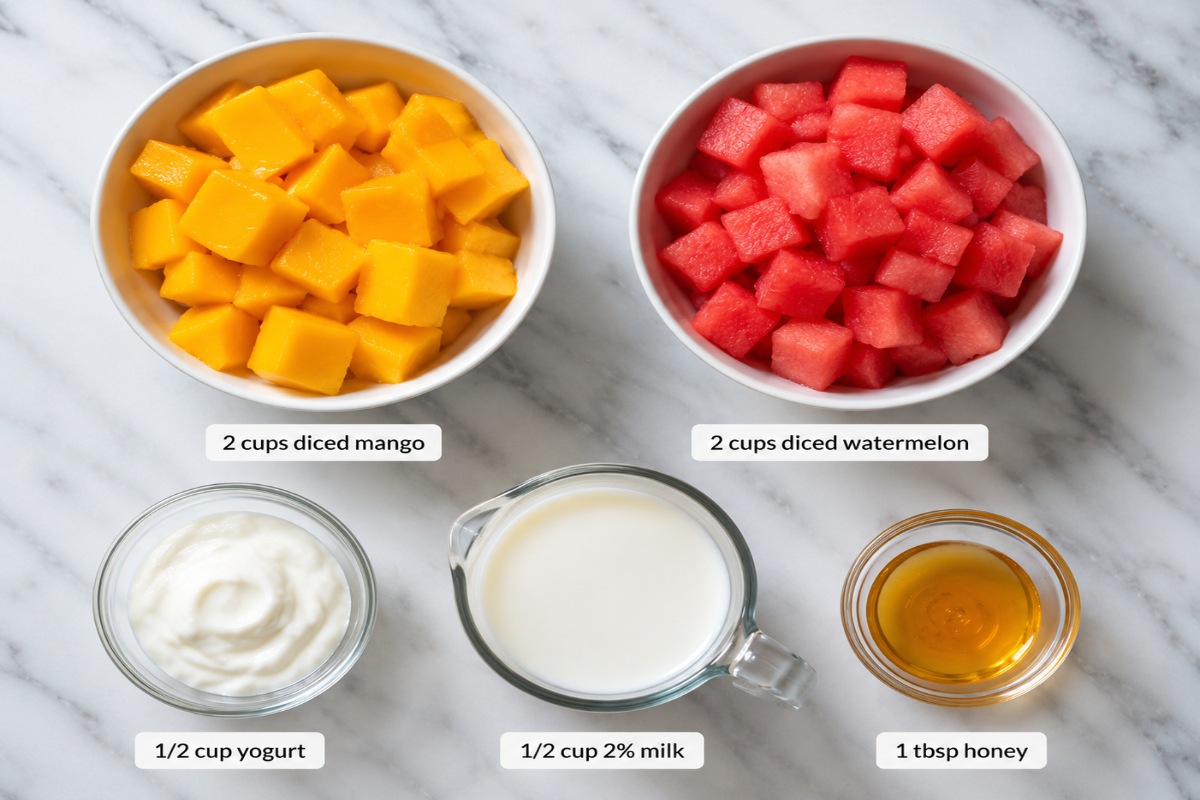
- 2 cups diced mango
- 2 cups diced watermelon
- ½ cup yogurt
- ½ cup 2% milk
- 1 tbsp honey
Instructions
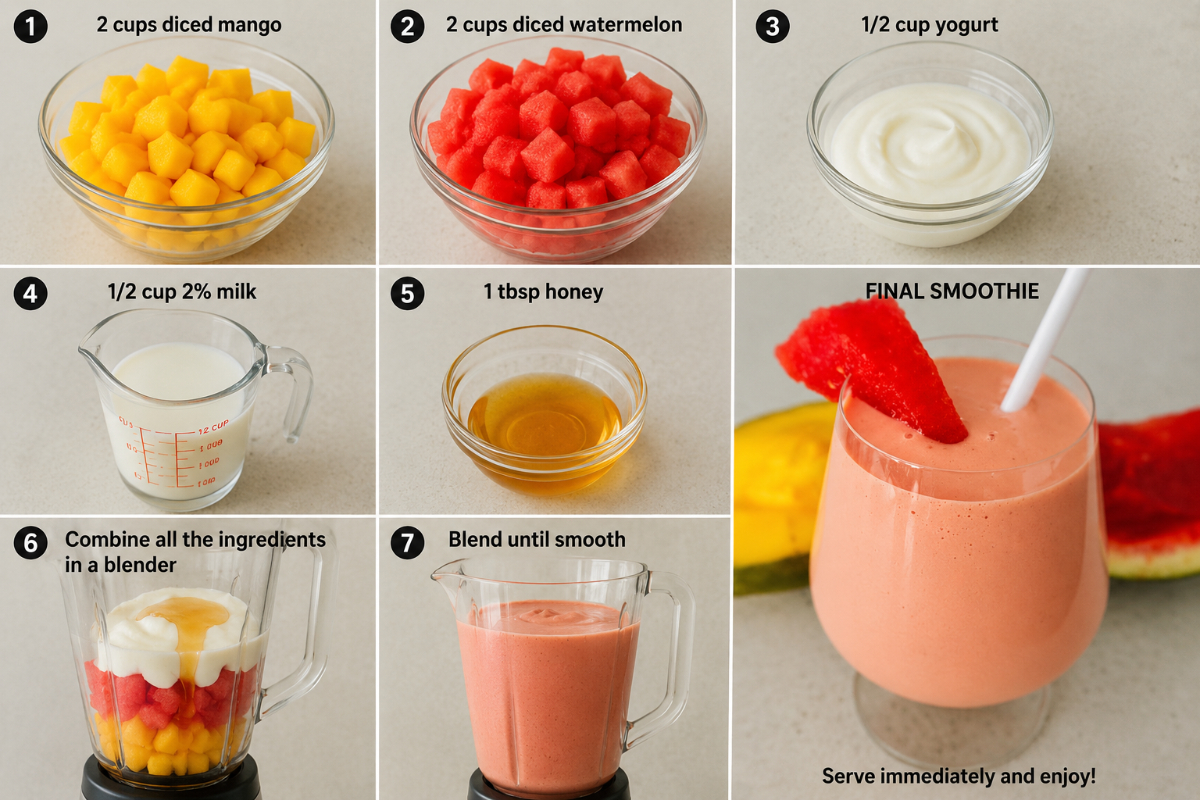
- Combine all the ingredients in a blender and blend until smooth.
- Serve immediately and enjoy!

Easy Mango Watermelon Smoothie
Ingredients
- 2 cups mangoes ripe, diced
- 2 cups watermelon diced
- ½ cup yogurt
- ½ cup milk 2% or milk of choice
- 1 tbsp honey
Instructions
- Combine all the ingredients in a blender and blend until smooth.
- Serve immediately and enjoy!
Video
Notes
Nutrition
How to Make a Mango Watermelon Smoothie That Actually Tastes Right
The ingredients list is short, but there are a few things that make a real difference between a good watermelon mango smoothie recipe and a great one.
Pick ripe fruit
This sounds obvious, but it’s what matters most. A ripe mango should give slightly when pressed and smell sweet near the stem. Watermelon should feel heavy for its size and sound hollow when tapped. Underripe fruit makes a bland smoothie, no matter how much honey you add.
Do not skip the yogurt
It adds body and a subtle tang. Full-fat yogurt gives the creamiest result; Greek yogurt makes it thicker and slightly more filling. Both work well.
Add liquid last
Or at least start with less. Watermelon releases a surprising amount of juice when it blends, so your smoothie might end up thinner than expected if you pour the full half-cup of milk in right away. Begin with ¼ cup and adjust as needed.
Blend long enough
Give it a full 45–60 seconds on high. Mango has fibrous strands that need time to break down fully, and you want the yogurt completely incorporated before you pour.
Serve right away
This one separates as it sits, the watermelon juice and the creamier yogurt layer naturally want to settle. Drink it fresh for the best texture.
Watermelon Mango Smoothie Benefits
This section comes up constantly in search, and honestly, it deserves a real answer rather than a generic list. Here’s what the research actually says.
Watermelon a source of lycopene
Lycopene, an antioxidant that gives watermelon its red color, has been studied for its potential role in supporting heart health, lowering blood pressure, and protecting cells from oxidative damage. Watermelon has the highest levels of lycopene compared to all other fresh fruits and vegetables, and lycopene is linked to a decreased risk of cancer, heart disease, and age-related eye disorders. One glass of this smoothie gives you a meaningful amount of it.
Watermelon also contains citrulline
An amino acid that’s been studied for its role in circulation and muscle recovery. Research has shown that athletes who consumed watermelon juice experienced less muscle soreness and quicker heart rate recovery compared to those who took citrulline alone, which means this watermelon and mango smoothie is genuinely useful as a post-workout drink, not just a summer treat.
Mango is more than just vitamin C
Yes, it’s high in vitamin C, a single cup covers most of your daily requirement, but that’s not the whole story. A 2025 review of 29 studies from Illinois Institute of Technology found that mango may help people feel full, maintain a healthy weight, and support blood sugar control. One study in the review found that people who snacked on mango felt more satisfied two hours later compared to eating a low-fat cookie with the same number of calories.
The yogurt adds more than creaminess
Yogurt contains probiotics, live cultures that support gut health and immune function. Paired with the fiber from both fruits, this mango-and-watermelon juice hybrid is the kind of drink that actually works for your digestive system, not just your taste buds.
Hydration is real here
Watermelon is approximately 92% water. Mango is high in electrolyte-supportive potassium. On a hot day when you’re not drinking enough water, and you want something that tastes better than plain water, this smoothie does double duty.
Quick Nutrition Snapshot Per Serving
| Nutrient | Amount |
| Calories | 527 kcal |
| Carbohydrates | 106g |
| Protein | 14g |
| Fat | 10g |
| Fiber | 7g |
| Vitamin C | 154mg |
| Potassium | 1,351mg |
| Vitamin A | 5,938 IU |
| Calcium | 377mg |
Note: Values are estimates and vary based on fruit ripeness and specific products used.
Make It Your Own Variations That Work
Dairy free version
Swap the yogurt for coconut yogurt and use oat milk or almond milk instead of regular milk. The texture stays thick, and the tropical flavor actually gets a small boost from the coconut base.
Frozen fruit version
Use frozen mango chunks and freeze your watermelon cubes the night before. This turns the smoothie into something closer to a sorbet-style drink, frostier, thicker, and perfect for hotter days. No ice needed.
Higher protein version
Add a scoop of vanilla protein powder or swap regular yogurt for Greek yogurt. Either way, you push the protein from 14g to 25–30g per serving, making it a genuinely satisfying post-workout option.
Green smoothie version
Add a big handful of baby spinach before blending. The flavor does not change, mango is strong enough to cover it completely, but you get an extra hit of iron and folate.
Tropical twist
Add 2–3 chunks of fresh pineapple or half a banana. The banana makes it creamier and slightly richer; the pineapple gives it a sharper citrus edge. If you enjoy our, you’ll like this variation a lot.
Thicker smoothie bowl
Cut the milk to 2 tablespoons and keep the yogurt at the full amount. Pour into a bowl and top with granola, sliced banana, coconut flakes, or a drizzle of honey for a proper smoothie bowl.
Storage, Freezing and Make Ahead Tips
Can you store it? You can keep leftover smoothie in a sealed jar in the fridge for up to 12 hours. Give it a good shake or stir before drinking, it will separate as it sits, which is completely normal. The flavor holds well, the texture gets slightly thinner.
Can you freeze it? Yes. Transfer the blended smoothie into popsicle molds and place them in the freezer until solid.4–6 hours. You get mango watermelon smoothie popsicles with zero effort. Kids love them. Adults also love them and will claim they made them “for the kids.”
Can you prep the fruit ahead of time? Definitely, dice the mango and watermelon the night before and store them in an airtight container in the fridge. In the morning, you just throw everything in the blender. This makes the 5-minute recipe a 2-minute recipe, which matters on weekday mornings.
Can you use frozen mango from a bag? Yes. Frozen mango chunks work perfectly in this watermelon mango smoothie recipe. They blend slightly differently, you may need to let them sit at room temperature for 5 minutes first so your blender doesn’t strain, but the result is just as good and arguably thicker.
Tips for Getting the Best Texture
A few things that make a real difference:
The order you add ingredients to your blender matters more than most people think. Add the milk and yogurt first so there’s liquid at the base, this helps the blades catch the fruit from the start. Watermelon goes in next (it’s soft and blends fast), then mango. Honey goes last, so it doesn’t stick to the blades without mixing.
If your blender is struggling with the mango, add a splash more milk. Don’t force it. Overworking a blender with frozen or very cold fruit can burn out the motor over time.
For an extra cold smoothie without diluting it, freeze your mango chunks the night before instead of adding ice. Ice cubes water down the flavor as they melt, pre-frozen fruit gives you the same chill without the trade-off.
What Goes Well With This Smoothie?

This watermelon-mango smoothie works as a standalone breakfast or a midday snack. Still, it also pairs really well with other quick morning dishes. If you’re putting together a full breakfast spread, try it alongside our Easy French Toast for a combo that satisfies both your sweet tooth and your thirst. For a lighter pairing, our Avocado Toast provides enough healthy fat and protein, and the smoothie rounds out the meal without making it too heavy.
Common Smoothie Making Mistakes And How to Avoid Them
Using unripe mango. This is the number one reason smoothies taste flat. Hard mango blends into something fibrous and mildly bitter. Let it ripen on your counter for a day or two if needed, the wait is worth it.
Adding too much liquid upfront. Watermelon already carries a huge amount of natural juice. Add your milk gradually and check the consistency as you go.
Skipping the honey entirely. If your fruit is ripe and sweet, you might not need it, fair enough. But if you find the smoothie tastes slightly flat or not quite balanced, a single tablespoon of honey usually fixes it without making the drink taste sugary.
Blending on low speed first. High speed from the start gives you a smoother result. Starting low and working up can leave mango chunks that don’t fully integrate.
Conclusion
This mango watermelon smoothie has stayed in rotation on this site for a reason, it is one of those recipes that genuinely works every time. Ripe fruit, a good blender, and five minutes. That’s the whole thing. Whether you’re making it as a quick breakfast before a long day, blending up a watermelon mango shake for the kids after school, or reaching for a cold post-workout drink on a hot afternoon, this one delivers. Give it a try, and if you do, leave a rating and let me know how it turned out. It makes a real difference for the site, and I read every single one.
Refreshing tropical smoothie
Easy avocado blueberry smoothie
Sugar Free Lemonade
Strawberry Banana Smoothie
Frequently Asked Questions (FAQs)
Can I use canned mango instead of fresh?
You can, but rinse and drain it first, since canned mango is often packed in syrup that can make the smoothie very sweet. Fresh or frozen mangoes give much better flavor and let you control the sweetness with your own honey.
Is this smoothie good for weight loss?
It’s naturally sweetened, low in added sugar, and relatively filling thanks to the yogurt and fiber content. That said, at around 527 calories per serving, it’s more of a meal replacement than a low-calorie snack. If you want something lighter, reduce the mango to 1 cup and cut the milk to ¼ cup.
Can I make mango and watermelon juice without yogurt?
Yes, skip the yogurt and use just the fruit, milk, and honey. The result is thinner, more like a juice than a smoothie, but still delicious. It’s closer to a traditional watermelon mango shake and refreshing in its own way.
How is this different from a watermelon mango smoothie recipe without dairy?
Swap the yogurt for coconut yogurt and use oat milk. The smoothie stays thick and creamy because coconut yogurt has a similar fat content, and honestly, the coconut adds a slightly tropical note that works beautifully with both fruits.
Can kids have this smoothie?
Absolutely. It has no added caffeine, no artificial ingredients, and the honey can be reduced or skipped for very young children (under 12 months, skip honey entirely). It’s one of the easiest ways to get two fruits into kids who might not sit down and eat a bowl of cut melon.
Why does my smoothie taste watery?
Most likely, the watermelon released more liquid than expected during blending. Next time, reduce the milk to ¼ cup, or use frozen watermelon chunks to keep the consistency thicker. Adding a tablespoon of extra yogurt also helps.
Can I make this without a high-powered blender?
Yes. Watermelon and ripe mango are both soft fruits that blend easily in standard blenders. Just make sure your mango is fully ripe and dice it into smaller pieces so the motor doesn’t have to work too hard.
How far in advance can I make this?
Best consumed right away for optimal texture, but it holds in a sealed container in the fridge for up to 12 hours. Shake or stir before drinking.
Is a watermelon mango smoothie good for post-workout recovery?
It’s a solid option. Watermelon’s citrulline content has been linked to reduced muscle soreness, the natural sugars help restore glycogen, and adding Greek yogurt boosts protein. For a more complete recovery drink, add a scoop of protein powder.
Can I add greens to this without tasting them?
Yes, a handful of baby spinach blends in completely. Mango is one of the most flavorful fruits for a blender, it masks greens effectively. You won’t taste the spinach.















2 Comments. Leave new
This Mango Watermelon Smoothie recipe from Devine Dishes is an absolute summer gem! The combination of ripe mango and fresh watermelon creates a perfectly balanced, creamy drink that is both refreshing and naturally sweet. What I love most is how quick and easy it is just five minutes and a handful of simple ingredients, yet the result tastes like something from a fancy café. The tips on fruit ripeness, yogurt texture, and liquid quantity are genuinely helpful and make a real difference. A must-try recipe for anyone looking for a healthy, delicious, and fuss-free drink!
A refreshing mango watermelon smoothie sounds perfect for a hot day! 🥭🍉🥤 So easy and delicious!