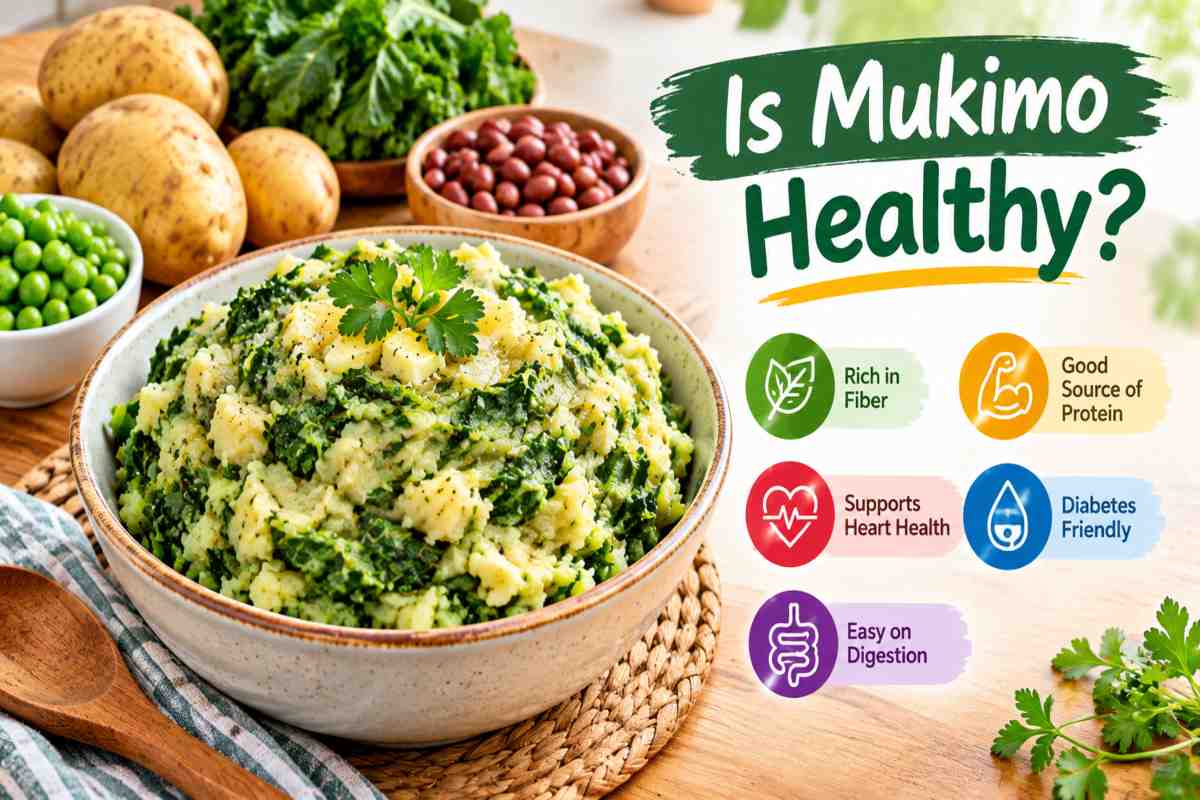
Is mukimo healthy? Yes, mukimo is healthy, this traditional Kenyan Mukimo dish combines potatoes, peas, maize and pumpkin leaves into a nutrient dense plate that offers fiber, plant protein, potassium and vitamin A in a single serving. Rather than being “just mashed potatoes,” mukimo owes much of its nutritional strength to the greens mixed in, a single cup of cooked pumpkin leaves provides 38% of the daily value for vitamin A, making this humble side dish far more nutritionally complete than it looks.
What makes mukimo worth a closer look is not just what is in it, but who it works for. Its ingredients naturally lend themselves to questions people actually search for, is it good for diabetics, is it safe during pregnancy, does it help or hurt weight loss goals. Below, we break down mukimo’s full nutritional profile, ingredient by ingredient benefits and how it compares to other Kenyan staples like ugali and githeri, so you can decide exactly how it fits your plate.
What Is Mukimo Made Of
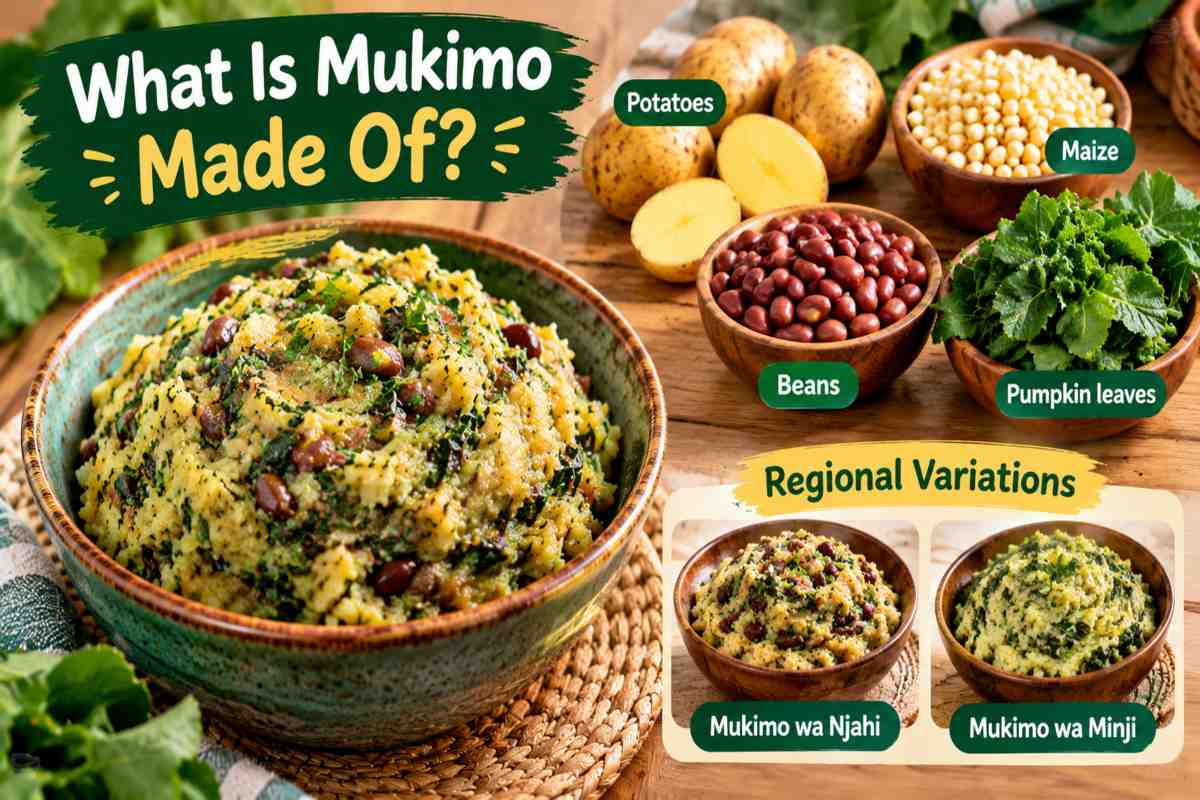
Mukimo is made from mashed potatoes combined with maize, beans and green vegetables, most traditionally pumpkin leaves, cooked together until they form a soft, pale green mash. It originates from communities around Mount Kenya, particularly the Kikuyu, Embu and Meru, where the name itself comes from the word “kima,” meaning mash. The combination of ingredients is not random, it reflects layers of Kenyan agricultural history, with potatoes introduced during the colonial era, maize brought by Portuguese traders and beans and pumpkin leaves rooted in indigenous farming.
Traditional Ingredients Potatoes, Maize, Beans and Pumpkin Leaves
The base of a traditional mukimo is potatoes, boiled until soft, then mashed together with cooked maize kernels, beans and finely chopped pumpkin leaves. Some households swap in spinach or chard when pumpkin leaves aren’t available, but the leaves are what give mukimo its signature green color and its nutritional edge, contributing meaningful amounts of vitamin A, iron and calcium. Onions and a bit of fat are often fried and stirred in at the end for flavor, though the core of the dish stays simple, starch, legumes and greens mashed into one.
Regional Variations Mukimo wa Njahi and Mukimo wa Minji
Not every household makes mukimo the same way and two variations show up often enough to have their own names. Mukimo wa njahi replaces regular beans with njahi or black beans, a legume increasingly discussed for its role in improving insulin sensitivity, which makes this version particularly relevant for anyone asking whether mukimo suits a diabetic diet.
Mukimo wa minji, on the other hand, uses green peas instead of beans, resulting in a slightly sweeter, lighter mash. Both variations keep the same potato and greens foundation, but the choice of legume changes the dish’s protein content, texture and even its blood sugar impact.
Mukimo Nutritional Value
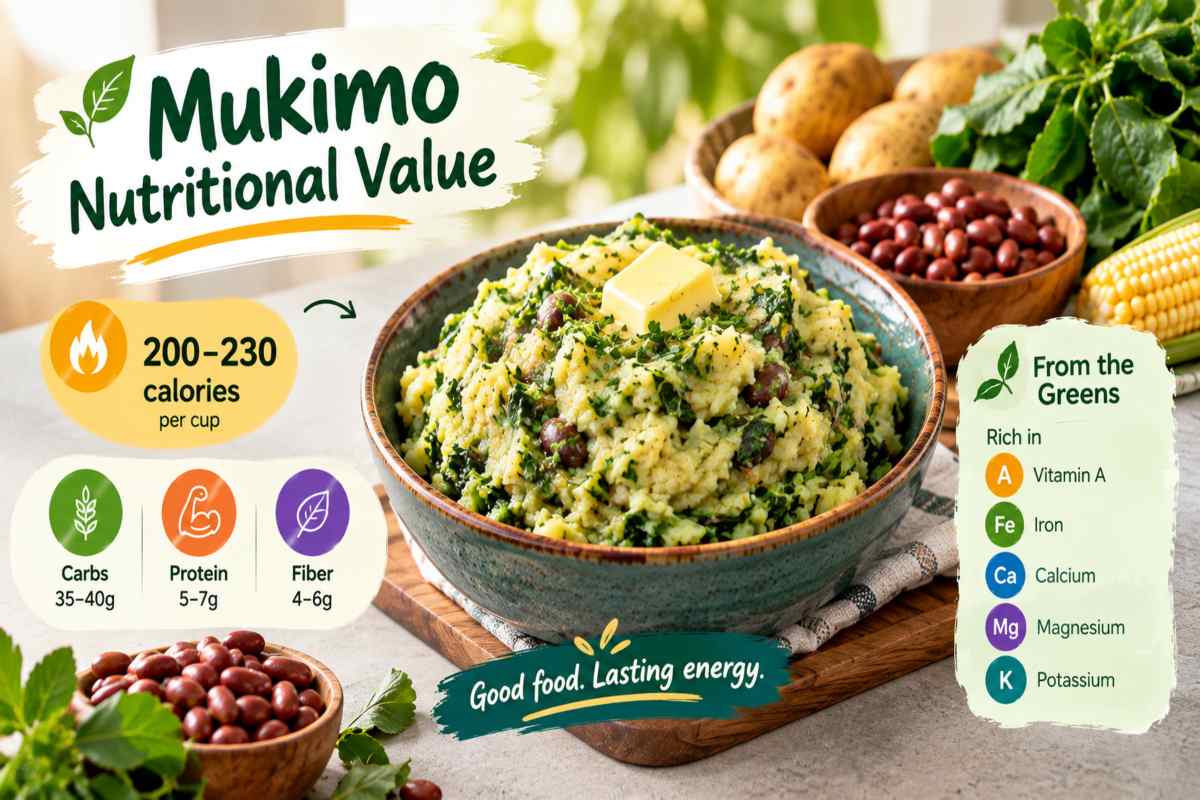
A typical one cup serving of mukimo contains roughly 200 to 230 calories, making it a moderately energy dense side dish rather than a light one. Because it is built from potatoes, legumes and greens rather than refined grains or added sugars, most of those calories come from complex carbohydrates and fiber, which is part of why mukimo has stayed a staple meal across generations in Kenya rather than an occasional treat.
Calories Per Serving
One cup of mukimo generally falls between 200 and 230 calories, depending on how much fat, milk or margarine is mixed in during mashing. Recipes that skip the added fat and rely on the natural moisture from the potatoes and vegetables sit closer to the lower end of that range.
On its own, mukimo is a carbohydrate forward side rather than a complete protein source, which is why it is traditionally served alongside meat based stews, pairing it with a protein like beef steak rounds out the plate with the protein and fat mukimo alone doesn’t fully provide.
Carbs, Protein and Fiber Breakdown
A standard serving of mukimo delivers around 35 to 40 grams of carbohydrates, 5g to 7g of protein and 4g to 6 g of fiber, figures that shift depending on whether beans, njahi or peas are used. The fiber content is worth noting on its own, at roughly 5 grams per serving, mukimo contributes close to 20% of a typical daily fiber target in one dish, which supports digestion and helps slow the rate at which the carbohydrates raise blood sugar.
Vitamins and Minerals From the Greens
The greens in mukimo, most often pumpkin leaves, are where the dish earns most of its micronutrient value. A cup of cooked pumpkin leaves alone provides 38% of the daily value for vitamin A and 13% of the daily value for iron, alongside calcium, magnesium and potassium. Because mukimo folds these greens directly into the mash rather than serving them as a separate side, a single serving carries a meaningful share of these nutrients without requiring an extra vegetable dish on the plate.
Mukimo Health Benefits
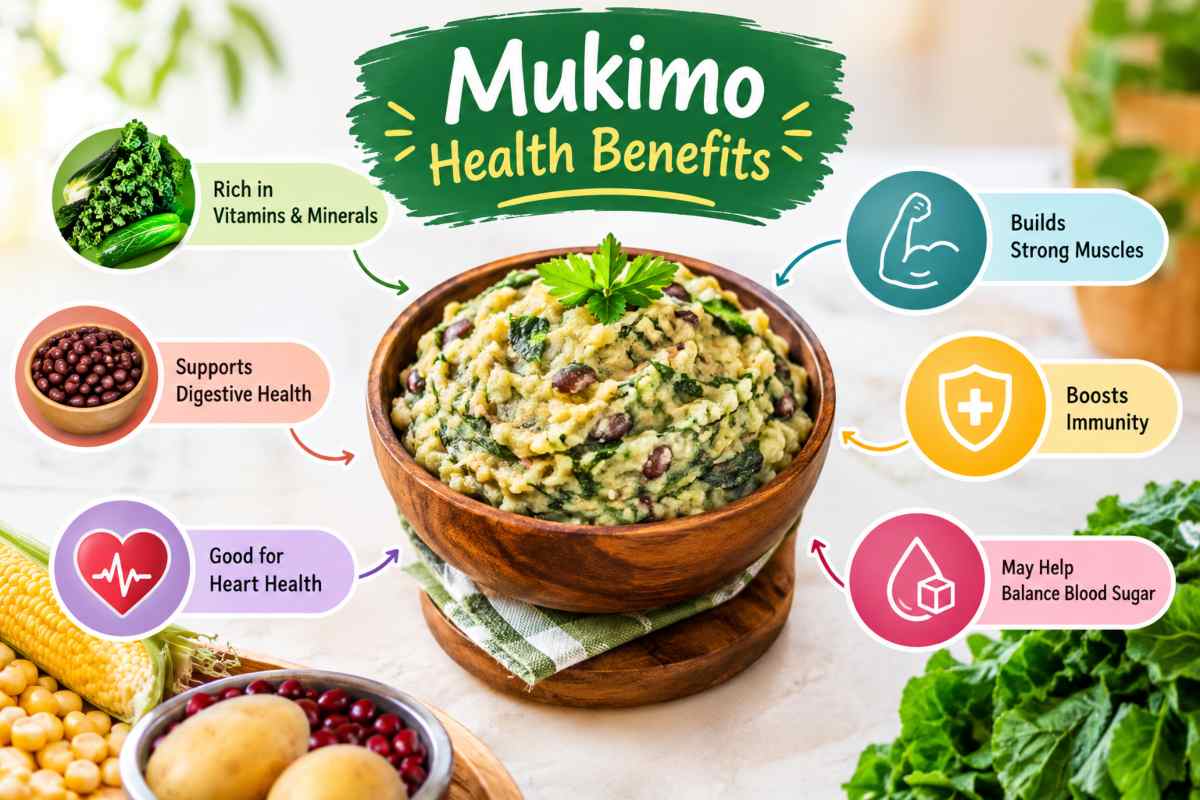
Mukimo’s health benefits come mainly from three sources working together, fiber that supports digestion, plant based protein from its legumes and a dense supply of micronutrients from its greens. This combination is what separates mukimo from a plain mashed potato side and turns it into a dish that actually contributes toward daily nutritional needs rather than just filling a plate.
Fiber and Digestive Health
The fiber in mukimo, drawn mainly from its beans, peas and potato skins if left on, plays a direct role in digestive health. A single serving delivers close to 5 grams of fiber, roughly 20% of a typical daily target, which helps add bulk to stool, supports regular bowel movements and feeds beneficial gut bacteria. This fiber also slows how quickly the dish’s carbohydrates are absorbed, which is part of why mukimo tends to be more filling and satiating than a plain starch side would be on its own.
Plant Based Protein From Beans and Njahi
Beans and njahi turn mukimo from a starch heavy side into a meaningful protein source, especially for households eating less meat. Njahi or black beans, stand out here, research from the USDA Agricultural Research Service has pointed to this legume role in improving insulin sensitivity, largely thanks to its fiber and protein content working together to slow glucose absorption. That makes mukimo wa njahi a natural fit on busy weeknights when you want something filling without leaning on meat for protein and pairs easily into a rotation of quick dinner ideas for family meals.
Micronutrients From Pumpkin Leaves and Spinach
Whether made with pumpkin leaves or a spinach substitute, the greens in mukimo are its biggest micronutrient contributor. Pumpkin leaves alone provide 38% of the daily value for vitamin A and 13% for iron per cooked cup, nutrients tied to immune function, vision and red blood cell production.
Spinach, when used as a substitute, offers a similar profile with slightly less vitamin A but comparable iron, meaning either version of mukimo delivers a real nutritional boost rather than just color.
Is Mukimo Good for Diabetics
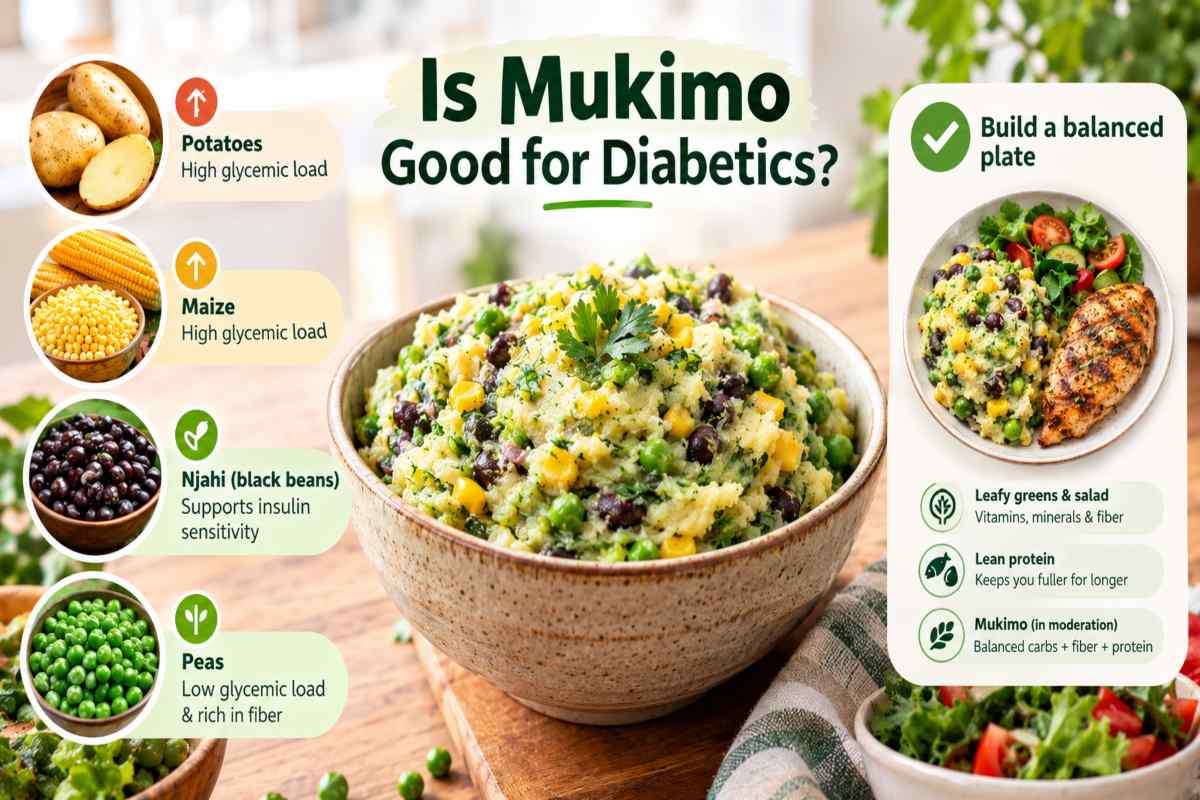
Mukimo can fit into a diabetic friendly diet, but with some care around portion size and the specific ingredients used, since potatoes and maize raise blood sugar faster than the beans and greens in the dish slow it back down. The version made with njahi or black beans, tends to be the better choice for blood sugar management, thanks to research linking this legume to improved insulin sensitivity.
Glycemic Load of Potatoes and Maize
Potatoes and maize are both moderate to high glycemic index foods, meaning they can cause a noticeable rise in blood sugar when eaten alone. Boiled potatoes sit around a glycemic index of 78, while maize is somewhat lower but still contributes meaningfully to the carbohydrate load of a mukimo serving.
This is one reason portion control matters more here than with low carb vegetables, a smaller serving of mukimo alongside protein and fiber rich sides keeps blood sugar more stable than a large portion eaten on its own. For a lower glycemic potato preparation to compare against, air fried potatoes use less added fat while keeping the same starch base.
Why Njahi (Black Beans) Supports Insulin Sensitivity
Njahi is where mukimo diabetic friendliness really comes from. Research from the USDA Agricultural Research Service has identified black beans as a legume that can improve insulin sensitivity, largely due to their combination of fiber, resistant starch and protein, which slows glucose absorption after a meal. Swapping regular beans for njahi in a mukimo recipe doesn’t change the preparation much, but it does shift the dish’s overall impact on blood sugar in a meaningfully positive direction.
Building a Diabetic Friendly Plate Around Mukimo
The easiest way to make mukimo work for a diabetic diet is to treat it as one part of a balanced plate rather than the main event. Keeping the serving to around half a cup, pairing it with a lean protein and choosing njahi or another fiber rich legume over plain beans all help blunt its glycemic impact. Rotating in other legume based sides, like a black eyed peas recipe, alongside mukimo through the week also helps diversify fiber and protein sources without giving up the traditional dish entirely.
Is Mukimo Healthy for Weight Loss
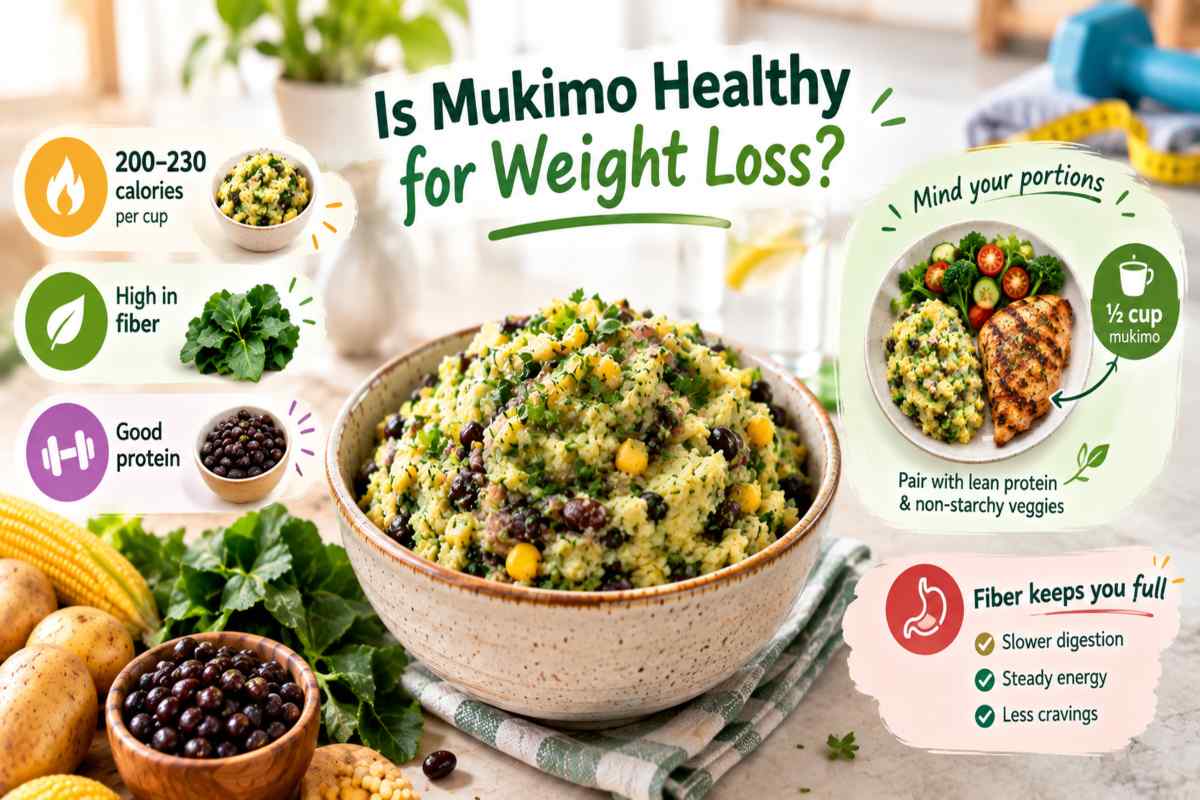
Mukimo can support weight loss when portioned carefully, since it is moderately calorie dense but also high in fiber, which helps curb overeating later in the day. At around 200 to 230 calories per cup, it isn’t a low calorie food on its own, but its fiber and protein content make it more satisfying per calorie than a plain starch side would be.
Calorie Density and Portion Size
A full cup of mukimo lands in the 200 to 230 calorie range, which is reasonable for a side dish but can add up quickly if served in large portions alongside a protein and other sides. For weight loss purposes, keeping servings closer to half a cup and building the rest of the plate around lean protein and non starchy vegetables is usually more effective than eliminating mukimo altogether. This kind of portion aware pairing works well for lighter midday meals too, similar to the approach used in these quick easy lunch recipes.
Fiber Role in Satiety
The fiber in mukimo, close to 5 grams per serving, plays a direct role in keeping you full longer after eating. Fiber slows gastric emptying and blunts the blood sugar spike that typically comes with starchy foods, both of which reduce the likelihood of feeling hungry again shortly after a meal. That satiety effect is one of the main reasons mukimo, despite being carbohydrate heavy, doesn’t automatically work against weight loss goals the way a lower fiber starch side would.
Is Mukimo Safe for Pregnancy and Babies
Mukimo is generally safe during pregnancy and for babies old enough to eat solid foods and its ingredients even align with nutrients commonly recommended during these life stages. In parts of Kenya, pumpkin leaves in particular have long been sought after by pregnant women and nursing mothers, largely because of their iron and vitamin A content.

Nutrients Relevant During Pregnancy
Pregnancy increases the body need for iron, folate and calcium and mukimo’s greens contribute meaningfully to all three. A cup of cooked pumpkin leaves provides 13% of the daily value for iron, a mineral central to preventing pregnancy related anemia, along with folate and calcium that support fetal development and bone health. The fiber from beans and potatoes is also useful during pregnancy, when constipation is a common complaint, making mukimo a practical, nutrient dense addition to a prenatal diet rather than just a traditional comfort food.
Introducing Mukimo to Toddlers
Mukimo’s soft, mashed texture makes it a natural food to introduce once a baby has moved on to thicker purees and early finger foods, typically from around eight to ten months onward.
Because it is naturally soft without needing added salt or strong seasoning, a plain version made with just potatoes, a little bean and well mashed greens works well for toddlers still building up to more textured meals, making it a fitting addition alongside other breakfast ideas for babies. As with any new food, it’s worth introducing mukimo’s individual components, beans, maize and greens, one at a time first to rule out any sensitivities before serving the combined dish.
Mukimo Compared to Other Kenyan Staples
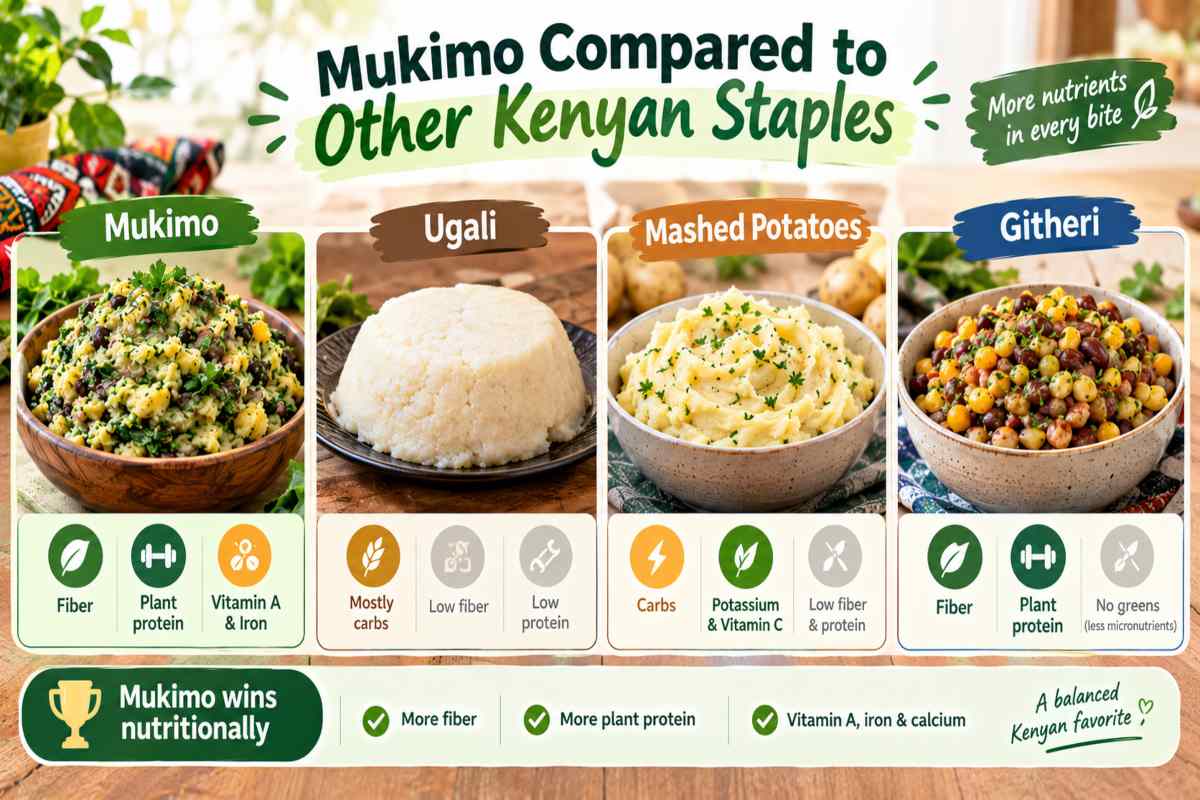
Mukimo generally comes out ahead nutritionally when compared to other Kenyan staples like ugali and plain mashed potatoes, mainly because it packs in vegetables and legumes that those dishes lack. Against githeri, the comparison is closer, since both dishes lean on beans and maize, but mukimo’s added greens give it a slight edge in micronutrient variety.
Mukimo vs Ugali Which Is Healthier
Ugali, made from maize flour and water, is essentially pure starch with almost no fiber, protein or micronutrients beyond what’s in the maize itself. Mukimo, by contrast, folds in potatoes, beans and pumpkin leaves alongside its maize, giving it meaningfully more fiber, plant protein and vitamin A per serving. For anyone comparing the two purely on nutritional density, mukimo is the stronger choice, since ugali main role is providing bulk and energy rather than a balanced nutrient profile.
Mukimo vs Mashed Potatoes Nutrition Side by Side
Plain mashed potatoes and mukimo start from the same base ingredient, but mukimo’s added maize, beans and greens push it well ahead nutritionally. Where mashed potatoes offer mostly carbohydrates, potassium and vitamin C, mukimo adds fiber, plant protein and a significant dose of vitamin A and iron from its greens.
If you are comparing preparation styles rather than full dishes, a lighter option like smashed potatoes trims added fat while keeping the potato’s core nutrients intact, similar to how a lower fat mukimo recipe would compare to a richer, margarine heavy version.
Mukimo vs Githeri Which Wins Nutritionally
Githeri, a simple mix of boiled maize and beans, is closer in nutritional profile to mukimo than either ugali or mashed potatoes, since both dishes rely on legumes for protein and fiber.
The difference comes down to the greens, mukimo pumpkin leaves add vitamin A, iron and calcium that githeri simply doesn’t have unless vegetables are served alongside it separately. Protein and fiber content between the two are fairly comparable, so the choice often comes down to whether you want those extra micronutrients built directly into the dish, which mukimo provides and githeri does not.
Is Mukimo Gluten Free and Vegan Friendly
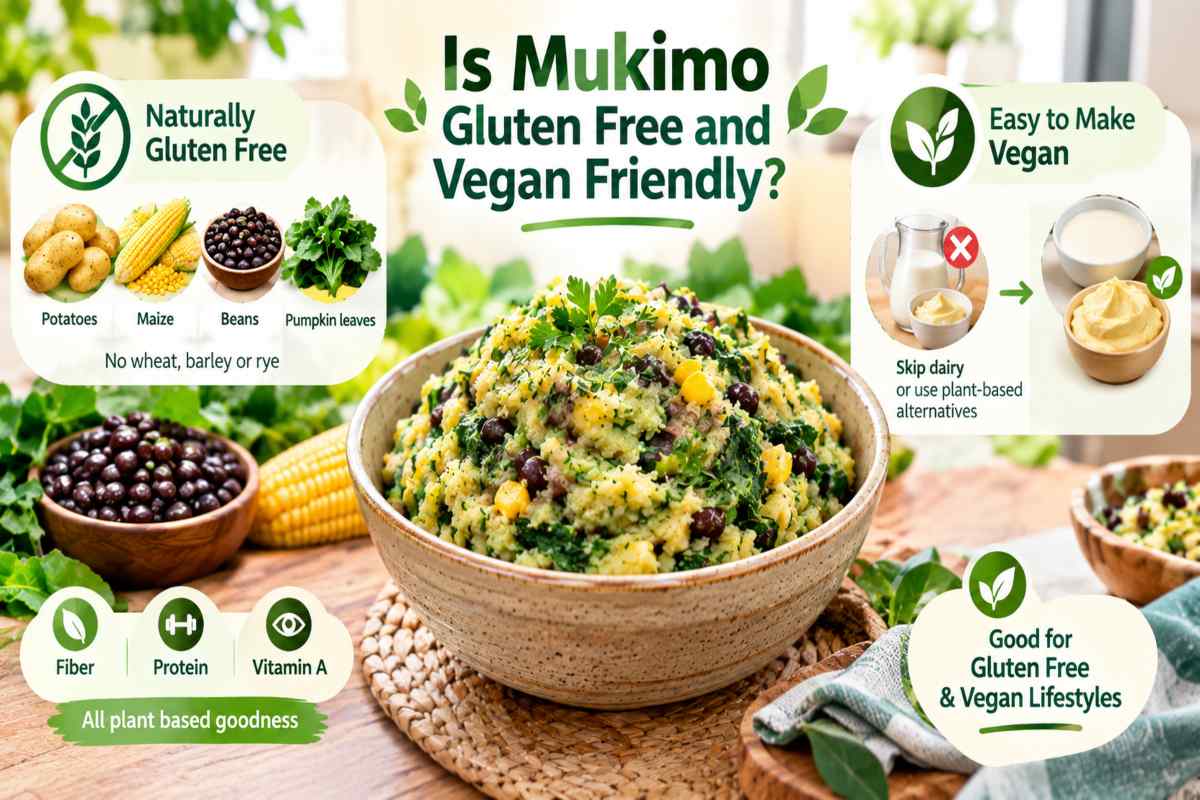
Mukimo is naturally gluten free, since its core ingredients, potatoes, maize, beans and pumpkin leaves, contain no wheat, barley or rye. It is also easy to make fully vegan, as the dish traditionally relies on plant based ingredients and only needs a small substitution when dairy is added for richness.
Why the Base Ingredients Are Naturally Gluten Free
None of mukimo traditional components come from gluten containing grains, which makes the dish safe for anyone avoiding gluten without needing a modified recipe. Potatoes, maize, beans, njahi and pumpkin leaves are all gluten free on their own, so the only real risk of cross contamination comes from how the dish is prepared, such as shared cooking surfaces or store bought seasoning blends that sometimes include gluten based fillers. For a household needing a gluten free protein pairing, a dish like ground beef bake rounds out the plate without introducing any gluten concerns.
Making Mukimo Fully Vegan
Traditional mukimo is already close to vegan, built almost entirely from potatoes, maize, beans and greens, with the only common non vegan addition being milk or margarine stirred in during mashing for extra creaminess.
Swapping in plant based margarine or a splash of unsweetened plant milk or simply skipping the added fat and relying on the potatoes natural moisture, keeps the dish fully plant based without changing its texture or flavor in any noticeable way. Because none of mukimo’s core nutritional value, its fiber, protein or vitamin A, comes from animal products, going vegan with this dish doesn’t require any real nutritional trade off.
How to Make a Healthier Mukimo
Making a healthier mukimo mostly comes down to two changes, swapping in lighter ingredients where the recipe traditionally calls for fat and rethinking how much dairy or margarine gets mixed in during mashing. Neither change affects the dish’s core identity, since mukimo health value already comes from its potatoes, legumes and greens rather than its added fat.

Low Calorie Ingredient Swaps
The easiest way to lighten mukimo is to look at what’s added on top of the base ingredients rather than the base itself. Using a modest amount of olive oil instead of margarine, leaning more heavily on beans or njahi and lighter on potatoes and adding extra pumpkin leaves or spinach all increase the dish fiber and micronutrient density while trimming calories. These swaps can shift a serving from the higher end of the 200 to 230 calorie range down meaningfully without changing the mash texture or traditional flavor.
Mukimo Without Milk or Margarine
Milk and margarine are usually added to mukimo purely for creaminess, not for any nutritional reason, which makes them the simplest ingredients to cut. The potatoes and cooked vegetables already release enough moisture during mashing to hold the dish together, so skipping the added fat mostly affects richness rather than texture.
A version made without milk or margarine keeps all of mukimo’s fiber, protein and vitamin content intact while removing the saturated fat that the traditional preparation sometimes adds, making it a straightforward way to make the dish lighter without sacrificing what makes it nutritionally worthwhile in the first place.
Conclusion
So, is mukimo healthy? Yes, between its fiber rich beans, potassium packed potatoes and nutrient dense pumpkin leaves, mukimo holds up as one of the more balanced traditional dishes in Kenyan cuisine, whether you’re managing blood sugar, eating for pregnancy or just trying to build a more nutritious plate. Its health value doesn’t come from any single ingredient but from how well potatoes, legumes and greens complement each other in one mash.
Where mukimo really shines is its flexibility, swapping in njahi for better blood sugar support, skipping the added milk or margarine or leaning more heavily on greens all let you adjust the dish to fit different goals without losing what makes it mukimo. Served alongside a protein and rounded out with other dinner recipes through the week, it earns its place as a genuinely nutritious staple rather than just a comforting side.
Frequently Asked Questions (FAQs)
What is mukimo made of?
Mukimo is made from mashed potatoes combined with maize, beans and greens, most traditionally pumpkin leaves. Variations swap in njahi (black beans) or peas depending on the household and region.
How many calories are in mukimo?
A typical one cup serving contains roughly 200 to 230 calories, depending on how much milk or margarine is added during mashing. Skipping the added fat keeps it closer to the lower end of that range.
Is mukimo good for diabetics?
Mukimo can fit a diabetic diet in moderate portions, especially when made with njahi, which has been linked to improved insulin sensitivity. Pairing it with protein and keeping servings around half a cup helps limit its impact on blood sugar.
Is mukimo healthy during pregnancy?
Yes, mukimo’s pumpkin leaves provide iron, folate and calcium that support pregnancy nutrition. It’s long been a traditional food recommended for pregnant and nursing mothers in Kenya.
Is mukimo gluten free?
Yes, all of mukimo traditional ingredients, potatoes, maize, beans and greens, are naturally free of gluten. The only risk comes from cross contamination or added seasoning blends, not the dish itself.
Can I make mukimo vegan?
Yes, traditional mukimo is almost entirely plant based already. Simply skip or substitute the milk or margarine typically added for creaminess with a plant based alternative.