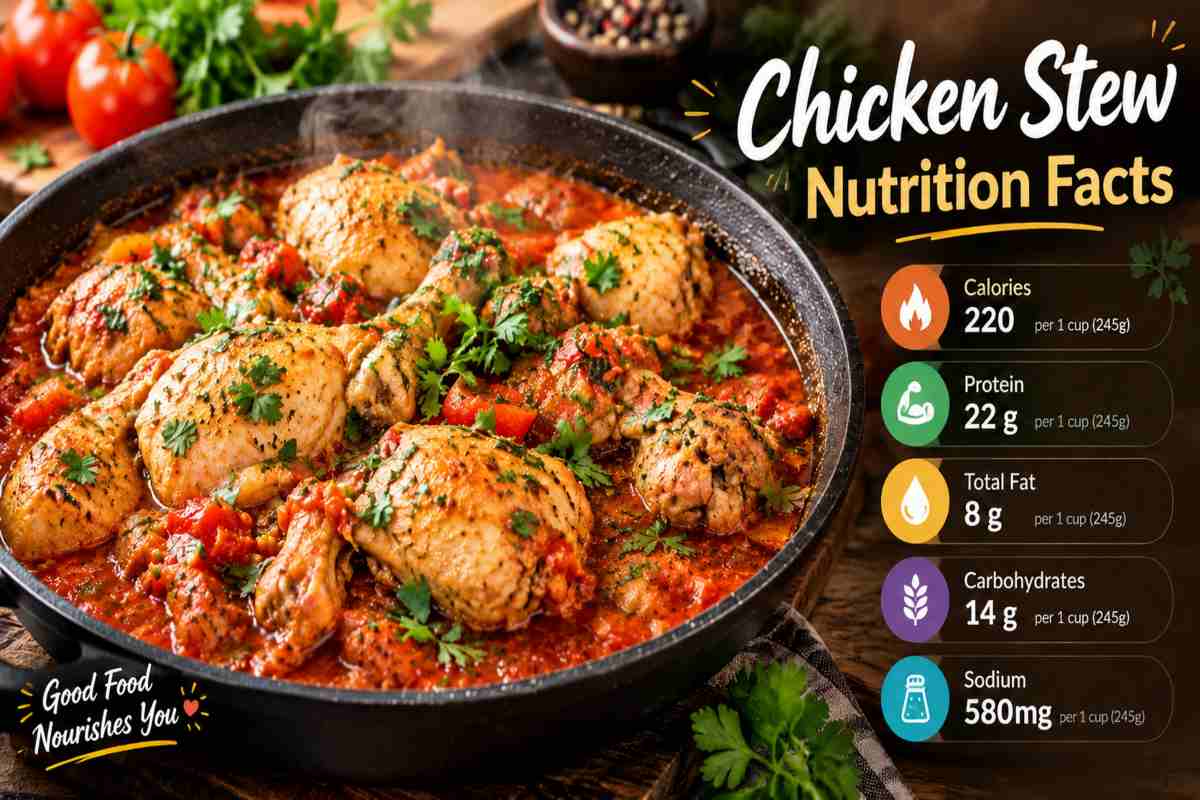
Chicken stew nutrition facts come down to a few key numbers, a typical 1 cup (245g) serving delivers roughly 175–315 calories, 20–26 grams of protein and 12–17 grams of carbs, depending on how it is made and what is added. Because Chicken Stew is built on lean protein simmered with vegetables in a light broth, it naturally leans high protein and moderate carb rather than heavy or calorie dense, one reason it shows up so often in weight management meal plans.
The exact breakdown shifts with the cut of chicken used, whether the skin is left on and what starches (rice, potatoes) join the pot, which is why this guide breaks the numbers down by serving size, preparation style and regional variation, so you can match the count to the version you are actually eating.
Chicken Stew Nutrition Facts at a Glance
A standard 1 cup (245g) serving of homemade chicken stew averages around 220 calories, 22g of protein, 15g of carbs and 7g of fat, numbers that scale up or down cleanly with serving size and the specific recipe used. Because it is chicken, vegetables and broth in a pot, the macro profile stays fairly stable across most home versions, which is why a single at a glance table covers most searches for calories, protein, carbs and fat.
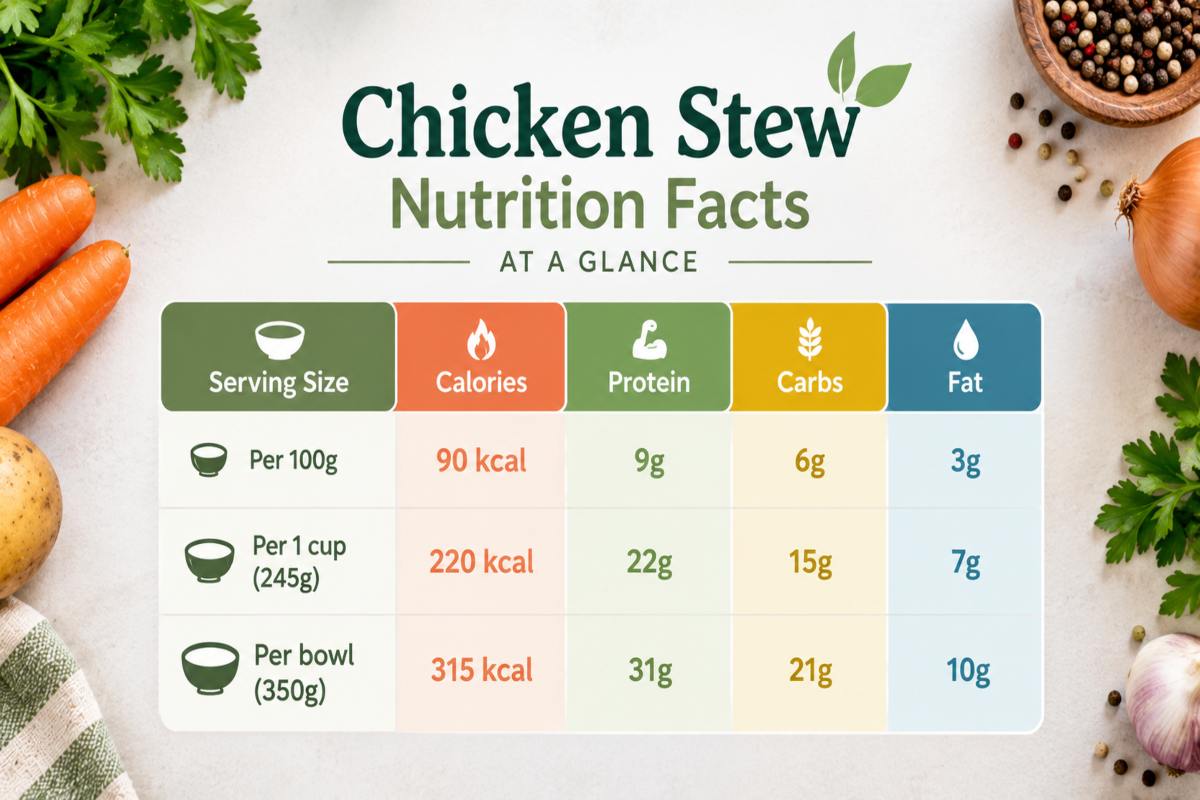
These figures reflect a typical stovetop recipe made with skin on chicken thighs, carrots, potatoes and onion in a light broth, USDA style nutrition databases put comparable chicken and vegetable stews in the 85–95 calorie per 100g range, which lines up closely with the table above. Leaner versions, skinless chicken breast, less starch, more broth, sit toward the bottom of these numbers, while heartier, rice or potato heavy bowls push toward the top, which the next sections break down in more detail.
Is Chicken Stew Healthy?
Yes, chicken stew is generally healthy, a typical serving delivers around 22g of protein for roughly 220 calories, giving it a strong protein to calorie ratio that supports muscle maintenance and helps you feel full longer. That combination of lean protein, fiber rich vegetables and a broth base (rather than cream or heavy oil) is what makes stews like this a common pick in weight loss and portion controlled meal plans, since high protein meals are consistently linked to greater satiety per calorie than carb or fat heavy dishes.
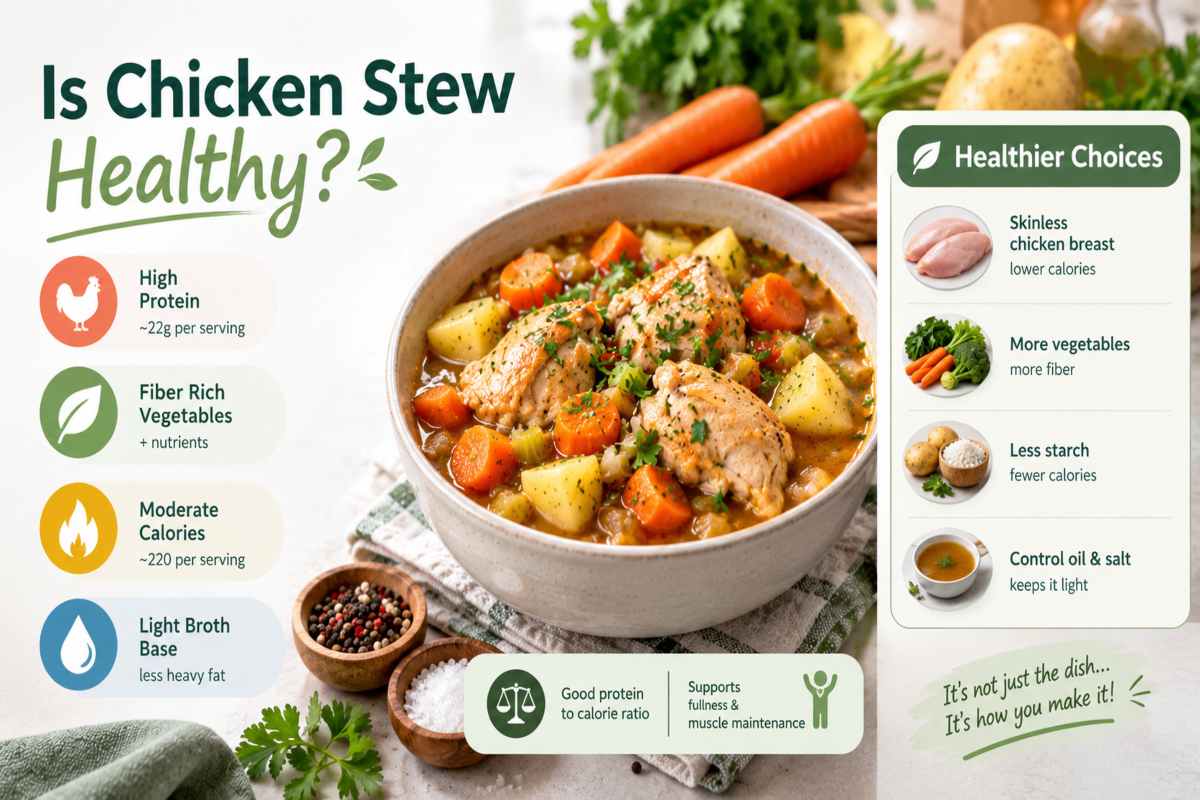
Whether a specific bowl fits a weight loss goal depends more on preparation than the dish itself. Skinless chicken breast, lighter use of potatoes or rice and controlled oil and salt keep a serving closer to 150–180 calories, while skin on thigh meat, added starches and richer broths can push a single bowl toward 300+ calories. The dish itself is not the deciding factor, the ratio of chicken and vegetables to starch and fat is.
How Many Calories Are in a Bowl of Chicken Stew?
A standard bowl of chicken stew roughly 350g, a bit more than a cup runs about 315 calories, though the exact count moves with bowl size and what’s in the pot. Smaller portions and lighter recipes land closer to 220 calories per cup, while a hearty, starch heavy bowl can reach 400 calories or more.
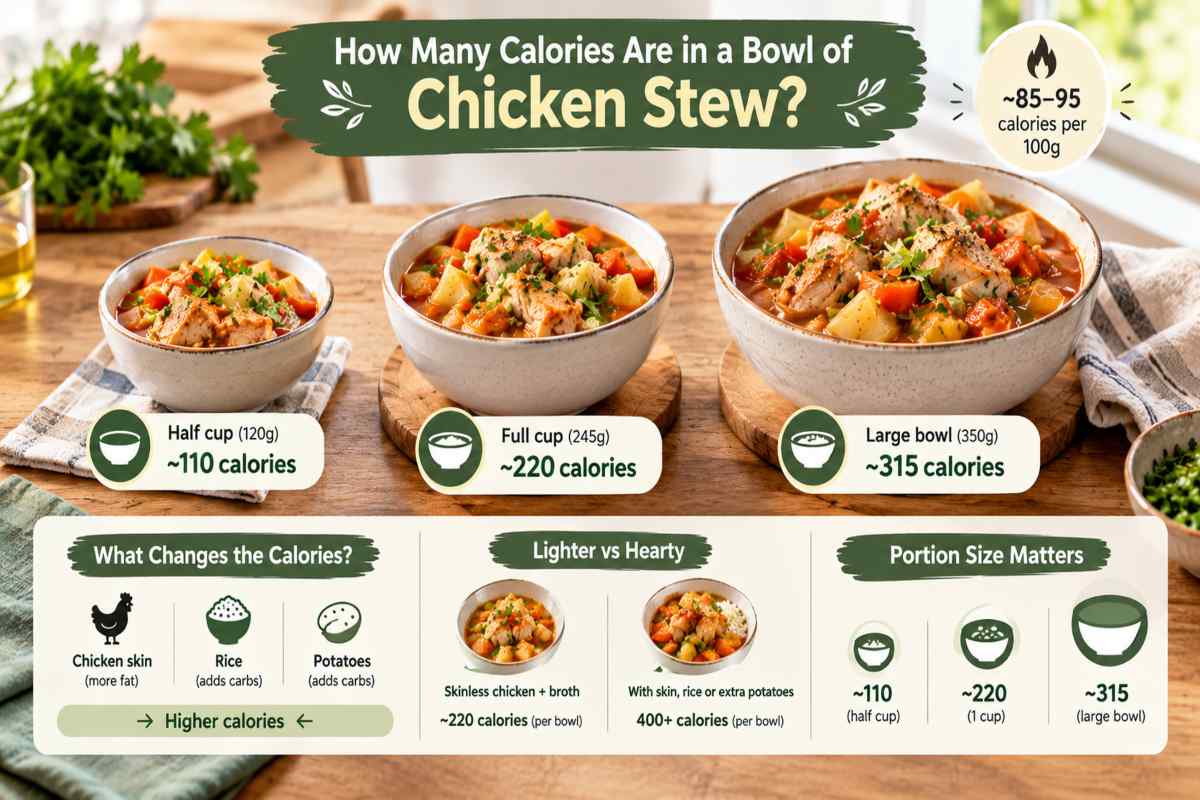
Serving size is the biggest variable here, since chicken stew is rarely measured out precisely at home. A half cup portion (about 120g) comes in around 110 calories, a full cup (245g) around 220 calories and a large bowl (350g) around 315 calories, a roughly linear scale up, since the calorie density per 100g stays fairly consistent at 85–95 calories regardless of how much you serve.
What changes the total more than bowl size is composition, stews built on skinless chicken and lighter broth stay near the low end of that range, while versions with skin on meat, added rice, or extra potatoes push a same sized bowl toward the higher end.
Chicken Stew Nutrition by Preparation
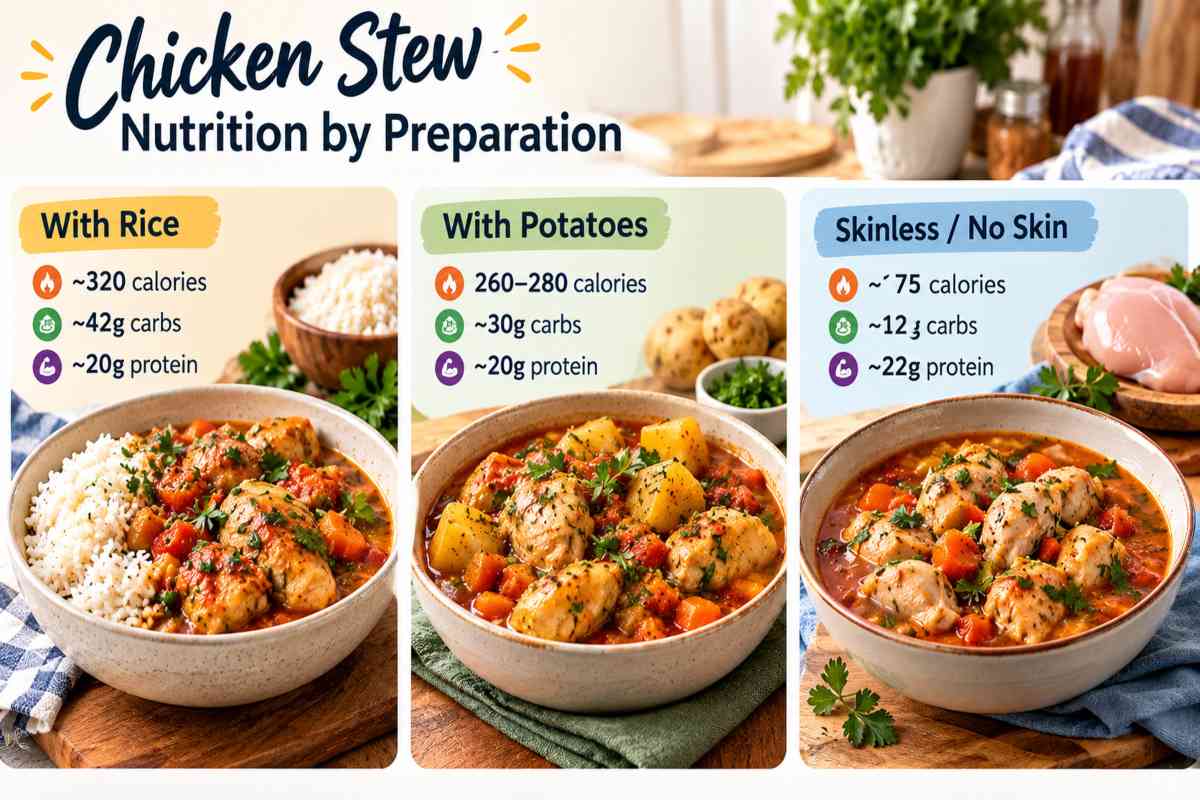
How chicken stew is prepared shifts its calorie and carb count more than almost any other factor, since the base recipe of chicken, broth and vegetables stays fairly consistent while add ins like starches and skin vary widely between kitchens. The three most common variations, rice based, potato based and skinless, each land in a distinct nutritional range.
With Rice
Adding a half cup of cooked rice to a serving of chicken stew adds roughly 100 extra calories and 22g of carbs, pushing a typical 1 cup serving from around 220 calories to closer to 320. This version trades some of the dish’s lean protein profile for more sustained energy from carbohydrates, which makes it heartier but less protein dominant per calorie. If you are building out stew and rice pairings, Rice Recipes covers the base preparations that work well alongside a pot of stew.
With Potatoes
Potatoes add fewer calories than rice for a similar volume, about 60–70 extra calories per half cup of cubed potato, along with a modest fiber boost that rice does not provide. A potato heavy bowl of chicken stew typically lands between the plain and rice added versions, around 260–280 calories per cup, with slightly more dietary fiber per serving. For a heartier potato side that pairs well with stew, Loaded Baked Potatoes is worth a look.
Skinless / No Skin Chicken
Removing the skin before cooking cuts a meaningful amount of fat and calories without touching the protein count, a skinless version of the same recipe drops from about 220 calories per cup to closer to 175, while protein stays close to 20–22g per serving. This makes skinless preparation the single easiest change for anyone optimizing chicken stew for a lower calorie or higher protein to fat ratio, since the fat reduction comes almost entirely from the skin rather than the meat itself.
Chicken Stew Around the World Nutrition by Style
Chicken stew nutrition profile shifts noticeably depending on regional preparation, since different traditions favor different cuts of chicken, cooking fats and accompaniments. A homemade stovetop version, a Kenyan kuku stew and an East African style stew can all sit in different calorie and fat ranges despite starting from the same core ingredient.

Homemade Stovetop Chicken Stew
A standard homemade stovetop chicken stew, bone in chicken pieces simmered with onion, garlic, carrots and tomato, averages around 220 calories and 22g of protein per cup, making it the baseline most nutrition comparisons are built from. Protein content here comes almost entirely from the chicken itself, for a closer look at how much of that protein comes from the meat versus the rest of the dish, Protein in Chicken Breast breaks down the per cut numbers.
Kenyan (Kuku) Stew Nutrition
Kenyan kuku stew, chicken braised in a tomato, onion and garlic base with warming spices like curry powder and coriander, typically runs close to the homemade baseline in calories, around 200–230 per cup, but often carries slightly more sodium and fat from the browning and simmering technique used to build flavor. Protein stays high, generally 20g to 24g per cup since the dish is built around bone in chicken rather than a starch heavy base.
East African Chicken Stew Nutrition
East African chicken stew follows a similar tomato and aromatics foundation but frequently incorporates coconut milk or additional vegetables depending on the specific regional variation, which can shift the fat and calorie count higher than a plain stovetop version. For the full nutrition breakdown and recipe specific to this style, Chicken Stew East African Style covers the exact per serving numbers for that preparation.
Chicken Stew vs Other Stews and Soups
Chicken stew is generally lower in calories and fat than beef stew, similar in calories to chicken curry but lower in fat and higher in protein density than most chicken soups. The differences come down to the protein source, the cooking fat and how much liquid dilutes each serving.
Chicken Stew vs Beef Stew
A cup of chicken stew averages around 220 calories, while the same size serving of beef stew typically runs closer to 270–300 calories, largely due to beef’s higher fat content per gram compared to chicken. Beef stew does edge out chicken stew on iron and vitamin B12, so the better choice depends on whether the priority is fewer calories or those specific micronutrients. For a beef based comparison point, Kenyan Ground Beef Stew lays out the full nutrition profile for that version.
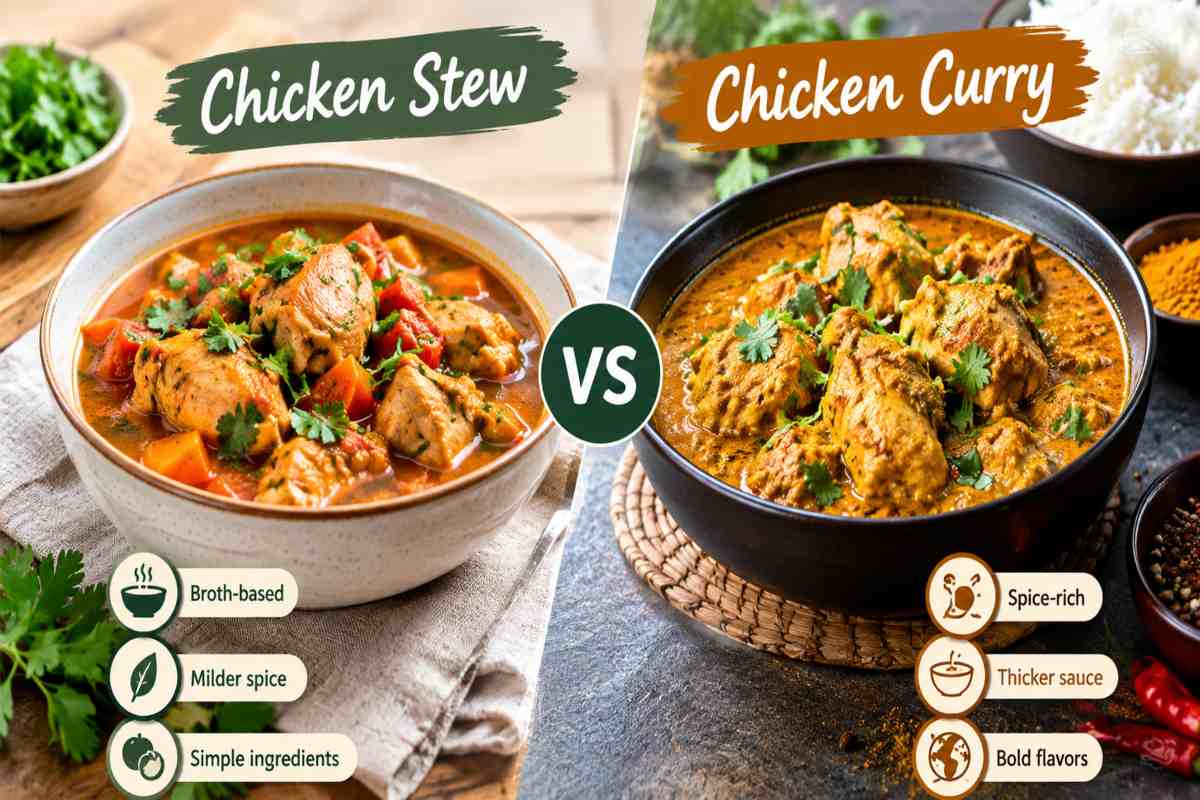
Chicken Stew vs Chicken Curry
Chicken stew and chicken curry land in a similar calorie range per cup, both typically 200–250 calories, since both are built on chicken simmered in a sauce base. The real difference is fat, curry’s coconut milk or ghee base usually pushes fat content higher than a broth and tomato stew, even when the calorie counts look close on paper.
Chicken Stew vs Chicken Soup
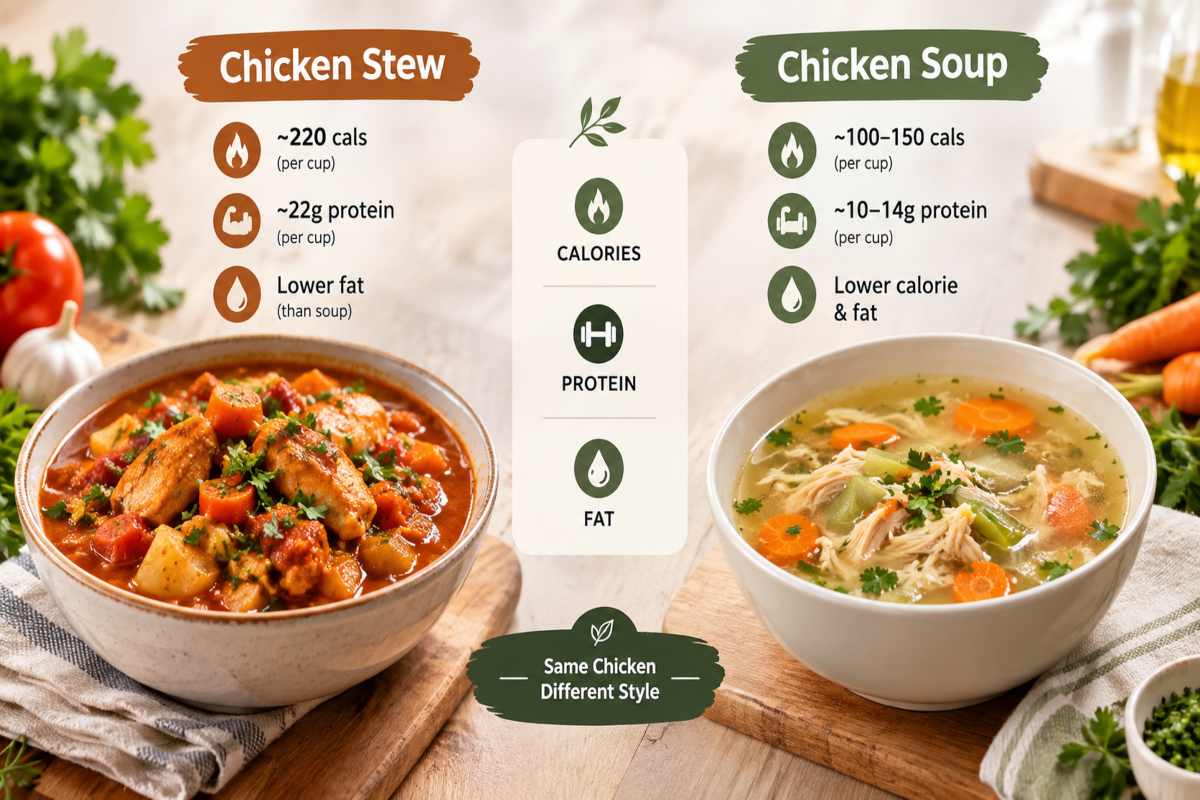
Chicken stew is meaningfully more calorie and protein dense than chicken soup, mainly because soup is diluted with far more broth relative to solid ingredients. A cup of chicken stew delivers roughly 220 calories and 22g of protein, while a comparable cup of chicken soup often lands closer to 100–150 calories and 10–14g of protein. For a lighter, broth forward option, Simple and Delicious Chicken Soup is the better fit when a lower calorie meal is the goal.
Making Chicken Stew Fit Your Diet
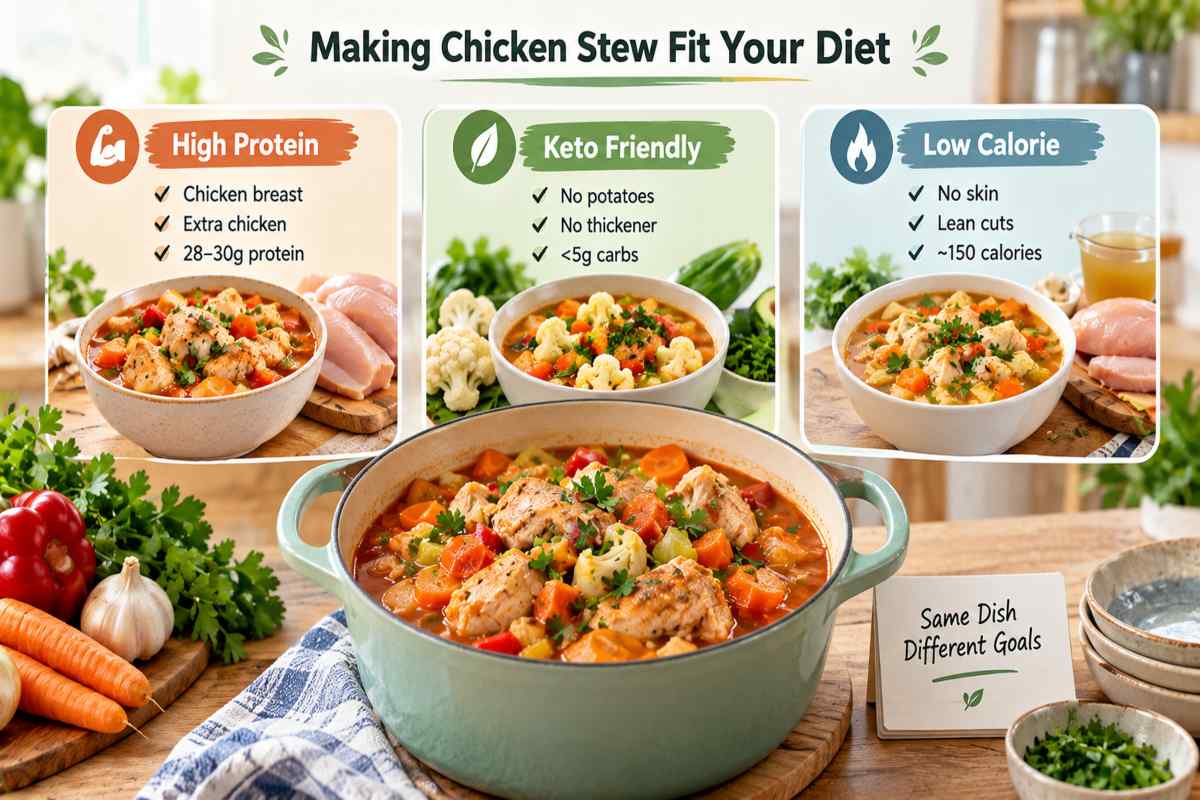
Chicken stew adapts easily to most dietary goals since its base recipe of chicken, vegetables and broth can be adjusted for more protein, fewer carbs, or fewer calories without changing the core dish. A few simple swaps push it toward high protein, keto, or low calorie territory depending on what is cut or added.
High Protein Chicken Stew
Using chicken breast instead of thigh meat and adding extra shredded chicken to the pot can push a serving from the standard 22g of protein per cup to 28–30g, while keeping calories close to the same range. Because protein content scales almost directly with the amount of chicken relative to broth and vegetables, this is the most straightforward adjustment for anyone prioritizing protein intake.
Keto Friendly Chicken Stew
Swapping out potatoes and skipping any flour based thickener drops the carb count from a typical 15g per cup to under 5g, making chicken stew compatible with most keto meal plans without major changes to the recipe. Cauliflower or turnip can stand in for potatoes to keep the texture similar while staying within low carb limits.
Low Calorie Chicken Stew
Removing the chicken skin, using leaner cuts and increasing the ratio of broth to solids can bring a serving down from around 220 calories per cup to closer to 150, without significantly reducing the portion size. This version keeps the dish filling through volume and protein rather than fat or starch. For more dinner options built around similar lean protein principles, Dinner Recipes has a broader range to pull from.
Conclusion
Chicken stew nutrition facts come down to a fairly consistent baseline, around 220 calories, 22g of protein and 15g of carbs per cup, with the exact numbers shifting based on the cut of chicken, whether the skin stays on and what starches join the pot. That flexibility is what makes it easy to adapt, skinless chicken and extra broth bring the calorie count down, more chicken relative to vegetables pushes protein up and skipping potatoes or rice keeps carbs low enough for a keto style meal.
Whether the goal is weight management, higher protein intake, or simply knowing what’s in a bowl, the same core dish can be shaped to fit almost any target without losing what makes it a comforting, reliable meal. For more recipes built around similar wholesome, protein forward cooking, Devine Dishes has the full collection to explore.
Frequently Asked Questions (FAQs)
How many calories are in chicken stew?
A standard 1 cup (245g) serving of chicken stew has about 220 calories, though this ranges from roughly 150 calories for lighter, skinless versions to over 300 for starch heavy bowls. The count scales fairly linearly with serving size.
Is chicken stew good for weight loss?
Yes, its high protein to calorie ratio (around 22g protein per 220 calories) helps with satiety, making it a common pick in portion controlled meal plans. Using skinless chicken and less starch keeps it even lighter.
How much protein is in chicken stew?
A typical cup of chicken stew delivers 20–26g of protein, depending on the cut of chicken and how much meat is in the serving relative to broth and vegetables. Using chicken breast or adding extra shredded chicken pushes this toward 28–30g.
Is chicken stew high in carbs?
Not inherently, a plain chicken stew has around 15g of carbs per cup, mostly from vegetables. Adding rice or potatoes can push that to 20–35g, while skipping starches keeps it under 5g for low carb diets.
Disclaimer: This article is for general information only and is not medical or nutrition advice. Nutrient values are estimates and vary by ingredients, oil, coating and portion size. Talk to your doctor or dietitian about your individual needs.