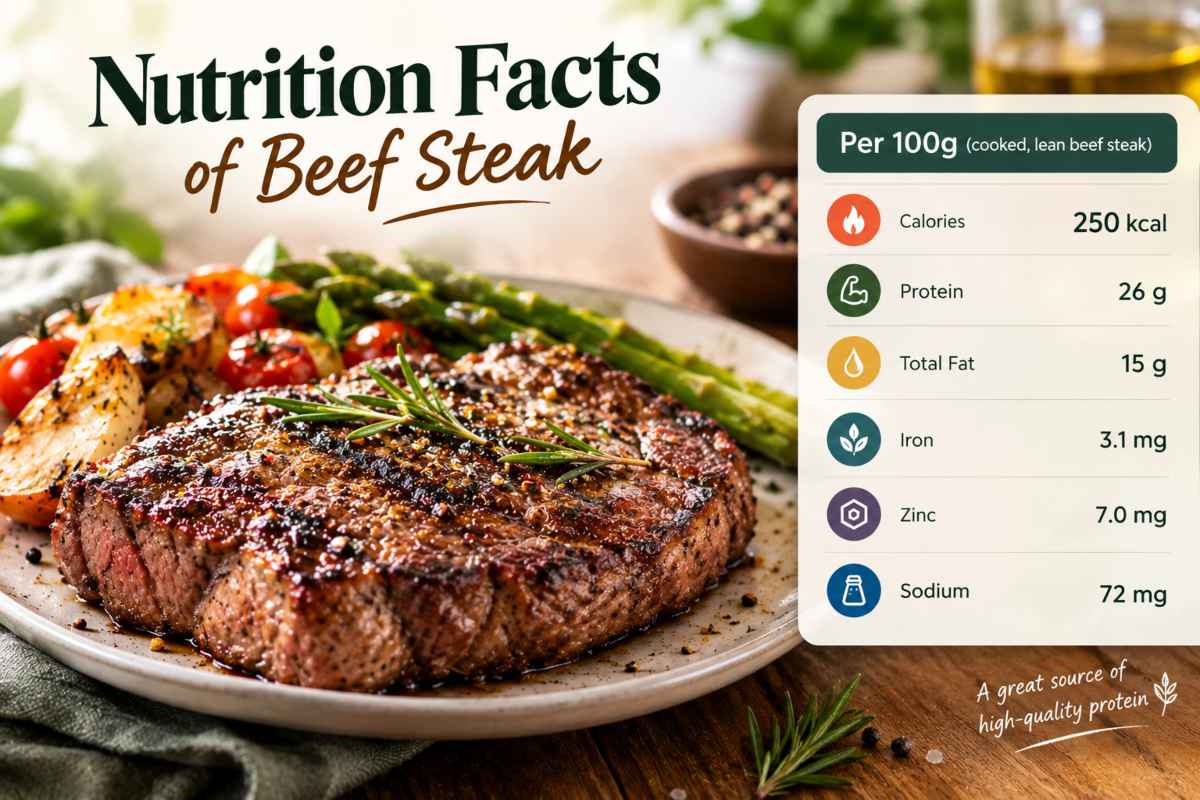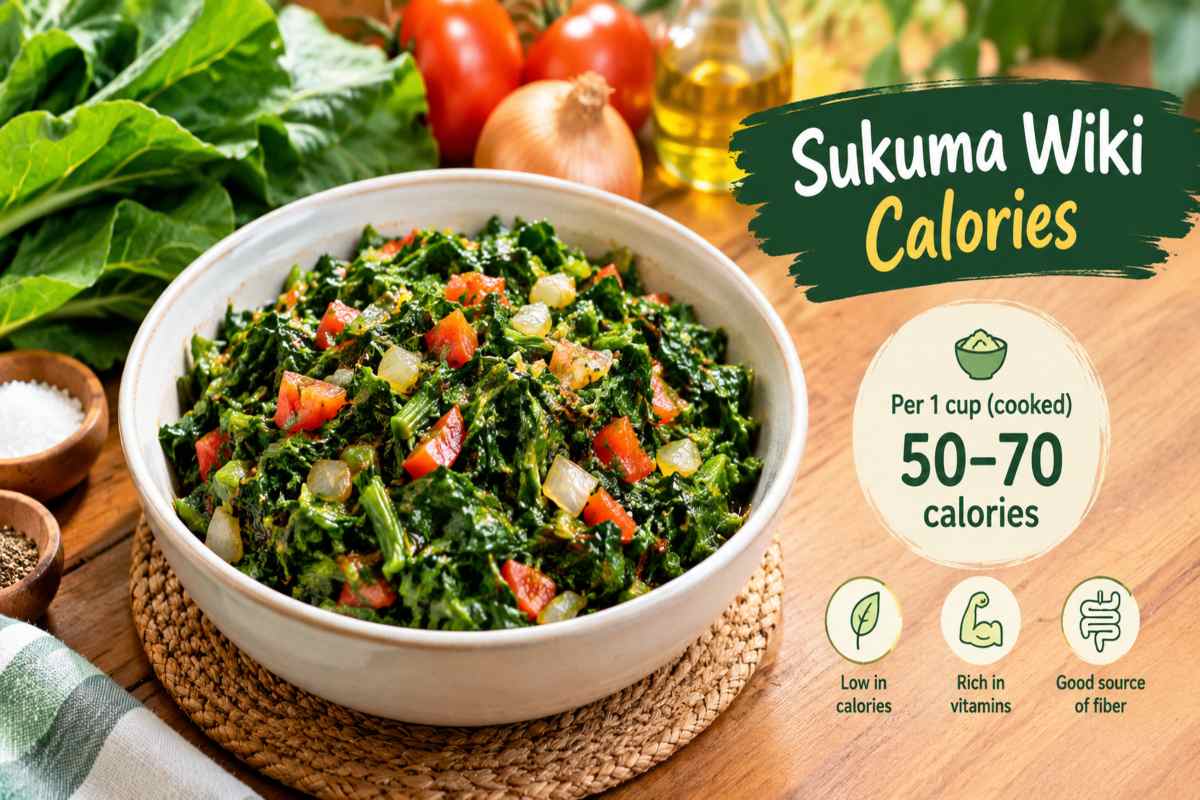
Sukuma wiki calories come in at roughly 196 to 541 per serving, depending on whether the dish is made lean with just oil and onions or bulked up with beef or goat meat. A basic vegetable only version made with collard greens, onion and tomato sits closer to 196 kcal per serving, while a heartier version like this goat sukuma wiki vegetable stew pushes the calorie count higher thanks to the added protein and fat from the meat.
That range matters because sukuma wiki is not one fixed dish, it is a base recipe of braised collard greens that changes nutritionally based on what is cooked into it. Below, you will find the full breakdown by serving size, how different proteins affect the numbers and how sukuma wiki stacks up against kale and collard greens nutritionally.
How Many Calories Are in Sukuma Wiki?
A standard serving of sukuma wiki has about 196 calories when made with just collard greens, onion, tomato and oil, though the number climbs to 300–540 calories once beef, goat or extra oil are added. This makes it one of the lighter options if you are planning quick lunch recipes built around vegetables rather than heavy starches, while still leaving room to add protein without turning it into a calorie dense meal.
Calories Per Serving
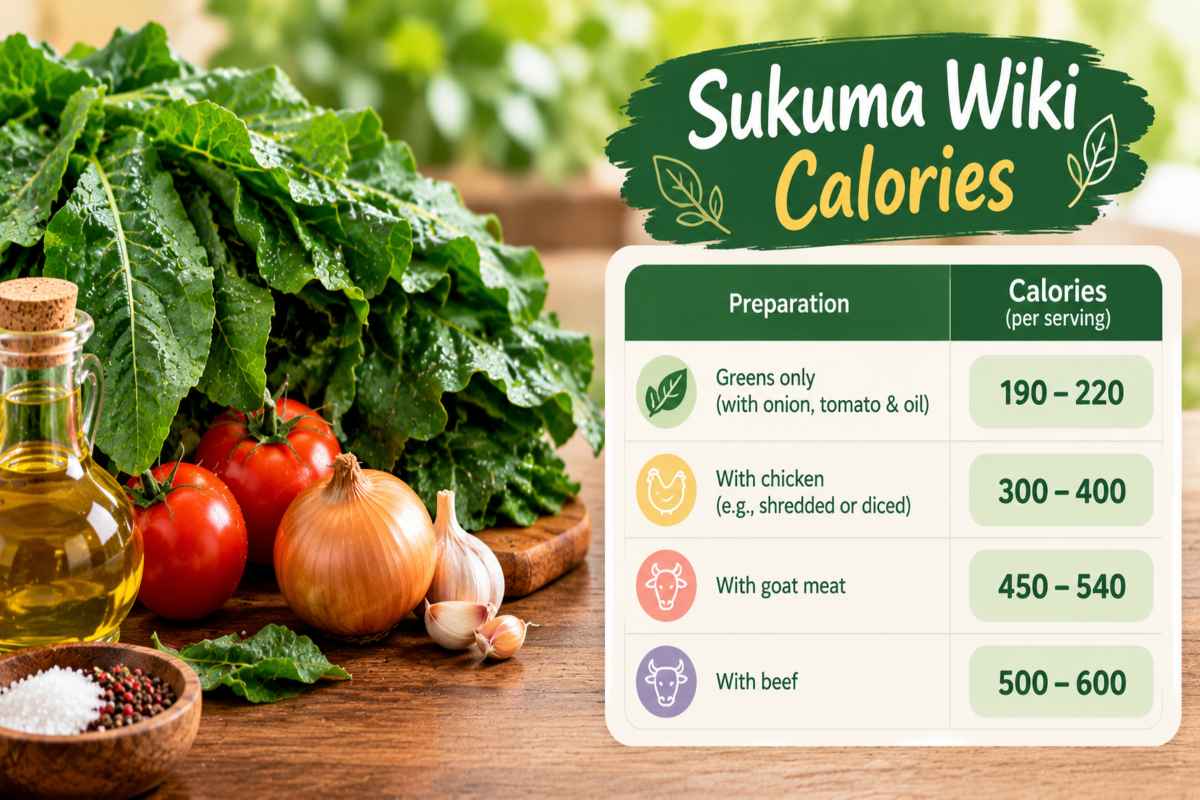
A single serving of sukuma wiki, roughly one cup of cooked greens as a side dish, typically falls between 190 and 220 calories in its simplest form, just greens sautéed with onion, tomato and a couple tablespoons of oil.
Once meat enters the picture, that same serving size can jump to 300 calories with lean protein or well over 500 calories when beef and its fat content are part of the dish. The wide range comes down to one variable, sukuma wiki is a cooking method for greens, not a fixed formula, so the calorie count follows whatever protein and fat are cooked in alongside it.
Calories Per Cup
One cup of cooked sukuma wiki, the most common way the dish is measured and served, lands close to 100–130 calories when it is the vegetable only version, since collard greens themselves are low in calories and the bulk of the count comes from the cooking oil.
Add a cup of shredded beef or goat meat to that same cup of greens and the total rises significantly, since meat contributes far more calories per cup than the vegetable base does. For anyone tracking intake by volume rather than by plate, measuring in cups gives a more consistent number than “per serving,” since serving sizes vary widely from one household to another.
Sukuma Wiki Nutrition Facts
Sukuma wiki nutrition facts vary by recipe, but a standard vegetable only serving delivers around 8g of protein, 19g of carbohydrates, 12g of fat and 11g of fiber, a solid ratio for a side dish built almost entirely from leafy greens. Here is how those macros break down per serving for both a basic version and a meat added version:
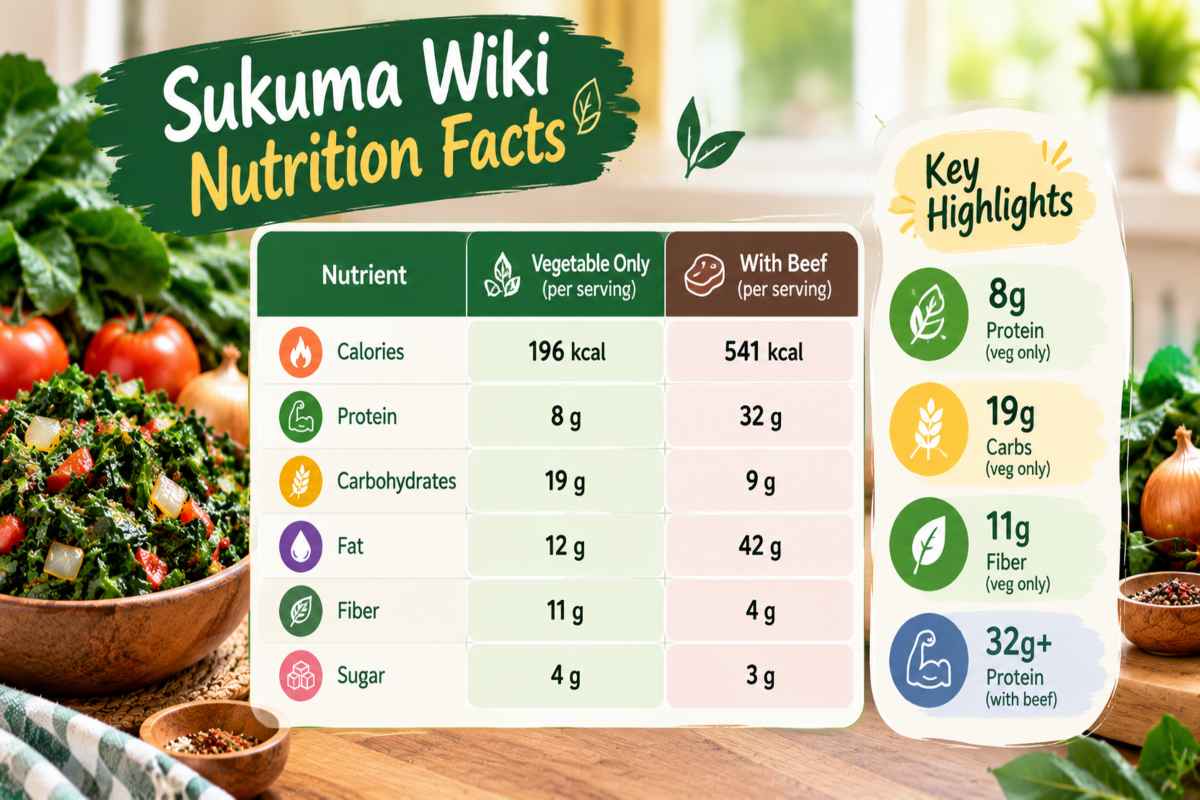
| Nutrient | Vegetable Only per serving | With Beef per serving |
| Calories | 196 kcal | 541 kcal |
| Protein | 8g | 32g |
| Carbohydrates | 19g | 9g |
| Fat | 12g | 42g |
| Fiber | 11g | 4g |
| Sugar | 4g | 3g |
The fiber content is worth noting on its own, at 11g per serving, the vegetable only version delivers nearly 40% of the recommended daily fiber intake in a single side dish, which is unusually high for a cooked green.
Sukuma Wiki Protein Content
Sukuma wiki protein content starts modest and scales up fast depending on what’s added to the pot. The greens themselves contribute roughly 8g of protein per serving on their own, coming from the collard greens and a small amount from the cooking onions and tomatoes. Once beef or goat meat is stirred in, protein content can climb to 30g or more per serving, turning what starts as a vegetable side into a legitimate protein source. This flexibility is part of why sukuma wiki works equally well as a light vegetable side or as the protein anchor of a full plate.
Sukuma Wiki Carbs and Fiber
Sukuma wiki carbs sit in a moderate range, with the vegetable only version providing about 19g of carbohydrates per serving, most of it coming from the natural sugars and structural fiber in the greens themselves rather than added starches.
Interestingly, adding meat to the dish lowers the carb count per serving, since beef and goat contribute calories through protein and fat rather than carbohydrates, a plain meat and greens version can drop to around 9g of carbs per serving. Fiber follows a similar pattern, the vegetable heavy version carries significantly more fiber than the meat added version, since fiber comes almost entirely from the collard greens rather than any other ingredient in the dish.
How Ingredients Change the Calorie Count
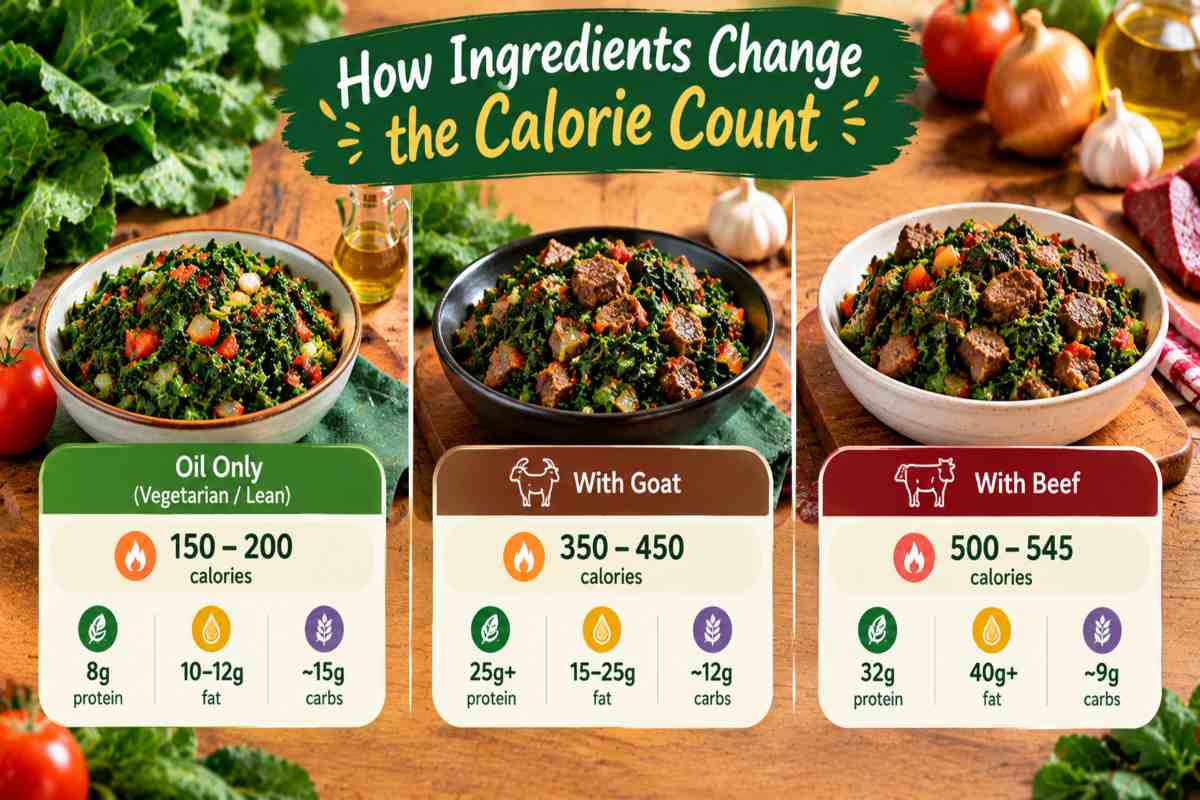
The calories in sukuma wiki shift dramatically based on which protein, if any, is cooked into the greens, ranging from under 150 calories for an oil only version to well over 500 calories once beef enters the pot. Since sukuma wiki is really a cooking technique for greens rather than a single fixed recipe, the protein choice, beef, goat or none at all, is the single biggest factor in the final calorie count.
Calories in Sukuma Wiki With Beef
Sukuma wiki made with beef typically runs 500–545 calories per serving, driven largely by the fat content that beef contributes alongside its protein. A pound and a half of beef added to a batch of greens can push fat content to over 40g per serving, more than three times what the vegetable only version carries, while also raising protein to around 32g per serving. This tracks with what’s true of beef steak nutrition facts generally, beef is calorie dense primarily because of its fat, not its protein, so even a moderate portion cooked into sukuma wiki has an outsized effect on the total count.
Calories in Sukuma Wiki With Goat
Goat meat brings a similar protein boost to sukuma wiki but with a leaner profile than beef, typically landing the dish in a 350–450 calorie range per serving. Goat is naturally lower in fat than beef cut for cut, so a serving of sukuma wiki made with goat delivers much of the same protein contribution, often 25g or more per serving, without carrying quite as much of the calorie load that comes from beef higher fat content. For anyone choosing between the two proteins specifically to manage calories while still adding meat to the dish, goat is the lighter option of the two.
Calories in Sukuma Wiki With Oil Only (Lean/Vegetarian Version)
The lightest version of sukuma wiki, made with just collard greens, onion, tomato and cooking oil, comes in around 150–200 calories per serving, with fat content depending almost entirely on how much oil is used in the sauté.
This oil only version keeps the dish vegetarian and keeps fat to roughly 10–12g per serving, most of it from the oil rather than the vegetables themselves. It is the version closest to the dish original form as an affordable, vegetable forward staple and it remains the lowest calorie way to prepare sukuma wiki without sacrificing the flavor the onions and tomatoes bring to the greens.
Is Sukuma Wiki Healthy
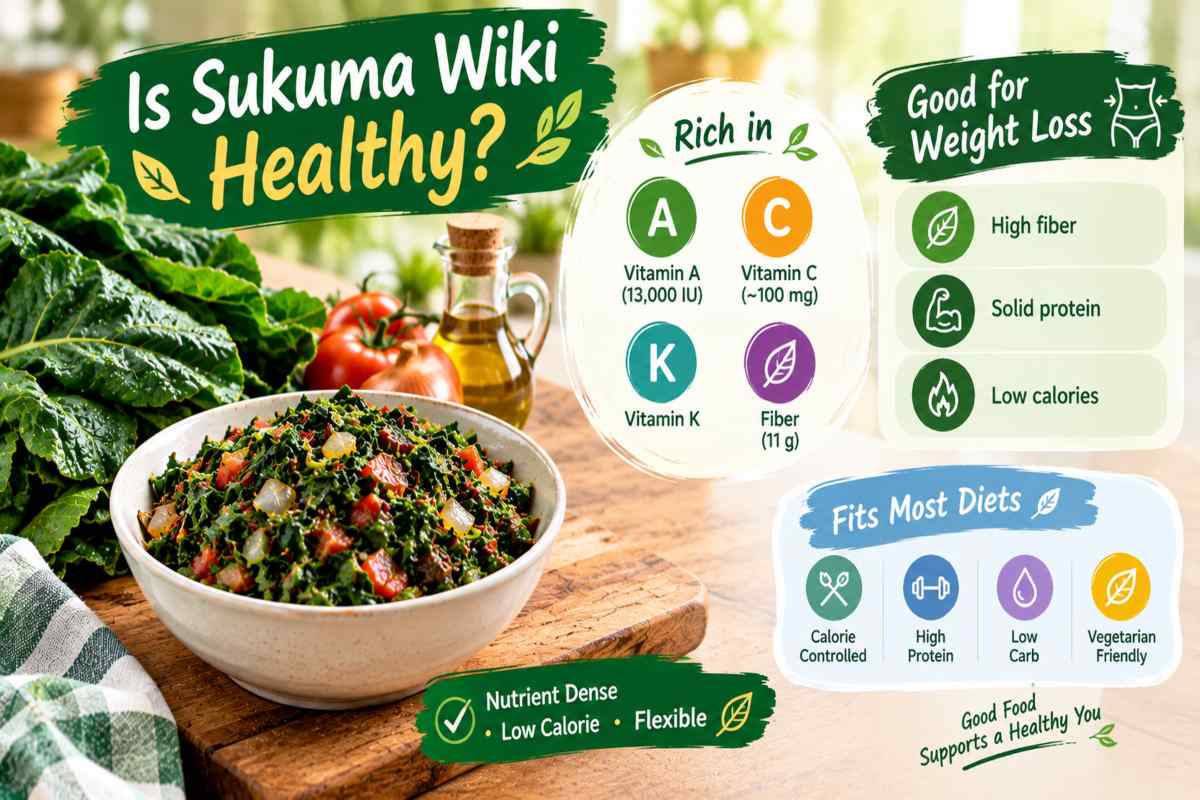
Sukuma wiki is a genuinely healthy dish, thanks to its base of collard greens, which are rich in vitamins A, C and K along with a fiber content that outpaces most cooked vegetables. A single vegetable only serving delivers around 13,000 IU of vitamin A and nearly 100mg of vitamin C, covering well over a day worth of both nutrients in one side dish. How healthy the final plate is depends mostly on what is added to it, a version built with lean protein and modest oil stays firmly on the healthy end, while a beef heavy, oil heavy version shifts the balance toward a richer, more indulgent meal.
Is Sukuma Wiki Good for Weight Loss
Sukuma wiki can be a strong fit for weight loss, particularly in its vegetable only or goat meat form, since it delivers high fiber and solid protein at a relatively low calorie cost. The fiber content alone, at around 11g per serving in the lean version, helps with satiety in a way few side dishes at under 200 calories can match.
It pairs the same way lighter meals do at other points in the day, much like the reasoning behind these healthy breakfast ideas for weight loss, the goal is high nutrient density without a high calorie cost and sukuma wiki fits that pattern well when kept lean.
Can You Eat Sukuma Wiki on a Diet
Sukuma wiki fits comfortably into most diets, including calorie controlled, high protein and low carb eating plans, as long as the protein and oil choices match the diet’s goals. Someone following a low carb approach can lean on the vegetable and goat version, since it keeps carbs under 10g per serving while still delivering meaningful protein.
Someone tracking calories more strictly can stick to the oil only version and stay under 200 calories per serving without giving up the dish entirely. The flexibility built into how sukuma wiki is prepared is what makes it easy to adapt to nearly any dietary framework rather than needing to be avoided on any of them.
Sukuma Wiki vs Kale Which Has Fewer Calories
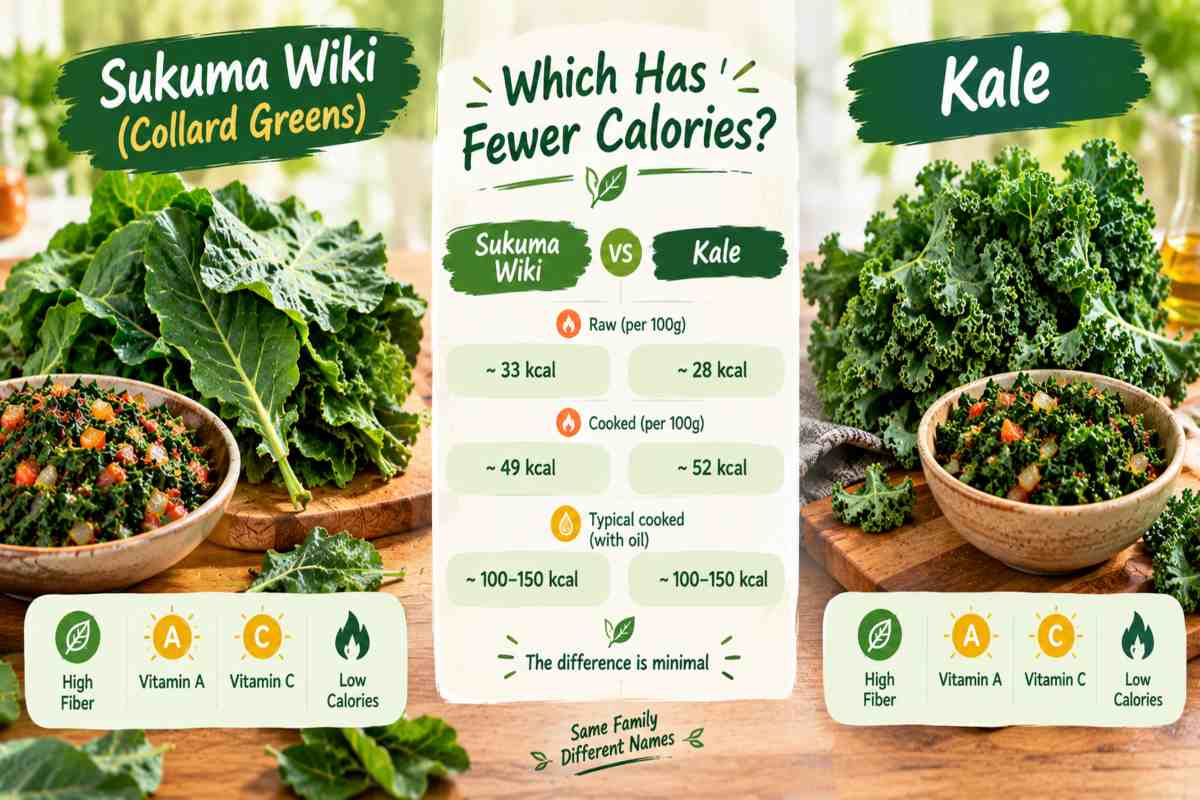
Kale and sukuma wiki are close in calorie count when both are cooked the same way, since sukuma wiki is traditionally made with collard greens but is commonly substituted with kale in Western kitchens. Raw kale runs slightly lower in calories than raw collard greens per 100g, but once both are sautéed in oil and cooked down the way sukuma wiki calls for, the difference becomes negligible, the calorie count is driven far more by how much oil and protein is added than by which leafy green forms the base.
Sukuma Wiki vs Collard Greens Nutrition
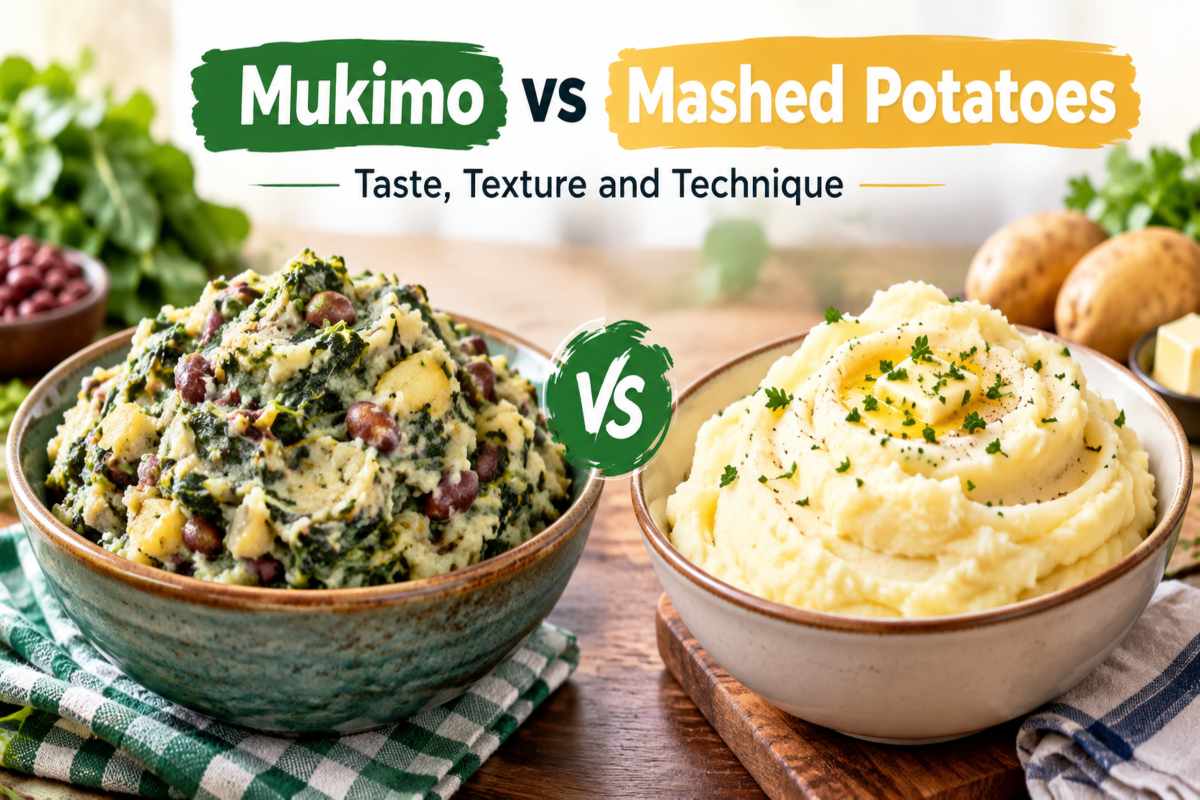
Sukuma wiki and collard greens are not actually two different foods, collard greens are the traditional base ingredient and “sukuma” is simply the Swahili name for the same vegetable used across East Africa.
Nutritionally, they are identical before cooking, both delivering high fiber, vitamin A and vitamin C for very few calories. Where the nutrition profile changes is in preparation, sukuma wiki is typically cooked with onion, tomato and oil and sometimes meat, which adds calories, fat and protein that raw or plainly steamed collard greens would not carry on their own.
Is Sukuma Wiki the Same as Kale?
Sukuma wiki is not the same as kale, though the two are frequently confused and often used interchangeably in recipes outside East Africa. The dish is traditionally made with collard greens, a close botanical relative of kale in the Brassica oleracea family, sharing a similar leaf texture and nutrient profile. Kale works as a substitute when collard greens are not available and the calorie and nutrition differences between the two are minor enough that swapping one for the other does not meaningfully change the final dish nutrition facts.
Conclusion
Sukuma wiki calories range from roughly 150 for a lean, oil only version to over 540 when beef is added, making it one of the more flexible dishes for matching a meal to specific nutrition goals rather than a fixed number to work around. What stays constant across every version is the nutritional core, high fiber, strong vitamin A and C content and a base of collard greens that delivers real nutritional value at a low calorie cost before any protein is added.
Whether the goal is a lighter, weight loss friendly side dish or a heartier protein rich meal built around goat or beef, sukuma wiki adjusts to fit rather than forcing a single approach. For more East African and Kenyan recipes built around the same kind of everyday, nutrient dense cooking, Devine Dishes has a full library of dishes worth exploring next.
Frequently Asked Questions (FAQs)
How many calories does a plate of sukuma wiki have?
A plate of sukuma wiki typically has 150–200 calories in its vegetable only form or 300–540 calories when beef or goat meat is added. The exact count depends on the protein and amount of oil used.
How much protein is in sukuma wiki?
The vegetable only version provides around 8g of protein per serving. Adding beef or goat meat can raise that to 25–32g per serving.
Is sukuma wiki the same as kale?
Not exactly, sukuma wiki is traditionally made with collard greens, a close relative of kale. Kale is often used as a substitute and nutritionally the two are very similar.
Can I eat sukuma wiki on a diet?
Yes, sukuma wiki fits most diets, including low carb and calorie controlled plans. Choosing the lean, oil only or goat version keeps it lightest.
Disclaimer: This article is for general information only and is not medical or nutrition advice. Nutrient values are estimates and vary by ingredients, oil, coating and portion size. Talk to your doctor or dietitian about your individual needs.