
Goat Sukuma Wiki Vegetable Stew is a one pot Kenyan dish that simmers tender goat meat with sukuma wiki (collard greens), onions and tomatoes into a rich, savory stew traditionally served alongside ugali. The name comes from Swahili, where “sukuma wiki” literally translates to “stretch the week,” a nod to how affordable, nutrient dense greens have long helped Kenyan households make a modest amount of meat go further across several meals.
This version leans into that tradition while building something heartier, goat, known for being naturally lower in fat and cholesterol than beef or lamb even when it delivers a similarly rich flavor, slow simmers until fork tender, then gets folded together with wilted greens and a tomato onion base seasoned the way it is done in Kenyan kitchens. The result is a stew that is satisfying enough to stand on its own as a weeknight dinner, yet rooted enough in technique and ingredient choice to hold up as an introduction to East African home cooking for anyone trying it for the first time.
Whether you are cooking it stovetop the traditional way or adapting it for a slow cooker or Instant Pot, this recipe walks through everything you need, including how it compares to the classic vegetable only version and what to pair it with for a complete meal. If you are building out a rotation of easy, protein forward meals, this stew fits right in alongside the rest of our Dinner Recipes.
What Is Goat Sukuma Wiki Vegetable Stew?
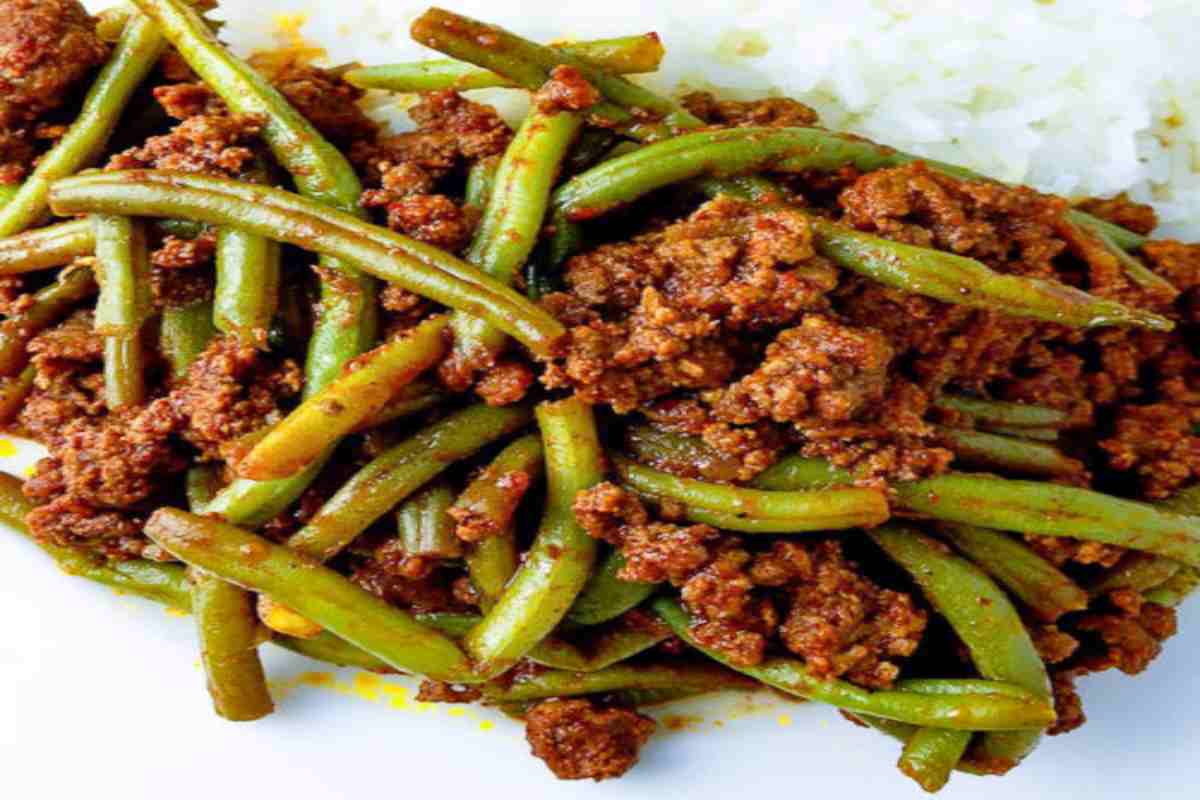
Goat Sukuma Wiki Vegetable Stew is a Kenyan one pot dish that combines slow simmered goat meat with sukuma wiki (collard greens), onions and tomatoes, seasoned in the traditional East African style and served with ugali or rice. It’s a heartier, protein rich take on sukuma wiki, which on its own is typically a simple vegetable side dish rather than a full meal.
The dish sits at the intersection of two Kenyan kitchen staples, sukuma wiki, the everyday greens dish found in nearly every household and nyama (meat) preparations like goat, which are reserved for more substantial meals or special occasions. Combining the two turns a humble side into a complete, filling stew, goat brings richness and depth, while the greens add freshness and cut through the fat, so neither element overwhelms the other. If you have made our Chicken Stew East African Style, this follows the same tomato onion stewing base, just built around a different protein with its own cooking time and texture.
Sukuma Wiki vs Collard Greens Are They the Same?
Sukuma wiki and collard greens are essentially the same vegetable, just known by different names in different parts of the world. “Sukuma” is the Swahili word used across Kenya, Tanzania and Uganda for what English speakers call collard greens, so any recipe calling for sukuma wiki can be made with the collard greens sold at a typical US grocery store.
The only real distinction is culinary context, not botany, sukuma wiki refers specifically to how the greens are prepared in East African cooking, sautéed with onions and tomatoes rather than the slow braised, smoked meat style common in Southern US collard greens recipes. Some cooks substitute kale or spinach when collards aren’t available, though collards remain the closest match in texture and flavor.
What Does “Mbuzi” Mean in Kenyan Cooking?
“Mbuzi” is the Swahili word for goat and it shows up throughout Kenyan menus and recipe names, as in nyama ya mbuzi (goat meat) or mbuzi sukuma wiki, the same dish covered here. Goat is one of the most eaten meats in Kenya, prized for being flavorful without being as fatty as beef.
Recognizing “mbuzi” is useful beyond this one recipe, since it appears on menus at Kenyan restaurants and in other classic preparations like goat wet fry, a drier, more intensely seasoned goat dish often served alongside sukuma wiki and kachumbari as part of the same meal.
Making Delicious Goat Sukuma Wiki Vegetable Stew Recipe
Recipe Yield
Serves 4–6 | Prep time 20 minutes | Cook time 1 hour 15 minutes | Total Time 1 hour 35 minutes
Ingredients
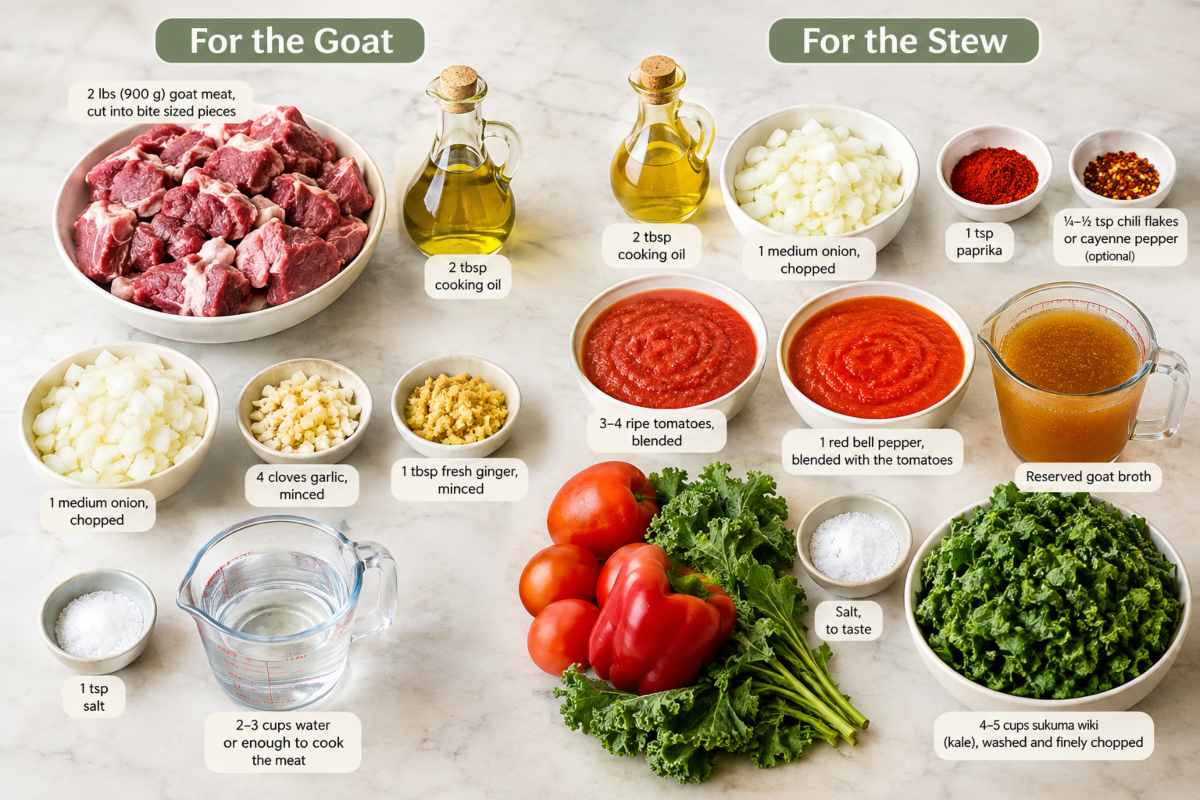
For the goat
2 lbs (900 g) goat meat, cut into bite sized pieces
2 tbsp cooking oil
1 medium onion, chopped
4 cloves garlic, minced
1 tbsp fresh ginger, minced
1 tsp salt
2–3 cups water or enough to cook the meat
For the stew
2 tbsp cooking oil
1 medium onion, chopped
1 tsp paprika
¼–½ tsp chili flakes or cayenne pepper, optional
3–4 ripe tomatoes, blended
1 red bell pepper, blended with the tomatoes
Reserved goat broth
Salt, to taste
4–5 cups sukuma wiki (kale), washed and finely chopped
Instructions
- Heat 2 tablespoons of oil in a large pot over medium high heat. Add the goat meat and cook for a few minutes, stirring occasionally.
- Add the garlic, ginger and chopped onion, followed by the salt. Stir well to combine.
- Pour in 2–3 cups of water, cover and let the goat simmer for about 45 minutes or until tender. Add a little more water if needed during cooking.
- While the goat cooks, wash and finely chop the sukuma wiki. Set aside.
- Once the goat is tender, remove the meat from the pot and reserve cooking broth. Don’t throw it away, it adds incredible flavor to the stew.
- Return the same pot to the stove and add 2 tablespoons of oil. Add the chopped onion and sauté unless golden brown.
- Return the cooked goat to the pot. Stir and let it cook uncovered until the meat begins to brown and caramelize. This step gives the goat a beautiful depth of flavor.
- Sprinkle in the paprika and chili, if using. Stir for about 30 seconds.
- Pour it in tomatoes (blended) and red bell pepper. Stir, cover and let the sauce simmer until it has reduced significantly and most of the excess liquid has cooked away.
- Pour the reserved goat broth back into the pot. Stir, cover and allow the stew to simmer again until the sauce thickens and the flavors come together.
- Prepare the sukuma wiki Bring a pot of water to a boil. Pour the hot water over the chopped sukuma wiki and let it sit for 2–3 minutes. Drain immediately and run the greens under cold water to stop the cooking. Drain and gently squeeze out extra water.
- Add the prepared sukuma wiki to the goat stew. Stir to combine and let everything to simmer for 3–5 minutes.
- Taste and adjust the salt as needed.
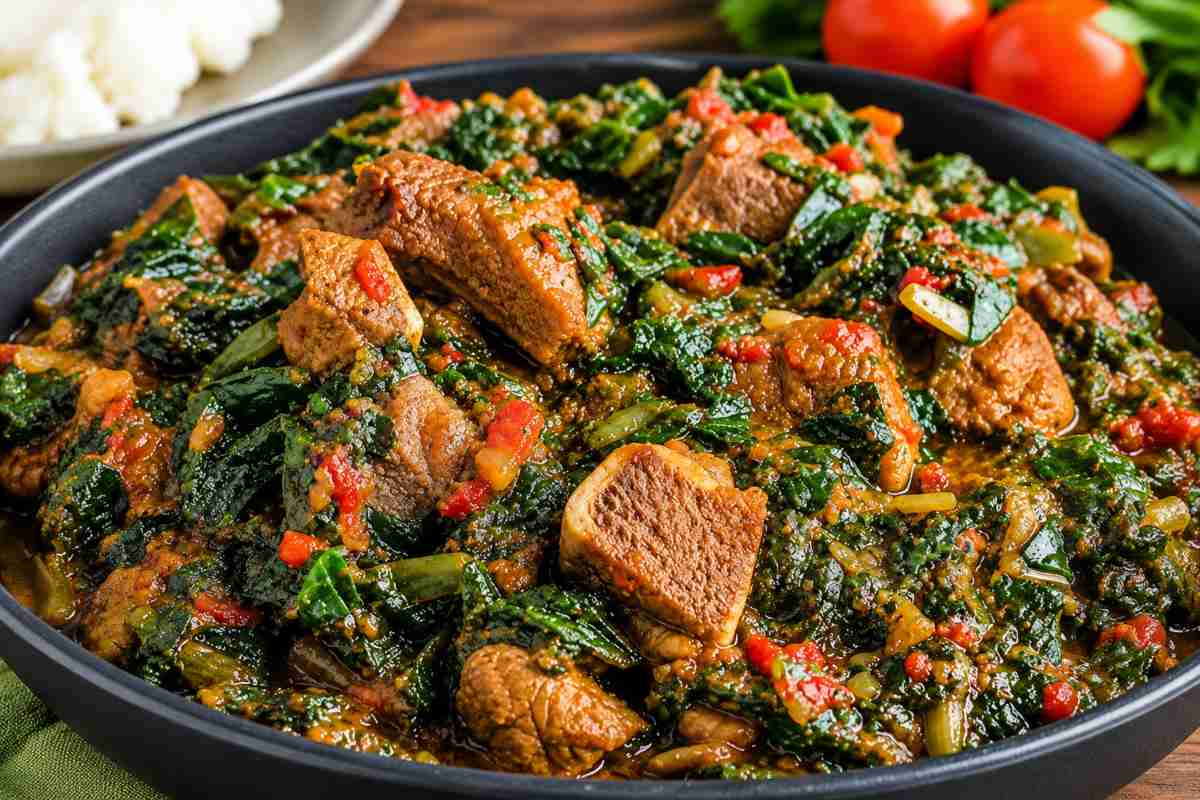
Goat Sukuma Wiki Vegetable Stew Recipe
Ingredients
Ingredients
For the goat
- 2 lbs 900 g goat meat cut into bite sized pieces
- 2 tbsp cooking oil
- 1 medium onion chopped
- 4 cloves garlic minced
- 1 tbsp fresh ginger minced
- 1 tsp salt
- 2–3 cups water or enough to cook the meat
For the stew
- 2 tbsp cooking oil
- 1 medium onion chopped
- 1 tsp paprika
- ¼–½ tsp chili flakes or cayenne pepper optional
- 3–4 ripe tomatoes blended
- 1 red bell pepper blended with the tomatoes
- Reserved goat broth
- Salt to taste
- 4–5 cups sukuma wiki (kale) washed and finely chopped
Instructions
Instructions
- Heat 2 tablespoons of oil in a large pot over medium high heat. Add the goat meat and cook for a few minutes, stirring occasionally.
- Add the garlic, ginger and chopped onion, followed by the salt. Stir well to combine.
- Pour in 2–3 cups of water, cover and let the goat simmer for about 45 minutes or until tender. Add a little more water if needed during cooking.
- While the goat cooks, wash and finely chop the sukuma wiki. Set aside.
- Once the goat is tender, remove the meat from the pot and reserve cooking broth. Don't throw it away, it adds incredible flavor to the stew.
- Return the same pot to the stove and add 2 tablespoons of oil. Add the chopped onion and sauté unless golden brown.
- Return the cooked goat to the pot. Stir and let it cook uncovered until the meat begins to brown and caramelize. This step gives the goat a beautiful depth of flavor.
- Sprinkle in the paprika and chili, if using. Stir for about 30 seconds.
- Pour it in tomatoes (blended) and red bell pepper. Stir, cover and let the sauce simmer until it has reduced significantly and most of the excess liquid has cooked away.
- Pour the reserved goat broth back into the pot. Stir, cover and allow the stew to simmer again until the sauce thickens and the flavors come together.
- Prepare the sukuma wiki Bring a pot of water to a boil. Pour the hot water over the chopped sukuma wiki and let it sit for 2–3 minutes. Drain immediately and run the greens under cold water to stop the cooking. Drain and gently squeeze out extra water.
- Add the prepared sukuma wiki to the goat stew. Stir to combine and let everything to simmer for 3–5 minutes.
- Taste and adjust the salt as needed.
Video
Notes
Please note that the nutritional information is a rough estimate and can vary significantly based on the products used in the recipe.
Nutrition
How to Make Goat Wet Fry Style Sukuma Wiki
Goat wet fry style sukuma wiki is made by browning goat meat until it’s well seared, then simmering it down with minimal liquid until the sauce reduces to a thick, clinging coating rather than a brothy stew, before serving it alongside sautéed sukuma wiki. It’s less about boiling the meat tender and more about building concentrated flavor through slow reduction.
To make it, goat pieces are first browned in oil over medium high heat to develop color, then simmered covered with just enough water to keep them from drying out, usually topped up gradually rather than added all at once. Once the meat is tender, the lid comes off and the mixture cooks uncovered until nearly all the liquid evaporates, leaving the goat coated in a thick, well seasoned sauce. The sukuma wiki is prepared separately in its own pan with onions and tomatoes, then plated next to the goat rather than stewed together, which keeps the greens bright and prevents them from turning soggy.
Choosing the Right Cut of Goat Meat
Bone in cuts like shoulder, leg or rib pieces work best for wet fry because the bone and connective tissue add flavor and body to the sauce as it reduces. Leaner cuts without bone tend to dry out during the extended simmering and lack the same depth.
Goat meat is naturally lower in fat than beef, which is part of why the wet fry technique, searing hard and reducing slowly, matters so much here: it’s how the dish builds richness that the meat itself doesn’t fully supply on its own. Cutting the meat into similarly sized pieces, roughly two inch chunks, also helps it cook evenly so some pieces aren’t falling apart while others are still tough.
What Makes Wet Fry Different From Regular Stew
The core difference is liquid, a regular goat stew keeps enough broth to be spooned over rice or ugali, while wet fry is cooked down until barely any liquid remains, leaving a drier, more intensely flavored dish that’s closer to a sauté than a soup. Wet fry also skips the vegetable additions common in stew, no carrots or potatoes, keeping the focus entirely on the meat and its reduced sauce.
Because of that, wet fry is typically served as one component of a larger plate rather than a standalone main, plated next to sukuma wiki, kachumbari and ugali so each element brings its own texture instead of blending into one pot.
Slow Cooker and Instant Pot Method for Goat Sukuma Wiki
Goat Sukuma Wiki Vegetable Stew adapts well to an Instant Pot or a slow cooker , both of which handle the long, low simmer goat meat needs to become tender without requiring much hands on attention. The greens still get added toward the end in either method, since sukuma wiki only needs a few minutes to wilt and turns mushy if it cooks as long as the meat does.
In a slow cooker, start by placing browned goat meat, onions, tomatoes and seasonings together, cooking everything on low heat for several hours until the meat is tender and easily shredded. Add the sukuma wiki in the final 15 to 20 minutes of cooking to ensure it retains its vibrant color and does not get overcooked. For the Instant Pot, you can follow the same steps but with a significant time reduction. Use the sauté function to brown the meat right in the pot before switching to pressure cooking, drastically shortening the typical cooking time.
Stovetop Timing vs Pressure Cooker Timing
Traditional stovetop cooking usually takes goat meat 60 to 90 minutes of simmering to reach a fork tender texture, depending on the cut and how large the pieces are cut. A pressure cooker or Instant Pot achieves that same tenderness in roughly 25 to 35 minutes under high pressure, since the sealed, pressurized environment cooks tougher cuts far faster than an open pot ever could.
That time difference is the main reason pressure cooking has become a popular shortcut for goat dishes specifically, goat is a leaner, more muscular meat than beef, so it typically needs longer conventional cooking to break down, making it one of the meats that benefits most from pressure cooking’s speed.
Adjusting Liquid for Slow Cooking
Slow cookers trap steam rather than letting it evaporate, so recipes written for stovetop cooking need less added liquid when adapted for a slow cooker or the finished stew turns out thinner and more watered down than intended. A good starting point is reducing the stovetop recipe’s liquid by about a quarter, then adjusting at the end if the stew needs thickening.
If the stew does come out thinner than expected, simmering it uncovered on the stovetop for the last 10 to 15 minutes after slow cooking or removing the lid on an Instant Pot sauté setting, reduces it back down to the right consistency without any extra ingredients.
What to Serve With Goat Sukuma Wiki
Goat Sukuma Wiki Vegetable Stew is traditionally served with ugali, a firm cornmeal staple that’s meant to be torn and used to scoop up the stew and greens, though rice and chapati work just as well for soaking up the sauce. A side of kachumbari, a fresh tomato and onion salad, is the near universal pairing, adding acidity and crunch that maintains the richness of the goat.
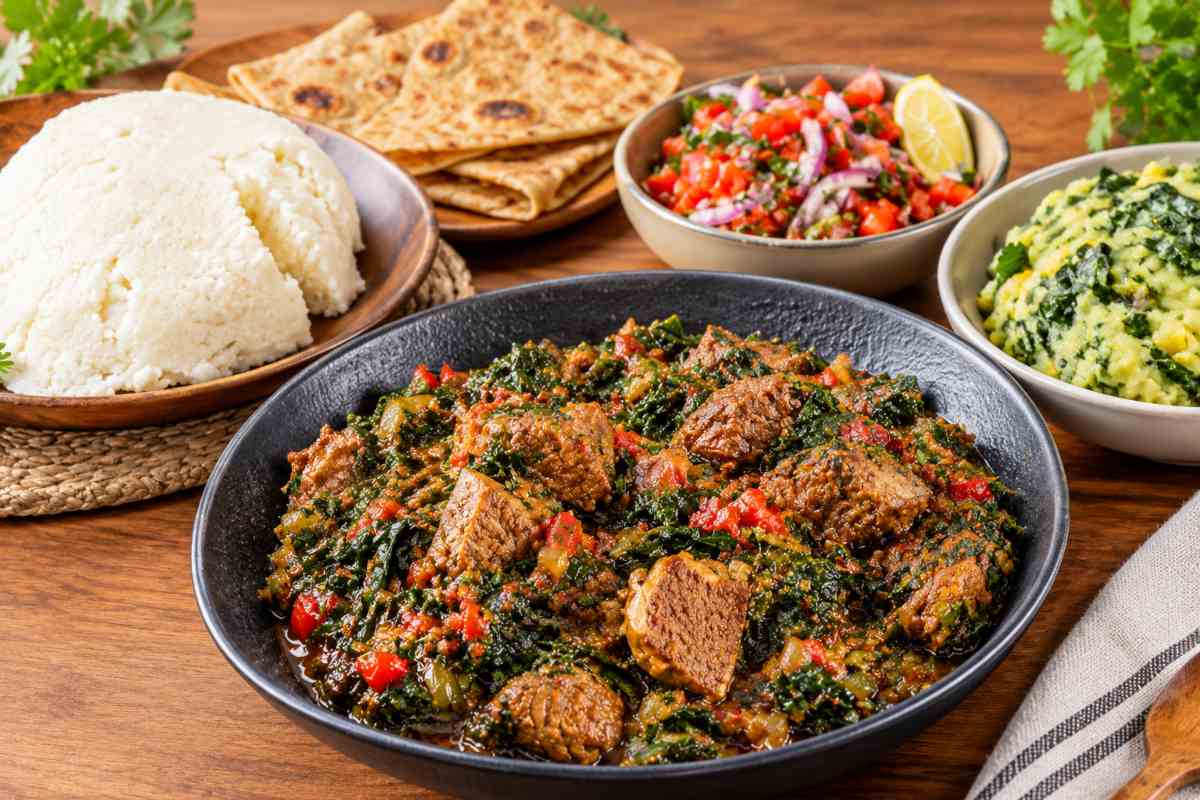
Beyond ugali and kachumbari, this stew fits comfortably into a larger Kenyan spread. Mukimo, a mashed mixture of potatoes, greens and corn, makes a heartier starch alternative to ugali if you’re serving a bigger group, you can find our recipe for Kenyan Mukimo if you want to build out the full plate. Soft, layered chapati is another common option and our guide to fluffy Kenyan chapatis covers the folding technique that gives them their characteristic texture.
Quick Kachumbari to Pair With Your Stew
Kachumbari is a raw salad of diced tomatoes, onions, chili and cilantro, tossed with a squeeze of lemon or lime just before serving and it takes only a few minutes to put together. Because it’s served cold and uncooked, it provides a sharp contrast to the warm, slow simmered stew, cutting through the richness of the goat with each bite.
If you’d rather switch things up, our easy vegetable salad recipe offers a similar fresh, acidic counterpoint using ingredients that are just as easy to keep on hand.
Serving With Ugali
Ugali is made by whisking maize flour into boiling water and stirring continuously until it thickens into a dense, dough like consistency that holds its shape when sliced or scooped. It’s intentionally plain in flavor, which is by design, ugali is meant to be a neutral base that absorbs the sauce from whatever stew it is served alongside, in this case the tomato and goat broth from the sukuma wiki stew.
To eat it the traditional way, a small piece of ugali is pinched off, shaped into a scoop with the thumb and used to pick up pieces of goat and greens directly from the stew, making utensils optional at the table.
Tips for Authentic Kenyan Goat Stew Flavor
Authentic Kenyan goat stew flavor comes down to three things, browning the meat properly before simmering, building the base with fully softened onions and tomatoes and seasoning with the right balance of aromatics rather than reaching for pre made spice blends. Skipping any one of these tends to produce a stew that’s technically correct but flat compared to the real thing.
Browning is the step most home cooks rush past, but searing the goat in batches, not crowding the pot, before adding any liquid is what gives the finished stew its deeper, roasted undertone rather than a boiled taste. The onions and tomatoes that follow need real time on the heat too, cooking the onions until they are soft and translucent, then letting the tomatoes break down completely into the base, is what creates the thick, cohesive sauce goat stew is known for, rather than a thin, separated liquid.
Seasoning is where most of the authenticity lives. Kenyan goat stew typically leans on garlic, ginger and a modest amount of curry powder or ground coriander and cumin, added early enough to bloom in the oil rather than sprinkled in at the end. A bay leaf or two during the simmer adds background depth without becoming detectable in the final dish. Salt should be added slowly and tasted throughout the cook, since the stew reduces as it simmers and can go from under seasoned to too salty quickly once the liquid concentrates.
Finally, resist the urge to rush the simmer. Goat is a leaner, more muscular meat than beef and it typically needs a full 60 to 90 minutes of low, steady heat to break down properly, cutting that time short is the most common reason homemade goat stew turns out tough rather than fork tender.
Bringing It All Together
Goat Sukuma Wiki Vegetable Stew is a one pot dish that turns two Kenyan kitchen staples, tender, slow simmered goat and sautéed collard greens, into a complete, satisfying meal with deep, well built flavor at every stage. Whether you cook it low and slow on the stovetop, adapt it for a slow cooker or speed things up with an Instant Pot, the fundamentals stay the same, good browning, a fully cooked down onion tomato base and greens added late enough to stay bright.
Served with ugali and kachumbari, it is a meal that reflects how Kenyan cooking balances richness with freshness on the same plate. And once you have got the technique down, it opens the door to variations like goat wet fry or swapping in chicken for a lighter version of the same base. For more recipes rooted in the same East African tradition, explore the rest of what Devine Dishes has to offer.
Also try our other delicious recipes:
Frequently Asked Questions (FAQs)
What is sukuma wiki made of?
Sukuma wiki is made from collard greens sautéed with onions, tomatoes and simple seasonings like salt and pepper. Some versions add garlic, chili or a squeeze of lemon for extra brightness.
Is sukuma wiki the same as collard greens?
Yes, sukuma wiki is simply the Swahili name for collard greens, the same vegetable found in most US grocery stores. The difference lies in preparation style, not the vegetable itself.
Can you make sukuma wiki with goat meat?
Yes, goat is a common addition to sukuma wiki in Kenyan cooking, turning the vegetable side into a heartier, protein rich stew. The goat is typically browned and simmered separately before combining with the greens.
What meat goes with sukuma wiki?
Goat, beef and chicken are the most common meats paired with sukuma wiki, with goat being especially popular for its rich flavor. It’s also frequently served alongside fish or simply on its own as a vegetable side.














1 Comment. Leave new
Browning the goat after simmering it is such a smart step never thought to do it that way! Can’t wait to try this with kachumbari on the side. Looks so comforting and rich. 😋