
The best black eyed peas recipe starts with dried or canned peas simmered with onion, garlic and smoked seasoning until creamy and tender, then finished with your choice of protein, greens or spice blend to match any cuisine. This one dish scales from a 30 minute weeknight side to a slow simmered Southern stew and it adapts just as easily into vegetarian, African, Greek or Caribbean style variations without losing its signature earthy, slightly nutty flavor.
Black eyed peas are not just a New Year tradition, they are a genuine nutritional workhorse. A single cooked cup delivers roughly 11g of protein and 8g of fiber, making them one of the most affordable, high protein legumes you can keep in the pantry. That combination of nutrition and versatility is exactly why this bean shows up in so many kitchens worldwide, from stovetop Southern classics to spiced Moroccan curries.
This guide covers everything you need, the foundational stovetop and pressure cooker methods, vegetarian and meat based variations, hearty soups and stews and global takes on black eyed peas from Africa, Greece and India. If you are planning a full menu around it, black eyed peas also make a fantastic protein packed addition to a quick easy lunch recipes, simmered and spooned over rice or greens for a fast, filling midday meal.
What Are Black Eyed Peas?
Black eyed peas are small, cream colored legumes with a distinctive black spot at their center, prized for their creamy texture and mild, earthy flavor once cooked. Despite the name, they are technically a bean, not a pea and belong to the cowpea family that been a staple across African, Southern American and South Asian cooking for centuries.
Nutritional Benefits of Black Eyed Peas
Black eyed peas are a nutrient dense, budget friendly protein source that fits easily into balanced meal planning. One cooked cup provides around 11g of protein and 8g of fiber, along with meaningful amounts of folate, iron and potassium, making them especially useful for anyone building plant forward or high fiber meals. Their low fat content and steady release of energy also make them a smart pairing alongside vegetable heavy dishes, such as sautéed mushrooms, for a simple, nutrient rich plate.
Dried vs Canned Black Eyed Peas
Dried black eyed peas offer better texture control and a deeper, more developed flavor, but they require soaking and a longer cook time compared to canned. Canned black eyed peas, on the other hand, are fully cooked and prepared to use straight from the can, making them the faster choice for weeknight cooking, though they tend to be softer and slightly higher in sodium unless rinsed well. For most everyday recipes, canned peas work fine, for stews, soups or dishes where texture matters most, dried peas are worth the extra time.
Classic Black Eyed Peas Recipe Southern Style Base
A classic Southern black eyed peas recipe simmers the beans low and slow with onion, garlic, smoked meat and a touch of vinegar until they turn creamy and deeply savory. This base recipe is the foundation for nearly every variation in this guide and it works equally well on the stovetop or in a pressure cooker depending on how much time you have.
Ingredients You Will Need

- 2 cup dry black eyed peas
- 1 medium onion
- 2 tbsp cooking oil
- 3-4 garlic cloves
- 1 small ginger
- 2 green chilli (optional) or habanero
- 2 cups chicken broth
- 1/2 large red bell pepper
- 3 ripe tomatoes
- 1/2 tsp turmeric
- 1 tsp curry powder
- 1 tbsp paprika
- 1 tbsp chicken broth powder
- Salt to taste
- Cilantro to garnish
Step by Step Stovetop Method

- Rinse the black eyed-peas.
- Add water to a pressure cooker and cook until soft but not mushy. You can soak overnight and cook on stove top if you don’t have a pressure cooker.
- To a blender, add the garlic, bell pepper, tomatoes, ginger and blend it.
- Add oil to a pan, followed by the chopped onions. Sauté the onions until soft and translucent.
- Add the paprika, curry powder and turmeric. Mix to combine then add the tomato blend.
- Cover and cook until the sauce thickens.
- Drain the beans then add them to the pan and give it a stir.
- Add the broth, stir then cover and cook for 5-10 minutes.
- Garnish with cilantro and serve.
Pressure Cooker / Instant Pot Method
For a faster version of this black eyed peas recipe, sauté the onion and garlic directly in the pressure cooker using the sauté function, then add the peas, smoked meat, broth and bay leaf. Seal the cover and cook on high pressure for 25 minutes if using dried peas, followed by a natural release for 10 minutes before manually releasing any remaining pressure. This method cuts total cooking time by more than half compared to the stovetop, while still producing the same tender, flavorful result, making it ideal for busy weeknights when you do not want to sacrifice flavor for speed.
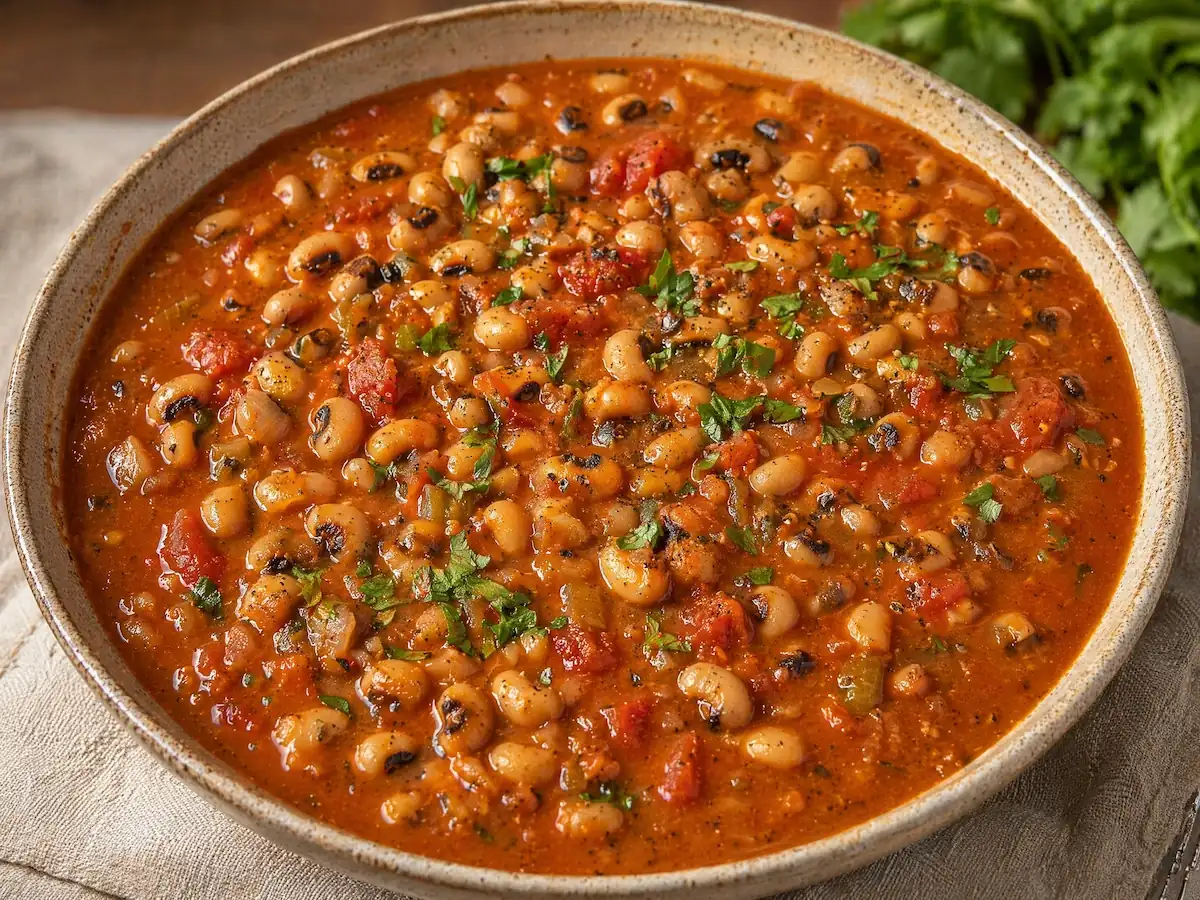
Black Eyed Peas Recipe
Ingredients
- 2 cup black eyed peas dry
- 1 medium onion
- 2 tbsp cooking oil
- 3-4 garlic cloves
- 1 small ginger
- 2 green chilli or habanero optional
- 2 cups chicken broth
- 1/2 large red bell pepper
- 3 tomatoes ripe
- 1/2 tsp turmeric
- 1 tsp curry powder
- 1 tbsp paprika
- 1 tbsp chicken broth powder
- Salt to taste
- Cilantro to garnish
Instructions
- Rinse the black eyed peas.
- Add water to a pressure cooker and cook until soft but not mushy. You can soak overnight and cook on stove top if you don't have a pressure cooker.
- To a blender, add the garlic, bell pepper, tomatoes, ginger and blend it.
- Add oil to a pan, followed by the chopped onions. Sauté the onions until soft and translucent.
- Add the paprika, curry powder and turmeric. Mix to combine then add the tomato blend.
- Cover and cook until the sauce thickens.
- Drain the beans then add them to the pan and give it a stir.
- Add the broth, stir then cover and cook for 5-10 minutes.
- Garnish with cilantro and serve.
Video
Nutrition
Vegetarian and Vegan Black Eyed Peas
A vegetarian black eyed peas recipe skips the smoked meat entirely and builds flavor instead through aromatics, greens and smoked paprika or liquid smoke, making it just as hearty and satisfying as the traditional version. This approach keeps the dish fully plant based while still delivering the deep, savory profile black eyed peas are known for.
Black Eyed Peas with Kale or Spinach
Adding leafy greens like kale or spinach turns black eyed peas into a more complete, nutrient dense meal without extra effort. Simply stir chopped kale into the pot during the last 10 minutes of cooking or wilt spinach in right before serving, so the greens stay vibrant rather than overcooked. This pairing works especially well alongside other legume based dishes, like a warm bowl of white bean soup, for a comforting, fiber rich meal.
Black Eyed Peas and Cabbage
Black eyed peas and cabbage is a classic Southern pairing, with the cabbage slight sweetness balancing the earthy richness of the peas. Sauté shredded cabbage with onion until softened, then fold it into the finished peas for the last few minutes of cooking so it stays tender but not mushy. If you would prefer a heartier, meat based variation of this same flavor combination, a cabbage and sausage skillet makes an excellent non vegetarian alternative built around the same base ingredients.
High Protein Vegetarian Additions like Quinoa
Stirring cooked quinoa into black eyed peas boosts the protein content significantly, since quinoa is one of the few plant foods that delivers all nine essential amino acids. Combined, one cup of black eyed peas and a half cup of quinoa can provide well over 15 grams of protein, making this combination a genuinely complete, muscle supporting vegetarian meal rather than just a side dish. For those who eat meat but want to rotate in more plant forward meals during the week, this quinoa version pairs well as a lighter counterpart to protein heavy dishes like baked turkey wings.
Black Eyed Peas with Meat and Sausage
Black eyed peas pair naturally with smoked and savory meats, since the peas mild, creamy texture absorbs bold flavors like smoked sausage, seasoned chicken or slow cooked pork without becoming overpowering. Each protein brings a slightly different character to the dish, from smoky and rich to lighter and more herb forward.
Black Eyed Peas and Smoked Sausage
Black eyed peas and smoked sausage is one of the most popular versions of this dish, with the sausage rendered fat infusing the entire pot as it simmers. Slice the sausage into rounds and brown it first in the pot before adding onion, garlic and the peas, so every bite of the finished dish carries that smoky depth. Andouille or kielbasa both work well here and either can be swapped in depending on how much heat you want in the final result.
Black Eyed Peas and Chicken
Adding chicken to black eyed peas creates a lighter, leaner version of the dish while still keeping it hearty enough for a full meal. Bone in chicken thighs work best, since they hold up during a longer simmer and add richness to the broth as they cook alongside the peas, onion and seasonings. If you are looking for a more robust, spice forward chicken dish to serve alongside or instead of this pairing, a masala chicken roast offers a bolder, differently spiced alternative worth adding to the rotation.
Black Eyed Peas and Pork
Pork and black eyed peas is a Southern staple, traditionally made with a ham hock, salt pork or bacon simmered directly into the pot for hours until the meat is falling apart tender. The slow render of pork fat is what gives this version its signature richness and it is the closest to the dish’s most traditional, deeply savory roots. For best results, add the pork at the very start of cooking so it has time to fully break down and season the broth as the peas cook.
Black Eyed Pea Soups and Stews
Black eyed pea soup and stew both start from the same base as the classic recipe, but with more liquid and longer simmer times to break the peas down into a thicker, more comforting dish. The main difference comes down to consistency, soup stays brothy, while stew reduces down into something closer to a spoonable, hearty meal.
Hearty Black Eyed Pea Soup
A hearty black eyed pea soup uses extra broth, typically 4 to 5 cups per pound of peas, along with diced carrots, celery and tomatoes to build a fuller, more complete one pot meal. Simmer everything together for about an hour and toward the end, mash a small portion of the peas against the side of the pot to naturally thicken the broth without needing cream or flour. This version is especially popular in colder months, since it’s filling enough to serve as a complete dinner on its own, with roughly 12 grams of protein per serving.
Slow Simmered Black Eyed Pea Stew
A slow simmered black eyed pea stew uses less liquid than soup and cooks longer, allowing the peas to break down further and the flavors to concentrate into something rich and deeply savory. This version benefits from a low, steady simmer of 1.5 to 2 hours, ideally with a smoked meat like smoked turkey or ham hock to build layers of flavor as it reduces. The result is a thick, almost gravy like consistency that traditionally served over rice, making it one of the most satisfying ways to enjoy black eyed peas as a main course rather than a side dish.
Cooking Methods Compared
Black eyed peas can be cooked several different ways depending on how much time you have and the texture you are after, from a slow stovetop simmer to a fast pressure cooker batch or even an air fryer shortcut. Each method delivers a slightly different result, so choosing the right one comes down to balancing convenience against depth of flavor.
Stovetop vs Pressure Cooker
The stovetop method gives you the most control over texture and allows flavors to develop slowly, typically taking 45 minutes to an hour for dried peas to become fully tender. A pressure cooker cuts that time by more than half, reaching the same tenderness in about 25 minutes of high pressure cooking plus a natural release, making it the better choice on busy weeknights. The trade off is subtle, stovetop peas tend to hold their shape a bit better, while pressure cooked peas turn out slightly softer and creamier, similar to the texture in dishes like creamy coconut nduma.
Baked and Air Fryer Black Eyed Peas
Baking or air frying black eyed peas is best suited for pre cooked or canned peas, transforming them into a crispy, snackable side rather than a soft, saucy dish. Toss drained, dried peas with oil and seasoning, then air fry at 400°F for 15 to 18 minutes, shaking the basket through for even crisping. This method works well as a crunchy topping for salads or grain bowls or as a standalone high protein snack in place of chips or crackers.
Quick 30 Minute Method
For a genuinely quick black eyed peas recipe, start with canned peas instead of dried, since they are already fully cooked and only need time to absorb flavor. Sauté onion and garlic, add the canned peas along with a small amount of broth and seasoning and simmer uncovered for 20 to 25 minutes unless the liquid reduces and the flavors meld. This shortcut version is ideal for weeknight dinners and it pairs especially well alongside a fast protein like creamy honey chicken for a complete meal in well under an hour.
Tips for the Best Black Eyed Peas Every Time
The key to consistently great black eyed peas comes down to three things, soaking dried peas properly, seasoning in layers and not rushing the simmer. Getting these fundamentals right makes the difference between peas that are creamy and flavorful versus ones that turn out bland or unevenly cooked.
If you are using dried peas, soak them for at least 4 hours or overnight, which shortens cooking time and helps them cook more evenly throughout. Unlike some larger dried beans, black eyed peas do not strictly require soaking since they cook relatively quickly, but a short soak still improves texture and reduces the risk of split, mushy peas. Salt the cooking liquid early rather than waiting until the end, since black eyed peas absorb flavor as they simmer, contrary to the old myth that early salting toughens beans, modern testing shows it actually improves both texture and taste.
Build flavor in stages rather than dumping everything in at once, sauté your aromatics first to develop a flavor base, then add the peas and liquid and finish with acid, vinegar or lemon juice, before serving to illuminate the dish.
Avoid boiling black eyed peas aggressively, a steady, gentle simmer keeps the peas intact rather than breaking them down into mush. Finally, always taste and adjust seasoning at the very end, since the flavor concentrates as the liquid reduces and what tastes underseasoned halfway through cooking often balances out perfectly by the time the peas are done.
Serving the Best Black Eyed Peas
Black eyed peas are traditionally served over a bed of lemongrass rice, which soaks up the flavorful broth and turns the dish into a complete, satisfying meal. Beyond rice, they also pair well with cornbread, collard greens or a simple side salad, rounding out the plate with texture and freshness alongside the peas creamy richness.

For a heartier presentation, spoon black eyed peas over mashed potatoes or grits instead of rice, letting the starchy base absorb the same rich broth in a slightly different way. If you are serving a soup or stew style version, a warm slice of crusty bread on the side works well for scooping up the last bits of broth. And for gatherings or holiday spreads, since black eyed peas are a traditional New Year dish symbolizing luck and prosperity in Southern cooking, serving them in a large communal pot alongside a few complementary sides keeps things simple while still feeling festive.
Leftovers hold up well in the refrigerator for up to 4 days and the flavor often deepens overnight as the peas continue absorbing the seasoned broth, making next day black eyed peas arguably even better than the first serving.
Try our other delicious recipes:
Frequently Asked Questions (FAQs)
Do you have to soak black eyed peas?
No, soaking is not required since black eyed peas cook faster than most dried beans, but a 4 hour soak still improves texture and cuts cooking time.
How long do black eyed peas take to cook?
Dried black eyed peas take 45 minutes to an hour on the stovetop or about 25 minutes in a pressure cooker, canned peas only need 15 20 minutes to heat through and absorb flavor.
Are black eyed peas healthy?
Yes, black eyed peas are highly nutritious, offering roughly 11 grams of protein and 8 grams of fiber per cooked cup, along with folate, iron and potassium.
Can you freeze cooked black eyed peas?
Yes, cooked black eyed peas freeze well for up to 3 months in an airtight container, making them a great make ahead option for future meals.










2 Comments. Leave new
🍲 Absolutely delicious and easy to make! This black eyed peas recipe is hearty, flavorful, and simple to follow. The rich tomato based broth and warm spices create the perfect comfort meal, especially served over rice or with cornbread. 🌽🍚 The serving suggestions and storage tips are a great bonus, making this a recipe I will definitely be making again! 😋👏
Glad you found the info helpful. Thanks for stopping by 💛