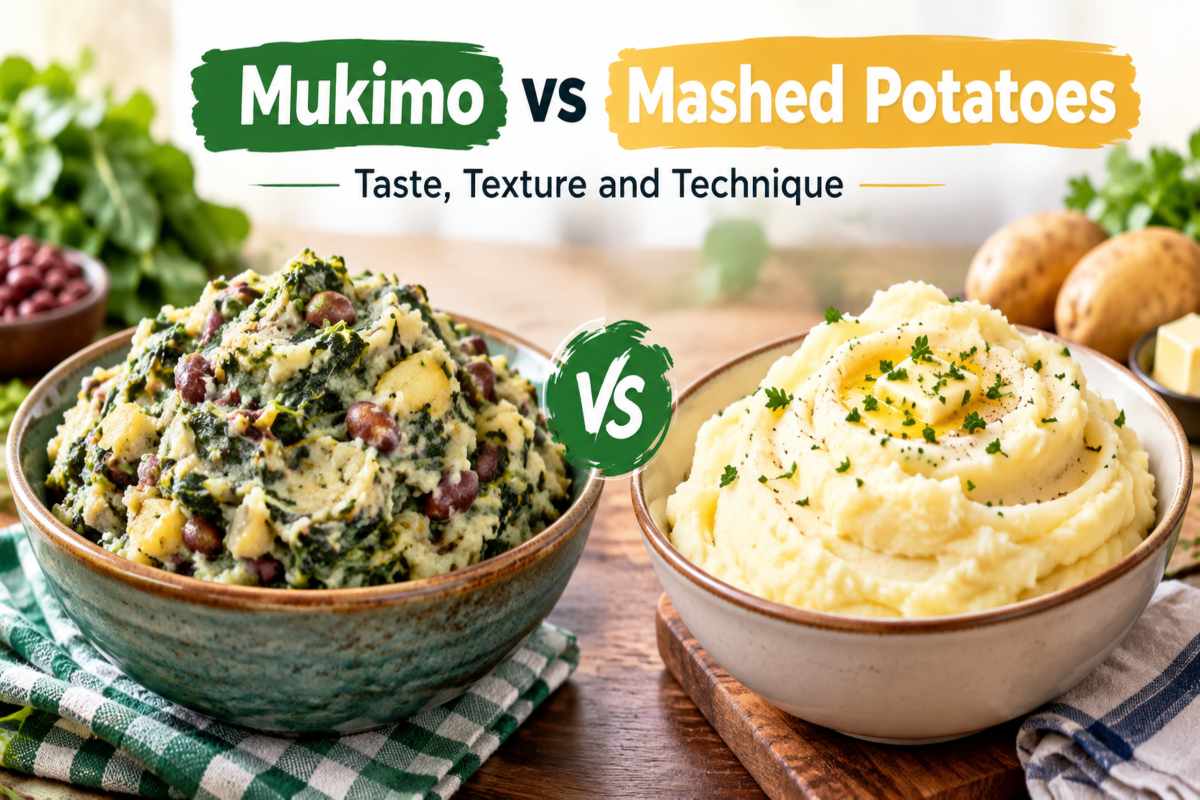
Mukimo vs mashed potatoes both share the same starchy base, but that is roughly where the similarity ends. Mukimo is a Kenyan dish made by mashing potatoes together with pumpkin leaves or spinach, peas and corn, giving it a chunky, pale green mash with a distinct earthy flavor, while regular mashed potatoes are just potatoes, butter and milk whipped into a smooth, uniform white side.
The difference goes deeper than what is mixed in. Mukimo added vegetables mean it is built to be eaten on its own or alongside a light salad, not just as a plate filler next to meat and a single serving carries roughly 5 grams of fiber from its beans, peas and potato skins, several times what a plain mashed potato side offers. The cooking method changes too, mukimo’s ingredients are boiled and mashed together in one pot so the flavors and colors blend, while classic mashed potatoes are made from potatoes alone, with butter and milk folded in afterward.
Below, we break down exactly how the two compare on ingredients, texture, cooking technique and where each one fits on a plate, plus how mukimo relates to irio and how it stacks up against American style mashed potatoes. If you want the full step by step recipe rather than the comparison, our traditional Kenyan mukimo recipe walks through the exact method from start to finish.
What Actually Sets Mukimo Apart From Mashed Potatoes
Mukimo is set apart from mashed potatoes by what is mashed in alongside the potatoes, pumpkin leaves or spinach, peas and corn, which turn a plain white side into a chunky, pale green dish with more flavor and texture in every bite. Where mashed potatoes rely on butter and milk for richness, mukimo gets its character from the vegetables folded in during mashing, so no two ingredients bring the same thing to the plate.
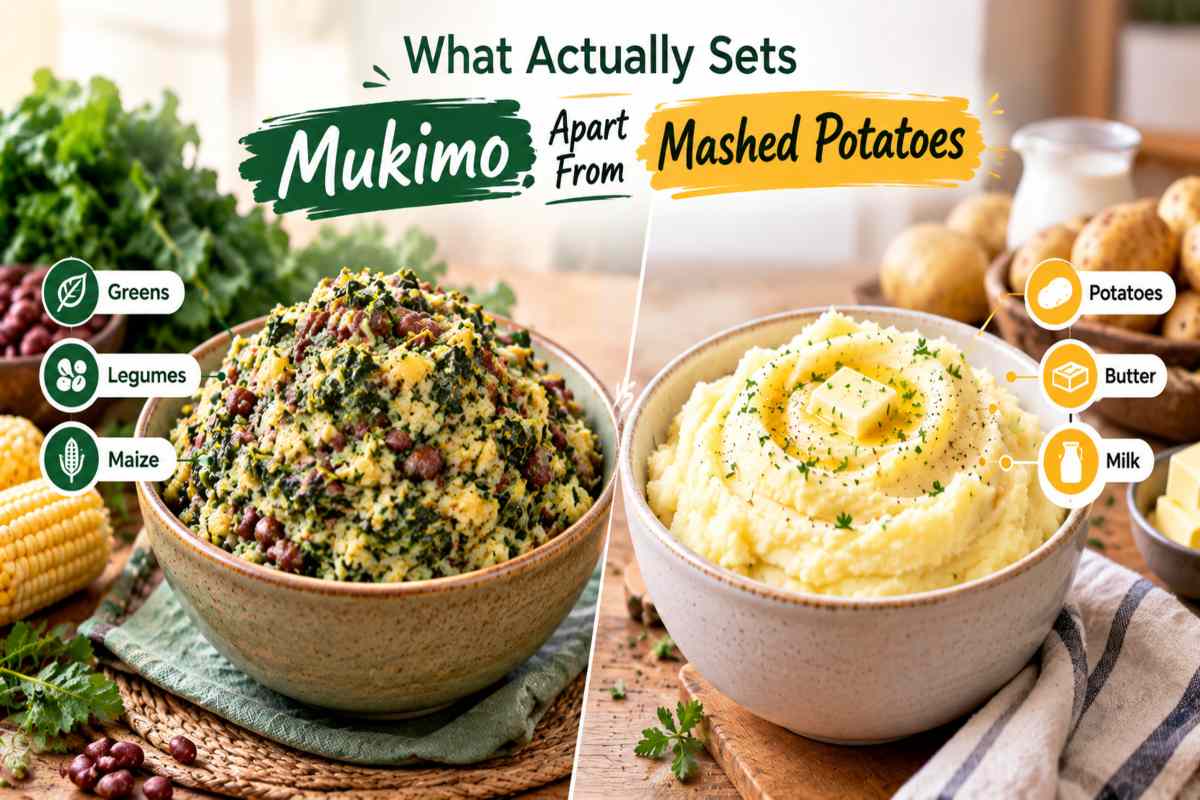
That single addition changes more than color. The greens in mukimo contribute meaningful fiber and vitamin A that plain mashed potatoes do not have and the peas and corn add a natural sweetness and bite that keeps the mash from being completely smooth. Mashed potatoes, by contrast, are built for uniform creaminess, which is exactly why the two dishes, despite sharing a potato base, end up serving different roles at a meal, one as a rich, neutral side and the other as a more complete, standalone plate.
Mukimo vs Regular Mashed Potatoes Ingredient Differences
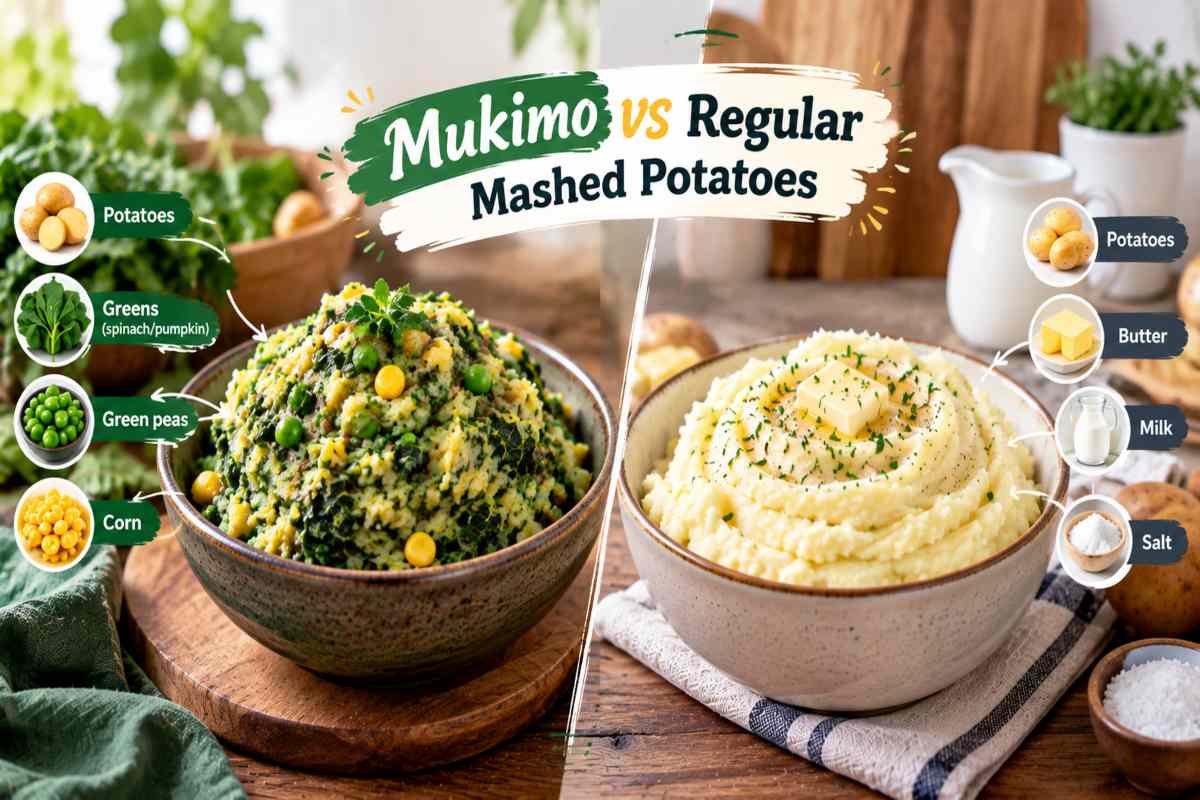
The core ingredient difference between mukimo and mashed potatoes comes down to what’s added beyond the potato itself, mukimo folds in greens, peas and corn, while regular mashed potatoes rely almost entirely on dairy for flavor. That one distinction is what separates a nutrient dense Kenyan staple from a simple, rich side dish.
What Goes Into Mukimo
Mukimo starts with boiled potatoes, then adds pumpkin leaves or spinach, green peas and corn, all mashed together while still hot so the greens blend evenly through the mash. A little butter, milk and sautéed onion round out the flavor, but the vegetables, not the dairy, do most of the work in defining the dish.
This combination is also why mukimo carries more nutritional weight than a plain potato side, a cup of cooked pumpkin leaves alone provides 38% of the daily value for vitamin A, a nutrient regular mashed potatoes do not offer. For a full breakdown of mukimo’s nutrition profile and how it compares ingredient by ingredient, see our guide on is mukimo healthy.
What Goes Into Regular Mashed Potatoes
Regular mashed potatoes are built from just potatoes, butter, milk and salt, mashed until smooth with nothing else folded in. Some versions add garlic, sour cream or chives for extra flavor, but the base stays simple and starch forward, with richness coming entirely from dairy rather than any added vegetables. That simplicity is part of the appeal, mashed potatoes are meant to be a neutral, creamy backdrop for whatever protein or sauce they are served alongside.
Texture and Color Differences
Mukimo and mashed potatoes look nothing alike on a plate and that comes down to what’s mashed in rather than how hard each dish is worked. Mukimo comes out chunky and pale green from its greens, peas and corn, while mashed potatoes stay smooth and white because potatoes are the only thing being mashed.
Why Mukimo Is Chunky and Green
Mukimo gets its green color from pumpkin leaves or spinach mashed directly into the hot potatoes and its chunky texture comes from the peas and corn, which are folded in rather than blended smooth. The goal is not a uniform mash, you should still see flecks of yellow corn and specks of pea scattered through the green, since over mashing to a paste texture loses the dish’s character.
That chunky texture also holds up well against a rich, saucy pairing, mukimo is traditionally served with a ladle of stew spooned right over the mash and our Kenyan ground beef stew is a straightforward version that works especially well for this.
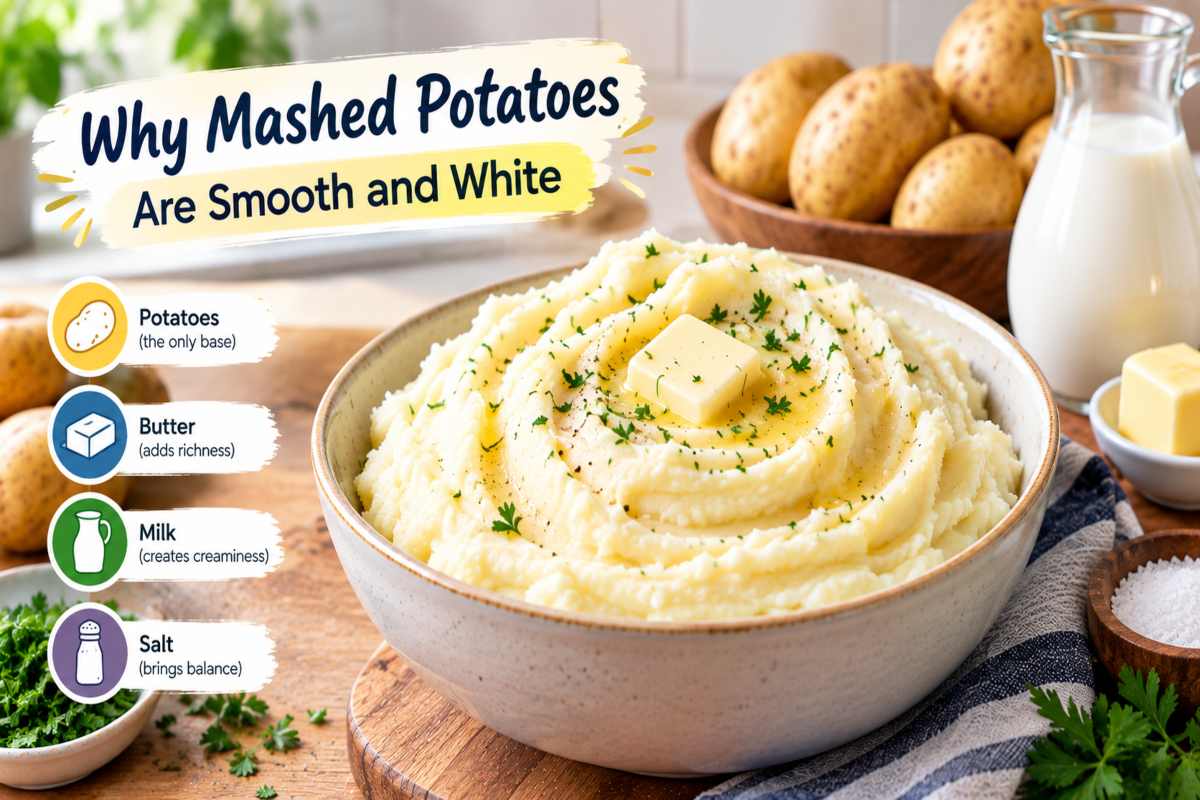
Why Mashed Potatoes Are Smooth and White
Mashed potatoes stay smooth and white because there is nothing in the mash to break up that consistency, just potatoes, butter and milk worked until every lump disappears. The color stays pale since potatoes alone do not carry the pigment that greens or corn would add and the texture is deliberately uniform, since a lumpy or chunky mash reads as undercooked or poorly made in a classic mashed potato dish. That smoothness is the entire point of the preparation, a stand in for texture contrast rather than a dish meant to have any on its own.
Cooking Method Differences
The biggest cooking difference between mukimo and mashed potatoes is that mukimo’s ingredients are cooked and mashed together in one pot, while mashed potatoes are made from potatoes cooked and mashed entirely on their own. That single choice changes how each dish comes together and how much prep it takes to get right.
Boiling and Mashing Together (Mukimo Method)
Mukimo is made by boiling the potatoes alongside or right after the maize, then mashing everything together while it is still hot, with the sautéed greens, peas and corn folded in during the same step.
Cooking and mashing in one pot lets the flavors merge and keeps the greens from turning stringy, since blending them in cold or separately makes them harder to distribute evenly. This one pot approach also means the dish comes together in under an hour from start to finish, making it a practical side for a weeknight meal built around a heartier main like our Kenyan ground beef bake.
Mashing Potatoes Alone (Traditional Method)
Mashed potatoes are made by boiling potatoes on their own, draining them well, then mashing with butter and milk added afterward rather than during cooking. Because nothing else is cooked alongside the potatoes, the process is more straightforward, there is no separate vegetable prep or timing to coordinate, just potatoes boiled until soft and mashed to the desired smoothness.
This simpler method is part of why mashed potatoes are such a common side, they take less coordination than a mixed mash like mukimo, even though the final texture and nutritional profile end up noticeably different.
African Mashed Potatoes vs American Mashed Potatoes
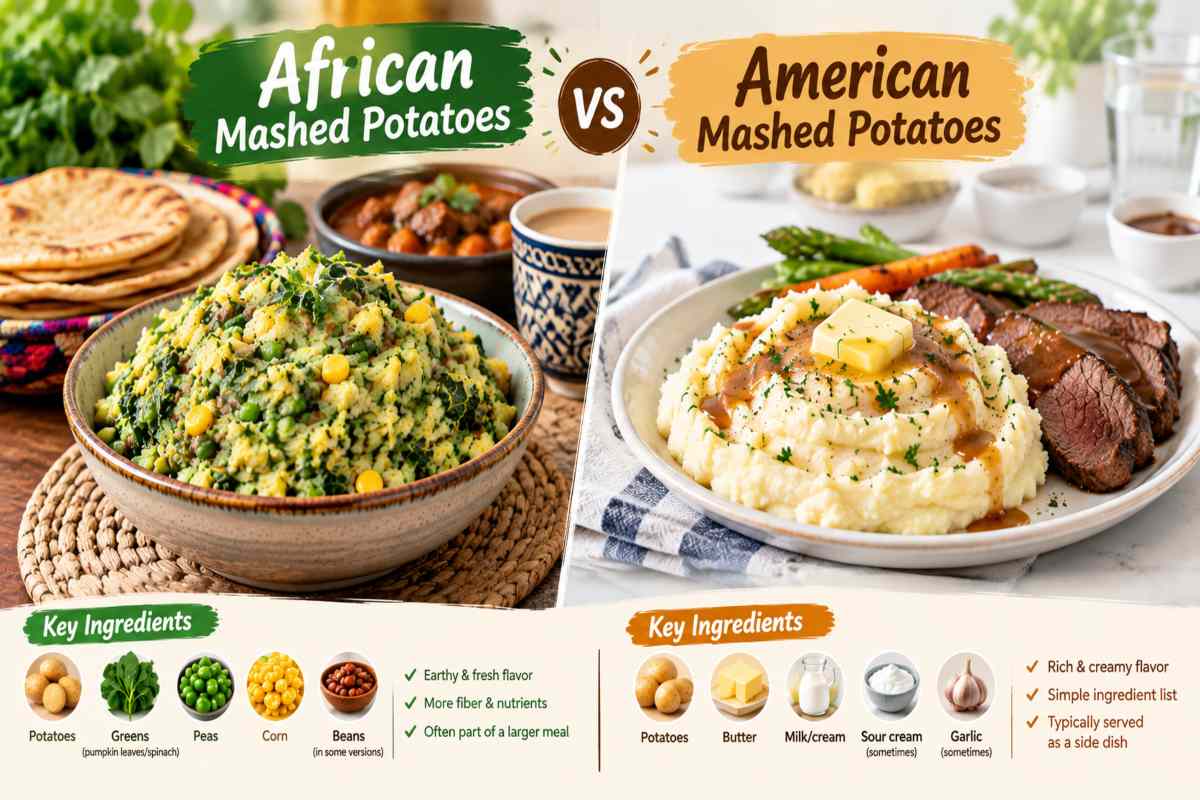
African mashed potatoes, like Kenyan mukimo, differ from American mashed potatoes mainly in what gets mixed into the mash and what role the dish plays at the table. Where American mashed potatoes stay close to a simple potato and dairy base, African versions often fold in vegetables, legumes or greens that turn the mash into a more complete, nutrient dense dish rather than a purely creamy side.
Ingredients and Flavor Base
American mashed potatoes lean on butter, milk or cream and sometimes sour cream or garlic, building flavor entirely through dairy and fat rather than added produce. African mashed potatoes, mukimo included, start from the same potato base but bring in pumpkin leaves, peas, corn or beans, so the flavor comes from a mix of earthy greens and mild sweetness rather than richness alone. That difference in ingredients is also a difference in nutrition, a dish like mukimo carries fiber and vitamin A from its greens that a plain American style mash simply doesn’t have.
How Each Is Traditionally Served
American mashed potatoes are typically plated as a side next to a roasted or grilled protein, often finished with gravy poured over the top at the table. African mashed potatoes like mukimo are served warm alongside a stew or grilled meat too, but they’re just as likely to appear as part of a full spread with other regional staples, a plate of mukimo next to Kenyan chapatis and a cup of Kenyan chai is a common way the dish shows up at a home cooked Kenyan meal rather than as a standalone side dish.
Mukimo vs Irio Quick Distinction
Mukimo and irio are closely related, not identical, dishes, irio is the broader term for mashed potatoes combined with maize, beans and greens, while mukimo specifically refers to the version made with pumpkin leaves or spinach mashed in for that deep green color.
In everyday use the two names get swapped constantly, but irio is technically the base preparation and mukimo one of its regional variations. That distinction matters more for naming than for what ends up on the plate, since both dishes share the same mashed potato foundation and the same general method.
Which One Should You Make
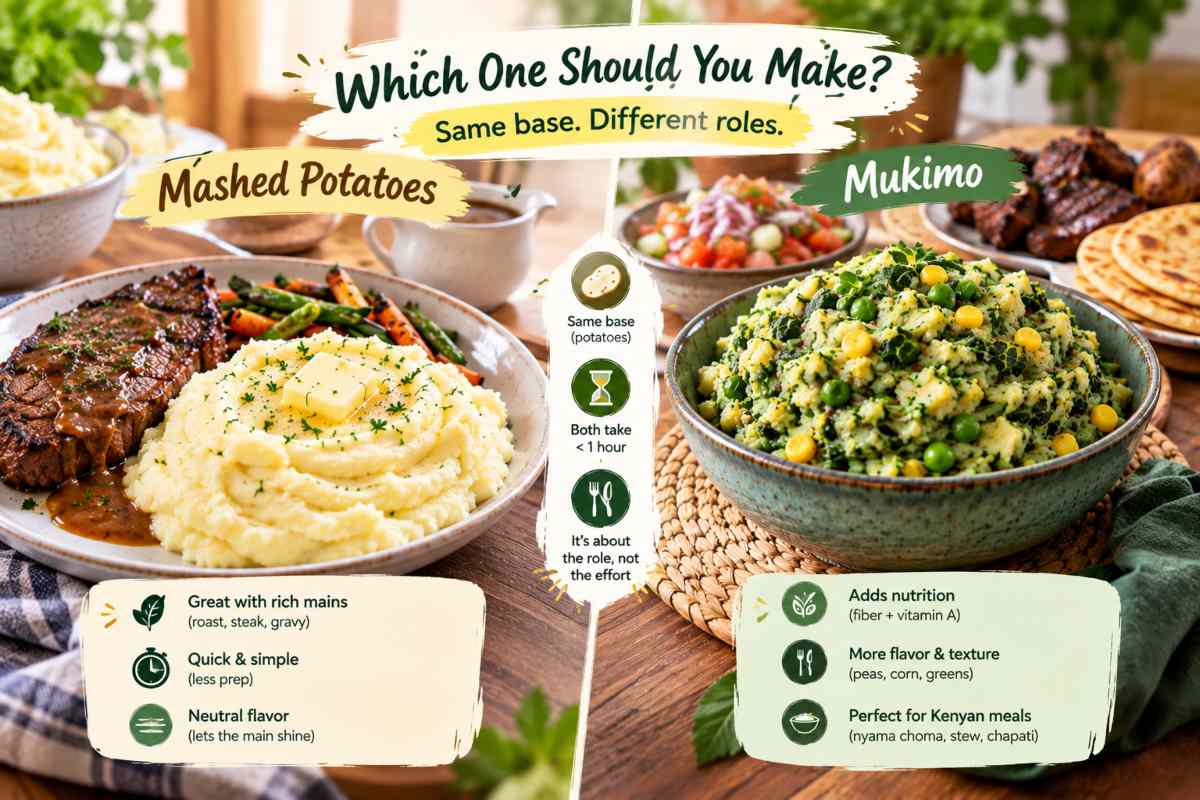
Whether mashed potatoes or mukimo is the better choice comes down to what role the dish needs to play on your plate, a simple, rich side or a more complete, vegetable forward one. Both take under an hour and use potatoes as their base, so the decision is less about effort and more about what you’re serving them with.
When Mashed Potatoes Make More Sense
Mashed potatoes work best when you want a neutral, creamy side that lets a rich main, like a roast, gravy heavy dish or grilled steak, stay the centerpiece of the plate. They’re also the simpler choice on a busy weeknight, since there is no extra vegetable prep or timing to coordinate beyond boiling and mashing the potatoes themselves. If the meal already leans heavy on flavor elsewhere, a plain mashed potato side keeps the plate balanced rather than competing for attention.
When Mukimo Makes More Sense
Mukimo makes more sense when you want the side dish to carry some of the meal’s nutrition and flavor on its own, not just fill space on the plate. Its peas, corn and greens add roughly 5 grams of fiber per serving that a plain mashed potato side does not offer, making it a better fit alongside a lighter protein or when you want fewer separate vegetable dishes to prepare. It is also the better pick when you’re cooking a Kenyan style meal specifically, since mukimo pairs naturally with nyama choma, beef stew or kachumbari in a way plain mashed potatoes weren’t built for.
Conclusion
Mukimo and mashed potatoes share a potato base but end up as genuinely different dishes once you account for what’s mashed in, how they are cooked and where each one fits on a plate. Mashed potatoes stay simple and creamy, built to support a rich main dish, while mukimo folds in greens, peas and corn to become a more complete, nutrient dense side that carries roughly 5 grams of fiber per serving beyond what a plain mash offers.
Neither dish is the “better” choice outright, the right one depends on whether you want a neutral backdrop for your main or a side that brings its own flavor and nutrition to the table. If you’re ready to try the Kenyan version for yourself, our full mukimo recipe walks through the exact method and you will find more East African staples and family dinner ideas over on Devine Dishes.
Frequently Asked Questions (FAQs)
Is mukimo just mashed potatoes?
No, mukimo is mashed potatoes combined with pumpkin leaves or spinach, peas and corn, which gives it a chunky, green mash rather than a smooth, plain one. That mix also adds fiber and vitamin A that regular mashed potatoes don’t have.
What is the difference between mukimo and mashed potatoes?
Mashed potatoes are just potatoes, butter and milk mashed smooth, while mukimo cooks and mashes in vegetables and legumes alongside the potatoes. The result is a different texture, color and nutritional profile, not just a flavor variation.
Is mukimo the same as irio?
Not exactly, irio is the broader base dish of mashed potatoes with maize, beans and greens, while mukimo specifically includes pumpkin leaves or spinach for its green color. The two names are often used interchangeably, but mukimo is technically a variation of irio.