
Quick Answer
For most healthy adults, yes, in moderate portions. FDA and EPA guidance lists tilapia as a low-mercury “best choice” at 2 to 3 servings a week (about 8 to 12 oz). Small daily portions are generally fine, but rotate in other fish and proteins because tilapia is low in omega-3s. Always cook it to 145°F (63°C). If you are pregnant or managing a health condition, check with your doctor.
Can I eat tilapia everyday? Yes, in moderate portions and for most healthy adults it is a safe, low fat way to get lean protein into your weekly diet. Tilapia is one of the most widely farmed fish in the world, and nutrition guidelines generally treat it as a low mercury option that’s fine to eat several times a week, some sources even suggest up to two to three servings weekly fits comfortably within standard seafood recommendations.
That said, everyday comes with a few caveats worth understanding before you make tilapia a daily staple, how it is farmed, how it is cooked and whether you fall into a group (like pregnant or breastfeeding people or those managing gout or diabetes) that needs a slightly different approach. If you are building tilapia into a regular rotation, pairing it with balanced sides makes it easier to keep meals varied, our Lunch Recipes collection has plenty of ideas to mix into your weekly plan.
How Often Can You Eat Tilapia? Weekly Guidelines
Most healthy adults can eat tilapia two to three times a week without any health concerns, since it is classified as a low mercury fish by seafood safety guidelines. The FDA and EPA group tilapia among their best choices seafood category, which they recommend eating two to three servings a week as part of a balanced diet.
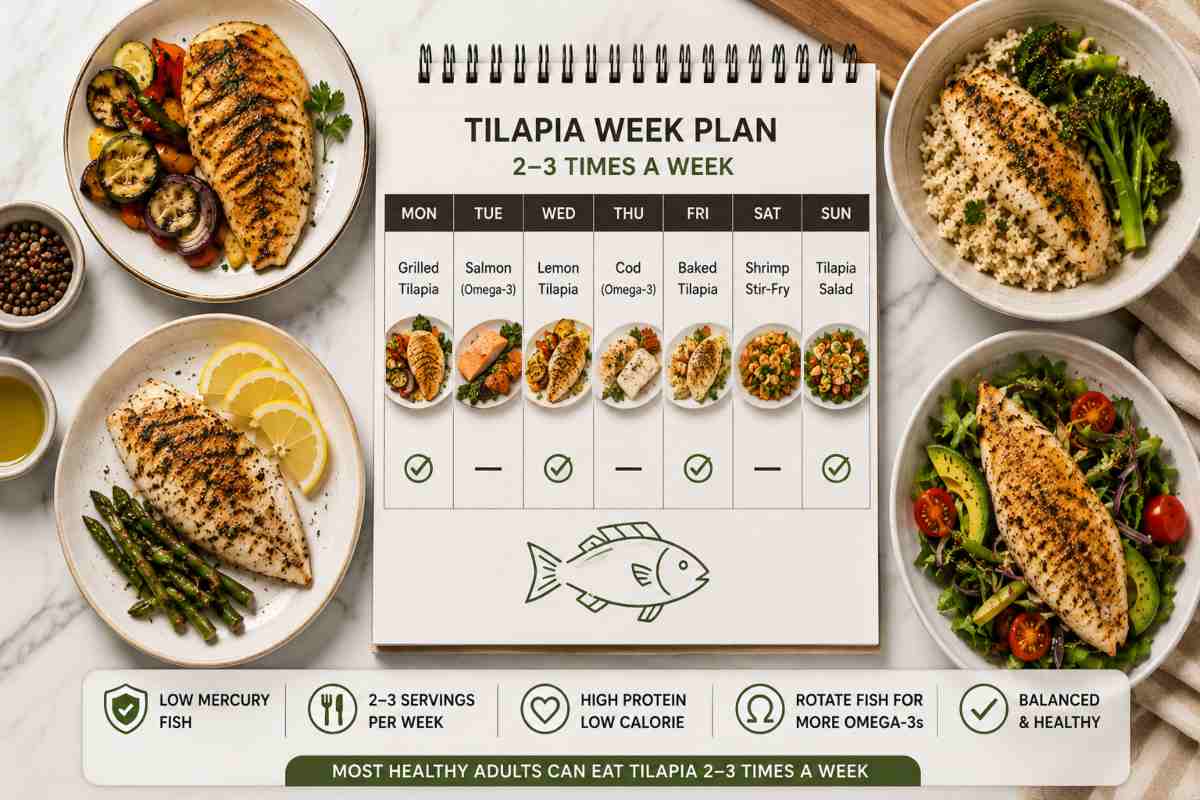
That guideline holds up well for tilapia specifically because a typical serving is also light on calories relative to the protein it delivers. If you are tracking intake alongside frequency, our breakdown of calories in fish tilapia is a useful reference for portioning out a few weekly meals. Eating tilapia daily in small portions is generally fine too, but rotating in other low mercury fish like salmon or cod adds variety to your omega 3 intake, since tilapia itself is lower in omega 3s than fattier fish.
How Much Tilapia Can You Eat in a Week?
You can safely eat around 8 to 12 ounces of tilapia per week, which typically breaks down into two to three standard servings spread across your meals. This amount aligns with FDA and EPA seafood guidance for low mercury fish and a single 3.5 ounce cooked portion of tilapia delivers about 26 grams of protein while staying under 130 calories, making it easy to fit multiple servings into a week without overdoing calorie or fat intake.

Spacing those servings out, rather than eating a large amount in one sitting, also helps keep meals varied and prevents flavor fatigue from a fish that is often prepared the same way each time. If you are planning a few tilapia dinners into your weekly rotation, our deep fried tilapia or honey baked tilapia recipes that make it simple to hit that weekly range without extra planning.
Can You Eat Too Much Tilapia? Risks of Overeating
Yes, eating too much tilapia can cause problems, mainly from an imbalanced omega 6 to omega 3 ratio and, in some farmed sources, higher levels of contaminants if the fish comes from poorly regulated farms. Research has raised concerns that farmed tilapia can contain omega 6 fatty acid levels several times higher than wild caught fish, which may contribute to inflammation if tilapia becomes your only protein source over long periods.
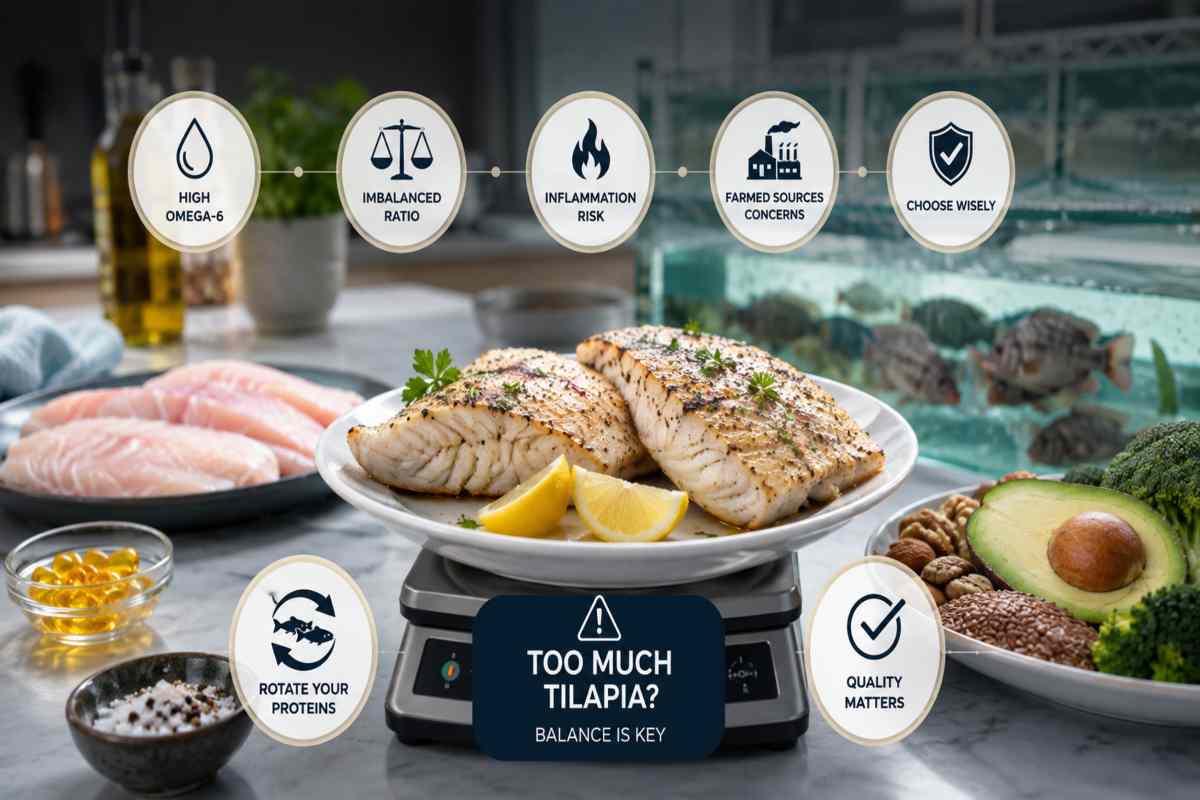
The risk is notreally about a single overindulgent meal, it is about relying on tilapia exclusively, week after week, instead of rotating in other proteins and fish varieties. Sourcing matters too, since tilapia farmed in well regulated conditions tends to carry fewer contaminant concerns, if you are preparing a whole fish at home, our guide on how to make whole tilapia covers selecting and cooking it properly from start to finish.
Can You Eat Tilapia Raw?
Short Answer
It’s safest not to eat tilapia raw. Cook it to an internal temperature of 145°F (63°C). Freezing at -4°F (-20°C) for 7 days kills parasites, which is how restaurants prepare fish for raw dishes, but it doesn’t remove bacteria, and “sushi-grade” is a marketing term, not a safety standard. Pregnant women, young children, older adults and anyone with a weak immune system should avoid raw fish.
Tilapia can be eaten raw, but only if it is been sushi grade or previously frozen to kill parasites, eating raw tilapia straight from the fresh counter without that step carries a real risk of foodborne illness.
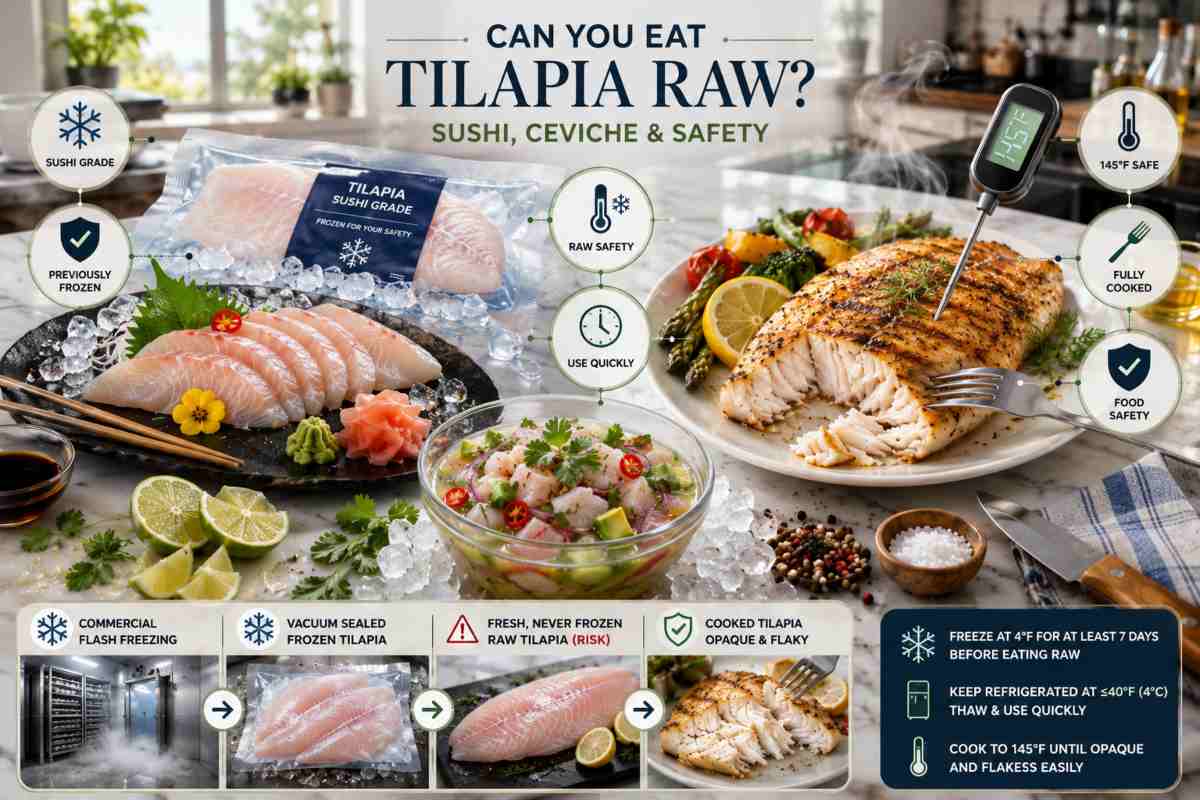
Because tilapia is a freshwater farmed fish, it is more prone to parasites than ocean fish, so the the FDA recommends freezing it at -4°F (-20°C) for at least seven days before eating it raw in dishes like ceviche or sushi. Once thawed, raw tilapia should be used quickly, so knowing how long tilapia can stay in the fridge before or after freezing helps you time your prep safely and avoid spoilage.
Can You Eat Frozen Tilapia Raw?
Yes, frozen tilapia is actually the safer way to eat it raw, since the freezing process is what kills off parasites that might otherwise be present in fresh, never frozen fillets. Commercial flash freezing at very low temperatures achieves this faster than a home freezer, which is why sushi grade tilapia is typically frozen at the processing facility rather than left to the buyer to freeze at home.
Can You Eat Undercooked Tilapia?
No, undercooked tilapia is not safe to eat unless it is been through the same freezing process used for raw preparations, because partial cooking does not reliably kill bacteria or parasites the way full cooking does. Tilapia needs to be cooked to an internal temperature of 145°F to be considered fully cooked and safe and the flesh should turn opaque and and break apart effortlessly using a fork as as a visual cue that it is done.
Is Tilapia Safe for Special Diets?
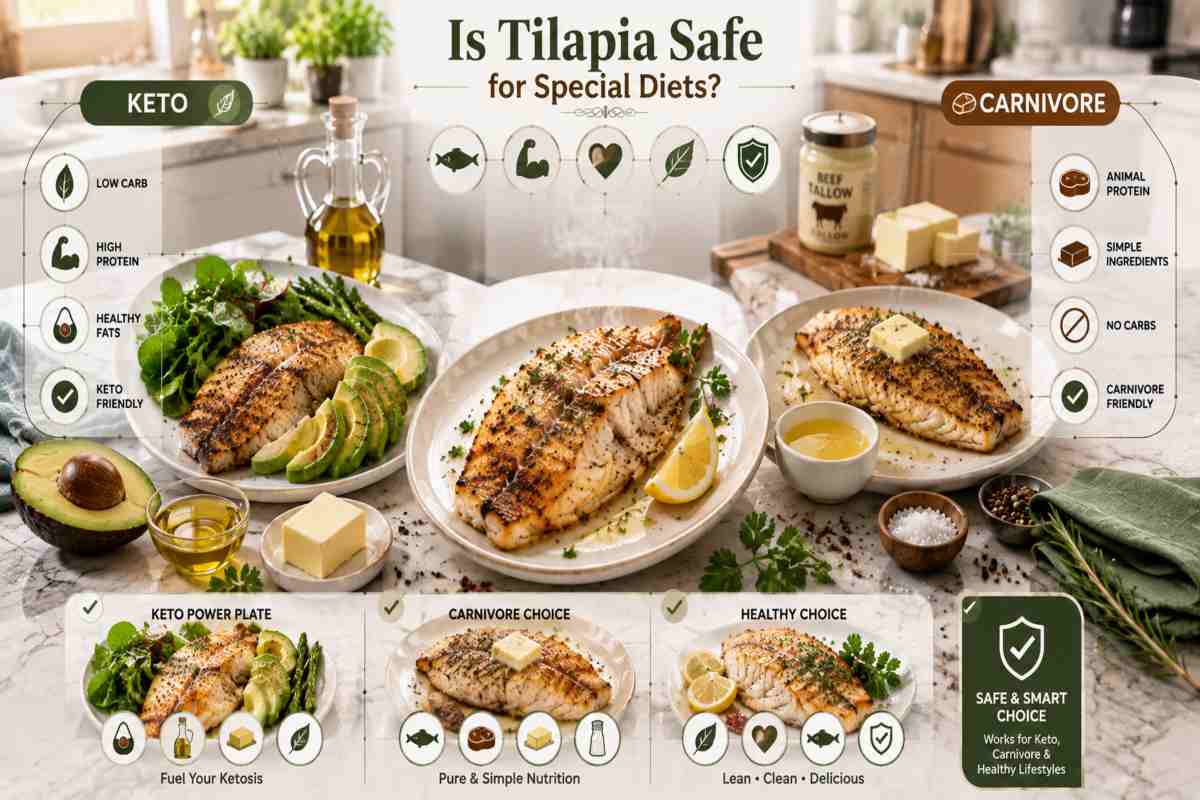
Tilapia is safe and well suited to most special diets, particularly low-carb and high-protein eating patterns, since it has zero carbohydrates and a lean nutritional profile that fits cleanly into restrictive plans. Its neutral flavor also makes it easy to season and pair according to your dietary preferences. If you are focusing on managing your calorie intake, learn more about Is Tilapia Good for Weight Loss and how its lean protein content can support your weight management goals.
Tilapia on Keto
Tilapia works well on keto since a standard serving has virtually no carbs and a solid protein to calorie ratio, though its low fat content means keto followers often need to add healthy fats like butter, olive oil or avocado to hit their macros. A 3.5 ounce serving has less than 1 gram of fat, so pairing it with fattier sides is what makes it satisfying and macro appropriate on a ketogenic plan, our keto meal planning guide walks through how to balance those ratios across a full day of eating.
Tilapia on Carnivore Diet
Tilapia fits the carnivore diet as an animal based protein source, though strict carnivore followers should check that any seasoning or breading is kept out, since the diet typically excludes plant based additions like breadcrumbs, flour or seasoning blends with added sugar. Plain, simply seasoned tilapia, salt, pepper and a cooking fat like butter or tallow, keeps it fully within carnivore guidelines while still delivering a lean protein option to rotate in alongside red meat.
Is Tilapia Safe for Health Conditions?
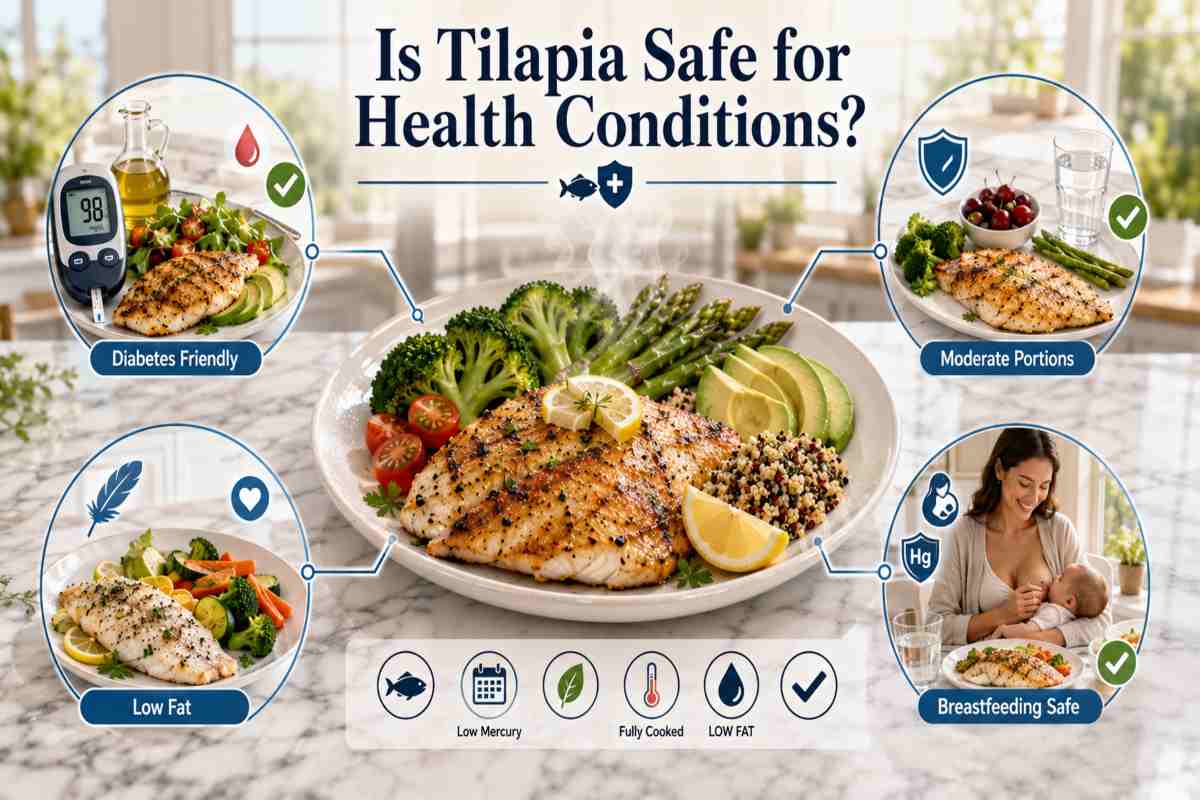
Tilapia is generally safe for most common health conditions, since it is low in fat, carb free and easy to prepare without added sugars or heavy sauces when we talk is tilapia healthy for eating. A few conditions call for closer attention to portion size or preparation method, but outright avoidance is rarely necessary.
Tilapia for Diabetics
Tilapia is safe for diabetics and can be a smart protein choice, since it has zero carbohydrates and won’t directly raise blood sugar the way starchy or sugary foods do. The main thing to watch is preparation, breaded, fried or heavily sauced tilapia dishes can quietly add carbs and calories, so grilling, baking or pan searing keeps it diabetes friendly. It’s an easy protein to build into busy weeknights too, our quick dinner ideas for family collection has several simple, blood sugar friendly tilapia dinners.
Tilapia and Gout
Tilapia can be eaten in moderation by most people managing gout, since it falls into the low to moderate purine category rather than the high purine group that includes organ meats and certain shellfish. Gout sufferers are typically advised to keep total purine rich food intake moderate, so a serving or two of tilapia a week generally fits within standard gout management guidelines, though anyone with frequent flare ups should confirm portion limits with their doctor.
Tilapia and Gallstones
Tilapia is a good option for people managing gallstones, since its low fat content makes it easier to digest than fattier fish or meats that can trigger gallbladder discomfort. Because gallstone symptoms are often aggravated by high fat meals, lean preparations like baked or steamed tilapia, without heavy butter or cream sauces, tend to be the safest way to include it.
Tilapia While Breastfeeding
Tilapia is considered safe to eat while breastfeeding and its low mercury status makes it one of the recommended fish choices during this stage, following the same two to three servings per week guidance given for pregnancy and nursing. As with any fish during breastfeeding, it should be fully cooked rather than raw, since foodborne illness risk is a bigger concern during this period than at other times.
Can You Eat Tilapia Skin and Bones?
Tilapia skin is edible and safe to eat when properly cleaned and cooked, but the bones should not be consumed and ought to be taken out before serving. since they pose a choking hazard and are not digestible. Crisped in a hot pan or oven, tilapia skin turns crunchy and holds a mild flavor, similar to salmon or trout skin, making it a popular addition for people who do not want to waste any part of the fillet.
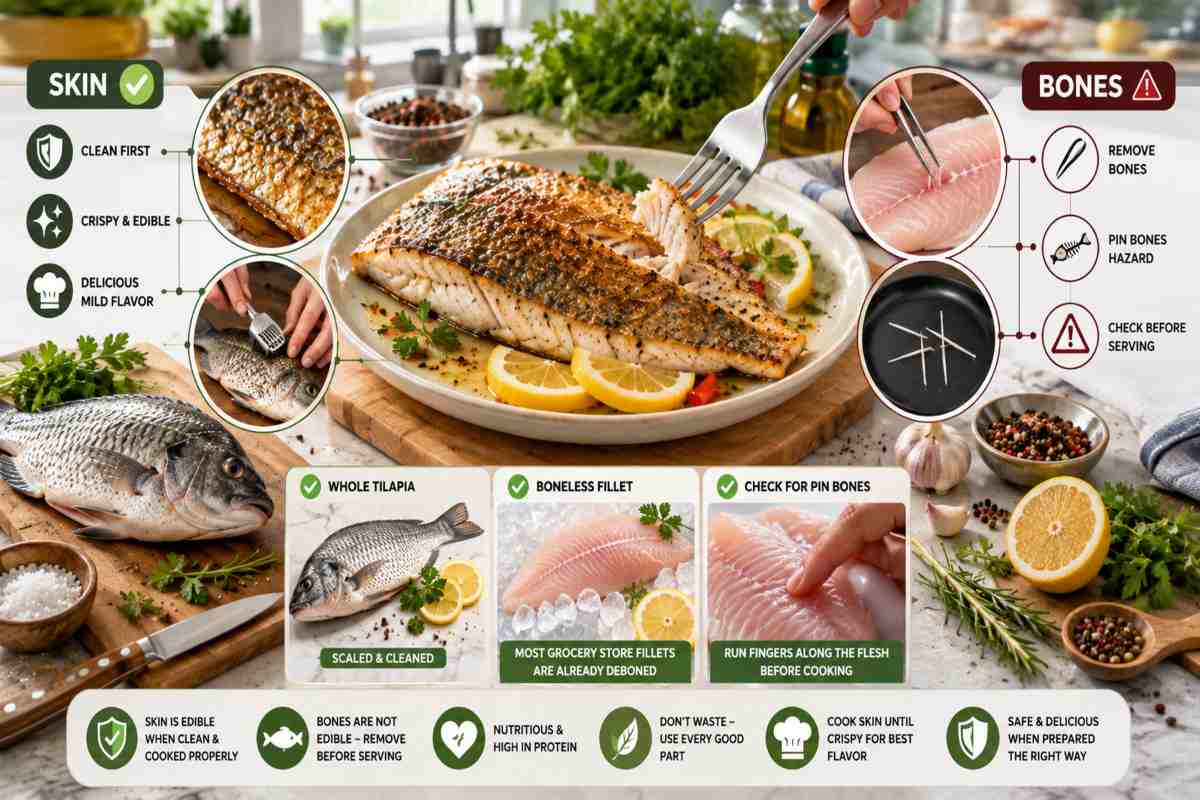
Most fillets sold in grocery stores are already deboned, but whole tilapia or less processed cuts can still contain small pin bones, so running a finger along the flesh before cooking is the easiest way to catch and remove any that remain. If skin is left on, it should be scaled and thoroughly cleaned first, since unscaled or poorly cleaned skin can carry a gritty texture and off flavor that is unpleasant even when fully cooked.
Other Tilapia Varieties Blue Tilapia and Mozambique Tilapia
Blue tilapia and Mozambique tilapia are both edible and safe to eat, following the same general guidelines as the more common Nile tilapia sold in most grocery stores. The differences between varieties come down to flavor and texture rather than safety, blue tilapia tends to have a slightly sweeter, milder taste, while Mozambique tilapia can carry a firmer texture and a more pronounced fishy flavor depending on where it is farmed or caught.

Availability is the bigger factor for most home cooks, since Nile tilapia dominates commercial farming and makes up the vast majority of tilapia sold in the U.S., while blue and Mozambique varieties are more common in specialty markets or regions where they’re farmed locally. If a recipe calls for tilapia but you can not find your preferred variety, other mild white fish like basa make an easy substitute, our basa fillet recipe is a good option to have on hand for swapping in.
Conclusion
Tilapia is a safe, versatile fish that fits comfortably into daily or near-daily eating for most people, as long as it is sourced responsibly, cooked to the right temperature and balanced with variety in your weekly protein rotation. It is also a lean source of protein, making it a useful option for high-protein meals. Learn more about protein in tilapia and how much protein this fish provides per serving. Whether you are managing a health condition, following a specific diet or just looking for an easy weeknight protein, tilapia checks the box for safety without much extra thought.
Frequently Asked Questions (FAQs)
Can you eat tilapia everyday?
Yes, tilapia can be eaten daily in moderate portions, though most guidelines recommend two to three servings a week as part of a varied diet. Rotating in other proteins helps balance out nutrients like omega 3s that tilapia is naturally lower in.
Is tilapia safe to eat raw?
Tilapia is only safe raw if it has been frozen at -4°F (-20°C) for at least seven days to kill parasites, as recommended by the FDA. Fresh, never frozen tilapia should always be fully cooked before eating.
How much tilapia can you eat in a week?
Around 8 to 12 ounces per week fits standard seafood guidelines, which typically breaks down into two to three servings. A single serving delivers about 26 grams of protein at under 130 calories.
Is tilapia safe during pregnancy or breastfeeding?
Yes, tilapia is considered a low mercury fish that is safe during pregnancy and breastfeeding, following the same two to three servings per week guidance. It should always be fully cooked, not raw, during this time.
Can you eat tilapia skin and bones?
Tilapia skin is edible and safe when properly cleaned and cooked, but bones should be removed since they are a choking hazard. Most store bought fillets are already deboned.
Disclaimer: This article is for general information only and is not medical or nutrition advice. Nutrient values are estimates and vary by ingredients, oil, coating and portion size. Talk to your doctor or dietitian about your individual needs.