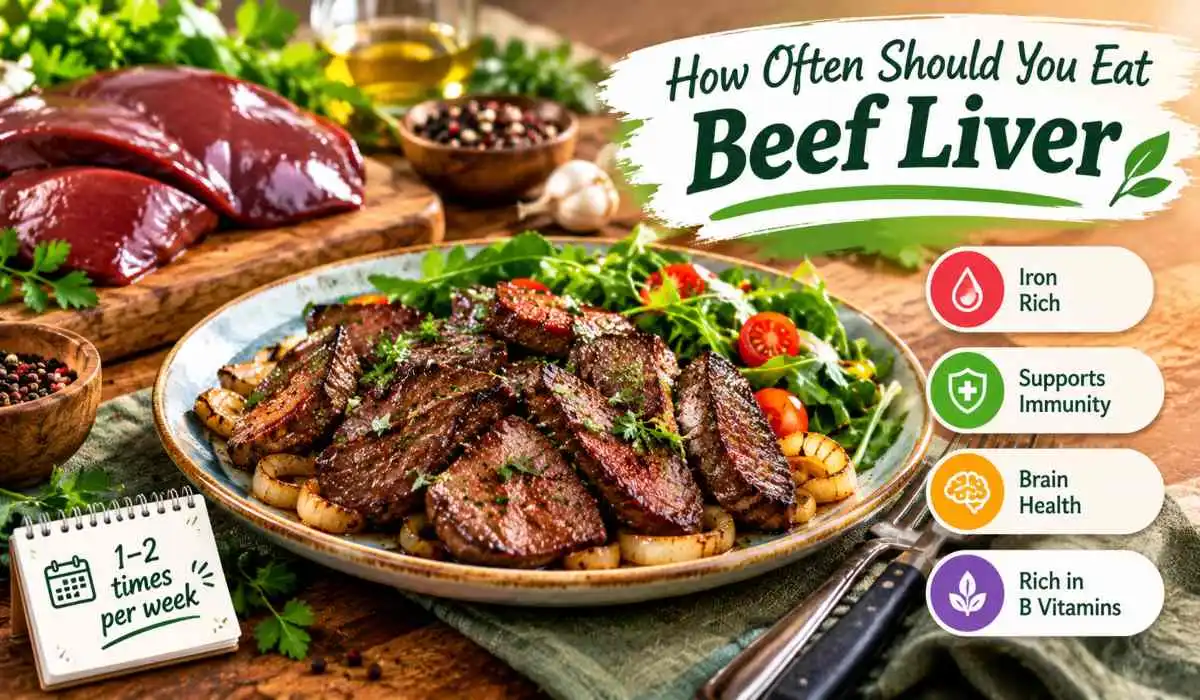
How Often Should You Eat Beef Liver? Most healthy adults can eat beef liver about once a week, in a portion of roughly 3 ounces (85 g). Eating it more often than that on a regular basis can push vitamin A intake past the adult upper limit of 3,000 mcg a day.
How often you should eat beef liver comes down to one nutrient. Liver is packed with preformed vitamin A, which your body stores instead of flushing out, so extra servings add up over days and weeks. USDA FoodData Central lists about 6,582 mcg RAE of vitamin A in a 3 ounce serving of pan fried beef liver, as reported by the NIH Office of Dietary Supplements. The FDA Daily Value for vitamin A is 900 mcg RAE, so that single serving covers roughly seven times the daily target.
One 3 ounce serving a week averages out to about 940 mcg of vitamin A a day, which sits well under the upper limit. Eating that same serving every day would deliver more than double the limit. The rest of this page covers how a week of liver adds up, how the right frequency changes with age, supplements and pregnancy, and what to know before eating it raw. If you want to cook some, our peppered beef liver recipe is an easy place to start. Its calories and nutrition will vary with the oil, onions and seasoning you use, so treat the figures here as general information for plain liver, not for any single dish.
How Often Can You Eat Beef Liver Each Week?
Once a week is the safest regular pattern for most healthy adults, and eating it every day is not recommended. The limit comes from vitamin A. Preformed vitamin A is stored in the body, so the weekly total matters more than any single meal.
Eating Beef Liver Once a Week
Eating beef liver once a week, in a 3 ounce (85 g) portion, is the pattern that fits comfortably within safe vitamin A limits. USDA FoodData Central lists about 6,582 mcg RAE of vitamin A in that portion of pan fried liver. Spread across seven days, it averages roughly 940 mcg a day, well under the 3,000 mcg adult upper limit set by the National Institutes of Health. The UK National Health Service uses the same once-a-week ceiling in its advice on liver. The United States has no liver-specific rule, so most weekly guidance is built from the vitamin A limit.
Eating Beef Liver Twice or Three Times a Week
Eating beef liver two or three times a week is not covered by any official guideline, and the numbers leave very little room. Two 3 ounce portions average about 1,880 mcg of vitamin A a day, and three average about 2,820 mcg, which is close to the 3,000 mcg ceiling before counting anything else you eat.
Supplements, fortified foods, eggs and dairy all add preformed vitamin A on top of liver. Smaller portions, around 1 ounce (28 g), are the practical way to eat liver more often without crossing the limit. Anyone who takes a vitamin A or fish liver oil supplement should stay at the once-a-week pattern or lower.
Can You Eat Beef Liver Every Day?
No, eating beef liver every day is not recommended, even in small amounts. A daily 3 ounce serving would deliver about 6,582 mcg of vitamin A, more than double the 3,000 mcg upper limit, and the excess builds up because the body stores it.
Liver is also high in copper. USDA data puts a 3 ounce portion at roughly 12 mg, above the 10 mg adult upper limit set by the NIH. Over months, high intake of preformed vitamin A is linked to liver and bone damage, and in pregnancy to birth defects. An occasional extra portion is not a concern. A daily habit is where the risk sits.
How Much Beef Liver Per Day, Per Week and Per Month
A safe amount works out to about 3 ounces (85 g) a week, which is roughly 12 to 15 ounces a month. There is no safe daily serving to aim for, because even a portion of about 1.4 ounces (40 g) reaches the 3,000 mcg upper limit on its own. For anyone who wants a steady routine, the simplest approach is to treat liver as a weekly or fortnightly meal. A rich dish like our liver stew fits that rhythm well. The calories and nutrition of a finished stew will differ from plain liver, since oil, onions and seasoning all change the totals, so use the figures on this page as general information only.
Your Weekly Vitamin A and Copper Budget
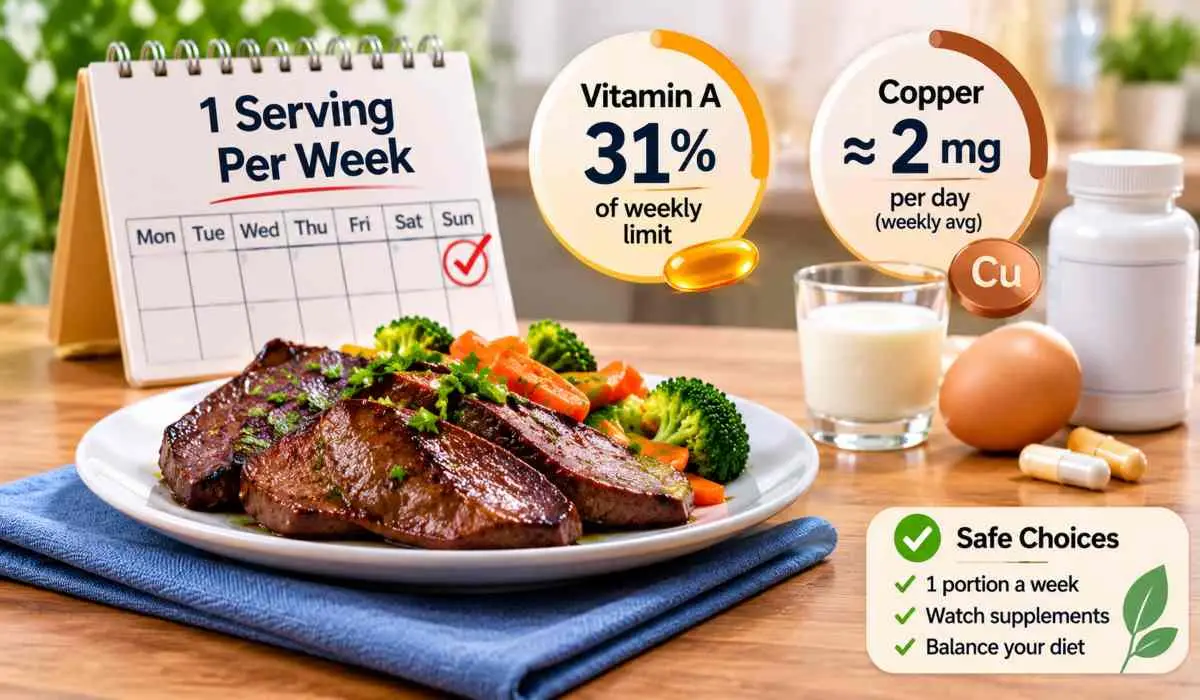
Treat the adult vitamin A upper limit of 3,000 mcg a day as a weekly budget of about 21,000 mcg, and one 3 ounce portion of beef liver uses roughly a third of it. Copper is the second nutrient to watch, though it limits liver far less than vitamin A does.
How Beef Liver Servings Add Up Over a Week
A 3 ounce (85 g) portion of pan fried beef liver contains about 6,582 mcg RAE of vitamin A, according to USDA FoodData Central and the NIH Office of Dietary Supplements. Against a weekly allowance of 21,000 mcg (seven days at the 3,000 mcg upper limit), that single portion uses about 31 percent. Here is how common patterns compare, assuming no other preformed vitamin A in the diet:
| Pattern |
Average vitamin A per day |
Share of the 3,000 mcg limit |
| One 3 oz portion a week |
about 940 mcg |
31% |
| Two 3 oz portions a week |
about 1,880 mcg |
63% |
| Three 3 oz portions a week |
about 2,820 mcg |
94% |
| Three 1 oz (28 g) portions a week |
about 930 mcg |
31% |
| One 3 oz portion every day |
about 6,582 mcg |
219% |
The pattern that fits best is one standard portion a week, or smaller portions spread across the week. Three full portions leave almost no room for anything else, which is why the other sources in the next section matter.
Vitamin A From Supplements, Eggs and Dairy
Vitamin A from other foods and supplements counts toward the same 3,000 mcg limit, so it shrinks the room left for liver. The NIH lists about 75 mcg RAE in a large egg and roughly 150 mcg in a cup of fat-free milk, small amounts that only add up if you eat them several times a day. Supplements are a bigger concern.
A tablespoon of cod liver oil possesses about 4,000 mcg RAE, more than the full daily limit on its own. Multivitamins vary by brand, and part of the vitamin A on many labels comes from beta-carotene, which does not count toward the upper limit the way retinol does. If you take a supplement that lists retinol or retinyl palmitate, check the label and keep liver to once a week or less.
Why Copper Is a Second Limit
Beef liver is one of the richest food sources of copper, and a single portion can exceed the daily copper limit. USDA data lists about 14.3 mg of copper in 100 g of braised liver, which works out to roughly 12 mg in a 3 ounce portion. The NIH sets the adult upper limit at 10 mg a day, and the daily value on U.S. food labels is only 0.9 mg.
A weekly portion averages out to under 2 mg a day, so one serving a week is not a copper concern for most people. The risk comes from eating liver daily, since the excess would build up over time. People with Wilson’s disease, a condition that causes copper to accumulate, are usually told to avoid liver altogether. All figures here are for plain liver and are general information, since the oil, onions and seasoning in a finished dish will change the totals.
How Often to Eat Beef Liver by Situation
Once a week suits most healthy adults, but the right frequency drops to once every week or two, or to none, depending on age, supplements, medication and pregnancy. The limit stays tied to vitamin A. What changes is how much room each person has left under it.
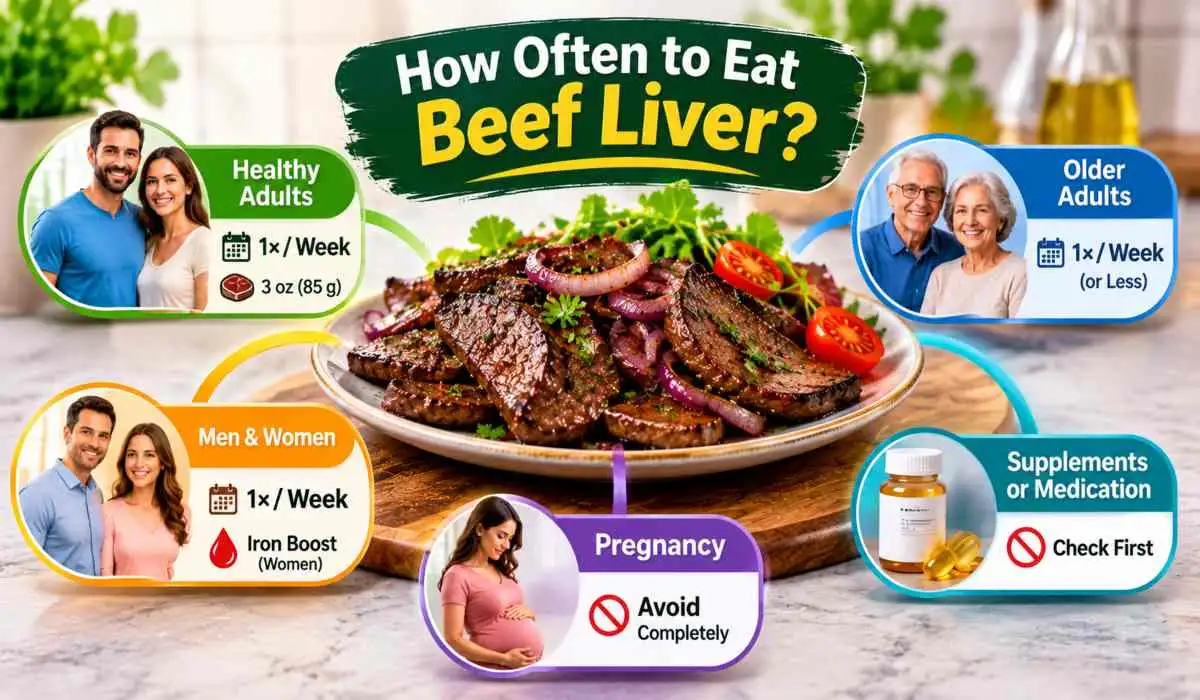
Healthy Adults
Healthy adults can eat one 3 ounce (85 g) portion of beef liver a week without going over the vitamin A upper limit. That portion supplies about 6,582 mcg RAE according to USDA FoodData Central, which averages roughly 940 mcg a day across the week. The NIH upper limit for adults is 3,000 mcg a day. Anyone who finds a full portion too rich can split it into two smaller servings, such as 1.5 ounces (about 42 g) twice a week, and arrive at the same weekly total.
Men and Women
Men and women can follow the same once-a-week pattern, because the vitamin A upper limit is the same for both. The daily needs differ slightly. The NIH lists, the recommended intake is 900 mcg RAE, while for adult women, it is 700 mcg, but a single portion of liver covers either figure several times over.
The main difference is iron. Women from age group 19 to 50 need 18 mg a day, compared with 8 mg for men, so women are more likely to eat liver for iron, while men have less need for the extra. Neither group needs to eat it more often. The extra iron is not a reason to go past weekly. Our article on Is beef liver is healthy covers the benefits for each in more detail.
Older Adults and Bone Health
Older adults, especially postmenopausal women and men at risk of osteoporosis, are advised to keep beef liver to once a week at most, and some choose less. The UK National Health Service gives this advice because long-term high intake of preformed vitamin A has been linked to weaker bones and a higher risk of fractures.
Older adults also tend to build up vitamin A more easily, since the body clears it more slowly with age. In practice, that means one small portion a week or one portion every other week is a sensible ceiling, with no vitamin A supplements on top. Anyone with a diagnosis of osteoporosis or low bone density should ask their doctor how often liver fits into their diet.
People Taking Vitamin A Supplements or Retinoid Medication
People who take vitamin A supplements or retinoid medicines should check with a doctor or pharmacist before eating beef liver regularly, and many are better off skipping it. A supplement that lists retinol or retinyl palmitate counts toward the same 3,000 mcg limit as liver. The NHS advises people who eat liver weekly to avoid vitamin A supplements, including fish liver oil.
Retinoid drugs such as isotretinoin and acitretin are chemically related to vitamin A, so extra intake from liver can add to their effect. Supplements that list only beta-carotene are treated differently, because the body converts it as needed and it does not carry the same risk. Always review the label, and ask your pharmacist if you are unsure.
Pregnancy and Trying to Conceive
Pregnant women and women who are trying to conceive are suggested to avoid beef liver completely. The NHS gives this advice because high intake of preformed vitamin A during pregnancy is linked to birth defects, and liver is among the most concentrated sources. The same advice usually covers liver pâté and other liver products.
There is no safe weekly amount to aim for in this group, so the best course is to leave liver out and ask a doctor or midwife about iron and other nutrients through other foods. All figures on this page are for plain liver and are general information only, since the calories and nutrition of a finished dish will vary with the oil, onions and seasoning used.
How to Space Out Beef Liver in Your Week
The easiest way to stay within weekly limits is to plan liver by weight: one cooked portion of about 3 ounces (85 g) a week, or the same total split into smaller servings. Measuring the raw weight before cooking and freezing individual portions keeps the routine simple.
One Full Portion vs Smaller Portions Mixed Into Meals
One full portion and several smaller portions deliver the same weekly vitamin A, so the choice is about taste and convenience. A single 3 ounce portion once a week uses about 6,582 mcg RAE, according to USDA FoodData Central figures reported by the NIH. Three 1 ounce (28 g) portions spread across the week come to roughly the same total, close to 930 mcg a day.
Smaller amounts suit people who find a full plate of liver too strong. Finely chopped liver can be stirred into stews, sauces or ground meat dishes, where the flavor blends in. Keep a rough tally of what goes into each dish so the week’s total stays near 3 ounces.
Raw Weight vs Cooked Weight for Portioning
Liver loses weight as it cooks, so 3 ounces of cooked liver starts out as about 4 ounces (120 g) raw. USDA data lists raw beef liver at about 71.7 percent water and braised liver at about 59.8 percent. That difference means 100 g of raw liver cooks down to roughly 70 g. The figures in this article use cooked weight, so weigh the raw liver first and adjust.
Our peppered beef liver recipe uses 500 g of raw liver for four servings, or 125 g raw each, which is close to a 3 ounce cooked portion. The calories and nutrition of a finished dish will differ from plain liver, since oil, onions and seasoning change the totals.
How to Portion and Freeze Liver
Freezing liver in single portions is the simplest way to stick to a weekly limit. The USDA Food Safety and Inspection Service lists raw variety meats such as liver as safe in the refrigerator for only 1 to 2 days, but they keep their best quality in the freezer for 3 to 4 months.
Divide fresh liver into portions of about 4 ounces (120 g), wrap each one tightly and press out the air before freezing. Label the bags with the date. Thaw in the refrigerator, not on the counter, and cook within a day or two of thawing. Cooked liver should be eaten within 3 to 4 days.
Easing In If You Dislike the Taste
If you dislike the taste, start with a small portion of milder liver and build up gradually. Calf liver is more tender and milder than liver from mature cattle, which makes it a gentler starting point. Slicing the liver thinly and not overcooking it keeps the texture from turning dry and grainy, and pairing it with onions or a tangy sauce helps balance the flavor.
Many home cooks also soak the slices in milk for 30 minutes before cooking to soften the taste, though this is a kitchen habit rather than a tested health claim. Beginning with 1 ounce in a stew or mixed into ground beef is enough to get used to it without going over the weekly total.
Can You Eat Raw Beef Liver, and How Often?
Eating raw beef liver is not recommended, because raw liver can carry bacteria and parasites that cooking destroys. The vitamin A limit also stays the same, so raw liver offers no extra room.
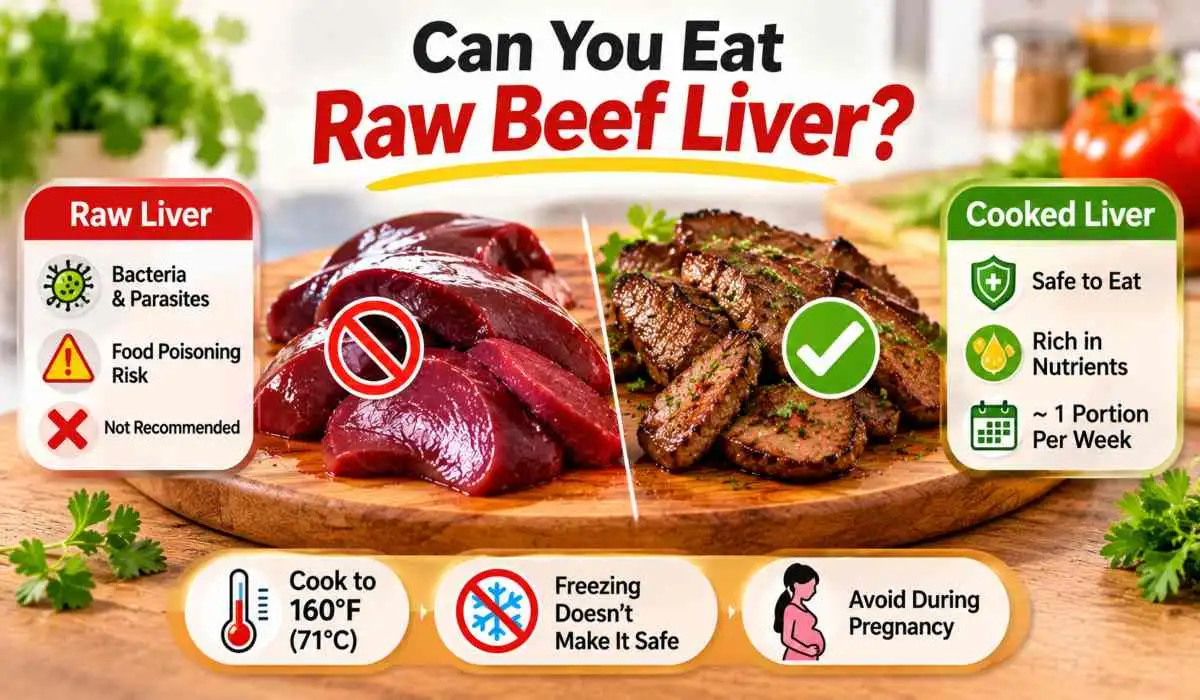
Is Raw Beef Liver Safe to Eat?
Raw beef liver is not considered safe to eat, and the USDA advises cooking organ meats before eating them. Liver is a filtering organ, so it can carry harmful organisms, and handling it raw also spreads bacteria to hands, boards and knives. The USDA Food Safety and Inspection Service advises cooking fresh variety meats such as liver to a internal temperature of about 160°F (71°C), checked with a food thermometer. Cutting a piece open and judging by color is not a reliable test. Grass-fed or organic labels do not change this, since those terms describe how the animal was raised, not whether the meat is free of bacteria.
Raw Liver Benefits vs Cooked Liver
Raw liver has no proven nutritional advantage over cooked liver, and the numbers per 100 g differ mostly because of water. USDA data lists raw beef liver at about 135 calories, 20.4 g of protein and 59.3 mcg of vitamin B12 per 100 g, against 191 calories, 29.1 g of protein and 70.6 mcg of B12 for braised liver.
Cooked liver looks higher only because about 12 percentage points of water cook out of it, which packs the same nutrients into less weight. Heat can slightly reduce a few heat-sensitive vitamins, such as folate, but the loss is modest and does not outweigh the safety risk. Claims that raw liver contains special enzymes or “living” nutrients are not supported by nutrition research, and vitamin A, the nutrient that sets the weekly limit, is not removed by cooking.
Bacteria and Parasite Risks
The main risks of raw liver are food poisoning from bacteria such as E. coli, Salmonella and Campylobacter, plus parasites in some regions. The CDC estimates that Salmonella alone causes about 1.35 million infections in the United States each year, most of them from food.
Symptoms usually include diarrhea, fever and stomach cramps, and they can be severe in young children, pregnant women, older adults and individuals with weak immune systems. Cattle liver can also carry liver flukes, a parasite that is more common outside the United States. Freezing does not make raw liver safe, since the USDA notes that freezing does not reliably kill bacteria. Thorough cooking is the dependable step.
Does Raw Liver Change How Often You Can Eat It?
Raw liver does not change the weekly limit for vitamin A, and it adds a food safety risk that no frequency makes acceptable. A 3 ounce portion supplies the same preformed vitamin A whether it is raw or cooked, so the once-a-week guidance and the 3,000 mcg daily upper limit still apply. Because the danger of raw meat comes from each serving, not from how many you eat, there is no “safe” raw schedule.
Pregnant women, young children, older adults and anyone with the weak immune system should avoid raw liver entirely. For everyone else, the safer plan is to cook liver thoroughly and keep it to about one portion a week. All figures here are for plain liver and are general information only, since the calories and nutrition of a finished dish vary with the oil, onions and seasoning used.
How Often Can You Eat Calf Liver?
Calf liver follows the same limit as beef liver, about one 3 ounce (85 g) portion a week for most healthy adults. Its milder flavor and tender texture do not make it any safer to eat more often. Calf liver comes from young cattle, and it is just as concentrated in vitamin A as liver from mature animals.
USDA FoodData Central lists braised calf liver at about 192 calories and 84.6 mcg of vitamin B12 per 100 g, against 191 calories and 70.6 mcg for beef liver. That makes the two nearly identical in energy, with calf liver slightly ahead on B12 and zinc. Because both are such rich sources of preformed vitamin A, the adult upper limit of 3,000 mcg a day applies in the same way. A mild taste can make it easy to eat a larger portion without noticing, so weigh it out and keep to one serving a week.
The same cautions apply as for beef liver, including avoiding it in pregnancy and checking with a doctor if you take vitamin A supplements or retinoid medication. For a side-by-side look at the numbers, see our beef liver nutrition facts page. All figures here are for plain liver and are general information only, since the nutrition of a finished dish varies with the oil, onions and seasoning used.
Why Do People Eat Liver?
People eat liver mainly because it is one of the most nutrient-dense foods available, and because it has been a traditional food in many cultures for centuries. Taste, thrift and nose-to-tail cooking are the other common reasons.
The nutrition is the biggest draw. USDA FoodData Central lists about 70.6 mcg of vitamin B12 in 100 g of braised beef liver, roughly 29 times the 2.4 mcg Daily Value set by the FDA. The same portion supplies large amounts of iron, folate, riboflavin, copper and preformed vitamin A, all for under 200 calories. Few other foods pack that many nutrients into such a small serving, which is why liver is often called a natural multivitamin.
Tradition and economics also play a part. In many food cultures, including East African, European and Middle Eastern cooking, organ meats are everyday dishes, served as stews, pâtés and pan-fried slices with onions. Eating the whole animal avoids waste and has long made liver a budget-friendly protein.
Some people simply enjoy the rich, mineral flavor. Because liver is so concentrated, most of its fans treat it as an occasional meal, not a daily staple, in line with the weekly limits covered earlier on this page. All figures here are for plain liver and are general information only, since the nutrition of a finished dish varies with the oil, onions and seasoning used.
Conclusion
Beef liver fits into a healthy diet at about one 3 ounce (85 g) portion a week, and the weekly limit matters more than any single meal. One portion averages roughly 940 mcg of vitamin A a day, well under the 3,000 mcg adult upper limit. A daily portion would deliver more than double that limit, and the body stores the excess.
Some people need a lower amount or none at all. Anyone who is trying to conceive or pregnant should avoid liver, and those who take vitamin A supplements, use retinoid medication or have bone-health concerns should check with a doctor first. Cook liver thoroughly, since the USDA advises against eating it raw, and keep portions measured by weight. Used this way, liver works best as an occasional, nutrient-rich meal rather than a daily habit. All figures on this page are general information for plain liver, and the nutrition of any finished dish will vary with the oil, onions and seasoning used.
Frequently Asked Questions (FAQs)
Can you eat beef liver every day?
No. A daily 3 ounce (85 g) portion supplies about 6,582 mcg of vitamin A, more than double the 3,000 mcg adult upper limit, and the body stores the excess.
Is once a week enough?
Yes, for most people. One 3 ounce portion a week provides several times the daily value for vitamin B12 and a large share of iron, folate and riboflavin, so more is not needed to benefit.
Can I eat liver twice a week?
It is possible only with smaller portions. Two full 3 ounce servings average about 1,880 mcg of vitamin A a day, which leaves little room for supplements or other sources.
How much beef liver is one serving?
One serving is about 3 ounces (85 g) cooked, which starts as roughly 4 ounces (120 g) raw. Liver loses weight as water cooks out.
Can I eat raw beef liver?
It is not recommended. Raw liver can carry bacteria such as Salmonella and E. coli, and the USDA advises cooking it to 160°F (71°C).
Is calf liver held to the same weekly limit?
Yes. Calf liver is just as rich in vitamin A, so the same once-a-week guidance applies, even though it tastes milder.
Disclaimer: This article is for general information only and is not medical or nutrition advice. Nutrient values are estimates and vary by ingredients, oil, coating and portion size. Talk to your doctor or dietitian about your individual needs.