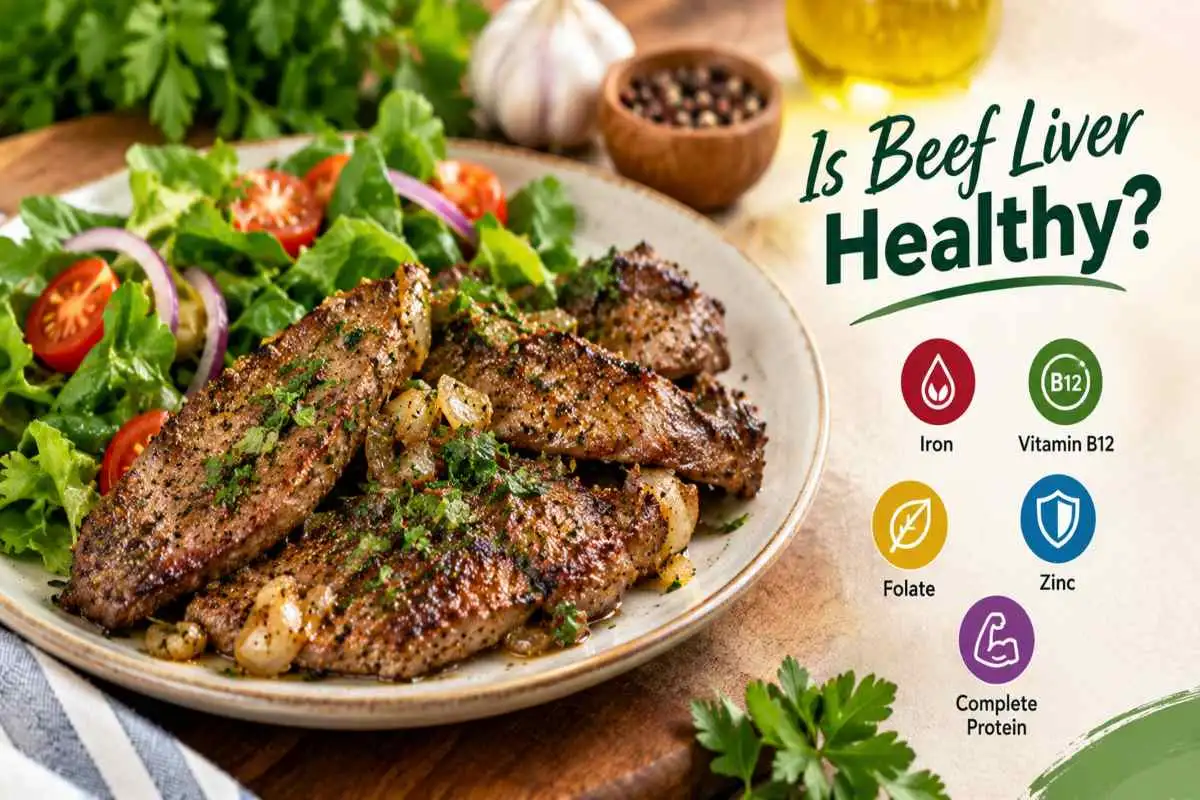
Is beef liver healthy? Yes, beef liver is healthy for most adults in moderate portions and it is one of the most nutrient dense foods you can eat. A single serving delivers large amounts of iron, vitamin B12, folate, zinc and complete protein. The catch is vitamin A, one serving exceeds the daily upper limit so eat it about once a week.
According to the NIH Office of Dietary Supplements, a 3 ounce serving of pan fried beef liver contains about 6,582 mcg of vitamin A, more than double the 3,000 mcg daily upper limit for adults. That makes liver a food to enjoy occasionally rather than daily and a reason for people who are pregnant or managing a health condition to check with their doctor first. This guide covers the nutrition, the benefits, the risks and how much is sensible to eat.
Is Beef Liver Healthy? The Short Answer
Yes, beef liver is healthy for most adults in small, occasional portions. It is packed with iron, vitamin B12, folate and protein. The main caution is vitamin A, one 3 ounce serving provides more than double the adult daily upper limit, so eat it occasionally rather than daily, and discuss it with a doctor during pregnancy.
If you want to cook it, our Peppered Beef Liver recipe serves four from 500 g of raw liver, so a serving is roughly 125 g raw. That is more than the 3 ounce serving used in the vitamin A figure above, which is another reason to keep it as an occasional meal.
What Is Beef Liver?
Beef liver is the liver of cattle, an organ meat eaten for its rich flavor and exceptional nutrient content. It has a dense, smooth texture and a stronger, more mineral taste than muscle cuts like steak and it is usually pan fried, grilled or simmered in dishes such as a liver stew.
Why it is called a nutrient dense organ meat
Beef liver is called a nutrient dense organ meat because it delivers a large amount of vitamins and minerals for the calories it contains. The liver is the body main processing and storage organ, so it holds generous reserves of iron, vitamin A, folate and vitamin B12. The B12 figure is the standout, a 3 ounce serving of cooked, pan fried beef liver provides about 70.7 mcg, roughly 29 times the 2.4 mcg daily value. “Organ meat,” also called offal, simply means edible internal organs rather than muscle meat and liver is the best known of them.
Beef liver vs cow liver (same thing, different name)
Beef liver and cow liver are the same food. “Beef” is the market name for meat from cattle, while “cow liver” is the plain language way of saying it, so recipes and nutrition labels use the two terms interchangeably. The one distinction worth knowing is age, calf liver comes from young cattle and tastes milder and more tender, while standard beef liver comes from mature animals and has a bolder flavor.
Beef Liver Nutrition Facts
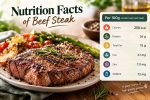
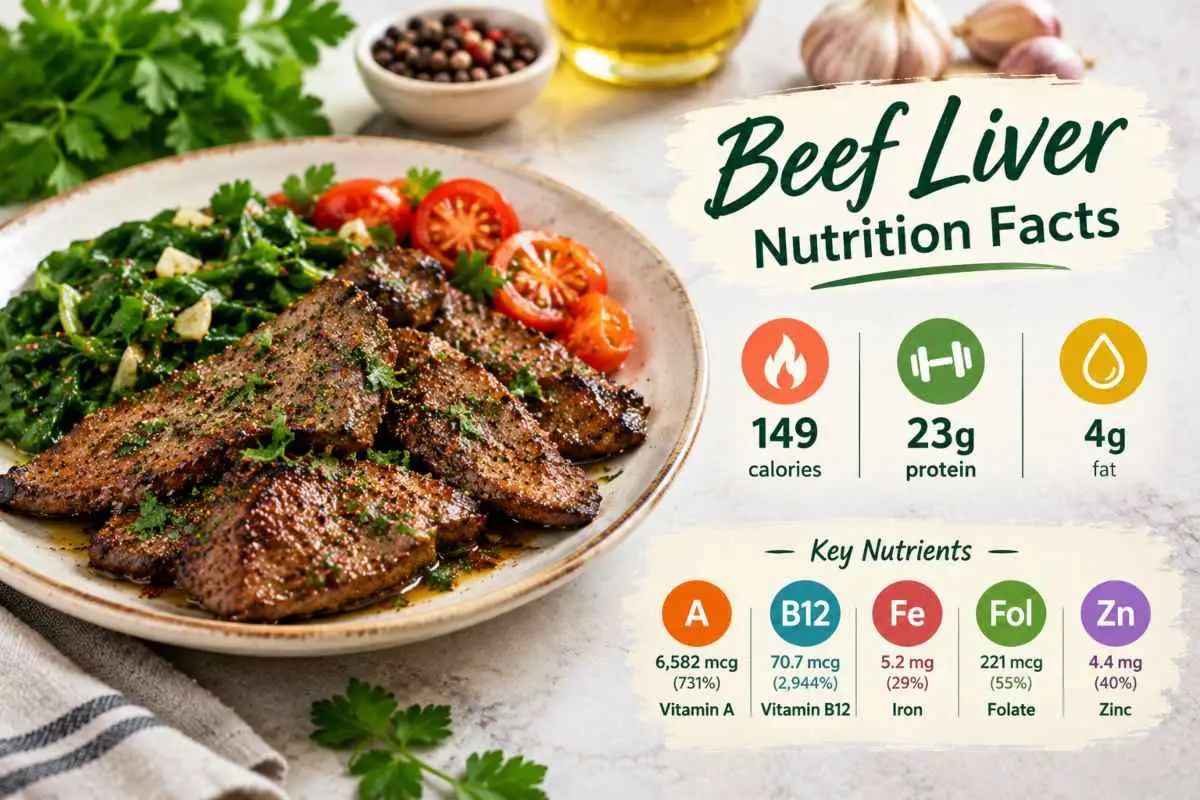
A 3 ounce (85 g) serving of pan fried beef liver provides about 149 calories, 23 grams of protein and 4 grams of fat, along with exceptionally high amounts of vitamin A, vitamin B12, iron, folate and zinc. It is a lean, protein rich food that is also one of the most concentrated sources of micronutrients available. All figures below are for cooked liver.
Calories, protein and fat
Beef liver is low in calories for the nutrition it carries. A 3 ounce cooked serving has roughly 149 calories and about 60 percent of those calories come from protein. It provides around 23g of complete protein and only 4g of fat with just over 2g of that being saturated fat. Carbohydrate is minimal, at about 4g per serving.
Cholesterol
Beef liver is one of the highest cholesterol foods you can eat. A 3 ounce serving contains about 324 mg, which is more than the 300 mg daily value printed on U.S. food labels. For many people, dietary cholesterol raises blood cholesterol less than saturated fat does and liver is low in saturated fat, but anyone with high cholesterol or heart disease should check with a doctor before eating it regularly.
Vitamins and minerals
Liver’s micronutrient content is where it stands apart from other meats. The table shows the amounts in a 3 ounce serving of cooked, pan fried beef liver and what share of the daily value (DV) each represents.
| Nutrient | Per 3 oz (85 g) | % Daily Value |
| Vitamin A | 6,582 mcg RAE | about 731% |
| Vitamin B12 | 70.7 mcg | about 2,944% |
| Iron | 5.2 mg | 29% |
| Folate | 221 mcg DFE | 55% |
| Zinc | 4.4 mg | 40% |
Source: USDA FoodData Central, “Beef, variety meats and by-products, liver, cooked, pan-fried” (SR Legacy, FDC ID 168627), scaled to 85 g. Vitamin B12 and the vitamin A upper limit, NIH Office of Dietary Supplements. Daily Values: U.S. FDA.
The vitamin A figure is the one to watch. At 6,582 mcg, a single serving is more than double the 3,000 mcg daily upper limit for adults, which is why liver is best eaten occasionally rather than every day.
Health Benefits of Beef Liver
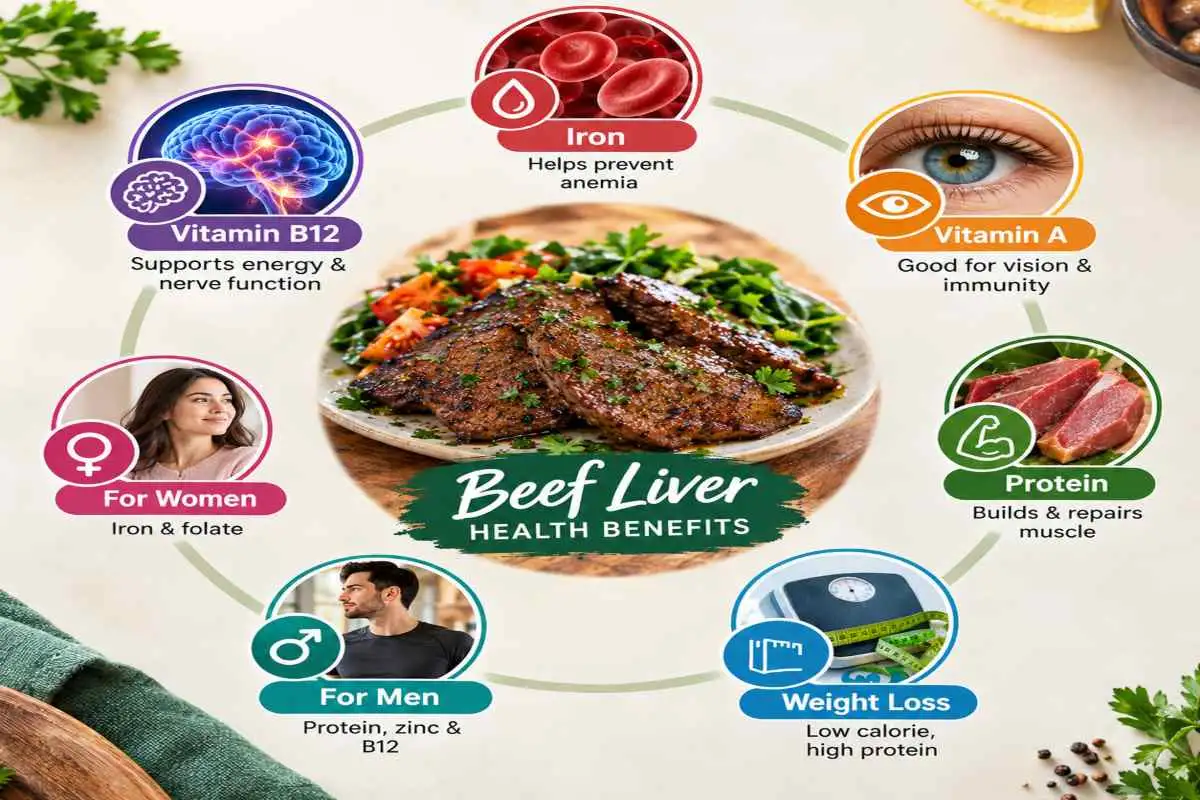
Beef liver main health benefits come from its concentration of iron, vitamin B12, vitamin A and protein, which support healthy blood, nerve function, vision and muscle maintenance. These benefits are real but have a limit, the same vitamin A that makes liver valuable can be harmful in excess, so it works best as an occasional food.
Iron and anemia
Beef liver helps prevent iron deficiency because its iron is heme iron, which the body absorbs far more efficiently than the iron in plants. The NIH Office of Dietary Supplements puts heme iron absorption at roughly 15 to 35 percent, compared with about 2 to 20 percent for nonheme iron. A 3 ounce serving of pan fried beef liver provides 5.2 mg of iron. Iron deficiency anemia needs a diagnosis and a treatment plan from a doctor, so liver is a food source of iron, not a treatment.
Vitamin B12 and energy
Beef liver is one of the most nutrient dense food sources of vitamin B12, which the body needs to make red blood cells, keep nerves healthy and produce DNA. A 3 ounce serving provides 70.7 mcg, against a daily value of just 2.4 mcg. B12 supports energy mainly in people who are low in it, since tiredness caused by a deficiency can improve once levels are restored, while extra B12 generally does not boost energy in people who already get enough.
Vitamin A
Beef liver supplies preformed vitamin A, which supports vision, immune function and normal growth and cell development. A 3 ounce serving provides 6,582 mcg RAE, about 731 percent of the daily value. That is also more than double the 3,000 mcg adult upper limit, so liver suits occasional meals rather than daily eating, because long term high intake of preformed vitamin A can damage the liver and bones and is linked to birth defects in pregnancy.
Protein
A 3 ounce serving of beef liver provides about 22.5 grams of complete protein, roughly 45 percent of the 50 gram daily value and it contains all the essential amino acids. Protein supports muscle maintenance and tissue repair and it helps you feel full after a meal.
Beef liver for weight loss
Beef liver can fit into a weight loss diet because it is low in calories and high in protein, but it does not cause weight loss on its own. At about 149 calories and 22.5 grams of protein per 3 ounce serving, it offers a filling portion for few calories. Results still depend on your overall calorie intake and its cholesterol and vitamin A content make it a food to eat occasionally, not daily.
Beef liver benefits for men
For men, beef liver’s main benefits are protein, zinc and vitamin B12 rather than iron. Adult men need only 8 mg of iron a day, which most diets already cover, so extra iron is rarely the goal. A 3 ounce serving supplies about 4.4 mg of zinc, roughly 40 percent of the 11 mg daily value, plus protein for muscle maintenance. Men with iron overload conditions such as hemochromatosis should avoid liver unless a doctor says otherwise.
Beef liver benefits for women
For women, beef liver is most useful for its iron and folate. Women ages 19 to 50 need 18 mg of iron a day more than double the 8 mg men need, because of menstrual blood loss and a 3 ounce serving provides 5.2 mg. It also supplies 221 mcg DFE of folate, about 55 percent of the daily value. Anyone who is pregnant or planning for pregnancy should talk to a doctor before eating liver, because too much preformed vitamin A is linked to birth defects.
Does Beef Liver Help Your Liver?
Eating beef liver does not detox, clean or repair your own liver and there is no good evidence that it treats liver disease. It does supply nutrients your liver needs to work normally, including choline, vitamin B12 and folate, but too much of its vitamin A can harm the liver.
The idea that eating an animal’s liver supports yours is a folk belief, not a medical finding. Your liver filters and processes substances on its own. Where beef liver helps is indirect, a 3 ounce serving provides roughly 350 mg of choline, about 60 percent of the 550 mg daily value and low choline intake is linked to fatty liver. That makes liver one food that helps you meet your needs, not a remedy. If you have liver disease, hepatitis or abnormal liver tests, talk to your doctor before eating it, since its vitamin A and iron content can be a problem.
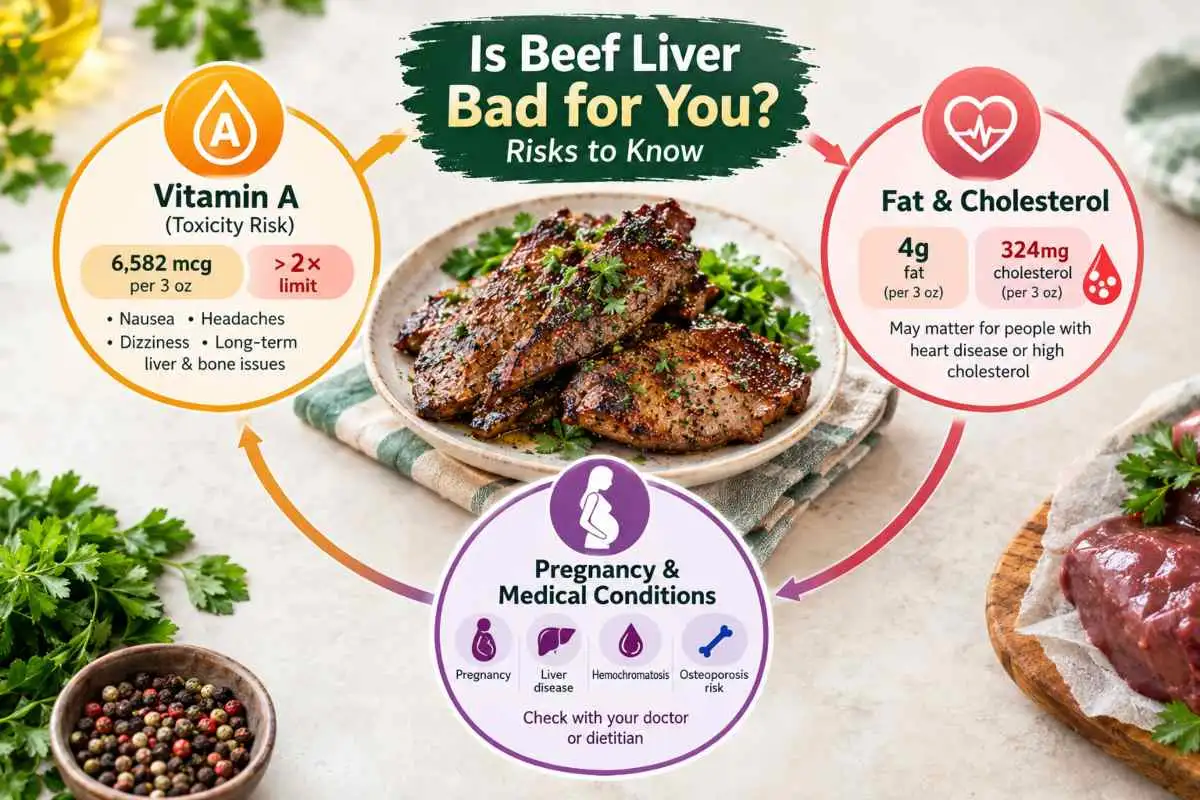
Is Beef Liver Bad for You? Risks to Know
Beef liver is not bad for you in small, occasional portions, but eating it too often can cause real harm, mainly from excess vitamin A and copper and its cholesterol content matters for some people. The risks come from frequency and portion size, not from the food itself.
Vitamin A toxicity
Eating too much beef liver can cause vitamin A toxicity, because the body stores preformed vitamin A instead of flushing it out. A 3 ounce serving contains 6,582 mcg RAE, more than double the 3,000 mcg adult upper limit. Short term excess can cause nausea, headaches and dizziness, while years of high intake can damage the liver and weaken bones. The risk builds with regular heavy eating, not one occasional meal.
Fat and cholesterol
Beef liver is low in fat, with about 4 grams per 3 ounce serving and only about 2 grams of saturated fat, roughly 10 percent of the daily value. Its cholesterol is the concern, 324 mg per serving is above the 300 mg daily value. For many people that matters little, but anyone told to limit dietary cholesterol, including people with heart disease or high cholesterol, should ask a doctor before making liver a habit.
Pregnancy and medical conditions
People who are pregnant or planning a pregnancy should avoid beef liver, since too much preformed vitamin A can harm a developing baby. Liver may also be a poor fit for people with iron overload conditions such as hemochromatosis, Wilson’s disease (copper buildup), gout, existing liver disease or a high risk of osteoporosis. If any of these apply to you, check with your doctor or dietitian before eating liver.
How Much Beef Liver Is Safe to Eat?
Most healthy adults can safely eat one 3 ounce (85 g) serving of beef liver about once a week and no more than that regularly. There is no official limit set for liver alone, so this guidance comes from vitamin A limits and national health advice.
Per day
No official daily amount of liver exists and a standard serving already exceeds the daily vitamin A limit on its own. A portion of about 1.4 ounces (40 g) reaches the 3,000 mcg upper limit before counting any other vitamin A from supplements, eggs or dairy. Liver is also high in copper, at about 12 mg per 3 ounce serving against a 10 mg adult upper limit. That is why it is not a daily food.
Per week
One 3 ounce serving a week averages about 940 mcg of vitamin A per day, well under the 3,000 mcg upper limit. UK National Health Service guidance advises eating liver no more than once a week and it says people who eat liver weekly should avoid supplements containing vitamin A. Women past menopause and older men who are at high risk of osteoporosis are advised to keep to that limit.
Can you eat it every day?
No, eating beef liver every day is not recommended. Daily servings would push vitamin A and copper far past their upper limits and the excess builds up over time because the body stores vitamin A. An occasional extra serving is not a concern, but regular intake above one serving a week is where the risk lies.
Beef Liver vs Other Liver
Beef, chicken, lamb and pork liver are all nutrient dense and all very high in vitamin A, so the same weekly limits apply to each. Beef liver has the boldest, most mineral flavor, while chicken liver is milder and cooks faster. On iron, chicken liver actually comes out ahead, USDA data lists pan fried chicken liver at 12.9 mg per 100 g versus 6.2 mg for beef liver, with similar protein in both.
Conclusion
Beef liver is healthy for most adults when eaten in small, occasional portions, about one 3 ounce serving a week. For roughly 149 calories, that serving delivers 22.5 grams of protein plus large amounts of iron, vitamin B12, folate and zinc, which is why it earns its place as a nutrient dense food.
The trade off is vitamin A, the same serving contains 6,582 mcg, more than double the 3,000 mcg adult upper limit, so how often you eat it matters more than any single meal. If you are pregnant or planning a pregnancy or you have iron overload, gout or liver disease, check with a doctor before adding it to your plate. For more easy, home cooked recipes, including East African favorites, browse Devine Dishes.
Frequently Asked Questions (FAQs)
Is beef liver good for you?
Yes, in moderation. A 3 ounce serving gives you iron, B12, folate, zinc and protein for about 149 calories, but its vitamin A content means it is best eaten occasionally.
Is beef liver bad for you?
Not in small, occasional portions. Eating it too often can overload you with vitamin A and copper and its cholesterol is high for people told to limit it.
How often should you eat beef liver?
About once a week at most, in a 3 ounce (85 g) portion. That is the UK NHS advice and the US sets no liver specific limit.
Is beef liver high in iron, protein or cholesterol?
All three. A 3 ounce serving has 5.2 mg of iron (29% of the daily value), about 22.5 g of protein and 324 mg of cholesterol, which is above the 300 mg daily value.
Is beef liver toxic?
Not in normal portions, but it is very high in vitamin A and copper. Regular large servings can build up to harmful levels over time.
Is beef liver good for anemia, energy or weight loss?
Its iron and B12 support healthy blood and energy and its protein and low calories can fit a weight loss plan. It is a food, not a treatment, so see a doctor for anemia.
Is beef liver safe during pregnancy?
Generally no. The UK NHS advises avoiding liver in pregnancy because too much preformed vitamin A can harm the baby, so ask your doctor.
Disclaimer: This article is for general information only and is not medical or nutrition advice. Nutrient values are estimates and vary by ingredients, oil, coating and portion size. Talk to your doctor or dietitian about your individual needs.