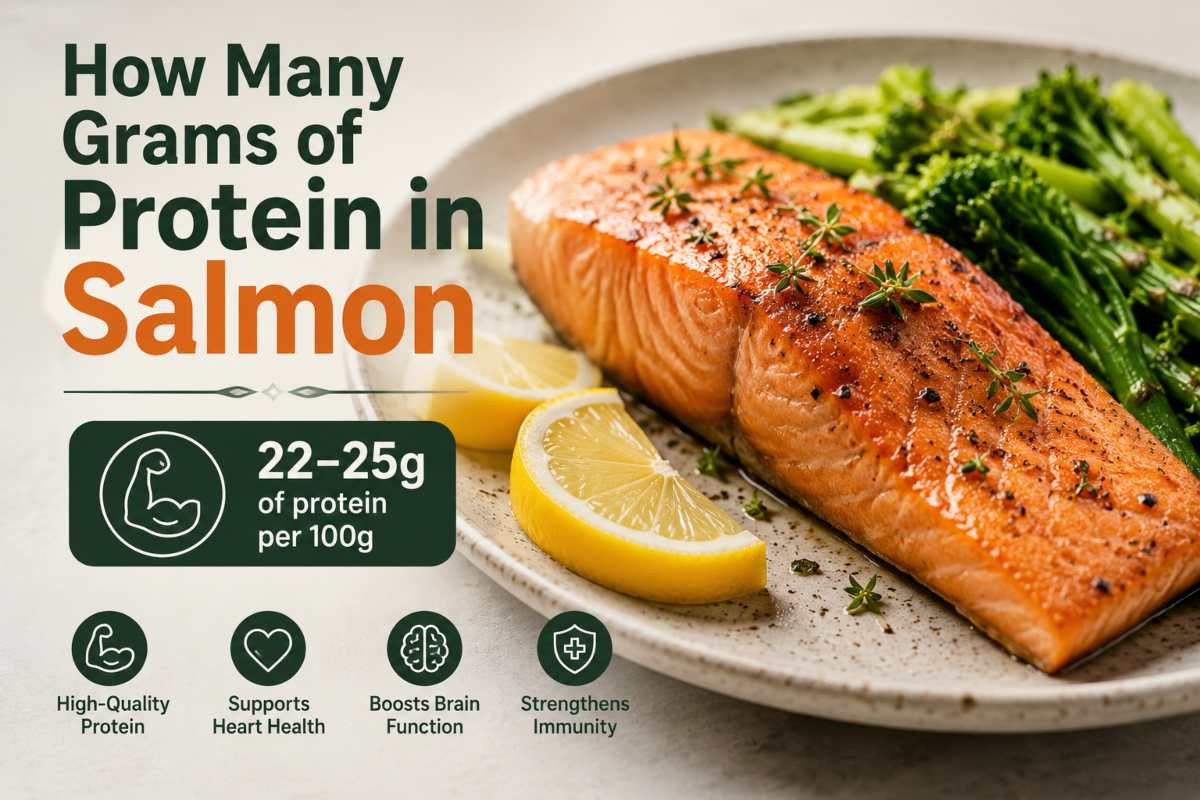
Quick answer: Cooked salmon has about 22 to 25 g of protein per 100 g, or roughly 6 to 7 g per ounce. A standard 5 to 6 oz fillet provides about 34 to 40 g. Wild and farmed salmon have similar protein, but farmed salmon carries more fat and calories.
How Many Grams of Protein in Salmon? A 4 ounce (113 gram) serving of cooked salmon delivers roughly 23 grams, according to USDA nutrition data, making it one of the most efficient protein sources in the seafood aisle. That number shifts a bit depending on whether you are eating a full fillet, a smaller cut or wild caught versus farmed salmon, but the short version is simple, salmon is a high protein, low effort way to hit your daily targets without loading up on saturated fat.
Below, we break down exactly how much protein you are getting by fillet, ounce and 100 gram serving, how cooking method and salmon type affect the numbers and how it stacks up against the rest of your plate. If you are building it into a weekday meal plan, it also pairs well with lighter sides, these lunch recipes are a good place to start.
How Much Protein Is in Salmon?
Salmon contains about 20 to 23 grams of protein per 3.5 ounce (100 gram) cooked serving, which is more protein per ounce than most other popular fish and comparable to a similar sized serving of chicken breast. This makes it an easy way to hit a meaningful chunk of your daily protein needs, the average adult needs roughly 46 to 56 grams a day, from a single portion.
The exact number moves slightly based on the cut, whether it is wild or farmed and how it’s cooked, which we’ll break down by serving size next. For a simple way to get it on the table on a weeknight, these quick dinner ideas for family make good use of a salmon fillet without much prep.
Protein in Salmon by Serving Size
Protein in salmon scales fairly predictably with portion size, so once you know the per ounce number, you can estimate any serving. Here is how it breaks down across the most common ways people measure a piece of fish.
Per Fillet
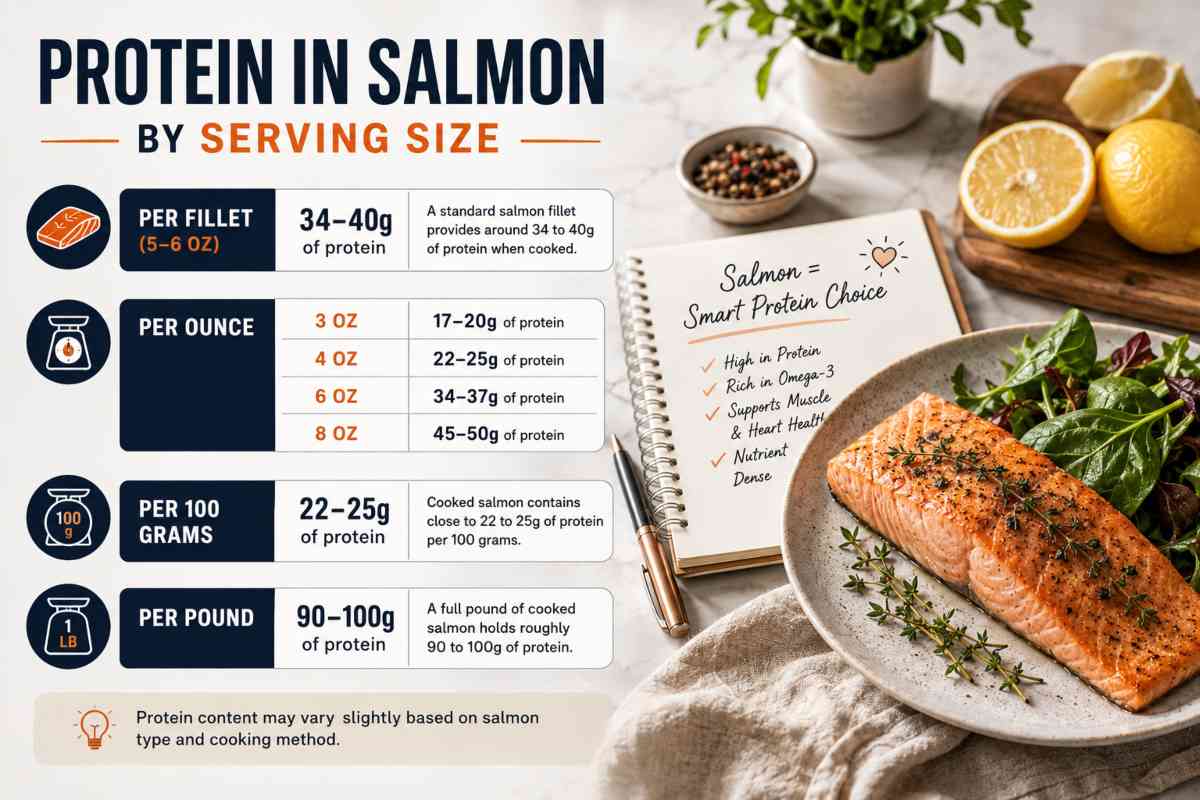
A standard salmon fillet, typically 5 to 6 ounces, provides around 34 to 40 grams of protein when cooked. That is roughly two thirds of the average adult daily protein target in one piece, which is why a single fillet is often enough to anchor an entire meal. If you want to put that fillet to good use, this honey glazed salmon recipe is a simple way to prepare it without extra fuss.
Per Ounce (3, 4, 6 and 8 oz)
Cooked salmon delivers approximately 6 to 7 grams of protein per ounce, so the totals climb steadily with portion size, about 17 to 20 grams in a 3 ounce serving, 22 to 25 grams in 4 ounces, 34 to 37 grams in 6 ounces and 45 to 50 grams in a full 8 ounce serving. These ranges account for natural variation between wild and farmed salmon, which we cover in more detail later on.
Per 100 Grams
Per 100 grams, cooked salmon contains close to 22 to 25 grams of protein, based on standard USDA nutrition data. This metric measurement is the one most nutrition labels and food tracking apps default to, making it a useful reference point if you are logging meals or comparing salmon to other protein sources on a package.
Per Pound
A full pound of cooked salmon holds roughly 90 to 100 grams of protein, which is more than most people need in an entire day from a single food. This makes a pound sized fillet a practical option for meal prepping multiple servings at once rather than something you’d eat in one sitting.
Does the Type of Salmon Change the Protein Content?
The type of salmon and how it is prepared can shift the protein count slightly, but the differences are small enough that they rarely change which salmon you should buy for protein purposes alone. What varies more noticeably is fat content, which affects overall calories more than protein.
Wild Caught vs Atlantic Salmon
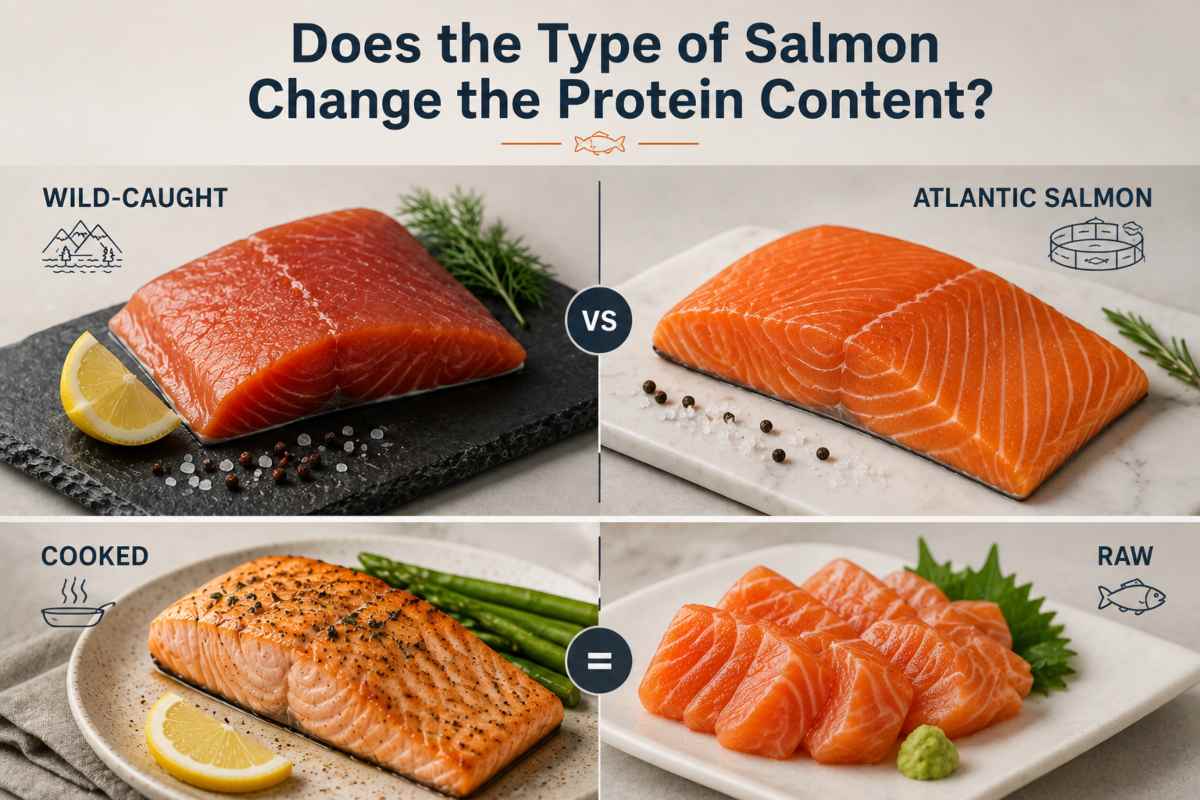
Wild caught salmon and farmed Atlantic salmon both land in a similar protein range, generally 20 to 25 grams per 100 gram serving, though wild salmon tends to be slightly leaner overall. The bigger distinction between the two is fat, farmed Atlantic salmon typically carries more fat per serving, which raises its calorie count without adding much extra protein. If you’re working wild salmon into a lighter meal, these salmon bites are an easy way to portion it out.
Cooked vs Raw
Cooking concentrates salmon protein slightly because heat causes moisture loss, so a cooked portion will show a marginally higher protein per ounce number than the same weight of raw salmon. In practical terms, this means nutrition labels based on raw weight can undercount what you are actually eating once it is on your plate, so it is worth checking whether a source is using raw or cooked weight before comparing numbers.
Salmon Full Nutrition Profile (Protein, Fat, Carbs and Calories)
A typical 4 ounce cooked serving of salmon contains around 22 to 25 grams of protein, 10 to 13 grams of fat, zero carbohydrates and roughly 200 to 230 calories, making it a nutrient dense option that fits easily into most eating patterns. Salmon contains no meaningful carbs at all, so its calorie count comes almost entirely from protein and fat.
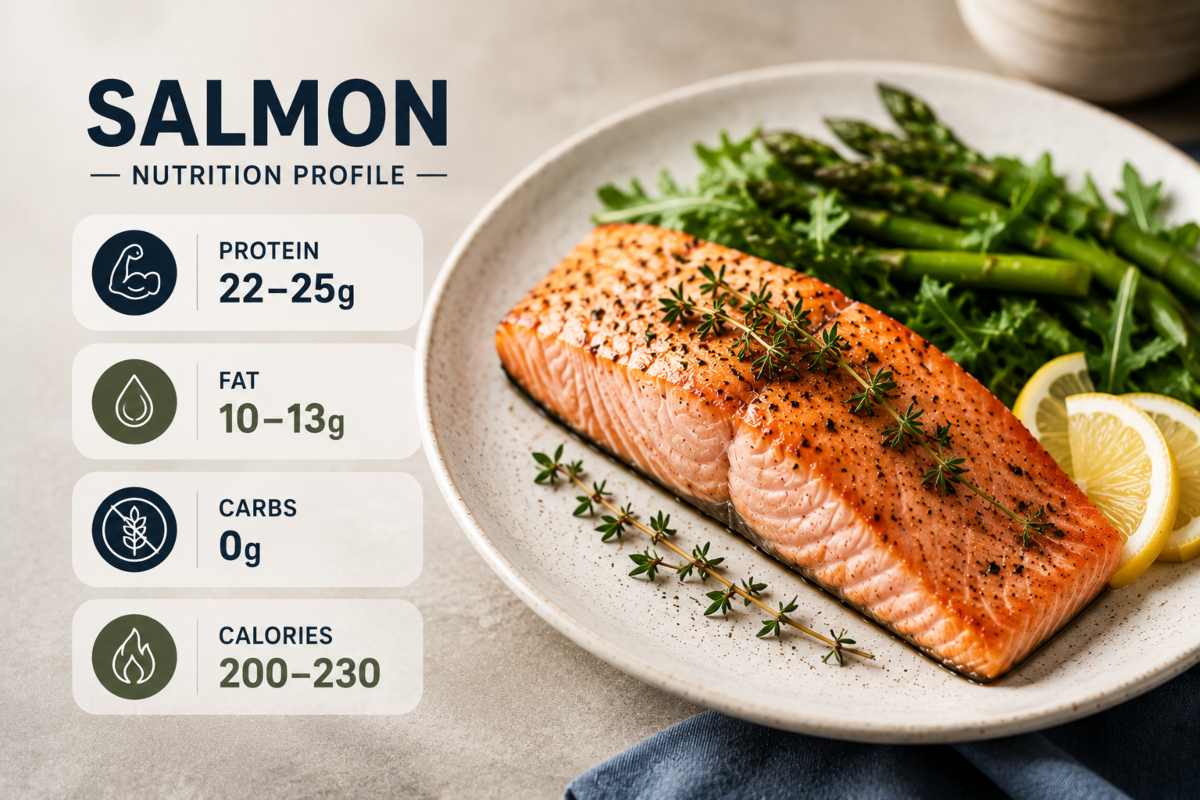
Most of that fat is the heart healthy, unsaturated kind, including omega 3 fatty acids, which is part of why salmon is recommended more often than higher fat proteins despite its similar calorie range.
Wild caught cuts tend to run slightly leaner in fat than farmed Atlantic salmon, though both stay within a similar overall calorie window. For a version that leans into that richer fat profile in a good way, this coconut salmon recipe pairs the fish with a creamy sauce without pushing the meal off balance.
Is Salmon a Complete Protein?
Yes, salmon is a complete protein, meaning it contains all nine essential amino acids the body can not produce on its own and must get from food. That puts it in the same category as eggs, poultry and other animal based proteins, rather than most plant proteins, which typically lack one or more essential amino acids on their own.
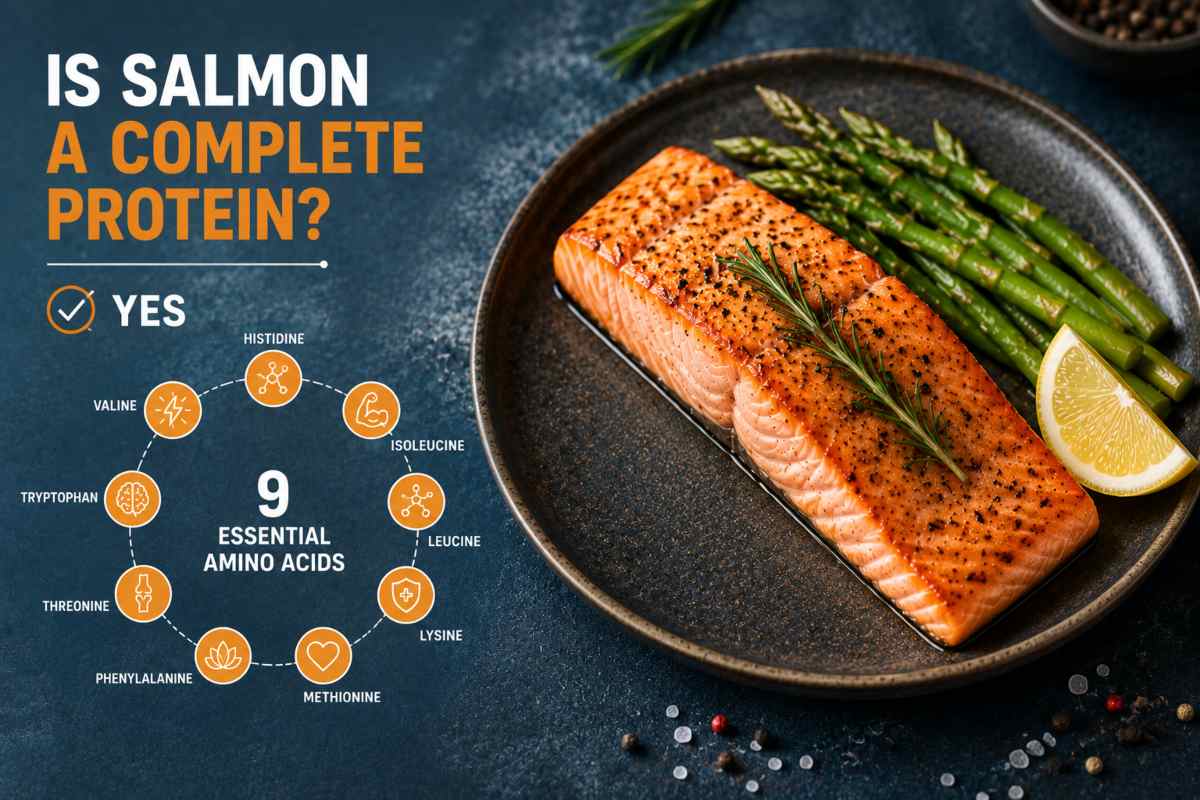
This matters most for how efficiently your body can use the protein you are eating. Because salmon delivers a full amino acid profile in a single serving, roughly 22 to 25 grams of protein per 4 ounces, it does not need to be paired with another protein source to be considered nutritionally complete, unlike combinations such as rice and beans.
Why Salmon Protein Matters (Benefits Section)
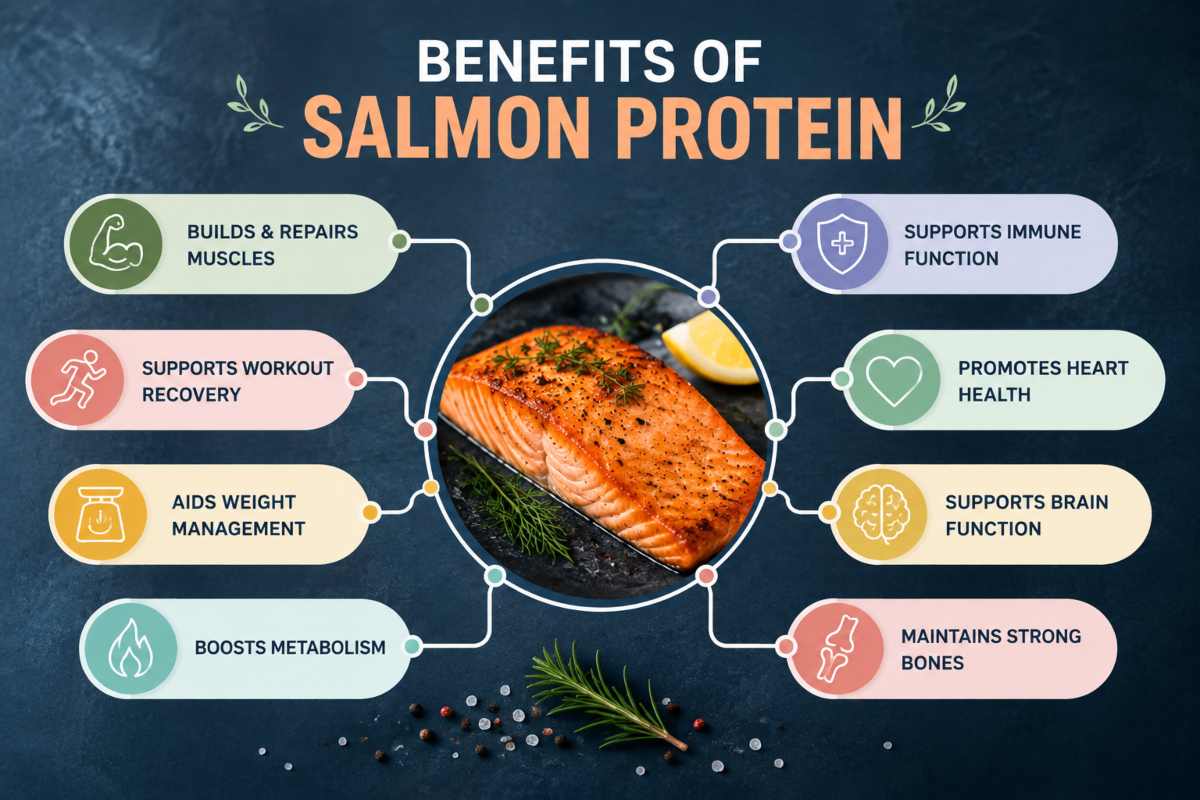
The protein in salmon does more than fill out a nutrition label, it plays a direct role in muscle repair and appetite control, which is why it shows up so often in fitness and weight management meal plans. A single fillet can meaningfully move the needle on both without requiring a large portion.
Muscle and Recovery
Protein supplies the amino acids muscles need to repair and rebuild after exercise and salmon’s roughly 34 to 40 grams per fillet makes it an efficient way to hit that need in one meal rather than spreading it across several smaller portions. Because it’s a complete protein, the body can put that amino acid supply to use right away rather than needing it paired with another food source.
Weight Management
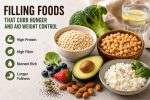
Protein is more filling per calorie than fat or carbohydrates, so a protein rich food like salmon tends to curb appetite more effectively than an equivalent calorie meal built around refined carbs. At around 200 to 230 calories for 22 to 25 grams of protein per 4 ounce serving, salmon offers a favorable ratio for anyone managing calorie intake while still trying to feel satisfied. This creamed spinach salmon recipe is a good example of building a filling, protein forward plate without a heavy calorie load.
Conclusion
Salmon delivers a reliable, high quality dose of protein no matter how you slice it, roughly 6 to 7 grams per ounce, 22 to 25 grams per 4 ounce serving and 34 to 40 grams in a full fillet, all from a complete amino acid profile the body can use right away. Whether you’re tracking macros, recovering from a workout or just trying to build a more filling dinner, that combination of high protein and moderate calories makes salmon one of the more efficient proteins to build a meal around.
The small differences between wild and farmed or raw and cooked, are worth knowing but should not complicate the decision, any of these options gets you a solid protein serving. For more ways to put that fillet to work, browse the full recipe collection at Devine Dishes.
Frequently Asked Questions (FAQs)
How much protein is in a salmon fillet?
A standard 5 to 6 ounce salmon fillet contains about 34 to 40 grams of protein when cooked. That’s roughly two thirds of the average adult’s daily protein needs in a single fillet.
Is salmon high in protein?
Yes, salmon is considered a high protein food, providing about 22 to 25 grams per 4 ounce serving. It also provides a complete amino acid profile, similar to eggs and poultry.
How much protein is in 4 oz of salmon?
A 4 ounce cooked serving of salmon has approximately 22 to 25 grams of protein. This makes it one of the more efficient protein sources per calorie in the seafood category.
Does salmon have carbs?
No, salmon contains virtually no carbohydrates. Its calories come almost entirely from protein and fat.
Is salmon good for weight loss?
Yes, salmon high protein to calorie ratio helps curb appetite while keeping calories moderate. A 4 ounce serving offers 22 to 25 grams of protein for around 200 to 230 calories.
Disclaimer: This article is for general information only and is not medical or nutrition advice. Nutrient values are estimates and vary by ingredients, oil, coating and portion size. Talk to your doctor or dietitian about your individual needs.