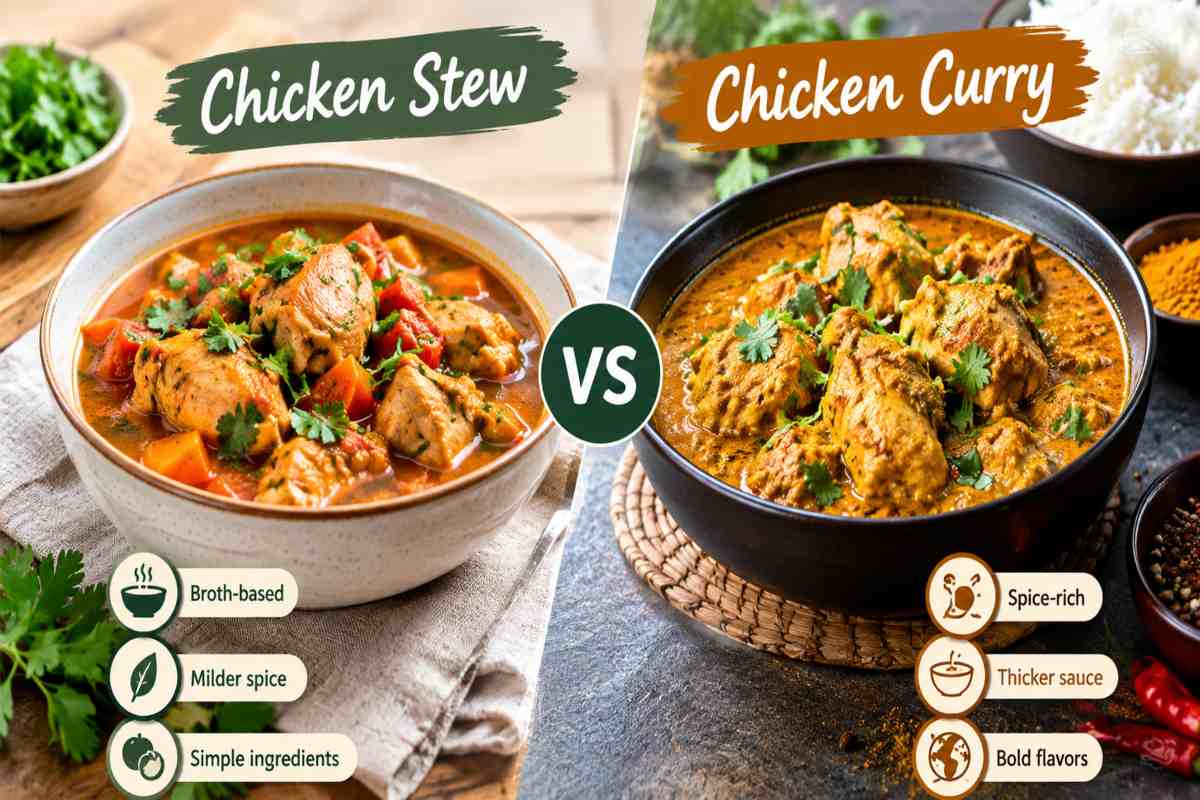
Chicken stew vs chicken curry comes down to one core difference, stew builds its flavor from slow cooked aromatics and broth, while curry gets its depth from a distinct spice blend, whether that is curry powder, garam masala or a paste. Both dishes braise chicken low and slow until it is fall apart tender, but the seasoning path is what splits them into two separate culinary traditions. Curry leans on warming spices like turmeric, cumin and coriander for a bold, layered heat, while stew keeps things gentler, built on onion, garlic and herbs like thyme or bay leaf, often thickened with vegetables rather than a spice forward sauce.
According to Google Trends data, “chicken curry” consistently pulls higher global search interest than “chicken stew,” largely because curry carries strong regional identities, Indian, Thai, Japanese, that stew naming does not share in the same way. That gap is actually good news if you are after a dish with real character, our Chicken Stew recipe, made East African style with coconut milk and warming spices, sits right in the overlap between the two, comforting like a stew, but with a curry like depth of flavor.
Chicken Stew vs Chicken Curry What is Actually Different
Chicken stew and chicken curry both start from the same technique, braising chicken slowly until it is tender, but they part ways on what carries the flavor. Stew leans on broth, aromatics and time, onion, garlic and vegetables like carrots or potatoes simmer alongside the chicken until the sauce thickens naturally and the meat falls apart with a fork. Curry, on the other hand, is defined by its spice base rather than its cooking method.
Whether it is a Western curry powder blend or a fresh mix of turmeric, cumin, coriander and chili, that spice profile is what makes a dish “curry” and gives it its signature warmth and color, something a classic stew never aims for. The distinction matters more than it might seem, chicken tikka masala, a curry dish, was proclaimed “a true British national dish” by former UK Foreign Secretary Robin Cook and one in seven curries sold in the UK today is chicken tikka masala, a level of cultural identity built almost entirely on its spice blend, not its stewing technique.
That is also why the line between the two dishes blurs so easily, add curry powder to a basic chicken stew and it becomes a curry, which is exactly how hybrid dishes like coconut chicken curry came to exist. If you sre deciding between the two for tonight, browse our full Dinner Recipes collection for both styles side by side.
Flavor, Spice and Texture Compared
The clearest way to tell chicken stew, chicken curry and chicken soup apart is by texture, stew is thick enough to coat a spoon, curry is thick but sauce forward and soup stays thin and brothy. Flavor wise, stew keeps things mellow and savory, built on slow cooked onion, garlic and root vegetables rather than a defined spice blend.
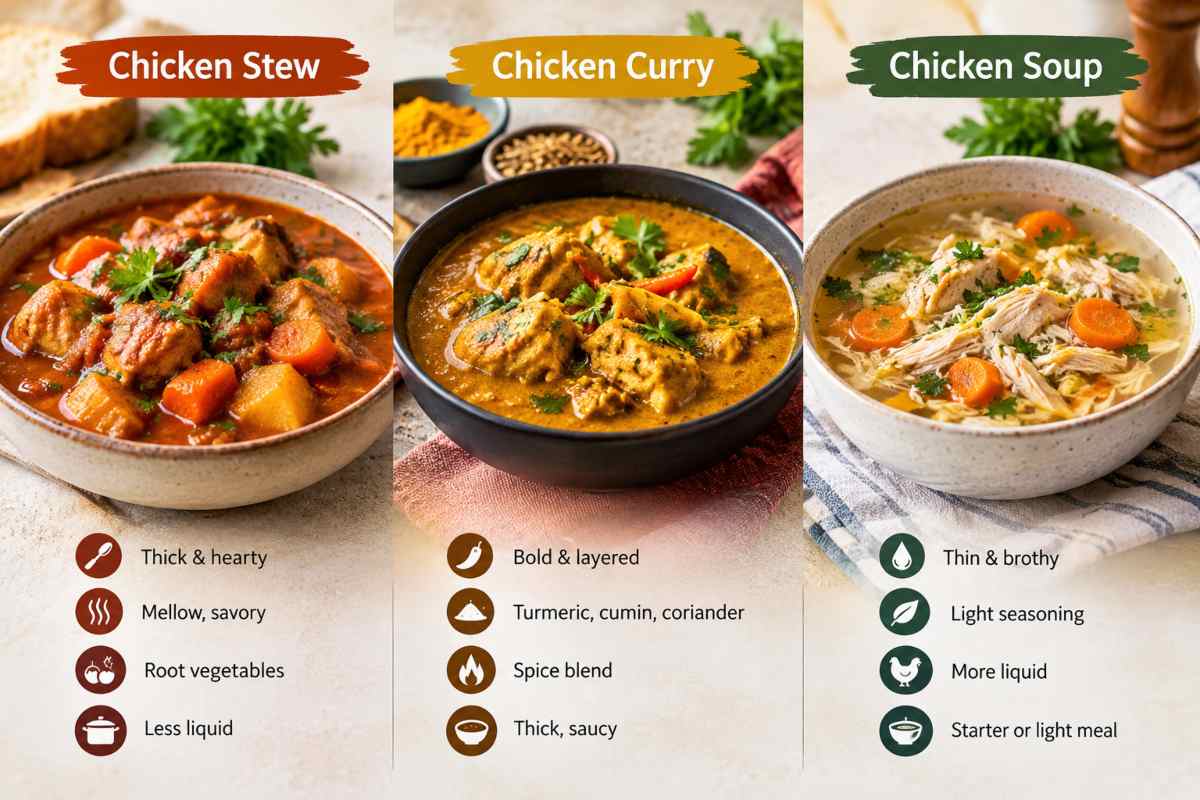
Curry pushes further into bold, layered heat, using turmeric, cumin, coriander or a curry paste to create a sauce that is as much about the spice mix as it is about the chicken itself. Texture is really what separates the two from a third dish people often lump in with them, soup. Where stew reduces its liquid down until it clings to the chicken and vegetables, soup keeps a much higher ratio of broth to solids, so it pours rather than spoons.
Chicken Stew vs Chicken Soup
Chicken stew and chicken soup are not interchangeable, even though both start with chicken simmered in liquid. The defining difference is consistency, stew is cooked down until the liquid thickens into a coating sauce, while soup keeps a light, pourable broth as its base.
A common culinary rule of thumb is that a stew uses roughly half the liquid of a soup for the same amount of chicken and vegetables, which is why stew eats more like a main dish and soup eats more like a starter or a light meal on its own. Soup also tends to lean on clear or lightly seasoned broth, letting the chicken and vegetables stand out, whereas stew reduced sauce carries most of the dish flavor. If a brothy, comforting bowl is what you are after rather than a thick, hearty one, our chicken soup recipe is the better fit.
Regional Styles Around the World
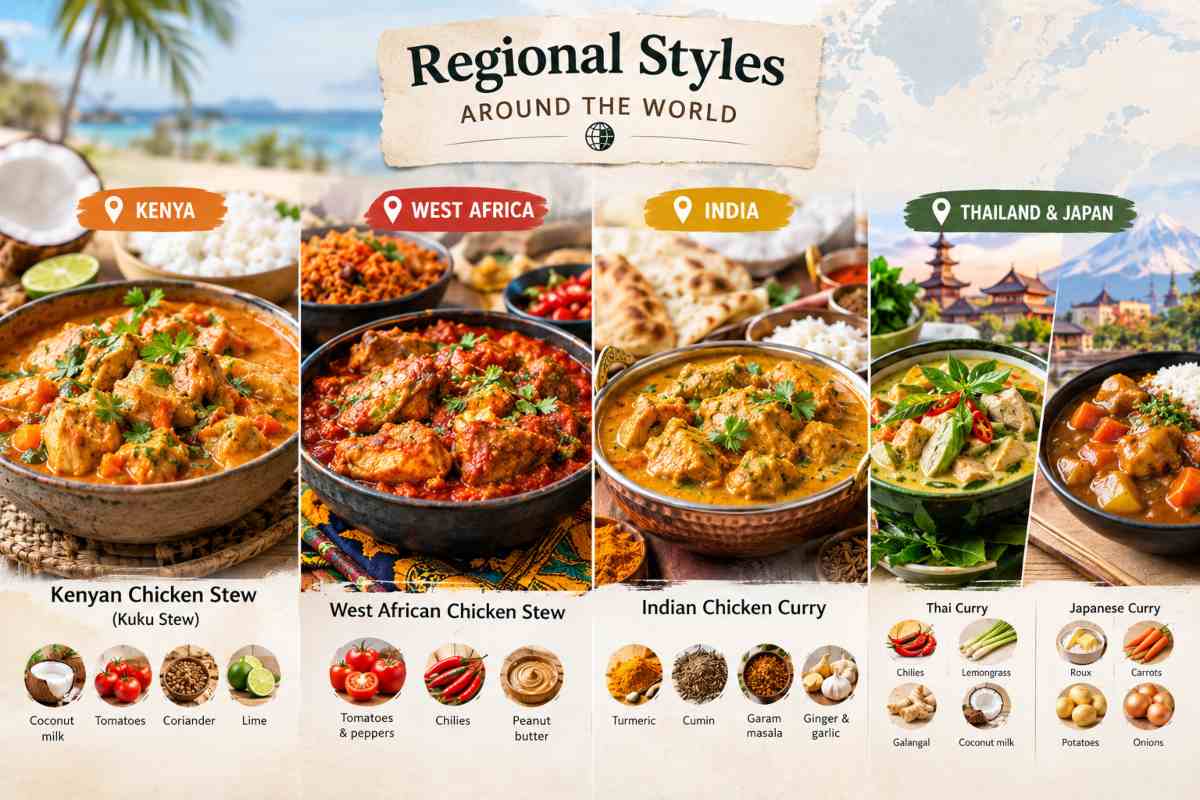
Chicken stew and chicken curry take on distinct identities depending on where they are made, shaped by local spices, staple starches and cooking traditions that go back generations. Coastal East Africa leans into coconut milk and citrus, West Africa builds on peanuts and chilies, India layers whole and ground spices into a defined masala and East Asia reworks curry into something sweeter and thicker than its South Asian roots. Each version still fits under the broader stew or curry divide, but the regional details are what actually make a dish memorable.
Kenyan Chicken Stew
Kenyan chicken stew, often called kuku stew, gets its character from tomatoes, onions and a splash of coconut milk simmered with free range chicken until the meat turns tender enough to pull apart. Coastal versions along Kenya’s Swahili coast lean further into coconut milk and lime juice, a style sometimes labeled kuku wa nazi, giving the stew a lighter, brighter finish than its inland counterparts. Ground coriander, garlic and ginger round out the base and the dish is almost always served over rice, ugali or chapati to soak up the sauce.
West African Chicken Stew
West African chicken stew, common across Nigeria and Ghana, builds its depth from a blended base of tomatoes, red bell peppers and onions cooked down into a thick, deeply red sauce. Chilies and sometimes peanut butter add heat and richness, turning the stew into something closer to a sauce that coats the chicken rather than a thin broth. It’s traditionally paired with jollof rice or fufu and the tomato pepper base is what gives it a flavor profile distinct from the coconut forward stews found further east on the continent.
Indian Chicken Curry
Indian chicken curry is defined by its spice layering rather than a single ingredient, starting with whole spices bloomed in oil before onions, ginger, garlic and tomatoes build the sauce. Ground spices like turmeric, cumin, coriander and garam masala go in next and the dish varies widely by region, from the creamy, nut based kormas of the north to the coconut and pepper curries of South India. Bone in chicken is standard, since the bones add richness as the curry simmers slowly until the meat is fall off the bone tender.
Thai and Japanese Curry Styles
Thai and Japanese curry both start from the same Indian influence but land in very different places. Thai curry is built on a fresh paste of chilies, lemongrass and galangal stirred into coconut milk, giving it a spicy, aromatic sauce that stays relatively thin.
Japanese curry moves the opposite direction, using a flour and fat roux to create a thick, mild, almost gravy like sauce that is noticeably sweeter than its South or Southeast Asian relatives. Curry’s hold on Japanese cooking is significant, according to the All Japan Curry Manufacturer Association, the average person in Japan eats curry around 79 times a year or roughly once every four to five days.
Cooking Methods Stovetop, Slow Cooker and Instant Pot
The best cooking method for chicken stew comes down to how much time you have and how much texture you want in the final dish, stovetop gives the most control, a slow cooker demands the least attention and an Instant Pot lands in between by delivering slow cooked tenderness in a fraction of the time.
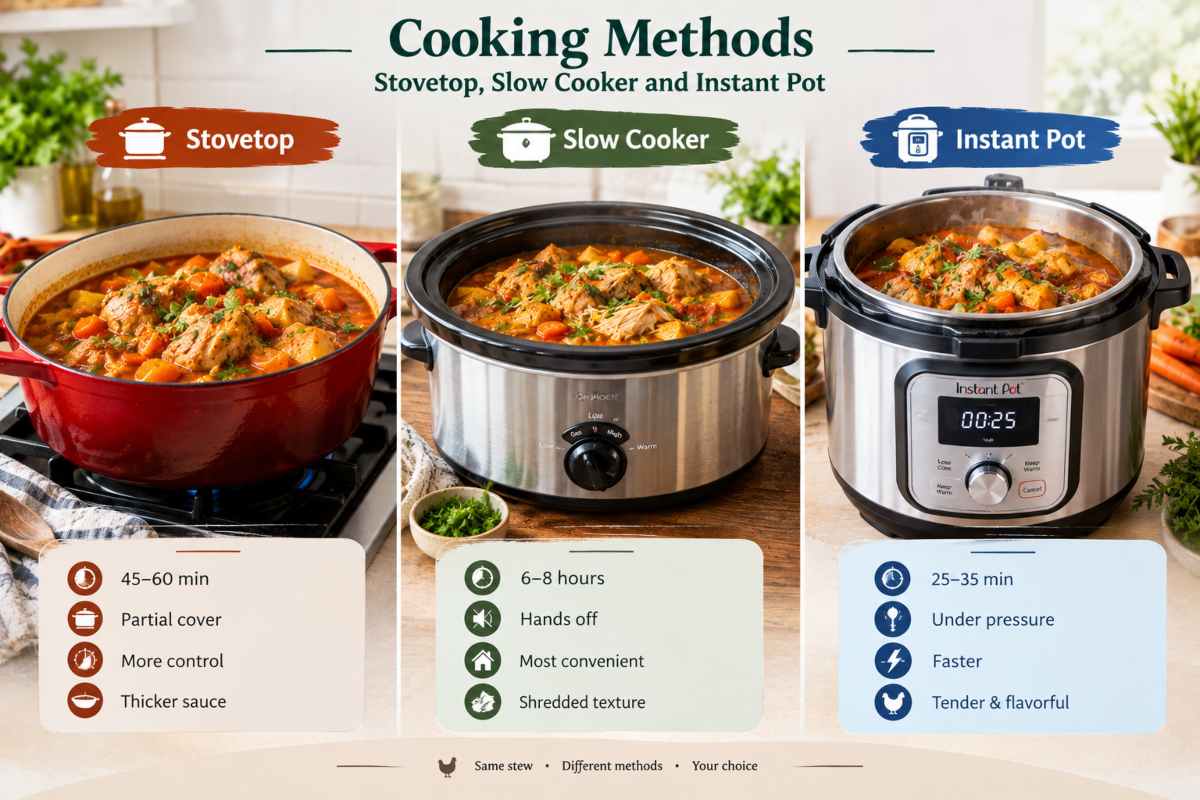
On the stovetop, chicken stew simmers uncovered or partially covered for 45 minutes to an hour, letting the liquid reduce naturally while you adjust seasoning and check doneness as you go, which makes it the better choice when you want a thicker, more concentrated sauce. A slow cooker trades that control for convenience, cooking the same stew over 6 to 8 hours on low so the chicken turns fall apart tender with almost no hands on effort, which explains why the appliance has held onto such a large share of American kitchens.
NPD Group research has found that roughly 83 percent of U.S. households own one. An Instant Pot or other electric pressure cooker compresses that same low and slow result into 25 to 35 minutes under pressure, making it the fastest route to tender chicken and a fully developed sauce without babysitting a pot. None of the three methods changes what makes a dish a stew rather than a curry, since that distinction comes from the seasoning, not the appliance, but the method you pick does shape the final texture, stovetop and Instant Pot versions tend to hold their shape better, while slow cooker chicken often shreds on its own by the time it’s done.
Which One Should You Make Tonight?
The simplest way to decide between chicken stew and chicken curry tonight is to think about what you’re craving, a milder, vegetable forward comfort meal points to stew, while a bolder, spice driven sauce points to curry. Stew tends to be the better call on busy weeknights, since it comes together with pantry staples like onion, garlic and carrots and doesn’t require a specific spice blend to taste finished.
It is also the lighter option nutritionally in most home versions, since the sauce typically stays broth based rather than relying on the added oil and cream some curry styles use to carry their spice base, a single serving of a vegetable and chicken stew generally runs lean on fat while still delivering a solid dose of protein from the chicken itself. If you are leaning toward stew, our full Chicken Stew Nutrition Facts breakdown covers calories, protein and macros per serving so you know exactly what you are serving.
Curry is worth reaching for instead when you want more warmth and complexity in the sauce or when you already have curry powder or a spice paste on hand and do not feel like building flavor from scratch. Either way, the choice mostly comes down to how much spice you want driving the dish, not which one is inherently the “better” meal.
Conclusion
The real difference between chicken stew and chicken curry comes down to the sauce, not the technique, stew builds flavor slowly from broth and aromatics, while curry gets its bold, layered taste from a defined spice blend. Both dishes rely on the same low and slow braising method, which is why regional versions from Kenyan kuku stew to Indian and Japanese curry all deliver tender, fall apart chicken despite tasting so different. If the coconut milk and warming spices used across the continent caught your interest, our African Cuisine collection has more dishes built on that same base.
Frequently Asked Questions (FAQs)
Is chicken stew the same as chicken curry?
No. Chicken stew gets its flavor from broth, aromatics and time, while chicken curry relies on a defined spice blend like curry powder or garam masala. Both use the same slow braising technique, but the seasoning is what actually separates them.
Is chicken curry healthier than chicken stew?
It depends on the recipe rather than the dish type, since some curries add cream or extra oil while most stews stay broth based. Check our Chicken Stew Nutrition Facts for the exact calorie and macro breakdown.
Can I make this in a slow cooker or Instant Pot?
Yes. Chicken stew works well in either appliance, a slow cooker takes 6 to 8 hours on low, while an Instant Pot delivers the same tenderness in about 25 to 35 minutes under pressure.
What makes Kenyan chicken stew different from West African stew?
Kenyan chicken stew leans on tomatoes and coconut milk for a lighter, brighter sauce, while West African versions build a thicker, deeply red base from blended tomatoes, peppers and often peanut butter.
What is the difference between chicken stew and chicken soup?
Stew is cooked down until the sauce thickens enough to coat the chicken, while soup keeps a much higher ratio of broth to solids and stays thin and pourable.