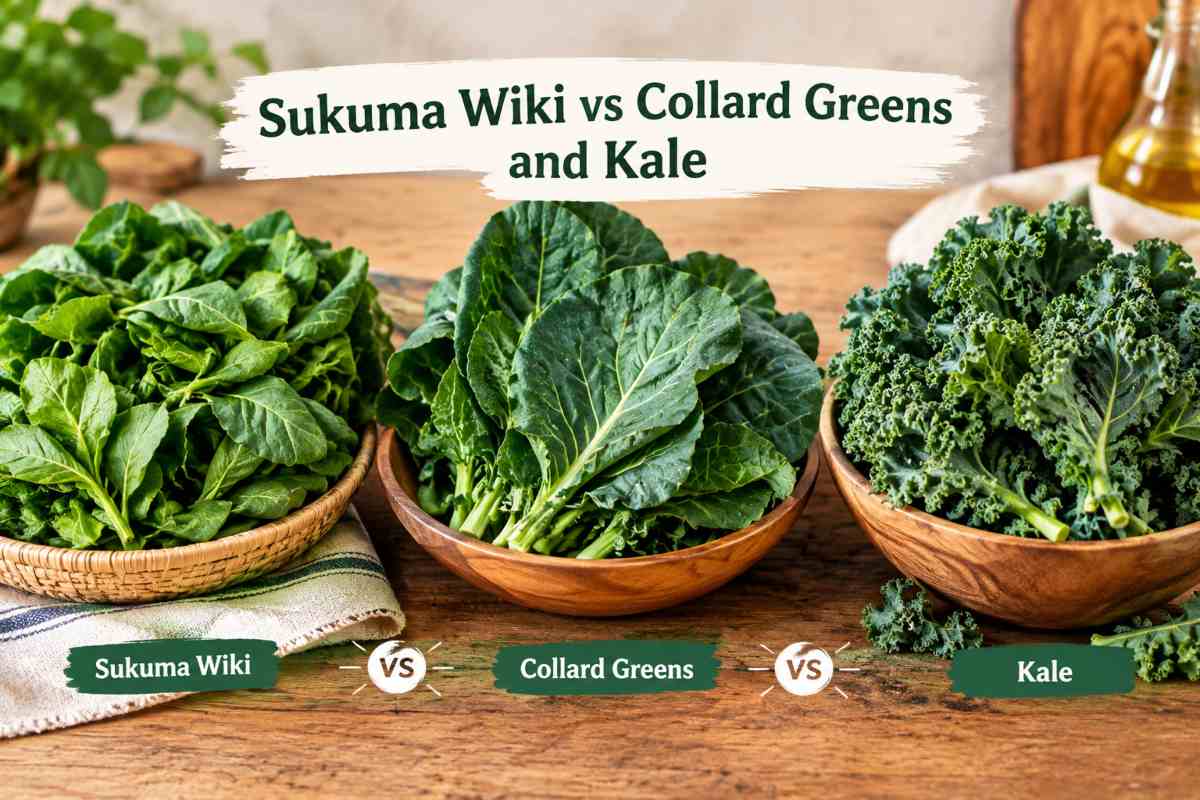
Sukuma wiki vs collard greens comes down to this, they are the same species, but different cultivars. Sukuma wiki has thinner, more tender leaves that cook in minutes, while American collard greens are tougher and typically simmered low and slow for an hour or more. Kale enters the comparison because all three belong to the same Brassica oleracea family, which is why shoppers outside East Africa often reach for kale as a stand in without knowing whether it actually behaves the same way in a pot.
The confusion is understandable. Sukuma wiki is the Swahili name for what much of the world calls collard greens and the phrase itself translates to “push the week” or “stretch the week,” a nod to how cheap and long lasting the vegetable is in East African kitchens. But swap in a bunch of thick stemmed Southern style collards or curly kale without adjusting the method and the texture and cook time will be noticeably off.
This guide breaks down exactly where sukuma wiki, collard greens and kale diverge, in taste, leaf structure, nutrition and how each one cooks, plus which substitute actually works when the real thing is not available. Once you know the difference, it is easy to put sukuma wiki to work beyond the basic sauté, this Goat Sukuma Wiki Vegetable Stew is a good example of how the tender leaves hold up in a heartier, slow simmered dish.
What Is Sukuma Wiki?
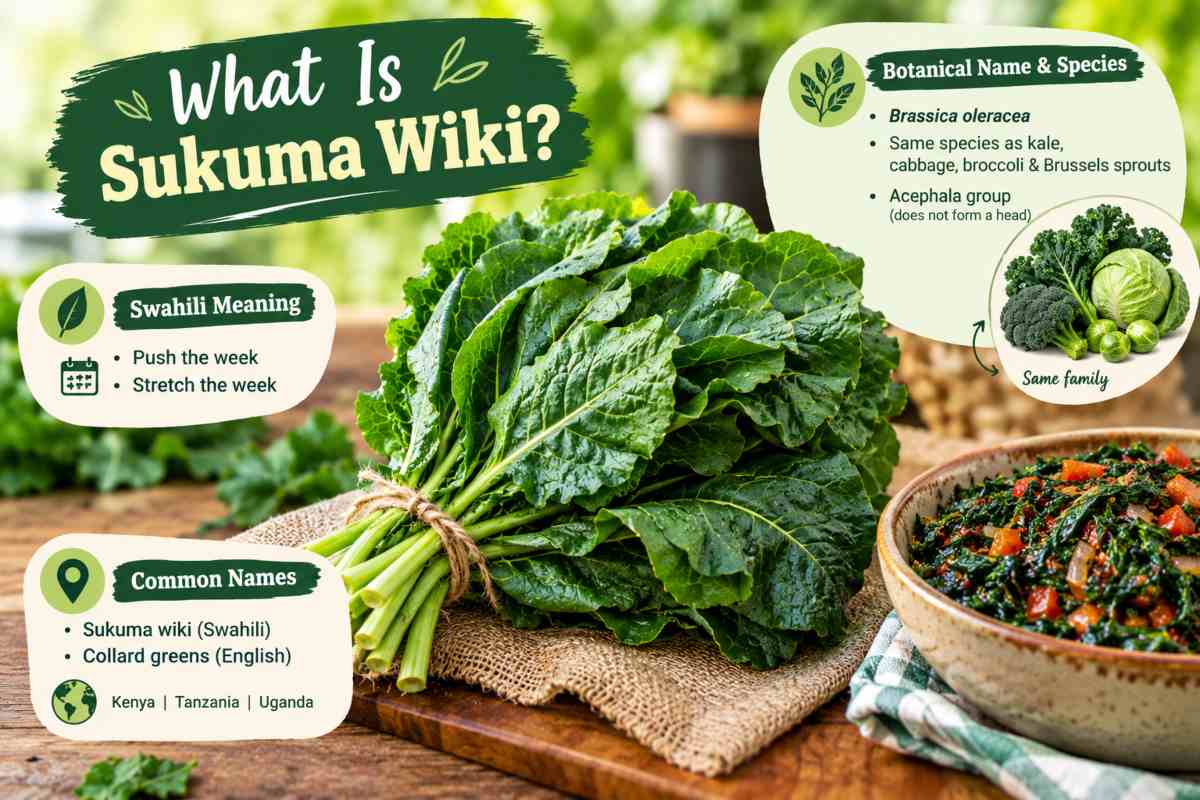
Sukuma wiki is the Swahili name for collard greens, a leafy vegetable in the same species as kale and cabbage that is cooked as a staple side dish across Kenya, Tanzania and Uganda. In English, it is simply called collard greens, though the East African variety tends to be more tender and quicker cooking than the collards commonly sold in the United States.
Sukuma Wiki Meaning in Swahili
The name “sukuma wiki” translates literally to “push the week” or “stretch the week.” It earned that name because the vegetable is cheap, available year round and filling enough to make a small amount of meat or a modest meal last through the week, a practical staple in households managing a tight food budget rather than just a descriptive food name.
Sukuma Wiki Botanical Name and Species
Botanically, sukuma wiki belongs to Brassica oleracea, the same species that includes kale, cabbage, broccoli and Brussels sprouts. Within that species, it falls under the acephala group, meaning it does not form a head, the same classification collard greens share, which is why the two are treated as one vegetable under different regional names rather than as separate crops.
Sukuma Wiki vs Collard Greens What is the Difference?
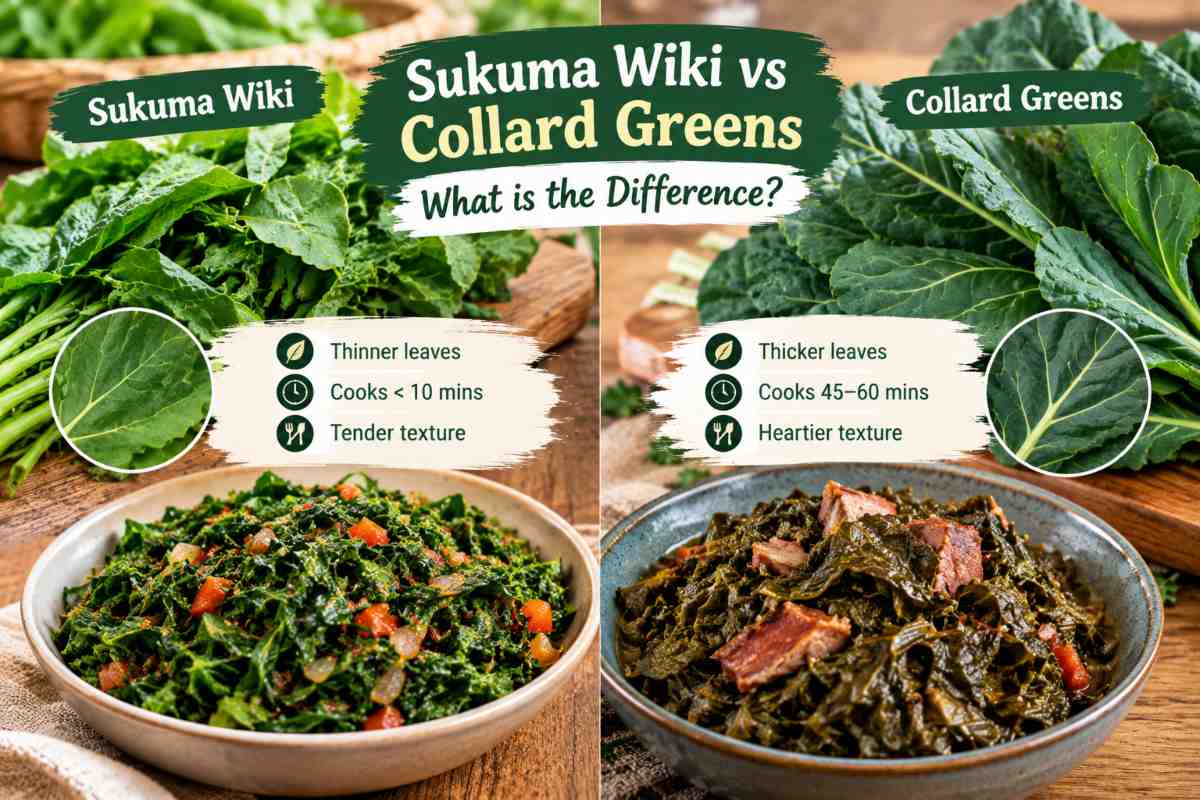
Sukuma wiki and collard greens are the same plant, the difference is in the cultivar and how each is traditionally cooked, not the vegetable itself. East African sukuma wiki is typically a thinner leafed, faster growing variety, while the collard greens found in most American grocery stores are a heartier cultivar bred for larger, thicker leaves that hold up to long cooking.
Sukuma Wiki vs American Collard Greens Texture and Cook Time
The texture gap is the clearest difference between the two. Sukuma wiki leaves are noticeably more tender and less fibrous, which means they wilt down and cook through in under 10 minutes of sautéing. American collard greens, by contrast, have a tougher leaf structure that usually needs 45 minutes to an hour of slow simmering, often with smoked meat or ham hocks, to break down to a similar tenderness. Using the American cook time on sukuma wiki will overcook it into mush, while the quick sukuma wiki method won’t fully soften tougher American collards.
Sukuma Wiki vs Collard Greens Taste
Both greens share the same mildly bitter, earthy base flavor typical of the Brassica family, but sukuma wiki shorter cook time preserves more of a fresh, slightly grassy taste alongside that bitterness. American collard greens, simmered longer and often with smoked pork, develop a deeper, smokier, more savory flavor that masks more of the raw bitterness. Neither is more “authentic”, the taste difference is really a byproduct of preparation style rather than the plant itself.
Sukuma wiki fast cooking, tender texture is also what makes it work so well mashed into dishes rather than just sautéed on its own, Kenyan Mukimo is a good example of how it is folded into potatoes, corn and beans rather than served as a standalone side.
Is Sukuma Wiki the Same as Kale?
No, sukuma wiki is not kale, even though the two are closely related and often confused. Both belong to the Brassica oleracea species, but they are different cultivars with distinct leaf shapes, textures and growing habits and swapping one for the other changes the final dish more than most recipes let on.
Sukuma Wiki vs Tuscan Kale (Lacinato)
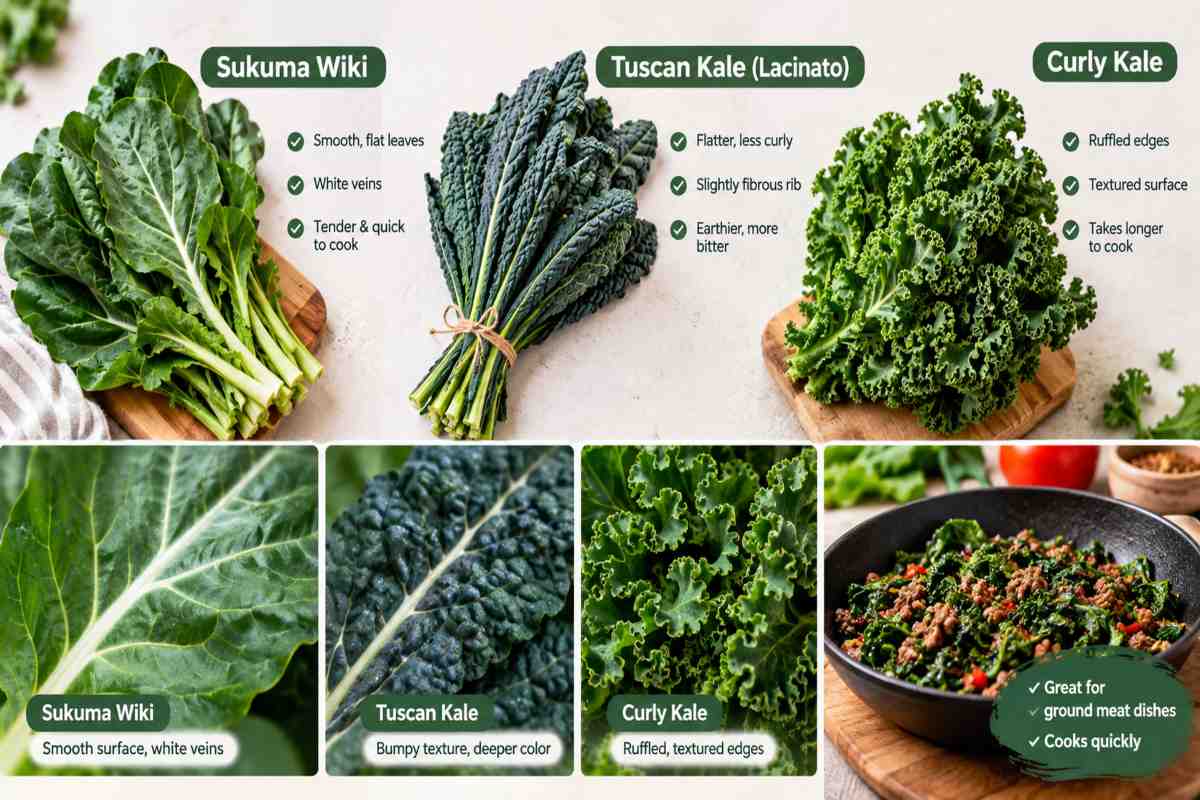
Tuscan kale, also called lacinato or dinosaur kale, is the closest kale variety to sukuma wiki in texture, which is why it is the most common substitute when sukuma wiki is not available. Both have relatively flat, less curly leaves that cook down faster than curly kale varieties.
Still, Tuscan kale has a slightly more fibrous rib and a deeper, earthier bitterness than sukuma wiki milder, more tender leaf, close enough to work as a stand in, but not an exact match in a side by side taste test.
Leaf Texture Comparison
The clearest way to tell sukuma wiki apart from kale on sight is the leaf surface. Curly kale has tightly ruffled, textured edges, while sukuma wiki leaves are smooth and flat with prominent white veins running through them, closer in appearance to a soft cabbage leaf than to kale crinkled texture. That smoother leaf is also part of why sukuma wiki wilts and softens so much faster once it hits a hot pan.
That tender, quick cooking leaf is exactly what makes sukuma wiki such a natural match for ground meat dishes, it is the same greens and protein combination used in this Kenyan Ground Beef Bake, where the greens cook down alongside the beef rather than needing a separate long simmer.
Kale vs Collard Greens vs Sukuma Wiki Comparison Table
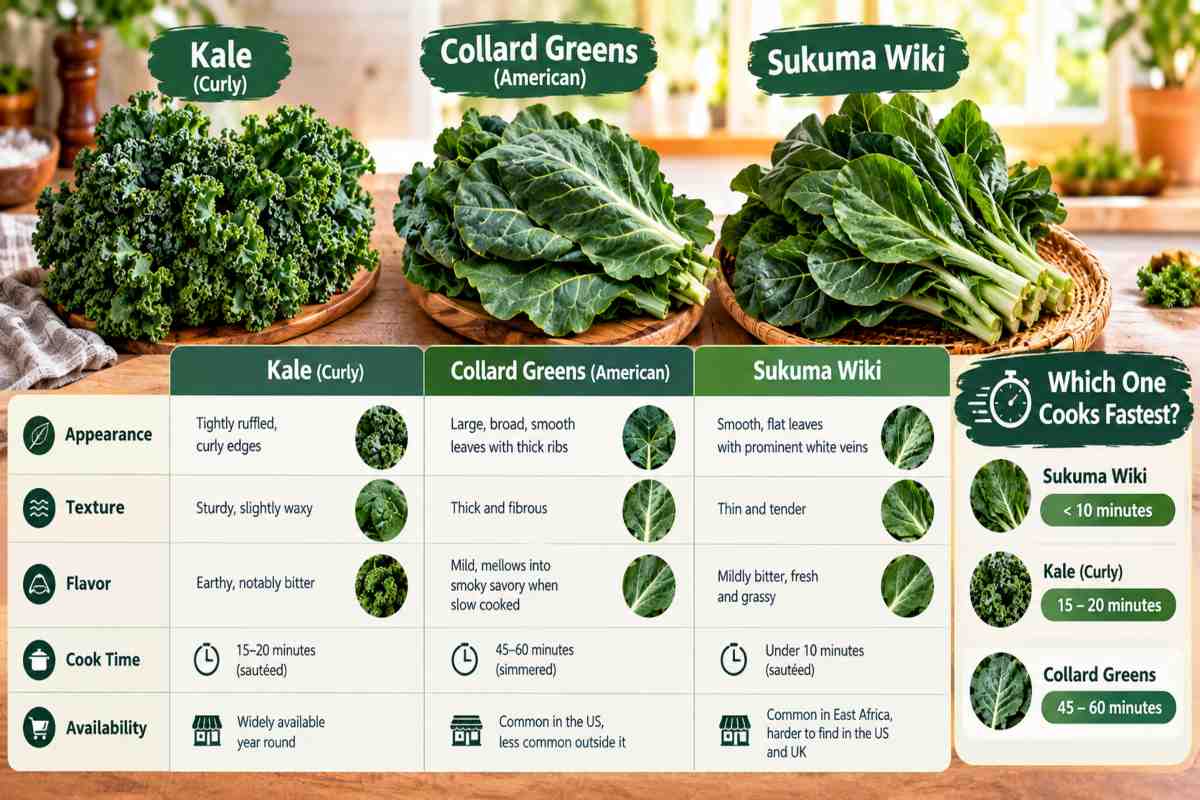
Side by side, kale, collard greens and sukuma wiki share the same species but differ enough in leaf structure and cook time that they are not interchangeable without adjusting the recipe. The table below breaks down the key differences at a glance.
| Kale (Curly) | Collard Greens (American) | Sukuma Wiki | |
| Appearance | Tightly ruffled, curly edges | Large, broad, smooth leaves with thick ribs | Smooth, flat leaves with prominent white veins |
| Texture | Sturdy, slightly waxy | Thick and fibrous | Thin and tender |
| Flavor | Earthy, notably bitter | Mild, mellows into smoky savory when slow cooked | Mildly bitter, fresh and grassy |
| Cook Time | 15–20 minutes sautéed | 45–60 minutes simmered | Under 10 minutes sautéed |
| Availability | Widely available year round in most grocery stores | Common in the US, less common outside it | Common in East Africa, harder to find in the US and UK |
Which One Cooks Fastest?
Sukuma wiki cooks the fastest of the three, softening in well under 10 minutes thanks to its thin, tender leaf structure. Curly kale takes roughly 15 to 20 minutes to break down when sautéed and American collard greens are the slowest by a wide margin, typically needing 45 minutes to an hour of simmering to reach a comparable tenderness. That gap is the main reason a recipe written for one green rarely translates directly to another without changing the cook time.
Sukuma Wiki vs Collard Greens and Kale Nutrition Compared
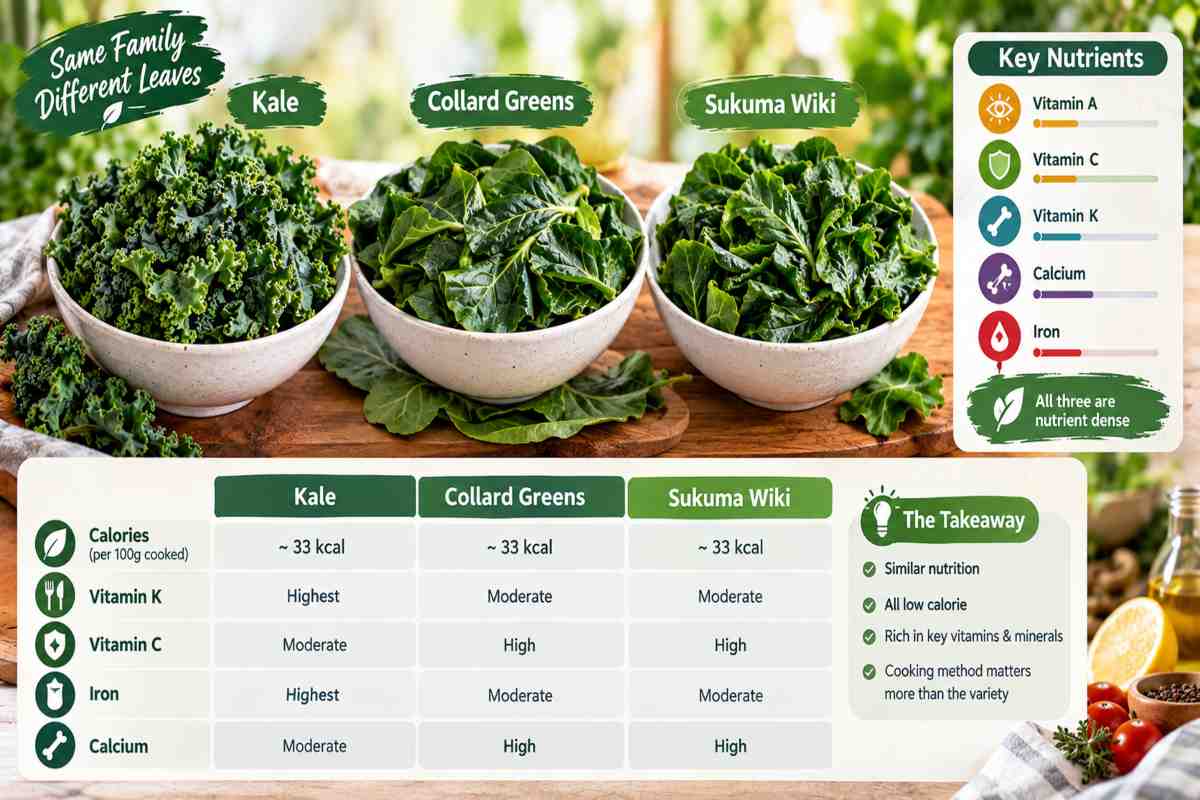
Nutritionally, sukuma wiki, collard greens and kale are close enough that none stands out as dramatically healthier, all three are low calorie, nutrient dense leafy greens from the same plant family, with only modest differences in specific vitamins and minerals. A 100 gram serving of cooked collard greens (the same plant as sukuma wiki) provides around 33 calories, making it one of the lightest ways to add volume and nutrients to a meal.
Is Sukuma Wiki Healthier Than Kale?
Sukuma wiki is not meaningfully healthier than kale, the two are nutritionally comparable, with any edge depending more on how each is cooked than on the raw vegetable itself. Kale is often cited as slightly higher in vitamin K and antioxidants when eaten raw, but since sukuma wiki is almost always cooked briefly rather than eaten raw, it retains more of its vitamin C and folate than kale does after kale typically longer sauté. In practice, the healthier choice comes down to preparation, not the plant.
Vitamin and Mineral Comparison
All three greens are strong sources of vitamin A, vitamin C, vitamin K and calcium, though the balance shifts slightly by variety. Collard greens and sukuma wiki tend to run higher in calcium and vitamin A, while kale generally has a higher concentration of vitamin K and iron per serving. None of these differences are large enough to make one green a clear nutritional winner over the others, the bigger factor is how much of the vegetable ends up on the plate and how it is cooked.
For a closer look at exactly how sukuma wiki numbers break down, including how they shift once beef, chicken or other proteins are added, see Sukuma Wiki Calories.
Best Substitutes for Sukuma Wiki
When sukuma wiki is not available, Tuscan kale and Swiss chard are the closest substitutes, since both mimic its tender texture and cook in a similar amount of time. The right choice depends mostly on what is sitting in the produce aisle and how much bitterness you are willing to trade for availability.
Can I Substitute Kale for Sukuma Wiki?
Yes, kale works as a substitute for sukuma wiki, but Tuscan (lacinato) kale is a far better match than curly kale. Tuscan kale flatter leaf and shorter cook time come closest to replicating sukuma wiki texture, while curly kale tougher, ruffled leaves need a longer sauté and bring a stronger bitterness that can throw off the balance of a recipe built around sukuma wiki milder flavor.
Swiss Chard as a Sukuma Wiki Substitute
Swiss chard is another reliable stand in, particularly for its tender leaf and quick cook time, which line up closely with sukuma wiki. The main adjustment is the stem, chard stems are thicker and take longer to soften than the leaf, so they are best chopped finely or removed before cooking. The leaf itself wilts down in a similar few minutes and carries a comparable mild, slightly earthy flavor once cooked.
Where to Find Sukuma Wiki Substitutes in the UK and US
Sukuma wiki itself is rarely sold outside East African or specialty African grocers in the UK and US, which is why Tuscan kale and Swiss chard have become the go to replacements, both are widely stocked in mainstream supermarkets year round. Curly kale is the most universally available option of the three if neither Tuscan kale nor chard is on hand, though it is the substitute that needs the most adjustment to cook time and seasoning to come close to the original.
However you land on your greens, they pair naturally with a spoonful of Pilipili ya Kukaanga on the side for the heat that plain sukuma wiki does not bring on its own.
Conclusion
Sukuma wiki, collard greens and kale all trace back to the same species, but the differences that matter, leaf texture, cook time and how bitter or mellow the final dish tastes, come down to which cultivar is in the pan and how it is prepared. Sukuma wiki thin, tender leaves and under 10 minute cook time set it apart from both the slow simmered American collard and the sturdier, more bitter kale varieties, even though a nutrition label would not show much difference between the three.
Knowing this makes substituting far less risky, reach for Tuscan kale or Swiss chard when sukuma wiki is not available, adjust the cook time down from what a collard greens recipe calls for and the results will land close to the real thing. For more Kenyan and East African recipes built around sukuma wiki and other everyday staples, Devine Dishes has the full collection.
Frequently Asked Questions (FAQs)
Is sukuma wiki the same as collard greens?
Yes, sukuma wiki is the Swahili name for collard greens, both come from the same plant. The main difference is that East African sukuma wiki is typically a more tender cultivar that cooks faster than the thicker American collard variety.
What is the English name for sukuma wiki?
The English name for sukuma wiki is collard greens. It belongs to Brassica oleracea, the same species as kale and cabbage.
Can I use kale instead of sukuma wiki?
Yes, especially Tuscan lacinato kale, which has a similar flat leaf and quick cook time. Curly kale also works but needs a longer sauté and brings a stronger bitterness.
Is sukuma wiki healthier than kale?
Not meaningfully, both are nutritionally comparable, low calorie leafy greens. Any advantage usually comes down to cooking method rather than the vegetable itself.