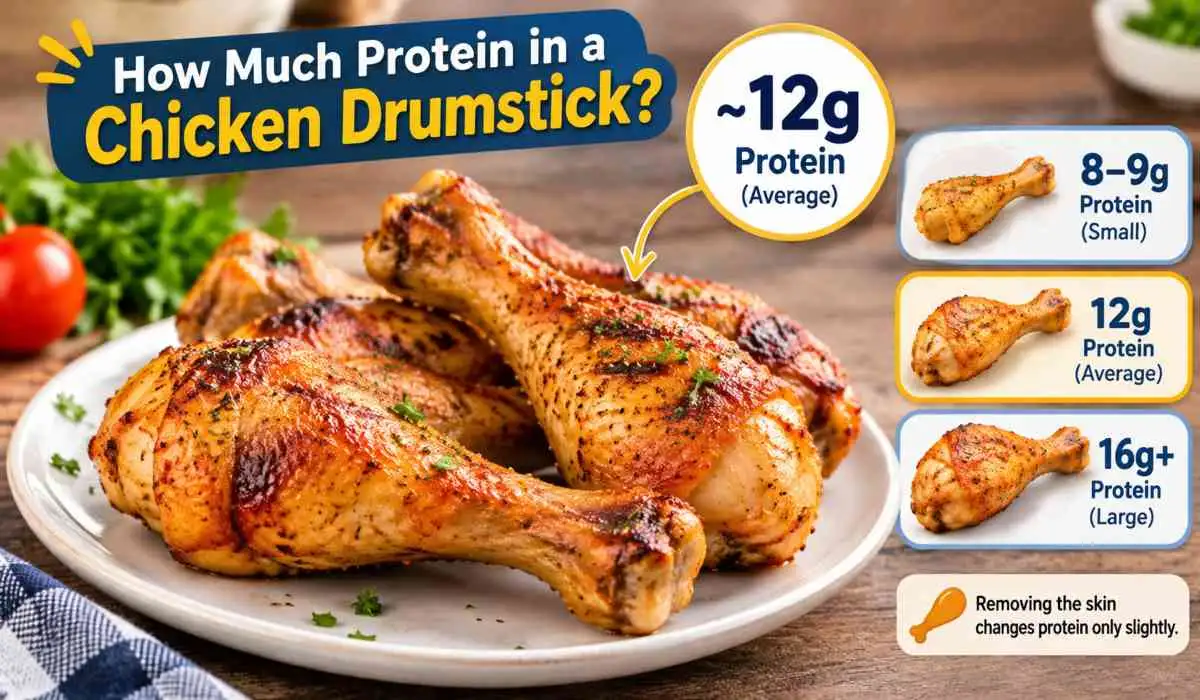
How much protein in a chicken drumstick? One average cooked chicken drumstick with skin has about 12 grams of protein. Size and skin shift the number, a small drumstick provides roughly 8 to 9 grams, while a large one can reach 16 grams or more, and removing the skin changes protein only slightly.
A single cooked drumstick delivers around 12 grams of protein, which is about a quarter of what many adults aim for at one meal. That figure moves up or down depending on how big the drumstick is, since a small one and a large one can differ by almost double. Cooking method and skin change the calories far more than they change the protein.
The reason the number holds fairly steady is that protein is concentrated in the meat itself. According to USDA FoodData Central, roasted drumstick meat with skin comes to roughly 27 grams of protein per 100 grams. Once you know the edible weight of your drumstick, you can estimate its protein in seconds. Cooking drives off water, which is why a cooked drumstick shows more protein per gram than a raw one, even though the total protein in the piece barely changes.
This guide breaks the numbers down by size, skin and cooking method, so you can find the figure that matches the drumstick on your plate. If you want a flavorful way to cook them, these chicken drumsticks in a red tomato sauce are an easy weeknight option and the protein estimates below apply to any plain cooked drumstick.
Protein in One Chicken Drumstick at a Glance
Average protein in a single cooked drumstick
A single cooked chicken drumstick with skin provides about 12 grams of protein, based on the edible meat and skin once the bone is removed. That is roughly 24 percent of a 50 gram protein target, so one drumstick covers a meaningful share of a meal. USDA FoodData Central lists roasted drumstick meat with skin at around 27 grams of protein per 100 grams and a typical drumstick yields only about 45 to 50 grams of edible meat. Two drumsticks therefore land near 24 grams and three come close to 36.
Protein and calories together (quick macro snapshot)
An average cooked drumstick with skin contains about 12 grams of protein and roughly 100 to 120 calories, with most of the remaining energy coming from fat. Without the skin, calories drop to around 80 to 90 while protein stays nearly the same, which makes skinless drumsticks the leaner choice per gram of protein. Carbohydrates are essentially zero in a plainly cooked drumstick. Breading, glazes and cooking oil add calories and carbohydrates on top of these figures, so a sauced or coated drumstick will not match this snapshot.
Why the number varies
Protein per drumstick changes mainly with the weight of the edible meat, because chicken meat has a fairly consistent protein concentration by weight. A small drumstick may yield under 40 grams of meat, while a large one can exceed 70 and the protein scales with it. Bone in weight can mislead, since the bone makes up a notable share of what you weigh on a scale. Cooking method has a smaller effect, heat removes water, so cooked meat shows more protein per gram than raw, but the total protein in the piece stays about the same.
Protein by Drumstick Size
Small drumstick
A small cooked chicken drumstick with skin provides about 8 to 9 grams of protein. Small drumsticks usually yield only 30 to 35 grams of edible meat once the bone is removed and at roughly 27 grams of protein per 100 grams of roasted meat with skin (USDA FoodData Central), that works out to a modest amount per piece. They suit kids’ portions, party platters and meals where you plan to serve several drumsticks per person.
Medium drumstick
A medium cooked drumstick with skin provides about 12 to 13 grams of protein, its the figure most nutrition labels and tracking apps treat as typical. A medium drumstick yields around 45 to 50 grams of edible meat, so two of them deliver close to 25 grams and three reach nearly 38. If a recipe or package simply says “drumstick” without a size, this is the safest estimate to use.
Large drumstick
A large cooked drumstick with skin provides about 16 to 19 grams of protein. Large drumsticks can yield 60 to 70 grams of edible meat, which puts a single piece close to what you would get from two small ones. They are common in family packs and from larger birds, so checking the weight of what you buy matters more than counting the pieces.
Raw vs cooked weight
Protein is best calculated from cooked, bone free weight, because raw weight includes water and bone that change the math. Raw drumstick meat with skin holds roughly 17g to 18g of protein per 100 grams, while the same meat after roasting holds around 27 grams, since cooking drives off water and concentrates what remains. The total protein in the drumstick does not change in the oven or pan, only the weight does. If you log food by raw weight, use a raw entry. If you weigh after cooking, use a cooked entry and never mix the two.
Chicken Drumstick Protein With Skin vs Without Skin
With skin protein and calories
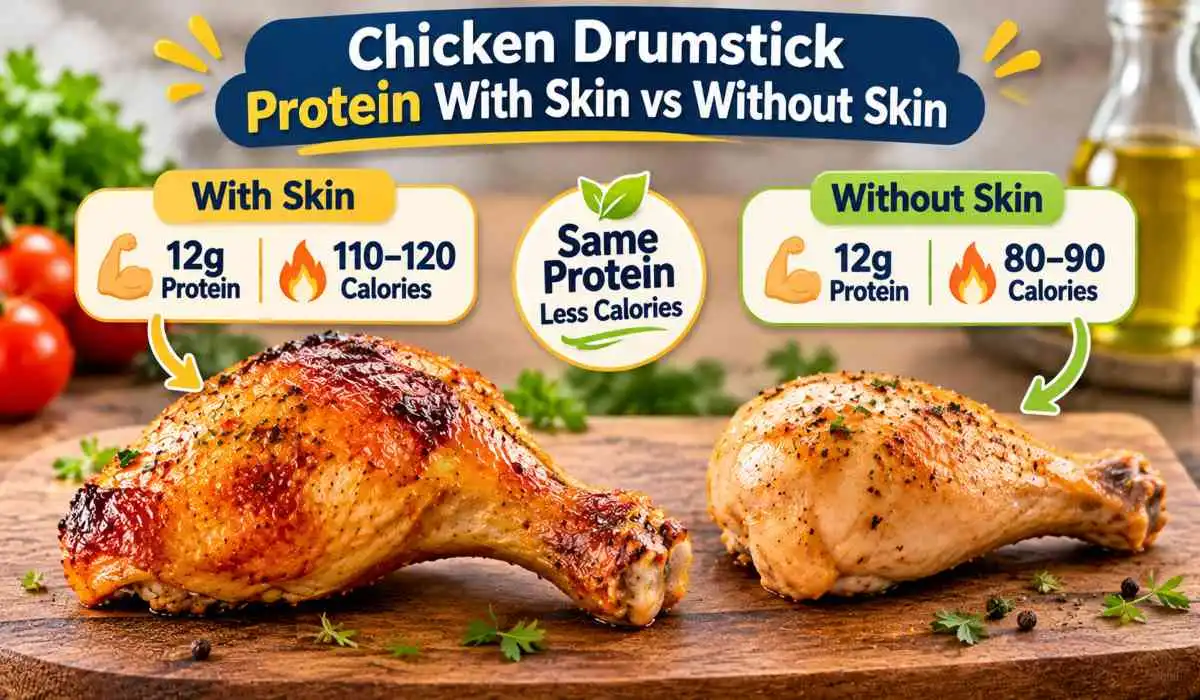
A medium cooked chicken drumstick with skin provides about 12 grams of protein and roughly 110 to 120 calories. The skin adds only a small amount of protein but a large share of the fat, which is why calories climb while the protein figure barely moves. USDA FoodData Central lists roasted drumstick meat with skin at around 27 grams of protein and 170 to 190 calories per 100 grams, so a typical drumstick with about 45 to 50 grams of edible meat and skin lands close to those numbers. This is the version most people eat when drumsticks are baked, grilled or fried.
Without skin protein and calories
A medium cooked drumstick without skin provides about 12 grams of protein and roughly 80 to 90 calories. Skinless drumstick meat is slightly higher in protein per gram, at about 28 grams per 100 grams, because the skin that was removed carried mostly fat rather than protein. Total protein per piece stays close to the with skin figure, though a skinless drumstick weighs a little less after the skin comes off. Carbohydrates remain essentially zero when the drumstick is cooked plain.
Is removing the skin worth it?
Removing the skin is worth it if you are trying to lower calories and saturated fat while keeping your protein intake the same. A skinless drumstick saves roughly 25 to 35 calories per piece and the savings add up across several drumsticks in one meal. The trade off is flavor and moisture, since the skin protects the meat during cooking and carries much of the taste. A practical approach is to cook the drumsticks with the skin on, then remove it before eating, which keeps the meat juicy while still cutting the fat. If calories are not a concern for you, leaving the skin on costs you nothing in protein and is a perfectly reasonable choice.
Protein by Cooking Method
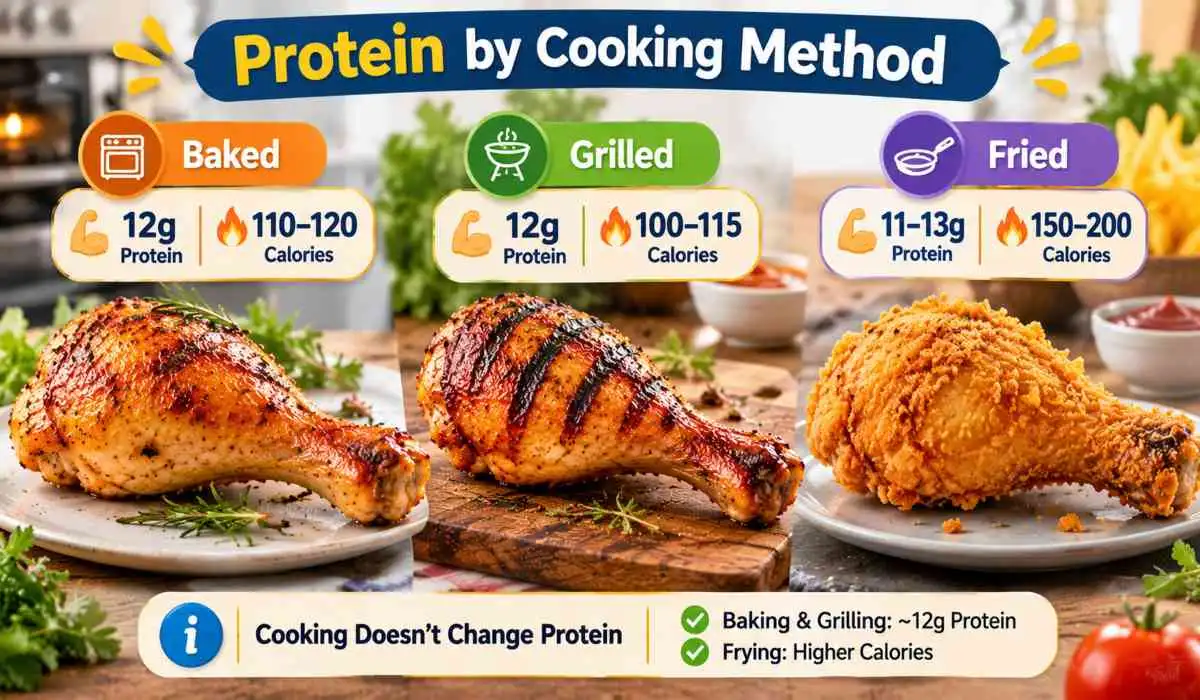
Baked chicken drumstick
A baked chicken drumstick provides about 12 grams of protein for a medium piece, the same as the baseline figure for any plainly cooked drumstick. Baking uses dry oven heat and little or no added fat, so the numbers stay close to the USDA FoodData Central values for roasted drumstick mea, around 27 grams of protein per 100 grams of meat and skin. Calories sit near 110 to 120 per drumstick with skin and the skin crisps as its fat renders into the pan. If you bake with a marinade or sauce, the protein stays the same, but sugar based glazes add carbohydrates and calories.
Grilled chicken drumstick
A grilled chicken drumstick provides about 12 grams of protein for a medium piece, essentially identical to a baked one. Grilling lets some fat drip away from the skin, so calories may land slightly lower, often around 100 to 115 per drumstick, though the difference depends on how long it cooks and how much skin remains. Charring and heavy barbecue sauce change flavor and sugar content, not protein. Weighing the meat after grilling and using a cooked entry in your tracker gives the most accurate result.
Fried chicken drumstick (breading and oil effects)
A fried chicken drumstick provides about 11 to 13 grams of protein for a medium piece, but the calories rise sharply compared with baked or grilled. Breading and absorbed frying oil can push a single drumstick to roughly 150 to 200 calories, with extra carbohydrates from the coating.
The coating adds a little protein from flour, yet it also adds weight, so protein per gram of the finished piece drops. If you are counting protein per serving, the chicken meat is what matters and the breading mostly adds calories. Restaurant and fast food drumsticks vary widely in size and coating, so a label or the restaurant’s published nutrition data is more reliable than a general estimate.
Does cooking change the protein itself?
Cooking does not meaningfully change the amount of protein in a drumstick, but it does change how the protein is measured. Heat denatures the protein, meaning its structure unfolds, which makes it easier to digest without destroying it.
What changes is water content, roasted meat holds around 27 grams of protein per 100 grams compared with roughly 17 to 18 grams for raw, because water cooks off and the same protein sits in less weight. Overcooking dries the meat and can make it tougher, but the total protein in the piece stays about the same. For accurate tracking, match your food entry to the state you weigh in, raw or cooked and keep it consistent.
Chicken Drumstick Protein and Calories by Size
A medium cooked chicken drumstick has about 12 to 13 grams of protein whether it is baked or grilled and size changes the number far more than skin or cooking method. The table below shows protein, calories and edible weight (meat and skin, bone removed) for each combination, so you can find the row that matches your drumstick.
| Size |
Skin |
Cooking method |
Edible weight |
Protein |
Calories |
| Small |
With skin |
Baked or grilled |
30-35 g |
8-9 g |
65-75 |
| Medium |
With skin |
Baked or grilled |
45-50 g |
12-13 g |
100-110 |
| Large |
With skin |
Baked or grilled |
60-70 g |
16-19 g |
130-150 |
| Small |
Without skin |
Baked or grilled |
26-30 g |
7-8 g |
45-50 |
| Medium |
Without skin |
Baked or grilled |
40-45 g |
11-12 g |
70-75 |
| Large |
Without skin |
Baked or grilled |
55-62 g |
15-17 g |
95-105 |
| Small |
With breading |
Fried |
40-50 g |
9-10 g |
110-140 |
| Medium |
With breading |
Fried |
60-75 g |
11-13 g |
150-200 |
| Large |
With breading |
Fried |
80-95 g |
16-18 g |
200-260 |
How to read the table
Protein follows edible weight closely, because roasted drumstick meat holds roughly 27 to 28 grams of protein per 100 grams according to USDA FoodData Central. That is why the baked and grilled rows share one set of protein figures. Grilling can trim calories by around 5 to 10 percent as fat drips away, but protein is unchanged.
Skin has the largest effect on calories rather than protein. Removing it saves roughly 25 to 35 calories on a medium drumstick while giving up about a gram of protein or less. Fried drumsticks are the exception. Breading and absorbed oil add weight and calories without adding much protein, so the fried rows show higher calories for similar protein. Fast food and restaurant drumsticks vary widely, so use the published nutrition data for those.
Drumstick vs Thigh vs Whole Leg
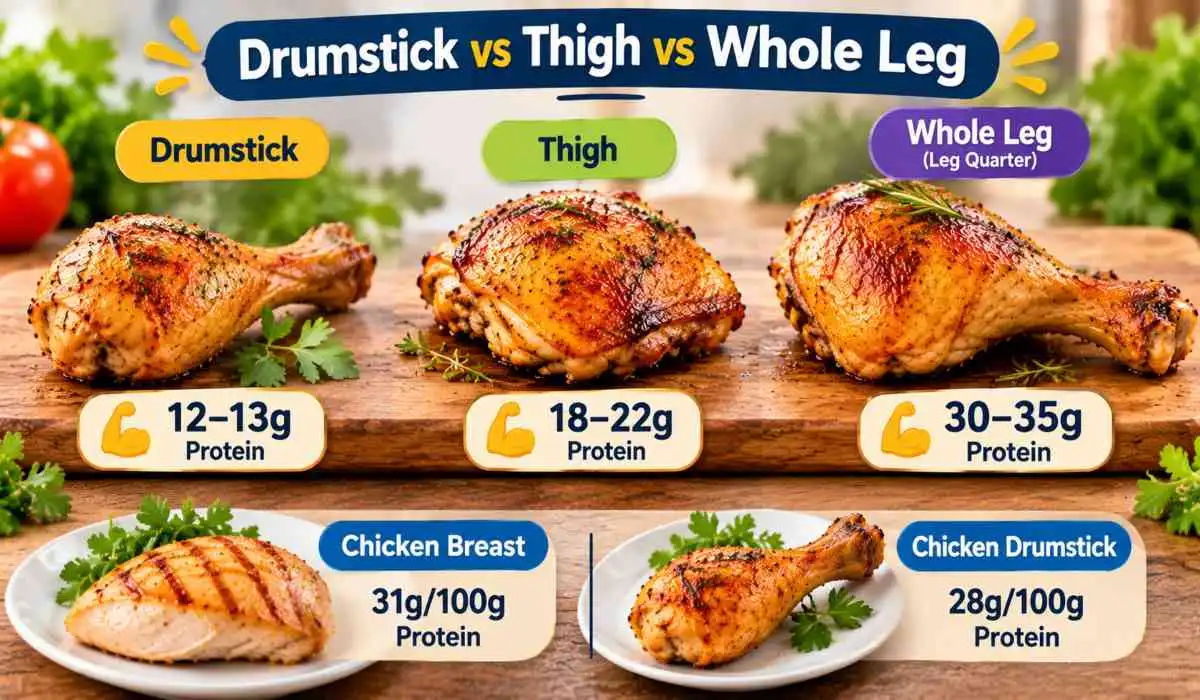
Protein in a chicken thigh and drumstick together
A cooked chicken thigh and drumstick together provide about 30 to 35 grams of protein when both are eaten with skin and the bones are removed. A medium drumstick contributes roughly 12 to 13 grams and a medium thigh adds about 18 to 22 grams, because a thigh yields more edible meat, often 70 to 80 grams against the drumstick’s 45 to 50. Protein per 100 grams is similar for the two cuts, at around 25 to 27 grams for roasted meat with skin according to USDA FoodData Central, so the thigh wins on total protein simply by being larger.
Protein in a chicken leg (drumstick and thigh)
A whole chicken leg, which is the drumstick and thigh still attached, provides about 30 to 35 grams of protein once cooked and deboned, the same total as eating the two pieces separately. Weighed with the bone, a whole leg often runs 150 to 200 grams raw, but only about 90 to 125 grams of that is edible meat and skin.
If a menu or package lists a “leg quarter,” it may also include part of the back, which adds a little extra weight, so the protein figure can run slightly higher. For calories, a whole cooked leg with skin typically lands between 250 and 300 and removing the skin trims that by roughly 60 to 80.
Drumstick vs breast how they compare
A cooked skinless chicken breast has more protein per gram than a drumstick, at about 31 grams per 100 grams compared with roughly 28 for skinless drumstick meat and it is also leaner. Because a typical breast is much larger, one half breast delivers around 40 to 50 grams of protein, which equals about three to four medium drumsticks. For a full breakdown of the numbers, see this guide on protein in chicken breast.
Drumsticks make up for this with more flavor, more moisture and a lower price per pound in most stores. If your priority is the most protein for the fewest calories, breast is the stronger choice and if you want juicier meat with a still solid protein count, drumsticks are a reasonable trade.
How Many Drumsticks Do You Need for a Protein Goal?
Per meal examples
Three to four medium cooked drumsticks give you about 36 to 50 grams of protein, which is enough to meet a typical high protein meal target of 30 to 40 grams. Each medium drumstick supplies roughly 12 to 13 grams, so the math is simple, divide your meal’s protein goal by 12 and round up.
Two drumsticks land near 25 grams, a light meal or a snack sized portion. Three reach about 38 grams, which fits most adult meal targets on their own. Four approach 50 grams, which suits larger appetites or heavy training days. Small drumsticks, at 8 to 9 grams each, take five or six pieces to match three medium ones and large drumsticks at 16 to 19 grams need only two to reach 32 to 38 grams.
Fitting drumsticks into a high protein diet
Drumsticks fit into a high protein diet well and many adults aiming for 100 to 150 grams of protein a day can cover roughly a third of that with one drumstick based meal. The Recommended Dietary Allowance for protein is 0.8 grams per kilogram of body weight, which performs out to about 56 grams a day for a 70 kilogram adult, so even two or three drumsticks deliver a large share of the baseline need.
People who train hard or want to build muscle often aim higher, commonly 1.2 to 2 grams per kilogram and drumsticks can anchor those meals alongside eggs, dairy, beans or fish to spread protein across the day. Calories are the main thing to manage. Three medium skin on drumsticks come to roughly 300 to 330 calories, while skinless ones are closer to 210 to 225, so removing the skin is an easy lever if you are cutting. Pair drumsticks with vegetables, rice or potatoes for a complete plate and keep breading and sugary glazes in check, since they raise calories without adding protein.
Is Chicken Drumstick a Good Protein Source?
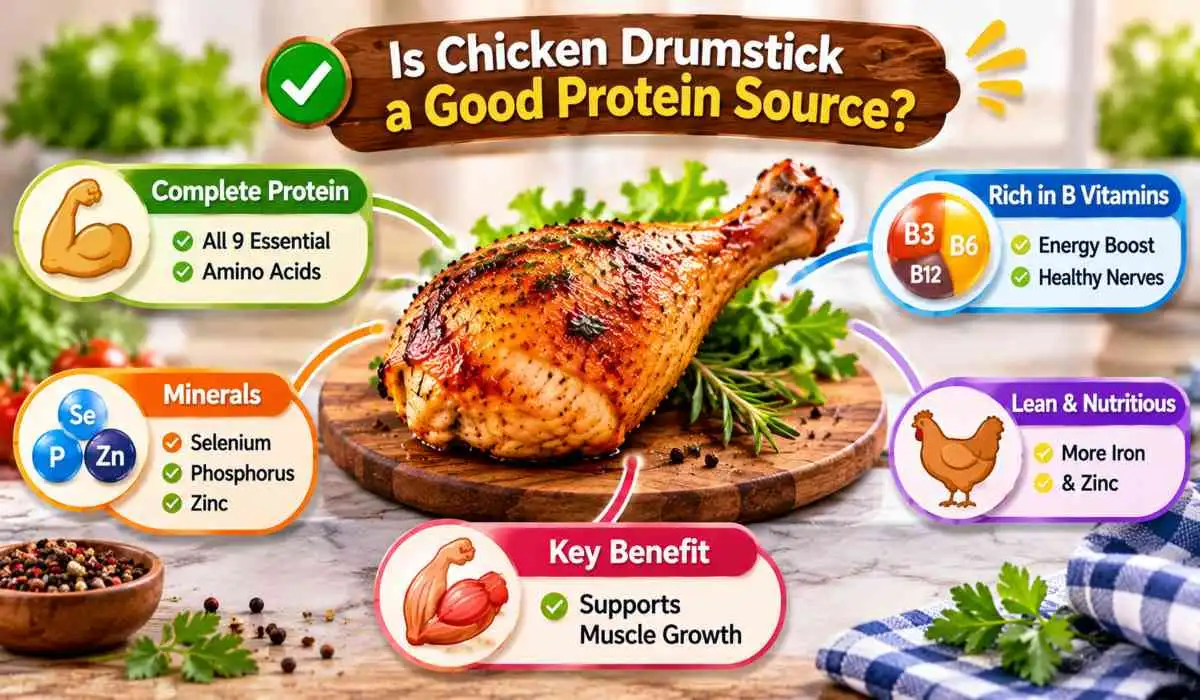
Protein quality and amino acids
Yes, chicken drumstick is a high quality protein source, because it delivers all the nine essential amino acids in the proportions the body needs. Proteins with this profile are called complete proteins and animal proteins like chicken score near the top on digestibility measures such as PDCAAS and DIAAS, which rate how well the body can absorb and use the amino acids a food provides.
Chicken meat also contains a generous amount of leucine, the amino acid most closely linked to triggering muscle protein synthesis. A medium drumstick at about 12 to 13 grams of protein is a modest portion on its own, but three of them provide roughly 36 to 38 grams of complete protein, enough to support muscle repair and maintenance in a single meal.
Nutrients beyond protein
Beyond protein, chicken drumsticks supply several B vitamins, minerals and a small amount of healthy fat. They are a useful source of niacin (vitamin B3) and vitamin B6, both involved in turning food into energy, along with vitamin B12, which supports nerve activity and the production of red blood cells. On the mineral side, drumstick meat provides selenium, phosphorus and zinc.
Dark meat generally contains more iron and zinc than chicken breast, which is one nutritional advantage drumsticks hold over the leaner cut. The main trade off is fat, a skin on drumstick contains more saturated fat than a skinless one, so removing the skin or choosing baked and grilled preparations keeps the nutrient profile closer to lean. Sodium also deserves a glance if you buy pre seasoned, brined or breaded drumsticks, since processing can raise it well above what plain chicken contains.
Tips for Getting the Most Protein From Drumsticks
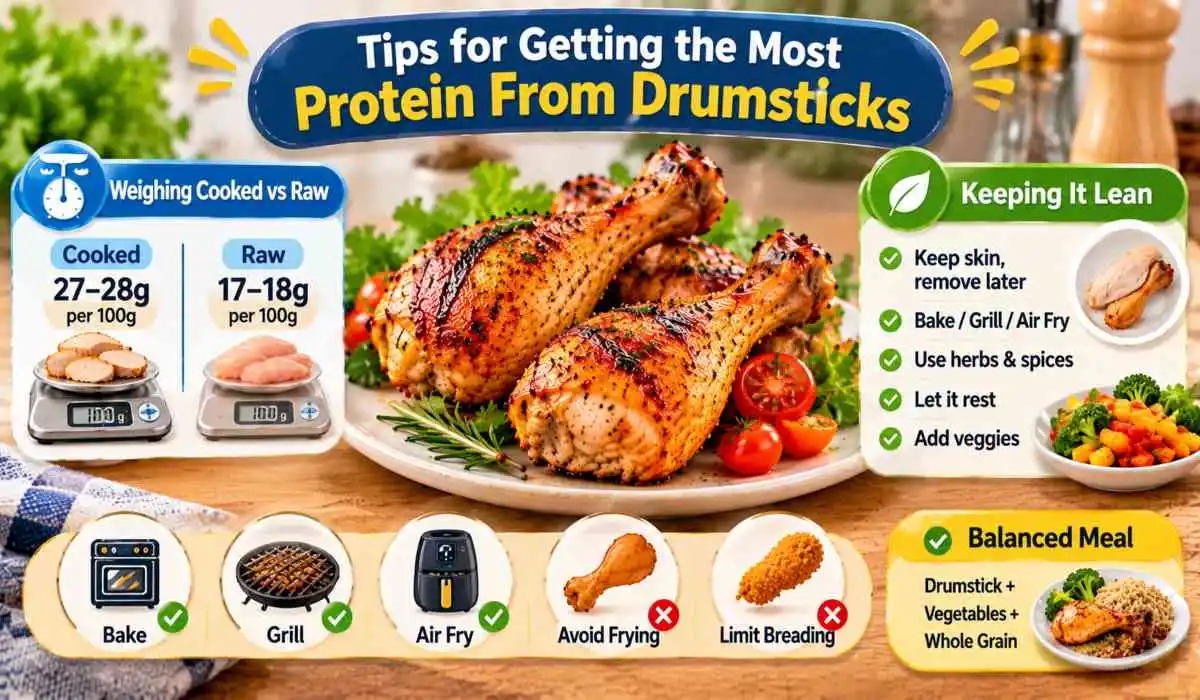
Weighing cooked vs raw
The most accurate way to track drumstick protein is to weigh the edible meat after cooking, with the bone removed and log it against a cooked entry. Roasted drumstick meat holds roughly 27 to 28 grams of protein per 100 grams (USDA FoodData Central), so 100 grams of deboned cooked meat is a reliable benchmark. Weighing a drumstick with the bone still in overstates the edible portion, because bone can account for around a quarter to a third of the piece.
If you prefer to weigh before cooking, use a raw entry and subtract the bone weight, since raw meat holds closer to 17 to 18 grams of protein per 100 grams. Pick one method and stay with it, because mixing raw and cooked entries is the most common reason drumstick protein counts come out wrong.
Keeping it lean
To keep drumsticks lean without losing protein, cook them with the skin on and remove it before eating. The skin shields the meat from drying out in the oven or on the grill and taking it off afterward trims about 25 to 35 calories per medium drumstick while giving up less than a gram of protein.
Baking, grilling and air frying let fat render away, while deep frying and heavy breading add calories without adding meaningful protein. Season with herbs, spices, citrus or a light marinade instead of sugary glazes and let the drumsticks rest for a few minutes after cooking so they stay juicy. Pairing them with vegetables or a whole grain turns a modest 12 to 13 grams per drumstick into a balanced, filling plate.
Frequently Asked Questions (FAQs)
How much protein is in a drumstick of chicken?
A medium cooked drumstick of chicken has about 12 to 13 grams of protein, counting the edible meat and skin with the bone removed. The number scales with size, a small drumstick provides roughly 8 to 9 grams and a large one 16 to 19 grams. USDA FoodData Central lists roasted drumstick meat at around 27g of protein per 100 grams, which is the benchmark behind these estimates.
Does a drumstick with skin have more protein?
A drumstick with skin has about the same protein as one without and sometimes a gram or so more in total because the skin adds a little weight. Per 100 grams, skinless meat is actually slightly higher in protein, at about 28 grams versus 27, since skin is mostly fat. The real difference is calories, a medium drumstick with skin has roughly 100 to 110, while a skinless one has about 70 to 75.
How much protein is in a fried drumstick?
A fried drumstick provides about 11 to 13 grams of protein for a medium piece, similar to baked or grilled, but with far more calories. Breading and frying oil push a single drumstick to roughly 150 to 200 calories and add carbohydrates, while contributing little extra protein. Restaurant and fast food drumsticks vary widely in size and coating, so the published nutrition information for that product is more reliable than a general figure.
Is a chicken wing “drumstick” the same thing?
No. A drumstick is the lower part of the chicken leg, while the wing’s meaty section is called a drumette and holds less protein, roughly 5 to 7 grams per piece.
How many drumsticks equal one chicken breast in protein?
About three to four medium drumsticks equal the protein in one cooked half chicken breast. A skinless half breast provides roughly 40 to 50 grams of protein, while each medium drumstick supplies 12 to 13 grams. Breast has more amount of protein per gram and fewer calories and drumsticks offer juicier meat at a lower price per pound, so the better choice depends on whether you prioritize leanness or flavor.