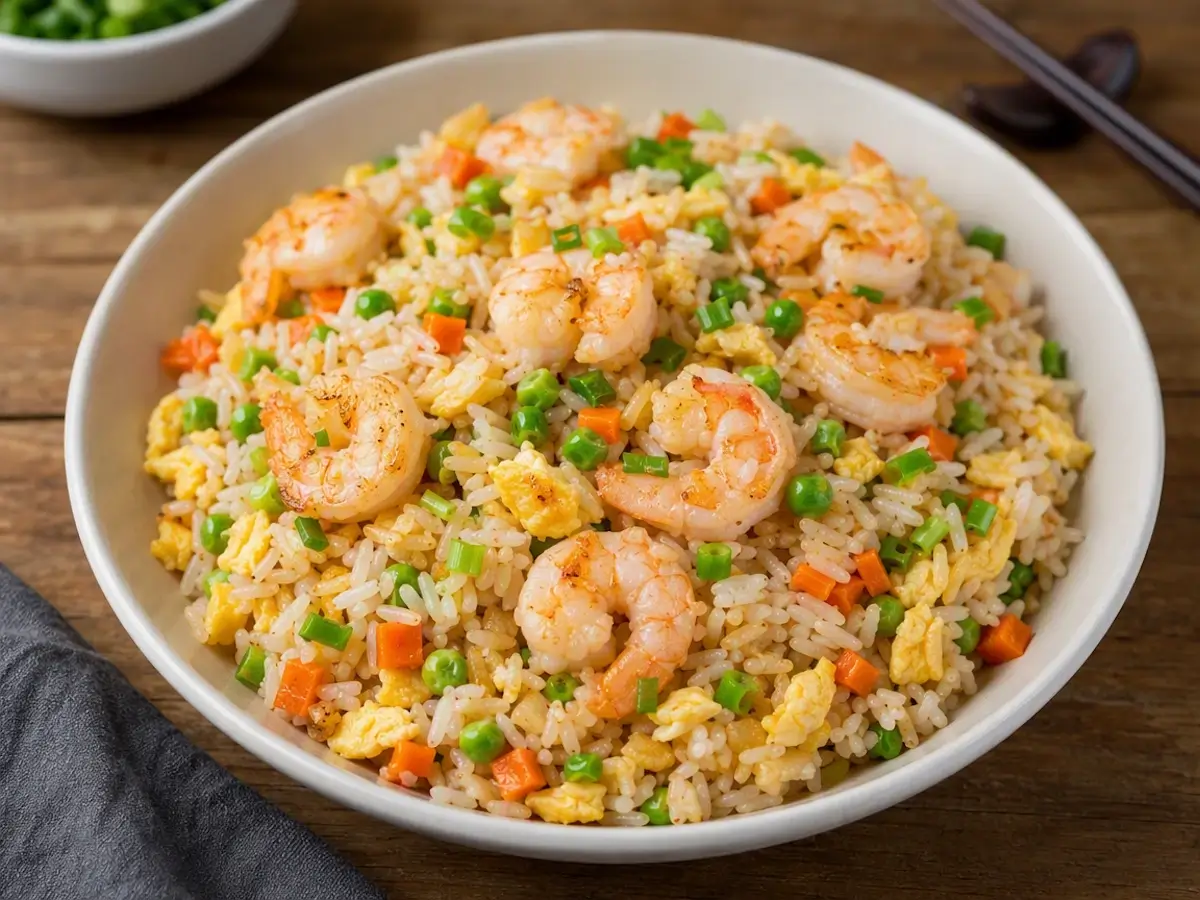
How many calories are in shrimp fried rice? One cup of homemade shrimp fried rice has about 300–350 calories, with roughly 12–15 g of protein, 42 g of carbs and 10 g of fat. A two-cup portion is about 600–700 calories. Restaurant versions usually run 100–200 calories higher per serving than homemade.
Shrimp fried rice earns its place as a weeknight favorite because it is fast, protein rich and easy to portion, shrimp, day old rice, egg, a little oil and soy sauce is all it really takes. But “healthy-ish” takeout food is exactly where calorie counts get murky. A cup from your kitchen and a cup from a restaurant carton can differ by 100 to 200 calories, simply because of oil quantity and portion size. That gap is the reason so many people search for an exact number before they log it, order it or decide whether to make it lighter at home.
This guide breaks down shrimp fried rice calories by serving size, compares homemade to popular restaurant and takeout versions like PF Chang’s, Costco and Din Tai Fung and shows exactly how to lighten the dish without losing the flavor that makes it worth making in the first place. If you want the full step by step method for making it yourself, our shrimp fried rice recipe walks through the full method. Its recipe card lists nutrition per serving (¼ of the recipe), which can be larger than the 1 cup used in this guide, so the numbers below will differ.
What is the Caloric Content of Shrimp Fried Rice?
A 1 cup serving of shrimp fried rice contains approximately 320 calories, 14g of protein, 42g of carbohydrates, 10g of fat and 650 to 750 milligrams of sodium, based on USDA FoodData Central values for the main ingredients (cooked rice, shrimp, egg, oil and soy sauce) for typical homemade ingredients (cooked rice, shrimp, egg, oil and soy sauce) in a 1 cup serving. These figures can change depending on the amount of soy sauce, oil and shrimp that go into the recipe, but they hold as a reliable baseline for most homemade and restaurant style versions.
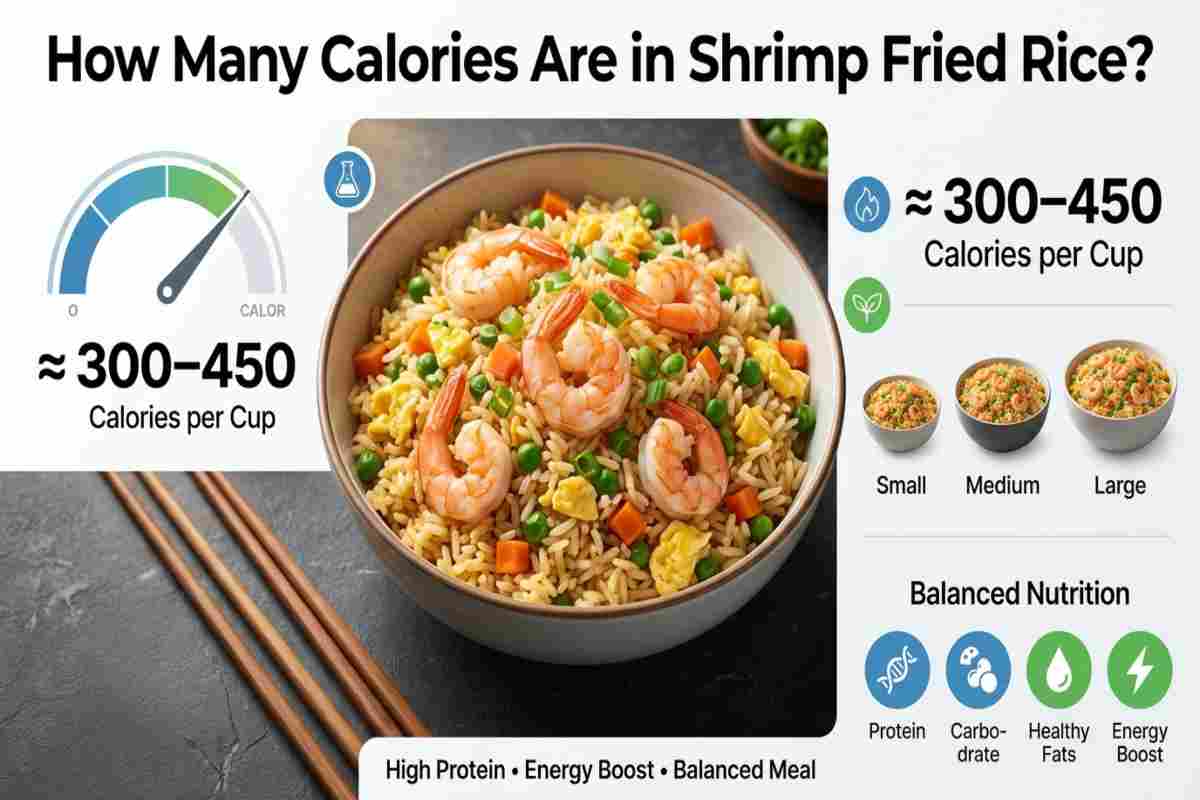
That calorie range holds steady across most home kitchens because shrimp itself is lean, contributing only about 85 calories per 3 ounce serving with almost no fat. The bulk of the calorie count actually comes from the rice and the oil used to fry it, not the shrimp, which is why portion control on rice and oil matters far more than trimming the shrimp if you’re watching intake.
For comparison, dishes that lean on rendered fat from sausage or bacon tend to run higher per serving. A dish like our cabbage sausage skillet, for example, gets more of its calories from the sausage itself, while shrimp fried rice keeps its protein source light and shifts the calorie load toward the rice and cooking oil instead. That distinction is useful context if you’re comparing quick one pan dinners and trying to figure out which one fits your calorie goals for the day.
Shrimp Fried Rice Calories by Serving Size
Shrimp fried rice calories scale directly with portion size, ranging from about 300 calories for a 1 cup serving to over 1,200 calories for a full quart. Since takeout containers rarely list nutrition info, matching your actual portion to the right calorie count is the most reliable way to track what you’re eating.
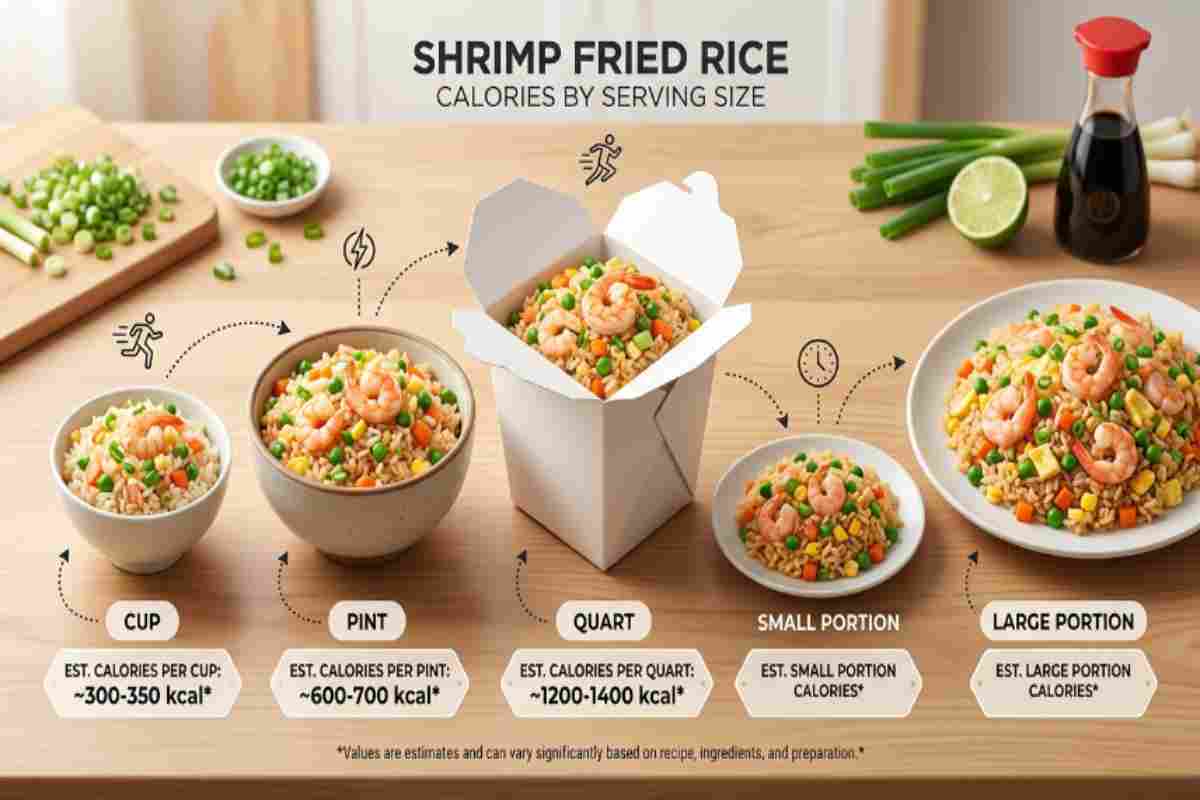
Restaurant and takeout orders are usually sold in pints and quarts rather than cups, which is where most people misjudge their intake. A pint holds 2 cups and a quart holds 4 cups, so a single quart container, often shared between two or three people, can easily hold more calories than a full dinner plate on its own.
Serving Size Approximate Calories
| Serving Size |
Approximate Calories |
| 1 cup |
300–350 |
| 1 pint (2 cups) |
600–700 |
| 1 quart (4 cups) |
1,200–1,400 |
| Small takeout portion (~1.5 cups) |
450–525 |
| Large takeout portion (~3 cups) |
900–1,050 |
The gap between a “small” and “large” takeout portion is often bigger than people expect, nearly double, since restaurants don’t standardize what counts as small or large the way packaged food does. If you’re ordering out and want a closer estimate, asking for a half portion or splitting a pint between two people keeps you closer to the 1 cup baseline most nutrition tracking apps default to.
Full Nutrition Breakdown
A 1 cup serving of shrimp fried rice contains approximately 320 calories, 14g of protein, 42g of carbohydrates, 10g of fat and 650 to 750 milligrams of sodium, based on USDA FoodData Central values for the main ingredients (cooked rice, shrimp, egg, oil and soy sauce) at the recipe’s proportions. These figures can change depending on the amount of soy sauce, oil and shrimp that go into the recipe, but they hold as a reliable baseline for most homemade and restaurant style versions.
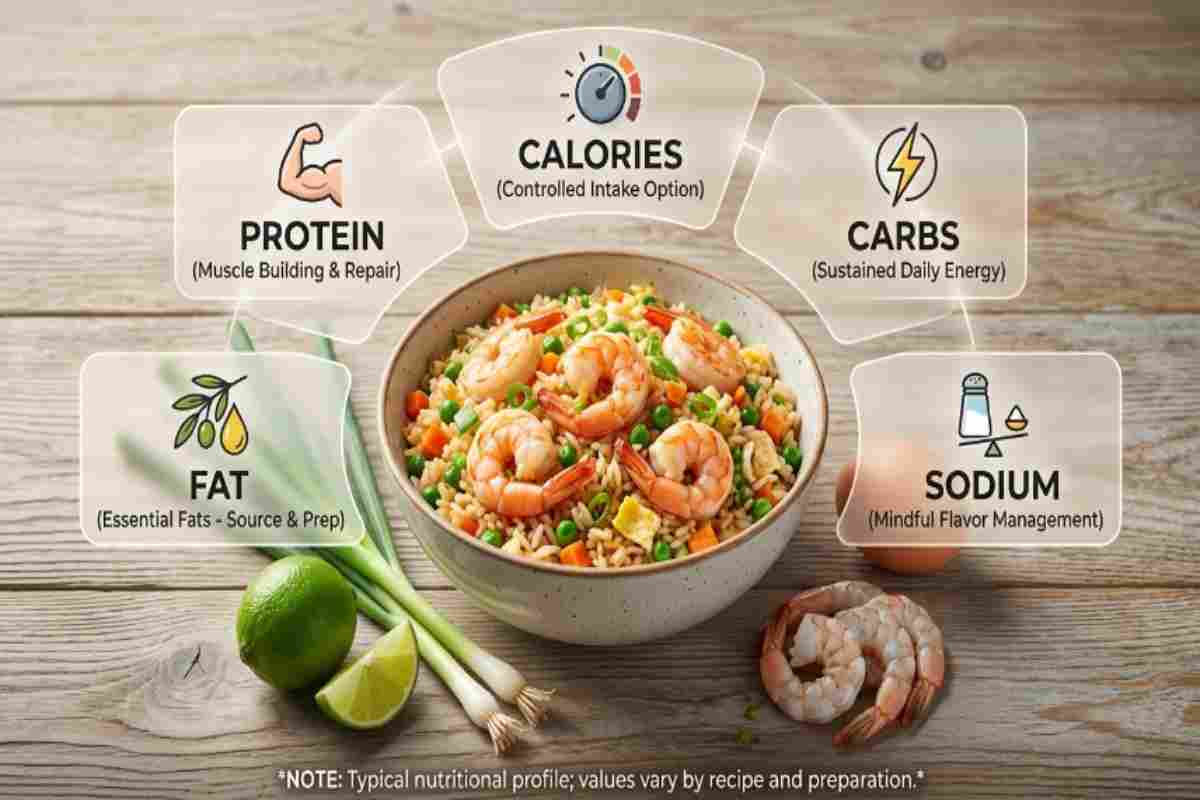
Protein in shrimp fried rice comes almost entirely from the shrimp and egg, making it a relatively lean source compared to dishes built around fattier proteins. For context, a serving of our baked turkey wings delivers a much higher protein count per serving with less overall fat than most fried rice dishes, since baking avoids the added oil that fried rice depends on for texture and flavor.
Sodium is where shrimp fried rice earns closer attention. Soy sauce is the primary driver and a single tablespoon carries close to 900 milligrams of sodium on its own, meaning even a light hand with the bottle can push a serving toward one-third of the suggested daily sodium consumption.
Carbohydrates come almost entirely from the rice itself, which is why using less rice or swapping in cauliflower rice is the most direct way to lower both the calorie and carb count without changing the flavor profile significantly.
Calories in Restaurant and Takeout Shrimp Fried Rice
Restaurant and takeout shrimp fried rice typically runs higher in calories than a homemade version, often by 100 to 200 calories per serving, mainly because restaurant kitchens use more oil and larger shrimp portions to boost flavor and perceived value. Here’s how four of the most searched brands compare.
PF Chang’s Shrimp Fried Rice Calories
PF Chang’s lists its Fried Rice with Shrimp entrée at 1,000 calories per full order, which is designed to serve two people, putting a single portion closer to 500 calories, with about 20 grams of fat and 154 grams of carbs for the full dish. That makes it one of the heavier restaurant versions on this list, largely due to the oil used to achieve the restaurant’s signature wok fried texture.
Costco Shrimp Fried Rice Calories
Costco’s frozen Hanwoomul Shrimp Fried Rice, sold in the freezer aisle, contains 490 calories per pouch, along with 8 grams of fat, 94 grams of carbohydrates and 1,080 milligrams of sodium. It’s worth noting this product is rice heavy and light on shrimp, so the calorie count leans almost entirely on the carbohydrate side rather than protein.
Din Tai Fung Shrimp Fried Rice Calories
Din Tai Fung’s shrimp fried rice is generally estimated at around 320 calories per cup, with about 12 grams of fat and 42 grams of carbs, though per-cup values vary by location. This dish is also notable for skipping soy sauce entirely, which keeps both the sodium and the calorie density lower than typical Chinese American fried rice styles.
Bibigo Shrimp Fried Rice Calories
Bibigo’s packaged shrimp fried rice, sold frozen in single serving bags, generally falls between 290 and 350 calories per bag depending on the specific product line, with roughly 8 grams of fat and 43 to 48 grams of carbohydrates. Its protein count runs lower than fresh restaurant versions, typically 10 to 16 grams per bag, since the shrimp content in packaged versions tends to be modest.
Per portion, these options range from about 290 calories (Bibigo) to roughly 500 calories (PF Chang’s single portion). Each is sold in a different portion size, so check the label or compare per cup before you log it.
Calories in Shrimp Fried Rice Variations
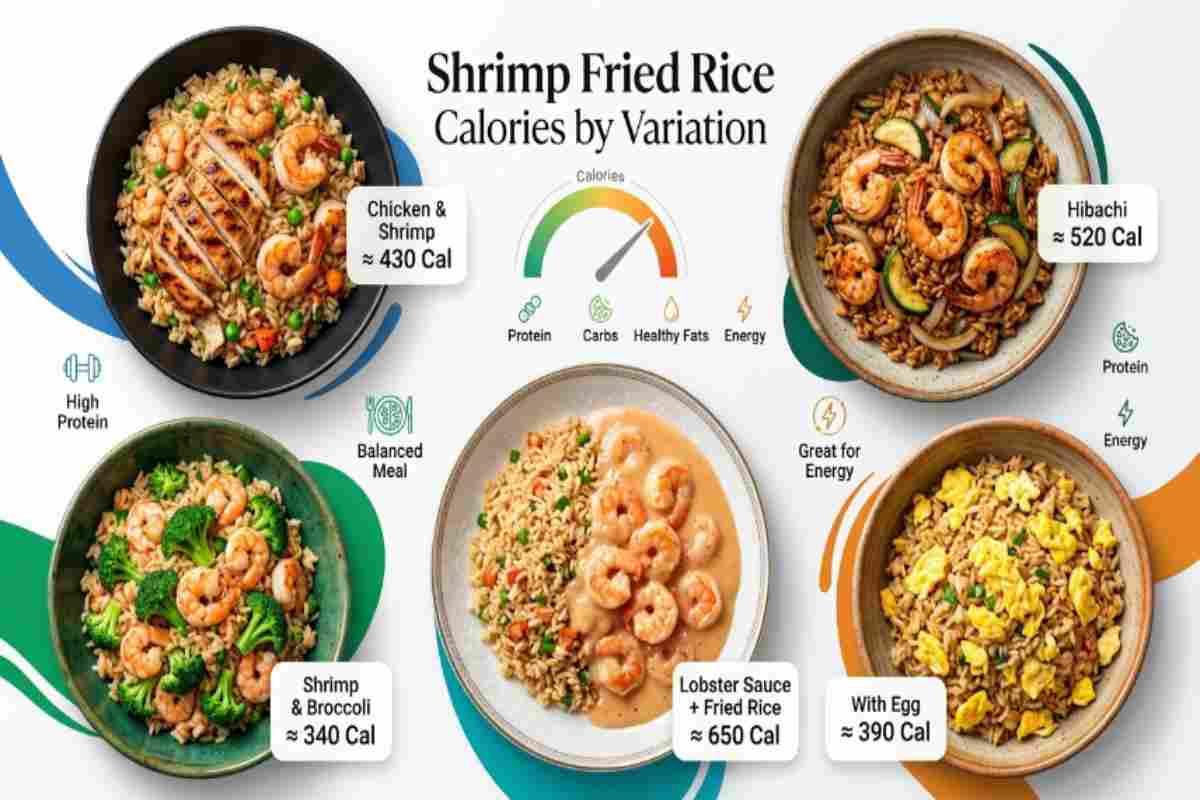
Adding a second protein, extra vegetables or a sauce to shrimp fried rice shifts the calorie count any where from 50 to over 200 calories per serving, depending on what’s added. Combo dishes tend to run higher simply because they carry more protein and fat per cup, while vegetable forward versions stay closer to the standard baseline.
Chicken and Shrimp Fried Rice Calories
A 1 cup serving of chicken and shrimp fried rice typically runs 380 to 420 calories, roughly 70 to 100 calories more than a shrimp only version, since the added chicken contributes extra protein and fat without changing the rice to oil ratio.
This combination is popular precisely because it stretches a smaller amount of shrimp further while keeping the dish filling enough for a full meal. If you’re looking for other fast combo protein meals in this same range, our quick and easy lunch recipes collection covers several similar 20 minute options.
Hibachi Shrimp Fried Rice Calories
Hibachi style shrimp fried rice generally lands between 400 and 450 calories per cup, higher than a standard homemade version because hibachi preparation relies on butter in addition to oil, along with a sweeter soy based glaze.
The butter is the main driver here, even a tablespoon adds roughly 100 calories, which is why restaurant hibachi rice consistently outpaces the home cooked baseline.
Shrimp and Broccoli Fried Rice Calories
Shrimp and broccoli fried rice is one of the lighter variations, typically 280 to 320 calories per cup, since broccoli adds volume and fiber without meaningfully increasing calories. Swapping in extra broccoli for a portion of the rice is a straightforward way to lower the carb count of a serving while keeping the portion size visually similar.
Shrimp Fried Rice with Egg Calories
Standard shrimp fried rice already includes egg in most recipes, but versions with an extra egg folded in run about 40 to 60 calories higher per serving, closer to 340 to 380 calories per cup. Egg adds protein and a small amount of fat without significantly affecting carbs, making it one of the more efficient additions if you’re trying to boost protein without changing the dish’s basic profile.
Shrimp with Lobster Sauce and Fried Rice Calories
Shrimp with lobster sauce served over fried rice is the heaviest variation on this list, often reaching 450 to 550 calories per serving, because the sauce itself is built on a corn starch thickened base with egg and often pork for depth of flavor.
The sauce contributes calories independently of the rice, so portioning the sauce separately is the most effective way to bring this dish back toward a lighter range. For a similarly saucy but lighter protein option, our red tomato chicken drumsticks offer a comparable flavor forward dish without the added starch from a thickened sauce.
How to Make Low Calorie Shrimp Fried Rice at Home
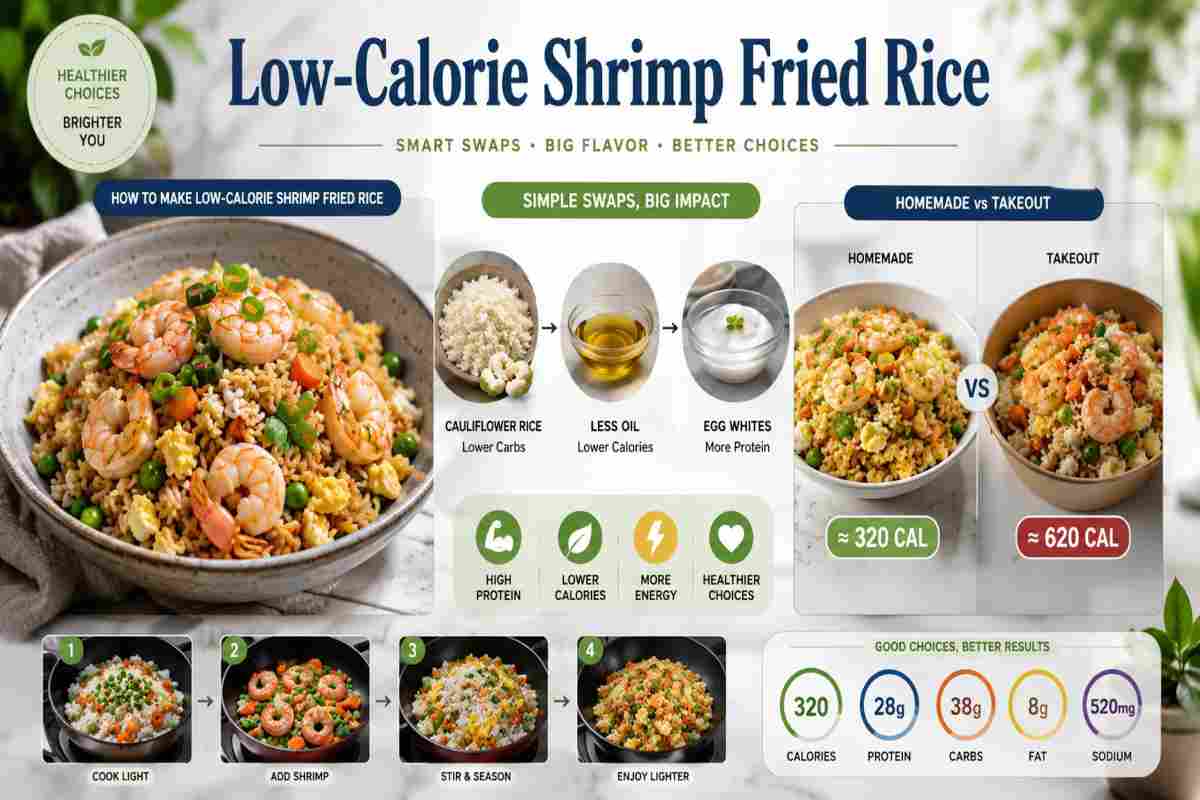
Making shrimp fried rice at home instead of ordering out can cut the calorie count by 30 to 50%, mainly because you control the amount of oil and the size of the portion. A few targeted swaps bring a standard 320 calorie serving down to closer to 170 to 230 calories without losing the dish’s core flavor.
Simple Swaps to Cut Calories
Three changes account for most of the calorie savings: swapping half the rice for cauliflower rice, cutting the oil in half and using egg whites instead of whole eggs. Together they cut about 90 to 150 calories, bringing a 320 calorie serving down to roughly 170 to 230 calories without reducing the shrimp.
Homemade vs Takeout Calorie Comparison
A homemade 1 cup serving of shrimp fried rice made with standard ingredients averages around 320 calories, while the same size portion from a restaurant or takeout order commonly runs 420 to 520 calories, a gap of 100 to 200 calories per cup.
That difference compounds quickly, a shared quart sized takeout container can carry more calories than three homemade servings combined, simply because commercial kitchens use more oil for flavor and shelf stability. Portion size plays a role too, restaurant servings are frequently larger than a true 1 cup measure, meaning the calorie gap in practice is often wider than the per cup numbers alone suggest. For anyone tracking intake closely, weighing or measuring a homemade portion remains the most reliable way to know exactly what’s on the plate.
Conclusion
Shrimp fried rice calories typically land between 300 and 350 per cup for a homemade version, with restaurant and takeout portions often running 100 to 200 calories higher due to added oil and larger serving sizes and knowing the breakdown by serving size, brand and variation makes it far easier to fit this dish into a daily calorie count without guessing. Whether you’re comparing a Costco freezer bag to a PF Chang’s order or building a lighter version in your own kitchen, the numbers in this guide give a reliable baseline to work from and if shrimp fried rice has earned a regular spot in your dinner rotation, our quick dinner ideas for family collection has more fast, protein forward meals that fit the same weeknight timeline.
Frequently Asked Questions (FAQs)
What is the calorie count for shrimp fried rice?
A standard 1 cup serving of shrimp fried rice contains approximately 300 to 350 calories. This can shift depending on the amount of oil, egg and shrimp used, with restaurant versions often running higher.
How many calories does a cup of shrimp fried rice have?
One cup of homemade shrimp fried rice averages around 320 calories, with about 14 grams of protein and 42 grams of carbohydrates. Takeout versions in the same 1 cup portion typically run 100 to 200 calories higher.
How many calories are in a pint of shrimp fried rice?
A pint of shrimp fried rice, which equals 2 cups, contains roughly 600 to 700 calories. This is the most common takeout container size for a solo meal.
What is the calorie count for shrimp fried rice from a Chinese takeout restaurant?
Chinese takeout shrimp fried rice generally ranges from 420 to 520 calories per cup, noticeably higher than a homemade version due to the extra oil used in restaurant preparation. Portion sizes at takeout counters also tend to exceed a true 1 cup measure.
Is shrimp fried rice low calorie?
Shrimp fried rice sits in a moderate calorie range compared to other fried rice dishes, largely because shrimp itself is lean at only about 85 calories per 3 ounce serving. It can be made genuinely low calorie with swaps like cauliflower rice and reduced oil, bringing a serving down to roughly 180 to 230 calories.
Source: Nutrition values for homemade shrimp fried rice are based on USDA FoodData Central. Restaurant and packaged product values come from each brand’s published nutrition information.
Disclaimer: This article is for general information only and is not medical or nutrition advice. Nutrition values are estimates based on USDA FoodData Central and change with ingredients, oil, shrimp amount and serving size. Talk to your doctor or dietitian about your individual needs.