Pull a single pot out of the cupboard. That is all you need to make the most satisfying bowl of stovetop mac and cheese you have had since the last time someone made it for you from scratch. Twenty minutes. One serving. Zero powder packets. This dinner recipe is built for the moment when you want something genuinely comforting without making a full pot that sits in the fridge for four days, slowly sad.
Single serving stovetop mac and cheese is genuinely faster than the boxed version once you account for the disappointment of eating the boxed version, and the flavour gap between the two is not even a close contest. The sauce is velvety. The pasta absorbs just enough of it to coat every piece properly without going stodgy. And the whole thing comes together from pantry staples you already have, no special trips, no unusual ingredients.
Why Single Serving Stovetop Mac and Cheese Is Worth Making
Most mac and cheese recipes yield four to six servings. That is wonderful when you are feeding a family. It is not wonderful when you are alone on a Tuesday night and want one bowl of something hot and cheesy without committing to leftovers for the next three days. This stovetop mac and cheese recipe scales down without losing anything. The roux-based sauce works in small quantities. The technique is the same. The result tastes like someone spent more effort on it than they actually did, which is the hallmark of a good recipe. It is also faster than you might expect. While the pasta cooks, the sauce comes together at the same time. By the time the macaroni is al dente, the sauce is ready to receive it.
Making the Creamy Stovetop Mac and Cheese
The secret to this creamy stovetop mac and cheese is the Cheese Temperature Rule. If you add cold cheese to a boiling liquid, the proteins will seize up, resulting in a grainy sauce. By turning the heat to the lowest setting (or off entirely) before whisking in your hand-grated cheese, you ensure a perfect emulsion. This creates a sauce that is incredibly smooth and clings to every single ridge of the macaroni.
Ingredients

1 cup dried macaroni (elbow or shells work best)
-
¾ cup shredded sharp cheddar cheese
-
½ cup whole milk
-
1 tablespoon unsalted butter
-
1 tablespoon all-purpose flour
-
½ teaspoon garlic powder (optional but recommended)
-
½ teaspoon smoked paprika (optional for a hint of heat)
-
Salt and black pepper to taste
Step by Step Instructions
-
Boil the Pasta Bring a medium pot of heavily salted water to a rolling boil. Add your macaroni and cook for 7 to 9 minutes, or until it reaches a perfect al dente texture. Be careful not to overcook it, as the pasta will continue to soften slightly once it is tossed in the warm cheese sauce.
-
Create the Roux In a separate small saucepan over medium heat, melt the tablespoon of butter until it begins to foam. Whisk in the flour and cook for about one minute, stirring constantly. This step is crucial because it toasts the flour, removing the raw taste and creating a thick, stable base for your creamy sauce.
-
Whisk in the Milk Gradually pour the milk into your butter and flour mixture while whisking vigorously to prevent any lumps from forming. Continue to cook the mixture over medium-low heat until it begins to thicken and coat the back of a spoon. You want a smooth, glossy consistency before you even think about adding the cheese.
-
Incorporate the Cheese Lower the heat to the minimum setting and add your shredded cheddar cheese in small handfuls. Stir gently until the cheese is completely melted and the sauce looks like liquid gold. This is the moment to stir in your garlic powder, paprika, salt, and pepper to customize the seasoning to your liking.
-
The Final Mix Once your sauce is perfectly creamy, add the drained macaroni directly into the saucepan. Fold the pasta gently into the sauce until every single tube is thoroughly coated in the cheesy goodness. Let it sit for just thirty seconds to allow the sauce to settle into the nooks and crannies of the pasta before serving.
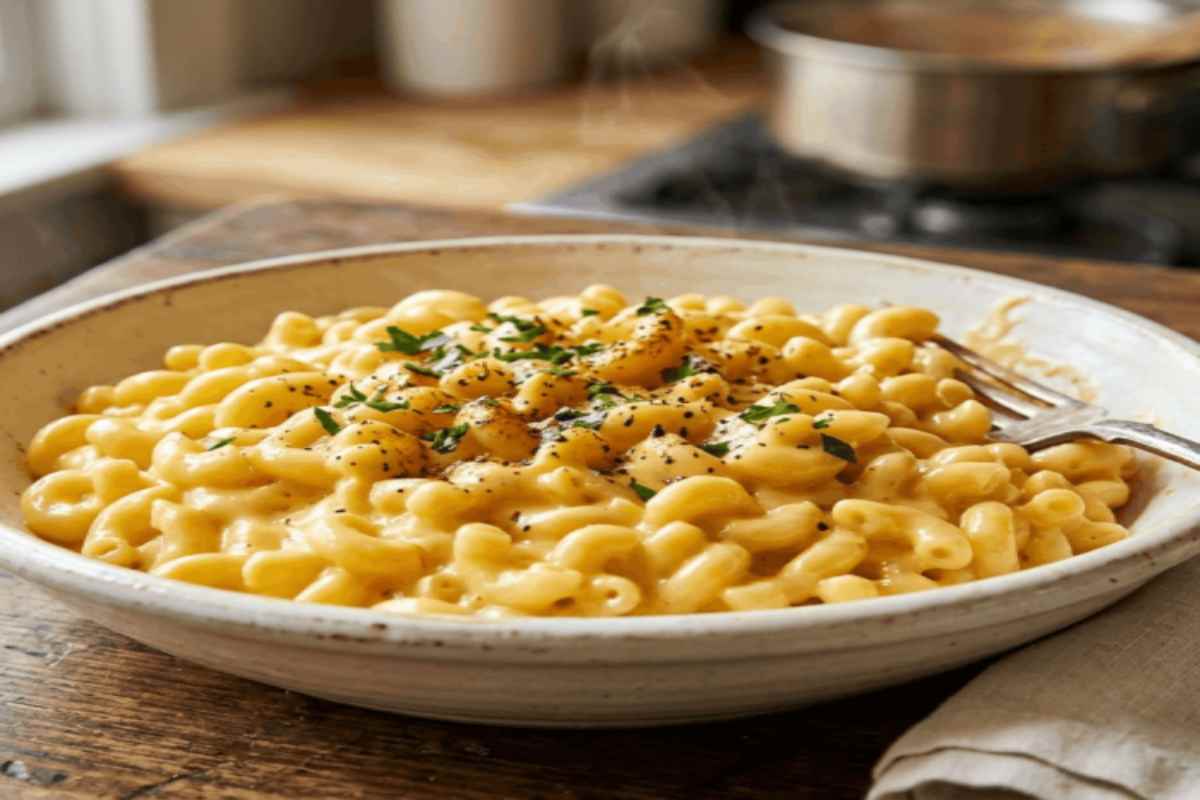
Stovetop Mac and Cheese Recipe
Ingredients
- 1 lbs elbow macaroni
- 4 cups sharp chedder cheese freshly grated
- 3 cups whole milk
- 4 tbsp unsalted butter
- 1/4 cup all purpose flour
- 1 tsp garlic powder
- 1 tsp smoked paprika
- 1/2 tsp ground mustard
- salt and pepper
Instructions
- Bring a large pot of heavily salted water to a boil. Cook the macaroni for 7–9 minutes until it is al dente it should still have a slight bite, as it will continue to cook in the sauce. Drain and set aside.
- In the same large pot, melt the butter over medium heat. Whisk in the flour and cook for 1–2 minutes. You want the mixture to bubble and turn slightly golden, but not brown. This removes the "floury" taste.
- Slowly pour in the milk, whisking constantly to ensure there are no lumps. Continue to cook on medium heat for 3–5 minutes until the sauce thickens enough to coat the back of a spoon.
- Stir in the garlic powder, smoked paprika, ground mustard, salt, and pepper. The ground mustard would not make it taste like mustard, it just makes the cheese taste cheesier.
- Turn the heat to low. Add the grated cheese one handful at a time, whisking gently until the sauce is glossy and completely smooth.
- Fold the cooked macaroni back into the cheese sauce. Stir gently until every noodle is submerged in the velvety cheddar. Serve immediately.
Notes
Nutrition
The Roux Why It Matters and How to Get It Right
The roux is the foundation of every great stovetop mac and cheese recipe. It is simply butter and flour cooked together before the milk goes in, and its purpose is to create a stable, smooth sauce that does not break or go grainy.
The most common mistake is rushing it. Once the butter melts and the flour goes in, you need to cook that mixture for at least one full minute, two is better, while stirring constantly. Raw flour has a distinctive, slightly chalky taste that disappears entirely once it cooks. If you skip this step or rush it, you will taste it in the finished sauce, and no amount of good cheese will cover it.
The second most common mistake is adding the milk too quickly. Pour it in gradually, a splash, stir until smooth, another splash, stir again, and you will get a lump free sauce every single time. If you dump all the milk in at once, the flour proteins bind unevenly, and you get lumps that no amount of whisking can fully remove.
For a single-serving recipe, use a small saucepan rather than a large pot. The sauce evenly coats the bottom of a small pan and thickens quickly. In a large pot, the same amount of sauce spreads too thin, cooks unevenly, and can scorch in spots.
The Cheese Block vs Pre Shredded
This is not a debate. It is a fact that block cheese grated at home melts better than pre-shredded cheese from a bag, every single time. Pre-shredded cheese is coated with anti caking agents, usually potato starch or cellulose, that prevent it from clumping in the packaging. Those same agents also prevent it from melting cleanly in a sauce. The result is a sauce that looks slightly grainy and feels less smooth on the palate than freshly grated cheese.
For a single serving of stovetop mac and cheese, you use a small amount of cheese, the difference between a grainy sauce and a silky one comes down entirely to whether you grate it yourself. It takes 60 seconds with a box grater. It is worth it. Sharp cheddar is the standard choice and the right one for this recipe. It has enough age to have developed real flavour and melts cleanly when added to a warm sauce off the heat. Extra-sharp cheddar delivers more flavour intensity but can be slightly more prone to graininess; if you use it, ensure your sauce is not too hot when the cheese goes in.
Cheese Variations
Once you are comfortable with the base recipe, switching the cheese is the fastest way to completely change the character of the dish. Here is what each option actually does:
| Cheese | Flavour Profile | Melt Quality | Best Pairing |
| Sharp Cheddar | Bold, tangy, classic | Excellent | Mustard powder, hot sauce |
| Gruyère | Nutty, slightly sweet | Excellent | Black pepper, thyme |
| Gouda | Mild, buttery, slightly smoky | Very smooth | Bacon bits, paprika |
| Fontina | Mild, creamy, slightly earthy | Very smooth | Garlic, white pepper |
| Pepper Jack | Spicy, bold | Good | Jalapeño, cilantro |
| Brie (rind removed) | Rich, creamy, mild | Excellent | Honey drizzle, walnuts |
| Parmesan (blended) | Salty, sharp, umami | Poor alone, blend with cheddar | Anything |
The most reliable combination for beginners is three quarters sharp cheddar and one quarter Gruyère. The cheddar provides the familiar flavour; the Gruyère adds a nuttiness and smoothness that elevates the sauce without making it unfamiliar. Never use mozzarella alone, it melts into strings rather than forming a sauce, producing a texture better suited to pizza than pasta. If you want that stretchy quality, add a small amount of mozzarella as a secondary cheese with cheddar as the primary.
The Pasta Shape Matters More Than You Think
Elbow macaroni is the classic for a reason, the curved tube shape traps sauce on both the inside and the outside, and the slight ridges on the exterior give the sauce something to cling to. For a single serving, elbows are practical because they cook quickly and portion easily. But other shapes work beautifully and sometimes better:
- Cavatappi a corkscrew tube, has more surface ridging than elbows and holds sauce particularly well. If you want the highest sauce-to-pasta ratio in every bite, cavatappi is the upgrade.
- Small shells with concave interiors are filled with cheese sauce, creating pockets of concentrated flavour. Very satisfying, especially for a single serving where you want every bite to count.
- Rotini the spiral catches sauce in its grooves and works well when the sauce is particularly thick.
- Penne or rigatoni larger shapes work, but need more sauce to fill the tube properly. For a single serving, stick to smaller shapes.
- Whatever shape you choose, cook it to al dente, just barely done, with a slight firmness at the centre when you bite through. The pasta continues cooking in the hot sauce. If you cook it fully before it meets the cheese, it will be overdone in the finished dish.
Single Serving vs Full Batch
Making stovetop mac and cheese for one is not simply a divided version of a large recipe. There are specific adjustments that improve the single-serving version.
The sauce to pasta ratio needs to be slightly more generous than in a large batch. Single portions cool faster on the plate, and as they cool, the sauce thickens and absorbs into the pasta quickly. Starting with a touch more sauce than you think you need means the final result is properly coated rather than dry.
The cooking time for the roux is the same regardless of quantity, one to two minutes of active cooking before the milk goes in. Do not try to speed it up because you are only making one serving. The chemical process of cooking out the raw-flour taste takes the same amount of time at any scale.
The cheese goes in off the heat or on very low heat. This is more critical in a small single serving sauce than in a large batch, because a small saucepan holds heat more intensely and the protein in the cheese can seize and go grainy if exposed to high heat after the sauce comes off the burner.
How to Build a Complete Meal Around This Recipe

Single-serving stovetop mac and cheese is a complete meal on its own, but it also works as a base that you can build on:
Add protein
Stir in leftover shredded chicken, chopped crispy bacon, flaked canned tuna, or diced ham after the cheese has melted. The pasta and sauce are hot enough to warm cooked proteins through without needing extra cooking time.
Add vegetables
Stir in steamed broccoli florets, frozen peas (just rinse under hot water to thaw), sautéed spinach, or roasted red peppers. Vegetables that are already cooked or simply thawed integrate perfectly.
Make it spicy
A few drops of hot sauce (Cholula, Frank’s, or Valentina) stirred in at the end changes the character of the dish dramatically without overwhelming it. Half a teaspoon of smoked paprika added to the roux gives a different kind of warmth.
Make it gourmet
Swap the cheddar for Gruyère, add a small spoonful of Dijon mustard to the sauce, and finish with a crack of black pepper and a few fresh thyme leaves. The ingredients cost slightly more, but the result tastes like something from a bistro menu.
For a complete comfort food for dinner, this stovetop mac and cheese pairs naturally alongside the crispy honey garlic chicken wings. The richness of the cheese sauce against the sticky, savoury wings is genuinely one of the better weeknight combinations.
What Went Wrong and How to Fix It
The sauce is grainy and slightly separated. Almost always caused by one of three things: pre-shredded cheese with anti caking agents, cheese added to a sauce that was too hot, or the milk added too quickly to an undercooked roux. For next time: grate block cheese yourself, add it to the sauce off the heat or on very low heat, and add milk in stages. If the graininess is mild, a vigorous whisk while the pan is still slightly warm can partially smooth it out. A very small splash of evaporated milk whisked in also helps.
The sauce is too thin and watery. The roux was not cooked long enough to thicken fully, or too much milk was added. Return the sauce to medium low heat without the pasta and whisk continuously until it thickens. It happens faster than you expect. On the other hand, mix a teaspoon of cornstarch with a teaspoon of cold water and whisk it into the sauce, it thickens almost immediately.
The sauce is too thick and gluey. The sauce reduced too far, or the pasta sat in it too long. Add a splash of warm milk and stir vigorously over very low heat. The sauce will loosen immediately. Always add warm rather than cold milk, cold milk can cause the proteins in the cheese to tighten rather than relax.
The pasta is soggy. Overcooked before it went into the sauce. Next time, pull the pasta two minutes before the packet says it is done. It will complete its cooking process in the hot sauce . For a single serving, especially, the sauce retains enough heat to cook the pasta further even after you remove the pan from the heat.
The sauce tastes flat. Needs salt, cheese varies significantly in salt content, so the sauce always needs a taste and adjustment before serving. Also, check that the roux was fully cooked; a raw-tasting sauce often just needs salt or a tiny pinch of mustard powder, a classic mac and cheese flavour enhancer that you cannot identify as mustard in the finished dish, but that makes everything taste more itself.
Gourmet Upgrades Elevating the Classic Recipe
Single serving stovetop mac and cheese is endlessly adaptable to whatever level of effort you have available. Here are four upgrades that genuinely improve the dish without requiring specialist ingredients:
The Dijon upgrade
Add half a teaspoon of Dijon mustard to the sauce after the roux is complete and before the milk goes in. You will not taste mustard in the finished dish. You will taste something that sharpens and deepens the cheese’s flavour, but you won’t be able to identify what it is.
The breadcrumb finish
Heat a teaspoon of butter in a small, separate pan, then add two tablespoons of panko breadcrumbs and stir until golden. Scatter these over the finished mac and cheese. The distinction between the crunchy topping and the creamy sauce underneath is a completely different eating experience.
The smoked paprika roux
Add a quarter teaspoon of smoked paprika to the butter when you melt it, before adding the flour. The paprika blooms in the fat, adding a subtle smokiness that runs through the entire sauce.
The finishing fat
A small knob of butter stirred in at the very end, just before serving, adds gloss and richness to the sauce, making it look and taste more indulgent. This technique, called monter au beurre in French cooking, works on any sauce.
Make Ahead and Storage Guide
Stovetop mac and cheese for one is best eaten immediately. The sauce persists to thicken as it cools, and the pasta absorbs more of it over time, significantly altering the texture. That said, there are practical ways to handle leftovers or prep ahead:
Storing leftovers up to 3 days
Let the mac and cheese cool slightly, transfer to an airtight container, and refrigerate. The sauce will firm up considerably, but this is normal.
Reheating on the stovetop recommended
Transfer to a small saucepan over very low heat. Add a splash of milk, start with one tablespoon, and stir continuously. The sauce will loosen and come back to life in 2 to 3 minutes. Do not use high heat; it will make the cheese seize.
Reheating in the microwave faster, slightly less ideal
Transfer to a microwave-safe bowl. Add a splash of milk, cover loosely, and microwave in 30-second intervals, stirring between each one. Two to three rounds are usually sufficient. The texture will be close to the original but not quite as smooth.
Batch prep for the week
If you want to make multiple single servings in advance, cook the pasta and sauce separately and combine only when reheating. Pasta stored separately does not absorb the sauce, and both components reheat more predictably.
What to Serve With This Stovetop Mac and Cheese
This is a complete meal on its own as a single serving dish. But if you want to round out the plate or make it feel like a proper dinner:
A simple green salad alongside the stovetop mac and cheese adds freshness and crunch, contrasting beautifully with the richness of the sauce. Even just a handful of rocket with lemon juice and olive oil takes two minutes and makes the whole bowl feel more balanced.
Sliced tomatoes with a bit of salt and a crack of pepper are the vegetable equivalent of doing almost nothing but getting a lot of credit for it.
For a heartier combination, the pork ribs recipe with the bone tender ribs and creamy mac and cheese bowl is one of those pairings that make sense the moment you try them.
If you want something lighter to follow, the marble cake is a quick, crowd pleasing dessert that comes together with minimal effort, the natural next step after a satisfying comfort food main.
Final Notes Before You Start
- Do not rush the roux. Cook it for the full one to two minutes even when you are making just one serving, it genuinely matters.
- Grate your own cheese. It takes 60 seconds and the textural difference in the sauce is not subtle.
- Add the milk gradually. Two tablespoons at a time, stir until smooth, then more. This is the step that controls everything.
- And eat it immediately. Stovetop mac and cheese for one is made to be eaten while it is hot, and the sauce is at its most fluid. It will still be good reheated. It will not be this good.
- Now make the roux. Everything else follows from there.
If you have enjoyed this recipe, also try our other recipes:
Creamy Garlic Parmesan Turkey Pasta
Pasta Recipes, Creamy Shrimp Pasta
Frequently Asked Questions (FAQs)
What is the secret to creamy stovetop mac and cheese?
Three things work together: a properly cooked roux, freshly grated block cheese, and adding the cheese off the heat. The roux creates the stable base for the sauce. Block cheese without anti-caking agents melts smoothly into that base. And removing the pan from the heat before stirring in the cheese prevents the proteins from seizing and going grainy. None of these steps is difficult. All three matter significantly.
Why does my stovetop mac and cheese go grainy?
The most common cause is pre-shredded cheese. The starch coating that prevents bagged cheese from clumping also prevents it from melting cleanly. Always grate block cheese yourself. The second most common cause is adding cheese to a sauce that is too hot, the heat causes the cheese proteins to tighten and separate. Add cheese off the heat or on very low heat, stirring until just melted.
Can I make stovetop mac and cheese without a roux?
Yes. You can whisk flour directly into cold milk before adding it to the melted butter, which skips the separate roux step. You can also use evaporated milk to create a naturally stable sauce without any flour. Or you can use a sodium citrate method, dissolving a small amount of food-grade sodium citrate in water and melting cheese into that, which produces a perfectly smooth sauce that never breaks, all three work.
How long does stovetop mac and cheese keep in the fridge?
Up to three days in an airtight container. The texture changes as the pasta continues to absorb the sauce, so day one is always the best. When reheating, OVE PLAGIRISM Please add a small quantity of milk and stir slowly over low heat.to restore creaminess. It will not be quite as silky as fresh, but it will still be genuinely good.
Can you freeze stovetop mac and cheese?
Technically, yes, for up to two months. Practically, the texture suffers when thawed, the sauce tends to separate and become grainy, and the pasta goes soft. If you want to freeze it, do so as soon as it is cool and reheat very gently with added milk. For a single serving recipe, freezing rarely makes sense, it is quicker just to make a fresh batch.
What pasta shape is best for stovetop mac and cheese?
Elbow macaroni is the classic and most practical, it cooks quickly and holds sauce well. Cavatappi is the upgrade, with more ridging and a corkscrew shape that catches sauce on all surfaces. Small shells create pockets filled with sauce that are very satisfying. Avoid spaghetti or other long pastas, they do not hold sauce as well, and the eating experience is awkward.
How do I make stovetop mac and cheese thicker?
If the sauce is too runny, cook it over medium low heat while stirring until it reaches the consistency you want, it thickens quickly. Alternatively, whisk a teaspoon of cornstarch with a teaspoon of cold water, then stir it into the sauce. It thickens almost instantly. Also, check that your roux was cooked for a full one to two minutes before the milk went in, an undercooked roux produces a thin, slightly floury sauce.
What can I add to stovetop mac and cheese to make it more filling?
Cooked chicken, bacon, ham, or tuna all work well and add significant protein. Steamed broccoli or frozen peas, stirred in, add vegetables without changing the comfort food character. For a gourmet version, a spoonful of truffle oil stirred through at the end, or caramelised onions folded in with the cheese, transforms the dish completely. For spice, a splash of hot sauce or a pinch of cayenne in the roux adds warmth that complements the cheese.
Is stovetop mac and cheese or baked mac and cheese better?
They are different dishes that suit different occasions. Stovetop is faster, creamier, and better for a single serving or weeknight dinner. Baked develops a slightly firmer texture and a golden crust on top that adds texture contrast. It is better for a crowd or when you want something you can make ahead.