Some dishes exist purely to make a Tuesday feel like a Saturday. Creamy shrimp pasta is one of those dishes. There’s no pretending it’s diet food, no apologizing for the butter, and no complicated technique standing between you and a genuinely restaurant-level bowl of food. You get plump, seasoned shrimp, a sauce that clings to every strand of pasta, and a kitchen that smells so good your family will already be at the table before you’ve even drained the pot. This recipe has been on Devine Dishes for a while, and it’s picked up a loyal following for a reason.
But cooking trends shift, home cooks are asking sharper questions about the sauce, about the shrimp, about what to do when you only have frozen, and this update addresses all of that while keeping every single ingredient and instruction from the original exactly as it was. The recipe works. What follows is everything around it that makes it work even better. If you’ve been searching for an easy creamy shrimp pasta recipe that delivers without making you feel like you need culinary school training, this is the one to bookmark.
Why This Recipe Outperforms the Competition
A quick look at what the major recipe sites are putting out on creamy shrimp pasta reveals a common problem: most are either too fussy or too light on actual cooking guidance. AllRecipes versions tend to rely heavily on pre-made alfredo jars. Food Network recipes sometimes call for ingredients that feel like a special trip to the store. RecipeTin Eats does solid work but leans toward richer, heavier cream sauces that can feel like too much on a weeknight.
What this homemade creamy shrimp pasta does differently is balance. The sauce is genuinely creamy without being overly thick. The garlic is present and real, not a background note, but not so aggressive as to drown everything else. The shrimp get their own moment in the pan before joining the sauce, so they stay juicy rather than turning rubbery from overcooking. The recipe doesn’t need clam juice, saffron, or a wine reduction to taste like something special. It gets there with a short list of well-handled pantry staples. That’s the kind of cooking that gets made on repeat, not just on a night when you’re trying to impress someone.
The Shrimp Question: What Size, Fresh or Frozen, Peeled or Not
This is where most creamy shrimp pasta recipes fall short on detail. They say “shrimp” and leave you standing at the seafood counter making guesses.
Size matters here more than most people think. Large or extra-large shrimp, typically 16 to 20 per pound, hold up beautifully in a creamy sauce. They stay juicy when seared quickly over high heat, and they have enough presence in the bowl that each forkful actually has something to bite into. Small shrimp disappear into the sauce and tend to overcook before the pasta is even ready. Go large.
Frozen shrimp is completely fine for this recipe. In fact, frozen wild-caught shrimp bought in a bag from the freezer aisle is often a smarter choice than whatever has been sitting in the display case under fluorescent lighting. Thaw overnight in the fridge if you plan, or do a cold-water thaw in about 20 to 25 minutes if you forgot, seal the shrimp in a zip bag, submerge in cold water, and change the water once. Either way, the critical step that almost nobody mentions: pat the shrimp completely dry before they go into the pan.
Moisture on the surface of shrimp does two things, neither of them good. It drops the pan temperature, which means the shrimp steams instead of sears. And it dilutes the butter or oil in the pan, which means you lose that golden, lightly caramelized surface that adds so much flavor to the finished dish. A thorough pat-dry with paper towels takes 30 seconds and makes a real difference.
Raw, peeled, and deveined is the way to go. Pre-cooked shrimp can be used in a pinch, but they’ll tighten up and lose texture with any additional heat. If you do use pre-cooked, add them at the very end and just let them warm through in the sauce, a minute, maybe two, no more.
Making the Sauce: Where the Magic Happens
The sauce in this creamy garlic shrimp pasta isn’t just cream poured into a pan. It’s built deliberately, and that process is worth understanding even if you’ve made it a dozen times.
The garlic goes in after the aromatics have softened and before any liquid. This sequencing matters. Garlic added to cold fat doesn’t bloom the way it should. Garlic thrown directly into liquid boils rather than sautés, and stays sharp and raw-tasting. But garlic added to fat that’s already warm and fragrant, with onion softened around it, cooks in about 60 seconds into something sweet, mellow, and deeply savory. That’s the flavor base the whole sauce is built on.
When the cream (or cream-based element) goes in, the heat should come down to medium or medium-low. High heat breaks cream sauces. What you’re looking for is a gentle, steady simmer where the sauce thickens slowly rather than boiling rapidly and splitting. Patience here, two to three minutes of patient simmering, produces a sauce that coats a spoon cleanly and clings to pasta the way it should.
Pasta water is an underrated addition. The starchy water left behind when you drain pasta does something that extra cream or butter can’t: it emulsifies the sauce, giving it body and helping it bond to the pasta instead of collecting at the bottom of the bowl.”Reserve at least half a cup before you drain. You might not use all of it, but having it available is what separates a good garlic butter shrimp pasta from a great one.
How to Make Easy Creamy Shrimp Pasta
Creating this easy creamy shrimp pasta is simpler than you might think. Here’s how to get it done:
Serves: 4 | Prep: 5 min | Cook: 15 min
Ingredients:
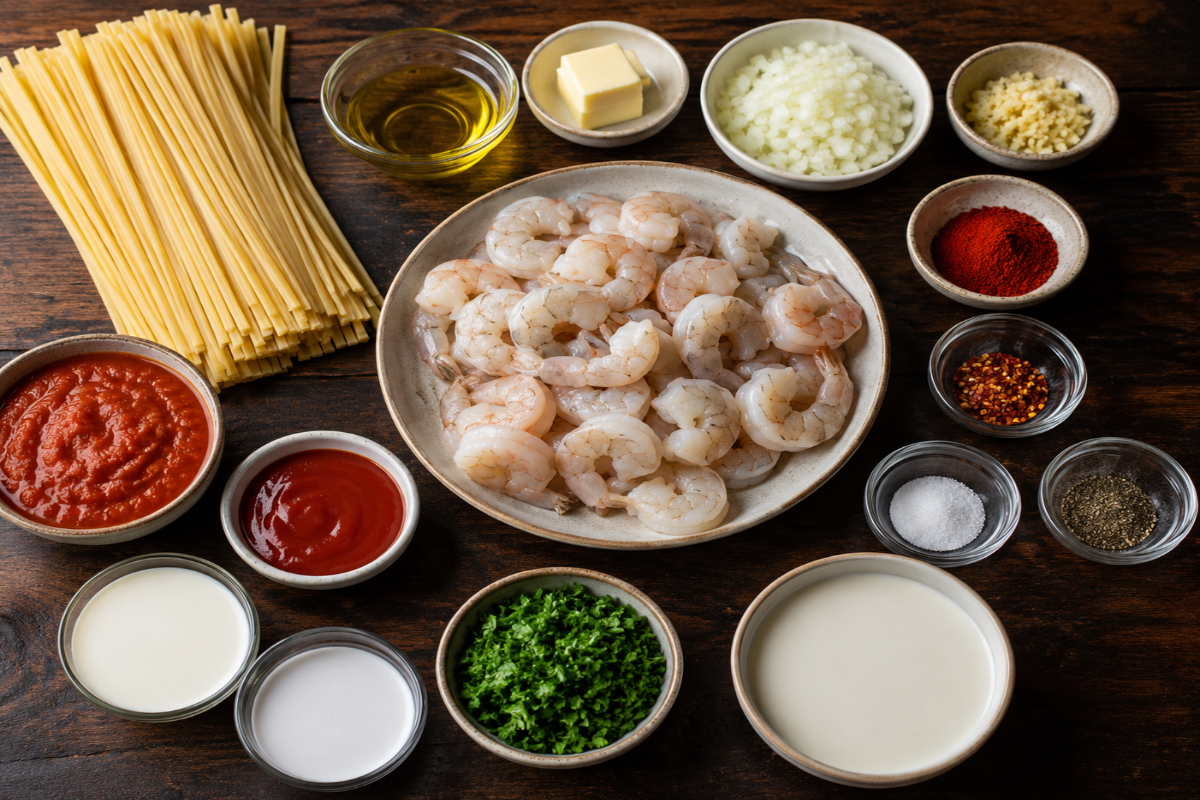
- 12 oz pasta (fettuccine, linguine, or spaghetti works well)
- 1 pound of shrimp, peeled and deveined
- 1 tablespoon of oil
- 2 tbsp butter
- 1 medium onion, finely chopped
- 3 garlic cloves, minced
- 1 tbsp paprika
- 1/2 tsp red pepper flakes (optional)
- 1 cup four-cheese marinara sauce
- 1/4 cup ketchup
- 1 cup of half-and-half cream
- 1/2 cup of coconut milk (can sub with extra half and half)
- 1/4 cup of chopped fresh parsley to garnish
- 1 tsp salt, or to taste
- 1/2 tsp black pepper or to taste
- Fresh parsley, chopped (for garnish)
Instructions
Cook the Pasta Bring a large pot of salted water to a boil. Add the pasta and cook to the package instructions until al dente. Reserve 1/2 cup of pasta water, then drain the pasta and set it aside.
Cook the Shrimp In a large skillet, heat butter over medium-high heat. Add the shrimp and garlic and cook for 2-3 minutes on each side until pink. Season with salt and pepper. Cook for 2-3 minutes on each side until the shrimp turns pink and are cooked through. Remove the shrimp from the skillet and set aside. Remove and set aside
Make the Creamy Sauce In the same skillet, add the oil and onions and sauté the onions until fragrant, about 1 minute. Add the marinara sauce, ketchup, and red pepper flakes. Stir well. Add the heavy cream and bring it to a simmer.
Combine and Serve Add the cooked pasta to the skillet, tossing it in the creamy sauce until well coated. Return the shrimp to the skillet and mix them into the pasta. If the sauce is too thick, add a bit of the reserved pasta water to reach your desired consistency.
Garnish and Enjoy Sprinkle chopped parsley over the pasta and serve immediately.
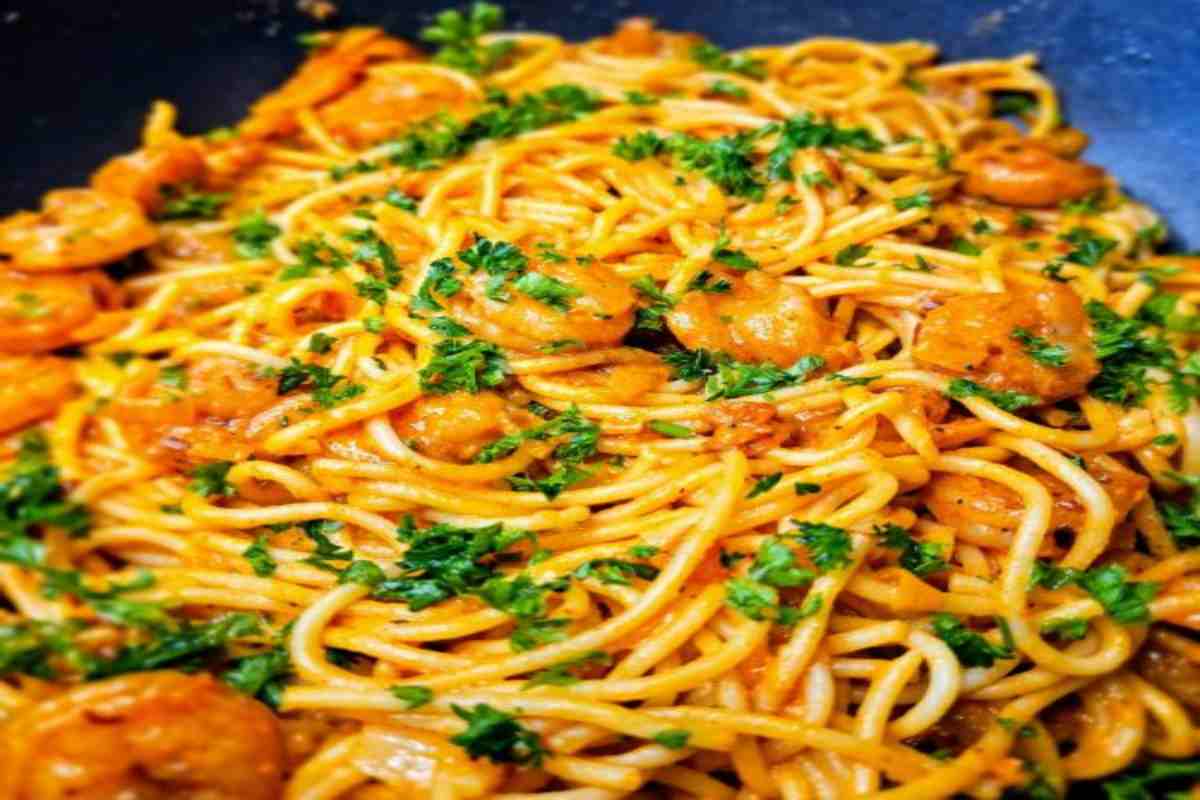
Easy Creamy Shrimp Pasta Recipe
Ingredients
- 12 oz pasta (fettuccine, linguine, or spaghetti work well)
- 1 lb shrimp peeled and deveined
- 1 tbsp olive oil
- 2 tbsp butter
- 1 medium onion finely chopped
- 3 cloves garlic minced
- 1 tsp paprika
- 1/2 tsp red pepper flakes optional
- 1 cup marinara four-cheese
- 1/4 cup ketchup I used Heinz no sugar added
- 1 cup half and half cream
- 1/2 cup coconut milk
- 1 tbsp parsley chopped to garnish
- 1 tsp salt or to taste
- 1/2 tsp black pepper
Instructions
- Cook the pasta according to the package instructions until al dente. Drain and set aside.
- Heat the butter in a large skillet over medium-high heat.
- Add the shrimp and garlic to the skillet and cook for 2-3 minutes on each side until pink and cooked through. Add salt to taste. Remove and set aside
- In the same pan, add the olive oil, followed by onions and sauté for 3-4 minutes, or until translucent.
- Add the marinara sauce, ketchup, red pepper flakes, and sweetener. Stir well
- Add the half and half and coconut milk to the skillet and stir well to combine. Bring the mixture to a simmer and cook for 2-3 minutes, or until the sauce has thickened slightly.
- Add the spaghetti to the skillet and stir well to combine.
- Return the shrimp to the skillet and mix well
- Adjust salt and pepper according to your taste
- Season with salt and pepper to taste.
- Garnish with fresh parsley and enjoy!

Video
Notes
Nutrition
Health Benefits of the Key Ingredients
Shrimp gets a bad reputation in some circles because of its cholesterol content. Still, the current understanding of dietary cholesterol and heart health has shifted significantly. Dietary cholesterol from whole foods, such as shrimp, has a significantly lesser effect on blood cholesterol levels in most people than previously thought. What shrimp genuinely offers is a dense hit of lean protein, exceptionally high selenium (a mineral critical for thyroid function and immune health), significant iodine, and meaningful amounts of phosphorus and B12.
The garlic in this one-pot creamy shrimp pasta isn’t just flavor, allicin, the compound released when garlic is chopped or crushed, has documented antimicrobial and anti-inflammatory properties. The effect is modest in a single serving, but across a diet that regularly includes garlic, it adds up.
Tomatoes, mushrooms, onions, and other vegetables in the base contribute antioxidants and prebiotic fiber that support gut microbiome diversity, something nutrition research has increasingly emphasized.
Pasta itself, despite years of being framed as the enemy, provides a reliable carbohydrate base that sustains energy for hours. Al dente pasta, cooked with a little resistance left in the center, has a lower glycemic index than fully softened pasta, meaning it releases glucose more slowly into the bloodstream. Cook it properly, and even the pasta has something going for it nutritionally.
Tips That Actually Change the Outcome
Don’t rush the sear on the shrimp
A common mistake in garlic butter shrimp pasta is overcrowding the pan. If you pile all the shrimp in at once and they’re touching, they steam rather than sear. Work in a single layer. If your pan isn’t large enough, cook in two batches. Two minutes per side over medium-high heat with a dry shrimp in a hot pan produces a shrimp with a lightly golden edge and a juicy interior.
Pull the shrimp out before the sauce
The shrimp get returned to the pan later, but cooking them separately first and keeping them aside means they don’t spend extra minutes in hot liquid, toughening up while you build the sauce. Set them aside, build the sauce, combine at the end, and serve immediately.
Salt the pasta water like you mean it
The water should taste noticeably salty, somewhere between seasoned and briny. Pasta cooked in properly salted water is fundamentally more flavorful than pasta cooked in plain water, and no amount of sauce-seasoning afterward fully compensates.
Serve immediately
Creamy pasta sauces don’t hold well. As the pasta sits, it absorbs the sauce, and what was perfectly silky five minutes ago becomes thick and heavy ten minutes later. Have everything else on the table before the pasta goes in. This is a dish that rewards a ready audience.
Finish with something bright
A squeeze of lemon juice or a small handful of fresh parsley stirred through at the very end cuts through the richness and lifts the entire dish. Neither ingredient makes the pasta taste lemony or herby, they just make everything else taste more vivid and clean.
The One Pan Version For Those Who Hate Dishes
If you’re looking for a true one pot creamy shrimp pasta experience, the recipe adapts. The method changes slightly, the pasta cooks directly in the liquid base rather than separately, but the result is still deeply satisfying and leaves you with exactly one pan to wash. The key adjustment: add more liquid than you think you need and stir frequently. Pasta releases starch as it cooks, which thickens the sauce naturally and can cause sticking if you leave it unattended.
Keep the heat at a steady medium, stir every minute or so, and add warm water or broth in small splashes if the liquid is absorbing too quickly before the pasta is cooked through. The result is a sauce that’s slightly starchier and more porridge-like than the separated method. Still, the flavor is rich and concentrated, with its own appeal. This is also the method that works best for weeknights when you don’t want to think too hard. One pan, one cleanup, done.
Pasta Shape Does It Actually Matter?
Yes, more than most people expect. Long pasta, linguine, fettuccine, spaghetti, holds a creamy sauce differently than short pasta. The sauce wraps around the length of a strand and stays on it through each forkful. With short pasta like penne or rigatoni, the sauce pools inside the tubes and at the base of the bowl. Neither is wrong, but they produce different eating experiences. For homemade creamy shrimp pasta where the sauce is the point, long pasta tends to feel more luxurious.
Fettuccine is the classic choice for Alfredo-style preparations because its width provides enough surface area to carry the sauce without getting lost in it. Linguine is slightly narrower and works equally well. Spaghetti is the most accessible option and delivers a great result. If you have short pasta and that’s what’s in the cupboard, penne works fine. The ridged surface holds sauce better than a smooth surface.
Variations Worth Trying
The base recipe is solid and stands entirely on its own. But once you’ve made it a few times, there are some directions worth exploring.
Cajun variation
Add a teaspoon of Cajun seasoning to the shrimp before searing, and finish the sauce with a pinch of smoked paprika and a few extra red pepper flakes. The result has heat and smoke layered over the creamy base. Serve with cornbread on the side.
Sun-dried tomato version
Add a tablespoon of sun-dried tomato paste or a handful of chopped sun-dried tomatoes to the sauce base after the garlic. They melt into the cream, adding a concentrated, slightly sweet acidity that beautifully balances the richness of the sauce.
Spinach and lemon
A large handful of fresh baby spinach, wilted into the sauce in the last two minutes, adds color, a subtle bitterness, and enough nutrients to make the whole dish feel a little more complete. A hearty splash of freshly squeezed lemon juice, along with some grated zest, stirred through at the end, gives the dish a brightness that plays well against the cream.
White wine version
Replace a quarter cup of the cream or stock with dry white wine added just after the garlic. Let it reduce by half before adding the cream. It adds acidity and complexity to the sauce, elevating it without much effort.
Storing and Reheating Without Ruining It
Creamy pasta is one of the more challenging leftover situations in home cooking. The sauce absorbs into the pasta as it cools, and reheating at high heat causes the cream to separate into greasy pools. But with a little care, leftovers from this recipe hold up reasonably well.
Store in an airtight container in the fridge for up to two days. When reheating, use a pan over low to medium-low heat with a splash of milk or cream stirred in, never the microwave at full power, which heats unevenly and breaks the sauce. Add liquid gradually, stirring constantly, until the sauce loosens and becomes creamy again. It won’t be quite the same as fresh, but it’s a very respectable leftover.
If you’re making this ahead intentionally, say, for meal prep, the smart move is to store the shrimp and sauce separately from the cooked pasta. Combine only when you’re ready to reheat and eat.
What to Serve Alongside
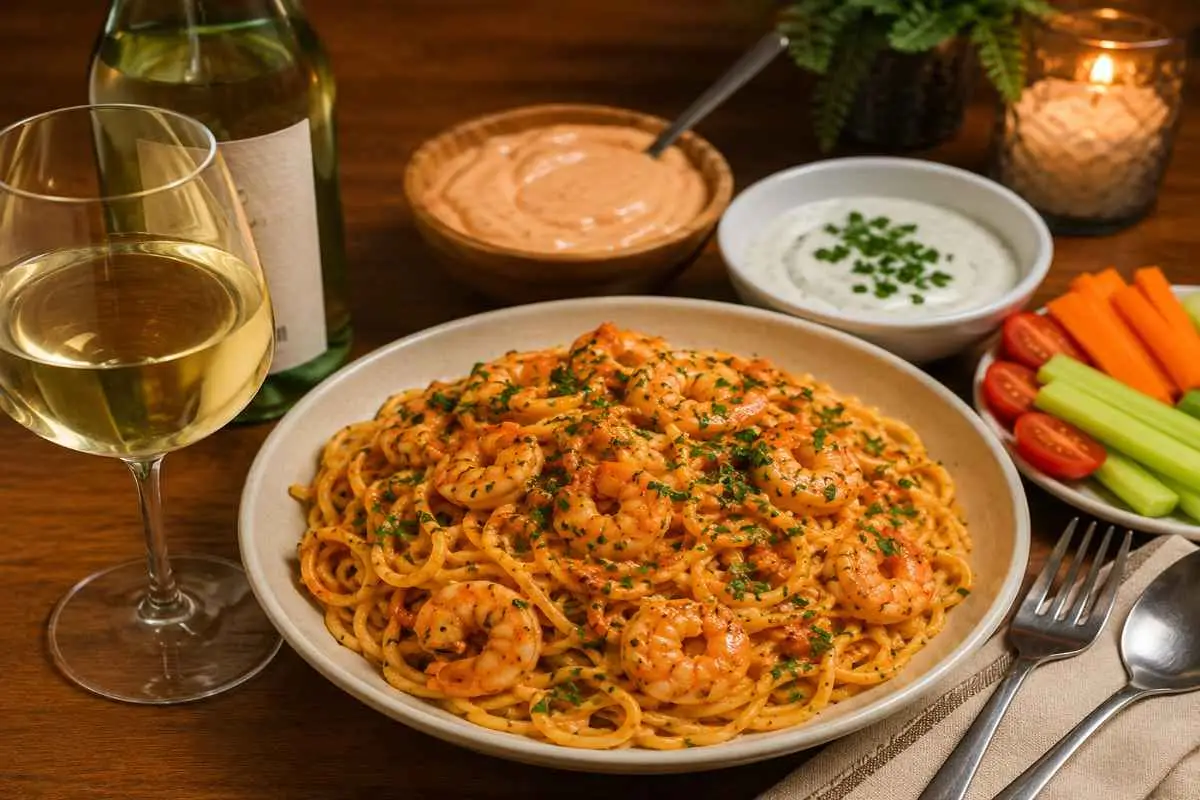
This is a rich, complete meal on its own, but the right side dish elevates the whole experience.
A crisp green salad with a sharp lemon vinaigrette is the classic pairing, the dressing’s acidity cuts through the cream and resets the palate between bites. Crusty bread for dipping into the sauce at the bottom of the bowl is strongly encouraged. Garlic bread doubles down on the garlic theme, a move dedicated garlic lovers will appreciate.
For something a bit more substantial, the Devine Dishes One-Pot Jambalaya is a good reference if you’re planning a meal where the pasta is one course rather than the whole dinner, both dishes share that ability to feel genuinely special without requiring hours of effort.
A glass of dry white wine, Pinot Grigio or Sauvignon Blanc, is the traditional pairing and earns its place here. The crisp acidity balances the cream and complements the shrimp. If wine isn’t your thing, sparkling water with a slice of lemon does the same job in a non-alcoholic way.
One Final Thought Before You Start
The thing about homemade creamy shrimp pasta is that it doesn’t announce itself as a healthy choice or a quick fix or a budget meal; it just tastes like something you’d order in a restaurant, except you made it, it costs less, and you’re eating it in your own kitchen in under 30 minutes. That’s the real pitch. Not the macros (though they’re solid), not the one-pan option (though it’s convenient), not the variations (though they’re genuinely good). It’s just a really satisfying bowl of food that’s easier to make than it has any right to be. Make it once this week. You’ll know by Friday whether it’s on permanent rotation.
Try our other shrimp recipes
Frequently Asked Questions (FAQs)
Can I use pre-cooked shrimp?
You can, but the result is less satisfying. Pre-cooked shrimp has already lost the moisture it would normally contribute to the sauce, and any additional cooking makes it rubbery. If it’s what you have, add it at the very end of cooking, literally the last 60 seconds, just to warm through.
What if I don’t have heavy cream?
Cream cheese (softened and thinned with a little pasta water or milk) makes a surprisingly good substitute. It is the method behind some popular creamy pasta variations. Rich coconut cream serves as an excellent dairy-free substitute and adds its own subtle richness. Half-and-half will work in a pinch, but produces a thinner sauce that may need more time to reduce.
Can I make this gluten-free?
Swap the pasta for your preferred gluten-free variety and cook it according to its package directions. Note that many gluten-free pastas don’t hold a sauce as well as semolina pasta, so you may want to slightly undercook and then finish in the sauce for a minute or two to help it absorb.
How do I know when shrimp are done?
Color is the most visible cue, raw shrimp are gray and translucent, cooked shrimp are pink and opaque. But the more reliable indicator is shape. A shrimp that’s just done curls into a loose C shape. A shrimp that’s overcooked curls into a tight O shape. Once you see the O, they’ve been in the pan too long. Aim for the C.
Is this dish kid-friendly?
Generally, yes, with the heat element adjusted. If you’re cooking for younger eaters, skip or reduce any red pepper flakes. The garlic-cream base without heat is mild, rich, and well within most kids’ comfort zone, especially if they already like pasta.
Can I add vegetables?
Absolutely. Baby spinach, halved cherry tomatoes, sliced mushrooms, asparagus tips, or peas all work well in this dish. Add heartier vegetables (mushrooms, asparagus) before the cream so they have enough time to cook. Add delicate vegetables (spinach, peas) in the last two minutes so they stay bright and don’t overcook.