
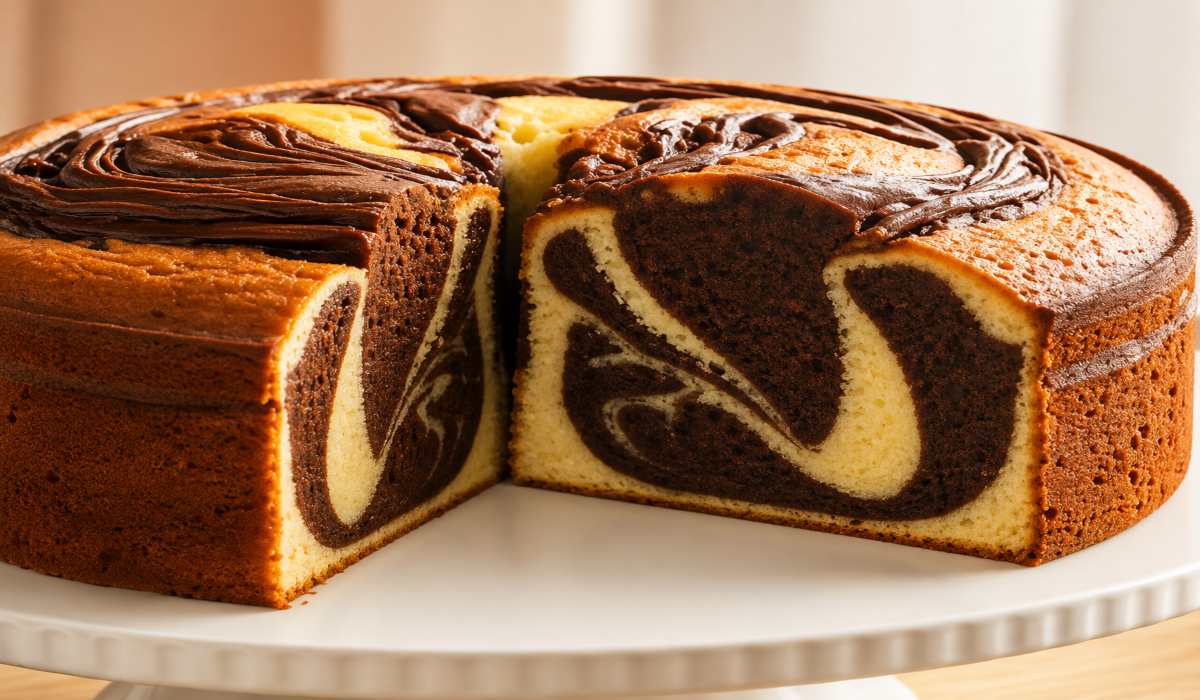
There’s something almost magical about pulling a marble cake out of the oven. You’ve put in one batter, done a few lazy swirls with a skewer, and when you slice into it, there it is. Those gorgeous ribbons of chocolate and vanilla running through each other as they planned it that way. No two slices look the same, and that’s exactly the point.
This marble cake has been a staple in home kitchens for generations, it is making a serious comeback. People are baking more intentionally, with fewer processed ingredients, more made from scratch moments, and a real desire for results that actually look as good as they taste. A chocolate and vanilla marble cake recipe hits that sweet spot perfectly. It’s impressive enough for a birthday or a weekend gathering, but relaxed enough to throw together on a Sunday afternoon with a cup of coffee nearby.
What makes this particular version stand out is the method. Using oil instead of butter as the primary fat keeps the crumb incredibly moist, not just on the day you bake it, but on day two and three as well. The combination of baking powder gives the cake a beautiful lift without any dense, heavy texture. And the swirling technique? Simple, deliberate, and explained in full below so you never end up with a muddy brown loaf when you were expecting a showstopper.
Let’s bake.
Why This Marble Cake Recipe Works Better Than Most
Not all marble cake recipes are equal. A lot of them produce something that tastes fine but looks flat, the swirls disappear into each other, the crumb is dry by the next morning, or the chocolate flavor barely registers against the vanilla. This version avoids all of those problems by being deliberate about a few things.
Oil over butter for moisture
Butter adds flavor, but oil locks in moisture in a way that butter simply can’t match over time. Using oil as the primary fat keeps this chocolate-vanilla marble cake tender and soft, even if you make it the day before you plan to serve it. That’s a real advantage when you’re baking for an event.
Cocoa powder done right
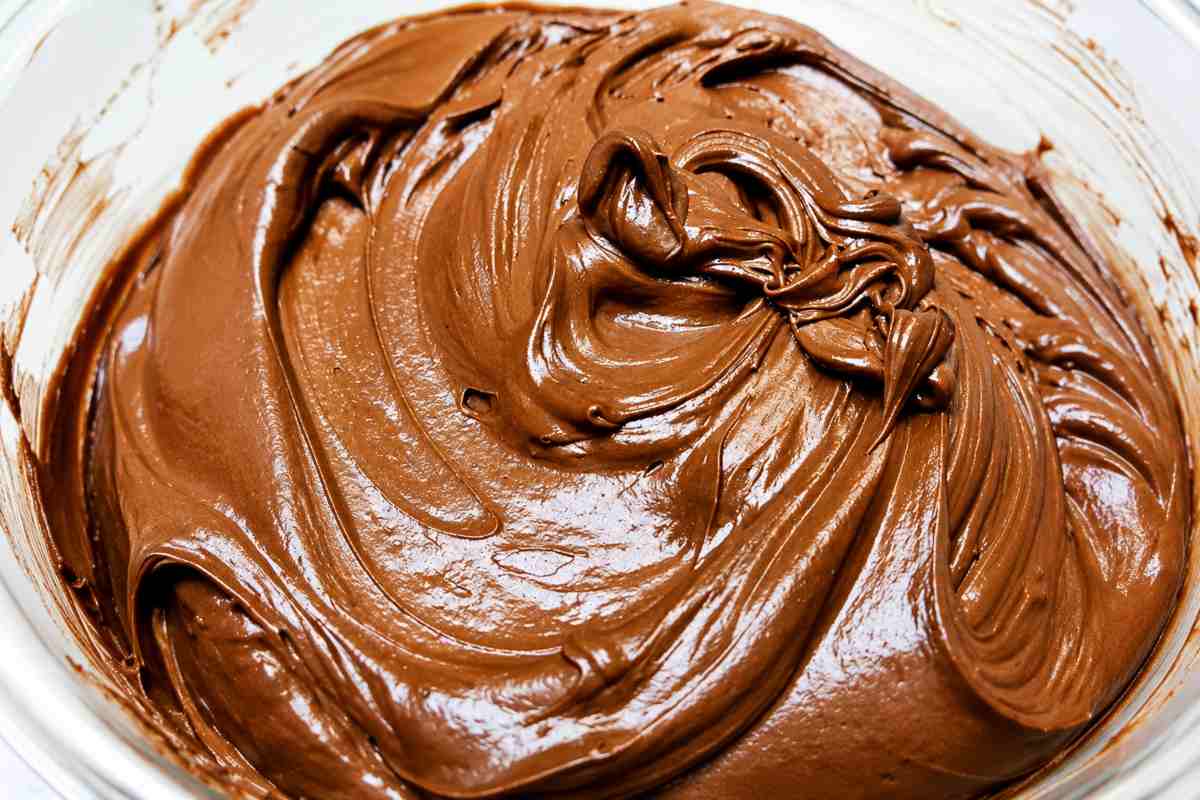
The chocolate portion of this batter uses good quality cocoa powder mixed into a portion of the vanilla batter. The key is dissolving the cocoa properly so there are no dry pockets, it should be smooth, glossy, and slightly darker than you might expect. That’s when you know it’s ready to swirl.
The “S” swirl method
This is the single technique that separates a beautiful marble cake recipe from a muddy one. Instead of stirring wildly or making random loops, you draw a deliberate “S” shape through the batter with a skewer or thin knife. Three or four clean passes. No more. Over-swirling is the most common mistake in a chocolate-and-vanilla marble cake recipe: the moment you go too far, the distinct colors start to blend, and you lose that striking contrast in the crumb.
Making the Best Moist Marble Cake
Yields: 12 slices Prep time: 15 minutes Cook time: 40–45 minutes
Ingredients
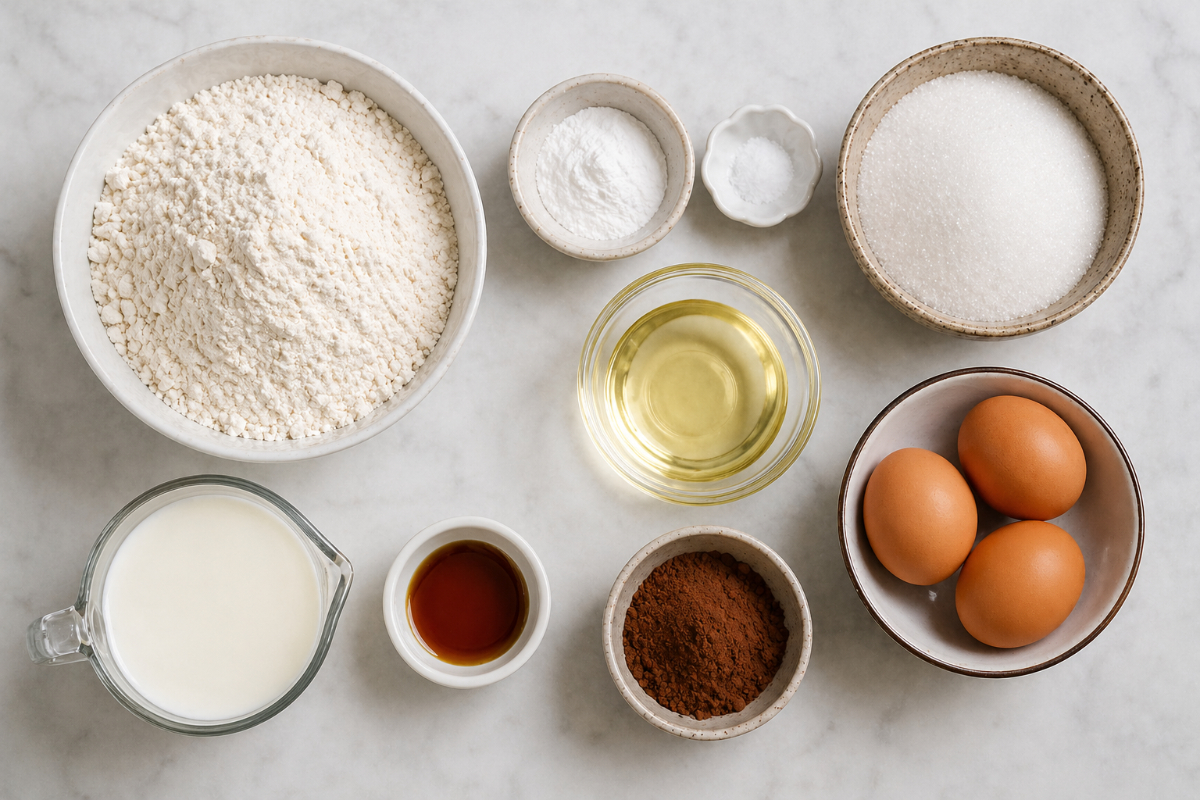
- 2 cups all-purpose flour
- 2 tsp baking powder
- 1/2 tsp salt
- 3/4 cup sugar
- 3/4 cup vegetable oil
- 3 large eggs
- 1 cup milk
- 2 tsp vanilla essence
- 2 tbsp cocoa powder
Step by Step Instructions
- Preheat Oven and Prepare Pan Preheat your oven to 350°F (175°C). Grease a loaf pan or a round 9-inch cake pan and lightly dust with flour.
- Mix the Wet Ingredients In a large bowl, whisk together the oil, eggs, sugar, milk, and vanilla essence until the mixture is smooth.
- Add the Dry Ingredients Add the all-purpose flour, baking powder, and salt to the wet mixture. Mix gently with a spatula until the ingredients are just combined, be careful not to overmix.
- Make the Chocolate Part Pour about 1 cup of the batter into a small bowl. Stir in 2 tbsp cocoa powder with about 2 tbsp of milk (not listed in your original ingredients but needed for consistency) and mix until smooth.
- Layer and Swirl Pour half of the plain (vanilla) batter into your prepared baking pan. Add spoonfuls of the chocolate batter over it, then top with the remaining plain batter. Use a knife or skewer to lightly swirl through the batter for that marbled look (remember, don’t overmix, or it will blend too much).
- Bake Bake for 40–45 minutes, or until a toothpick inserted in the center of the cake comes out clean.
- Cool and Serve Let the cake cool in the pan for 10 minutes, then carefully remove it from the pan and transfer it to a wire rack to cool completely before slicing and serving.
Best Easy Marble Cake Recipe
Ingredients
- 2 cups all purpose flour
- 2 tsp baking powder
- 1/2 tsp salt
- 3/4 cup sugar
- 3/4 cup vegetable oil
- 3 large eggs
- 1 cup milk
- 2 tsp vanilla essence
- 2 tbsp cocoa powder
Instructions
- Preheat oven to 350°F (175°C). Grease a loaf pan or round 9-inch cake pan and lightly dust with flour.
- In a large bowl, whisk together oil, eggs, sugar, milk, and vanilla essence until smooth.
- Add flour, baking powder, and salt. Mix gently until combined, don’t overmix.
- Pour about 1 cup of the batter into a small bowl. Stir in 2 tbsp cocoa powder with about 2 tbsp of milk (not listed in your original ingredients but needed for consistency) and mix until smooth.
- Pour half of the plain batter into the baking pan. Add spoonfuls of chocolate batter over it, then top with the remaining plain batter. Use a knife or skewer to lightly swirl through the batter for that marbled look (don’t overmix or it’ll blend too much).
- Bake for 40–45 minutes, or until a toothpick inserted in the center comes out clean
- Let it cool for 10 minutes, then remove from the pan and cool completely.
Video
Notes
Nutrition
The Science of the Perfect Chocolate Vanilla Swirl
Understanding why this marble cake recipe behaves the way it does in the oven makes you a more confident baker and helps you troubleshoot when things don’t go exactly to plan.
When both batters go into the tin side by side, they’re essentially competing for the same space as they expand in the heat. The oil in the batter keeps the gluten strands supple, allowing the cake to rise evenly without cracking or forming a tough crust on the sides. The baking powder reacts with heat to help the cake rise evenly, creating the light and fluffy texture you want in a proper chocolate and vanilla marble cake recipe.
The cocoa portion of the batter behaves slightly differently because cocoa absorbs moisture. This is why the chocolate batter in a well-made marble cake recipe tends to look slightly thicker than the vanilla, it’s not wrong, it’s chemistry. That thicker consistency actually helps the swirls hold their shape in the oven rather than bleeding completely into the surrounding vanilla batter.
One more thing worth knowing
The skewer technique works because you’re dragging through both batters simultaneously, creating a shared boundary rather than fully mixing them. The boundary is what produces those clean, defined marble lines when the cake is sliced. Keep that boundary intact, and your marble cake recipe, chocolate and vanilla, will look exactly the way it should.
Getting the Swirl Right
This section alone could save your cake. The swirl is where most home bakers either create something beautiful or accidentally turn their chocolate vanilla marble cake recipe into a brown, blurry mess. Here’s exactly what to do.
After spooning both batters into your prepared tin, alternating them in rough dollops rather than pouring one entirely on top of the other, take a skewer, chopstick, or the handle of a thin spoon. Starting at one end of the tin, draw a slow “S” shape from one side to the other. Move to a slightly different position and draw another “S”. Repeat three or four times across the length of the tin. Stop.
That’s it. Genuinely. The urge to keep going is strong, but you must resist it. The more you swirl, the more the colors merge, and within ten additional seconds of overworking it, your marble cake recipe goes from showstopper to disappointment. Trust the process, put down the skewer, and pop it in the oven.
The heat will do the rest. As the cake rises, those swirl lines expand and separate slightly, creating the marbled effect you’re after. When you cut into a properly swirled chocolate and vanilla marble cake recipe, every slice should reveal a different pattern, and that’s exactly the beauty of it.
Nutrition Information Per Serving
This marble cake recipe yields 12 servings. The values below are per single slice, taken directly from the recipe. Keep in mind that any toppings like ganache, powdered sugar, or buttercream will add to these numbers.
| Nutrient | Amount Per Serving |
|---|---|
| Calories | 254 kcal |
| Carbohydrates | 32 g |
| Protein | 5 g |
| Total Fat | 12 g |
| Saturated Fat | 2 g |
| Polyunsaturated Fat | 3 g |
| Monounsaturated Fat | 7 g |
| Trans Fat | 0.04 g |
| Cholesterol | 49 mg |
| Sodium | 448 mg |
| Potassium | 88 mg |
| Fiber | 1 g |
| Sugar | 14 g |
| Vitamin A | 102 IU |
| Calcium | 217 mg |
| Iron | 2 mg |
Please note that nutritional information is a rough estimate and can vary significantly based on the products used in the recipe.
Common Mistakes in a Marble Cake Recipe
Even experienced bakers run into problems. Here are the most common issues with a marble cake recipe and how to solve them before they ruin your afternoon.
The marble pattern disappeared
You overswirled. There’s no fixing it after the fact, the cake will still taste good, it just won’t have the visual contrast. Next time, stop at a maximum of 4 swirls and don’t go back for a second pass.
The cake is dense instead of fluffy
One of two things happened: the batter was overmixed after adding the flour (which develops too much gluten and makes the crumb tight), or the leavening agents were past their prime. Baking powder can lose its potency over time, so always check that it is fresh before using it. If yours have been sitting in the cupboard for more than six months, replace them before you bake.
The cake sank in the middle
The oven wasn’t hot enough, or the tin was opened too early during baking. Resist checking before the 35-minute mark. A digital oven thermometer is one of the most useful tools any home baker can own. Most ovens run 10–15 degrees off the dial reading.
The chocolate flavor is weak
This almost always comes down to cocoa quality. Cheap cocoa powder produces a pale, flat chocolate flavor in a marble cake recipe. Use the best cocoa you can find. Dutch-processed cocoa gives a deeper, smoother chocolate flavor than natural cocoa powder.
The cake is sticking to the tin
Grease and line your tin properly. Grease the sides with a little oil or butter, cut a piece of parchment paper for the base, and press it in. Even non-stick tins benefit from this treatment, especially when baking a chocolate and vanilla marble cake, where you want clean, sharp edges when you turn it out.
How to Store Your Marble Cake Recipe for Maximum Freshness
One of the best things about this marble cake recipe is how well it keeps, thanks to the oil in the batter. Unlike butter-based cakes, which tend to dry out quickly, oil keeps the crumb moist for longer.
- At room temperature, store the cake in an airtight container for up to 3 days. Keep it away from direct sunlight and heat. A cake dome works beautifully if you have one.
- In the fridge, the cake will keep for up to 5 days. Wrap individual slices in cling film or place the whole cake in an airtight container. Let it come back to room temperature before eating, cold cake always tastes slightly stale even when it isn’t.
- In the freezer, this marble cake recipe, chocolate and vanilla, freezes beautifully. Wrap individual slices tightly in cling film, then place them in a zip-lock bag with all the air removed. Freeze for up to 3 months. Thaw at room temperature for about an hour, and it’ll taste almost freshly baked.
How to Make Your Marble Cake Recipe Even More Special
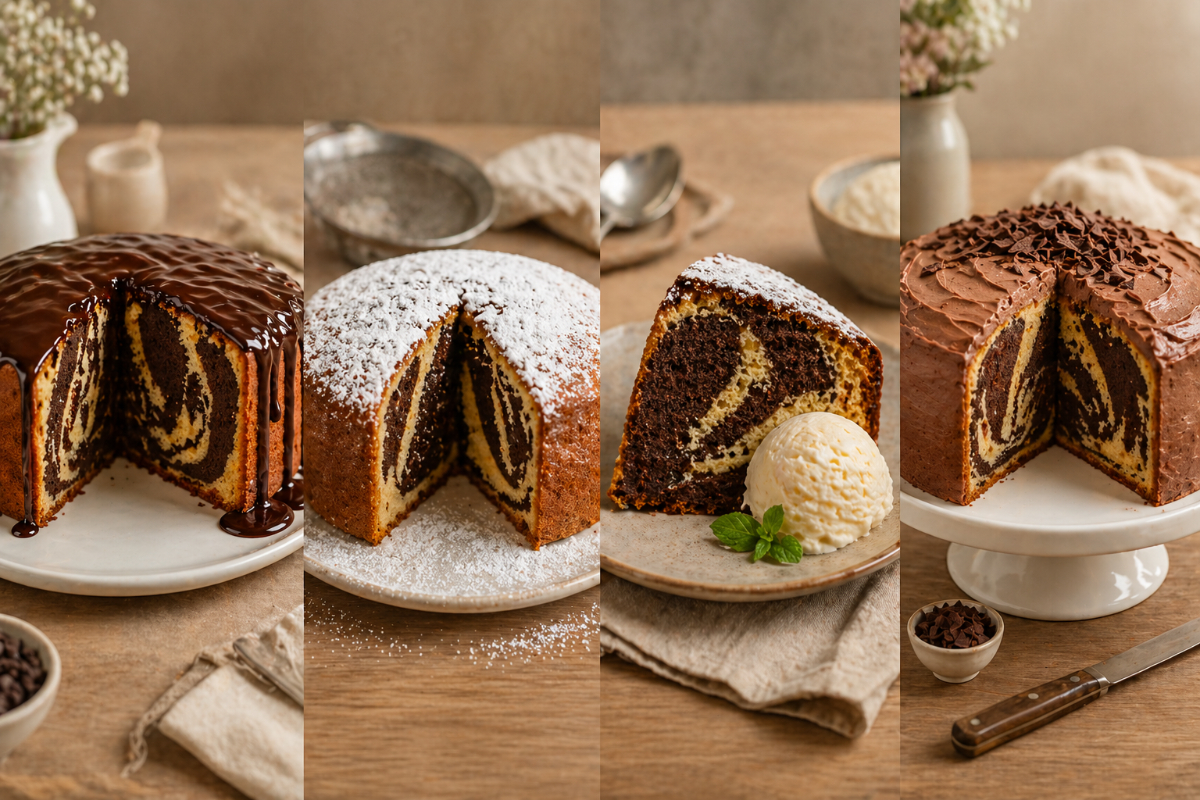
The base recipe is wonderful on its own, but if you want to dress it up for a birthday or special occasion, here are a few ideas that work beautifully and don’t require any advanced baking skills.
Simple chocolate ganache drizzle
Heat equal parts double cream and chopped dark chocolate until smooth, then let it cool slightly until thick enough to pour, then drizzle it over the cooled cake. It gives a glossy finish and adds richness, turning a simple marble cake recipe into something that looks genuinely bakery-worthy.
Dusting of powdered sugar
For the most effortless finish, simply dust the top generously with powdered sugar just before serving. It highlights the cake’s domed top and gives it a classic, nostalgic look.
Vanilla ice cream on the side
A warm slice of chocolate-and-vanilla marble cake, paired with a scoop of vanilla ice cream, is one of those combinations that never get old. The cold, creamy vanilla against the warm, dense cake is just perfect.
Chocolate buttercream frosting
If you want to go all-in, spread a layer of chocolate buttercream across the top and sides of the cooled cake. It transforms the marble cake recipe from an everyday bake into a proper celebration cake.
Can You Adapt This Marble Cake Recipe
The beauty of a well-built marble cake recipe is how adaptable the base batter is. Here are a few tested variations worth trying.
Marble loaf cake
Pour the batter into a standard 9×5-inch loaf tin instead of a round cake pan. Baking time increases slightly, check at the 50-minute mark with a skewer. The rectangular shape makes it easier to slice and is excellent for packing into lunchboxes.
Marble bundt cake
A bundt tin gives this chocolate vanilla marble cake recipe a dramatic, elegant shape that needs no decoration. Grease the tin extremely thoroughly, every crevice, to ensure clean release. The swirling technique is slightly different in a bundt: alternate spoonfuls of each batter around the ring, then swirl once with a thin knife.
Gluten free version
Swap plain flour for a good-quality 1:1 gluten-free baking flour. The texture will be slightly different, a touch more dense, but the flavor and swirl remain excellent. Add a quarter teaspoon of xanthan gum if your blend doesn’t already include it.
Mini marble cupcakes
Divide both batters alternately into cupcake cases and use a toothpick to give each one a small swirl. Bake at 175°C / 350°F for 18–22 minutes. Perfect for parties and significantly easier to serve than a whole cake.
Serving Suggestions
This marble cake recipe is absolutely delightful on its own, and honestly, a plain slice still feels like a treat every single time. But if you want to dress it up a little, the options are simple and completely stress-free.
For a proper dessert moment, serve a warm slice alongside a scoop of vanilla ice cream. The contrast between the cold, creamy ice cream and the soft, moist cake is one of those combinations that never gets old, and the vanilla echoes the vanilla batter in the marble cake recipe in the best possible way. A drizzle of the chocolate ganache over both the cake and the ice cream at the same time takes it completely over the top.
This cake also pairs perfectly with a cup of coffee or tea. The slight bitterness of a good coffee cuts through the sweetness of the chocolate and vanilla and balances every bite. It’s the kind of combination that turns a simple breakfast into something special.
The Final Words on This Marble Cake Recipe
A great marble cake recipe isn’t complicated. It’s patient. It asks you to stop swirling when your instinct says to keep going. It asks you to trust the oven and resist opening the door. It rewards you with something that looks hand-crafted and beautiful, because it genuinely is. This chocolate vanilla marble cake recipe is the kind of bake that people ask for the recipe after tasting it. The kind where someone takes a photo before the first slice is even cut. The kind that disappears faster than you expected, which is always the best sign of all. Bake it this weekend. Take the photo. Share the recipe. And if you tried it and loved it, leave a comment below, it genuinely helps more bakers find recipes that actually work.
Try out our other Cake Recipes:
- The Best Fluffy Moist Banana Cake
- Grandma’s Strawberry Cake
- The Ultimate Pound Cake Recipe
- The Best Fluffy Lemon Cake
- Tres Leches Cake
Frequently Asked Questions ( FAQs)
Can I use butter instead of oil in this marble cake recipe?
You can, but the texture changes noticeably. Butter produces a slightly denser, more flavored crumb but dries out faster. Oil keeps the cake moist for longer, which is why it’s preferred here. If you want the best of both, use half butter and half oil.
Why did my marble cake recipe turn brown instead of marbled?
Overswirling. Once both batters are in the tin, the skewer should only pass through the batter three or four times in a slow “S” motion. Any more than that and the colors blend completely.
Can I make this marble cake recipe ahead of time?
Yes, this is actually one of the best cakes for making ahead. Bake the day before, cool completely, wrap tightly, and store at room temperature. The oil in the batter keeps it fresh and moist overnight without any loss of quality.
What is the best cocoa powder for a chocolate and vanilla marble cake recipe?
Dutch processed cocoa powder gives a deeper, smoother, less bitter chocolate flavor. Natural cocoa works too, but produces a slightly lighter, more acidic flavor. Either is fine, but for a truly rich chocolate swirl, Dutch-processed is the better choice.
Can I make this marble cake recipe without eggs?
You can replace eggs with flax eggs (1 tablespoon ground flaxseed + 3 tablespoons water per egg, left to gel for 5 minutes). The texture will be slightly different, a little denser, but the flavor and swirl are largely unaffected. Unsweetened applesauce (60g per egg) also works well.
Why is my marble cake recipe dry?
Either too much flour was added (always spoon and level, never scoop directly from the bag), the cake overbaked, or it was stored uncovered. Use a digital scale for accuracy, check doneness at the 38-minute mark with a skewer, and always store in an airtight container.
Can I add vanilla extract to the chocolate portion of a marble cake recipe or just to the vanilla?
Absolutely. A small splash of vanilla in the chocolate batter rounds out the cocoa bitterness and adds depth. It won’t affect the swirl, only the flavor, and always for the better.
How do I get a taller, fluffier marble cake?
Make sure your leavening agents are fresh, don’t overmix after the flour goes in, and ensure your oven is fully preheated before the tin goes in. Using room temperature eggs and milk also helps the batter come together more smoothly and produces a better rise.












6 Comments. Leave new
Amazing one!
This marble cake recipe is fantastic! The cake came out incredibly soft and moist. Highly recommended for anyone who enjoys homemade cakes.❤️🎂
I’m so happy to hear your marble cake turned out soft and moist. That’s exactly what I was hoping for! Thank you for trying the recipe and for recommending it. Happy baking, and I hope you enjoy many more Devine Dishes recipes! 🎂🥰
Love the beautiful marble swirl in this cake! 🍰🤎 It looks fluffy, classic, and absolutely delicious! 😍
Your text mentions baking SODA several times but it’s not listed in the ingredients list or photos. Please clarify…I’m looking forward to making this today but want to get it right. Thanks!
Hi Tracie, thank you for catching this and sorry for the confusion! You are right, this recipe uses baking powder only and the baking soda mentions were a mistake in the post. We have removed them and corrected the baking powder amount so the post now matches the ingredients list and the recipe card. Enjoy your marble cake and let us know how it turns out! 🍰