
Some cakes are fine. They get eaten, forgotten, and nobody asks for the recipe. This lemon cake recipe is not that cake. This is the one that gets people hovering near the cooling rack before the glaze even goes on. The one someone grandmother calls the best thing I’ve tasted in years.
The one you make once and then keep making, for birthdays, for brunches, for a random Tuesday when you just need something that tastes like sunshine. What makes it stand out isn’t anything complicated. There are no specialty ingredients, no stand mixer required, no three-hour chilling breaks.
What you get is a perfectly balanced lemon cake, tender from the oil, bright from real lemon juice and zest, golden on top, and soft all the way through the middle. Add the optional glaze, and it tips straight into showstopper territory. If you’ve ever pulled out a dry, dense, or barely lemony loaf from the oven and wondered where it all went wrong, this recipe fixes every single one of those problems. And if you’re looking for a moist lemon pound cake recipe that doesn’t demand a pastry degree to pull off, you’ve landed in exactly the right place.
Why This Lemon Cake Recipe Works
Here’s the truth about most lemon cakes that disappoint: the problem is rarely the baker. It’s the recipe. A lot of lemon cake recipes call for butter creamed with sugar, which sounds classic but makes a denser, drier crumb unless you get the ratios exactly right. Others undershoot the lemon and leave you with a cake that’s merely vanilla with a hint of something citrusy. Some skip the zest entirely and rely on bottled juice, which tastes flat compared to the real thing.
This recipe takes a different approach
- First Using oil instead of butter is the single biggest change that keeps this cake moist for days rather than hours. Oil stays liquid at room temperature, so the crumb never sets hard like a butter-based cake can. It’s the same logic behind why a good lemon pound cake from a bakery stays tender even on day two or three.
- Second The key is double lemon, both fresh juice and zest. The juice adds tartness and reacts with the baking powder to lift the batter. The zest is where all the aromatic citrus oil lives, and that’s what gives this cake that unmistakably bright lemon flavor rather than a flat, sugary one.
- Third no overmixing. Seriously. This is the one instruction that separates a fluffy, cloud-like crumb from a rubbery slab. Whisk just until the batter comes together, stop, and trust the oven to do the rest.
What You Will Need Before You Start
Before jumping in, here are a few things worth noting:
- Room temperature ingredients matter. Cold milk can shock the batter, affecting how evenly the leavening activates. Take your milk out 20–30 minutes ahead of time.
- Use fresh lemons, not bottled juice. This single choice makes a bigger difference than almost anything else. One large lemon gives you roughly the right amount of both juice and zest for this recipe.
- Measure flour correctly. Pour the flour into your measuring cup and use a straight edge to smooth the top. Scooping directly from the bag packs it down and can add 20% more flour than the recipe intends, almost always the culprit behind a dense, dry cake.
- Grease your pan properly. Whether you’re using a loaf pan or a round 8-inch pan, grease and flour it, or line it with parchment. This cake has a gorgeous, golden crust you don’t want to leave behind.
Making the Best Moist Lemon Cake
Creating the Best Moist Lemon Cake is a simple process that relies on using the right ingredients. The secret to its remarkable moisture and fluffy texture is the use of vegetable oil and whole milk. These ingredients work together to keep the crumb tender and light. The other key is the use of fresh lemon juice and zest, which guarantees a bright, natural citrus punch that elevates this cake from simple to stunning.
Recipe Yield
Yields 8-10 slices | Prep time 15 minutes | Cook time 35–40 minutes
Ingredients
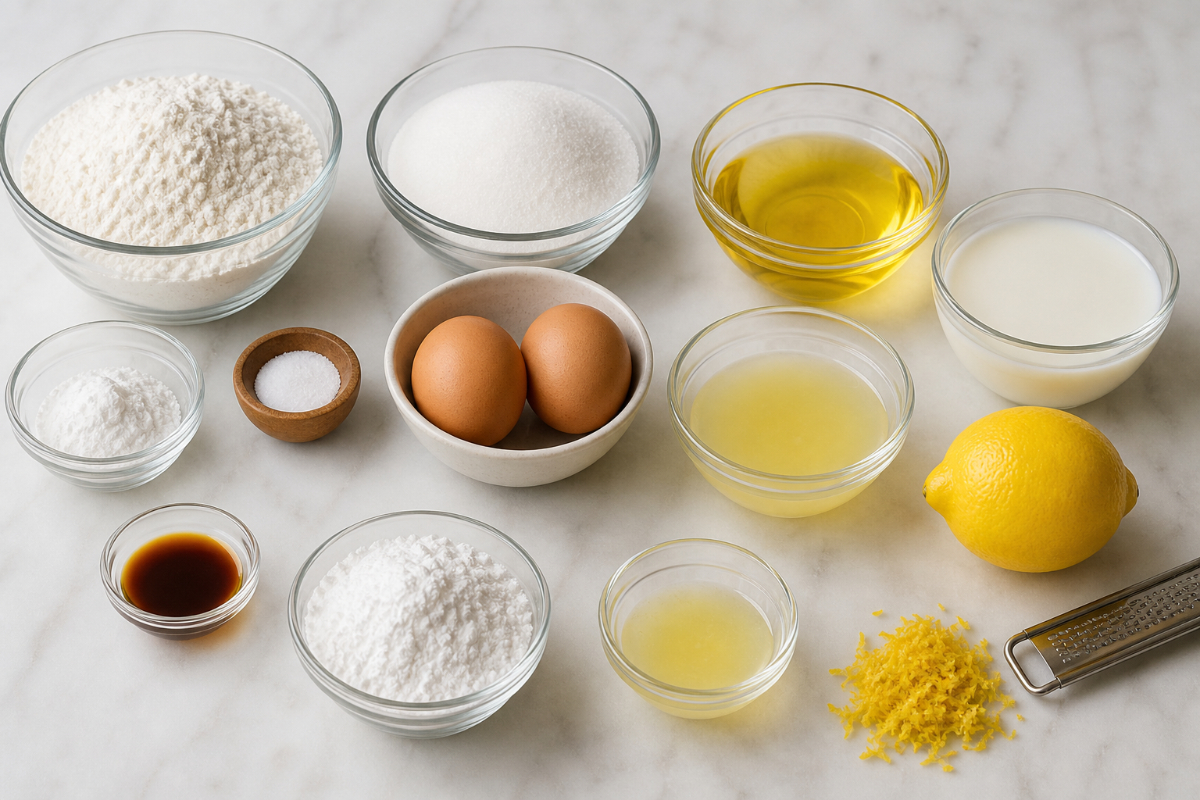
For the Cake
- 1 ½ cups all-purpose flour
- 1 cup sugar
- 2 tsp baking powder
- ½ tsp salt
- ½ cup vegetable oil (or melted butter)
- 2 large eggs
- ½ cup milk (room temperature)
- ¼ cup freshly squeezed lemon juice (about 1 lemon)
- Zest of 1 lemon
- 1 tsp vanilla extract
Optional Lemon Glaze
- ½ cup powdered sugar
- 1–2 tbsp lemon juice
Step by Step Instructions
- Preheat Oven & Prepare Pan Preheat your oven to 350°F (175°C). Grease and flour a loaf pan or a round 8-inch pan.
- Mix the Wet Ingredients In a large bowl, whisk together the oil, eggs, milk, lemon juice, lemon zest, and vanilla extract until smooth and fully combined.
- Add Dry Ingredients Add the flour, sugar, baking powder, and salt. Whisk gently until the batter is smooth. Avoid overmixing to keep it fluffy.
- Pour & Bake Pour the finished batter into your prepared pan and bake for 35–40 minutes, or until a toothpick inserted into the center of the cake comes out clean.
- Cool Let the cake cool in the pan for about 10 minutes. Then, carefully remove it from the pan and transfer it to a wire rack to cool completely.
- Make the Glaze (Optional) Once the cake is fully cooled, mix the powdered sugar with 1–2 tablespoons of lemon juice until you achieve a smooth, pourable consistency. Drizzle the glaze evenly over the cooled cake for a glossy, tangy finish.

How To Make The Best Fluffy Lemon Cake
Ingredients
- 1 1/2 cup whole purpose flour
- 1 cup sugar
- 2 tsp baking powder
- 1/2 tsp salt
- 1/2 cup vegetable oil or melted butter
- 1/2 cup milk room temperature
- 1/4 cup lemon juice freshly squized
- 1 lemon zest
- 1 tsp vanilla extract
Optional but highly recommended
- 1/2 cup powdered sugar
- 2 tsp lemon juice
Instructions
- Preheat oven to 350°F (175°C). Grease and flour a loaf pan or round 8-inch pan.
- In a large bowl, whisk together oil, eggs, milk, lemon juice, lemon zest, and vanilla.
- Add flour, sugar, baking powder, and salt. Whisk gently until smooth — don’t overmix.
- Pour batter into your pan and bake for 35–40 minutes, or until a toothpick comes out clean.
- Let it cool for about 10 minutes, then remove from pan to cool completely.
- Mix the powdered sugar with 1–2 tbsp lemon juice. Drizzle over cooled cake for a glossy, tangy finish.
Notes
Nutrition
Nutrition Overview Per Slice, Approx. 10 Slices
| Nutrient | Per Slice |
| Calories | ~219 kcal |
| Carbohydrates | 29g |
| Fat | 12g |
| Protein | 0.5g |
| Sugar | 28g |
| Sodium | 209mg |
Note: Values are estimates and vary based on specific brands and portion size.
How to Know When It is Perfectly Done
The toothpick test is reliable, but there are a couple of other signals worth watching for. The cake should pull away very slightly from the edges of the pan. The top will look set and lightly golden, neither shiny nor wet-looking. And if you gently press the center, it should spring back without leaving a dent.
Oven temperatures vary more than most people realize. If your oven runs hot, start checking at the 32-minute mark. If it tends to run cool, give it the full 40 minutes before opening the door. Letting cold air rush in before the structure has set is a fast way to end up with a sunken center.
The Lemon Glaze Do not Skip It
Technically, the glaze is listed as optional. Practically speaking, it’s not optional if you want the best version of this cake. The glaze does two things.
- First, it adds another layer of tart lemon flavor that cuts through the crumb’s sweetness.
- Second, it creates that glossy, bakery-style finish that makes this look genuinely impressive, whether you’re serving it on a Sunday morning or bringing it to a gathering.
- The key to a good glaze is getting the consistency right, thick enough to coat the cake without running straight off, thin enough to drizzle rather than plop.
- Begin with one tablespoon of lemon juice, and add the second slowly until you hit that sweet spot. If the mixture becomes too runny, sprinkle in some additional powdered sugar.
One tip
Drizzle the glaze while the cake is fully cooled. If the cake is still warm, the glaze absorbs in rather than sitting on top, and you lose that shiny, visible layer.
Variations to Experiment with
While the original recipe is excellent as is, consider trying these variations after you’ve made it
Lemon Poppy Seed
Fold 2 tablespoons of poppy seeds into the batter prior to baking. The seeds contribute a delightful crunch, making this a timeless twist on the classic lemon pound cake.
Lemon Blueberry
Toss ¾ cup of fresh or frozen blueberries with a teaspoon of flour to keep them from sinking, then fold them gently into the finished batter. This combination is one of the most searched lemon cake recipe variations right now, and for good reason.
Glazed with Cream Cheese Frosting
Skip the standard glaze and instead mix 100g softened cream cheese using ½ cup of confectioners’ sugar and 1 tablespoon of lemon juice for a tangy, creamy topping. It changes the character of the cake entirely, from a less casual loaf to a more celebration cake.
Citrus Swap
Replace the lemon with orange zest and juice for a completely different but equally delicious result. Check out the best orange cake recipe on Devine Dishes if that direction interests you.
Mini Loaves
Divide the batter between four mini loaf pans and bake for 22–26 minutes. These make great gifts and slice cleanly for serving at events.
Ways to Modify This Recipe for Specific Dietary Requirements
Dairy free
Substitute the milk with an equivalent volume of oat milk or almond milk. The texture changes very slightly, just a touch less rich, but the lemon flavor carries through completely.
Gluten free
A cup-for-cup gluten-free flour blend works well here. Incorporate an additional ¼ teaspoon of baking powder to compensate for the slightly reduced lift you get without gluten structure.
Reduced sugar
You can drop the sugar to ¾ cup without dramatically affecting the texture. The cake will be less sweet, and the lemon flavor will feel sharper, some people actually prefer it this way.
Egg free
Replace each egg with a tablespoon of ground flaxseed mixed with 3 tablespoons of water, left to sit for 5 minutes. The crumb will be slightly denser but still pleasant and well-flavored.
Making This Into Cupcakes or a Layer Cake
This batter converts easily. For cupcakes, fill liners about two-thirds full and bake at 350°F for 18–20 minutes. You’ll get about 12 standard cupcakes. Let them cool completely before adding a cream cheese or lemon buttercream frosting.
For a layer cake, double the recipe and divide it between two 8-inch round pans. Bake for 25–30 minutes. Once cooled, fill and frost with either the standard glaze or a more substantial frosting. If you love baking layered cakes and want to try something different, the moist chocolate cake on Devine Dishes follows a similar method. It pairs beautifully alongside this one at dessert tables.
Common Lemon Cake Problems
- My cake came out dense. Almost always overmixing or too much flour. Use the spoon-and-level method when measuring flour, and stop whisking the batter as soon as it comes together.
- My cake isn’t lemony enough. Don’t skip the zest. The zest carries far more flavor than the juice alone. If you want an even more intense citrus hit, add ½ teaspoon of lemon extract along with the vanilla.
- The glaze soaked into the cake. The cake wasn’t fully cooled. Let it reach room temperature before glazing, this takes about 45 minutes to an hour after removing from the pan.
- The top is browning too fast. Tent the pan loosely with foil after 25 minutes and continue baking. This slows the surface browning while the interior finishes.
- The cake stuck to the pan. Greasing alone isn’t always enough. Grease, then flour, or line with parchment paper. Both work, the combination of both is foolproof.
Storage
Keep the cake stored in a sealed container at room temperature for no more than three days. Refrigerate for up to 5 days, the lemon flavor actually deepens overnight, so day-two slices are genuinely better than day-one. If you freeze it, wrap individual slices securely wrap it in plastic and place them in the freezer for as long as two months. Thaw at room temperature for about an hour before serving.
Serving This Lemon Cake Right
Plain slices with tea or coffee, this is the move for breakfast or a mid-afternoon pick-me-up. The cake is substantial enough to be satisfying without being heavy. For something a little more dressed up, serve slices alongside fresh blueberries or raspberries. The berries add color and their own slight tartness that plays beautifully against the lemon. A small spoonful of lightly whipped cream alongside each slice turns this into a proper dessert without any extra baking.
If you want to make it the centerpiece of a brunch spread, pair it with something savory from the table, it’s a natural complement to egg dishes, which is why this works so well as part of a weekend breakfast layout alongside something like a fluffy blueberry muffin or a simple butter cake for variety.
Related Recipes You Will Love
Frequently Asked Questions (FAQs)
What makes a lemon cake truly moist?
The fat source. Oil keeps a cake moist far more effectively. Butter solidifies slightly as it cools, which can make a crumb feel drier than it did right out of the oven. The combination of oil, eggs, and whole milk in this recipe creates a crumb that stays genuinely soft for several days.
Is it possible to replace bottled lemon juice for fresh lemon juice?
You can, but the difference is noticeable. Freshly squeezed lemon juice has a brighter, rounder flavor. Bottled juice often has a slightly bitter aftertaste from processing. If fresh lemons aren’t available, use bottled juice but add an extra teaspoon of zest, or a few drops of lemon extract, to compensate.
What’s the difference between a lemon cake and a lemon pound cake?
Traditional lemon pound cake uses a pound each of butter, sugar, eggs, and flour, it’s richer and denser. This recipe sits between the two, it has the moistness and depth of a lemon pound cake, but with a lighter, fluffier crumb because of the oil-to-flour ratio and the use of baking powder for lift.
Why did my lemon cake sink in the middle?
Usually one of three things: the oven door was opened before the 30-minute mark (letting cold air in collapses the rising structure), the batter was overmixed (developing too much gluten, which fights the rise), or the baking powder is old and has lost its potency. Test baking powder by dropping a teaspoon into hot water, it should bubble actively.
Can I make this lemon cake ahead of time?
Yes, and it actually improves. The lemon flavor deepens after 12–24 hours as the zest’s oils continue to infuse into the crumb. Make it the day before, store it in an airtight container, and add the glaze an hour before serving for the best result.
How do I add more lemon flavor without changing the recipe?
Two easy moves: increase the zest to 1.5 lemons, and add ¼ teaspoon of lemon extract alongside the vanilla. Neither change affects the batter’s structure, and both noticeably amplify the citrus.
Can I make a moist lemon pound cake recipe with this batter?
Yes. For a denser, more traditional pound cake style, substitute the vegetable oil with melted butter and reduce the milk by one tablespoon. The result is richer and more buttery, closer to a classic moist lemon pound cake recipe, while still keeping the bright lemon character that makes this cake worth making.
How long does this cake keep?
At room temperature in an airtight container, up to 3 days. Refrigerated: up to 5 days. Frozen (wrapped tightly) up to 2 months.

















1 Comment. Leave new
Sunshine in cake form ☀️🍰 oil based batter keeps it moist for days, double lemon (juice + zest) makes it POP, glaze is non negotiable. 😋✨