
Some recipes earn a permanent spot in your weekly rotation not because they’re trendy, but because they genuinely deliver every single time. Ginger Soy Chicken is exactly that kind of recipe. It’s bold, it’s sticky, it’s deeply savory, and it comes together in one pan in under 30 minutes flat. If you’ve ever ordered Asian-style glazed chicken from a restaurant and thought, “I wish I could make this at home without the fuss,” this is your recipe. The glaze is built from pantry staples you likely already have, the method is straightforward, and the result is the kind of meal that makes people go quiet at the dinner table, the best compliment a cook can get.
This recipe works on a Tuesday night when you’re exhausted. It works when you’re meal prepping for the week. It works when you want to impress someone without spending three hours in the kitchen.
Why Ginger Soy Chicken Is the Weeknight Dinner You Keep Coming Back To
There’s a reason Ginger Soy Chicken shows up on food blogs, meal prep accounts, and family dinner tables across the world. It hits every flavor note at once, sweet from the honey, salty and umami-deep from the soy, warm and slightly sharp from the fresh ginger, and peppery enough to keep things interesting. That balance is hard to achieve with a long ingredient list, let alone a short one.
The focus has shifted toward real ingredients, faster methods and meals that actually reheat well, because most of us aren’t cooking fresh every night. Soy Ginger Chicken Recipe fits that lifestyle perfectly. It stores beautifully, repurposes across multiple meals, and tastes just as good on day three as it does straight from the pan. It also adapts. Gluten-free? One swap and you are done. Watching sodium? Low-sodium soy handles it. Want more vegetables? Toss them right into the pan. This recipe bends without breaking, which is exactly what a reliable kitchen staple should do.
The Secret Behind a Perfect Ginger Soy Chicken Glaze
Before jumping into the recipe itself, it’s worth understanding what makes this glaze work, because once you get it, you’ll never second-guess yourself at the stove again. The glaze in Soy Ginger Chicken is a pan reduction. When the soy, honey, and ginger mixture hits a hot pan, the water in the mixture begins to evaporate immediately. As it reduces, the soy concentrates, the honey caramelizes, and the natural sugars in both ingredients darken and thicken into that signature sticky coating that clings to every piece of chicken.
The key variables are heat and timing. Too low and the sauce simmers without thickening, you end up with watery chicken swimming in thin liquid. Too high and the sugars burn before they coat. Medium-high heat is your target. Watch for the point where the sauce coats the back of a spoon and holds a clean line when you drag your finger through it.
That’s your signal. Place the chicken back in the pan and stir to ensure it is evenly coated. serve immediately. Fresh ginger is non-negotiable here. Ground ginger adds background warmth, but it won’t give you that sharp, bright, slightly citrusy kick that makes Ginger Soy Chicken taste alive. Grate it fine, let it cook briefly in the hot pan, and let it do its thing.
Ingredients You’ll Need for Soy Ginger Chicken
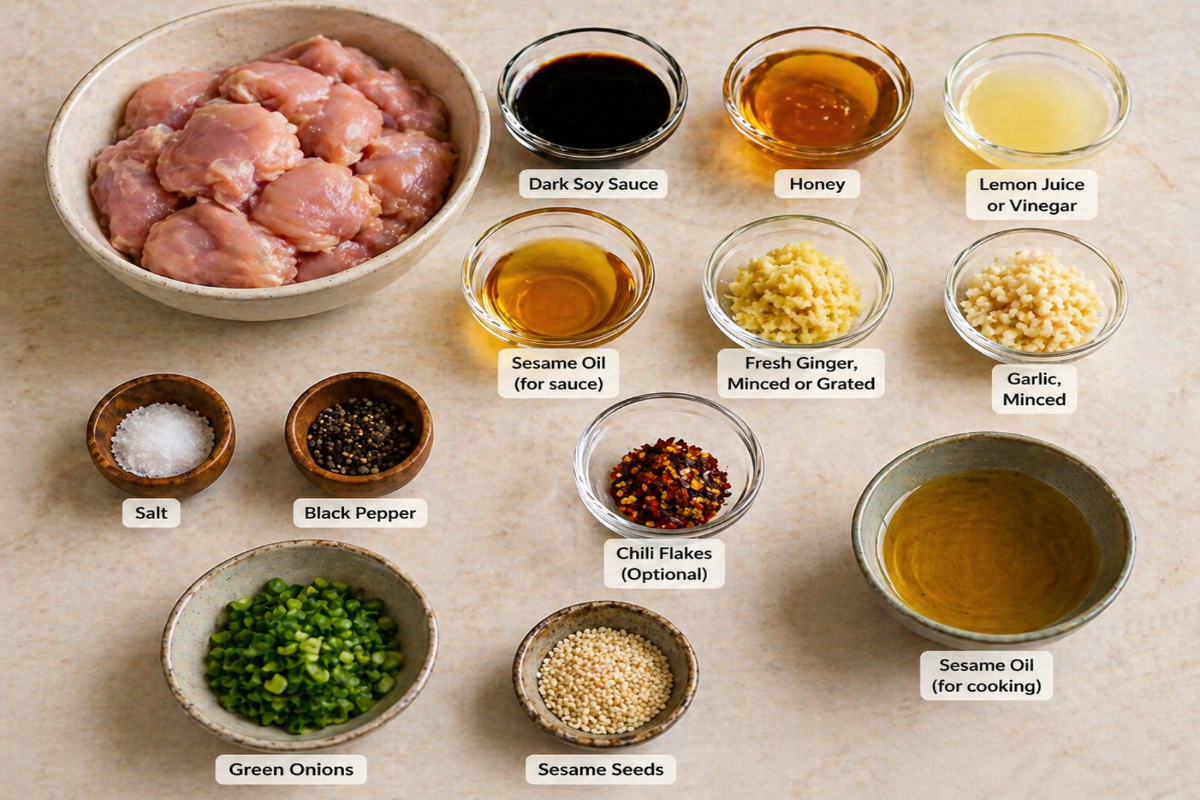
For the Chicken
- 4 boneless chicken thighs, cut into pieces
- Salt, to taste
- Black pepper, to taste
For the Sauce
- 2 tbsp dark soy sauce
- 2 tbsp honey
- 1 tbsp lemon juice or vinegar
- 1 tbsp sesame oil
- 1 tbsp fresh ginger, minced or grated
- 3 cloves garlic, minced
- ½ tsp chili flakes (optional, for heat)
For Serving
- 1 tbsp sesame oil (for cooking)
- Green onions, to garnish
- Sesame seeds, to garnish
Step-by-Step Instructions
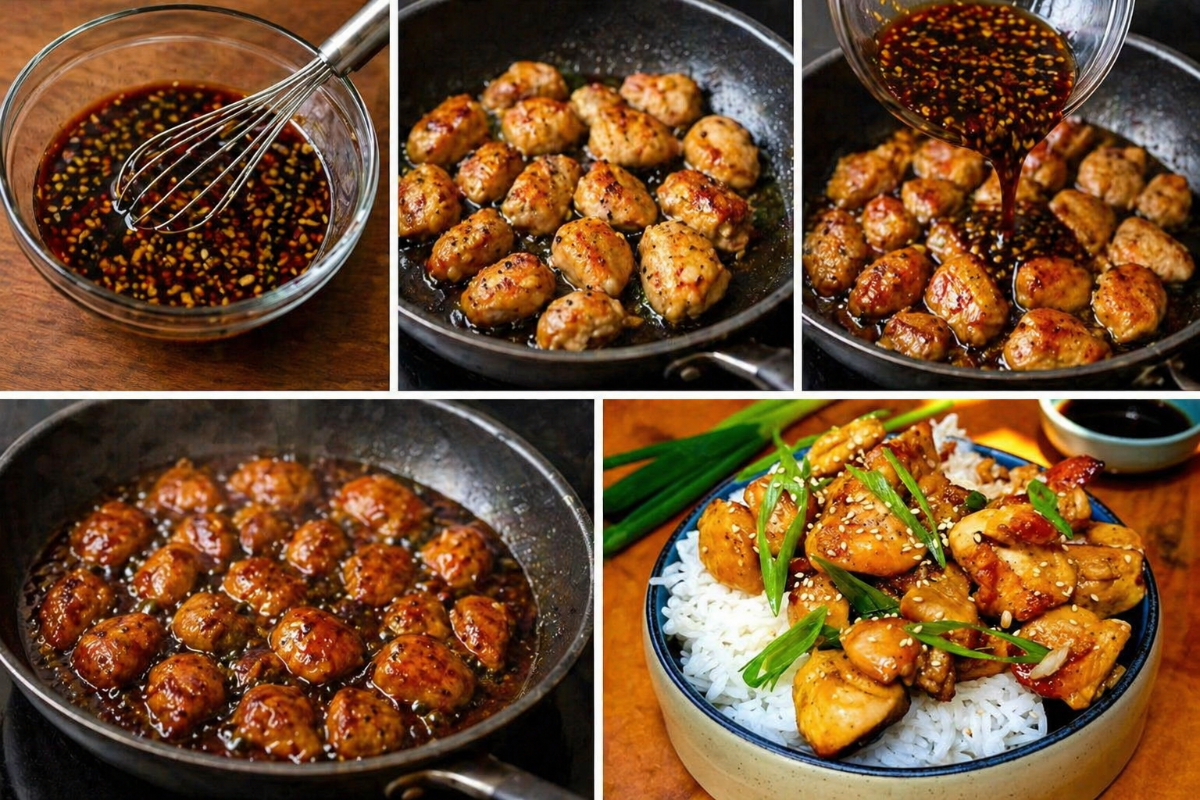
Prepare the Sauce In a medium bowl, whisk together dark soy sauce, honey, lemon juice (or vinegar), sesame oil, ginger, garlic, and chili flakes. Set aside.
Sauté the Chicken Heat a pan over medium-high heat and add one tablespoon of sesame oil. Season chicken pieces with salt & pepper, then sauté until golden brown on all sides (7–10 minutes).
Pour in the Sauce Add the ready Sauce to the pan and stir well to coat the chicken thoroughly.
Reduce and Thicken Lower the heat and let the sauce steam for 2–3 minutes until thick, glossy, and sticky.
Garnish and Serve Draw from heat, then top with sesame seeds & green onions. Serve hot and enjoy!

Sticky Soy Ginger Chicken: A Quick, One-Pan Weeknight Meal
Ingredients
- 4 chicken thighs boneless
- 2 tbsp dark soy sauce
- 1 tbsp honey
- 1 tbsp lemon juice
- 1 tbsp sesame oil
- 1 tbsp fresh ginger minced or grated
- 3 cloves garlic minced
- 1/2 tsp chilli flakes optional
- salt
- 1 green onion to garnish
- sesame seeds to garnish
Instructions
- In a medium bowl, whisk together the sauce ingredients: dark soy sauce, honey, lemon juice (or vinegar), 1 tablespoon of sesame oil, minced ginger, minced garlic, and chili flakes (if using). Set this delicious sauce aside for later use.
- Heat a large pan over medium-high heat. Add the remaining 1 tablespoon of sesame oil to the pan. Once the oil is hot, add your chicken pieces, seasoned with salt and pepper. Sauté the chicken until it is golden brown on all sides. This should take about 7-10 minutes.
- Pour the prepared sauce over the chicken in the pan. Use a spatula to scrape any extra sauce out of the bowl to ensure no flavor is left behind. Stir well to coat all the chicken pieces evenly.
- Reduce the heat to low and allow the sauce to simmer gently. Cook for 2-3 minutes, stirring occasionally. The sauce will begin to thicken and become beautifully sticky and glossy, coating the chicken perfectly.
- Remove the pan from the heat. Sprinkle the cooked chicken with green onions and sesame seeds for both color and added flavor. Serve immediately while hot, and enjoy this fantastic sticky soy ginger chicken!
Notes
Please note that the nutritional information is a rough estimate and can vary significantly based on the products used in the recipe.
Nutrition
Chicken Thighs or Chicken Breasts What Works Best for Ginger Soy Chicken?
This is probably the most common question people have when they first make Soy Ginger Chicken, and the honest answer is: both work, but they behave very differently. Chicken thighs are the stronger choice for this recipe. The slightly higher fat content keeps them moist, even if they cook a minute or two longer than ideal. They sear beautifully, develop more color in the pan, and their flavor holds up well against a bold glaze. If you’re meal prepping, thighs are non-negotiable, they reheat without turning rubbery, unlike breasts.
Chicken breasts are lean and work well if you’re mindful of temperature. Cook them to exactly 74°C / 165°F and pull them immediately. Cut them into even pieces beforehand so they cook at the same rate, and don’t overcrowd the pan. The glaze will taste just as good, you’ll just need to be a bit more attentive. For most people cooking Soy Ginger and Chicken on a weeknight, boneless skinless thighs are the move, less stress, more flavor, and far more forgiving.
How to Make This Ginger Soy Chicken Healthier Without Sacrificing Flavor
This recipe is already pretty clean nutritionally, but a few smart swaps can make it work for a wider range of dietary needs without touching the flavor profile you love.
Lower sodium version
Use low-sodium soy sauce. Because the glaze reduces and concentrates during cooking, the saltiness intensifies significantly. Starting with a lower-sodium base gives you more control and still produces a deeply savory result.
Gluten-free version
Swap regular soy sauce for tamari or coconut aminos. Tamari is the closest flavor match. Coconut aminos have a milder sweetness and lower saltiness compared to other sauces, so you may want to pull back on any added sweetener slightly to compensate.
Lower sugar version
Reduce the honey quantity and add a splash of rice vinegar or fresh lemon juice to maintain brightness. The acidity fills the flavor gap left by less sweetness and keeps the glaze from tasting flat.
More vegetables
Broccoli, snap peas, baby bok choy, and green beans all work beautifully in this Soy Ginger and Chicken recipe. Add them to the pan in the last 4–5 minutes so they soften slightly while still holding their color and crunch. They’ll pick up the glaze and become just as irresistible as the chicken itself.
Meal Prep with Ginger Soy Chicken, Make It Once, Eat It Three Ways
One of the biggest reasons Ginger Soy Chicken has become a meal prep favorite is how well it repurposes across the week. Cook a full batch on Sunday, and you’ve got three entirely different meals ready to go.
Day 1 Classic Bowl
Serve the freshly cooked chicken hot over steamed rice, scattered with sesame seeds and sliced green onions. Clean, simple, perfect.
Day 2 Noodle Bowl
Slice the leftover chicken and toss it with soba or rice noodles, shredded cucumber, a drizzle of sesame oil, and any extra glaze left in the container. The sauce becomes the dressing. No additional seasoning needed.
Day 3 Wrap
Chop the chicken into smaller pieces and tuck it into warm flatbread with quick-pickled red onion, fresh coriander, and a squeeze of lime. You’ve turned a single Sunday cook into a completely different Friday lunch.
Store in an airtight container in the fridge for up to 3 days. To reheat, add the chicken to a skillet over medium-low heat with a tablespoon of water to loosen the glaze, then gently warm it through. The pan method keeps the texture far better than the microwave, which tends to make the chicken slightly rubbery.
What to Serve with Ginger Soy Chicken
The bold, sticky glaze in this Ginger Soy Chicken pairs best with sides that can either soak it up or cut through its richness. Here are the options worth trying:
Turmeric Rice
The earthy, golden warmth of turmeric rice pairs well with the ginger in this dish. They share the same warm spice family and balance each other beautifully on the plate. Try the Best Turmeric Rice Recipe on Devine Dishes, it’s simple, aromatic, and instantly transforms any chicken dish.
Stir-Fried Vegetables
If you love the bold Asian-inspired flavors in this Ginger Soy Chicken, a proper stir fry is the natural next step. The Best Easy Chicken Stir Fry recipe uses pantry staples you already have and is on the table in minutes.
Soft Flatbread
Serve the glazed chicken wrapped in our Soft Shawarma Wrap Bread for a fusion-style dinner that genuinely surprises. The chewy bread soaks up the glaze from the pan in the most satisfying way.
Sautéed Mushrooms
Skip the carbs and serve your Ginger Soy Chicken over a bed of our Rich and Buttery Sautéed Mushrooms. The mushrooms absorb the extra glaze from the plate, adding an earthy depth that makes the whole dish feel more substantial.
Common Ginger Soy Chicken Problems
Even a simple recipe can go sideways. Here’s how to fix the most common issues before they ruin dinner.
- The sauce won’t thicken. Your heat is too low, or there’s too much liquid in the pan. Raise the heat to medium-high and let it bubble actively. It should reduce and thicken within 2–3 minutes of reaching a full boil.
- The chicken is sticking to the pan. The pan wasn’t hot enough before you added the chicken, or you tried to move it too early. Leave it undisturbed for 3–4 minutes. A proper sear releases naturally, forcing it causes tearing and sticking.
- The glaze tastes too salty. This happens when the sauce reduces too far. Incorporate a few drops of fresh lemon juice, the tanginess cuts through saltiness immediately and brightens the whole dish without adding any competing flavor.
- The ginger flavor is too sharp or harsh. Sauté the grated ginger in the oil for 30 seconds, then add the remaining sauce. Cooking it briefly softens the sharpness without removing the flavor. A small drizzle of honey also helps balance an overly punchy batch of fresh ginger.
- The chicken is cooked, but the glaze is still thin. Take the chicken out of the skillet, reduce the sauce alone over medium-high heat for another 60–90 seconds until it thickens, then return the chicken and toss to coat. Problem solved.
The Bottom Line on Ginger Soy Chicken
Ginger Soy Chicken doesn’t need bells and whistles to be great. It needs good fresh ginger, a hot pan, and enough patience to let the glaze do its thing. Get those three elements right, and you’ll have a dish that genuinely rivals anything you’d order from a restaurant, for a fraction of the price and in half the time. Make it this week. Pack the leftovers. Try it a different way on day two. And when someone asks you what’s for dinner, say it with the confidence of someone who already knows exactly how good it’s going to be.
Looking for something different? Try out our other chicken recipes:
Frequently Asked Questions ( FAQs)
Can I make Ginger Soy Chicken in an air fryer?
Yes, and it works really well. Marinate the chicken first, then air fry at 200°C / 400°F for 15–18 minutes, flipping halfway through. In the final 3 minutes, brush the remaining glaze generously and let it caramelize. The result is slightly crispier than the pan version with the same bold flavor.
Is Ginger Soy Chicken good for high-protein meal prep?
Absolutely. Each serving delivers around 26g of protein with moderate fat from the chicken thighs. Pair it with rice and vegetables for a balanced macro meal that holds up well in the fridge across the week.
Can I prepare the ginger soy sauce ahead of time?
The sauce can be stored in the refrigerator for a maximum of 5 days, stored in a sealed jar. Mix it on the weekend, and your weeknight prep time drops to almost nothing.
What distinguishes dark soy sauce from regular soy sauce in this recipe?
Dark soy sauce has a more viscous consistency and a hint of sweetness. richer in color. It gives the glaze that deep, glossy, mahogany finish you see in restaurant versions of Ginger Soy Chicken. Regular soy sauce works but produces a thinner, lighter-colored glaze. Both taste great, dark soy just delivers that dramatic visual finish.
Can I use this ginger soy sauce on other proteins?
Absolutely. This same glaze works beautifully on salmon, pork tenderloin, tofu, and even large prawns. Cooking times vary, but the sauce is versatile enough to use as a marinade, a finishing glaze, or even a dipping sauce.
Can I double this Ginger Soy Chicken recipe for a larger group?
Yes, but cook in batches rather than crowding the pan. Overcrowding causes the chicken to steam rather than sear, resulting in less color, less flavor, and a watery sauce. Two properly seared batches will always beat one overcrowded pan.













1 Comment. Leave new
Made this on a busy weeknight and it was a hit! The sticky ginger soy glaze is so flavorful and it came together in under 30 minutes. Will definitely make again!