
Let me be direct, this chicken stir fry recipe takes 30 minutes, uses one pan, costs a fraction of delivery, and tastes better than most takeout you’ll actually receive at the door. That’s the deal. The sauce is savory, a little sweet, garlicky, and thick enough to coat every piece of chicken and every vegetable without turning the whole thing into a sticky mess. The chicken comes out tender. The vegetables stay crisp. And the whole thing is genuinely flexible, you can use whatever is in the fridge, adjust the heat level, swap the protein, or serve it over rice, noodles, or cauliflower rice, depending on where you’re at that week.
I’ve made this Chicken Stir Fry on Mondays when I had nothing planned. I’ve made it on Fridays when takeout felt like the easy call, and then remembered I already had everything for this. It wins both times. Once you have the sauce formula down, this stops being a recipe you follow and becomes something you just make. Let’s get into it.
Recipe Overview Table of Chicken Stir Fry
| Category | Details |
|---|---|
| Recipe Name | Best Easy Chicken Stir Fry |
| Prep Time | 10 minutes |
| Cook Time | 15 minutes |
| Total Time | 25 minutes |
| Servings | 4 |
| Difficulty Level | Easy |
| Cooking Method | Stove-top / Skillet |
| Flavor Profile | Savory, garlicky, aromatic |
| Best For | Quick Weeknight Dinner, Meal Prep |
Why This Recipe of Chicken Stir Fry Actually Works
There’s a reason some stir-fry recipes land flat, and others hit right. The difference usually comes down to three things: high heat, prep done before cooking starts, and a sauce with the right balance of salty, sweet, and umami. This recipe does all three.
High heat is non negotiable. Stir fry is a fast, hot cooking method. If your pan is not properly preheated before the chicken goes in, you are steaming rather than searing, and you’ll end up with pale, slightly rubbery chicken that releases water instead of browning. Get the pan genuinely hot before anything touches it.
Mise en place is the whole game. Once cooking starts, things move fast. The chicken takes 3–4 minutes. The vegetables take 3–4 minutes. The sauce thickens in under 2 minutes. There’s no time to stop and slice a pepper or measure soy sauce mid cook. Having everything chopped, measured, and ready before the oil goes in is what separates a stir fry that comes together perfectly from one that turns into a chaotic, overcooked mess.
The sauce needs to be made in advance. Not hours ahead, just whisk it together in a bowl before you start cooking. Pouring it in straight from measuring spoons while the pan is screaming hot is a recipe for uneven flavour and lumpy cornstarch.
Making the Best Easy Chicken Stir Fry
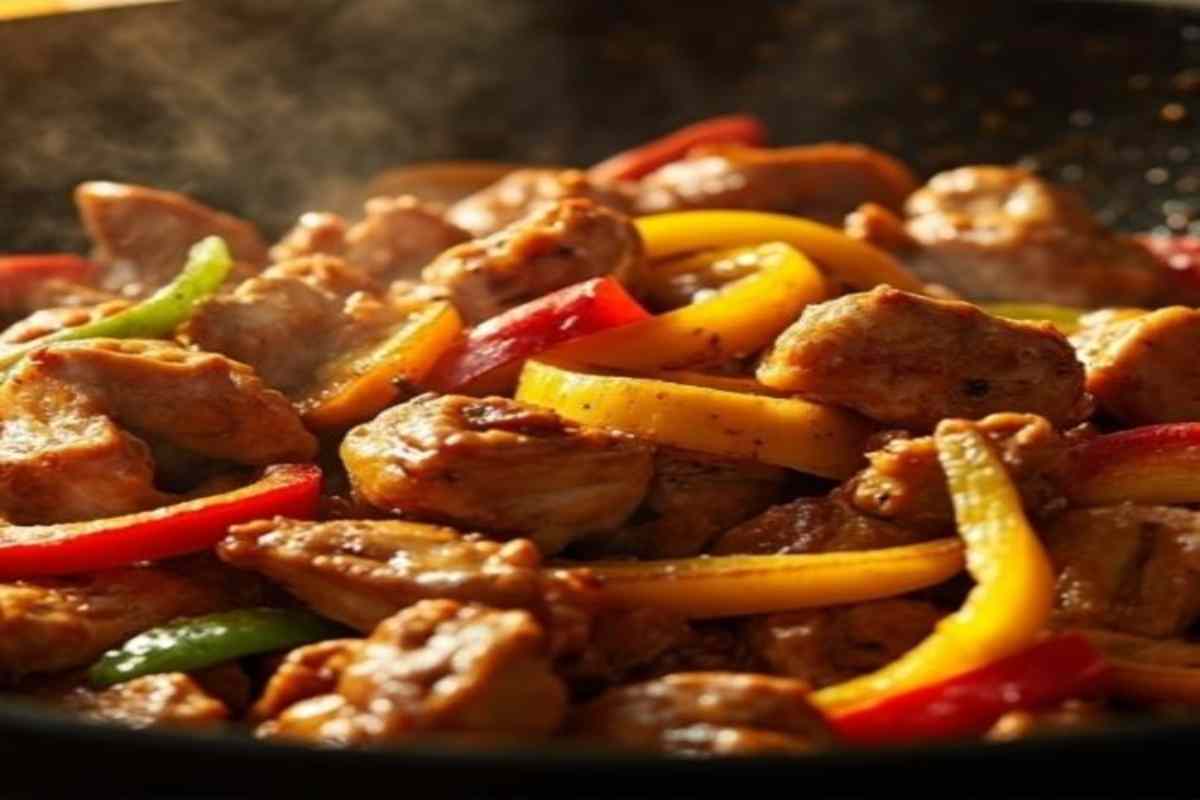
The secret to achieving this flavorful Easy Chicken recipe is simple high heat and layering flavors. We cook the chicken first to get a beautiful brown crust, and then we bloom the fresh garlic and ginger right in the oil to build the aromatic base. The key is to add your peppers last and cook them quickly we want them tender crisp, not soft! This simple approach ensures an easy weeknight dinner that is moist and deeply flavorful.
- Yields: 4 servings
- Prep time: 10 minutes
- Cook time: 15 minutes
Ingredients

-
1.5 lbs of chicken thighs, skinless, boneless, sliced
-
2 tbsp oil of choice
-
3 garlic cloves, minced
-
1 small fresh ginger root, minced
-
1 medium onion, sliced
-
Salt to taste
-
1 tbsp paprika
-
1/2 tsp chilli, optional
-
1 tsp garlic powder
-
1 tsp onion powder
-
2 medium bell peppers, sliced or roughly chopped
Step-by-Step Instructions
-
Sear the Chicken Heat the oil in a large skillet or wok over medium high heat. Add the sliced chicken thighs and cook until the chicken is beautifully browned on all sides.
-
Add Aromatics Push the chicken to the side of the pan (or remove it briefly). Add the minced garlic and minced ginger root to the hot oil. Cook for about 1 minute until wonderfully fragrant. Stir them into the chicken.
-
Season Add the salt, paprika, chilli (if using), garlic powder, and onion powder to the chicken and aromatics. Mix well to ensure the chicken is perfectly coated in the spice blend.
-
Add Vegetables Add the sliced onion and the sliced bell peppers. Mix everything gently to coat the vegetables with the seasoning. Continue to cook for just a few minutes, do not overcook. We want those peppers to retain their crispness.
-
Serve Remove the skillet from the heat and serve immediately.
Best Easy Chicken Stir Fry Recipe
Ingredients
- 1 lb chicken thighs skinless, boneless, sliced
- 2 tbsp olive oil
- 3 garlic cloves minced
- 1 small ginger root
- 1 medium onion sliced
- 1 tbsp paprika
- 1/2 tsp chilli optional
- 1 tsp garlic powder
- 1 tsp onion powder
- 2 medium bell peppers sliced or roughly chopped
Instructions
- Heat the oil in a large skillet or wok over medium-high heat. Add the sliced chicken thighs and cook until the chicken is beautifully browned on all sides.
- Push the chicken to the side of the pan (or remove it briefly). Add the minced garlic and minced ginger root to the hot oil. Cook for about 1 minute until wonderfully fragrant. Stir them into the chicken.
- Add the salt, paprika, chilli (if using), garlic powder, and onion powder to the chicken and aromatics. Mix well to ensure the chicken is perfectly coated in the spice blend.
- Add the sliced onion and the sliced bell peppers. Mix everything gently to coat the vegetables with the seasoning. Continue to cook for just a few minutes—do not overcook—we want those peppers to retain their crispness.
- Remove the skillet from the heat and serve immediately.
Notes
Nutrition
The Sauce Let’s Talk About It
If there is one section of this post worth reading before you cook, it is this one. The sauce is what makes or breaks a chicken stir fry, and understanding what each ingredient does gives you the freedom to adjust it to exactly how you like it.
Soy sauce is the foundation, salty, deeply savoury, and full of umami. Low sodium soy sauce is the better call here. Regular soy sauce isn’t wrong, but once you reduce it in a hot pan, the saltiness concentrates fast. Low-sodium gives you more control. If you need it gluten-free, tamari is a direct swap. Coconut aminos work too, they are about 70% lower in sodium than traditional soy sauce and carry a slightly sweeter flavour, which means you can reduce the honey slightly to compensate.
Honey is the sweet counterpart that keeps the sauce from tasting flat. It also helps the sauce caramelise slightly at the edges, which gives the stir fry that glossy, restaurant quality look that most home versions miss.
Garlic and ginger are the aromatics that lift the whole dish. Fresh is noticeably better than jarred here, particularly the ginger, which loses its bright, slightly spicy edge quickly once it’s been sitting. Grate the ginger on a microplane if you have one; it incorporates more evenly than minced pieces and disappears into the sauce.
Sesame oil goes in at the end, not at the start. It has a low smoke point, which means cooking with it destroys the nutty flavour you’re adding it for. A teaspoon stirred in just before serving is all you need.
Cornstarch is what thickens the sauce from thin liquid to the glossy coating that clings to the chicken and vegetables. Mix it into the sauce when everything else is combined before it ever hits the pan, whisking cornstarch into a hot liquid causes clumping.
Rice vinegar (optional but recommended) adds a subtle brightness that cuts through the richness and keeps the sauce from tasting one-dimensional. Half a tablespoon makes a real difference.
Wok vs Skillet, Which Should You Use?
This comes up constantly, and the honest answer is: both work, with one important caveat. A wok is purpose built for stir fry. The sloped, high sides allow you to toss ingredients without things flying onto the stove, and the centralized heat at the base of the pan creates the high-heat sear that produces what Chinese cooks call “wok hei”, that slightly smoky, charred quality you get from restaurant stir fry that’s nearly impossible to replicate on a home stove. If you cook stir fry regularly and want to invest in one piece of equipment, a carbon steel wok is worth it.
That said, a large stainless steel or cast iron skillet makes an excellent chicken stir fry. The key is size, use the largest skillet you own. Crowding the pan lowers the temperature and causes steaming rather than searing. If your skillet isn’t big enough to hold everything in a single layer, cook the chicken in batches rather than piling it all in at once. Non stick pans work at lower heat levels but don’t generate the searing heat that stir fry benefits from. If non stick is all you have, crank it as high as the manufacturer recommends and still make sure everything is dry before it goes in.
Vegetable Timing Guide Keep Everything Crispy
This is one of the most practical things to have in your back pocket for any stir fry. Vegetables have different water contents and densities, which means they need different amounts of time in a hot pan.
Cook first (3–4 minutes), Broccoli florets, carrots, sugar snap peas, green beans, baby corn, water chestnuts.
Add after 2 minutes, Bell peppers (any colour), zucchini, mushrooms, and yellow onion.
Add in the last 60 seconds, Bok choy, spinach, bean sprouts, frozen peas, and green onions.
The rule of thumb is that the more water a vegetable contains, the less time it needs. Overcooking bell peppers turns them from bright and slightly sweet to pale and mushy. Spinach needs barely a minute in a hot pan.
Make It Your Way
Chicken thighs instead of breasts
Thighs are the better choice if you want more flavour and less risk of the chicken drying out. They’re naturally juicier, slightly richer, and more forgiving if you accidentally leave them in the pan 30 seconds longer than intended. Breast meat is leaner and has a milder flavour, both are good, it just depends on what you’re after.
Gluten free version
Use coconut aminos or tamari in place of soy sauce. Both work one-for-one. Check your cornstarch, too. Pure cornstarch is gluten-free, but some brands are processed on shared equipment.
Lower sodium version
Coconut aminos is the move here. Use low sodium chicken broth instead of additional soy sauce if you want to thin the sauce out. Taste before you add any extra salt at the end.
High protein lower carb bowl
Serve the stir fry over cauliflower rice instead of white rice. Skip the honey or reduce it to a teaspoon, it adds carbs without much structural change to the dish. The protein content of chicken stir fry with breast meat sits around 26–30 grams per serving, which makes it a solid high-protein meal with or without the rice underneath.
Spicy version
Add a teaspoon of chili garlic sauce or sambal oelek to the sauce mixture before cooking. Red pepper flakes stirred in at the end also work, but for more even heat distribution, the sauce is a better place to add it.
Vegetable heavy version
Cut the chicken in half and double the vegetables. Use chickpeas or edamame as a partial protein swap if needed. The sauce holds up beautifully over a more vegetable-forward version.
What to Serve With Chicken Stir Fry

The stir fry is a complete meal on its own when served over rice or noodles. But if you want to round it out or make it feel a little more complete as a spread, here are the pairings that actually make sense.
Steamed jasmine rice is the classic choice, and for good reason, the subtle floral flavour of jasmine complements the soy ginger sauce without competing with it. Basmati works too. Brown rice adds fiber and a nuttier flavour. For something more interesting, try the Best Turmeric Rice Recipe from Divine Dishes. The golden colour and warm spice note make the whole plate look and taste significantly more impressive.
Rice noodles or soba noodles are an underrated base. Cook them separately, toss them with a little sesame oil so they don’t stick, then pile the stir fry on top. The noodles soak up excess sauce in the best way.
Spring rolls or egg rolls on the side turn this into something that feels restaurant worthy at home without much extra effort.
A simple cucumber salad just sliced cucumber, rice vinegar, a pinch of salt, and sesame seeds, cuts through the richness of the sauce and adds a fresh, cold element to contrast with the hot stir-fry.
Meal Prep How to Use This for the Week
Chicken stir fry is genuinely one of the better meals to make in bulk on Sunday for a week of lunches. The flavour deepens slightly overnight as the sauce soaks into the chicken and vegetables, and reheating takes less than 3 minutes in a skillet over medium heat. A few practical notes for meal prepping this recipe:
Cook your rice separately and store it in a separate container. Rice stored in the stir fry absorbs the sauce, making the dish thicker and less distinct by day two or three.
Store remaining food in airtight containers in the fridge for up to 4–5 days. The chicken holds up well, and the vegetables will soften slightly over time, this is unavoidable, but it doesn’t make the dish any less tasty.
To freeze, let the stir fry cool completely, portion into freezer safe containers, and store in the freezer for up to 3 months. Add rice to a separate bag. Thaw overnight in the fridge, then reheat on the stovetop with a small splash of water or broth to loosen the sauce.
For dedicated meal prep bowls, this formula works well, cooked rice on the bottom, stir fry on top, and sesame seeds and green onions in a small container on the side to add fresh at eating time so they don’t go soggy. Pack 4–5 containers on Sunday, and you have lunches covered through Thursday without any additional cooking.
Is Chicken Stir Fry Actually Healthy?
It can be, and this version clearly leans toward yes, depending on what you pair it with and how you make the sauce. Chicken breast is one of the leanest protein sources available, delivering roughly 26–30 grams of protein per serving with minimal fat. That protein content is meaningful for satiety, muscle maintenance, and helping you avoid an afternoon snack two hours after eating. The vegetables, bell peppers, broccoli, carrots, and snap peas bring meaningful amounts of vitamin C, vitamin A, potassium, and fiber. Bell peppers, in particular, are an underappreciated source of vitamin C, containing more per gram than citrus in many cases.
The main nutritional consideration in a stir-fry is sodium from the soy sauce. A full-sodium version made with regular soy sauce can push 700–900mg of sodium per serving, which is significant. Switching to low-sodium soy sauce or coconut aminos brings that number down considerably without meaningfully affecting the flavour. Using less sauce than you think you need and then adding more at the end to taste is a better approach than dumping everything in upfront. Served over white rice, a full portion of this dish sits around 400–450 calories with 26–30g of protein. Over cauliflower rice, that number drops to 280–320 calories while keeping the protein roughly the same.
A Note Before You Cook
The first time you make this, follow the recipe reasonably closely. Once you have made it once, you’ll understand the sauce and the technique well enough to free style, more ginger, less honey, different vegetables, whatever makes sense for what’s in the fridge. That is the real value of a recipe like this, not that you follow it forever, but that it teaches you something useful enough that you stop needing to follow it at all. Make it tonight. The pan will be clean in 30 minutes, and you won’t want to takeout for a while.
Also check out our other chicken recipes
Frequently Asked Questions (FAQs)
What is the secret to a good chicken stir fry?
Three things, a genuinely hot pan, dry chicken (pat it with paper towels before it goes in), and a sauce that’s already mixed and ready before cooking starts. The order of operations matters more than any single ingredient.
Why is my chicken stir fry tough and chewy?
Almost always one of two reasons, either the chicken was overcrowded in the pan, so it steamed instead of searing, or it was cut unevenly, so thicker pieces were still cooking while thinner pieces dried out. Cook in batches if needed, and keep your pieces uniform in size.
Should I marinate chicken before stir frying?
It is not required, but it helps. Even a 15-minute marinade in soy sauce, a little cornstarch, and a small drizzle of oil makes the chicken noticeably more tender and flavourful. If you have time, do it. If not, the recipe still works well.
Can I use frozen vegetables?
Yes. Add them straight from frozen at the end of cooking, after the fresh vegetables are already done. They just need 2–3 minutes to heat through. Don’t add frozen vegetables early, they release water as they defrost, which can drop the pan temperature and make everything steam rather than stir-fry.
What is the difference between chicken stir fry sauce and teriyaki sauce?
Stir fry sauce is broader and typically contains soy sauce, garlic, ginger, and something sweet. Teriyaki sauce is specifically a Japanese-style sauce made with soy sauce, mirin, sake, and sugar. It is sweeter and has a distinct lacquered, glossy quality. The two overlap but aren’t the same, and this recipe uses a stir fry style sauce rather than a true teriyaki.
How long does chicken stir fry last in the fridge?
Up to 4–5 days in a well sealed airtight container. Reheat on the stove over medium heat for the best texture, microwave reheating works, but softens the vegetables more.
Can I make this without a wok?
Yes, a large stainless steel or cast iron skillet works well. The key is using the largest pan you own and avoiding overcrowding. You won’t get quite the same smoky depth as a screaming hot wok, but the recipe is very good in a skillet.










1 Comment. Leave new
Quick, vibrant, and packed with flavor. Perfectly cooked chicken with crisp veggies and a tasty sauce makes this a go-to weeknight favorite.