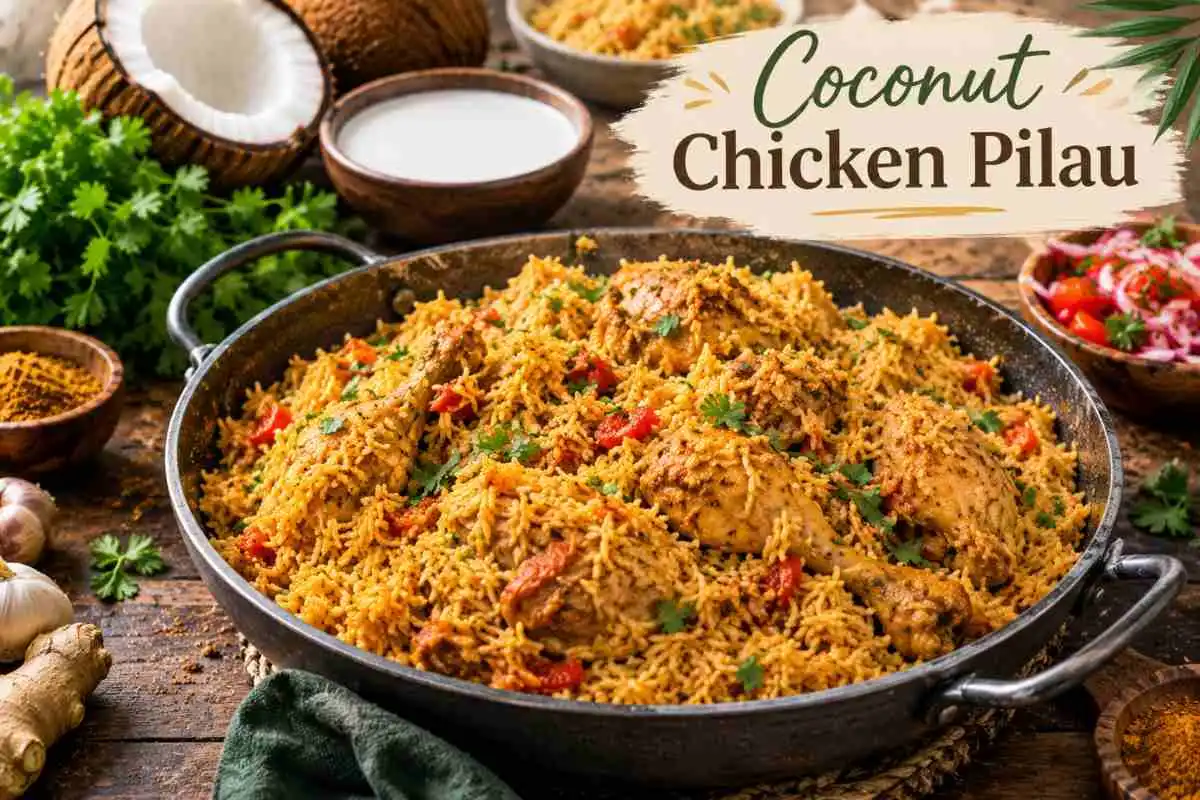
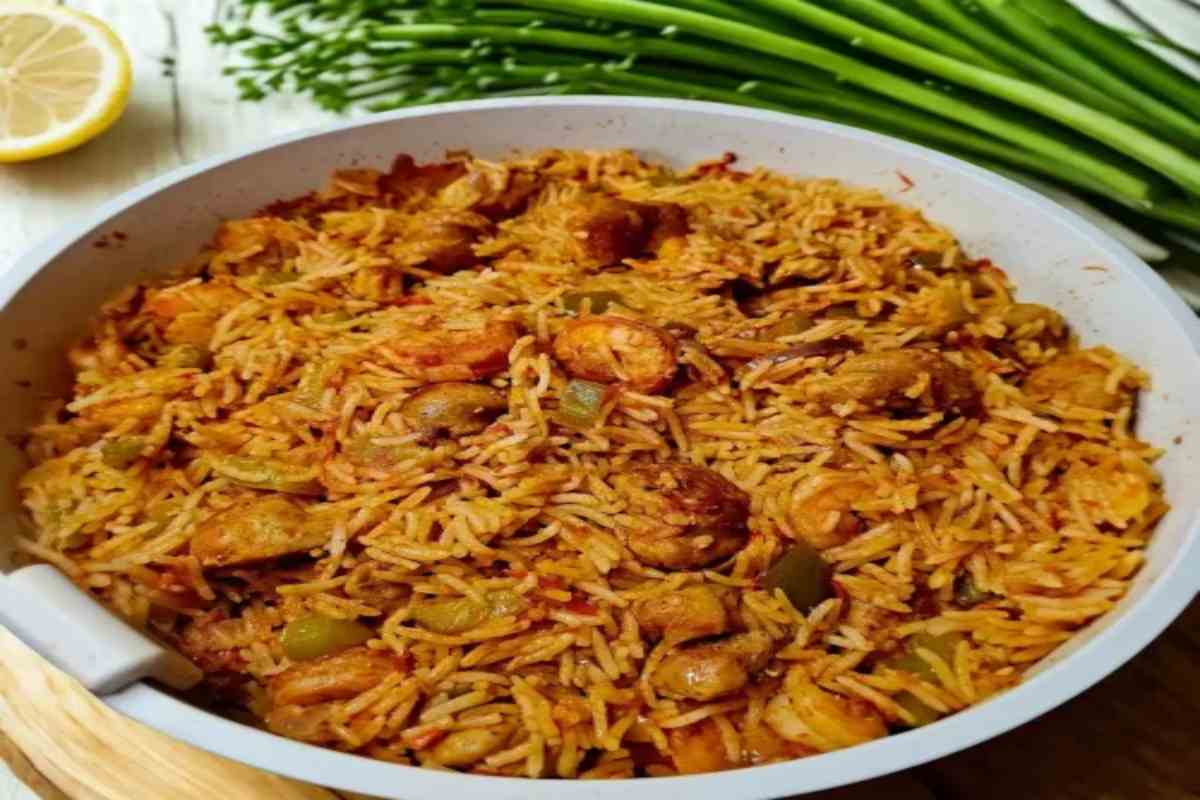
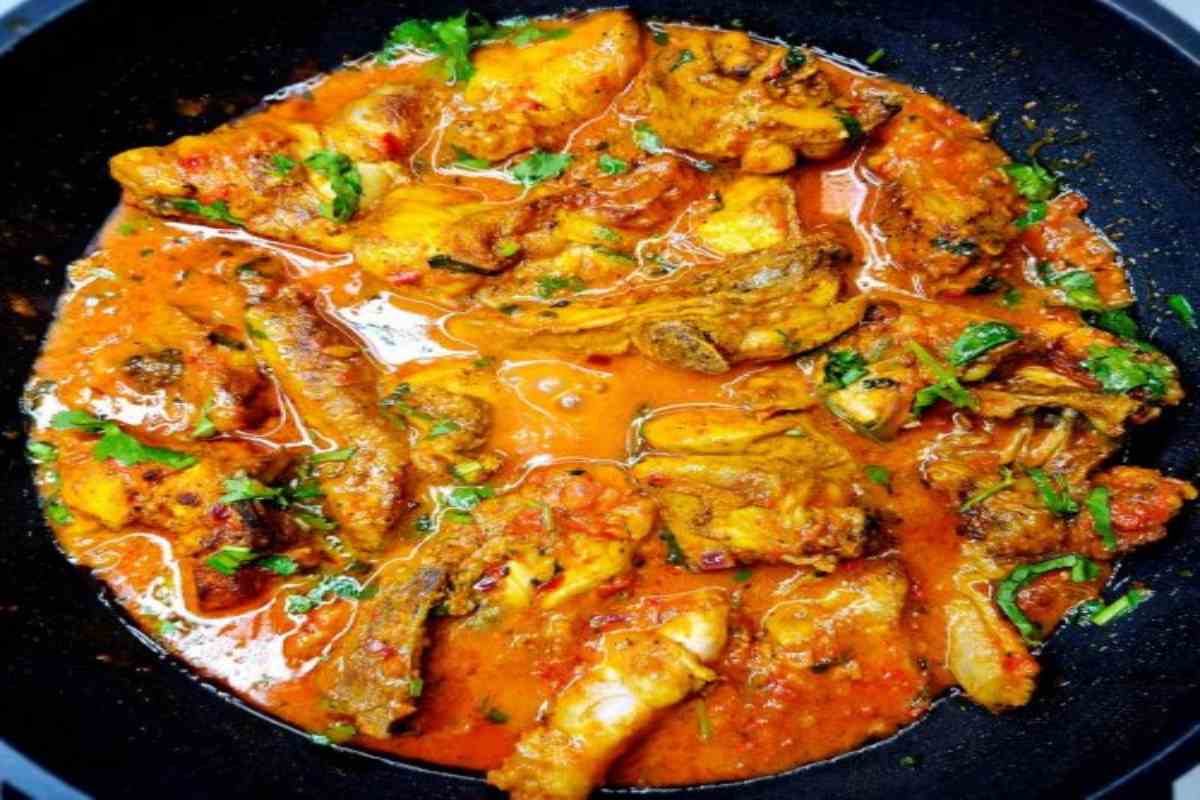
What is coconut chicken pilau? Coconut chicken pilau is a Kenyan style rice dish made by boiling chicken drumsticks, roasting them until golden, then simmering them with basmati rice in coconut milk and a reduced tomato and red pepper paste seasoned with pilau masala. It serves 6 to 8 and takes about 1 hour 40 minutes.
Coconut chicken pilau goes wrong most often when the rice turns soggy, and this version is built to avoid that.The whole pot depends on one rule, exactly 6 cups of liquid, made up of 2 cups of full-fat coconut milk and 4 cups of the chicken’s own stock topped up with water. Because the tomato and red pepper purée is cooked down to a paste before any liquid goes in, it adds flavor without adding water, so 4 cups of basmati come out creamy and separate.
The chicken gets the same care. The USDA lists 165°F (74°C) as the safe internal temperature for poultry. Here the drumsticks are boiled for about 30 minutes first, then roasted at 400°F (200°C) in an air fryer or oven until golden. Pilau masala adds the warm, fragrant seasoning that sets this apart from plain coconut rice. If you are new to African Cuisine, this is an easy place to start, and a side of kachumbari or coleslaw finishes the plate.
What Is Coconut Chicken Pilau?
Coconut chicken pilau is a Kenyan style rice dish in which chicken and basmati rice finish cooking together in one pot, in a seasoned liquid of coconut milk and chicken stock. As it cooks, the rice absorbs the sauce’s flavor, so every grain is seasoned throughout rather than coated on top.
Kenyan and East African pilau explained
Pilau is a one pot rice dish found across East Africa, and Kenyan kitchens treat it as a staple for family meals and gatherings. The defining feature is that the rice is not boiled separately. It cooks directly in a spiced, flavorful liquid alongside the meat, so the dish tastes complete from the first bite.
In this Kenyan version, the flavor comes from pilau masala, a ready made spice blend sold at most East African stores, and a tomato and red pepper paste that is roasted, blended and cooked down before the rice goes in. Chicken drumsticks supply both the meat and the stock.
How the coconut milk changes the flavor and texture
Coconut milk makes pilau richer, creamier and slightly sweeter than versions cooked in stock alone. Because it is full fat, it coats the rice grains and gives the finished dish a soft, silky feel without making it heavy or wet.
In this recipe, coconut milk is 2 cups of the 6 cups of total liquid, so one third of what the rice cooks in. The other 4 cups are chicken stock topped up with water, which keeps the savory chicken flavor in front and stops the coconut from taking over. That balance, with 4 cups of basmati rice, is what gives separate, fluffy grains rather than a porridge like texture. If you prefer beef, the Beef Coconut Pilau uses the same coconut and pilau idea in a pressure cooker.
Pilau vs biryani
Pilau and biryani are both spiced rice and meat dishes, but they differ in how they are built. In pilau, the rice cooks in the same seasoned liquid as the meat, so everything finishes together in one pot. Biryani is typically assembled in layers, with meat and rice prepared separately and then combined for a final steam.
That difference changes the result. Pilau tastes more unified and mellow, since the rice drinks up the sauce directly, while biryani is known for distinct layers of rice and meat. Pilau is also the simpler of the two to cook. If you want to try the layered style, the chicken biryani recipe covers it from start to finish.
Making Delicious Coconut Chicken Pilau Recipe
Ingredient
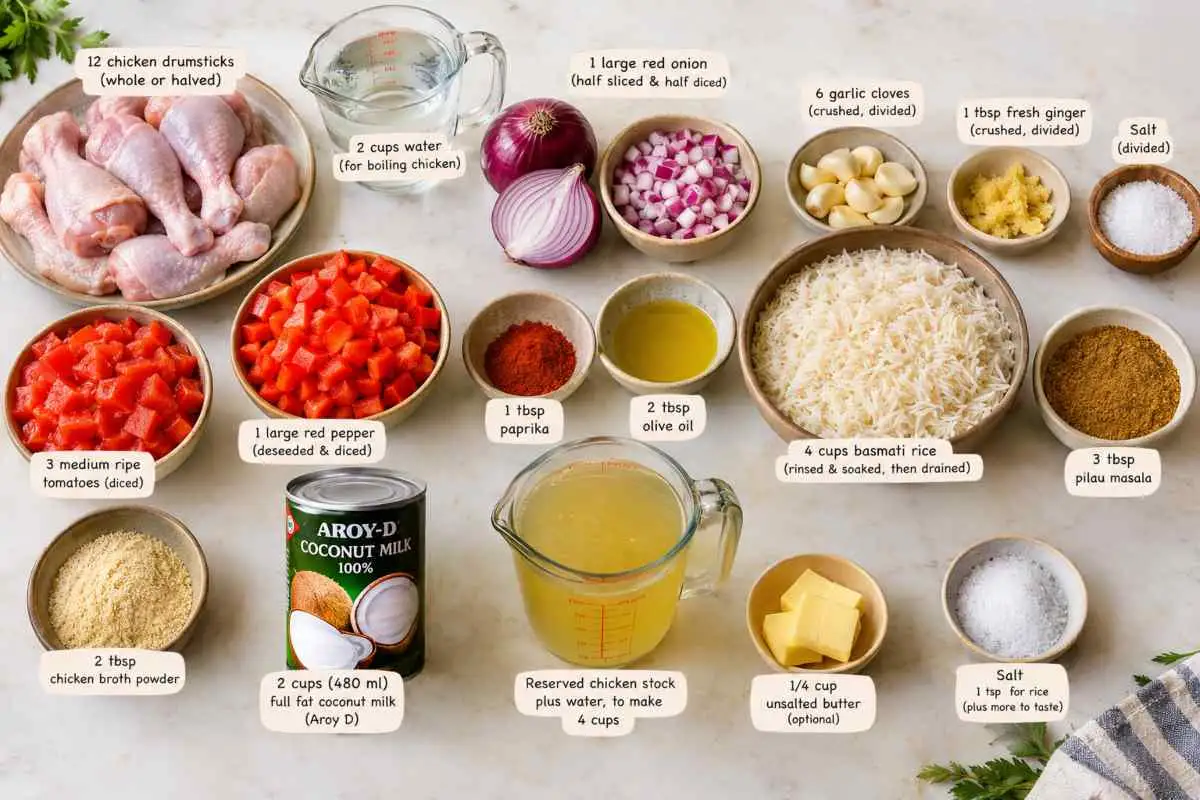
12 chicken drumsticks, whole or cut in half, rinsed and patted dry
2 cups water, for boiling the chicken (this becomes the stock)
1 large red onion, half sliced and half diced
6 garlic cloves, crushed, divided (3 for the chicken, 3 for the vegetables)
1 tbsp fresh ginger, crushed, divided (half for the chicken, half for the vegetables)
Salt, divided 1 tbsp for the chicken, ½ tsp for the vegetables, 1 tsp for the rice, plus more to taste
3 medium ripe tomatoes, diced
1 large red pepper, deseeded and diced
1 tbsp paprika
2 tbsp olive oil
4 cups basmati rice, rinsed and soaked 20-30 minutes, then drained
3 tbsp pilau masala
2 tbsp chicken broth powder
2 cups (480 ml) full fat coconut milk, Aroy D (if using 240 ml cans, that’s 2 cans)
Reserved chicken stock plus water, to make 4 cups
¼ cup unsalted butter (optional)
Choosing full fat coconut milk
Use full fat coconut milk, and this recipe is written with Aroy D. Full-fat milk gives the rice its creamy body, while a light version would leave the pot thinner and less rich. You need 2 cups (480 ml), which is two 240 ml cans if that is how your brand is packaged.
Coconut milk counts toward the liquid, so the amount matters. It makes up 2 of the 6 total cups the rice cooks in, with the other 4 coming from the chicken stock topped up with water. Measure it rather than estimate, since extra liquid is the quickest way to get soft, clumped rice.
Why basmati rice
Basmati is a long grain rice that stays separate and fluffs up after cooking, which suits a pilau where every grain should be distinct. The recipe uses 4 cups, rinsed and soaked in cold water for 20 to 30 minutes, then drained before it goes into the pot.
Soaking helps the grains cook evenly in the coconut-and-stock mixture. Because the liquid ratio is tight, a shorter grain that releases more starch would tend to turn creamy and sticky rather than fluffy.
Pilau masala and what to do if you don’t have it
Pilau masala is the spice blend that gives this dish its signature seasoning, and the recipe uses 3 tablespoons. It is stirred into the cooked down tomato and pepper paste along with the chicken broth powder, before the coconut milk goes in.
If you can’t find it, garam masala is the closest substitute. Pilau masala is otherwise easy to find at most East African stores.
How to Make Coconut Chicken Pilau Step by Step
Add chicken to a large pot with the 2 cups of water, 1 tbsp salt, half the ginger, 3 crushed garlic cloves, and the sliced onion. Bring it to a boil over medium heat and cook for almost 30 minutes, until the chicken is cooked through. Lift the chicken out and reserve all the stock.
Meanwhile, rinse the rice and soak it in cold water for 20–30 minutes. Drain before using.
Meanwhile, preheat the air fryer or oven to 400°F (200°C). In a medium bowl, add the tomatoes, red pepper, diced onion, the remaining garlic and ginger, the paprika, ½ tsp salt, and the olive oil, and mix until evenly coated.
Spread the vegetable mix on a baking pan and roast for 20 minutes, turning midway, until charred.
Remove and blend until smooth.
Transfer the boiled chicken to the same baking pan and roast at 400°F (200°C) for 20 minutes, turning midway, until golden.
Pour the blended tomato and pepper purée into the large pot and cook over medium heat for 2–3 minutes, until it thickens to a paste and is almost catching on the bottom of the pot.
Stir in the pilau masala and the chicken broth powder.
Add the coconut milk. Use part of the reserved stock to rinse out the blender (and swill out the coconut milk can) into the pot so no sauce is wasted, then add the remaining stock and top it up with water to make 4 cups of stock/water in total.
Bring to a boil, then add the drained rice and 1 tsp salt and give it a stir. Return the chicken pieces, bring back to a boil, then taste and adjust the salt, the liquid should be a little on the salty side.
Cover, turn the heat to the lowest setting, and simmer for 15 minutes.
Top with the butter (optional), cover again, and keep on the lowest heat for another 10–15 minutes, until the butter has melted through.
Fluff the pilau and serve hot with a side of kachumbari or coleslaw.
Coconut Chicken Pilau Recipe
Coconut chicken pilau is a Kenyan-style one-pot rice dish. Roasted drumsticks and basmati rice simmer in creamy coconut milk and a thick tomato and red pepper paste, seasoned with pilau masala. Serve it hot with kachumbari or coleslaw.
2cups480 ml full fat coconut milk, Aroy D (if using 240 ml cans, that’s 2 cans)
Reserved chicken stock plus waterto make 4 cups
¼cupunsalted butteroptional
Instructions
Add chicken to a large pot with the 2 cups of water, 1 tbsp salt, half the ginger, 3 crushed garlic cloves, and the sliced onion. Bring it to a boil over medium heat and cook for almost 30 minutes, until the chicken is cooked through. Lift the chicken out and reserve all the stock.
Meanwhile, rinse the rice and soak it in cold water for 20–30 minutes. Drain before using.
Meanwhile, preheat the air fryer or oven to 400°F (200°C). In a medium bowl, add the tomatoes, red pepper, diced onion, the remaining garlic and ginger, the paprika, ½ tsp salt, and the olive oil, and mix until evenly coated.
Spread the vegetable mix on a baking pan and roast for 20 minutes, turning midway, until charred.
Remove and blend until smooth.
Transfer the boiled chicken to the same baking pan and roast at 400°F (200°C) for 20 minutes, turning midway, until golden.
Pour the blended tomato and pepper purée into the large pot and cook over medium heat for 2–3 minutes, until it thickens to a paste and is almost catching on the bottom of the pot.
Stir in the pilau masala and the chicken broth powder.
Add the coconut milk. Use part of the reserved stock to rinse out the blender (and swill out the coconut milk can) into the pot so no sauce is wasted, then add the remaining stock and top it up with water to make 4 cups of stock/water in total.
Bring to a boil, then add the drained rice and 1 tsp salt and give it a stir. Return the chicken pieces, bring back to a boil, then taste and adjust the salt, the liquid should be a little on the salty side.
Cover, turn the heat to the lowest setting, and simmer for 15 minutes.
Top with the butter (optional), cover again, and keep on the lowest heat for another 10–15 minutes, until the butter has melted through.
Fluff the pilau and serve hot with a side of kachumbari or coleslaw.
Video
Notes
Please note that the nutritional information is a rough estimate and can vary significantly based on the products used in the recipe.
Coconut chicken pilau works with either an air fryer or an oven for the roasting steps, and both run at 400°F (200°C). The stovetop pot handles everything else, so you are never choosing one appliance over another. You are choosing how to roast, and the result is nearly the same.
Air fryer at 400°F (200°C)
An air fryer is a good choice when you want the roasting done quickly and with less to clean. Preheat it to 400°F (200°C), then roast the tomato, red pepper and onion mix for 20 minutes, turning it midway, until the vegetables are charred. Blend that into the purée, then use the same appliance to roast the boiled drumsticks for another 20 minutes, again turning midway, until golden.
The size of your basket matters here. Twelve drumsticks may not fit in a single layer, so cut them in half if needed, or roast them in two rounds. Crowded chicken steams instead of browning, which defeats the point of this step.
Oven at 400°F (200°C)
An oven suits a full batch best, since a large baking pan holds all the drumsticks and the vegetables with room to spare. Preheat to 400°F (200°C) and follow the same timings as the air fryer, 20 minutes for the vegetables, turned midway, then 20 minutes for the chicken, turned midway.
Use the same baking pan for both stages, as the recipe does. Roast the vegetables first, blend them, and then put the boiled chicken on the same pan so it picks up the browned, flavorful bits left behind.
Stovetop pot for the boiling and simmering
The stovetop does the heaviest work, no matter which roasting method you pick. The chicken boils in a large pot for about 30 minutes with the stock aromatics, and that same pot later holds the whole pilau. The blended purée is cooked there over medium heat for 2 to 3 minutes unless it thickens to a paste, then the pilau masala, broth powder, coconut milk, stock and rice follow.
Once the rice goes in, bring it to a boil, cover it, and drop the heat to the lowest setting. The pilau simmers for 15 minutes, then another 10 to 15 minutes after the butter is added. A heavy bottomed pot with a tight lid gives the most even heat and keeps the steam in.
The 6 Cup Liquid Rule (Why the Rice Stays Fluffy)
The rice in this coconut chicken pilau stays fluffy because it cooks in exactly 6 cups of liquid, 2 cups of full fat coconut milk and 4 cups of stock and water combined. That total is built for 4 cups of basmati rice, so the grains absorb everything and finish separate instead of soggy.
2 cups coconut milk plus 4 cups stock/water
The 6 cups are split into one third coconut milk and two thirds stock. The 2 cups coconut milk (480 ml) adds creaminess and gentle richness. The other 4 cups come from the stock left over after boiling the chicken, topped up with plain water until you reach the full amount.
Measuring matters more than it seems. Pour the reserved stock into a measuring jug first, see how much you have, and add water to reach 4 cups. Use some of that liquid to rinse out the blender and swill out the coconut milk can so you don’t waste any sauce, then add the rest to the pot. Because the stock carries the chicken’s flavor, the rice tastes like the drumsticks it is cooked with.
Why the purée doesn’t count toward the liquid
The blended tomato and red pepper purée is cooked down to a thick paste before any liquid goes into the pot, so its moisture has already evaporated. It takes only 2 to 3 minutes over medium heat, until it thickens and is almost catching on the bottom of the pot.
That is why the 6 cup rule leaves it out. By the time the coconut milk and stock arrive, the purée is concentrated in flavor and color, not extra water. If you skip this reduction, the raw purée adds liquid on top of the 6 cups, and the rice turns soft and clumpy. Reducing it first is what protects the ratio.
Tasting the liquid for salt before the rice cooks
Taste the liquid after the rice and 1 tsp of salt go in, once the pot returns to a boil and the chicken is returned. The recipe says the liquid should be a little on the salty side, and you should adjust the salt at this point.
The reason is timing. Once the lid is on and the heat is on its lowest setting, you can’t season the rice evenly without disturbing itThe rice absorbs the liquid while it cooks, so seasoning that tastes slightly strong in the pot balances out in the finished pilau. Liquid that tastes just right at this stage usually yields bland rice.
Tips for the Best Pilau
The two habits that matter most for coconut chicken pilau are cooking the tomato and red pepper purée down to a thick paste and using the reserved stock to rinse out the blender and coconut milk can. Both are small steps, and both protect the flavor and the 6 cup liquid balance.
Reducing the purée until it nearly catches on the pot
Cook the blended purée over medium heat for 2 to 3 minutes, until it thickens into a paste and is almost catching on the bottom of the pot. That near sticking point is your cue. The purée should look dense and clingy, not loose and watery.
Reducing it matters for two reasons. It drives off moisture, so the purée adds concentrated flavor instead of extra liquid, and the 6 cups of coconut milk and stock stay accurate. It also deepens the roasted tomato and red pepper taste before the pilau masala and broth powder go in. Stay at the pot and stir during these few minutes, because the paste can go from thick to stuck very quickly. Once it reaches that point, move straight on to the next step.
Using the stock to rinse the blender and the coconut milk can
Pour part of the reserved chicken stock into the blender and swirl it around to lift the purée clinging to the sides, then tip it into the pot. Do the same with the coconut milk can, swilling a little stock around inside it so none of the coconut milk is left behind. A surprising amount of sauce stays on the walls of a blender and the inside of a can, and this recovers all of it.
The rinsing liquid is part of the plan, not an extra. Once you have used some of the stock this way, add the remaining stock to the pot and top it up with water until the stock and water total 4 cups. Because the rinse comes out of that 4 cups, the ratio does not change, and you keep the full flavor of the dish.
What to Serve with Coconut Chicken Pilau
Coconut chicken pilau is best served hot with kachumbari or coleslaw. Both are fresh, crunchy sides that cut through the creamy coconut rice and the rich, roasted chicken, so each forkful feels balanced rather than heavy.
Kachumbari
Kachumbari is the classic partner for pilau in Kenya, and it earns that place by doing the opposite of what the rice does. The pilau is warm, soft and savory, while kachumbari is cool, sharp and juicy. A spoonful on the side wakes up the palate between bites of coconut rich rice.
It works especially well here because the pilau is full fat and creamy. The fresh acidity of the salad lifts the coconut milk and balances the paprika, pilau masala and roasted tomato flavors in the rice. Spoon it next to the pilau just before serving so it stays crisp. If you’d like to make it from scratch, the kachumbari recipe walks you through it.
Coleslaw
Coleslaw is the easy, make ahead alternative when you want something cold and creamy crunchy on the plate. Its cool, tangy crunch contrasts with the warm, tender rice and golden drumsticks, and it suits a crowd, which matters for a pilau that serves 6 to 8.
Because it can be prepared ahead and kept chilled, coleslaw frees you up while the pilau simmers on the lowest heat. Serve it in a bowl at the table so guests can add as much as they like. A good dressing makes the difference, and this coleslaw dressing is a simple place to start.
Storage, Freezing and Reheating
Leftover coconut chicken pilau keeps in the fridge for up to 3 days or in the freezer for up to 3 months as long as you cool it and store it airtight. Refrigerate it within an hour of serving, and reheat single portions in the microwave for 2 to 4 minutes.
Refrigerating (up to 3 days)
Cool the pilau quickly after the meal and get it into the fridge within an hour. Spreading the rice in a shallow container helps it lose heat faster than leaving it in the deep pot. Once cool, seal it in an airtight container and refrigerate for up to 3 days.
Speed matters because cooked rice and poultry are both foods that need prompt chilling. The USDA advises refrigerating perishable leftovers within 2 hours, and this recipe’s one hour window is stricter and safer, especially when the pot has been sitting out at a gathering. Store the chicken and rice together, or separate them if you prefer, as long as both go in the fridge in time.
Freezing in single portions (up to 3 months)
Freezing works best when you portion the pilau into single servings before freezing. Pack each portion into an airtight container or freezer bag, let it cool completely first, and freeze for up to 3 months. Individual portions thaw and reheat faster, and you only defrost what you plan to eat.
Because the rice cooks in coconut milk and stock rather than being drained, it holds its moisture well, which is part of why the dish freezes and reheats so successfully. Label each container with the date so you can use the oldest portions first.
Thawing and microwave reheating
Thaw frozen portions overnight in the fridge rather than on the counter to keep the pilau at a safe temperature while it defrosts. The next day, microwave one portion for 2 to 4 minutes, depending on your microwave, until it is steaming hot all the way through.
Microwave wattage varies, so start at the lower end of that range and stir halfway through if you can, then add more time as needed. The USDA recommends reheating leftovers to an internal temperature of 165°F (74°C), so check that the center of the portion is hot, not just the edges. Serve it with kachumbari or coleslaw as you did the first time.
Conclusion
Coconut chicken pilau is a Kenyan style one pot rice dish that comes together with a few reliable habits, boil the drumsticks for stock, roast the vegetables and chicken at 400°F (200°C), cook the purée down to a paste, and keep the liquid to exactly 6 cups. Follow those steps and you get creamy, separate grains with chicken that is golden on the outside and tender within.
The whole recipe serves 6 to 8 in about 1 hour 40 minutes, and leftovers keep in the fridge for up to 3 days or in the freezer for up to 3 months, which makes it as useful for meal prep as it is for a gathering. Serve it hot with kachumbari or coleslaw, and the rich coconut rice has a fresh, crunchy partner on the plate. If you enjoy this recipe, there is plenty more easy home cooking waiting atDevine Dishes, so try it once and the technique will stay with you for every pot of pilau you make after.
Can I use chicken thighs or breast instead of drumsticks?
This recipe is written and tested with drumsticks, so I can not promise the same timings or results with other cuts. For the best match to the instructions, stick with drumsticks, whole or cut in half.
Can I make coconut chicken pilau without pilau masala?
Yes. Garam masala is the closest substitute if you can’t find pilau masala. The flavor will be slightly different, but the rest of the method stays the same.
Why is my pilau mushy?
Mushy pilau usually comes from too much liquid or a purée that wasn’t cooked down first. Stick to the 6-cup total and reduce the tomato and pepper purée to a thick paste before adding any liquid.
Can I skip the butter?
Yes, the butter is optional. The pilau still turns out creamy from the coconut milk, and you can simply keep it on the lowest heat for the final simmer.
Can I freeze coconut chicken pilau?
Yes. Portion it into single servings, store airtight and freeze for up to 3 months. Thaw overnight in fridge, then microwave for 2 to 4 minutes.
How long does coconut chicken pilau keep in the fridge?
It keeps for up to 3 days in an airtight container. Cool it quickly and refrigerate within an hour of serving.
Can I cook coconut chicken pilau in the air fryer?
Partly. The air fryer handles the roasting steps at 400°F (200°C), for the vegetables and the boiled chicken. The boiling and the rice simmering still happen in a large pot on the stovetop.
Is the liquid supposed to taste salty?
Yes, a little. Taste it after adding the rice and salt, and adjust it to be slightly salty, since the rice absorbs the seasoning as it cooks.
About Devine Dishes
A lifelong love of cooking, one delicious recipe at a time.
Welcome to Devine Dishes! I'm so glad you're here.
I'm the cook, recipe creator, and food lover behind this little corner of the internet. Born and raised in Kenya, my love for cooking started when I was very young. Even as a child, I would happily volunteer to cook for the family, leaving the dishes and laundry for my siblings. Looking back, I think I had already discovered my passion and a clever way to avoid some chores! 😜
Where My Love for Cooking Began
In high school, I chose Home Science and quickly discovered that baking was something I truly enjoyed. I went on to win awards in provincial school baking competitions for three consecutive years. Those were incredibly proud moments for me, and I loved the feeling of creating something delicious with my own hands.
But not everyone saw cooking the way I did.
I still remember the day my chemistry teacher laughed out loud in class after I received one of my baking medals. He told me I was wasting my time with cooking and that I should focus on the sciences, which would give me a better future than cookies and cakes.
It was an embarrassing moment, especially as a student who was proud of something she had worked hard to achieve. But I didn't stop cooking.
That experience stayed with me, not because it changed my passion, but because it reminded me that sometimes you have to believe in yourself even when others don't understand your dreams.
From Cooking for Family to Building a Food Business
Over the years, my love for cooking has taken me on quite a journey.
I've explored different food business ideas, from cooking and selling chapatis and mandazis to catering, meal preparation, and delivery. Each experience taught me something new about food, business, and the joy of sharing a good meal with others.
Today, I'm excited to bring that passion to food blogging.
Devine Dishes is a place where I share the recipes I love, the ones I'm learning, and the ones I can't wait for you to try. You'll find African and Kenyan favorites, comforting family meals, delicious baking recipes, and practical dishes that make cooking at home enjoyable.
My goal is simple: to help you discover recipes that are delicious, approachable, and worth making again.
More Than Just Recipes
For me, food has always been about more than feeding people. It's about family, memories, creativity, and bringing people together.
When I'm not working, you'll often find me trying out new recipes, creating and editing content, or spending time with family. Sometimes we're swimming, watching TV, or simply chatting over a good meal. Those ordinary moments are some of my favorite moments.
I also love traveling and discovering new places, cultures, and foods. I'm hoping to do much more of it in the near future, and I'm excited about the inspiration those experiences will bring to my cooking and future recipes.
Thank You for Being Here
Whether you're visiting Devine Dishes for a Kenyan recipe, looking for something delicious to bake, or simply exploring new meals to try, thank you for being part of this journey.
Every recipe shared here is a little piece of my love for cooking, my experiences, and the belief that it's never too late to pursue something you're passionate about.
I hope you find something delicious, make wonderful memories around your table, and come back often.
Happy cooking!
With love,
Milli
The heart behind Devine Dishes