
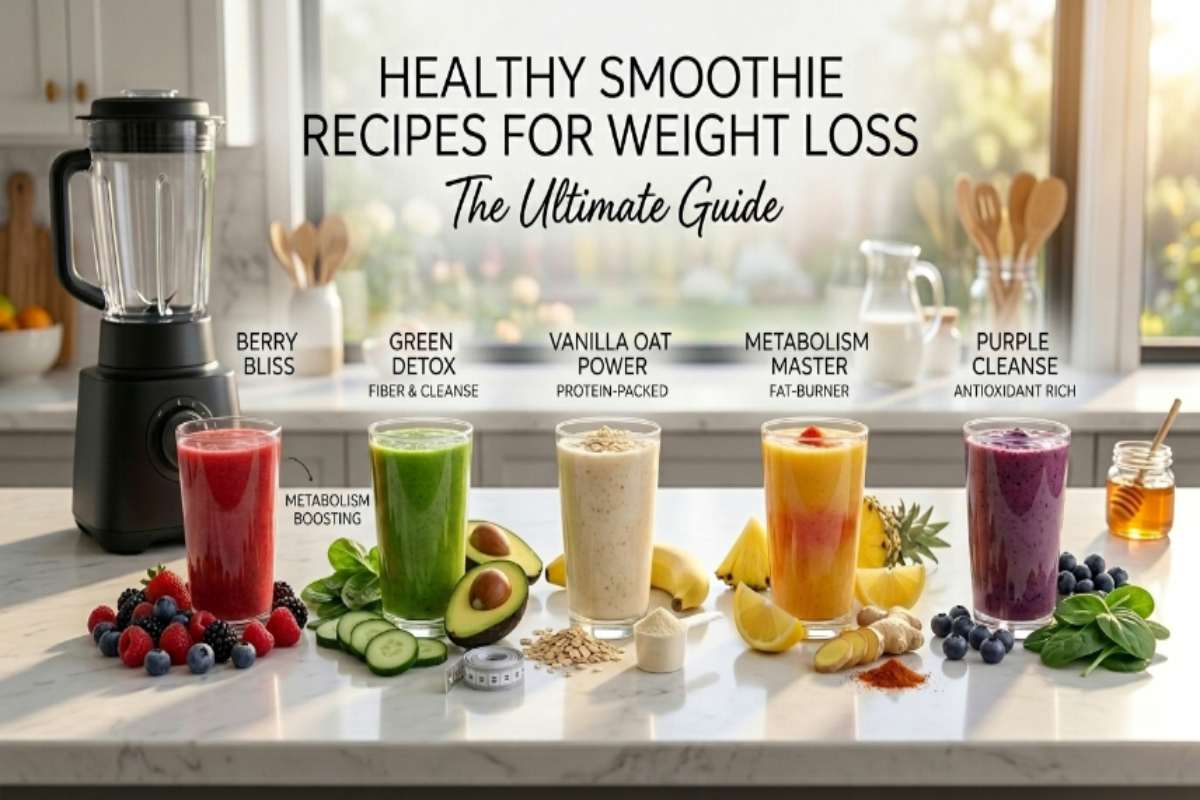
The best healthy smoothies for weight loss combine high protein ingredients, fiber rich fruits, and minimal added sugar to keep you full longer while supporting a calorie deficit. Done right, a smoothie becomes one of the easiest tools for sustainable weight loss, fast to make, easy to customize, and satisfying enough to replace a meal without leaving you hungry an hour later.
This guide breaks down exactly what makes a smoothie weight loss friendly, the best ingredient combinations for protein, fiber, and gut health, and ready to use recipes you can start blending today. Whether you are after a quick breakfast, a post workout recovery drink, or a healthier alternative to sugary store bought blends, you will find practical, science backed guidance here, no fad ingredients, no extreme restrictions.
What Makes a Smoothie Healthy for Weight Loss
A smoothie supports weight loss when it is built around protein, fiber, and whole food ingredients, with minimal added sugar and a portion size that matches a real meal rather than an afterthought. The difference between a smoothie that helps weight loss and one that quietly works against it almost always comes down to what is in the blender, not the act of blending itself.
Ingredients That Support Weight Loss
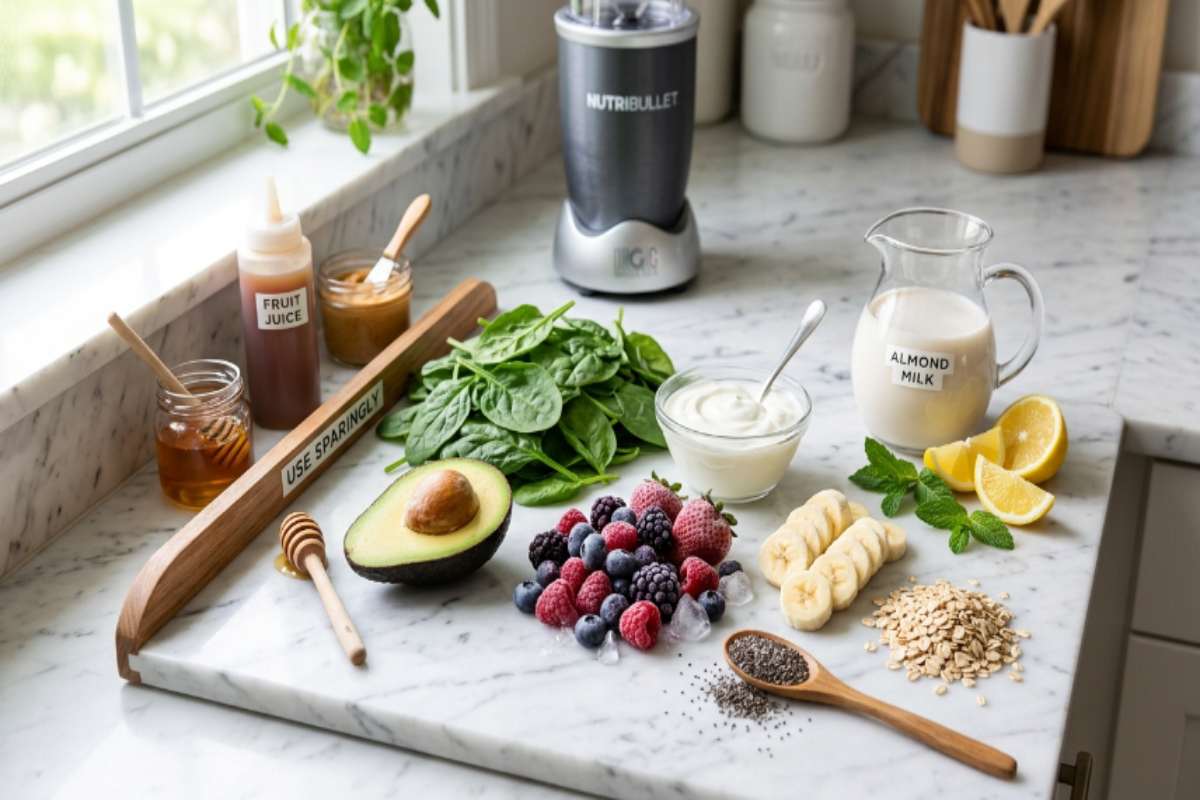
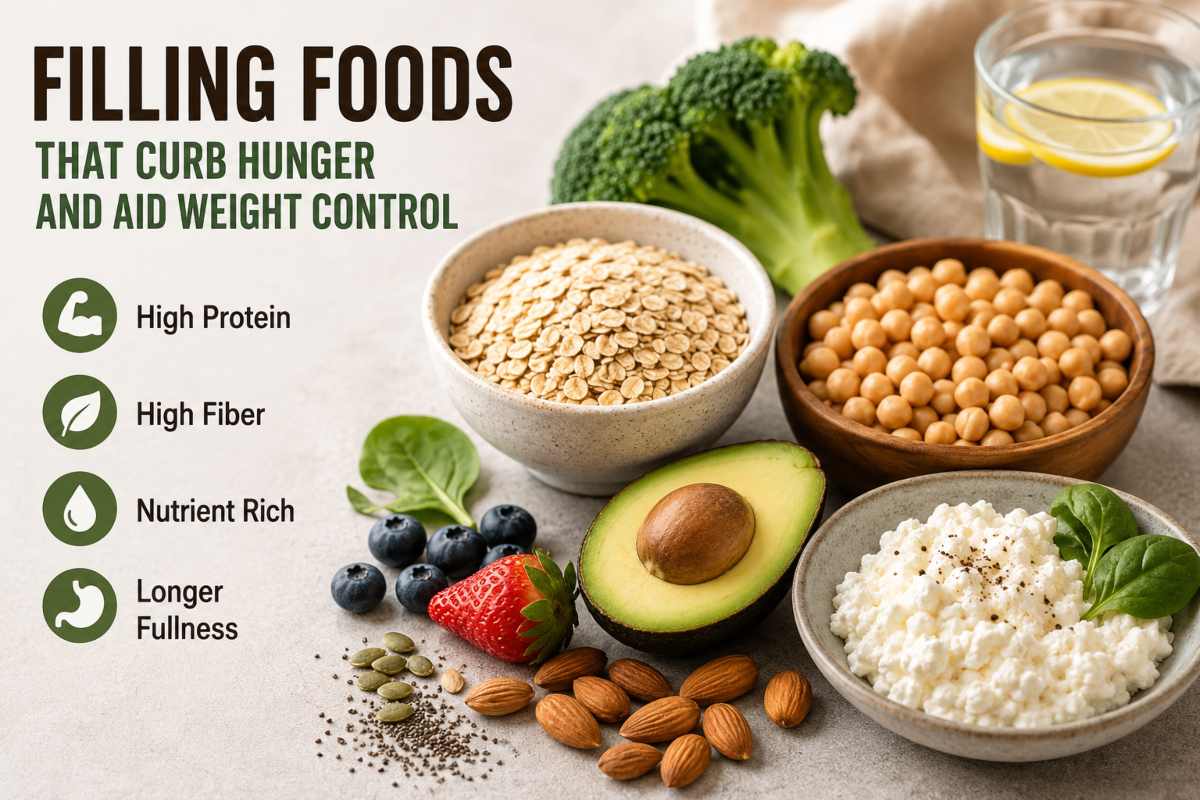
Protein is the single most important ingredient category for a weight loss focused smoothie. Sources like Greek yogurt, cottage cheese, silken tofu, or a quality protein powder do more than add nutritional value, protein has a higher satiety effect per calorie than carbohydrates or fat, meaning it keeps you feeling full for longer after you finish drinking. A smoothie with a meaningful protein component can function as a genuine meal replacement rather than something that leaves you hungry again within the hour.
Fiber works alongside protein to extend that feeling of fullness. Chia seeds, ground flaxseed, oats, and leafy greens like spinach all slow down digestion, which helps prevent the rapid blood sugar spike and subsequent crash that often triggers cravings later in the day. Whole fruits, particularly berries, apples, and bananas, contribute natural sweetness along with fiber, which is the key distinction between fruit eaten whole and fruit consumed as juice. The fiber in whole fruit slows sugar absorption, juice removes that fiber entirely, which is part of why a fruit based smoothie behaves very differently in the body than a glass of juice with the same fruit content.
Healthy fats deserve a place here too, even though they are sometimes treated with suspicion in weight loss contexts. A small amount of avocado, nut butter, or chia seeds adds satiety and helps the body absorb fat soluble vitamins from the other ingredients. The keyword is “small”, a tablespoon of nut butter or a quarter of an avocado is usually enough to get the benefit without significantly increasing the calorie count.
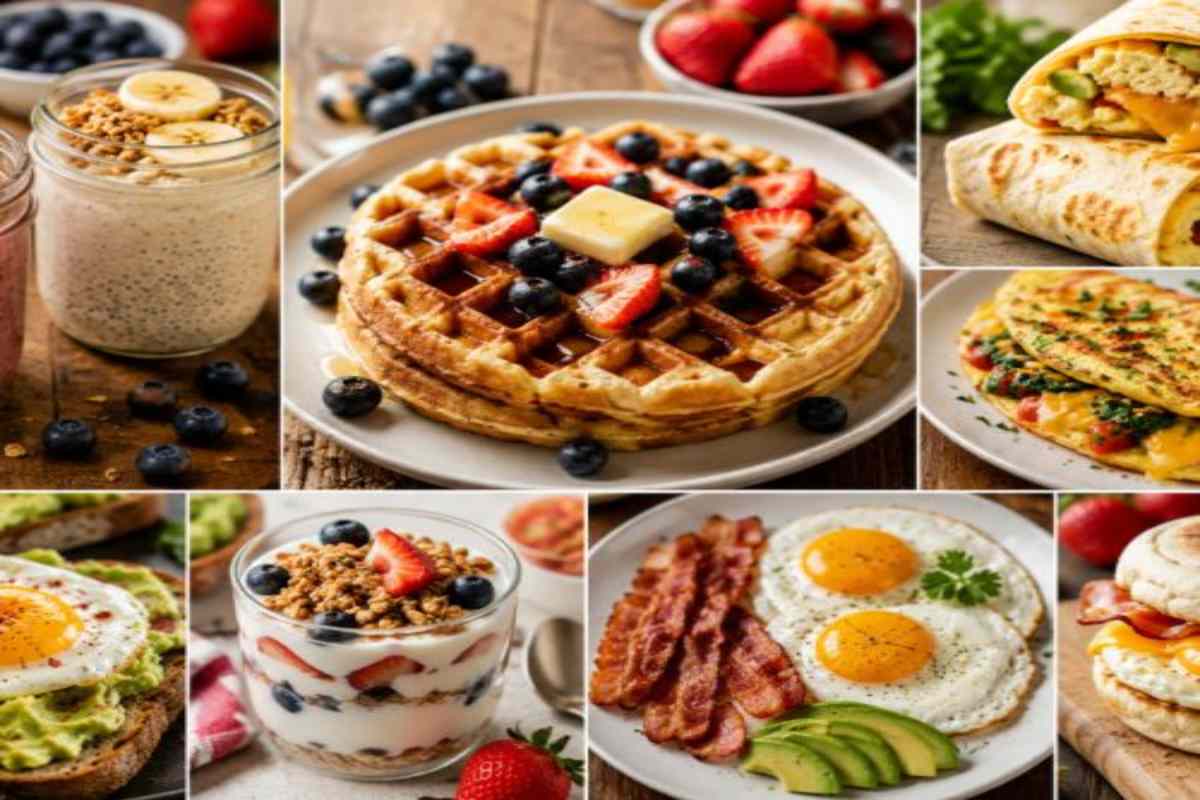
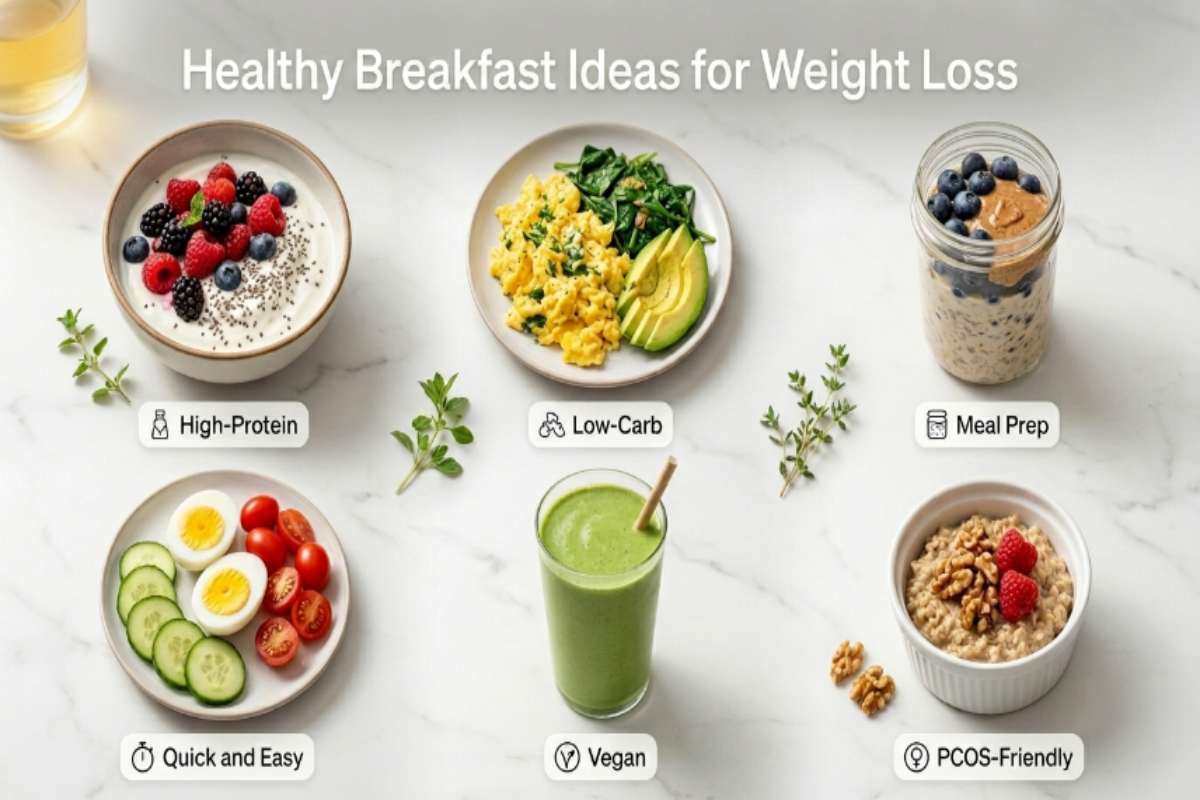
If you are looking for other protein an fiber forward options to round out a weight loss friendly morning routine, this collection of healthy breakfast ideas for weight loss covers a range of approaches beyond smoothies that follow the same nutritional logic.
Ingredients to Use Sparingly
The ingredients that most commonly derail a weight loss smoothie are not unhealthy in isolation, they are simply easy to overuse, and smoothies make overuse particularly easy because everything gets blended into a single, often underestimated serving.
Fruit juice is the most common culprit. Using juice as a smoothie base instead of whole fruit and a liquid like water or milk adds a significant amount of sugar and calories without the fiber that would otherwise slow its absorption. A smoothie made with orange juice as its base can easily contain as much sugar as a can of soda, despite feeling like a “healthy” choice. Honey, maple syrup, and flavored syrups fall into the same category, a small drizzle adds up quickly, and natural fruit is almost always sweet enough on its own without them.
Full fat dairy and nut butters are nutritious but calorie dense, which means portion size matters more than with almost any other ingredient. A generous scoop of peanut butter or a large pour of whole milk can add over one hundred calories without noticeably changing the texture or flavor of the final smoothie, the kind of addition that is easy to underestimate and easy to repeat daily without realizing its cumulative effect.
Pre made smoothie mixes and flavored protein powders are worth checking carefully as well, since many contain added sugars or artificial sweeteners that are not always obvious from the front of the packaging. Reading the ingredient list, rather than relying on marketing claims like natural or healthy, is the most reliable way to avoid ingredients that quietly work against your goals.
For a baked goods comparison that illustrates the same principle, where a food can look healthy on the surface but vary significantly depending on how it is made, these fluffy blueberry muffins show how small ingredient choices change the overall nutritional profile of a recipe without changing how it looks or tastes on the surface.
Benefits of Smoothies for Weight Loss You Will Actually Notice
Smoothies support weight loss by delivering protein, fiber, and micronutrients in a format that is fast to prepare, easy to portion, and genuinely satisfying enough to replace a full meal. Unlike most quick fix diet strategies, the benefits of adding a well built smoothie to your routine compound over time, better energy, fewer cravings, and more consistent nutrition without the effort of cooking from scratch every morning.
Keeps You Fuller for Longer Without Extra Calories
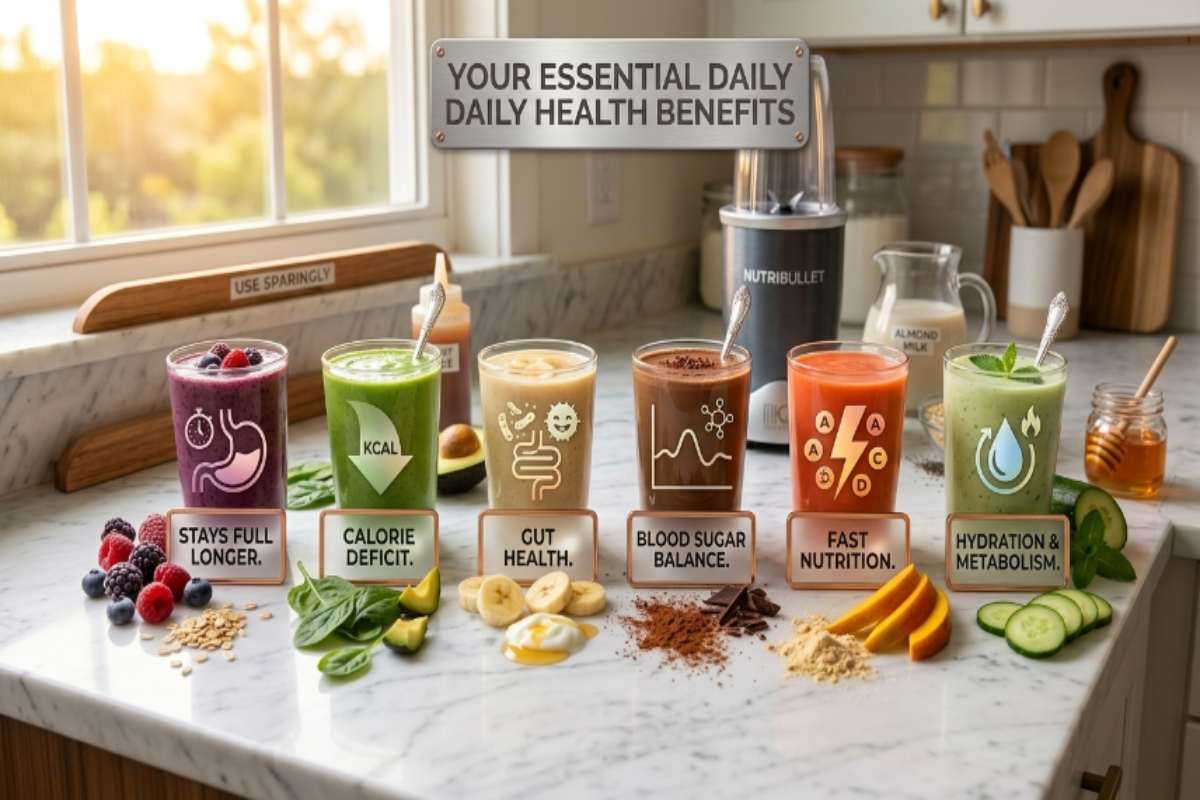
The most immediate benefit of a high protein, high fiber smoothie is satiety. When your breakfast includes at least 20 grams of protein, from Greek yogurt, cottage cheese, or a clean protein powder, your body suppresses hunger hormones more effectively than it does after a carb heavy meal. Add chia seeds or ground flaxseed, and you slow digestion further, which means you are not reaching for a snack by 10 a.m. This combination of protein and fiber is what separates a weight loss smoothie from a glorified glass of juice.
Supports a Natural Calorie Deficit Without Feeling Deprived
One of the most underrated benefits of smoothies for weight loss is how easily they fit into a calorie deficit without making you feel like you are dieting. A well built smoothie in the 300–400 calorie range can replace a 600–800 calorie breakfast, not by starving you, but by using volume, fiber, and protein to do the same job with fewer calories. Spinach, cucumber, and frozen berries add bulk and nutrition with almost no caloric cost, which means your smoothie can feel generous while still keeping your daily intake on track.
Delivers Gut Friendly Nutrition That Supports Metabolism
Gut health and weight management are more connected than most people realize, and smoothies are one of the most efficient ways to feed your microbiome daily. Ingredients like banana, oats, chia seeds, and leafy greens act as prebiotics, they feed the beneficial bacteria in your gut that regulate digestion, reduce bloating, and influence how efficiently your body processes and stores energy. Adding a spoonful of plain Greek yogurt or kefir introduces live probiotics on top of that, creating a smoothie that actively supports metabolic health rather than just calorie control.
Helps Control Blood Sugar and Reduce Cravings
Blood sugar stability is one of the most overlooked factors in successful weight loss, and smoothies, when built correctly, are one of the better tools for maintaining it. Whole fruits blended with fiber and protein slow the absorption of natural sugars, preventing the sharp glucose spike and subsequent crash that typically triggers cravings for refined carbohydrates and sweets later in the day. Cinnamon, a common smoothie add in, has also been shown in multiple studies to improve insulin sensitivity, making it a small but meaningful addition for anyone managing energy levels alongside weight.
Makes Nutrient Dense Eating Fast Enough to Actually Stick To
Consistency is the single biggest predictor of weight loss success, and smoothies remove one of the main barriers to consistent healthy eating: time. A smoothie that takes three minutes to blend and one minute to drink delivers more protein, fiber, vitamins, and antioxidants than most meals that take thirty minutes to cook. That ease of preparation is not a minor convenience, it is the mechanism by which smoothies actually change eating habits over the long term, because a healthy choice that is faster than the unhealthy alternative is one people return to without relying on willpower.
Supports Hydration, Which Is Directly Linked to Fat Metabolism
Hydration plays a direct role in how effectively the body metabolizes fat, and many people are chronically mildly dehydrated without realizing it. Smoothie bases like coconut water, cucumber, and watermelon contribute meaningful hydration alongside their nutritional benefits, while the liquid base itself, water, almond milk, or green tea, adds to daily fluid intake in a way that feels like eating rather than drinking plain water. Research consistently shows that even mild dehydration reduces metabolic rate and increases the likelihood of mistaking thirst for hunger, making hydration a genuinely functional weight loss benefit rather than a peripheral one.
Trendy Healthy Smoothie Recipes for Weight Loss
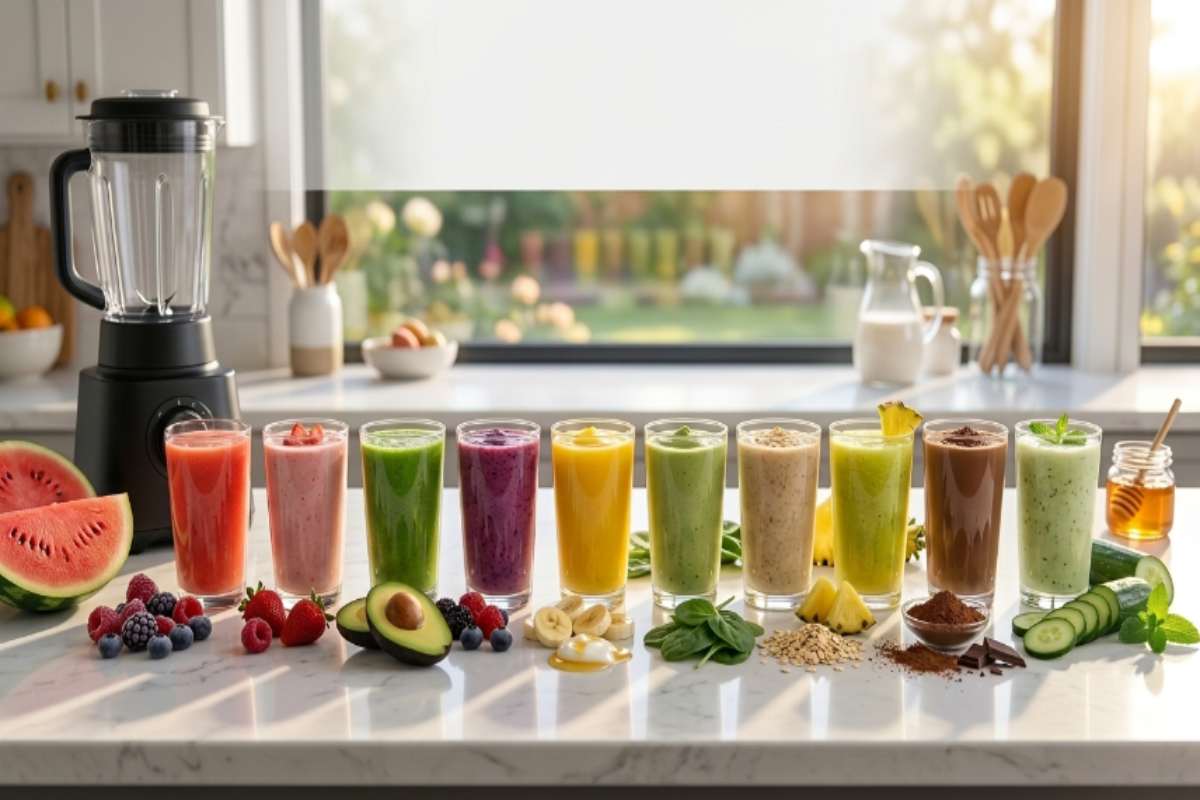
These ten smoothies combine protein, fiber, and whole food ingredients across fruit, berry, green, and breakfast style variations, each one built to keep you full, support a calorie deficit, and avoid the sugar crashes that come with store bought blends. Each recipe below makes one serving and can be doubled or batch prepped for the week.
1. Mango Watermelon Smoothie
This mango watermelon smoothie is one of the most hydrating options on this list, and hydration plays a bigger role in weight management than most people realize. Thirst is often mistaken for hunger, leading to unnecessary snacking. Watermelon is over ninety percent water, which means this smoothie delivers significant volume for very few calories, while mango adds natural sweetness along with vitamins A and C.
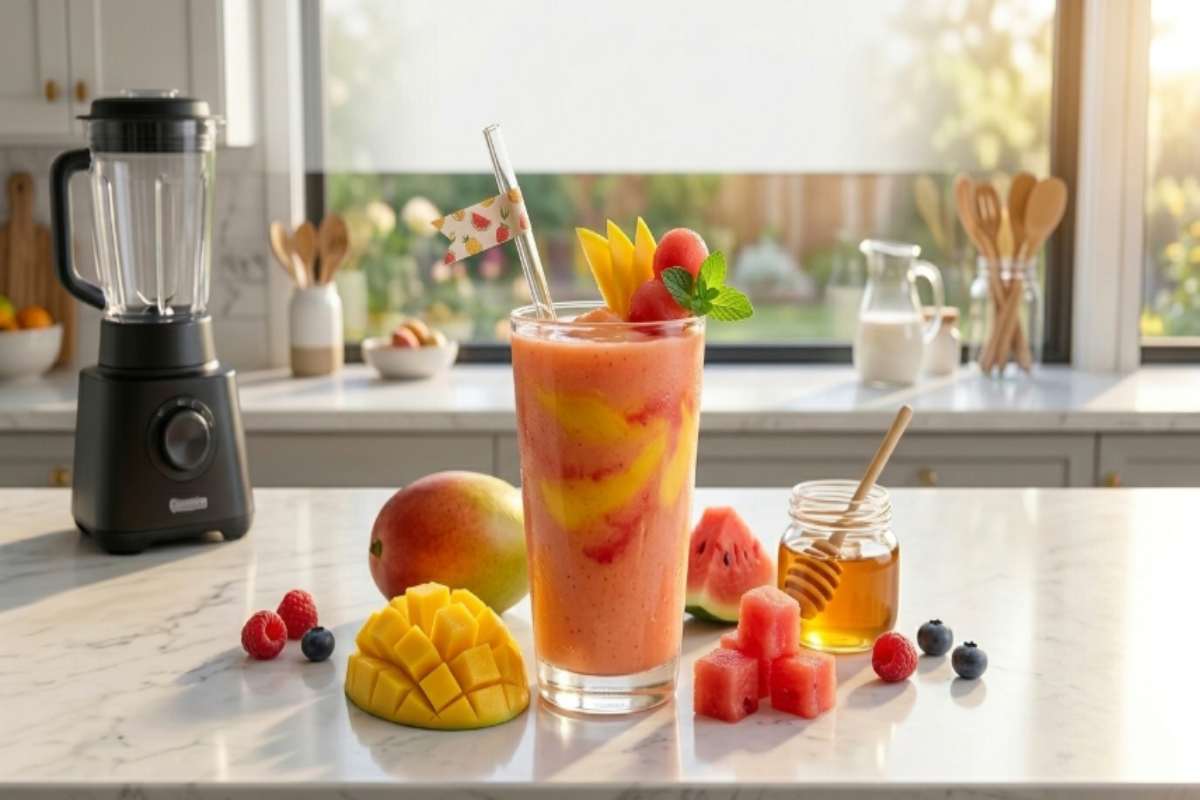
The combination works particularly well as a mid afternoon option when you want something refreshing rather than heavy. Because the natural sugars in watermelon and mango are balanced by the fruit water and fiber content, this smoothie satisfies a sweet craving without the rapid blood sugar spike that comes from juice or processed snacks. For extra staying power, add a tablespoon of chia seeds, they absorb liquid and thicken the smoothie while adding fiber that slows digestion.
Quick Recipe
Ingredients: 1 cup cubed watermelon, ½ cup frozen mango chunks, 1 tablespoon chia seeds, ½ cup water or coconut water and a few ice cubes.
Instructions: Add the watermelon, mango, chia seeds, and water to a blender. Blend on high for 30–45 seconds until smooth. Add ice and blend again briefly for a slushier texture. Serve immediately so the chia seeds do not over thicken the drink.
2. Strawberry Banana Smoothie
The strawberry banana smoothie is a classic for a reason, it delivers a familiar, crowd pleasing flavor while quietly packing in nutrients that support weight loss. Strawberries are one of the lowest sugar fruits relative to their fiber content, and bananas add potassium along with a creamy texture that makes the smoothie feel indulgent without needing added sugar.
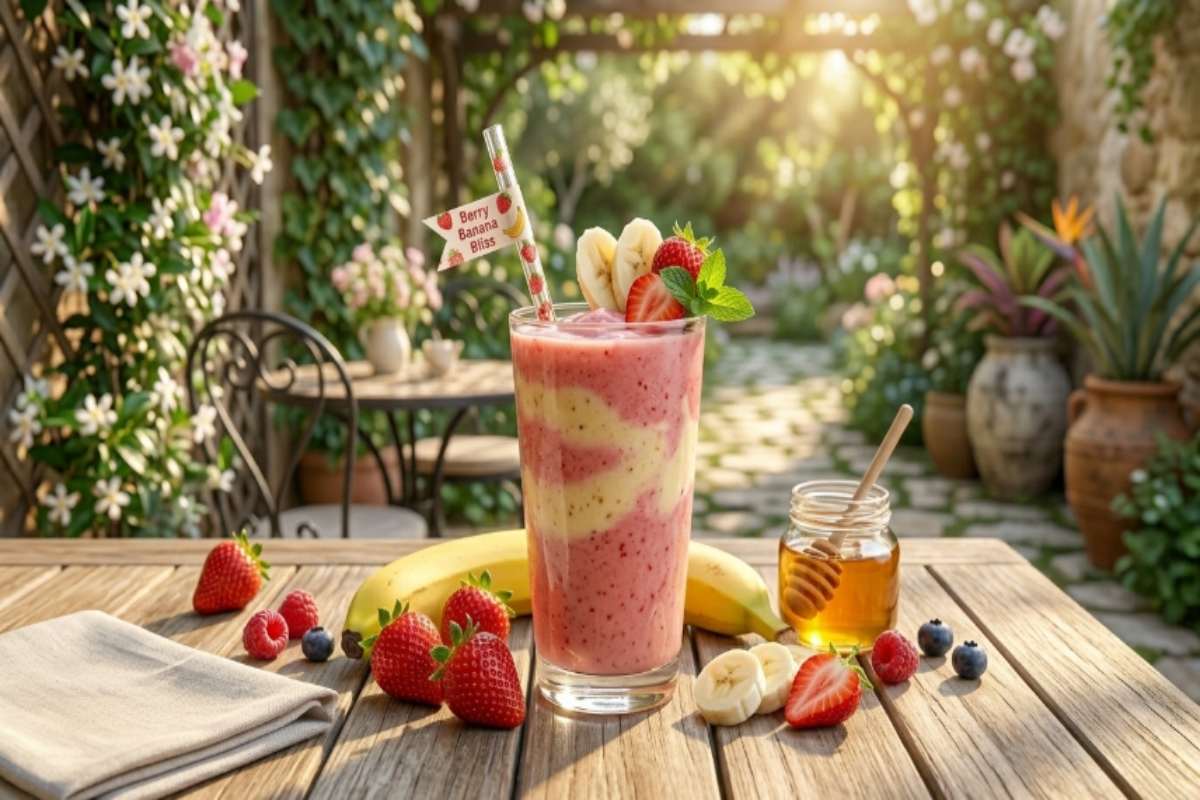
This combination is particularly effective as a breakfast replacement. Add a scoop of Greek yogurt or protein powder, and you have a smoothie with enough protein and fiber to keep hunger at bay for several hours. Research consistently shows that protein rich breakfasts reduce overall calorie intake later in the day compared to high carb, low protein options. For a thicker, colder texture, use a frozen banana rather than fresh.
Quick Recipe
Ingredients: 1 frozen banana, ¾ cup frozen strawberries, ½ cup plain Greek yogurt, ½ cup unsweetened almond milk, ice as needed.
Instructions: Combine the banana, strawberries, yogurt, and almond milk in a blender. Blend until smooth, adding a splash more almond milk if it is too thick to pour. Taste and add a few ice cubes if you prefer a colder, slushier consistency, then blend once more.
3. Green Detox Smoothie
A green detox smoothie built from spinach, cucumber, and green apple is one of the most effective ways to add vegetables to your diet without the taste of vegetables dominating the result. Spinach contributes almost no flavor once blended, while cucumber adds water content and a clean, refreshing quality, and green apple provides just enough natural sweetness to balance the earthiness of the greens.
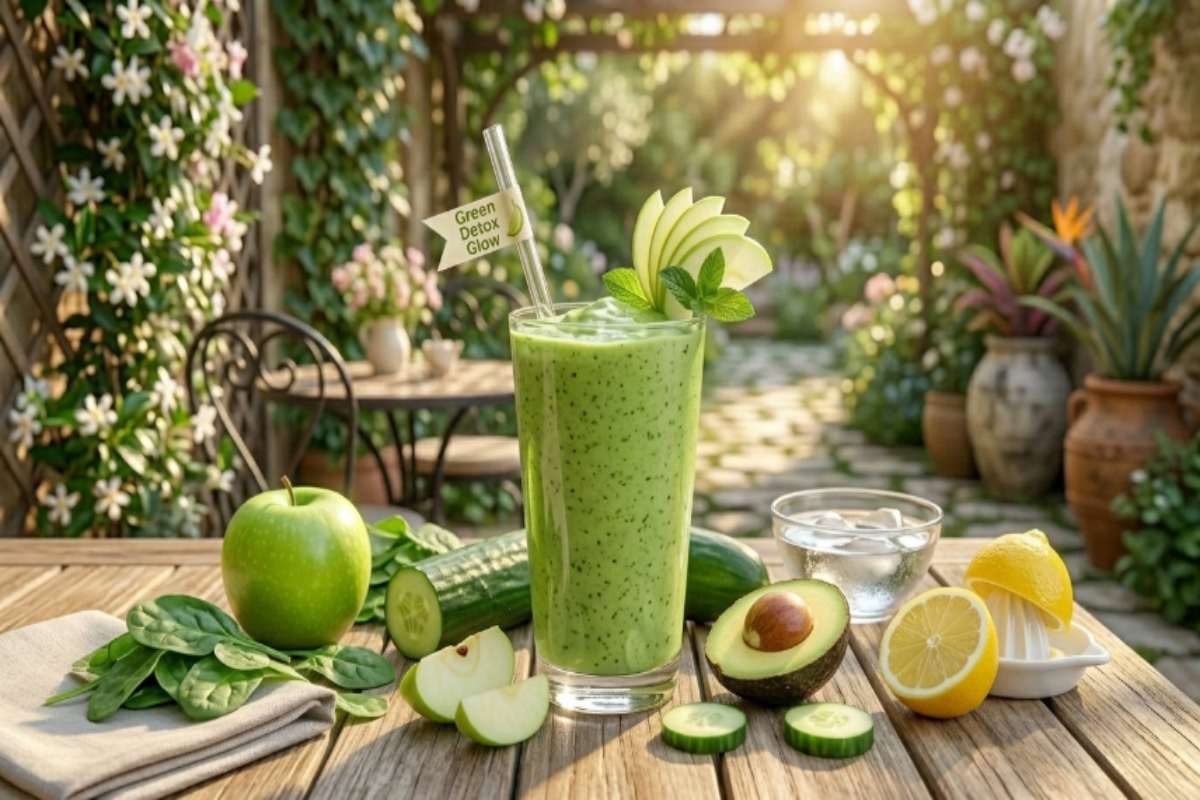
This smoothie is particularly low in calories relative to its volume, making it an excellent choice for anyone trying to increase vegetable intake while managing portion sizes. A squeeze of fresh lemon juice brightens the entire blend and helps mask any remaining bitterness from the greens. For added satiety, blend in half an avocado, which adds healthy fats and a silky texture without overpowering the other flavors.
Quick Recipe
Ingredients: 1 cup fresh spinach, ½ cucumber (chopped), 1 small green apple (cored and chopped), juice of half a lemon, ¾ cup cold water, ½ avocado (optional).
Instructions: Layer the spinach, cucumber, and apple in the blender first, then add the lemon juice and water. Blend until fully smooth, scraping down the sides if needed. If using avocado, add it after the initial blend and pulse again until creamy. Serve over ice for a more refreshing finish.
4. Berry Protein Smoothie
Mixed berries, a combination of blueberries, raspberries, and blackberries, are among the most nutrient dense, lowest sugar fruits available, making them an ideal base for a weight loss focused smoothie. Berries are particularly high in antioxidants and fiber relative to their calorie content, which means you get significant nutritional value without a large sugar load.
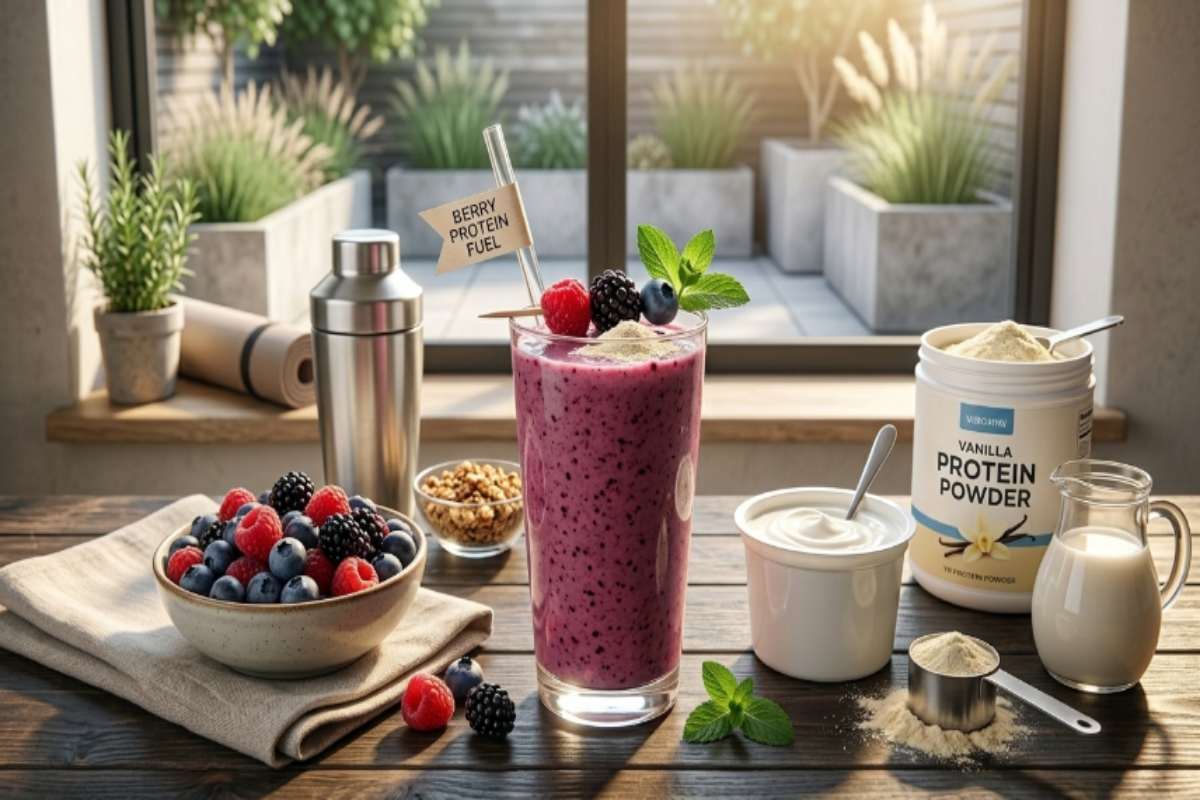
Combined with Greek yogurt and a scoop of protein powder, this smoothie becomes a genuinely filling meal replacement rather than just a snack. The protein content slows the absorption of the natural sugars from the berries, preventing the energy spike and crash pattern that can trigger cravings later. This is one of the best options for a post workout smoothie, as the protein supports muscle recovery while the berries replenish antioxidants depleted during exercise.
Quick Recipe
Ingredients: 1 cup mixed frozen berries (blueberries, raspberries, blackberries), ½ cup Greek yogurt, 1 scoop vanilla or unflavored protein powder, ¾ cup unsweetened almond milk.
Instructions: Add the almond milk to the blender first, followed by the yogurt, protein powder, and frozen berries. Blend on high until completely smooth and no berry chunks remain. If the mixture is too thick, add a tablespoon of almond milk at a time until it reaches your preferred consistency.
5. Tropical Smoothie
This tropical smoothie combines pineapple, mango, and coconut water for a blend that tastes like a vacation but performs like a weight loss friendly staple. Coconut water is naturally low in calories while providing electrolytes, making this smoothie an excellent post workout option or a refreshing alternative to sugary sports drinks.
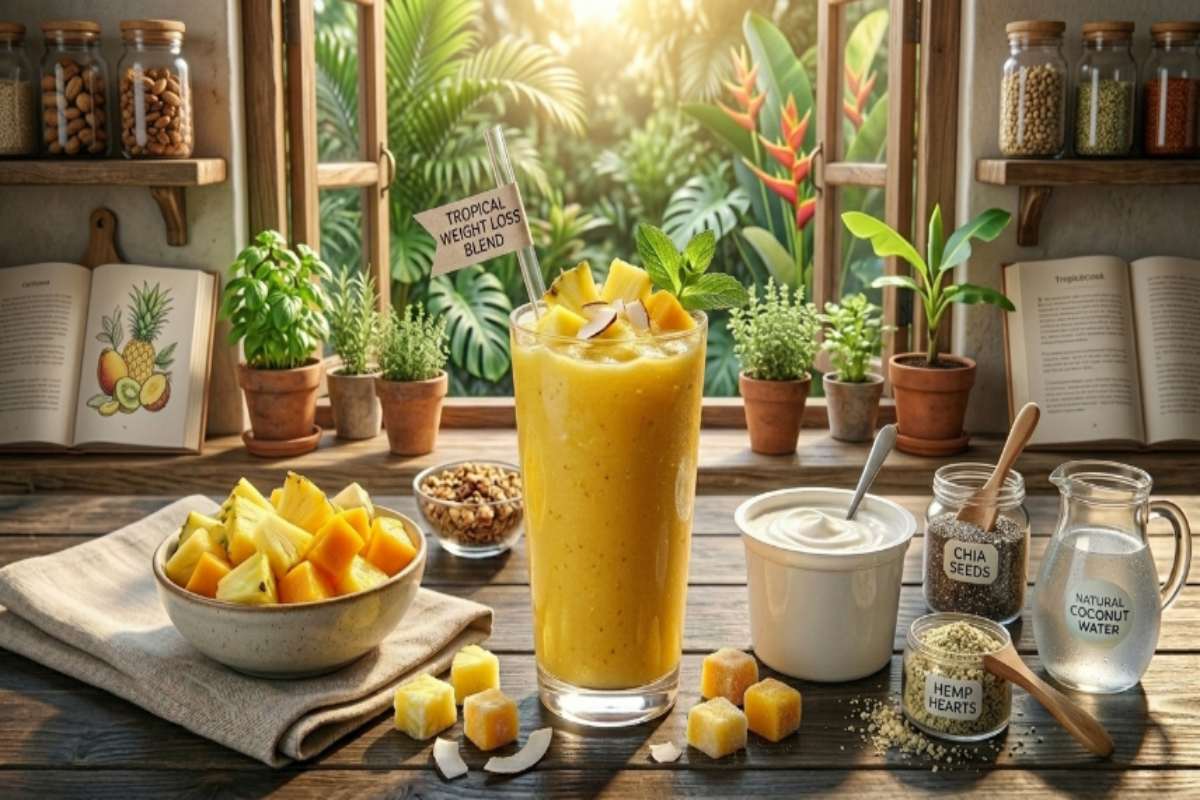
Pineapple contains bromelain, an enzyme that supports digestion, which pairs well with a smoothie strategy focused on gut health alongside weight management. The natural sweetness from the tropical fruits means this smoothie requires no added sugar at all, and the combination of fruit fiber and coconut water hydration helps curb the kind of cravings that often derail weight loss efforts in the afternoon.
Quick Recipe
Ingredients: ¾ cup frozen pineapple chunks, ½ cup frozen mango chunks, 1 cup coconut water, ice as needed.
Instructions: Combine the pineapple, mango, and coconut water in a blender and blend until smooth. If the texture is too thin, add a handful of ice and blend again for a thicker, slushy consistency. Pour and serve right away while it is cold.
6. Avocado Blueberry Smoothie
The avocado blueberry smoothie might sound unusual, but the combination works exceptionally well. Avocado contributes a creamy, almost dessert like texture while contributing healthy monounsaturated fats that support satiety, and blueberries add natural sweetness along with one of the highest antioxidant counts of any commonly available fruit.
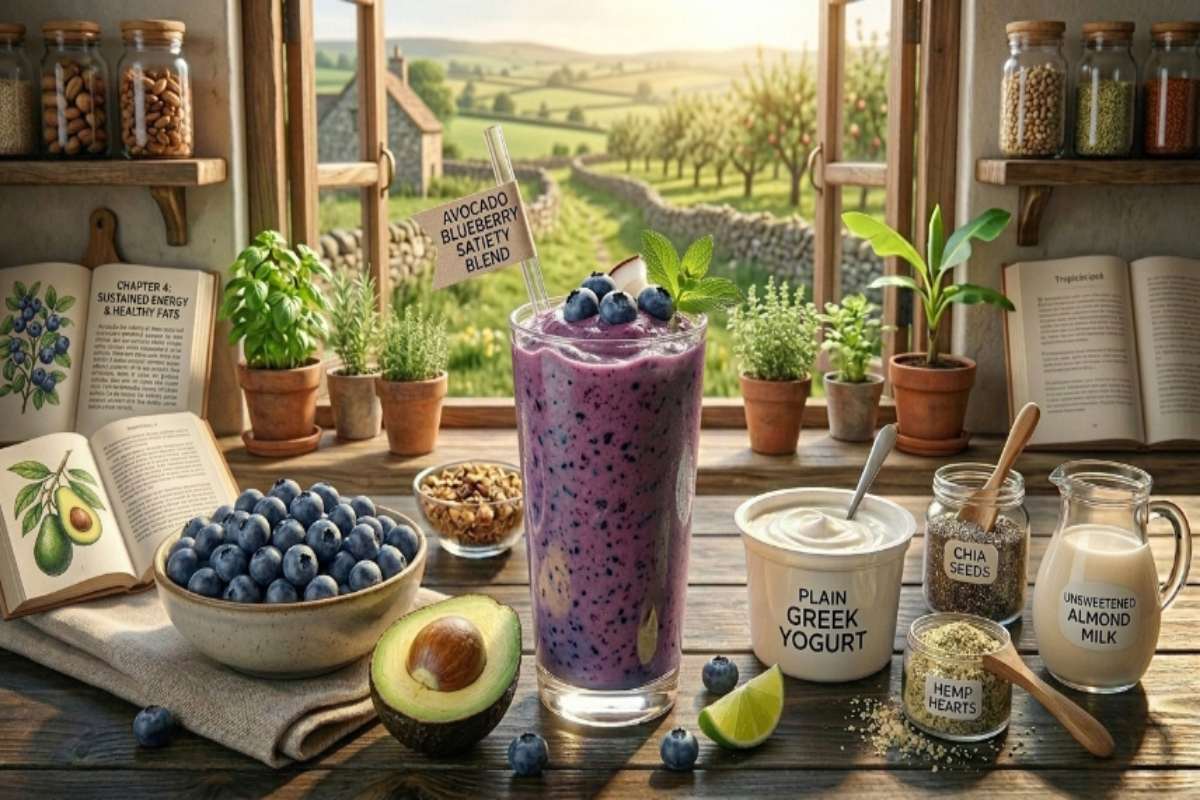
Healthy fats are often underrated in weight loss diets, but they play a critical role in keeping you full between meals and helping your body absorb fat soluble vitamins from the other ingredients. This smoothie is particularly effective as a breakfast option, since the combination of fat, fiber, and antioxidants provides slow, sustained energy rather than the quick spike and crash associated with high sugar breakfasts. A small amount goes a long way, half an avocado is typically enough for a single serving.
Quick Recipe
Ingredients: ½ ripe avocado, 1 cup frozen blueberries, ½ cup unsweetened almond milk, ½ cup plain Greek yogurt, and a small squeeze of lime juice.
Instructions: Scoop the avocado into the blender along with the blueberries, almond milk, and yogurt. Blend until completely smooth and creamy, scraping the sides once if needed. Add the lime juice at the end and blend briefly to combine, it helps balance the richness of the avocado.
7. Oatmeal Banana Breakfast Smoothie
Blending oats directly into a smoothie is one of the simplest ways to add slow digesting fiber that keeps you full for hours. Combined with banana for natural sweetness and a creamy texture, this oatmeal banana smoothie functions less like a drink and more like a complete breakfast in liquid form.
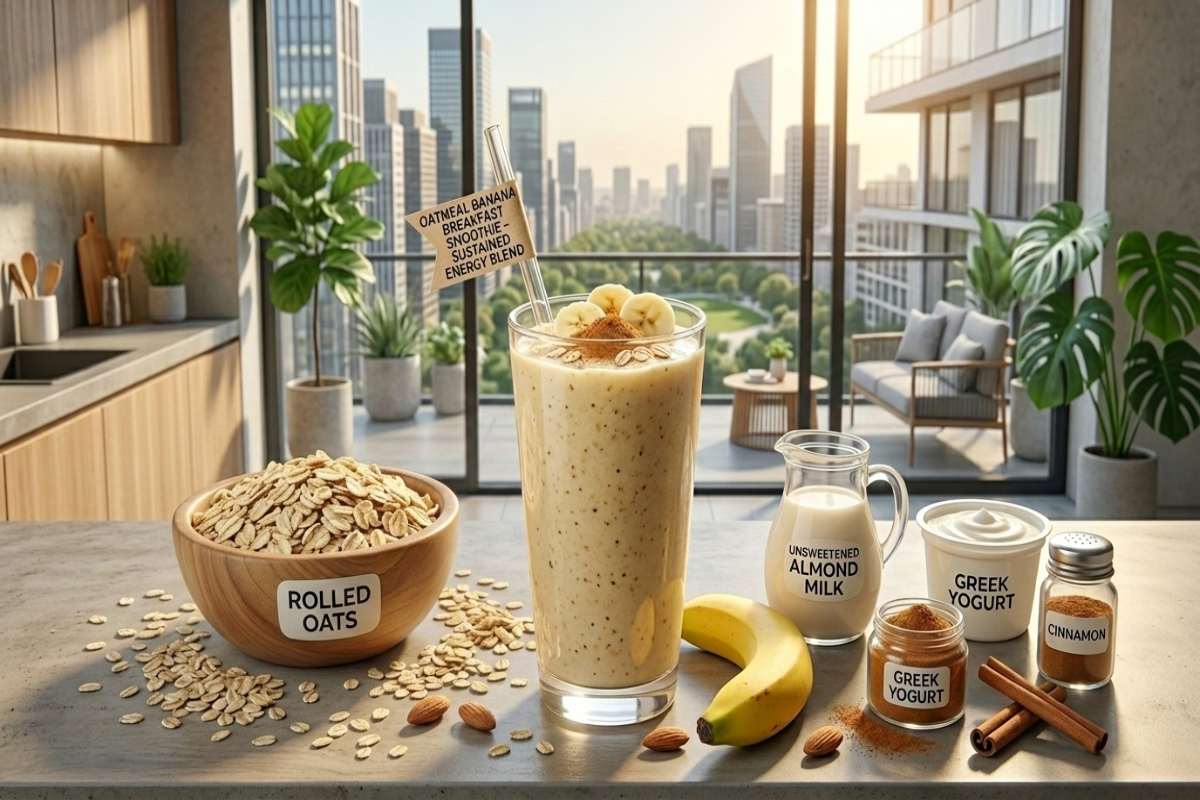
The fiber in oats forms a gel like substance in the digestive tract that slows nutrient absorption, helping stabilize blood sugar and reducing the likelihood of a mid morning energy crash. This makes the smoothie particularly useful for anyone who tends to feel hungry again shortly after a typical breakfast. A small amount of cinnamon enhances flavor while potentially helping regulate blood sugar levels, making this an especially practical choice for sustained weight management.
Quick Recipe
Ingredients: ½ cup rolled oats, 1 ripe banana, ¾ cup unsweetened almond milk, ½ teaspoon cinnamon, ½ cup plain Greek yogurt (optional, for extra protein).
Instructions: Add the oats and almond milk to the blender first and let them sit for 5 minutes to soften slightly. Add the banana, cinnamon, and yogurt if using, then blend on high until smooth and creamy. If the smoothie is too thick, thin it out with a little extra almond milk.
8. Pineapple Spinach Smoothie
Pineapple intense natural sweetness almost completely masks the taste of spinach, making this one of the easiest ways to increase vegetable intake for anyone who is not naturally drawn to green smoothies. The result tastes far closer to a tropical fruit smoothie than a vegetable forward blend, despite the significant nutritional contribution from the spinach.
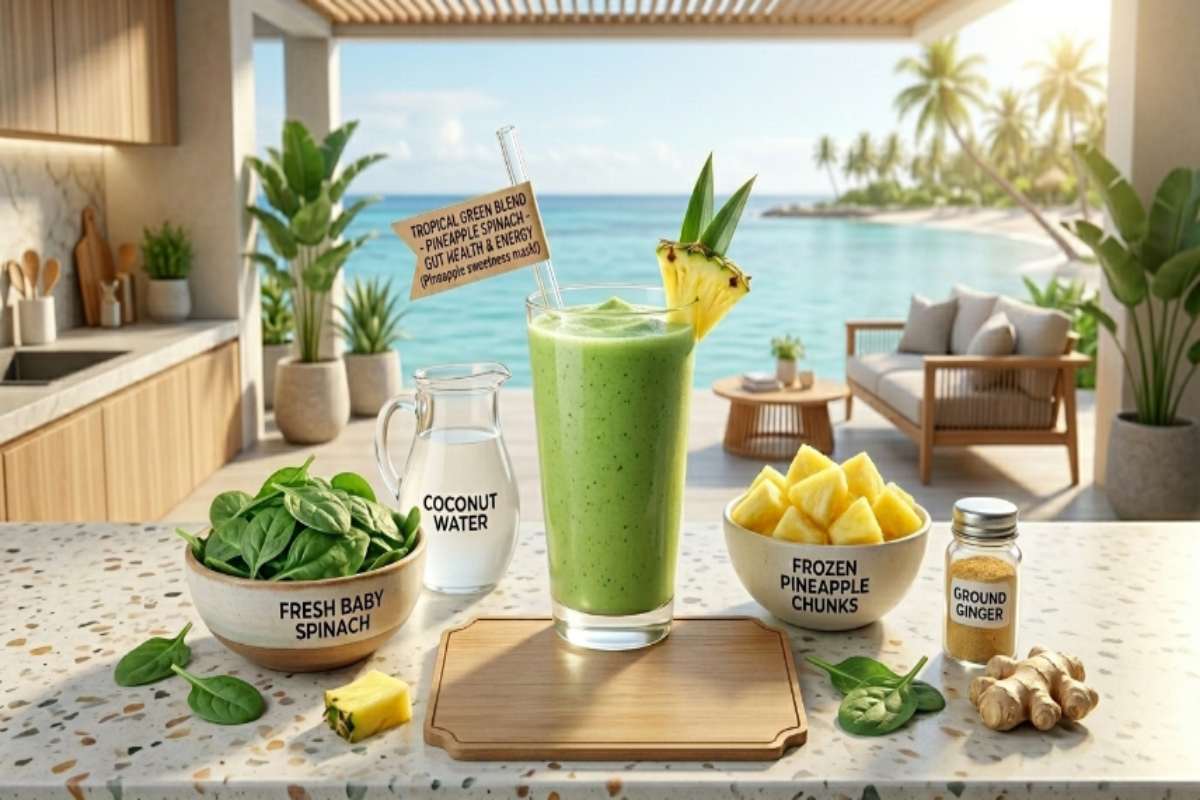
Beyond its flavor masking properties, pineapple contains bromelain, which supports digestion and may help reduce bloating, a useful quality for anyone focused on gut health as part of their weight loss approach. Spinach contributes iron, fiber, and a range of micronutrients with almost no caloric impact, making this smoothie an efficient way to pack in nutrition without adding significant calories to your daily total.
Quick Recipe
Ingredients: 1½ cups fresh spinach, 1 cup frozen pineapple chunks, ¾ cup water or coconut water, a small piece of fresh ginger (optional).
Instructions: Add the spinach and liquid to the blender first and blend briefly until the spinach breaks down into a smooth green liquid. Add the pineapple (and ginger, if using) and blend again until fully smooth. Taste and add a little more liquid if the consistency feels too thick.
9. Chocolate Peanut Butter Protein Smoothie
This smoothie proves that weight loss friendly does not have to mean flavor restricted. Combining cocoa powder, a tablespoon of natural peanut butter, and a scoop of protein powder creates a smoothie that tastes close to a milkshake while delivering substantial protein and healthy fats that support satiety.
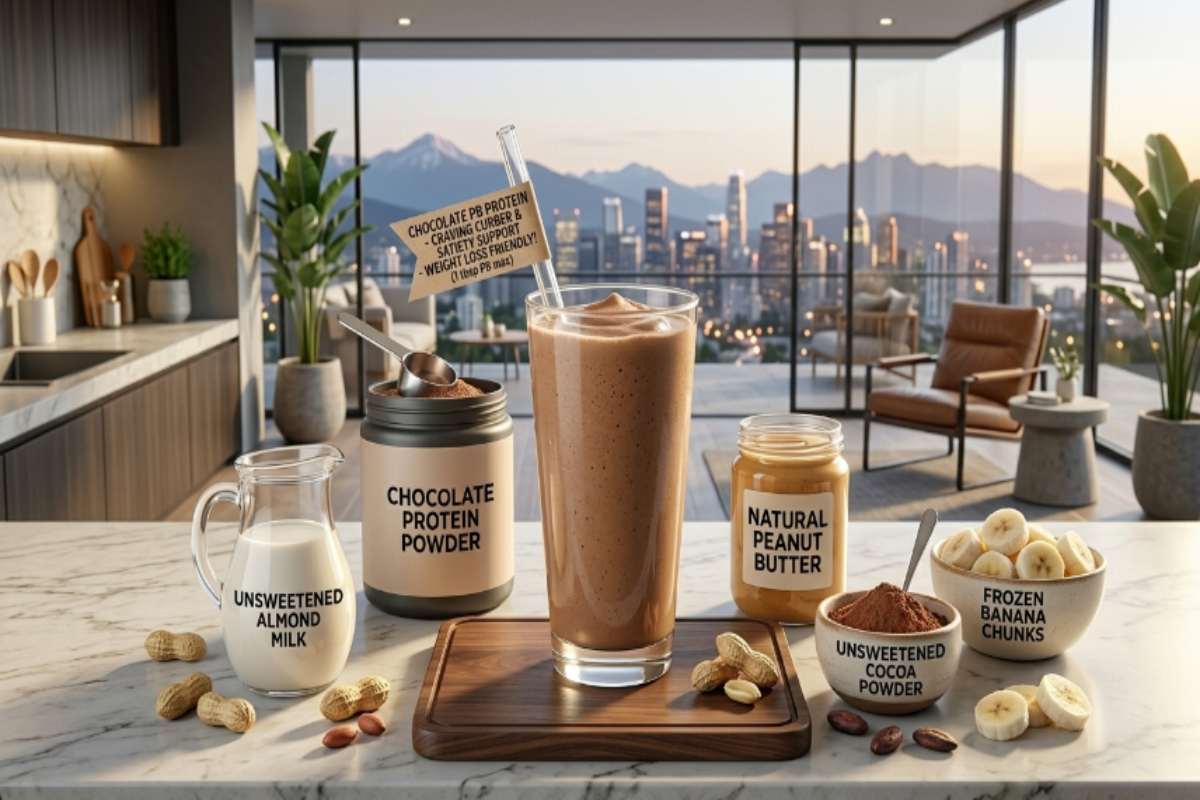
The key to making this work for weight loss is portion control on the peanut butter, a single tablespoon provides enough flavor and richness without pushing the calorie count too high. The protein content makes this an excellent option for curbing sweet cravings, particularly in the evening, since it satisfies a chocolate craving while still contributing to your daily protein goals rather than working against them. Unsweetened almond milk as the base keeps the overall sugar content low.
Quick Recipe
Ingredients: 1 cup unsweetened almond milk, 1 scoop chocolate or unflavored protein powder, 1 tablespoon natural peanut butter, 1 tablespoon unsweetened cocoa powder, 1 frozen banana (optional, for extra creaminess).
Instructions: Add the almond milk, protein powder, peanut butter, and cocoa powder to the blender. Blend until smooth, then add the frozen banana if using for a thicker, milkshake like texture and blend again. Serve immediately for the best consistency.
10. Cucumber Mint Smoothie
The cucumber mint smoothie is the lightest option on this list, and that lightness is exactly its strength. Cucumber is roughly ninety six percent water, making this smoothie one of the most hydrating, lowest calorie options available, ideal for hot days or as a palate cleansing refresher between meals.
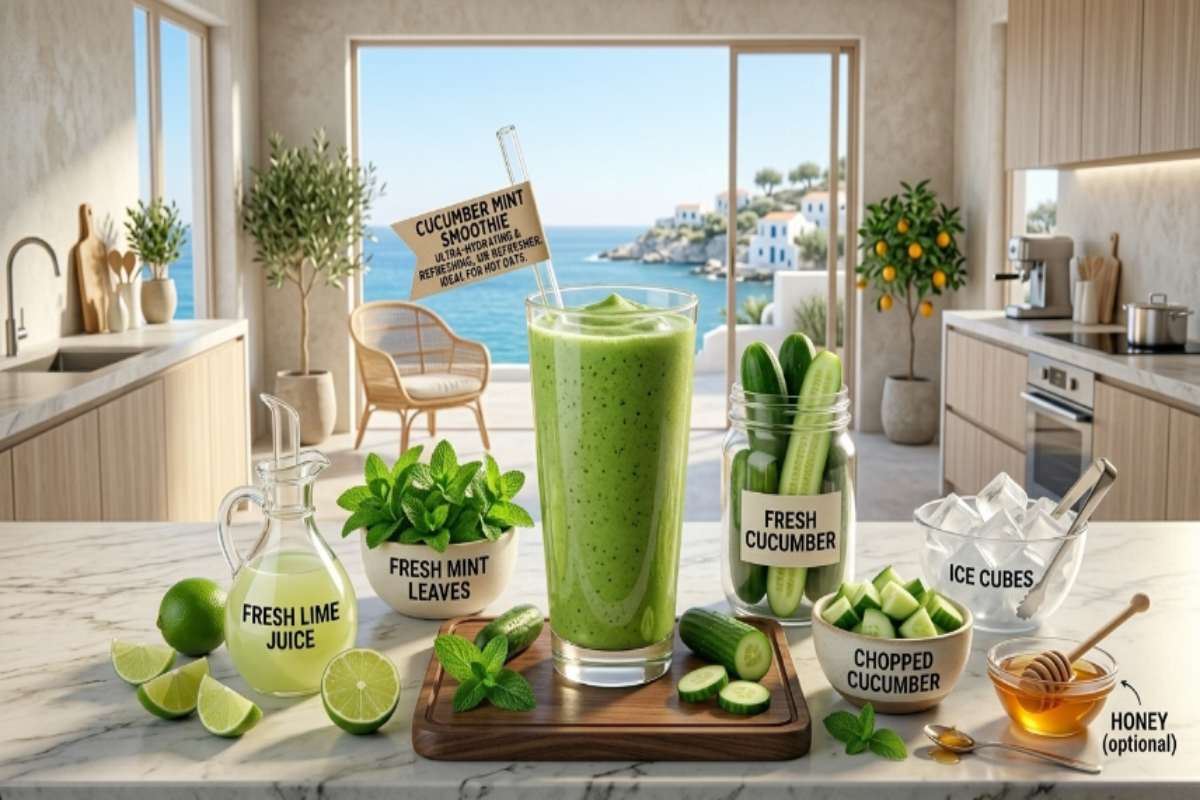
Mint adds a cooling, refreshing quality that makes this smoothie feel more like a treat than a health drink, despite containing very few calories. A small amount of lime juice and a touch of honey can round out the flavor without significantly affecting the calorie count. This smoothie works particularly well as an afternoon option when you want something light and refreshing rather than filling, useful for managing snack cravings without adding meaningful calories to your day.
Quick Recipe
Ingredients: 1 large cucumber (peeled and chopped), a handful of fresh mint leaves, juice of half a lime, ½ cup cold water, ice cubes and a small drizzle of honey (optional).
Instructions: Add the cucumber, mint, lime juice, and water to the blender and blend until completely smooth. Strain if you prefer a thinner, juice like texture, or leave as is for a thicker smoothie. Add ice and a small drizzle of honey if desired, then blend briefly to combine.
Easy Tips for Making Healthy Smoothies Part of a Weight Loss Routine
A smoothie supports weight loss most effectively when it is timed to match your hunger patterns and portioned with the same care as a regular meal. Treating a smoothie as just a drink is the most common reason people end up consuming more calories than they realize. The right timing and portioning turn it into a genuine tool rather than an afterthought.
Best Time of Day to Drink a Smoothie
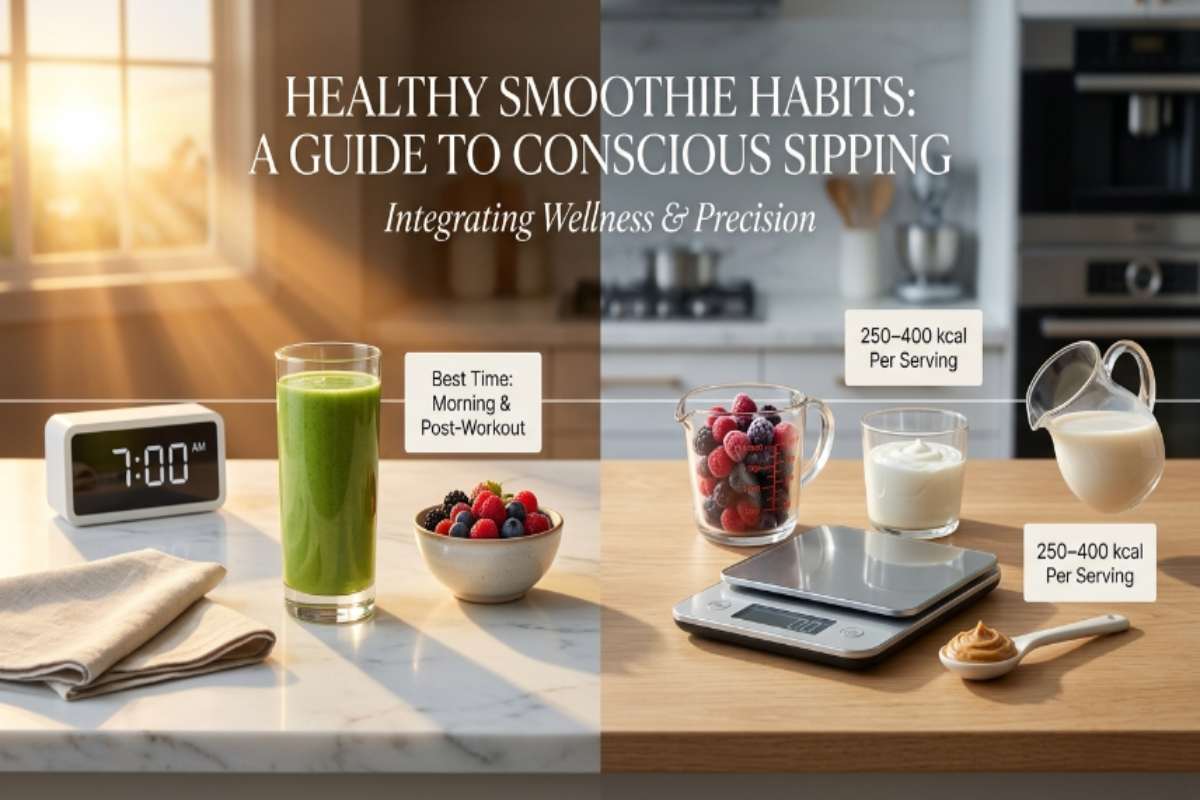
The most effective time to drink a smoothie depends on your goal, but morning and post workout windows tend to produce the best results for weight loss. A smoothie consumed at breakfast, particularly one built around protein and fiber, helps reduce mid morning hunger and limits the temptation to reach for a high calorie snack before lunch. This matters because studies on meal timing consistently show that a high protein breakfast leads to lower overall calorie intake throughout the rest of the day compared to skipping breakfast or eating a carb heavy one.
Post workout is the other strong window. After exercise, your body is primed to absorb nutrients efficiently, and a smoothie combining protein with fast digesting carbohydrates supports muscle recovery while replenishing energy stores depleted during the workout. This is one of the few times where a slightly higher calorie smoothie is actually beneficial rather than something to minimize.
What tends to work less well for weight loss is drinking a smoothie late in the evening as a dessert substitute, particularly if it is high in fruit sugar with little protein or fiber to slow digestion. If you are craving something sweet at night, a smaller portion of a naturally portioned treat, like a slice from one of these easy cake recipes, can sometimes satisfy that craving with fewer overall calories than an oversized evening smoothie, simply because the portion size is built in.
Portion and Calorie Guidance
Smoothies are deceptively easy to over consume, because a calorie dense smoothie can be finished in under five minutes, far faster than eating an equivalent amount of solid food, which naturally limits intake through chewing and digestion time. A weight loss focused smoothie typically falls in the 250 to 400 calorie range for a meal replacement, and significantly less, around 100 to 150 calories, for a snack sized portion.
The easiest way to keep portions in check is to measure ingredients rather than blending freely. A single serving of fruit (roughly one cup), one source of protein (a scoop of powder or half a cup of Greek yogurt), and a measured liquid base keeps the calorie count predictable. Add ins like nut butter, full fat coconut milk, or honey should be measured in tablespoons, not estimated. These ingredients are calorie dense enough that a little extra can add fifty to one hundred calories without noticeably changing the taste or texture.
If you are following a structured eating plan, for example, a keto meal plan, smoothie ingredients need particular attention, since fruit heavy blends can quickly exceed daily carbohydrate limits. In that case, building a smoothie around low carb bases like avocado, unsweetened almond milk, and berries in small quantities keeps it aligned with the broader plan.
It is also worth remembering that a smoothie does not need to be the centerpiece of every meal. Occasionally, pairing a smaller smoothie with something more substantial, even a comforting plate of lemon mandazi on a weekend morning, is perfectly compatible with a weight loss routine, as long as it fits within your overall daily intake rather than being treated as an extra on top of it. Sustainable weight loss is rarely about perfect days, it is about consistent averages over time.
Conclusion
Building a sustainable weight loss routine does not require complicated meal plans or expensive diet programs, it starts with small, consistent choices, and these healthy smoothie recipes for weight loss make that consistency easier than ever. Whether you blend a protein packed berry smoothie after a morning workout, swap a high calorie breakfast for a fiber rich oatmeal banana blend, or reach for a refreshing cucumber mint smoothie to beat an afternoon craving, every glass you make is a deliberate step toward better nutrition, steadier energy, and a calorie deficit that does not feel like deprivation.
Frequently Asked Questions (FAQs)
Can I drink smoothies every day for weight loss?
Yes, smoothies can be part of a daily routine as long as they are balanced with protein and fiber and fit within your overall calorie goals. Drinking the same high sugar smoothie daily without variety can limit nutrient diversity, so rotating ingredients is ideal.
How many calories should a weight loss smoothie have?
A meal replacement smoothie typically falls between 250 and 400 calories, while a snack sized smoothie should stay closer to 100 to 150 calories. The right amount depends on what else you are eating that day and your overall calorie target.
Will smoothies make me lose weight on their own?
No single food causes weight loss, but smoothies support weight loss by replacing higher calorie meals or snacks with something more filling and nutrient dense. Results depend on your overall diet, activity level, and consistency over time.
Are smoothies better than juices for weight loss?
Yes, smoothies are generally better because they retain the fiber from whole fruits and vegetables, which slows sugar absorption and keeps you full longer. Juices remove that fiber, leaving mostly sugar and calories behind.
Can I make weight loss smoothies ahead of time?
Yes, smoothies can be prepped by freezing pre portioned fruit, greens, and add ins in bags, then blending with liquid when ready. This saves time while keeping portions consistent and reducing the temptation to add extra ingredients.
What is the best liquid base for a weight loss smoothie?
Water, unsweetened almond milk, and coconut water are the lowest calorie options and work well for most recipes. Avoid fruit juice or sweetened dairy alternatives, as these add unnecessary sugar without improving the smoothie nutritional value.








2 Comments. Leave new
Wait, is it actually possible to lose weight without feeling like you’re starving all day? Absolutely! Smoothies are the ultimate secret weapon for this because they keep you full while burning fat. If you are tired of complicated meal preps, you should definitely check out The Official 21-Day Smoothie Diet. It’s super easy to follow and the results speak for themselves. What’s your favorite smoothie ingredient to beat sugar cravings?
These smoothie ideas look refreshing and nutritious! 🍓🍌 Perfect for a healthy start.