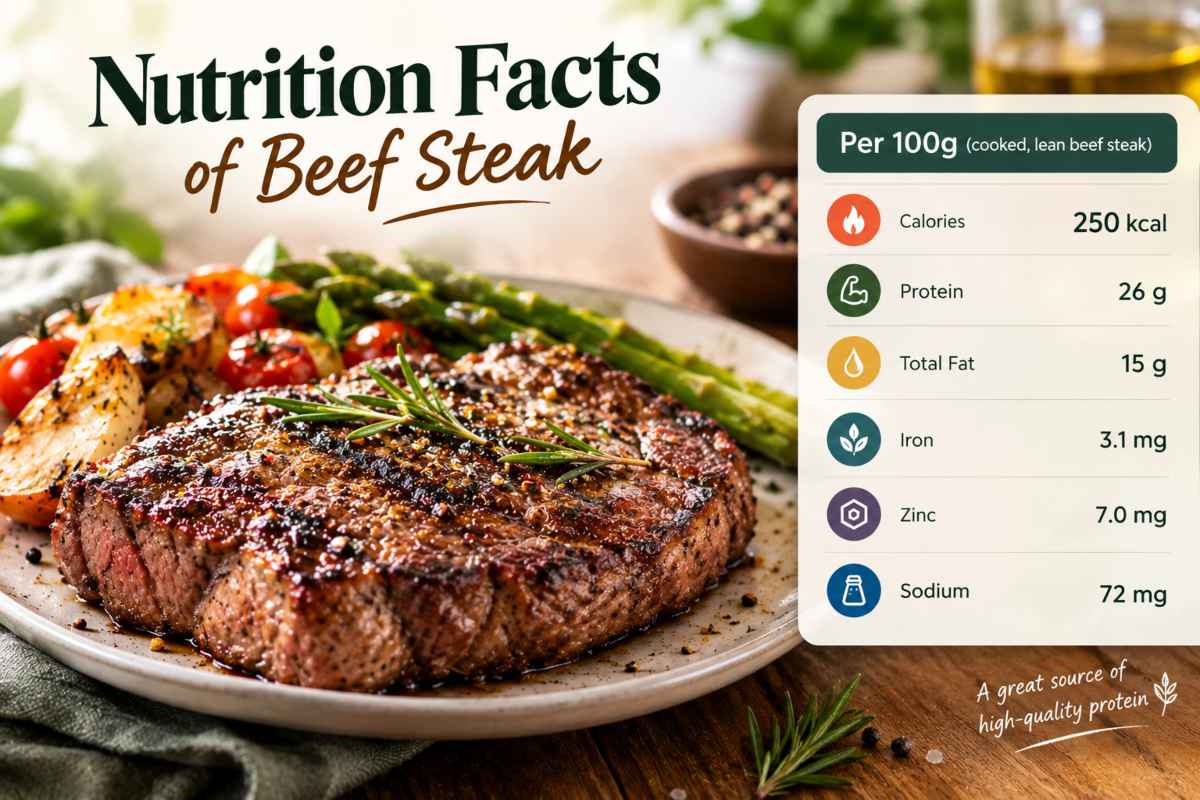
A hundred grams of cooked beef steak delivers roughly 250 calories, 26 grams of protein and 15 grams of fat, making it one of the most protein dense options in a typical lunch recipes. The exact numbers shift depending on the cut and how it is cooked, but beef steak consistently ranks as a high protein, moderate fat food that fits easily into muscle building, weight loss or general maintenance goals.
Unlike processed meats, steak carries no added sugars or fillers, what you see on the label is close to what the animal actually provided. That makes it a reliable anchor for tracking macros, whether you are counting calories for a deficit or hitting a protein target for training. The sections below break down nutrition facts of beef steak by serving size, cooking method and individual cut, so you can match the numbers to whichever preparation is actually on your plate.
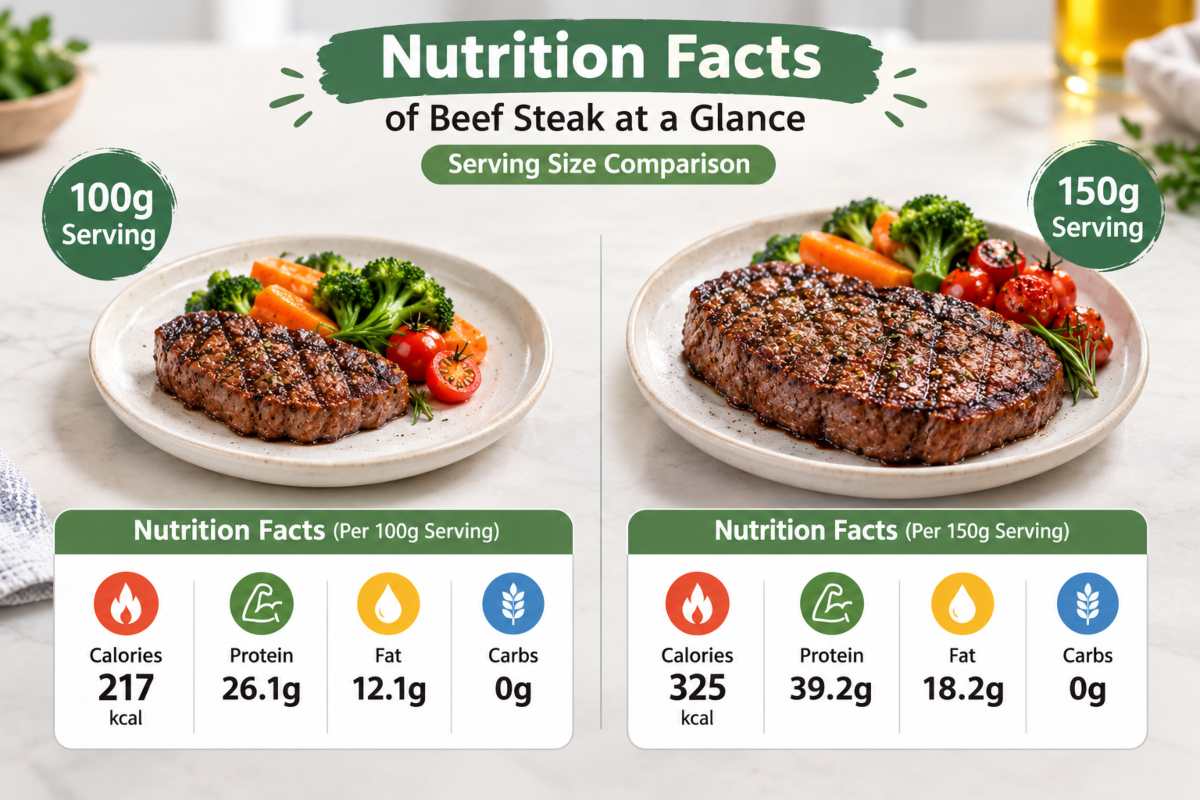
Nutrition Facts of Beef Steak at a Glance 100g Serving
A 100 gram serving of cooked beef steak provides about 250 calories, 26 g of protein and 15 grams of fat, with zero carbohydrates, numbers that hold fairly steady across most common cuts once fat trimming is accounted for. This baseline makes it easy to scale up or down depending on portion size, whether you are plating a lean sirloin or a richer cut like peppercorn beef steak.
Beef Steak Nutrition Label Example
A standard nutrition label for a 100g cooked beef steak typically lists 250 calories, 26g protein, 15g total fat (around 6g saturated), 0g carbohydrates and roughly 75mg cholesterol. Sodium sits naturally low before seasoning, usually under 60mg, which means most of the sodium on your plate comes from how the steak is prepared rather than the meat itself.
Calories, Protein, Fat and Carbs Per 100g
Per 100 grams, cooked beef steak averages 250 calories, split mainly between protein and fat with no meaningful carbohydrate content. Protein lands around 26g, covering roughly half the daily intake many adults target from a single meal, while fat contributes about 15g depending on the cut marbling. This calorie to protein ratio is why steak shows up so often in high protein meal plans, few whole foods deliver as much protein per calorie without added carbs.
Nutrition Facts Per 150g Serving
Scaling to a more typical 150g portion, closer to what is served at most meals, brings the totals to roughly 375 calories, 39g protein and 22g fat. That 150g serving alone covers a substantial share of the suggested daily protein intake for most adults, which is part of why a single steak serving can anchor an entire day macro planning.
Calories in Beef Steak by Cooking Method
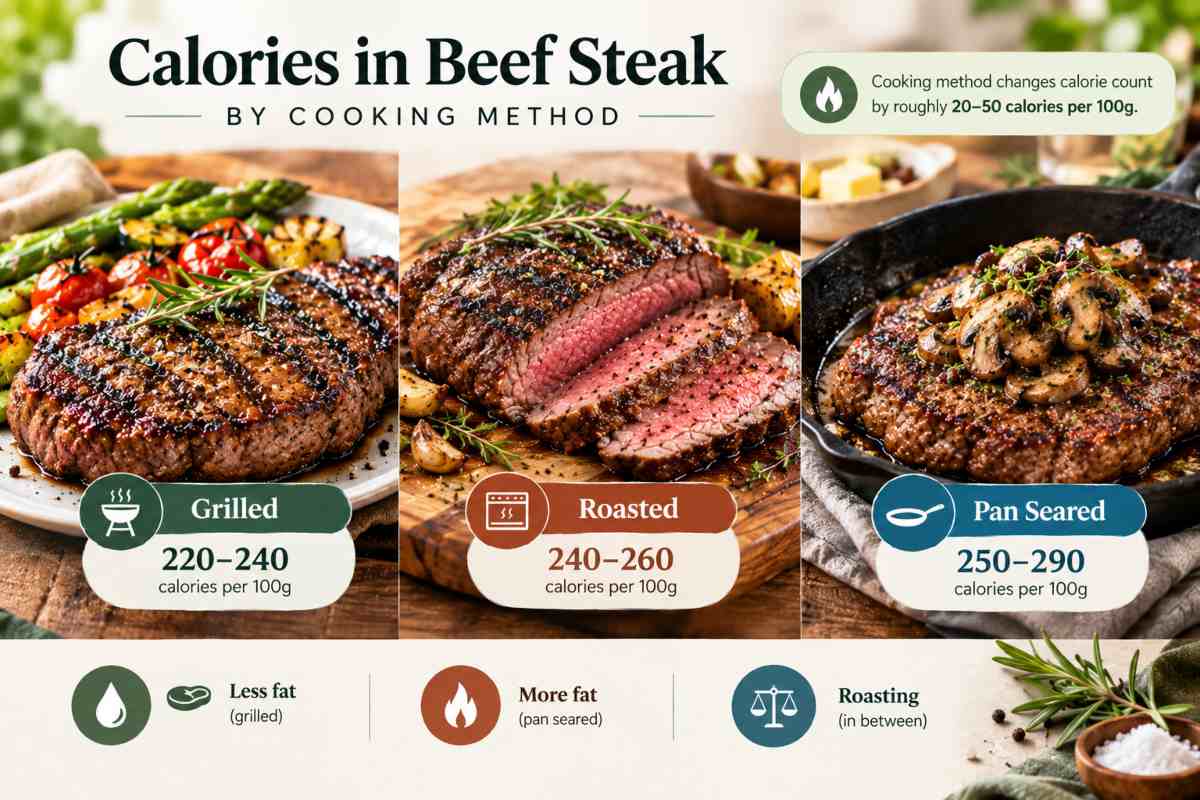
Cooking method changes beef steak calorie count by roughly 20–50 calories per 100g, mainly because of how much fat renders out versus how much oil or butter gets added back in. A dry heat method like grilling tends to land on the leaner end, while a pan seared preparation, especially something rich like beef steak with mushrooms, pushes the numbers higher.
Grilled Steak Calories
Grilling is typically the lowest calorie cooking method for beef steak, coming in around 220–240 calories per 100g cooked. Because the meat cooks directly over heat with no added fat, excess marbling drips away during cooking, which is why grilled steak consistently tests lower in calories than pan fried or roasted versions of the same cut.
Pan Seared vs Roasted Steak Calories
Pan searing usually adds 30–50 extra calories per 100g compared to grilling, largely from the oil or butter used to build a crust. Roasting falls in between the two, since the steak isn’t sitting directly in fat, but it also is not losing as much rendered fat as it would on a grill, landing around 240–260 calories per 100g. The gap between methods becomes more noticeable with fattier cuts, where a pan sear can trap more of that rendered fat back into the meat.
How Cooking Method Changes Fat Content
Fat content shifts more than any other number depending on preparation, since cooking method controls how much fat renders out versus stays locked in. A grilled steak loses a meaningful share of its surface fat to the flame, while a butter basted pan sear reintroduces fat the meat would otherwise shed, meaning two identical cuts can differ by 5g of fat or more per 100g purely based on how they are cooked, not which cut was used.
Nutrition Facts by Cut
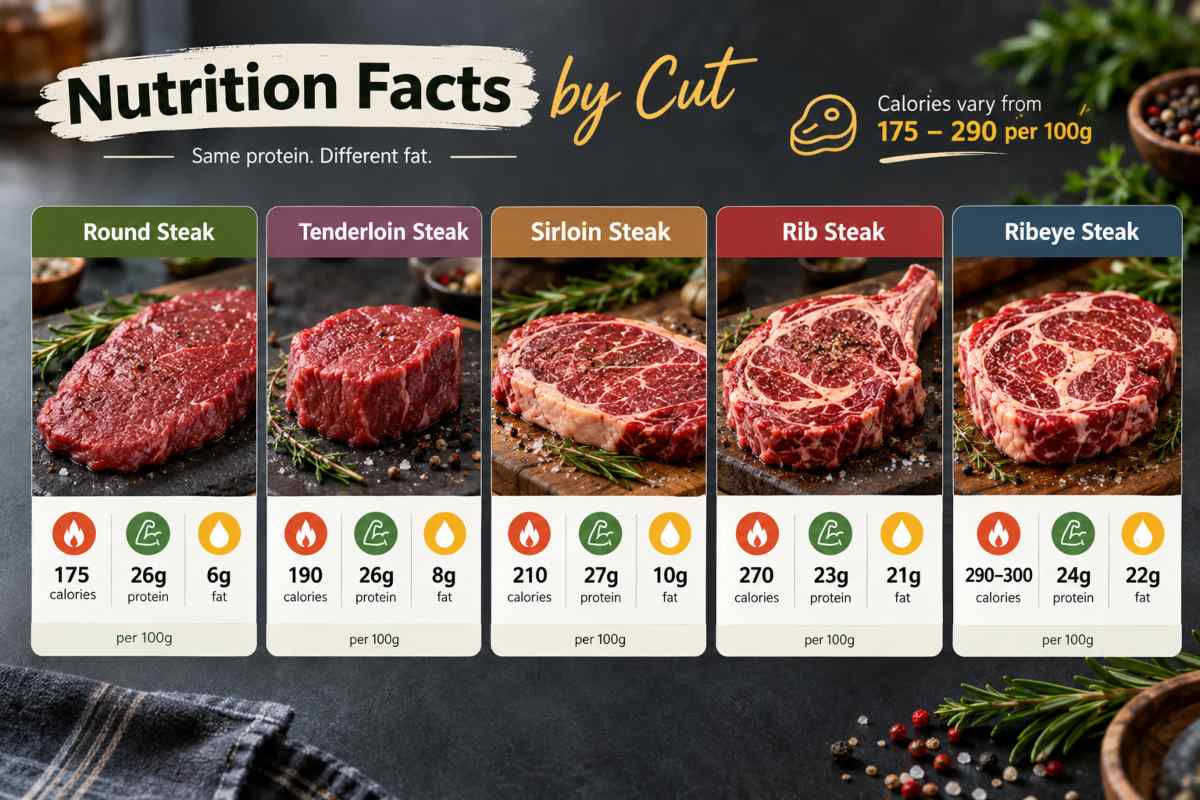
Nutrition facts vary noticeably from one beef steak cut to another, with calories per 100g ranging from around 175 in lean round steak to over 290 in a well marbled ribeye. Protein stays fairly consistent across cuts at 25–27g per 100g, so the real differentiator when comparing cuts is fat content, not protein.
Sirloin Steak Nutrition Facts
Sirloin steak averages around 210 calories per 100g cooked, with about 27g of protein and 10g of fat, making it one of the more balanced cuts for anyone wanting protein without excess fat. Its moderate marbling puts it squarely between leaner cuts like round and richer ones like ribeye, which is part of why it is often recommended as a default choice for everyday meals.
Ribeye Steak Nutrition Facts
Ribeye is the fattiest common cut, running roughly 290–300 calories per 100g with 22g of fat and 24g of protein. The heavy marbling that gives ribeye its flavor and tenderness is the same marbling that pushes its calorie count well above leaner cuts, nearly 40% more fat than sirloin for a similar sized portion.
Tenderloin Steak Nutrition Facts
Tenderloin sits toward the leaner side despite its reputation as a premium cut, at around 190 calories per 100g with 26g of protein and 8g of fat. Because it is one of the least worked muscles on the animal, it carries less connective tissue and marbling, translating directly into a lower fat count on the label.
Round Steak Nutrition Facts
Round steak is the leanest of the common cuts, typically landing around 175 calories per 100g with 26g of protein and just 6g of fat. That fat to protein ratio makes it a frequent pick for anyone specifically targeting a lowest calorie, highest protein steak option, though the tradeoff is a firmer texture that benefits from slower cooking methods.
Rib Steak Nutrition Facts
Rib steak, closely related to ribeye but often bone in, runs about 270 calories per 100g with 21g of fat and 23g of protein. The bone and surrounding fat cap add a bit more calorie density than a boneless ribeye of the same weight, though the actual meat portion has a similar nutritional profile.
Protein, Fat and Macros Breakdown
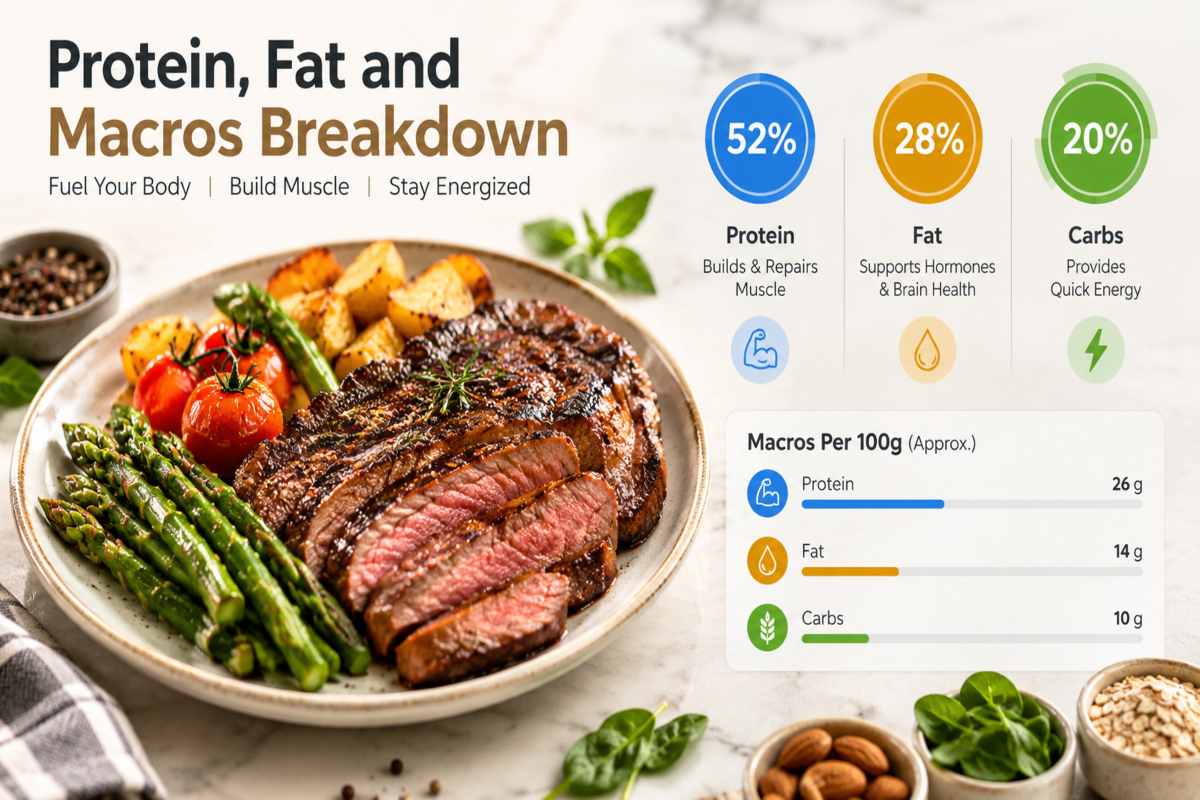
Beef steak’s macro profile is dominated by protein and fat, with virtually no carbohydrates, a pattern that holds whether you are eating a plain grilled cut or working it into something richer like beef stroganoff. Understanding how those macros split by cut and preparation makes it easier to fit steak into a specific calorie or protein target.
Beef Steak Macros Explained
A typical 100g serving splits into roughly 26g protein, 15g fat and 0g carbohydrates, meaning nearly all of steak calories come from protein and fat in a close to even split by weight, though fat contributes more calories gram for gram at 9 calories per g versus 4 for protein. This is why two cuts with similar protein counts can still differ by 50+ calories depending purely on fat content.
Steak Potassium and Micronutrient Content
Beef steak carries a meaningful amount of potassium, typically around 315mg per 100g, along with solid contributions of iron, zinc and vitamin B12. That potassium level puts a single serving at roughly 7% of the daily recommended intake, making steak a useful contributor to electrolyte balance alongside its protein content, not just a protein source on its own.
Protein Content Per Cut Compared
Protein content stays remarkably consistent across cuts, generally ranging from 23g to 27g per 100g regardless of whether you are eating lean round steak or a marbled ribeye. The real variable between cuts is fat, not protein, so choosing a cut based on protein content alone won’t move the needle much, but it will significantly affect total calories.
Lean Beef Steak vs Fattier Cuts
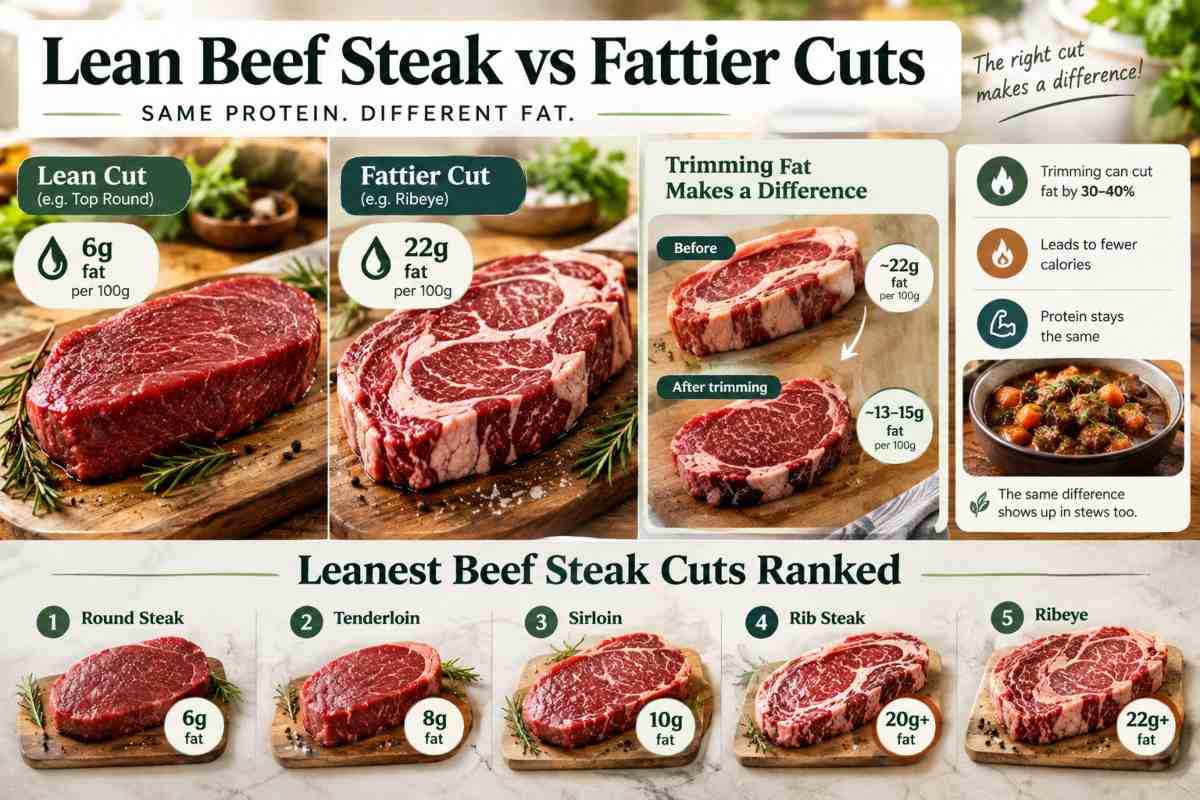
Lean beef steak cuts can carry as little as 6g of fat per 100g, while fattier cuts like ribeye run closer to 22g, nearly a fourfold difference that has a bigger impact on total calories than the choice of cut itself. That same range shows up in slow cooked beef dishes too, where a leaner stewing cut in beef stew behaves very differently on the macro count than a fattier one would.
How Trimming Fat Changes the Numbers
Trimming visible fat before cooking can cut a steak fat content by 30–40%, which translates to a meaningful calorie drop without touching protein at all. A ribeye trimmed of its outer fat cap, for example, can shed several grams of fat per 100g while keeping protein essentially unchanged, making trimming one of the simplest ways to adjust a steak nutrition profile without switching cuts entirely.
Leanest Beef Steak Cuts Ranked
Round steak typically ranks as the leanest common cut at around 6g of fat per 100g, followed closely by tenderloin at roughly 8g and sirloin at about 10g. Ribeye and rib steak sit at the opposite end, both running above 20g of fat per 100g even after light trimming, a gap wide enough that cut selection alone can shift a meal fat content more than any cooking adjustment would.
Lowest Calorie, Highest Protein Steak Cuts
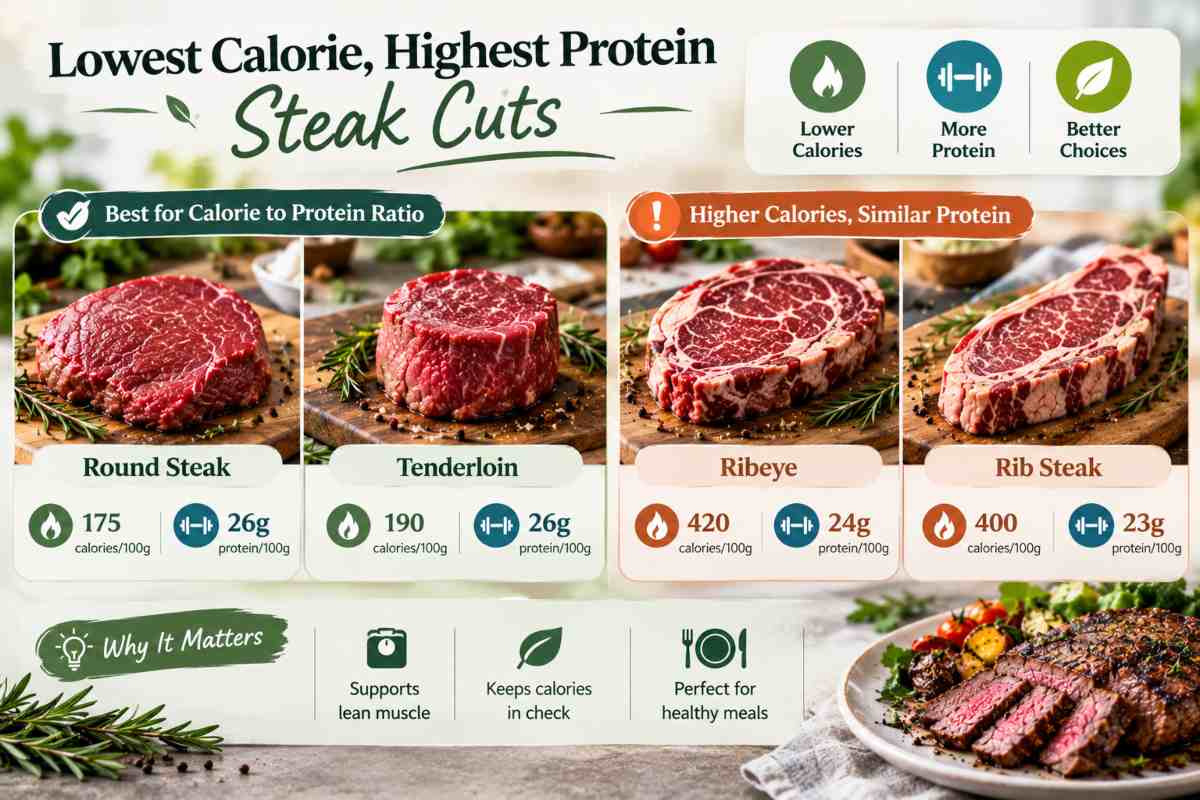
Round steak and tenderloin offer the best calorie to protein ratio among common cuts, each delivering 26g of protein for under 200 calories per 100g. That efficiency makes them a natural fit for quick dinner ideas for family meals where you want a solid protein source without adding excess calories to the plate.
Top Picks for Lean Muscle Building
Round steak leads the pack for muscle building on a calorie budget, packing 26g of protein into just 175 calories per 100g, a ratio few other cuts can match. Tenderloin follows closely at 26g protein for around 190 calories, offering nearly identical protein efficiency with a more tender texture, which is why both cuts show up so often in lean, high protein meal plans.
Cuts to Limit If Watching Calories
Ribeye and rib steak sit at the opposite end, delivering only slightly more protein than round steak, 23 24g per 100g, while carrying 60–70% more calories. That extra calorie load comes almost entirely from fat rather than protein, meaning someone watching calories gets little nutritional upside from choosing a fattier cut over a leaner one with a similar protein count.
Ground Beef vs Whole Steak Cuts
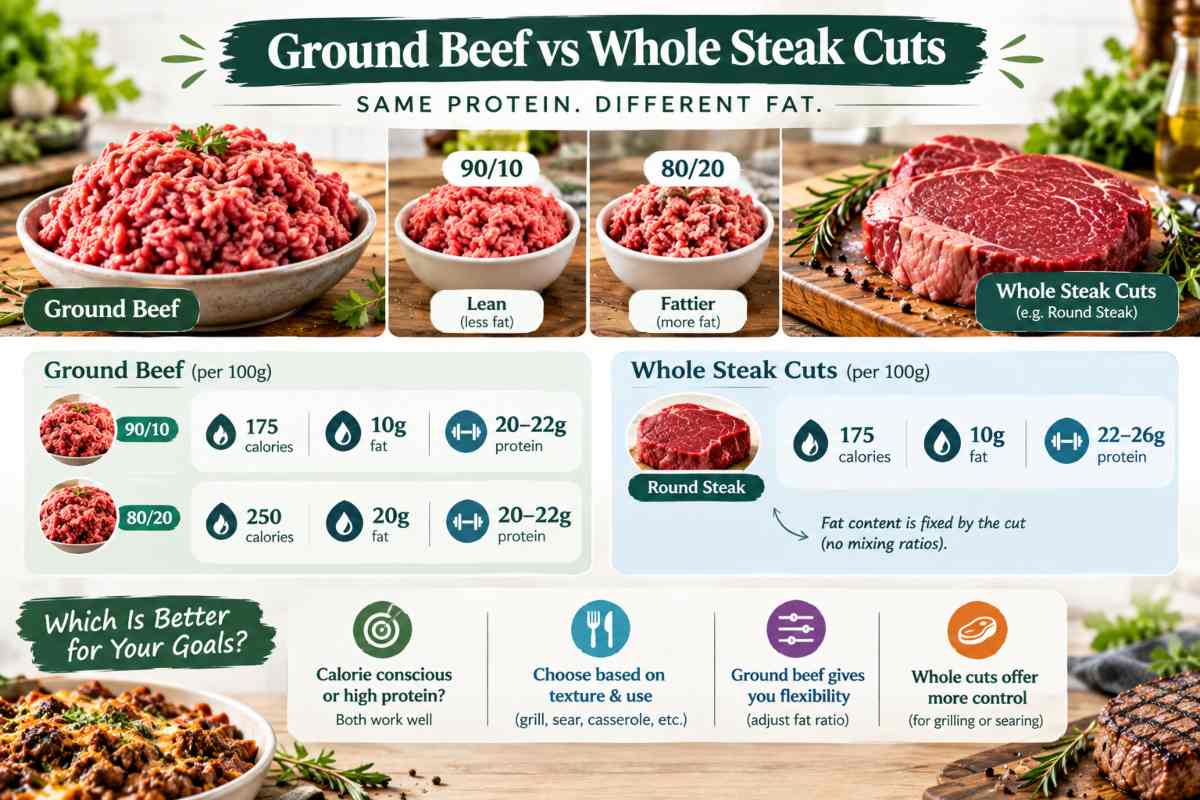
Ground beef and whole steak cuts can carry similar protein counts, but ground beef fat content varies far more widely depending on the lean to fat ratio used, ranging from 90/10 blends to fattier 80/20 mixes. That variability matters just as much in a dish like ground beef casserole as it does eating steak on its own, since the fat percentage you choose at the store drives most of the nutritional difference.
Nutrition Differences Explained
A 90/10 ground beef blend runs close to 175 calories and 10g of fat per 100g, putting it in the same range as lean whole cuts like round steak. An 80/20 blend, by contrast, jumps to around 250 calories and 20g of fat for the same 100g, a swing driven entirely by fat percentage, since protein stays fairly steady at 20 26g across both blends. Whole steak cuts do not carry this same variability, since the fat content is fixed by the cut rather than chosen at purchase.
Which Is Better for Your Goals
For calorie conscious or high protein goals, a lean ground beef blend or a whole cut like round steak deliver nearly identical nutrition, so the choice comes down to texture and how the meat will be used rather than nutritional advantage. Whole cuts offer more control for grilling or searing where a specific texture matters, while ground beef adjustable fat ratio makes it easier to dial in a precise macro target across casseroles, patties or sauces.
Conclusion
Nutrition facts of beef steak ultimately come down to two variables, which cut you choose and how you cook it, with calorie counts ranging from around 175 in lean round steak to over 290 in a well marbled ribeye. Protein stays fairly consistent across the board at 23 27g per 100g, so fat content and cooking method are what actually move the needle when you are tracking calories or macros.
Whether you are aiming for a calorie deficit, building muscle or just want to know what is on your plate, matching the cut and preparation to your goal, leaner cuts like round or tenderloin for calorie conscious meals, richer cuts like ribeye when flavor takes priority, makes the numbers work in your favor rather than against it. For more ways to put these cuts to use, Devine Dishes has recipes covering everything from quick weeknight dinners to slow cooked classics built around beef steak and ground beef alike.
Frequently Asked Questions (FAQs)
How many calories in a beef steak?
A 100g serving of cooked beef steak has around 250 calories on average, though this shifts depending on the cut, from roughly 175 calories in lean round steak up to 290+ in a well marbled ribeye.
What is the nutritional value of beef steak?
Beef steak delivers about 26g of protein, 15g of fat and 0g of carbohydrates per 100g, plus notable amounts of potassium, iron, zinc and vitamin B12. It’s one of the most protein dense whole foods available, with minimal carb content.
How many calories in lean beef steak?
Lean cuts like round steak or tenderloin run 175 190 calories per 100g, roughly 25 30% fewer calories than fattier cuts like ribeye, while keeping protein at a similar 26g per 100g.
Is steak good for a calorie deficit?
Yes, especially leaner cuts, round steak or tenderloin provide 26g of protein for under 200 calories per 100g, making it easy to hit protein targets without exceeding a calorie budget.
What is the lowest calorie steak cut?
Round steak is typically the lowest calorie common cut at around 175 calories per 100g, thanks to its low fat content of roughly 6g per 100g compared to 15 22g in richer cuts.
How many calories are in a beef steak cooked 100g vs 150g?
A 100g serving runs about 250 calories, while a more typical 150g portion scales up to roughly 375 calories, with protein and fat increasing proportionally alongside it.