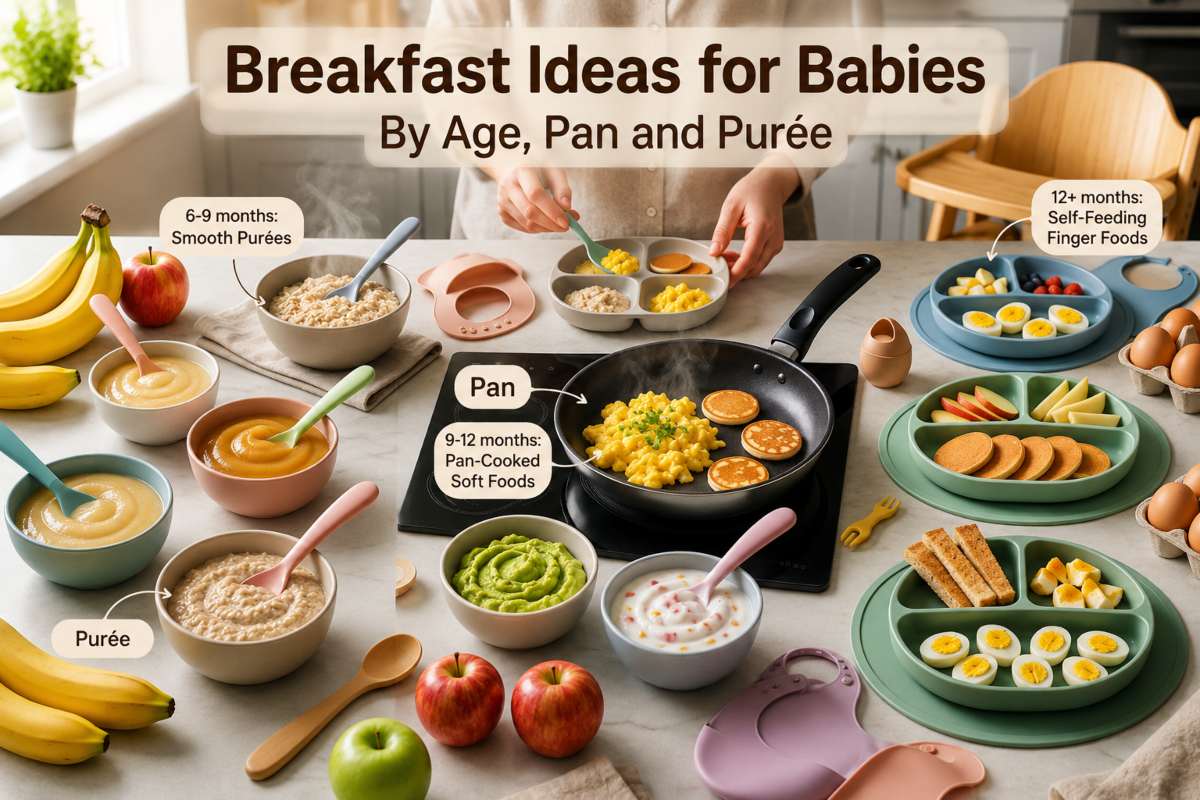
Babies are ready for breakfast from the moment they start solids, typically around six months and the right morning meal sets the tone for their appetite, energy and development throughout the day. Whether you are just starting with smooth purées or graduating to soft finger foods, this guide walks you through the best breakfast ideas for babies at every stage, with simple pan cooked, no cook and regional options that work in any kitchen. Mornings with a baby do not have to mean complicated.
Most of the best baby breakfasts take under ten minutes, use ingredients you already have and can be adapted as your baby grows. The key is matching texture and ingredients to your baby age and developmental stage, something this guide makes straightforward, one month at a time. If you are also feeding older children or yourself alongside your baby, our collection of Easy Quick Breakfast Ideas has fast, family friendly options you can pull together at the same time without doubling your effort in the kitchen.
What Can Babies Eat for Breakfast?
Babies can eat a wide variety of foods for breakfast depending on their age and stage, from smooth single ingredient purées at six months to soft versions of family meals by their first birthday. A healthy breakfast for babies does not need to be elaborate, it simply needs to match their current texture tolerance, avoid added salt and sugar and offer a balance of energy, iron and healthy fats to fuel their growing bodies.The age by age breakdown below makes it easy to know exactly what to offer at each stage and how to move forward as your baby skills develop.

What to Feed a 6 Month Old for Breakfast First Foods and Purées
At six months, your baby is just beginning their solid food journey, which means breakfast should be smooth, single ingredient and completely lump free. The digestive system is still adjusting and the goal at this stage is exploration rather than nutrition, breast milk or formula still provides the majority of what they need.
Good first breakfast options for a 6 month old include smooth oat porridge made with water or breast milk, puréed banana mashed to a silky consistency, puréed sweet potato or blended avocado thinned with a little milk. Introduce one ingredient at a time and wait two to three days before adding something new, so you can identify any reactions early. Textures should be completely smooth, no lumps, no chunks, no skins.
Breakfast Ideas for a 7 Month Old Introducing Texture
By seven months, most babies have had several weeks of smooth purées and are ready for a subtle upgrade in texture. This does not mean lumpy yet, it means slightly thicker, less runny and occasionally mashed rather than blended. The tongue thrust reflex begins to fade around this time, making it easier for babies to move food around their mouth.
Mashed banana with a fork (rather than fully blended) is an ideal transition food. Thicker oat porridge, well mashed avocado or stewed and mashed pear are all excellent breakfast ideas for a 7 month old. You can also begin mixing two flavours together, banana and oat, avocado and pear, which broadens taste exposure without overwhelming digestion.
Breakfast Ideas for an 8 Month Old Soft Lumps and Combinations
An 8 month old is ready for soft lumps and breakfast can start to feel more like a real meal. At this stage, babies typically have better tongue control and may be beginning to sit more steadily, which means they can handle slightly more textured food without difficulty. Iron rich foods become increasingly important here, as the iron stored from birth begins to deplete.
Soft scrambled eggs made gently in a pan with no salt are one of the best breakfast options at this age, they are rich in protein, iron and healthy fat and the texture is naturally soft and easy to manage. Porridge with mashed fruit stirred through, well mashed lentils with a little soft vegetable or yogurt with blended fruit are all strong choices. Combinations work well now, think oat porridge with mashed blueberry or soft egg with puréed avocado alongside.
Breakfast Ideas for a 9 Month Old Finger Foods Begin
Nine months is when breakfast starts to get exciting. Most babies at this stage have developed the pincer grip or are close to it, which means they can begin picking up small, soft pieces of food independently. This is the beginning of baby led texture exploration and breakfast is one of the best meals to introduce it.
Soft finger food breakfast ideas for a 9 month old include small pieces of ripe banana, soft toast fingers spread thinly with mashed avocado, small cubes of well cooked omelette made in a pan with no seasoning or pieces of soft steamed fruit like pear or peach. The pieces should be soft enough to squash between your fingers, if you can crush it easily, your baby can manage it safely. Continue offering spoon fed options alongside finger foods so nutrition is not compromised while the skill develops.
1 Year Old Breakfast Ideas Transitioning to Family Foods
By the time your baby is twelve months, breakfast can look very close to what the rest of the family is eating, with minor adjustments for salt and texture. A 1 year old has typically developed strong chewing skills even without a full set of teeth and their digestive system is significantly more robust than it was at six months.
Breakfast ideas for a 1 year old include soft scrambled eggs with very lightly toasted bread cut into strips, oatmeal with soft fruit and a small drizzle of full fat yogurt, a small bowl of unsweetened cereal softened in whole milk or mashed banana pancakes made in a pan without sugar or salt. Whole cow milk can now be offered as a drink with breakfast, replacing formula if you choose. The priority at this age is variety, exposing your baby to a wide range of flavours, colours and textures at breakfast builds the food confidence that carries them through toddlerhood and beyond.
As your child grows and the family morning routine picks up pace, the same principles of simplicity and nourishment apply to every age group. Our Healthy Breakfast Ideas for Weight Loss principle applies that same whole food thinking to adult mornings, using quick, nutrient dense options that fit into a busy family schedule.
Pan Cooked Breakfast Ideas for Babies Stovetop Methods
The stovetop is one of the most versatile tools for making easy breakfast for babies, it gives you full control over heat, texture and consistency, which matters more when cooking for little ones than almost any other factor. Pan cooked baby breakfasts are quick to prepare, require minimal equipment and produce results that can be adjusted on the spot depending on how your baby is responding to texture that week. The three stovetop methods below are the most reliable and widely used for babies from eight months onward, each producing a different texture profile so you can rotate based on your baby current stage.

Soft Scrambled Eggs on the Pan 8 Months+
Soft scrambled eggs are one of the most nutritionally complete pan cooked breakfasts you can make for a baby, they deliver protein, iron, healthy fat and choline in a texture that naturally suits babies from eight months onwards. The key difference between scrambled eggs for adults and scrambled eggs for babies is heat and pace: lower temperature, slower stirring and no seasoning whatsoever.
To make them, crack one egg into a small non stick pan set over the lowest heat possible with a very small amount of unsalted butter. Stir continuously and remove the pan from the heat just before the egg looks fully set, residual heat finishes the cooking and keeps the texture silky rather than rubbery.
The result should be soft, moist and easy to squash between two fingers. Serve on their own, alongside mashed avocado or spooned over soft toast that has been cut into manageable strips. For adults at the same table, our Loaded Breakfast Omelette takes the same egg on pan method and builds it into a full, satisfying morning meal, same technique, scaled up for grown up appetites.
Pan Cooked Oatmeal Porridge for Babies
Oatmeal porridge made on the stovetop is the gold standard of baby breakfasts for good reason, it is iron fortified, easy to digest, endlessly adaptable and ready in under five minutes. The pan method gives you more control over consistency than microwave preparation, which matters when you are adjusting texture week by week as your baby develops.
Use rolled oats rather than instant oats where possible, as they retain more fibre and have a more stable texture when cooked. Add two parts water or unsalted breast milk or formula to one part oats in a small saucepan, bring to a simmer over medium heat and stir regularly until the oats absorb the liquid and reach a smooth, creamy consistency.
For babies under eight months, blend or push through a sieve after cooking for a fully smooth result. From eight months onward, a soft but slightly textured porridge is appropriate. Stir through mashed banana, puréed mango or blended stewed apple once off the heat to add natural sweetness and additional nutrients without any added sugar.
Stovetop Mashed Banana Pancakes No Sugar, No Salt
Two ingredient banana pancakes made on the stovetop are one of the most popular baby breakfast ideas circulating among parents,and they genuinely work. Made from nothing more than ripe banana and egg, they are naturally sweet, soft and completely free of added sugar, salt and flour, making them appropriate from around nine to ten months when your baby is managing soft finger foods confidently.
Mash one very ripe banana thoroughly in a bowl until no large lumps remain, then whisk in one egg until fully combined. The batter will be loose, this is normal. Heat a non stick pan over medium low heat with a very small amount of unsalted butter, then Scoop small amounts of batter and place them in the pan, each about the size of a fifty pence piece or a large grape. Cook for ninety seconds to two minutes until the edges look set and the surface begins to bubble, then flip carefully and cook for a further minute.
The finished pancakes should be soft, slightly springy and easy to squash. Serve warm, cut into small pieces, with mashed avocado or a spoonful of plain full fat yogurt alongside. If you want to make a full pancake breakfast for the rest of the family at the same time, our Pancake Breakfast guide has everything you need, from classic stacks to toppings, so the whole table is covered in one go.
African Baby Breakfast Ideas Traditional and Nutritious
Some of the most naturally baby friendly breakfast foods in the world come from African culinary traditions, soft, starchy, easily digestible and made from whole ingredients that have nourished generations of children long before commercial baby food existed. African baby breakfast ideas are built on grains, legumes and starchy vegetables that cook down to smooth, spoonable textures ideal for babies from six months onward and they carry a nutritional profile, particularly in iron, zinc and complex carbohydrates, that rivals anything found in a packaged baby food pouch.

Soft Maize Porridge Uji / Ugali Style for Babies
Maize porridge, known as uji in East Africa and prepared in various forms across the continent, is one of the oldest and most trusted baby first foods in African households. Made by cooking finely ground maize flour in water until it reaches a smooth, silky consistency, it is naturally gluten free, easy on a young digestive system and bland enough to accept fruit or vegetable additions without resistance.
At its thinnest, it functions as a drinkable porridge for very young babies just starting solids. Cooked slightly thicker, it becomes a proper spoonable breakfast suitable from seven months onward.To prepare it for a baby, use finely milled maize flour rather than coarse meal, which takes longer to cook and retains more texture. Whisk a tablespoon of flour into cold water before adding it to the pan, this prevents lumps from forming.
Cook over medium heat, stirring continuously, until the mixture crystallizes and pulls away from the sides of the pan slightly. For babies under eight months, keep the consistency loose and completely smooth. As your baby approaches nine to ten months, you can allow it to thicken further and stir through mashed banana or puréed mango for natural sweetness and added nutrients. No salt, no sugar and no flavourings are needed at this stage.
Mashed Plantain Breakfast Iron Rich and Easy to Digest
Ripe plantain is one of the most underused baby breakfast ingredients outside of African and Caribbean households and it deserves far wider recognition. When fully ripe, skin deeply yellow with heavy black spotting, plantain mashes to a smooth, naturally sweet consistency similar to banana but with a denser starch content, higher iron levels and a slightly more complex flavour that introduces babies to a broader taste range early. It is appropriate from six months as a smooth mash and from nine months as a soft finger food when pan cooked and served in small pieces.
For a no cook version, simply peel a very ripe plantain and mash thoroughly with a fork until completely smooth, thinning with a little breast milk or formula if needed for younger babies. For a slightly more developed texture suitable from nine months, slice the ripe plantain into rounds and cook in a dry non stick pan over low heat for two to three minutes each side until softened and lightly caramelised, no oil, no salt, no sugar needed, as the natural sugars in ripe plantain handle everything. The result is a soft, slightly golden piece that babies can pick up independently as a finger food. The natural iron and potassium content makes it particularly valuable as a breakfast food during the six to twelve month window when iron needs are high.
Millet Porridge for Babies 6 Months and Up
Millet is one of the most nutritionally impressive grains available for baby feeding and it has been used as a weaning food across West Africa, East Africa and parts of North Africa for centuries. It is naturally gluten free, rich in iron, magnesium and B vitamins and when cooked down properly it produces a smooth, creamy porridge that sits comfortably alongside oats as a breakfast staple for babies from six months onward. Its slightly nutty, mild flavour is generally well accepted and it blends easily with fruit purées to create more complex breakfast combinations as your baby grows.
To prepare millet porridge for a baby, use millet flour or grind whole millet in a blender until fine before cooking, whole millet grains retain too much texture for young babies even after prolonged cooking. Whisk the flour into cold water first to avoid lumps, then cook over medium heat in a small saucepan, stirring continuously until smooth and thickened. The cooking time is typically five to seven minutes. For babies at the start of their solid food journey, keep the porridge loose and completely lump free. From eight months onward, a thicker consistency is appropriate and stirring through mashed avocado, puréed banana or a spoonful of plain yogurt after cooking adds healthy fat and protein that rounds the meal out nutritionally.
Millet porridge also keeps well in the refrigerator for up to two days, making it a practical option for batch preparation on busy mornings. For parents who follow a low carb lifestyle themselves while feeding babies traditional grain based porridges, the contrast in approaches is worth noting and if you are looking for your own grain free morning option, our Fluffy Keto Bagels are a satisfying, bread like alternative that fits a low carb breakfast routine without compromise.
American and Continental Baby Breakfast Ideas
American and Continental breakfast traditions happen to align naturally with what babies need most, soft grains, dairy, eggs and fresh fruit form the backbone of both cuisines and with minor adjustments for salt and texture, many of these classic morning dishes translate directly into excellent baby meals. Whether you are working through breakfast ideas for a 1 year old ready to join the family table or looking for reliable options for a younger baby still building texture tolerance, this section covers three of the most practical and nutritionally sound options from both traditions.

Classic American Oatmeal with Fruit Purée
Oatmeal is the most enduring breakfast staple in the American morning repertoire and for babies it earns that status for good reason. It is iron fortified, rich in slow release carbohydrates, easy to adjust in texture from completely smooth to softly lumpy and pairs with almost any fruit purée to create a meal that changes daily without requiring new ingredients. It is appropriate from six months as a thin, blended porridge and works equally well as a thicker, more textured bowl for a 1 year old sitting at the breakfast table alongside the rest of the family.
Cook rolled oats in water or unsalted breast milk over medium heat, stirring regularly until soft and fully absorbed. For babies under eight months, blend briefly or push through a sieve to clear any remaining texture. From nine months onward, a slightly coarser consistency is appropriate and actually beneficial for developing chewing skills.
Once off the heat, stir through a fruit purée, mashed banana, blended stewed apple or puréed mango all work well, which adds natural sweetness and additional vitamins without any added sugar. The fruit also cools the oatmeal down faster, which is a practical bonus on busy mornings.If you enjoy oatmeal yourself and want a more flavourful adult version to make alongside your baby bowl, our Cinnamon Raisin Oatmeal is a warmly spiced, naturally sweetened recipe that comes together just as quickly, same base, grown up finish.
Continental Style Yogurt Bowl with Soft Berries
The Continental breakfast tradition, centred on dairy, fresh fruit and light bread, translates beautifully into baby feeding, particularly from seven months onward when combinations of ingredients become appropriate and texture begins to matter more. A yogurt bowl with soft fruit is one of the simplest, most complete no cook baby breakfasts in this style: it delivers calcium, protein, probiotics and natural fruit sugars in a single bowl with almost no preparation time.
Use plain, full fat yogurt as the base, the fat content is important for brain development at this stage and the absence of added sugar keeps the meal appropriate for babies. Berries make the ideal Continental style topping, but they need preparation before serving. Blueberries should be thoroughly mashed or puréed for babies under ten months, as their skins present a texture challenge even when soft. Raspberries break down easily with a fork and stir smoothly into yogurt.
Strawberries, hulled and mashed, add a vivid colour and mild sweetness that most babies respond to positively. By twelve months, very soft whole blueberries, squashed gently between your fingers first to break the skin, can be served as they are, making this yogurt bowl a breakfast that genuinely grows with your baby from first tastes all the way to toddlerhood.
Soft French Toast Strips Pan Cooked, No Salt for 10 Months+
French toast is one of the most beloved items in the American breakfast tradition and a baby adapted version, made without salt, sugar or added flavouring, is genuinely one of the best pan cooked breakfast ideas for babies from around ten months onward. The egg coating adds protein and healthy fat to soft bread, the pan cooking creates a lightly firm exterior that is easy for babies to grip as a finger food and the interior stays soft enough to manage without a full set of teeth.
To make it for a baby, whisk one egg in a shallow bowl and dip a strip of soft, crustless white or wholemeal bread into the egg mixture, letting it to soak for about twenty seconds on each side. Cook in a non stick pan over medium low heat with a very small amount of unsalted butter for two minutes per side until lightly golden and cooked through. Cut into strips narrow enough for your baby to hold in a fist, approximately the width of an adult finger works well at this stage.
The texture should be soft throughout with no crispy or hard edges. Serve warm on their own or alongside a spoonful of mashed avocado or plain yogurt for a more complete breakfast. By twelve months, a very light dusting of cinnamon on the egg mixture is a flavour introduction that most 1 year olds respond to enthusiastically and it marks a natural transition point toward family style breakfasts where everyone at the table is eating something similar.
Asian Inspired Baby Breakfast Ideas
Asian culinary traditions offer some of the most instinctively baby appropriate breakfast foods in the world, slow cooked, water rich and built around soft grains and eggs that require little adaptation to become ideal first foods. Across East and Southeast Asia, rice based porridges and steamed egg dishes have been the default weaning foods for centuries and modern nutrition science consistently affirms what generations of families already knew, these dishes are gentle on developing digestive systems, easy to enrich with additional ingredients and accepted readily by babies who might resist more unfamiliar textures elsewhere.

Rice Congee Jook Perfect for 6–8 Month Olds
Rice congee called jook in Cantonese, zhou in Mandarin and known by similar names across Japan, Korea, Vietnam and Thailand, is arguably the most universally prepared baby first food in Asia and it is easy to understand why. Made by simmering white rice in a large volume of water for an extended period, the grains break down completely into a smooth, silky, spoonable porridge that requires no blending, no sieving and no special equipment to achieve a texture appropriate for babies from six months onward. It is naturally bland, which makes it an ideal carrier for puréed vegetables, mashed fruit or small amounts of finely blended protein as your baby diet expands.
The ratio that works best for baby congee is one part rice to ten parts water, cooked over low heat for forty five minutes to an hour with the lid partially on, stirring occasionally. The long, slow cook is what produces the characteristic silky texture, rushing it over high heat produces a thicker, starchier result that lacks the smoothness babies need at the earliest stages. For babies between six and seven months, cook until the grains have completely dissolved and the consistency resembles a thin, pourable cream. From eight months onward, a slightly thicker consistency with soft but visible grain remnants is appropriate and introduces gentle texture variation.
Once cooked, stir through puréed sweet potato, mashed pumpkin or blended chicken stock, unsalted, to add flavour and nutrition without compromising the simplicity of the base. Getting the rice right before it goes into the congee pot makes a noticeable difference to the final texture. Our focus on How to Cook Perfect Rice covers the fundamentals that apply whether you are making plain rice for the family or preparing the base grain for a baby congee the following morning.
Soft Steamed Egg Custard for Babies
Steamed egg custard is a staple baby and toddler food across China, Japan and Korea and it is one of the smoothest, most protein rich breakfast options available for babies from around seven to eight months onward. The texture sits somewhere between silky tofu and a very soft set pudding, entirely smooth, trembling slightly when the bowl is moved and requiring no chewing whatsoever. It is prepared by whisking egg with warm water or unsalted stock at a specific ratio and steaming gently until just set, a technique that produces a result no pan or oven method can replicate.
The ratio that consistently produces the right texture for babies is one egg to approximately one hundred and fifty millilitres of warm water, roughly one part egg to two and a half parts liquid. Whisk together thoroughly, then strain the mixture through a fine sieve into a small heatproof bowl to remove any stringy egg white that would disrupt the smooth finish.Loosely wrap the bowl with plastic wrap or a small plate to prevent condensation dripping onto the surface during steaming, then place in a steamer basket over gently simmering water and steam on the lowest heat possible for ten to twelve minutes.
The custard is ready when the edges are set and the centre has only a very slight wobble. Overcooking on high heat produces a pitted, spongy texture rather than a smooth one, low and slow is the rule here without exception. Serve warm, on its own or with a very small amount of plain congee alongside, for a complete and nutritionally balanced Asian inspired baby breakfast that unites with little effort and great impact digestibility.
Best Breakfast Ingredients for Babies What to Always Have Ready
The foundation of a reliable baby breakfast routine is not a collection of complicated recipes, it is a small set of ingredients that are nutritionally dense, texturally appropriate and versatile enough to combine in different ways every morning without repetition feeling like repetition. Four ingredients consistently appear at the top of every paediatric nutrition resource for good reason, eggs, oats, avocado and banana.

Eggs, Protein Rich and Versatile
Eggs are one of the most complete single foods you can offer a baby at breakfast. A single egg delivers high quality protein, iron, healthy fat, choline for brain development and vitamin D in a package that costs very little and takes under five minutes to prepare in multiple different ways. Scrambled gently in a pan, whisked into steamed custard or incorporated into banana pancakes, the egg is the most format flexible ingredient on this list, it changes character entirely depending on how it is cooked, which means it can appear on the breakfast table several times a week without ever feeling like the same meal twice.
From a safety standpoint, eggs should be fully cooked for babies, no runny yolks until at least twelve months and ideally beyond. Soft scrambled is the standard preparation for babies from eight months onward, keeping the texture moist and easy to manage without leaving any part undercooked. Eggs were previously delayed as an allergen food, but current guidance from most paediatric health bodies now recommends introducing them early, around six months, to reduce the likelihood of allergy development. If your baby is at higher allergy risk, introduce eggs at home rather than a nursery setting and watch for any reaction over the following two hours.
Oats Iron Fortified and Filling
Oats earn their place as the cornerstone oatmeal breakfast for babies not just because of convenience but because of what they actually deliver nutritionally. They are one of the few plant based sources of iron available in a form that babies eat willingly, they provide slow release carbohydrates that sustain energy through the morning without a sugar spike and their natural beta glucan fibre supports digestive health during a period when the gut microbiome is still establishing itself. A bowl of oat porridge made with breast milk or formula and stirred through with fruit purée is one of the most complete breakfasts a baby under twelve months can have.
Rolled oats are preferable to instant oats for baby porridge, they have a lower glycaemic impact and produce a more stable, controllable texture when cooked. For babies under eight months, cooking and then blending or sieving gives the smoothest result. From eight months onward, cooking rolled oats until fully softened but not blended produces a gently textured porridge that is appropriate and developmentally beneficial. Oats also work cold, soaked overnight in formula or breast milk, they soften completely by morning and can be served directly from the refrigerator on days when even five minutes of stovetop time is not available.
Avocado Healthy Fats for Brain Development
Avocado is the single best source of healthy monounsaturated fat available to babies in a form that requires no cooking, no blending equipment and almost no preparation time. The fat content is not incidental, between six and twelve months, approximately fifty percent of a baby total energy intake should come from fat and the brain in particular undergoes its most rapid development during this window, making fat soluble nutrients critically important. Avocado delivers oleic acid, the same healthy fat found in olive oil, alongside folate, potassium and vitamins K, C and B6, making it one of the most nutritionally intelligent avocado breakfast choices for babies available.
Ripeness is everything. A ripe avocado, one that yields to gentle pressure without feeling mushy, mashes to a completely smooth consistency with nothing more than a fork, making it ready in under two minutes. An underripe avocado will not mash smoothly and has a slightly bitter, astringent flavour that babies reject. Buy avocados a few days before you need them and allow them to ripen at room temperature, then refrigerate once ripe to extend the window by two to three days. Serve mashed on its own, spread on soft bread, stirred into porridge or alongside scrambled egg. Avocado pairs well with almost every other ingredient on this list.
Banana Natural Sweetness, No Prep Needed
Banana is the most accessible baby breakfast ingredient in existence and the one most parents reach for first, with good reason. It requires no cooking, no preparation beyond peeling, mashes in under a minute and carries a natural sweetness that babies respond to instinctively from their very first taste. It provides quick release energy through natural fruit sugars, potassium for healthy muscle and heart function and vitamin B6 which supports the nervous system during a critical developmental period. From six months as a smooth mash to twelve months as soft sliced pieces served independently, banana adapts to every stage without effort.
The one variable worth managing is ripeness. A fully ripe banana, yellow with brown spotting, mashes smoothly, tastes sweeter and is significantly easier to digest than a firmer, greener one. The starch in underripe bananas is resistant starch, which is harder for young digestive systems to break down and can cause discomfort in some babies. Buy bananas in small bunches and allow them to ripen fully before using them in baby breakfasts. Once ripe, they keep in the refrigerator for several days, the skin will darken but the flesh remains perfect. Banana also works as a natural sweetener stirred into oat porridge, blended into yogurt or mashed into egg pancake batter, making it the most multi purpose ingredient on this entire list.
For a wider collection of breakfast recipes that work across all ages and occasions, our Breakfast Recipes page brings together everything from quick weekday options to relaxed weekend spreads, a useful resource to bookmark alongside this baby breakfast guide.
How to Prepare Baby Breakfasts Safely Textures by Stage
Preparing baby breakfasts safely is less about following rigid recipes and more about understanding one foundational principle: texture must match developmental readiness, not just age. Every baby progresses at a slightly different pace, but the three broad texture stages below, smooth purées, mashed and lumpy and soft finger foods, provide a reliable framework that aligns with how the swallowing reflex, tongue control and chewing ability actually develop in the first year of life. Getting texture right at each stage is the single most important safety factor in baby feeding and it is also what determines whether your baby builds confidence with food or develops an aversion to it.

Stage 1 Smooth Purées 6–7 Months
At six months, a baby swallowing mechanism is only just beginning to adapt from the sucking reflex used for milk feeds to the more complex motion required to move solid food safely from the front of the mouth to the back and down the throat. This means that any food offered at this stage must be completely smooth, no lumps, no fibrous strands, no skins and no seeds. Even a small, soft lump can trigger gagging at this age, not because something has gone wrong, but because the tongue thrust reflex is still present and the baby has not yet learned to manage anything that is not liquid or near liquid in consistency.
The right texture for Stage 1 is often described as smooth enough to fall off a spoon in a slow, steady drip, thinner than adult yogurt but thicker than milk. To achieve this reliably, cook all ingredients until completely soft, then blend thoroughly and pass through a fine sieve to catch anything the blender missed. Breast milk or formula can be added after blending to thin the consistency further if needed. Suitable breakfast purées at this stage include smooth oat porridge, blended banana, puréed mango and blended sweet potato, all naturally soft foods that break down easily and carry no stringy or fibrous texture even before processing. Introduce one ingredient at a time and maintain a two to three day gap between new foods so that any allergic reaction can be identified clearly and without confusion.
Stage 2 Mashed and Lumpy 8–9 Months
By eight months, most babies have moved past the tongue thrust reflex and developed enough oral motor control to begin managing soft lumps, small, irregular pieces of food that require the tongue to work laterally, moving food from side to side rather than simply pushing it backward. This is a critical developmental milestone and introducing appropriate texture at this stage rather than staying with smooth purées is important for building the chewing skills that underpin confident eating through toddlerhood and beyond. Babies who remain on smooth purées past eight to nine months can develop texture aversions that become increasingly difficult to address as they get older.
The right texture for Stage 2 should pass what practitioners often call the tongue test, if you can mash a piece of food by pressing your tongue against the top of your mouth, no teeth required, it is safe for a baby at this stage. Mashed banana with small soft pieces left in, porridge with a slightly coarser consistency, soft scrambled egg and well cooked mashed lentils all sit in this texture range. The key is that lumps should be soft and irregular rather than firm and uniform, soft lumps encourage the tongue to work, while firm pieces of consistent size present a choking risk. At this stage, continue offering a spoon alongside any mashed foods, as self feeding attempts are normal and should be encouraged even when they are messy.
Stage 3 Soft Finger Foods 10–12 Months
From ten months onward, most babies have developed a functional pincer grip, the ability to grasp small items using the thumb and forefinger and are ready to begin feeding themselves independently using soft finger foods. This stage marks a significant shift in the breakfast experience, the baby moves from passive recipient to active participant and the parent role shifts from spoon feeding to preparation and supervision. Finger foods at breakfast build fine motor skills, hand eye coordination and food autonomy simultaneously, making this stage as developmentally important as it is practically convenient.
Safe finger foods for Stage 3 must meet two non negotiable criteria: they must be soft enough to squash completely between your thumb and index finger using moderate pressure and they must be cut into pieces small enough that even if swallowed whole, they would not obstruct the airway. Strips of soft French toast, small pieces of ripe banana, soft omelette cut into cubes, lightly toasted bread fingers spread with mashed avocado and small soft pancake pieces all meet both criteria.
Round, firm foods, whole grapes, whole blueberries, chunks of raw apple, do not meet these criteria and should not be offered at this stage regardless of how well the baby appears to be managing other finger foods. Gagging is normal and should not be confused with choking: gagging is loud, visible and self resolving, while choking is silent and requires immediate intervention. Staying present and calm during every finger food breakfast is the most important safety practice at Stage 3 and it remains so until well into the toddler years.
Conclusion
Breakfast ideas for babies do not need to be complicated to be effective, the best morning meals are built from simple, whole ingredients prepared to the right texture for your baby current stage. From smooth maize porridge and millet at six months to soft French toast strips and banana pancakes at ten months and beyond, every recipe and method covered in this guide is designed to grow with your baby, reduce morning stress and build the kind of early relationship with food that carries forward into confident, adventurous eating through toddlerhood and beyond. Trust the process, follow your baby cues and know that every spoonful, however much ends up on the floor, is doing exactly what it is supposed to do.
Frequently Asked Questions (FAQs)
Can a 6 month old eat oatmeal for breakfast?
Yes, oatmeal is one of the best first breakfast foods for a 6 month old when cooked until completely smooth and served at a thin, spoonable consistency. Use rolled oats cooked in water or breast milk, blend until lump free and avoid adding any salt, sugar or cow milk before twelve months.
What is the best first breakfast for a baby?
The best first breakfast for a baby is smooth oat porridge or mashed ripe banana, both are easy to digest, naturally mild in flavour and simple to prepare to a completely smooth texture. Either option can be offered from six months as a single ingredient meal before combinations are introduced.
How much should a baby eat for breakfast?
At six months, one to two tablespoons of food is a normal breakfast portion, milk feeds still provide the majority of nutrition at this stage. By twelve months, a baby may eat three to four tablespoons or more, but appetite varies daily and following your baby hunger cues is always more reliable than measuring by volume.
Can babies have eggs every day?
Yes, eggs can be offered daily from around six months as part of a varied diet, provided your baby has already been introduced to them without any allergic reaction. They are one of the most nutritionally complete breakfast foods available and there is no evidence that daily consumption causes harm in healthy babies.
What breakfast foods should I avoid for babies under 1?
Avoid added salt, added sugar, honey, whole cow milk as a drink and any food that presents a choking risk such as whole grapes, raw apple or firm chunks of any kind. Processed cereals marketed at babies often contain more sugar than necessary, so checking ingredient labels carefully before serving any packaged breakfast product is always worthwhile.