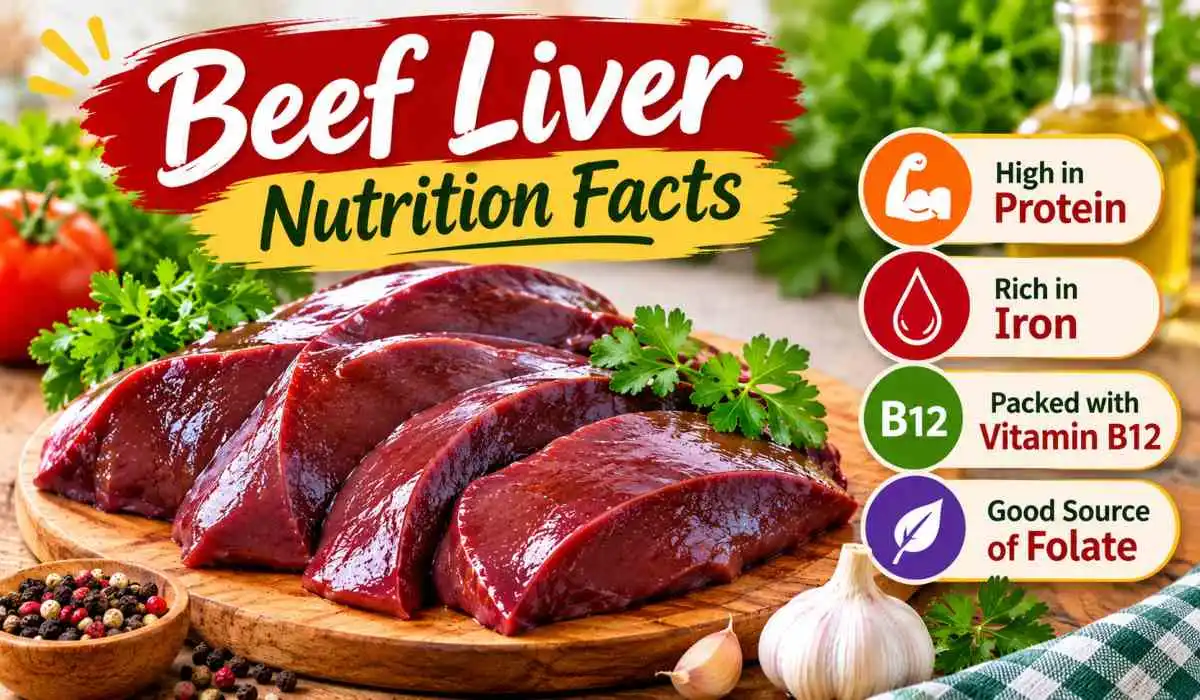
How many calories and nutrients are in beef liver? Cooked beef liver has an estimated 191 calories, 29 g of protein, 5 g of fat and 5 g of carbs per 100 g. That one serving also delivers an estimated 29x the daily value of vitamin B12 and 10x the vitamin A, plus plenty of copper, folate and iron. Keep reading for the full nutrition table, raw vs cooked numbers, how liver beats chicken breast on nutrients, and the main safety cautions.
Raw beef liver has about 135 calories per 100 grams, and cooking pushes that number up as water cooks out. Braised liver comes in around 175 calories per 100 grams and pan-fried liver around 191, so the cooking method changes the figures you should use. All numbers on this page come from USDA FoodData Central and are given per 100 grams, the starting point for working out any portion, whether it’s a few ounces or a whole pound.
The calories are only part of the story. That same 100 grams of cooked liver contains about 70.6 micrograms of vitamin B12, close to 29 times the daily value. This is why liver is so often described as one of the most nutrient dense meats you can buy. This guide covers its calories, protein, vitamins and minerals and how it compares with chicken and pork liver.
If you plan to cook it, our peppered beef liver recipe is a good place to start. Its calories will differ from the plain figures here, because oil, onions and seasoning all add to the total. Use the numbers on this page as a general reference for plain liver, not as the nutrition of any single dish.
Beef Liver Nutrition Facts at a Glance
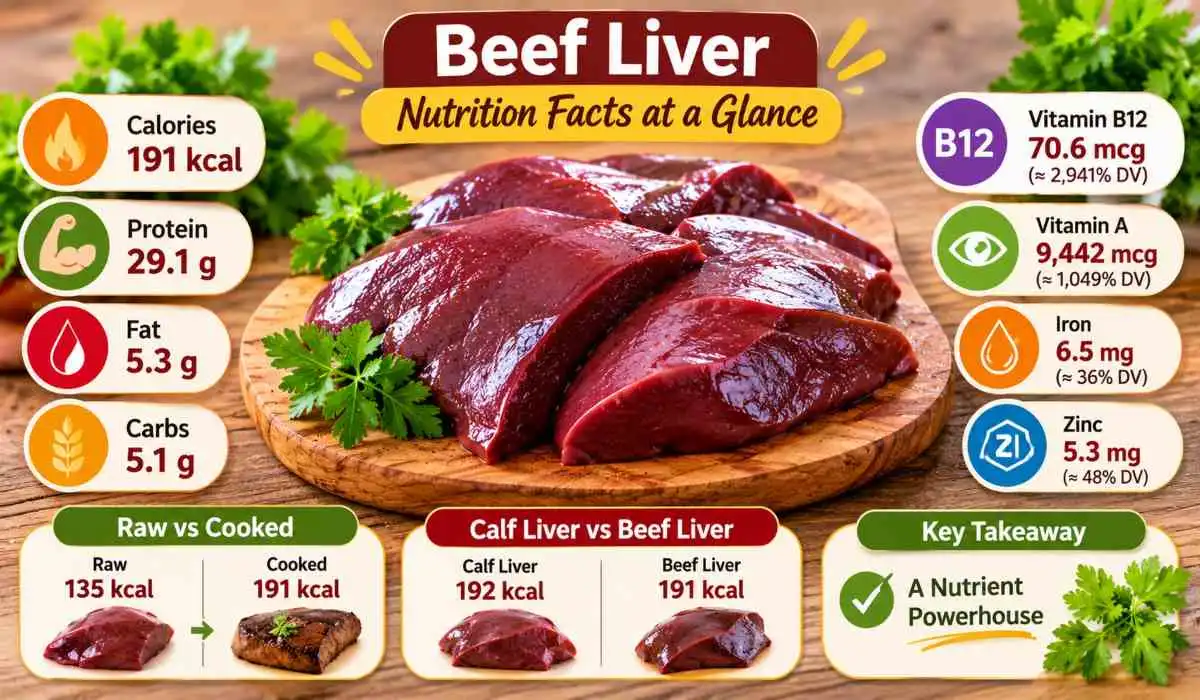
A 100 g serving of cooked beef liver provides about 191 calories and 29 g of protein, with very high levels of vitamin B12, vitamin A, copper and iron. Raw liver and calf liver have slightly different numbers and the three sections below cover each.
Nutrition table per 100g, cooked
Cooked (braised) beef liver contains 191 calories, 29.1 g of protein, 5.3 g of fat and 5.1 g of carbohydrate per 100 grams, with no fiber or sugar. The micronutrients are where it stands out. B12 alone is about 29 times the daily value, according to the USDA entry.
| Nutrient (per 100 g, braised) |
Amount |
Approx. % Daily Value |
| Calories |
191 kcal |
10% |
| Protein |
29.1 g |
58% |
| Total fat |
5.3 g |
7% |
| Carbohydrate |
5.1 g |
2% |
| Vitamin B12 |
70.6 mcg |
2,941% |
| Vitamin A |
9,442 mcg RAE |
1,049% |
| Copper |
14.3 mg |
1,589% |
| Folate |
253 mcg |
63% |
| Iron |
6.5 mg |
36% |
| Zinc |
5.3 mg |
48% |
Values are for plain liver. Oil, butter, flour or onions in a finished dish will change the totals, so use this table as a general reference, not as the nutrition of any specific recipe.
Raw vs cooked beef liver
Cooked beef liver shows more calories per 100 g than raw (191 vs 135) because cooking removes water, not because it adds calories. USDA data lists raw liver at about 71.7% water and braised liver at about 59.8%, so the same nutrients are packed into less weight.
Raw beef liver has 20.4 g of protein, 3.6 g of fat, 3.9 g of carbohydrate, 4.9 mg of iron and 59.3 mcg of B12 per 100 g. Always compare a raw weight with a raw entry and a cooked weight with a cooked one. A 100 g piece weighed before cooking will not weigh 100 g afterward and mixing the two gives the wrong calorie count.
Calf liver vs adult beef liver
Calf liver and adult beef liver have almost the same calories. USDA lists braised veal (calf) liver at 192 calories per 100 g, against 191 for beef liver. Protein is 28.4 g vs 29.1 g, fat is 6.3 g vs 5.3 g and carbohydrate is 3.8 g vs 5.1 g.
The bigger differences are in minerals and B12. Calf liver has about 84.6 mcg of B12 against 70.6 mcg and about 11.2 mg of zinc against 5.3 mg. Calf liver also has a milder flavor and a more tender texture, so it suits people who find standard beef liver too strong.
Beef Liver Macros Protein, Carbs and Fat
Cooked beef liver is high in protein and low in carbohydrates and fat. USDA data lists 29.1 g of protein, 5.1 g of carbs and 5.3 g of fat per 100 g of braised liver. Protein supplies roughly 60% of its calories, fat about a quarter and carbohydrate about a tenth.
Protein per 100g and per serving
Cooked beef liver has 29.1 g of protein per 100 g and raw liver has 20.4 g. A 3 oz (85 g) cooked serving provides about 24.7 g, close to half of the 50 g Daily Value. A 4 oz (113 g) serving provides about 33 g. Raw liver looks lower per gram only because it holds more water. Liver contains all essential amino acids, so its protein is complete.
How many carbs are in beef liver?
Beef liver has about 5.1 g of carbohydrate per 100 g cooked and 3.9 g per 100 g raw, which works out to roughly 4.4 g in a 3 oz cooked serving. USDA lists no fiber or sugar, so the total carb figure is also the net carb figure. That is unusual for meat, because liver stores a little glycogen while muscle cuts like steak contain almost none.
The amount is small enough to fit most low carb eating patterns, as long as the liver is cooked plain. A flour dredge, a sweet glaze or a thickened sauce will add carbs beyond these figures.
Is beef liver high in fat?
Beef liver is low in fat but high in cholesterol. Cooked liver has 5.3 g of total fat per 100 g (3.6 g raw), with about 2.9 g of that saturated or roughly 15% of the Daily Value. A 3 oz cooked serving has about 4.5 grams of fat and anout 2.5 grams of saturated fat.
Cholesterol is the number that stands out. Braised liver has about 396 mg per 100 g or about 337 mg in a 3 oz serving, which is above the 300 mg Daily Value used on U.S. food labels. Raw liver has about 275 mg per 100 g. Frying in oil or butter adds fat beyond the plain liver figures here, so a finished dish will vary by recipe.
Vitamins and Minerals in Beef Liver
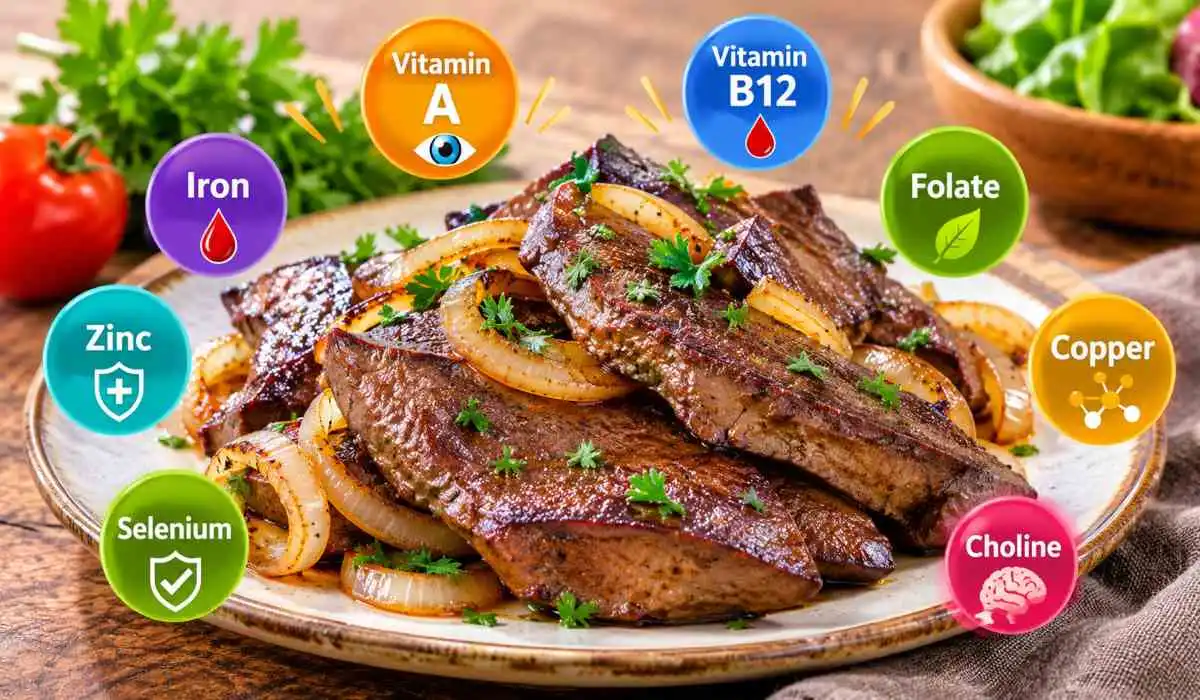
Beef liver is one of concentrated food sources of vitamin A, vitamin B12, riboflavin, folate, copper and choline. It also supplies useful amounts of iron, zinc and selenium. A 100 g portion of braised liver provides about ten times the vitamin A Daily Value and about 29 times the B12 Daily Value.
Vitamin A (retinol)
Beef liver is the richest common food source of vitamin A, with about 9,442 mcg RAE per 100 g braised, roughly ten times the 900 mcg Daily Value. The NIH lists 6,582 mcg RAE for a 3 oz pan fried serving. Liver supplies preformed vitamin A (retinol), which the body uses directly for vision, immune function and cell growth. Plant foods supply carotenoids that the body has to convert first. Because the amount is so concentrated, portion size matters, and our article on how often to eat beef liver covers weekly limits.
B vitamins, especially B12, folate and riboflavin
Beef liver is exceptionally high in vitamin B12, riboflavin and folate. A 100 g portion of braised liver has 70.6 mcg of B12, about 29 times the 2.4 mcg Daily Value. It also has about 3.4 mg of riboflavin, roughly 2.6 times the 1.3 mg Daily Value and 253 mcg of folate, about 63% of the Daily Value. B12 and folate are required to make red blood cells and DNA and riboflavin helps the body turn food into energy. Liver also supplies about 1 mg of vitamin B6, roughly 59% of the Daily Value.
Iron, copper, zinc and selenium
A 100 g portion of braised beef liver provides about 6.5 mg of iron (36% of the Daily Value), 5.3 mg of zinc (about half) and 36 mcg of selenium (about two thirds). Copper is the standout, at 14.3 mg or about 16 times the 0.9 mg Daily Value. Iron from animal foods is generally absorbed more easily than iron from plants. Copper works alongside iron in the body and supports nerve function. Zinc and selenium support immune function and thyroid health.
Choline and other notable nutrients
Beef liver is one of the good food sources of choline. The NIH lists 356 mg in a 3 oz pan fried serving, about 65% of the 550 mg Daily Value. Braised liver has 426 mg per 100 g or 78%. Choline is needed for cell membranes, nerve signaling and fat transport. Liver also provides about 497 mg of phosphorus per 100 g, around 40% of the Daily Value, which supports bones and energy metabolism.
Which nutrients are highest compared with other foods?
Beef liver far outranks common foods for B12, vitamin A, choline and riboflavin. A 3 oz serving has about 29 times the B12 of the same weight of ground beef, according to NIH figures.
| Nutrient |
Beef liver (3 oz, cooked) |
Comparison food |
| Vitamin B12 |
70.7 mcg |
Ground beef (3 oz) 2.4 mcg |
| Vitamin A |
6,582 mcg RAE |
Baked sweet potato (1 whole): 1,403 mcg RAE |
| Choline |
356 mg |
Hard boiled egg (1 large): 147 mg |
| Riboflavin |
2.9 mg |
Milk (1 cup): 0.4 mg |
That works out to about 4.7 sweet potatoes worth of vitamin A, about 2.4 eggs worth of choline and about 7 cups of milk worth of riboflavin in one small serving. Other organ meats, such as chicken and lamb liver, are also nutrient dense and are compared later on this page.
Benefits of Eating Beef Liver
Beef liver is healthy for most adults as an occasional food, because it packs a large amount of iron, B vitamins and other nutrients into a small, low calorie serving. Its benefits come from those nutrients, not from any special property of the organ. For the full verdict, safe portions and risks, read our guide Is Beef Liver Healthy.
Energy and iron deficiency support
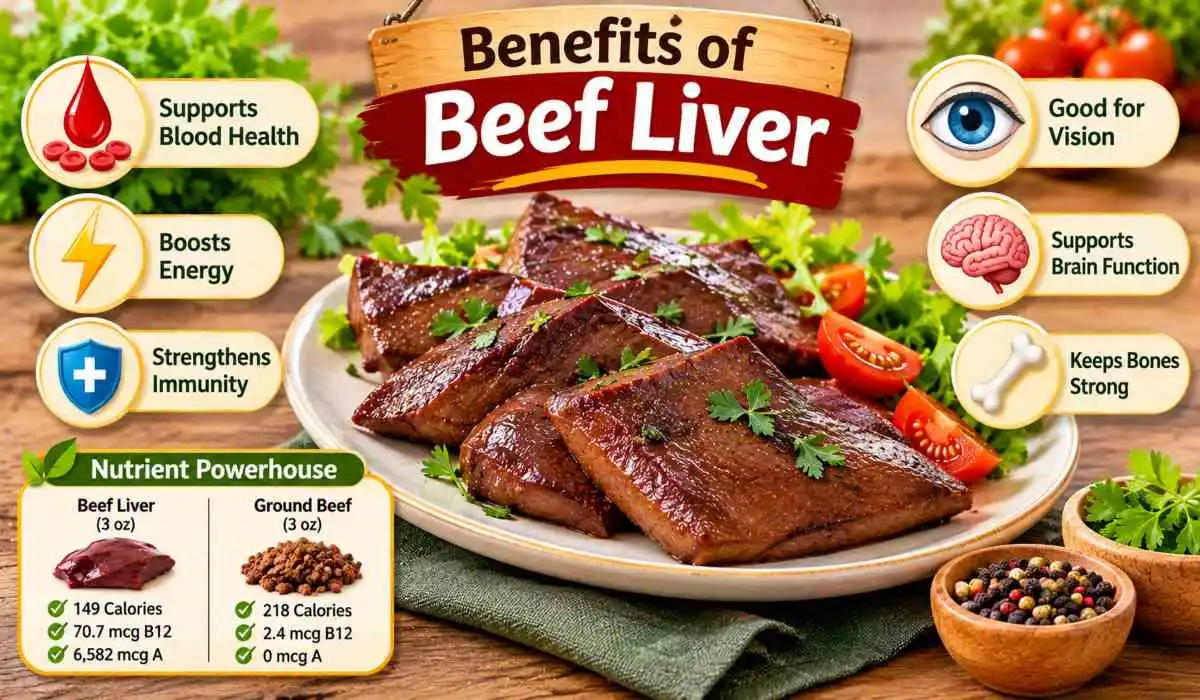
Beef liver supports energy and iron levels because it supplies iron, vitamin B12, folate and riboflavin together. The body relies on these nutrients to make red blood cells and turn food into usable energy. A 3 oz cooked serving provides about 5.2 mg of iron, roughly twice what the same weight of 85% lean ground beef offers. Food can help maintain healthy levels, but tiredness or suspected anemia needs a proper diagnosis from a doctor, because liver is not a treatment.
Nutrient density compared with muscle meat
Beef liver delivers far more vitamins and minerals per calorie than muscle meat. A 3 oz serving has about 30% fewer calories than 85% lean ground beef (149 vs 218), yet it supplies roughly 29 times the vitamin B12.
| Nutrient (3 oz, cooked) |
Beef liver |
85% lean ground beef |
| Calories |
149 |
218 |
| Vitamin B12 |
70.7 mcg |
2.4 mcg |
| Vitamin A |
6,582 mcg RAE |
0 mcg |
| Choline |
356 mg |
70 mg |
| Iron |
5.2 mg |
2.2 mg |
| Zinc |
4.4 mg |
5.3 mg |
The one exception in this table is zinc, where ground beef comes out slightly ahead. Muscle meat still has a place, since it provides more protein dense, versatile cooking options. Liver’s edge is its concentration of micronutrients, so it works best as a nutrient boost rather than a replacement for everyday meats.
Is liver good for the body overall?
Beef liver is good for the body overall as a source of nutrients tied to blood health, nerve function, vision and immunity. Most of the evidence is based on what those nutrients do, not on studies of eating liver itself. Its main drawback is concentration. A single serving supplies far more vitamin A and copper than most foods, so how often you eat it matters more than any one meal. People who are pregnant or planning pregnancy or who have iron overload, gout or liver disease, should check with a doctor first. Our general guide to whether beef liver is healthy covers those cautions in detail.
Beef Liver Safety Cautions (Cholesterol and Medication)
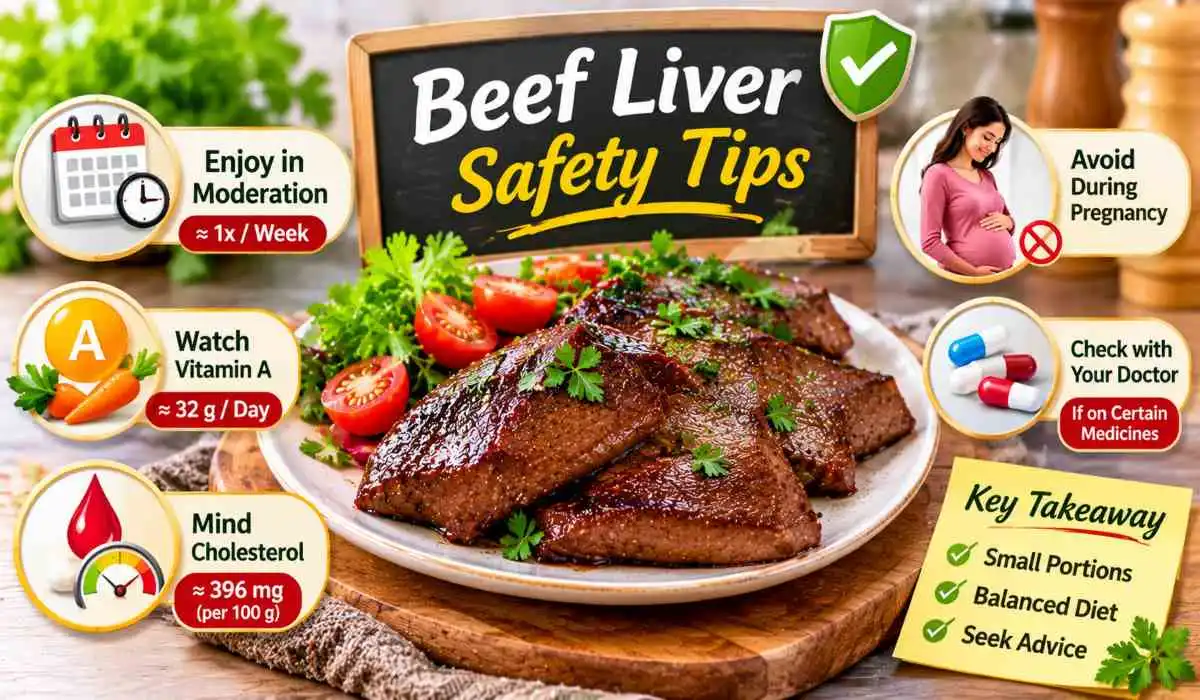
Beef liver is safe for most healthy adults in small portions about once a week. It becomes a problem mainly through frequency, because it is extremely concentrated in vitamin A and through a few specific health and medication situations. This section covers the safety points and our guide on is beef liver healthy gives the full overview.
Vitamin A toxicity and portion guidance
Eating liver too often can push vitamin A past the adult upper limit of 3,000 mcg RAE per day, because the body stores preformed vitamin A instead of flushing it out. A 100 g portion of braised beef liver has about 9,442 mcg RAE, roughly three times that limit, so about 32 g (just over an ounce) reaches the ceiling for the day.
One 100 g portion a week averages about 1,350 mcg per day, which is why UK health guidance says to eat liver no more than once a week. The US sets no liver specific limit. The same UK guidance advises avoiding vitamin A supplements, including fish liver oil, in weeks when you eat liver.
Cholesterol and who should limit liver
Beef liver is high in cholesterol, with about 396 mg per 100 g of braised liver, above the 300 mg Daily Value on U.S. food labels. For many healthy people, saturated fat affects blood cholesterol more than dietary cholesterol does and liver is low in saturated fat. Still, the NIH suggests limiting organ meats because of their cholesterol. People who have been advised to limit cholesterol, including those with heart disease or high LDL cholesterol, should ask their doctor how often liver fits into their diet.
Pregnancy and medication cautions
People who are pregnant or trying to conceive should avoid beef liver, because high intakes of preformed vitamin A are linked to birth defects. A few medications and conditions call for caution too:
- MAOI antidepressants: People taking these are usually advised to avoid liver that isn’t fresh, because tyramine builds up as it ages. Buy it fresh, refrigerate it and cook it promptly.
- Wilson’s disease: Liver is one of the copper rich foods that people with this condition are usually told to avoid.
If you take vitamin A supplements or retinoid medication, see how often to eat beef liver before eating liver regularly.
Beef Liver vs Chicken Breast
Chicken breast has more protein per calorie, while beef liver has far more vitamins and minerals. Per 100 g cooked, chicken breast provides 31 g of protein for 165 calories and beef liver provides 29.1 g for 191 calories, with over 200 times the vitamin B12.
Protein, calories and micronutrients
Chicken breast is the leaner source of protein and beef liver is the far denser source of micronutrients. Chicken breast gives about 0.19 g of protein per calorie, against about 0.15 g for liver and has no carbohydrate and much less cholesterol. Liver’s advantage is concentration, with large amounts of B12, folate, riboflavin, iron and vitamin A that chicken breast barely contains.
| Per 100 g, cooked |
Beef liver (braised) |
Chicken breast (roasted, skinless) |
| Calories |
191 |
165 |
| Protein |
29.1 g |
31.0 g |
| Fat |
5.3 g |
3.6 g |
| Carbohydrate |
5.1 g |
0 g |
| Cholesterol |
396 mg |
85 mg |
| Vitamin B12 |
70.6 mcg |
0.3 mcg |
| Folate |
253 mcg |
5 mcg |
| Riboflavin |
3.4 mg |
0.1 mg |
| Iron |
6.5 mg |
about 1 mg |
The two foods do different jobs. Chicken breast is a high protein staple that fits easily into everyday meals and our guide on how much protein is in chicken breast breaks it down by cup, ounce and whole breast. Beef liver works better as an occasional nutrient rich food than as a main protein source. Its calories and macros will vary with oil, coating and seasoning once it is cooked into a dish, so treat these figures as general references for the plain meats.
Conclusion
Beef liver is a low-calorie, high-protein food with more vitamins and minerals per bite than almost any other meat. A 100 g cooked portion gives you 191 calories and 29 g of protein, plus very large amounts of B12, vitamin A, copper, folate and iron. Chicken breast wins on lean protein, but liver wins on nutrient density.
The same concentration is why portion size matters. Keep it to a small serving about once a week, and check with your doctor first if you are pregnant, take retinoid medication or have been told to limit cholesterol.
Ready to cook it? Try our liver stew for a tender, rich and full-of-flavor way to enjoy liver. Keep in mind that oil, onions and seasoning will change the calories and macros from the plain figures on this page.
Frequently Asked Questions (FAQs)
How many calories are in beef liver per 100g?
Cooked (braised) beef liver has about 191 calories per 100 g, pan fried has about 175 and raw has about 135. The numbers differ because cooking removes water.
Is beef liver high in protein?
Yes. Cooked beef liver has about 29 g of protein per 100 g (raw has about 20 g) and roughly 60% of its calories come from protein. Chicken breast is slightly leaner per calorie.
Does beef liver have carbs?
Only a small amount. Cooked beef liver has about 5 g of carbohydrate per 100 g (raw has about 4 g), with no fiber or sugar.
What vitamins does beef liver have?
Beef liver is mainly rich in vitamin A, vitamin B12, riboflavin, folate and vitamin B6. It also supplies choline, iron, copper, zinc and selenium.
How much vitamin A is in beef liver?
Cooked (braised) beef liver has about 9,442 mcg RAE of vitamin A per 100 g, roughly ten times the 900 mcg Daily Value and about three times the 3,000 mcg adult upper limit.
Does eating liver give you energy?
It can if you’re low in B12 or iron, because both support red blood cells and energy production. It won’t add energy if you already get enough of them.
Which liver is the healthiest?
No single liver wins, since all are very nutrient dense. Chicken liver has about twice the iron of beef liver per 3 oz but about half the vitamin A, while calf liver has more B12 and zinc than adult beef liver.