Is fried tilapia healthy for you? It can be, depending on the cooking method, coating and portion size. Tilapia is lean and protein rich, so it is healthy to eat fried when the oil is measured and the breading is light, but a heavily battered, deep fried fillet adds far more fat and calories.
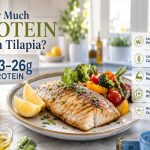
A 3.5 ounce serving of plain cooked tilapia has about 128 calories and 26 grams of protein, according to USDA data. Frying changes that picture, because the fillet absorbs oil and the coating adds carbs. So is tilapia healthy to eat fried? This guide covers calories, nutrition facts and how deep fried tilapia compares with pan fried, air fried and baked versions, so you can decide how it fits your plate.
Is Fried Tilapia Good for You or Bad for You?
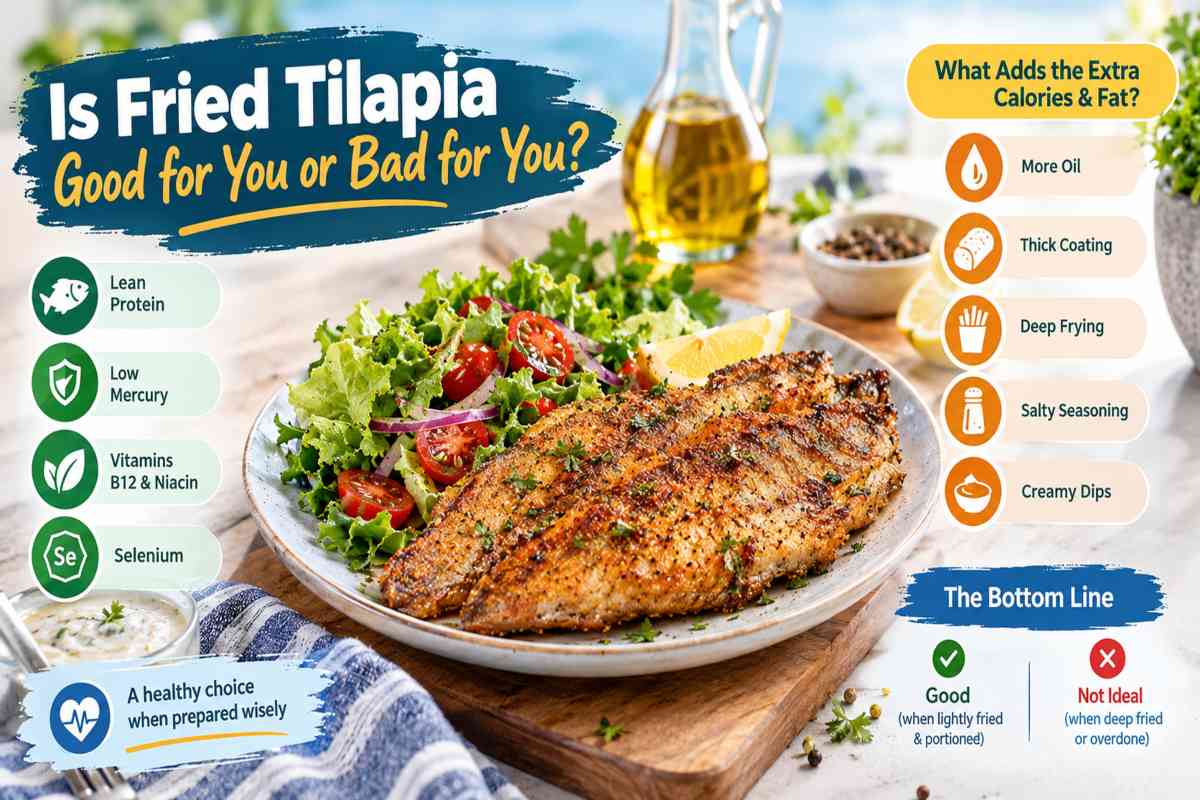
Fried tilapia is neither a health food nor a bad one. The fish is lean and nutritious and the frying is what adds fat and calories, so the answer depends on how much oil and coating end up on the plate. A lightly coated fillet cooked in a measured amount of oil is a reasonable meal. A thickly battered, deep fried one is better kept for occasions.
Is fried fish healthy in general?
Fried fish is generally less healthy than baked, grilled or steamed fish. Frying adds oil and calories and coatings add refined carbs and sodium, which can offset the benefits of eating fish. The American Heart Association suggests two servings of fish a week and favors baked or grilled preparations.
A large study of postmenopausal women in the Women’s Health Initiative found that eating baked or broiled fish was linked to a lower risk of heart failure, while fried fish and fish sandwiches were linked to a higher risk. That does not make fried fish off limits. It means the cooking method matters more than the label “fish,” and lighter frying is a better habit than deep frying.
What makes fried tilapia unhealthy
Fried tilapia turns unhealthy mainly through the amount of oil it absorbs, the thickness of the coating and how often it is eaten. Deep frying in a heavy batter can nearly double the calories of a plain fillet or more and a thick crust adds carbs the fish does not have on its own. Salty seasoning blends and creamy dipping sauces add sodium and fat on top.
Reused oil is another factor, since oil that has been heated many times breaks down and is best not repeated. Cooking whole tilapia at home gives you control over these variables, from the oil quantity to the seasoning. The fish itself is rarely the problem; the preparation usually is.
Is tilapia good for you or bad for you?
Tilapia is good for you as a lean, high protein fish that is also low in mercury, which is why the FDA lists it among its “best choices” for regular consumption. It provides protein, selenium, niacin and vitamin B12 with very little fat.
The main criticism is that tilapia contains only modest amounts of omega 3 fatty acids compared with fatty fish such as salmon and more omega 6 than omega 3. That ratio drew headlines suggesting tilapia is harmful, but because the fish is so lean, the total amount of any fat is small. Tilapia is a sound everyday protein and it is simply not the fish to rely on for omega 3s.
Fried Tilapia Nutrition Facts
A 3.5 ounce (100 g) serving of fried tilapia typically has about 200 to 350 calories, 20 to 24 grams of protein and 9 to 20 grams of fat, depending on the oil and coating. Plain tilapia has none of the added fat or carbs, so the numbers below show how much frying and breading change the same fish.
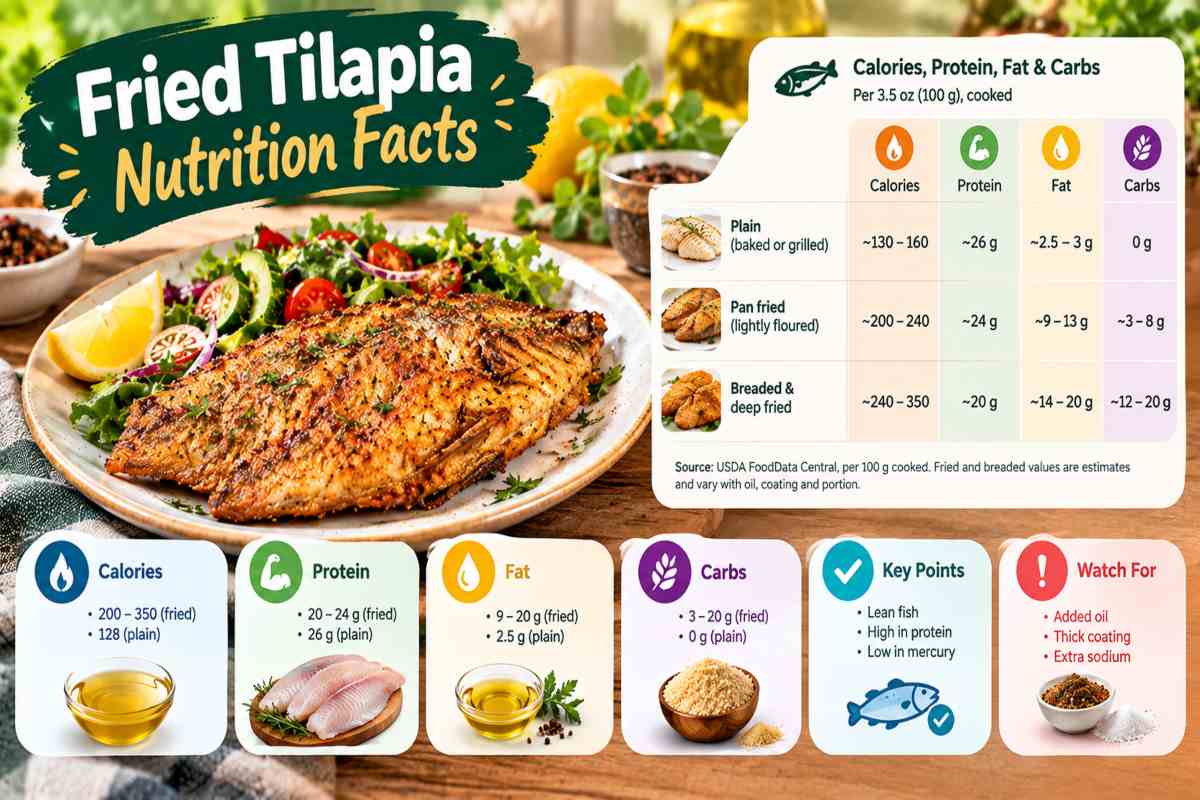
| Per 3.5 oz (100 g), cooked | Calories | Protein | Fat | Carbs |
|---|---|---|---|---|
| Plain (baked or grilled) | 130-160 | 26 g | 2.5-3 g | 0 g |
| Pan-fried, lightly floured | 200-240 | 24 g | 9-13 g | 3-8 g |
| Breaded and deep-fried | 240-350 | 20 g | 14-20 g | 12-20 g |
Source: USDA FoodData Central, per 100 g cooked. Fried and breaded values are estimates and vary with oil, coating and portion.
Fried tilapia calories
Fried tilapia has roughly 200 to 350 calories per 3.5 ounce serving, compared with about 128 for the same portion of plain cooked tilapia, according to USDA data. The difference comes almost entirely from absorbed cooking oil and any coating. Since a typical fillet is often larger than 3.5 ounces, it’s worth weighing your portion if you’re tracking calories. For a broader look at how different preparations compare, see this guide to calories in fish tilapia.
Calories in pan fried tilapia
Pan fried tilapia usually has about 200 to 240 calories per 3.5 ounce serving when it’s lightly floured and cooked in a modest amount of oil. Pan frying uses far less oil than deep frying and the fillet only absorbs what’s in the pan. Draining it on paper towels and measuring the oil instead of pouring it keeps the number toward the low end.
Calories in breaded fried tilapia
Breaded fried tilapia typically has 240 to 350 calories per 3.5 ounce serving and deep fried versions land at the top of that range. Breadcrumbs and batter act like sponges, soaking up oil and adding carbohydrates on top of the fish’s natural protein. A thin, even coating keeps the calories closer to a pan fried fillet, while a thick crust can nearly triple the calories of plain tilapia.
Is tilapia high in protein?
Yes, tilapia is high in protein, with about 26 grams in a 3.5 ounce serving of plain cooked fish for only around 130 calories. Frying does not remove the protein, but it does lower the share of each bite that comes from it, since the added oil and coating contribute extra fat and carbs. Even fried, a serving still delivers roughly 20 to 24 grams of protein, which keeps it a strong choice for anyone building meals around lean protein.
Fried tilapia carbs and is it keto?
Plain tilapia has no carbohydrates, so any carbs in fried tilapia come from the coating. A light dusting of flour adds a few grams, while breadcrumbs or batter can add 12 to 20 grams per serving. Fried tilapia can fit a keto diet only if it is cooked without breading or with a low carb coating, since a standard breaded fillet usually uses up too much of a keto carb budget.
Is fried tilapia high in fat or cholesterol?
Plain tilapia is low in fat at about 2.5 grams per serving, but fried tilapia can reach 9 to 20 grams depending on the method and most of the extra fat comes from the cooking oil. Cholesterol is moderate, at roughly 50 to 60 milligrams per serving, which is in line with other white fish. For most people, the type and amount of frying oil and the overall diet matter more than the fish’s own cholesterol content, though anyone managing cholesterol should check with a doctor or dietitian.
Pan Fried vs Deep Fried vs Air Fried vs Baked Tilapia
Baked tilapia is the healthiest of the four, followed by air fried, then pan fried, with deep fried last. The fish is the same each time, so the difference comes from how much oil it absorbs and what coating it wears. A baked fillet has about 130 calories per 3.5 ounces, while a breaded, deep fried one can reach 240 to 350.
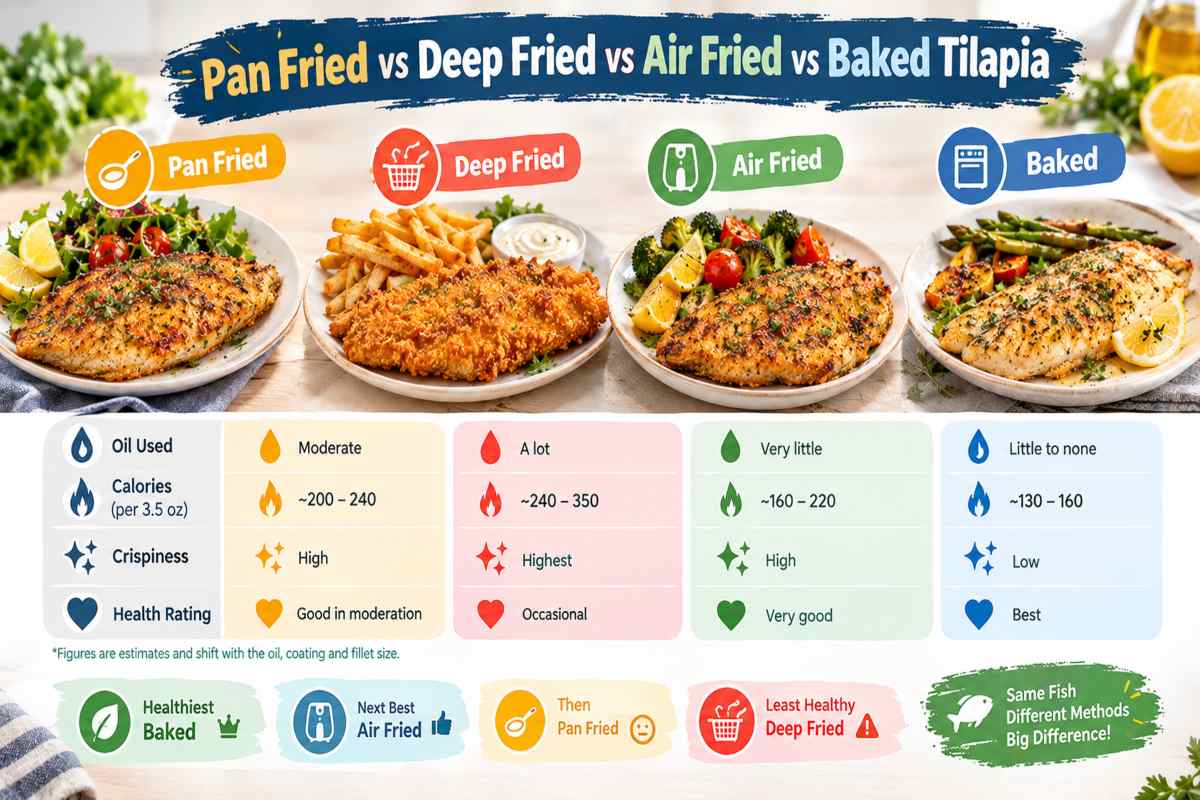
| Method | Oil used | Calories (per 3.5 oz) | Crispiness | Health rating |
|---|---|---|---|---|
| Baked | Little to none | 130-160 | Low | Best |
| Air-fried | Very little | 160-220 | High | Very good |
| Pan-fried | Moderate | 200-240 | High | Good in moderation |
| Deep-fried | A lot | 240-350 | Highest | Occasional |
Figures are estimates and shift with the oil, coating and fillet size.
Is pan fried tilapia healthy?
Pan fried tilapia is a reasonable choice when it’s cooked in a small, measured amount of oil. Because the fillet sits in a shallow layer of oil instead of being submerged, it absorbs far less fat than a deep fried one, usually landing at about 200 to 240 calories per serving. Using a nonstick pan, a light flour dusting and a paper towel to drain the fillet keeps it toward the lighter end.
Is deep fried tilapia healthy?
Deep fried tilapia is the least healthy way to eat the fish, though it’s fine as an occasional meal. Submerging the fillet in hot oil lets it soak up much more fat, which can push the calories to nearly double those of a baked fillet or more. The oil is also often reused and that breaks down over repeated heating. If you love the crunch, keeping deep fried tilapia to a treat and choosing lighter methods most of the time balances it out.
Is breaded tilapia healthy?
Breaded tilapia is less healthy than uncoated fish because the breading adds carbohydrates and, once fried, soaks up extra oil. A thin, even coating keeps the numbers close to a pan fried fillet, while a thick crust of breadcrumbs or batter can add 12 to 20g of carbs and a lot of fat. Breaded fillets from the freezer aisle can also be high in sodium, so checking the label is worth the few seconds.
Is air fried tilapia healthy?
Air fried tilapia is the healthiest way to get a fried result, because it needs only a light coating of oil to turn crisp. Hot circulating air does most of the work, so the fillet takes on a fraction of the fat a deep fried one would. The result is a crunchy exterior with calories much closer to baked fish than fried. Air fried tilapia is usually healthier than pan fried because it needs only a light brush or spray of oil instead of a shallow pool, so it lands closer to baked fish in calories while keeping the crunch.
Fried vs baked tilapia which is healthier?
Baked tilapia is healthier than fried because it has fewer calories and less fat while keeping the same protein, roughly 26 grams per 3.5 ounce serving of plain cooked fish. Baking needs little or no added oil, so the fillet absorbs little to no fat. It can still go off track if the seasoning or glaze is heavy on sugar or salt, as with a sweet and salty preparation like honey baked soy sauce tilapia, so portions and sauces still count. Fried tilapia can absolutely fit a balanced diet, but baked is the better everyday default.
Is Tilapia Inflammatory? The Omega 6 Debate
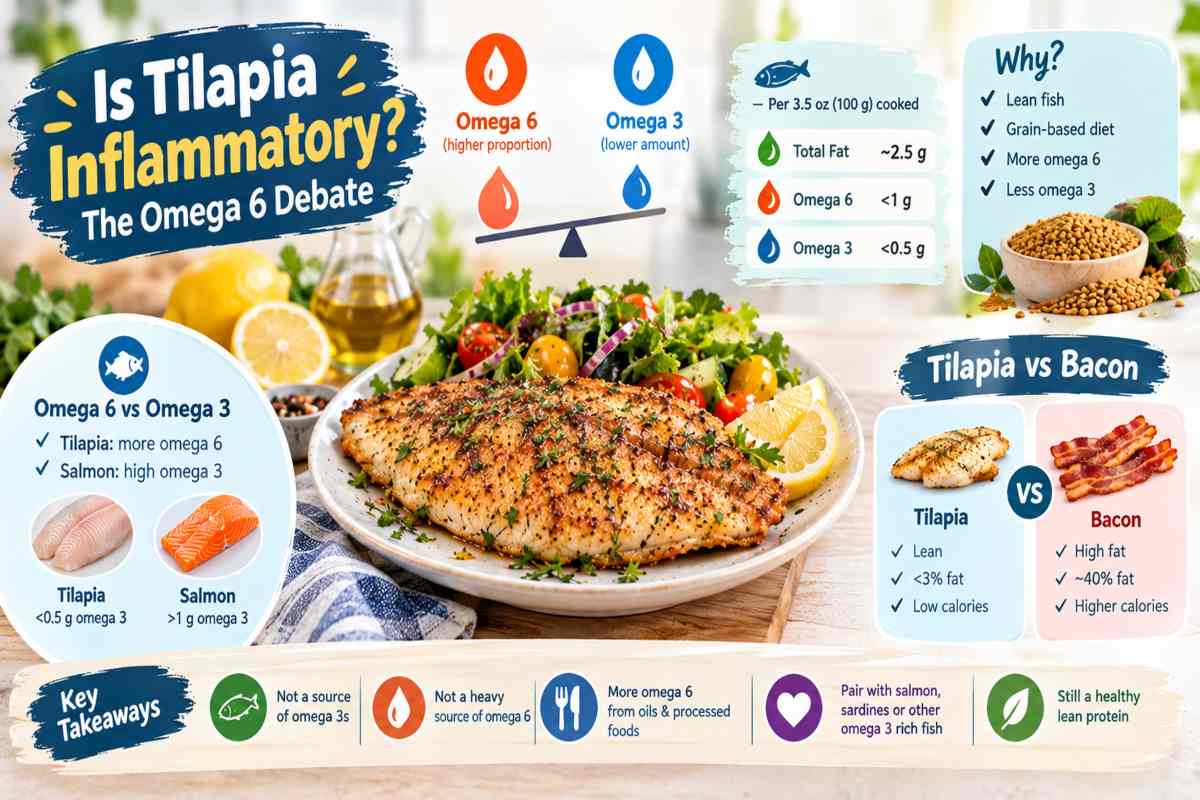
Tilapia is not considered a meaningfully inflammatory food. It does contain more omega 6 than omega 3 fatty acids, but it is so lean that the total amount of either is small. The inflammation claim comes mostly from a ratio, not from the amount of fat a serving actually delivers.
Is tilapia high in omega 6?
Tilapia has a higher proportion of omega 6 than omega 3, but the absolute amounts are low. A 3.5 ounce serving of cooked tilapia has only about 2.5 grams of total fat and less than a gram of that is omega 6. Farmed tilapia is typically fed grain based diets, which tilts its fat profile toward omega 6 and it offers far less omega 3 than fatty fish like salmon, which can provide well over a gram of omega 3 per serving.
The practical takeaway is that tilapia is not a source of omega 3s, but it is not a heavy source of omega 6 either. Most people get far more omega 6 from vegetable oils, processed foods and, in the case of fried tilapia, the frying oil itself.
Is tilapia worse than bacon? Where the claim came from
No, tilapia is not worse than bacon in any practical sense. The claim traces back to a 2008 study from Wake Forest University published in the Journal of the American Dietetic Association, which analyzed the fatty acid content of farmed tilapia and catfish. The researchers noted that, based on the ratio of certain fatty acids, the inflammatory potential of a portion of farmed tilapia could exceed that of a hamburger or bacon. Headlines quickly turned that into “tilapia is worse than bacon.”
The study looked at fatty acid ratios, not at what happens in the body when people eat these foods and the authors did not conclude that tilapia is unhealthy. A ratio also ignores portion content, cooked bacon is roughly 40 percent fat by weight, while tilapia is under 3 percent. Eating a lean fish that is low in omega 3 is a very different thing from eating a fatty processed meat, which is why dietitians generally still treat tilapia as a healthy lean protein. If you are focused on anti inflammatory eating, pairing tilapia with omega 3 rich fish like salmon or sardines during the week covers the gap.
Is Fried Tilapia Healthy for Your Diet and Health Goals?
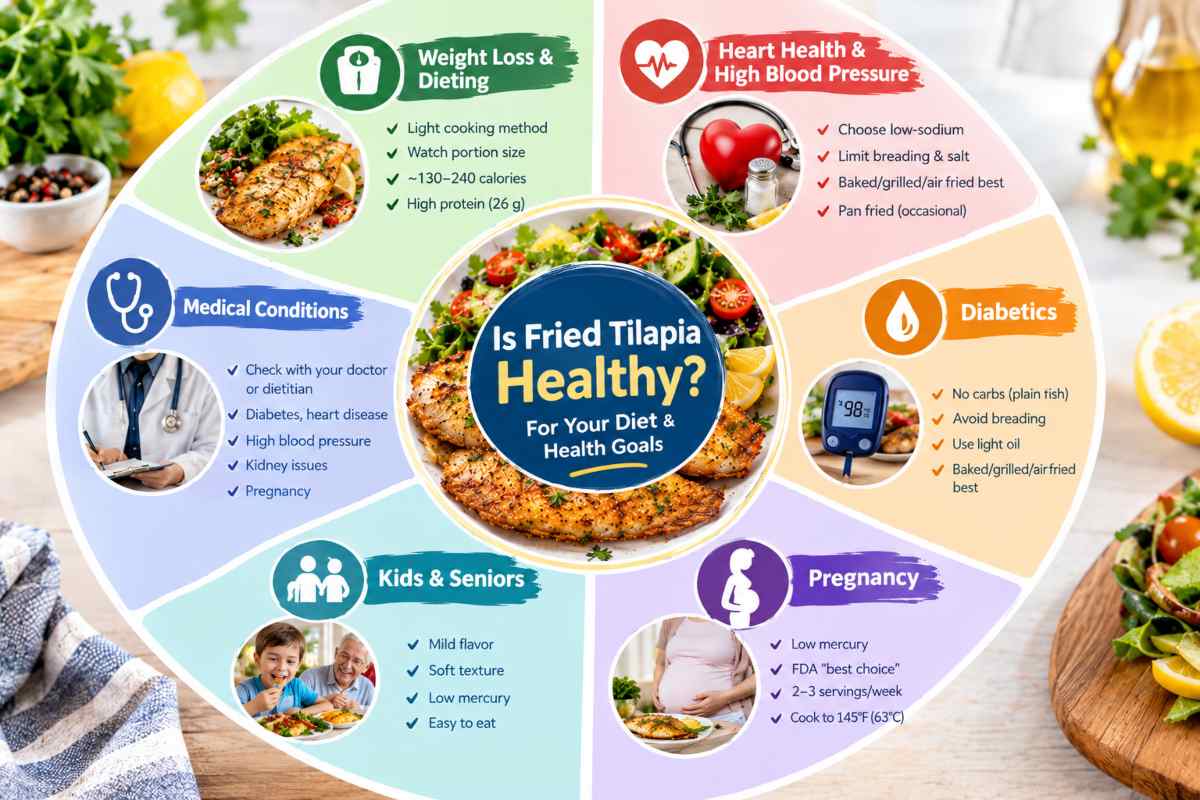
Fried tilapia can fit most diets and health goals when it is pan fried or air fried with a light coating and a sensible portion. It becomes harder to justify for weight loss, blood pressure or blood sugar control when it is deep fried, heavily breaded or salty. Below is how it fits each goal.
Weight loss and dieting
Fried tilapia can work in a weight loss plan if you choose a light cooking method and watch the portion. A 3.5 ounce serving of plain cooked tilapia has only about 130 calories and even a pan fried fillet stays around 200 to 240, so it costs far less than most fried proteins. The protein in tilapia, about 26 grams per serving of plain cooked fish, also helps you feel full for longer. Deep fried or heavily breaded fillets can reach 350 calories or more, which uses up a large share of a calorie budget, so those are better as an occasional meal.
Heart health and high blood pressure
Fish is part of heart healthy eating, but fried preparations do not deliver the same benefit as baked or grilled fish. The American Heart Association recommends eating fish twice a week and it advises limiting sodium to 2,300 milligrams a day, with an ideal of 1,500 for most adults.
Frozen breaded fillets and seasoning blends can be high in salt, so checking labels or seasoning at home with herbs, lemon and pepper makes a real difference. Baked, grilled or air fried tilapia is the better routine choice for blood pressure, with pan fried as an occasional option.
Diabetics
Tilapia has no carbohydrates, so the fish itself does not raise blood sugar. The concerns are the breading, which adds carbs and the added fat from frying. The American Diabetes Association encourages eating fish regularly but suggests avoiding breaded and fried versions where possible. Lightly seasoned tilapia that is baked, grilled or cooked in a small amount of oil is the more diabetes friendly way to enjoy it.
Pregnancy
Tilapia is a safe fish choice during pregnancy when it is fully cooked. The FDA lists it among its “best choices” because it is low in mercury and it recommends two to three servings a week of fish in that category. The fish should reach an internal temperature of 145°F (63°C), which properly fried tilapia does. It is still worth keeping the frying light and pregnant women with specific dietary concerns should follow their own provider’s guidance.
Kids and seniors
Tilapia is a good fit for both children and older adults thanks to its mild flavor, soft texture and low mercury. For kids, a lightly coated fillet cut into small pieces is easy to eat and portions should be scaled to age. For seniors, the soft, flaky texture and high protein help support muscle maintenance, but anyone watching blood pressure or cholesterol should go easy on breading, salt and heavy frying oil.
A note on medical conditions
This information is general and is not a substitute for personal medical advice. If you have diabetes, heart disease, high blood pressure, kidney problems or are pregnant, check with your doctor or a registered dietitian about how often and in what form fried fish suits your plan.
How to Make Fried Tilapia Healthier
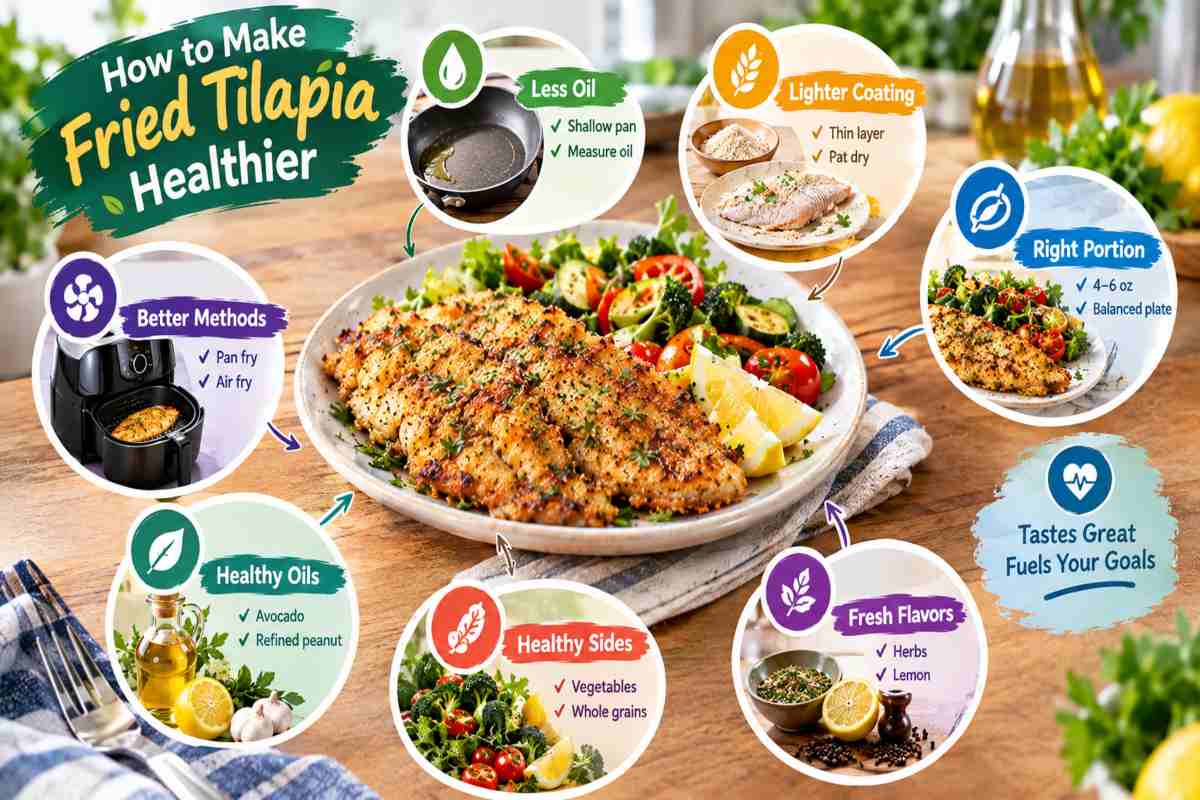
You can make fried tilapia healthier by using less oil, a lighter coating and a smaller portion and by pairing it with vegetables instead of fries. One tablespoon of cooking oil adds about 120 calories, according to USDA data, so how much oil the fillet takes on matters more than almost any other choice you make.
The healthiest way to fry fish
The healthiest way to fry fish is to use a shallow layer of oil in a nonstick pan or an air fryer, instead of deep frying. Select an oil with a high smoke point, such as avocado or refined peanut oil and heat it until it shimmers before the fish goes in. Oil that is not hot enough seeps into the fillet and makes it greasy, while oil at the right temperature seals the surface quickly and keeps absorption low. Measure the oil instead of pouring it and use fresh oil each time.
The healthiest way to cook tilapia
The healthiest way to cook tilapia is to bake, grill, steam or poach it, because none of these methods needs more than a teaspoon or two of oil. Plain baked tilapia stays near 130 calories per 3.5 ounce serving and keeps all of its protein. Tilapia’s mild flavor takes well to lemon, garlic, herbs and spices, so you do not need a heavy sauce to make it interesting. Frying still has a place, but these methods are the better default for everyday meals.
Tips for low calorie fried tilapia
Portion size, draining and coating are the three changes that lower the calories most. A fillet of about 4 to 6 ounces is a sensible serving and larger pieces quickly add calories. Lift the fish out of the pan and rest it on paper towels or a wire rack so excess oil drips away instead of soaking back in.
For the coating, a thin dusting of flour, cornmeal or seasoned breadcrumbs gives crunch for far fewer calories and carbs than a thick batter. Patting the fillet dry first helps a light coating stick, so you need less of it. Finish with lemon juice, fresh herbs or a squeeze of lime instead of creamy sauces, which can add more fat than the frying oil.
Healthy sides to serve with it
Vegetables and whole grains balance fried tilapia best, because they add fiber and nutrients that the fish and its coating lack. A crisp green salad, steamed or roasted broccoli, sautéed greens and grilled zucchini all keep the plate light.
For something more filling, brown rice, quinoa or roasted sweet potatoes work well without piling on more fried food. Skipping french fries and creamy coleslaw is the simplest swap and it can save several hundred calories. If you are building meals around fish more often, this guide to the healthiest fish to eat is a useful place to compare your options.
Conclusion
Fried tilapia is healthy enough for regular meals when it is pan fried or air fried in a small amount of oil with a light coating and best kept as an occasional dish when it is deep fried or heavily breaded. The fish itself is the strong part of the meal, with about 128 calories and 26 grams of protein per 3.5 ounce serving of plain cooked tilapia, according to USDA data, so the cooking method matters more than the fish.
Make baked, grilled or air fried tilapia your everyday choices, keep the portion to one fillet, measure the oil, drain the fish well and pair it with vegetables or whole grains to keep the plate balanced. If you have diabetes, heart disease or high blood pressure or you are pregnant, lighter preparations are the safer default and a doctor or dietitian can tell you what fits your plan. Tilapia’s mild flavor also suits many seasoning styles, from simple lemon and herbs to the bolder spice blends found in African cuisine, where fried and whole fish dishes are staples.
Frequently Asked Questions (FAQs)
Can I eat fried tilapia on a diet?
Yes, in moderation. Pan fried or air fried tilapia has roughly 200 to 240 calories per 3.5 ounce serving, so it fits most calorie controlled plans when the oil is measured and the coating is light.
Is fried tilapia safe during pregnancy?
Yes, when it is totally cooked. The FDA lists tilapia as a best choice for heating because it is lower in mercury and it should get an internal temperature of 145°F (63°C). Check with your provider about your own needs.
Is fried tilapia keto?
Only if it is cooked without breading. Plain tilapia has 0 grams of carbs, but flour, breadcrumbs or batter can add 12 to 20 grams per serving, which is usually too much for keto.
Is fried tilapia good for weight loss?
It can be. Tilapia provides about 26 grams of protein per 3.5 ounce serving of plain cooked fish, which helps with fullness. Keep it pan fried or air fried and watch the portion, since deep fried fillets can top 350 calories.
Is fried tilapia healthy for kids or seniors?
Yes, in reasonable portions. Its mild flavor, soft texture and low mercury suit both groups. Choose a lightly coated fillet and go easy on salt and heavy frying oil, especially for seniors managing blood pressure or cholesterol.
Sources: USDA FoodData Central (fdc.nal.usda.gov), entries for tilapia, cooked (dry heat), fried, baked or broiled and grilled.
Disclaimer: This article is for general information only and is not medical or nutrition advice. Nutrient values are estimates and vary by ingredients, oil, coating and portion size. Talk to your doctor or dietitian about your individual needs.