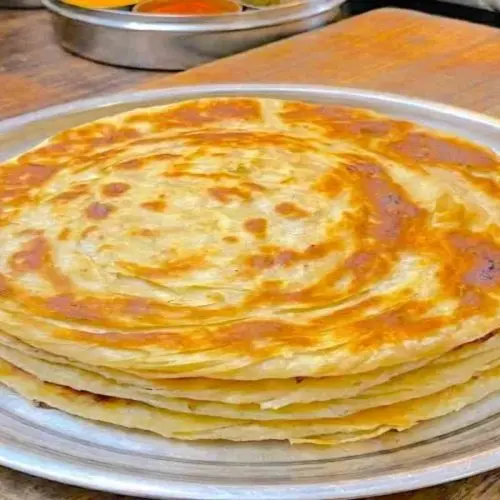
Fluffy Kenyan Chapati Recipe
A foolproof, large-batch recipe for ultra-soft layered East African chapatis utilizing a stand mixer. Features a hot-water hydration method and a unique warm oil-flour paste hack that guarantees distinct, flaky, pull-apart layers every single time.
Ingredients
For the Main Dough
- 10 cups all-purpose flour
- 2½ teaspoons salt
- 8 teaspoons sugar optional
- 5 cups hot water 1200 ml.
- ⅓ cup cooking oil
For the Layering and Frying
- 1/2 cup cooking oil warmed and extra for cooking
- About 3/4 cup all-purpose flour
Instructions
- Attach the dough hook to your stand mixer. Add the salt, sugar (if using), and 1/3 cup of cooking oil directly into the bottom of the mixer bowl.
- Slowly pour the 5 cups (1200 ml) of hot water into the bowl. Give it a quick whisk by hand or a brief turn of the mixer to ensure the salt and sugar are completely mix it in the liquid before adding the flour.
- Set your mixer to low speed. Add your 10 cups of all-purpose flour in two separate batches. Let the first batch incorporate slightly before adding the rest. Run the stand mixer on low-medium speed for 5 to 7 minutes until the flour completely hydrates and pulls away cleanly from the sides of the bowl, forming a unified, soft dough.
- Transfer the dough out of the mixer onto a lightly floured work surface. Give it a quick, light manual knead for 1 to 2 minutes just until it transforms into a perfectly smooth, cohesive ball. It should feel incredibly soft and pliable.
- In a small separate bowl, heat your 1/2 cup of layering oil until it is hot but not smoking. Slowly stir in the 3/4 cup of flour, whisking continuously until it forms a perfectly smooth, pourable paste with no lumps. This is your secret weapon for distinct separation.
- Divide your large dough mass into 12 to 15 equal pieces. Gently roll each portion in your hands to shape smooth, compact dough balls.Take one ball at a time and use a rolling pin to roll it out into a thin, even circle on your floured surface.
- Take a spoon or a pastry brush and spread a thin, even layer of your prepared oil-flour paste across the entire surface of the rolled circle. Starting from one edge, roll the circle tightly into a long rope, then coil that rope around itself like a snail shell, tucking the loose end underneath. Repeat this process for all your dough balls and let them rest for 5 minutes.
- Take your coiled dough shells and, using your rolling pin, roll them out a second time into neat, even circles (about 1/8 inch thick). Be careful not to press down with extreme force, as you want to preserve the internal coiled structures you just created.
- Heat a heavy, dry skillet or tawa over medium-high heat. Place a rolled chapati onto the hot pan without adding any oil. Cook for 1 to 2 minutes until you see beautiful air bubbles beginning to puff up across the surface. Flip the chapati and cook the other side briefly for another 30 to 45 seconds, then remove it from the pan. Repeat this dry-cooking process for the entire batch, stacking them together under a clean kitchen towel to trap the steam.
- Once all chapatis have been dry-cooked, return the first chapati back to the hot pan. Pour about 1 tablespoon of cooking oil around and on top of it. Use a spatula to press down gently on the edges, rotating it continuously. Flip it over and brown the other side. Cook until the exterior is stunningly crispy, flaky, and speckled with deep golden-brown spots. Remove, stack in an insulated container, and serve warm!
Video
Notes
Please note that the nutritional information is a rough estimate and can vary significantly based on the products used in the recipe.
Nutrition
Calories: 527kcalCarbohydrates: 82gProtein: 11gFat: 17gSaturated Fat: 1gPolyunsaturated Fat: 5gMonounsaturated Fat: 10gTrans Fat: 0.1gSodium: 492mgPotassium: 112mgFiber: 3gSugar: 3gCalcium: 19mgIron: 5mg
Tried this recipe?Let us know how it was!
