
Some breakfasts take effort and taste like it. Some take no effort and taste like it. This quesadilla recipe somehow manages to be the third option, one pan, twenty minutes, and you end up with something that actually makes you want to sit down and eat slowly instead of grabbing it off the counter and leaving. The outside shatters slightly when you press down, that specific golden crunch that only comes from butter meeting a hot pan at exactly the right moment. The inside is soft scrambled eggs and pulled, melted cheese that stretches when you break it apart. There is nothing complicated here. There is also nothing missing. If you have been making quesadillas for lunch and dinner but skipping them at breakfast, that ends today. And if you already make them in the morning, the tips in this article will make yours noticeably better than what you have been doing.
Why This Quesadilla Recipe Works Every Time
Most breakfast quesadillas fail at one of two points. Either the eggs go rubbery because they cook too long before the quesadilla even gets assembled, or the tortilla turns pale and soft because the pan was not hot enough, or because too much oil has pooled rather than forming a thin, even coating.
This recipe fixes both. The eggs come off the heat while they still look about 80% done, slightly shiny, still soft in the middle. They finish cooking inside the quesadilla as the cheese melts around them. The tortilla goes into a preheated, butter coated pan at medium heat, not high, not low, which gives it a deep amber-gold colour without burning before the filling is warm.
Making the Best Easy Quesadillas
Yields: 1-2 servings Prep time: 10 minutes Cook time: 12 minutes
Ingredients:
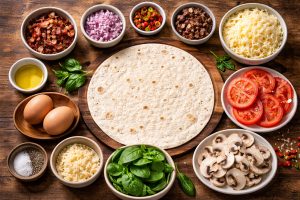
-
2 large eggs
-
1 tbsp cooking oil (or butter for extra richness)
-
1/3 cup cooked meat (ground beef, crispy bacon, or crumbled sausage)
-
2 large mushrooms, thinly sliced
-
1 ripe tomato, sliced into rounds
-
1 small red onion, finely chopped
-
1/2 cup fresh baby spinach
-
4–6 hot pepper pieces (sliced jalapeños or bird’s eye chilies)
-
1/2 cup shredded mozzarella cheese (grated fresh for better melt)
-
1 large flour tortilla
-
Salt and black pepper, to taste
Step-by-Step Instructions
-
Sauté the Aromatics: Begin by heating your oil in a high-quality non-stick pan over medium heat. Toss in the chopped onions and sauté until they are soft and translucent. Add the mushrooms and cook for another minute; you want the mushrooms to release their moisture and start to brown, which intensifies their earthy flavor.
-
The Egg Foundation: Whisk your eggs in a small bowl with salt and pepper. Pour them directly over the sautéed vegetables, swirling the pan to ensure they cover the bottom evenly. Immediately scatter your cooked meat across the liquid eggs so they set together.
-
Build the Layers: As the eggs begin to firm up at the edges, arrange your tomato slices and hot peppers on one half. Pile the fresh spinach on top, don’t worry if it looks like a lot, it will wilt down perfectly. Sprinkle exactly half of the mozzarella over the entire surface.
-
The Tortilla Bonding: Place your large tortilla flat on top of the egg and cheese mixture. Cover the pan with a tight-fitting lid for one minute. This allows the spinach to steam and the cheese to act as a glue between the eggs and the tortilla.
-
The Master Flip: Slide the entire mixture onto a large, flat plate. Place the pan upside down over the plate and, holding both firmly, flip them together so the tortilla is now on the bottom of the pan.
-
The Final Crisp: Sprinkle the remaining mozzarella on the egg side. Once you hear the tortilla beginning to sizzle and turn golden, use a spatula to fold the quesadilla in half. Press down gently to lock the cheese and let it cook for another 30–60 seconds.
-
Serve: Slide the quesadilla onto a board, let it rest for a minute so the cheese sets, then slice into wedges.

Breakfast Quesadilla
Ingredients
- 2 eggs
- 1 tbsp cooking oil
- 1/3 cup cooked meat or ground beef, bacon, or sausage
- 2 mushrooms sliced
- 1 tomato sliced
- 1 red onion chopped
- 1/2 cup spinach
- 5 hot pepper pieces optional
- 1/2 cup mozzarella cheese shredded
- 1 large tortilla
- salt & pepper
Instructions
- Begin by heating your oil in a high-quality non-stick pan over medium heat. Toss in the chopped onions and sauté until they are soft and translucent. Add the mushrooms and cook for another minute; you want the mushrooms to release their moisture and start to brown, which intensifies their earthy flavor.
- Whisk your eggs in a small bowl with salt and pepper. Pour them directly over the sautéed vegetables, swirling the pan to ensure they cover the bottom evenly. Immediately scatter your cooked meat across the liquid eggs so they set together.
- As the eggs begin to firm up at the edges, arrange your tomato slices and hot peppers on one half. Pile the fresh spinach on top—don’t worry if it looks like a lot, it will wilt down perfectly. Sprinkle exactly half of the mozzarella over the entire surface.
- Place your large tortilla flat on top of the egg and cheese mixture. Cover the pan with a tight-fitting lid for one minute. This allows the spinach to steam and the cheese to act as a glue between the eggs and the tortilla.
- Slide the entire mixture onto a large, flat plate. Place the pan upside down over the plate and, holding both firmly, flip them together so the tortilla is now on the bottom of the pan.
- Sprinkle the remaining mozzarella on the egg side. Once you hear the tortilla beginning to sizzle and turn golden, use a spatula to fold the quesadilla in half. Press down gently to lock the cheese and let it cook for another 30–60 seconds.
- Slide the quesadilla onto a board, let it rest for a minute so the cheese sets, then slice into wedges.
The Trick That Makes the Eggs Stay Soft
There is one thing most quesadilla recipes do not tell you, and it makes a bigger difference than anything else, pull the eggs off the heat before they look finished.
When you scramble eggs for a quesadilla, you are not making scrambled eggs to eat on their own. You are making a filling that will cook a second time inside a hot pan. If you cook them fully before they go in, they will be overcooked and slightly rubbery by the time the cheese melts and the tortilla crisps.
Take them off the heat when they still have a slight shine. Some visible softness. A little underdone. They will finish perfectly inside the quesadilla, and the texture will be noticeably different from anything you have made before.
The same principle applies if you are making our crispy honey garlic chicken wings, pulling protein from the heat just before it is done, and letting residual heat finish the job is one of the most reliable cooking techniques across recipes.
Best Cheese Which Works Well
Not all cheese melts the same way inside a quesadilla, and the wrong choice makes a real difference. Here is what actually happens with each common option in a hot pan over two to three minutes:
| Cheese | Melt Quality | Flavour | Best For |
| Sharp Cheddar | Excellent | Bold, tangy | Classic breakfast quesadilla |
| Monterey Jack | Very smooth | Mild, buttery | Creamy interior texture |
| Pepper Jack | Excellent | Spicy, bold | Heat lovers, chorizo filling |
| Mozzarella | Stringy, stretchy | Very mild | Pull-apart visual effect |
| Colby Jack | Good | Mild-medium | Family-friendly, kids |
| Oaxacan | Exceptional stretch | Mild, slightly salty | Authentic Mexican texture |
| Pre-shredded bags | Poor | Variable | Not recommended |
The last row is the most important. Pre-shredded cheese contains anti caking agents, typically potato starch or cellulose, that prevent it from clumping in the bag but also from melting cleanly in a pan. It goes grainy rather than silky. Grating a block of cheese fresh takes 90 seconds, and the result inside the quesadilla is dramatically better.
Air Fryer Breakfast Quesadilla: The 2026 Method
The air fryer has become the most searched cooking method for quesadillas in 2026, and for good reason. It handles multiple quesadillas at once without you standing over the stove to adjust the heat, produces an extremely consistent crunch across the whole surface, and works brilliantly for reheating leftovers without any sogginess.
Here is exactly how to do it:
- Assemble the quesadilla the same way as the stovetop method, cheese on the tortilla first, filling in the middle, more cheese on top, fold or cover with the second tortilla. Lightly brush or spray both outer surfaces with butter or cooking oil. Do not skip this step, without surface fat, the tortilla goes dry rather than golden.
- Place in the air fryer basket in a single layer. Do not stack. Air fry at 375°F (190°C) for 4 minutes. Flip carefully using tongs, the cheese inside will still be partially molten at this point, so flip with confidence and one smooth motion. Air fry for another 3 to 4 minutes, until both sides are golden and the cheese is completely melted through.
- For flour tortillas, the full 4 minutes per side works reliably. For corn tortillas, check at 3 minutes, they crisp faster and can go from crisp to overdone quickly in an air fryer.
Protein Variations: How to Build This Quesadilla Recipe Your Way
The base of this recipe, eggs, cheese, tortilla, is a platform, not a fixed menu. Here are the combinations that genuinely work in a real kitchen, not just in theory:
- Bacon and cheddar, the classic. Cook the bacon until properly crispy before it goes in. Soft bacon inside a quesadilla becomes chewy as it steams inside the folded tortilla. Chop it into small pieces after cooking. Cheddar is the partner who works.
- Chorizo and pepper jack, for heat, Mexican chorizo (not Spanish, completely different texture and fat content) cooked until the fat renders and the edges get slightly caramelised. Pepper jack adds the right amount of heat without overpowering the egg.
- Black beans and cheddar, vegetarian, not boring. Drain and rinse canned black beans, then blot dry with a paper towel before adding. Wet beans are the main reason vegetarian quesadillas turn soggy on the inside. Season with cumin and garlic salt. This filling holds up against any meat version.
- Leftover roasted vegetables, the Sunday morning version: Bell peppers, onion, zucchini, whatever roasted vegetables came from dinner the night before. Chop small, add with the eggs, and use Monterey Jack for its mild creaminess. One of the most underrated breakfast quesadilla combinations.
- Sausage and gouda, the upgraded Breakfast sausage cooked and crumbled, with gouda instead of cheddar. Gouda melts beautifully and has a subtle smokiness that pairs well with pork sausage, unlike cheddar, a small change with a noticeable difference.
- If you enjoy quick, high-protein meals like this one, our chicken stir-fry recipe on the dinner page follows the same principle, strong flavour, one pan, done in under 30 minutes.
Flour vs Corn Tortilla
This question comes up constantly in quesadilla discussions. The short answer is that both work, but they do so differently, and the right choice depends on what you want.
Flour tortillas are more forgiving. They bend without cracking when cold, hold heavier fillings without splitting at the edges, and produce a slightly softer, chewier interior with crispy edges. For a loaded breakfast quesadilla with eggs, cheese, and added protein, flour is the practical choice.
Corn tortillas have a more complex flavour, distinctly corny, slightly earthy, and produce a crispier result throughout rather than just at the edges. They are naturally gluten free. But they crack when cold, so warm them in a dry skillet for 20 to 30 seconds each side before folding. For lighter fillings or smaller portions, corn tortillas are excellent.
One practical note on size, 8-inch tortillas fit a medium skillet perfectly and are the most manageable for home cooking. Anything larger than 10 inches becomes genuinely difficult to flip cleanly without losing filling.
Make Ahead and Meal Prep Guide
Breakfast quesadillas are one of the most practical items to batch-cook for a week of fast mornings, but the method matters a lot for how they hold up.
Refrigerator up to 4 days
Cook them fully, then cool completely on a wire rack rather than a plate. A plate traps steam beneath the tortilla, making the bottom soft within minutes. Wrap each cooled quesadilla individually in parchment paper, not cling film, which can cause condensation, and store in an airtight container in the fridge.
Freezer up to 3 months
Same process as fridge storage, but after the parchment wrap, add a layer of aluminium foil. Freeze flat. Label with the date.
Reheating from the fridge
Skillet over medium heat, no lid, 2 to 3 minutes per side. This is the method that restores the crunch to something close to fresh. The microwave produces a softer, slightly chewy result, acceptable if you are late, but not the same experience.
Reheating from frozen
Thaw overnight in the fridge and reheat in a skillet. Or go directly from frozen into a 350°F oven for 12 to 15 minutes, flipping halfway. The air fryer from frozen is the fastest method that produces genuine crispiness, 350°F for 8 minutes, flip, 4 more minutes.
What to Serve Alongside This Quesadilla Recipe

A quesadilla is already a complete meal. But when you are serving brunch or want to round out the plate, these are the pairings that actually complement rather than compete with the eggs and cheese:
Salsa the obvious choice for a reason. Fresh pico de gallo adds the acid and brightness that cuts through the richness of the filling. Jarred salsa works. Homemade is better. Both are fine on a Tuesday morning.
Sour cream or Greek yogurt Full fat sour cream is the traditional dip. Greek yogurt is the 2026 swap that many home cooks prefer, slightly tangier, higher in protein, still creamy enough to do the same job, and it works.
Guacamole mash two ripe avocados with lime juice, salt, and a pinch of garlic. That is genuinely all the guacamole you need for breakfast. The avocado fat makes the whole meal more sustaining throughout the morning.
Hot sauce Cholula, Valentina, or Tapatío, is the most common in American kitchens for Mexican style breakfast food. Cholula is the mildest and most versatile. Valentina has the most complex flavour for its price. Tapatío has the most heat.
Fresh fruit, a small plate of mango, pineapple, or berries next to a hot savoury quesadilla is a combination far more people should try. The cold sweetness and the hot crunch go together better than most people expect until they actually do it.
If you are serving a crowd for weekend brunch, consider pairing these quesadillas with our honey-lemon salmon for a full spread that satisfies both lighter and heartier appetites at the same table.
Common Mistakes and Exactly How to Fix Them
- The tortilla burns before the cheese melts. Your heat is too high. Drop to medium low and place a lid on the pan for 30 seconds. The trapped steam creates enough heat to melt the cheese quickly without burning the outside.
- The inside is wet and soggy. Either the filling had too much moisture, undrained beans, watery vegetables, or salsa mixed directly into the eggs, or the finished quesadilla was placed on a flat plate while still hot, letting steam condense under the base. Dry your fillings. Cool on a wire rack.
- The eggs are rubbery and dry, overcooked before assembly. See the egg tip above, pull them off the heat before they look fully done. They will finish cooking inside the quesadilla, and the texture will be completely different.
- The quesadilla falls apart when flipping, and either flipping too early, using a spatula that is too small, or overfilling the pan. Wait until the base is visibly golden before flipping. Use the widest spatula you have. Use noticeably less filling than your instincts suggest.
The cheese is not fully melted. Cold cheese going into the pan, straight from the fridge, takes longer to melt and can cause the tortilla to overcook before the filling is warm. Let the shredded cheese sit at room temperature for 10 minutes before building, and shred it finely. Thick chunks melt more slowly than fine shreds.
Final Notes Before You Start
- Do not skip the resting time before cutting, 60 seconds on a cutting board gives the cheese time to set slightly so it does not pour out the sides when you slice.
- Do not use cold cheese straight from the fridge if you can help it. Ten minutes at room temperature makes a genuine difference to how fast and evenly it melts.
- Do not walk away from the pan. Two to three minutes per side is fast. The line between golden and burnt is closer than it feels when you are also making coffee.
- And the one thing that actually separates a good quesadilla from a great one, butter in the pan rather than oil. Oil produces a crispier texture. Butter produces that amber, flavoured crust with a smell that makes everyone in the house appear in the kitchen without being asked.
- For a weekday morning, that is the recipe working exactly as it should.
If you enjoyed this recipe, try out our other recipes:
Frequently Asked Questions (FAQs)
What is the best cheese for a breakfast quesadilla?
Freshly grated sharp cheddar is the most practical and reliable choice. It melts consistently, has a strong enough flavour to stand alongside eggs and any added protein, and is available everywhere. Monterey Jack melts more smoothly and has a milder result. Pepper jack adds heat. Oaxacan cheese produces exceptional stretch and is increasingly available in mainstream supermarkets in 2026. Whatever you choose, grate it yourself, pre-shredded bags contain anti-caking agents that prevent clean melting and produce a grainy texture rather than a silky one.
Can you make breakfast quesadillas ahead of time?
Yes, and they reheat significantly better than most people expect. Cook them fully, cool on a wire rack, wrap in parchment paper, and refrigerate for up to four days. Reheat in a dry skillet over medium heat for two to three minutes per side, this restores most of the original crunch. The microwave is faster but produces a softer result.
How do you keep a quesadilla crispy?
Two things control crispiness: surface fat and moisture management. A thin, even layer of butter in a preheated pan at medium heat yields golden, not soggy, results. Keep your fillings dry, drain beans, blot cooked vegetables with a paper towel, and serve salsa on the side rather than mixing it into the filling. Rest the finished quesadilla on a wire rack for one minute before cutting. Always reheat in a skillet or air fryer, never a microwave.
Can you freeze breakfast quesadillas?
Yes, they freeze well for up to three months. Cook fully, cool completely, wrap each one in parchment then foil, and freeze flat. Reheat from frozen in a 350°F oven for 12 to 15 minutes, flipping halfway, or in an air fryer at 350°F for 8 to 12 minutes total. Do not microwave from frozen, the outside overheats while the inside stays cold.
How long does a quesadilla take in an air fryer?
7 to 8 minutes total at 375°F,. 4 minutes on the first side, flip, 3 to 4 minutes on the second. Brush or spray both outer surfaces with oil or butter, then air fry. This has become the most popular quesadilla method in home kitchens in 2026 because it handles temperature and timing more consistently than the stovetop.
Why is my breakfast quesadilla soggy in the middle?
Three causes. First, the filling had too much moisture from undrained beans, watery vegetables, or salsa mixed directly in. Second, the heat was too high and the outside cooked faster than the inside could warm through, trapping steam. Third, the finished quesadilla rested on a flat plate while still hot. Use dry fillings, cook at medium heat, and rest on a wire rack for a minute before serving.
What tortilla size works best?
An 8-inch flour tortilla is the standard for a folded half-moon quesadilla. It fits a medium skillet, holds a good amount of filling, and flips cleanly. For a full-round quesadilla with two tortillas, choose the 10-inch size. Larger than 10 inches becomes genuinely difficult to flip without losing filling in a standard home pan.
Is a breakfast quesadilla healthy?
It provides solid protein and fat from eggs and cheese, which sustain energy better through the morning than most carbohydrate heavy breakfasts. Using a whole-wheat tortilla, adding black beans, and using a moderate amount of cheese bring the profile to what most nutrition professionals would consider a balanced morning meal. Bacon and sausage increase sodium and saturated fat, not a problem in moderation, but worth noting if these are a daily habit.


